e-conomy sea 2025: ASEAN’s digital powerhouse smashes the 300 billion dollar milestone
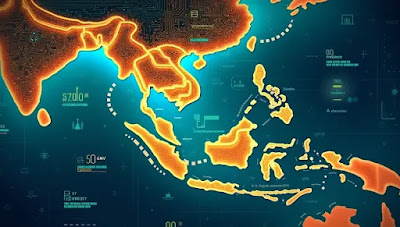
ok, look, if you’ve been looking at the global growth charts lately and assuming that the only regions printing real digital cash are Silicon Valley or the major hubs in Europe, you are completely missing the real action for real. It’s early 2026, and Southeast Asia (ASEAN) has just pulled off an absolute masterclass in economic scaling. According to the definitive e-conomySEAa 2025 report by Google, Temasek, and Bain & Company, the region’s digital gross merchandise value (GMV) has officially exploded past a staggering $300 billion.
Honestly, if you’re a macro investor sitting in London trying to scout the next massive consumer wave, or a tech strategist in San Francisco looking at global expansion, this isn’t just a routine annual update—it’s a total revolution. The thing is, this vibrant 10-country bloc has ballooned its digital economy by an insane 7.4 times over the last decade, turning what used to be a cash-dominated frontier into an absolute goldmine of video commerce, digital finance, and hyper-dense AI ecosystems. Let’s get into the raw, unedited details properly.
The Revenue Rocket: How ASEAN Learned to Monetise Properly
Let’s get into it properly—a decade ago, when the very first version of this report came out, Wall Street analysts predicted the region might scratch $200 billion by 2025 if they got lucky. Instead, reality outpaced the hype by an extra 50%. We aren’t just talking about a spike in user numbers here; we are talking about a massive shift in how these platforms actually make money. Digital economy revenue has skyrocketed to $135 billion, marking an incredible 11.2-fold leap since 2016.
The thing is, tech companies in Southeast Asia have completely ditched the old, unsustainable burn-rate frenzy where they threw endless discounts at consumers just to acquire users. Platforms have mastered the art of smart monetization—layering in high-margin retail media ads, rolling out premium tiered subscriptions, and optimizing logistics. On-demand sectors like food delivery ($36 billion GMV) and ride-hailing ($33 billion GMV) are now sitting comfortably near profitability, opening up clear ipo paths for over 150 regional firms across Indonesia, Malaysia, and Singapore for real.
e-commerce reloaded: the 185 billion dollar live-stream craze
Straight up, the undisputed heavyweight champion of this digital surge is e-commerce, locking down a massive $185 billion in GMV. But look under the hood—the real story here is the explosive rise of video commerce. In less than three years, live-stream shopping and influencer-driven video storefronts (think TikTok Shop and regional giants) have gone from a tiny 5% niche to commanding a staggering 25% of all online retail sales.
Think about Oliver, a global portfolio manager based in London. He’s been heavily tracking the shift in retail habits because video commerce has driven a massive 50% year-on-year surge in transaction volumes across the region. The average order values are relatively low—hovering around $11 to $13 as users indulge in quick impulse buys for fashion and beauty products—but the velocity of these sales is intense. It’s an absolute behavioral shift that traditional Western brick-and-mortar brands are scrambling to copy for real.
The financial backbone: cross-border QRs and a 1.4 trillion dollar grid
You can’t run a massive $300 billion digital empire on physical bills. That’s why digital financial services (DFS) have become the quiet powerhouse of the entire ASEAN economy. Gross transaction value has hit a jaw-dropping $1.4 trillion, with seamless digital payments swallowing up a massive $1.17 trillion chunk of that pie. Across core global economies, physical cash has now fallen to just 39% of usage.
Take Emily, a supply chain logistics manager based in San Francisco. She’s been monitoring how cross-border QR code payment systems have linked eight out of the ten ASEAN nations seamlessly. If a business wants to settle transactions across borders, they no longer have to deal with clunky, expensive wire transfers that take days to clear. Embedded lending apps—powered by real-time AI credit scoring—have seen an 18% revenue jump, giving millions of small merchants instant access to working capital that legacy banks wouldn’t even look at. It’s a level of financial inclusion that is structurally outperforming traditional Western banking setups for real.
The AI factor: an extra 200 billion dollars unlocked
The thing is, ASEAN isn’t just adopting Web2 tools late; they are leapfrogging straight into an AI-first world. The region is currently home to over 700 active AI startups, with Singapore operating as the primary central hub. Over 30% of all private tech funding in the region is flowing directly into artificial intelligence setups, backed by a massive $50 billion data centre infrastructure commitment from giants like Google and Microsoft.
Honestly, management consulting models from firms like Kearney suggest that this massive AI transition could unlock an additional $200 billion to $1 trillion in GDP value across Southeast Asia by 2030Consumersrs are absolutely lapping it up—nearly 62% of shoppers openly admit that their buying choices are actively swayed by personalizeAIai recommendations, and 75% are consistently using generativAIai tools, chatbots, and visual searches to navigate their daily digital tasks. To be fair, there are real headwinds like regional regulatory fragmentation and a severe shortage of deep tech talent, but with AI learning enrollments surging 5.2 times over, the workforce is upskilling at a breakneck pace for real.
The macro playbook: how to position your cash
At the end of the day, today’s southeast asian market is an absolute gold rush for companies that understand how to navigate regional nuances. If you want to play this $300 billion digital pie smartly, you have to look beyond the basic headline data:
- Ride the retail media wave: digital advertising inside e-commerce and food apps is growing at 33% annually. Retail media networks are on track to become a massive multi-billion-dollar sector, making app enablers a very juicy investment play.
- Watch the export tariff risks: while domestic digital consumption is roaring, countries like Indonesia and Vietnam have massive export-to-GDP exposures. If global trade wars escalate, local consumer wallets could feel a squeeze, making domestic-focused tech platforms a safer hedge. Pioneer the green transition: with electric vehicle (EV) Adoption doubling in spots like Vietnam due to heavy subsidies, the infrastructure required for EV ride-hailing fleets is a massive, untapped value play.
Southeast Asia is no longer just an outsourcing destination or a passive market—it is an absolute blueprint for the future of the global mobile internet. Stay smart, diversify across their booming digital finance grids, and make sure your portfolio has direct exposure to this hyper-growth narrative before the rest of Wall Street prices it out completely for real!
faq – burning questions about ASEAN’s 300 billion dollar digital boom
1. What exactly is driving Southeast Asia’s digital economy past $300 billion?
The thing is, it’s a mix of smartphone penetration and absolute mastery over monetization. Platforms have moved away from giving massive, cash-burning discounts and are now making serious money through high-margin retail media ads and premium tiered subscriptions for real.
2. How does the massive rise of video commerce impact global retail investors like Oliver in London?
To be fair, for global macro strategists like Oliver, this is a massive behavior shift you can’t ignore. Live-stream shopping and video storefronts have exploded from a tiny 5% niche to commanding a staggering 25% of all online retail sales in the region. Transaction volumes are up 50% year-on-year, proving that video is the absolute future of global retail for real.
3. Why is digital finance considered the quiet backbone of the ASEAN market?
Let’s get into it properly—the region has completely skipped clunky, legacy bank setups. Gross transaction value has hit a jaw-dropping $1.4 trillion, with payments alone making up $1.17 trillion of that pie. Cross-border QR codes are now linked across eight nations, making international trade and instant AI credit scoring incredibly fast and low-fee for real.
4. How are supply chain and logistics managers like Emily in San Francisco looking at this data?
Managers such as Emily are tracking these changes because the digital ecosystem is improving the speed and efficiency of international sourcing and logistics. Embedded finance options allow local suppliers to get instant working capital, which dramatically speeds up production timelines and cuts through traditional bureaucratic delays for real.
5. Is the massive AI boom in Southeast Asia actually sustainable?
Honestly, the data says yes. With over 700 active AI startups and a massive $50 billion investment in infrastructure from tech giants like Google and Microsoft, AI is deeply integrated into consumer habits. Nearly 62% of regional buyers admit their choices are actively swayed by personalized AI recommendations, unlocking up to an extra $1 trillion in GDP value by 2030 for real.
This is for educational purposes only. We are not financial advisors. Results may vary based on your individual debt situation.
Leave a Reply