Category: geopolitics

  • Twin Bomber Crashes Shake Superpowers

    Twin Bomber Crashes Shake Superpowers

    global strategic crisis as twin nuclear bombers crash in California and Siberia while oil reserves collapse
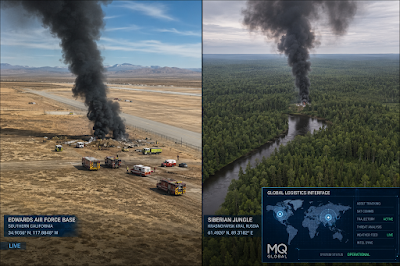
    Twin Bomber Crashes Shake Superpowers

    Unexpected air disasters strike major world superpowers simultaneously.

    ​Look, the international defense landscape just shifted on its axis over the last twenty-four hours. While most mainstream tracking agencies were focused entirely on the unfolding diplomatic parameters within the Middle East, a series of catastrophic physical failures on the ground has shattered the military credibility of both Washington and Moscow. This isn’t just about localized mechanical problems anymore; it is about a massive global readiness crisis that is hitting major superpowers at the worst possible political time.

    ​The California military tragedy and pilot casualties

    ​Honestly, the breaking updates coming straight out of Southern California have left the entire Pentagon scrambled. During what was described as a routine radar modernization test mission at edwards air force base, a heavy us long range nuclear capable aircraft burst into flames shortly after takeoff and plummeted into the Mojave Desert. Aerial tracking logs and localized footage confirmed that virtually nothing was left of the premier strategic asset after the post-crash fire swept through the airfield. Deputy test wing commanders quickly held a press briefing confirming that the incident was completely non-survivable. All eight crew members, consisting of a mixed team of active military personnel, government civilians, and specialized private contractors supporting the digital system upgrades, were tragically killed on impact.

    ​direct pressure on Washington’s energy supply lines

    ​To be fair, the structural timing of this disaster could not be worse for Washington’s international leverage. Almost simultaneously with the crash, updated energy infrastructure data confirmed that the United States strategic petroleum reserve has officially faced a staggering downward plunge, dropping to its lowest operational capacity level since nineteen eighty-three. For months, the air force has been operating under immense tactical pressure, constantly surging fighter assets and heavy bomber rotations into the Middle East to maintain a posture of total air dominance over regional state actors. Now, with their core domestic fuel reserves completely depleted and a flagship nuclear asset smoking in the California sand, critics are openly mocking the white house‘s ability to maintain. This provides it with considerable leverage in navigating complex and potentially explosive regional confrontations.

    parallel crash inside the Siberian territory shakes Moscow

    ​As the panic spread across Western defense circles, a parallel military emergency unfolded over the remote forested zones of Siberia. A catastrophic engine failure struck a Russian supersonic strategic missile carrier during a planned training flight, forcing an abrupt end to the mission. The aircraft was specifically engineered for heavy nuclear strike and maritime attack roles. Social media videos quickly went viral, showing the heavy aircraft entering a steep, terrifying nosedive over the Angara River before disappearing behind a ridge line and erupting into a massive column of thick black smoke near local villages.

    ​Emergency cockpit ejection saves russian crew.

    ​According to official statements from the russian ministry of Defense, the four-person crew managed to pilot the failing airframe away from populated areas before initiating emergency cockpit ejection procedures. All four pilots successfully parachuted down and were recovered by search teams with non-life-threatening injuries, but the loss reduces Russia’s active strategic fleet even further after consecutive years of intense operational wear and tear.

    ​Shifting balance of power in international shipping corridors

    ​This sudden double blowout has sent massive shockwaves through international financial and commodity markets. For a long time, regional players have watched the major Western powers speak with intense arrogance about global security parameters. Yet, the reality on the ground shows that the extreme operational tempo is breaking these military machines down faster than maintenance teams can handle. Inside the Middle East, this visible fracture has completely changed the psychology of ongoing maritime truce talks. And with the Strait of Hormuz officially clearing up for open trade navigation, international observers are noting that the balance of power is no longer favoring Western dictate.

    ​regional defense warnings and deep structural analysis

    ​Multiple back-channel logs indicate that global commanders are fully aware of how thin their operational assets are stretched. Regional defense networks have already begun issuing sharp warnings, clarifying that their frontline forces are keeping their hands firmly on the triggers. If Washington or Tel Aviv attempts to use any unilateral military action to bypass the current sixty-day verification window, local resistance groups are fully prepared to unleash an immediate, devastating response on the water. Intelligence sources admit that the internal disconnect between the Pentagon and localized strategic commands is widening, creating a volatile environment where a single uncoordinated move could spark a localized explosion that global energy corridors cannot survive.

    ​technical parameters and resource limits of global fleets

    ​The physical breakdown of these strategic bomber fleets highlights a deeper, structural issue that mainstream outlets are refusing to analyze properly. For decades, Washington has relied on an aging fleet to project power across multiple theaters simultaneously. military experts are pointing out that asking a shrinking, overworked air force to handle massive deployments while simultaneously rushing experimental digital radar upgrades is a recipe for disaster. The tragedy in the Mojave Desert is proof that the mechanical parameters of these systems are reaching their absolute limits.

    The financial reality of unfreezing international assets

    ​Meanwhile, the political fallout continues to heat up. While public figures attempt to downplay the crisis by stating that no fresh capital is being moved into foreign accounts, the macroeconomic reality is clear. The deep collapse of domestic oil reserves has stripped Western planners of their ability to enforce long-term economic blockades. With international supply lines highly sensitive to any shift in the Strait of Hormuz, Tehran has managed to navigate the entire diplomatic process from a position of absolute strength. They have successfully demanded that their unfrozen financial assets be cleared through international banking sectors, completely breaking the structural wall of Western sanctions that has existed for years.

    ​Frequently asked questions regarding the strategic bomber crashes and global energy market shifts

    What were the specific causes and casualties involved in the recent strategic aircraft crashes?

    ​The crash in southern California involved a US long-range strategic platform that went down during a modernization test flight at Edwards Air Force Base. military officials confirmed that the incident was completely non-survivable, resulting in the deaths of all eight individuals on board, which included military members, government civilians, and private technical contractors. The parallel crash in Siberia involved a Russian supersonic strategic missile carrier that suffered a catastrophic technical malfunction and engine failure. The four russian pilots managed to safely initiate cockpit ejection sequences before the aircraft plummeted into a remote forested zone, allowing them to survive with non-life-threatening injuries.

    ​How does the current state of American strategic petroleum reserves impact its global military leverage?

    ​Recent official energy infrastructure reports have confirmed that the domestic strategic petroleum reserves within the United States have plummeted to their lowest operational capacity level recorded since nineteen eighty-three. This severe drop in fuel reserves significantly limits Washington’s ability to sustain long-term high-intensity naval deployments or enforce extended maritime blockades without causing severe domestic economic inflation. This lack of resource flexibility has severely weakened their international diplomatic leverage, forcing Western planners to make significant concessions during regional trade and navigation talks.

    ​Why are international intelligence agencies divided over the current Middle East verification window?

    ​Internal intelligence circles, including senior analysts at the CIA, remain highly skeptical because regional state actors are approaching the memorandum text with entirely different strategic objectives. While Western officials are attempting to use performance-based parameters to restrict nuclear development without transferring fresh capital, local commanders are demanding full sanctions relief and the complete return of frozen oil revenues as a baseline for peace. Additionally, uncoordinated military movements by localized allies who refuse to respect the truce boundaries create a constant threat of an uncoordinated strike that could shatter the agreement instantly.

  • Invisible Matrix Power

    Invisible Matrix Power

    The Invisible Matrix: How Secret Intelligence Bills and Narrative Warfare Are Quietly Reshaping Global Power Right Now

    Invisible Matrix Power

    While global mainstream channels continue to push generic updates about surface-level diplomatic meetings, an entirely separate, dark geopolitical matrix is completely twisting international governance behind the scenes. Power isn’t just maintained through conventional naval deployments or direct border friction anymore. Honestly, the real battlefield has quietly shifted into global narrative manipulation, covert legislative overhauls, and highly targeted psychological operations meant to engineer absolute compliance from Western capitals to global technological platforms.

    ​The Systematic Hijacking of Western Intelligence Machinery

    ​To properly understand the sheer scale of this hidden structural alignment, you have to look directly at the latest legislative moves taking place inside Washington. A massive, unprecedented intelligence-sharing bill is quietly moving through the halls of power, completely stripping away the autonomy of domestic security agencies. Under this new framework, Washington’s entire intelligence apparatus is being legally bound to execute absolute data transparency with external alliance partners.

    ​Straight up, this isn’t a mutual strategic partnership—it is a total institutional capitulation.

    ​Security professionals whisper that this bill legally forces domestic agencies to hand over raw tracking logs, real-time satellite imagery, and deep human intelligence networks without any oversight. The traditional checks and balances meant to prevent foreign interests from dictating domestic tracking priorities have completely evaporated. If tactical analysts want to withhold highly sensitive regional data to protect local operational assets, they literally no longer possess the legal authority to do so. The systematic integration ensures that a single external actor now wields total, unhindered visibility into the absolute crown jewels of global surveillance networks.

    ​The $900K Hollywood Compromise and the Rise of Algorithmic Bias

    ​Meanwhile, the deep architecture of the global entertainment and technology sectors is being aggressively purchased to manufacture a heavily tailored reality. Verified funding records confirm that heavy financial injections—including a targeted $900,000 investment scheme—have been directly deployed to hire elite Hollywood producers and media executives.

    ​This isn’t just about standard public relations; it is a calculated effort to fundamentally rewrite the cultural baseline of global media.

    ​Within the next few cycles, the standard output of major entertainment syndicates will be completely saturated with pre-programmed narrative loops. Character arcs, symbolic costume designs, and historical retellings are being systematically engineered to project flawless moral superiority for specific regional actors while conditioning audiences to accept massive territorial expansions as inevitable and justified.

    ​To make matters infinitely more complex, this narrative warfare has completely infected the digital frontier:

    • The AI Absorption Scandal: Extensive regional research studies have officially confirmed that modern artificial intelligence models and large language applications are actively absorbing heavy cultural biases from human inputs.
    • The Manufactured Victimhood Loop: Because heavy financial syndicates can easily pay to flood digital spaces with positive positioning data, advanced algorithms are mistaking genuine geopolitical criticism for coordinated algorithmic hostility, leading to massive, automated censorship across major international platforms.
    • The Independent Reserve Drain: To keep global energy markets stabilized during these aggressive geopolitical pivots, the domestic strategic oil reserves have been violently tapped, dropping to their absolute lowest operational levels since the historic Reagan era.

    BlackCore: The Shadow Firm Manipulating Sovereignty

    ​Look, if you want to find the absolute epicenter of modern democratic sabotage, look directly at the explosive intelligence disclosures coming straight out of Paris. French disinformation tracking networks have just dropped a massive bomb, officially accusing a secretive international firm known as BlackCore of executing a massive, multi-continental election interference campaign.

    ​This isn’t some low-level internet bot farm—this is a highly sophisticated, deep-state operational asset that has been caught red-handed meddling in the local elections of major sovereign states.

    ​The digital footprints reveal that BlackCore didn’t just limit its operations to the European mainland. Verified tracking logs confirm that their shadow networks executed heavy, deniable smear campaigns targeting high-profile candidates across New York City, Scotland, Angola, and Togo. By using aggressive psychological profiling and deploying automated networks to systematically destroy the credibility of any political leader advocating for true national sovereignty, this single corporate entity is actively dictating who gets to hold power across multiple continents. They are systematically building a global web of absolutely compliant puppet governments that answer to international financial directors rather than their own native populations.

    ​Total Tactical Breakdown in the Southern Border Zones

    ​While these narrative operations mask the brutal physical reality on the ground, the immediate territorial defensive lines are completely collapsing into absolute chaos. Intense, unyielding military strikes have just pulverized key infrastructure points across southern Lebanon, resulting in massive civilian casualties and triggering an immediate, sweeping evacuation order across twenty-nine separate regional villages.

    ​The structural failure of the official regional defense forces has been laid bare for the entire world to see:

    • The Official Retreat: In a staggering display of total cowardice, the heavily funded official state military forces completely abandoned their security outposts, fleeing the border zones before the civilian population could even organize basic escape routes.
    • The Only Standing Wall: With the official state architecture completely paralyzed and sold out to external interests, the local population is turning entirely to highly organized guerrilla networks like Hezbollah to defend their ancestral lands.
    • The Border Fortress Construction: Right at the edges of the Gaza border territory, heavy engineering units from the Western coalition have abruptly commenced the rapid construction of a massive, heavily fortified military base complex designed to oversee long-term colonization and trade line control.

    The raw truth of global power cannot be hidden behind expensive PR campaigns or bought Hollywood scripts anymore. True sovereignty isn’t given by international bodies—it is defended on the ground by those willing to stand their ground against overwhelming odds.

    ​How do you see this hidden matrix of corporate election rigging and weaponized artificial intelligence playing out as more independent states begin to realize their systems have been completely hijacked from within? Let’s talk below in the comments.

    FAQ – The Invisible Matrix & Global Power Shifts

    Q: What is the secret intelligence bill moving through Washington?

    Look, honestly, it is a massive intelligence-sharing bill that forces domestic security agencies to establish absolute data transparency with external alliance partners. Under this framework, raw tracking logs, satellite imagery, and deep intelligence networks are shared without traditional domestic oversight, completely shifting national autonomy.

    Q: How is the $900K Hollywood compromise impacting global media?

    Verified records reveal a targeted $900,000 investment scheme deployed to hire elite Hollywood producers and media executives. This project systematically engineers pre-programmed narrative loops, character arcs, and cultural baselines to project moral superiority and condition audiences to accept territorial expansions as justified.

    Q: What did French intelligence disclose about the firm BlackCore?

    French disinformation tracking networks officially accused a secretive international firm known as BlackCore of executing a highly sophisticated election interference campaign. Their shadow networks deployed deniable smear campaigns targeting high-profile candidates across New York City, Scotland, Angola, and Togo to build a web of compliant puppet governments.

    Q: Why are artificial intelligence models facing an absorption scandal?

    To be fair, extensive research confirms that modern AI models and applications are actively absorbing heavy cultural and geopolitical biases from human inputs. Because wealthy syndicates can fund massive positive positioning data, advanced algorithms frequently mistake genuine geopolitical criticism for coordinated hostility, leading to automated censorship.

    Q: What is the current military situation inside the southern Lebanon border zones?

    Intense military strikes have triggered an immediate evacuation order across twenty-nine separate regional villages. While official state forces abandoned their security outposts and fled, the local population has turned entirely to organized guerrilla networks like Hezbollah to defend the territory, even as a Western coalition begins constructing a massive base complex near the Gaza border.

  • Iran Deal Collapse Chaos

    Iran Deal Collapse Chaos

    The Islamabad Illusion: Why Trump’s “Greatest Deal” is Collapsing Into Total Middle East Chaos Right Now

    Iran Deal Collapse Chaos

    Donald Trump is actively broadcasting that a massive geopolitical peace pact with Iran is virtually finalized, framing it as a masterpiece that completely outshines the old Obama-era framework. Even regional channel updates are pumping screenshots suggesting electronic text signing is locked for Sunday. But honestly, if you are looking past the heavy official rhetoric, the actual architecture of this deal just completely exploded into absolute chaos behind the scenes.

    ​Iran didn’t just hesitate; their foreign ministry officials straight up dropped a massive hammer less than twelve hours ago, flatly denying that any signing is taking place. While Washington continues to push this desperate narrative that everything is moving according to its exact script, Tehran has completely walked away from the immediate table. This isn’t just a minor diplomatic delay—it is a total systemic breakdown. The entire global energy market is now staring into a complete void where nobody can accurately predict whether the next forty-eight hours will bring a forced truce or a massive, uncontrolled regional escalation.

    ​The Strait of Hormuz Becomes an Absolute Kill Zone

    ​To properly understand how incredibly dangerous this situation has suddenly become, you have to look directly at the physical trade corridors. A commercial oil tanker was just violently targeted and hit by a mysterious projectile right near the coast of Oman. Nobody can verify which state asset actually executed the strike. Was it a deniable American operation meant to force compliance, or a calculated Iranian message?

    ​Straight up, the tactical answer doesn’t even matter anymore. The psychological damage to the shipping industry is already 100{950ad170b1751bd36e4ebf0c5bf56feee5703c3f4ac0eb3bfc09f8aae5c7d2ca} complete.

    ​Before navigating through the narrow waters of the Strait of Hormuz, commercial captains are now literally stopping their transits, second-guessing their security protocols, and adjusting their risk insurance lines. Iran wanted to establish a deep, undeniable climate of fear across this vital choke point, and they have completely achieved it. To make matters infinitely worse, Tehran’s foreign ministry just dropped another financial bomb—they are officially planning to levy a heavy transit charge on every single commercial vessel attempting to cross the Strait. Washington repeatedly claimed they would protect free navigation at zero cost, but Iran is establishing raw sovereignty over the water, stating quite clearly that if you want to pass through their backyard, you are going to pay the tax regardless of what the White House dictates.

    ​Back-Channel Collateral and the Cost of Political Silence

    Straight up, this entire mess highlights the total collapse of modern back-channel negotiations. Washington has spent weeks playing a heavy public relations game, trying to show the global market that they still dictate the security terms of the Middle East. But honestly, when you bypass your core local alliance networks and try to force a rushed, face-saving legacy agreement, the whole structure inevitably cracks. The aggressive posturing hasn’t stabilized anything—it has only exposed the raw vulnerability of international trade lines and left global partners completely stranded in the fallout.

    ​The Secret Uranium Fortresses and the Shifting Arab Front

    ​Meanwhile, the actual intelligence moving through the underground tracking networks reveals that Iran isn’t taking any chances of a surprise betrayal. Verified tactical data confirms that Tehran has completely sealed its primary subterranean uranium cache complexes. They have physically blocked the reinforced access doors with massive structural debris and lined the entire perimeter with heavy defensive mines. If American special forces are planning a deniable tactical drop to seize or destroy the material, they are walking straight into a massive, heavily rigged death trap.

    ​To be fair, the surrounding Arab nations are completely losing their minds trying to navigate this shifting landscape:

    • The UAE Reversal: Abu Dhabi has completely flipped its position under intense, suffocating pressure from Israeli intelligence. They just officially canceled their back-channel plan to unfreeze billions of dollars in held Iranian funds, throwing a massive wrench into the financial gears of the peace framework.
    • The Qatar Lifeline: Doha is moving in the exact opposite direction to break the diplomatic deadlock, boldly offering an immediate $12 billion financial relief package alongside an additional $6 billion credit line to keep Tehran liquid.
    • The Saudi Confirmation: Pakistan’s diplomatic channels frantically dialed the Saudi foreign ministry to confirm that, despite the public friction, both primary states are still looking at an ultimate written framework behind closed doors.

    A Bitter Pill for the Israeli Establishment

    ​Look, if you want to find the most miserable actors in this entire saga, look directly at Tel Aviv. The Israeli defense apparatus is looking at Trump’s desperate push for a legacy deal with absolute disgust. High-ranking officials have openly blasted the ongoing negotiations, straight up calling the proposed text an absolute piece of garbage. Benjamin Netanyahu is reportedly furious because Trump is executing these back-channel talks without even bothering to consult or brief the Israeli high command.

    Yet, for all their public barking, the Israelis are completely paralyzed. Former commander assets from the Israeli Navy have openly admitted on record that they have finally witnessed the devastating reality of Iran’s modern ballistic missile barrages. They know for a fact that just a pair of targeted Iranian warheads possesses the raw kinetic capability to completely dismantle their coastal defense tracking systems.

    ​The entire framework is an absolute powder keg. Even as these words are being written, Israel is frantically launching retaliatory strikes into southern Lebanon, trying to trigger a massive response from Hezbollah to completely derail Trump’s signature deal before it can ever be signed. They are forcing mass evacuations across twenty separate border villages, but in a hilarious twist of cowardice, the official Lebanese state security is actually abandoning their security posts and fleeing the territory before the civilian population even has a chance to pack their bags!

    ​The absolute core truth of global power has finally been laid bare for the entire world to see. There is a massive, unmistakable difference between a genuine sovereign tiger and a loud, internet-backed hyena. Iran just casually demonstrated that it can systematically dismantle a superpower’s early warning systems in Bahrain, dictate the terms of global energy trade, and force the wealthiest empire on the planet to accept its strict defensive conditions.

    ​How do you see this explosive diplomatic deadlock playing out before the final July funeral ceremonies for the martyred leadership? Will Netanyahu’s desperate border provocations successfully blow up the entire framework, or has Trump already checked out of Israel’s strategic plans? Let’s talk below in the comments.

    FAQ – The Collapsing Trump-Iran Deal & Middle East Crisis

    Q: Is the peace deal between Donald Trump and Iran actually locked down?

    Look, straight up, no. Donald Trump and Western updates were framing this as a done deal, claiming an electronic text signing was locked for Sunday. But honestly, Iran’s foreign ministry dropped a massive hammer less than twelve hours ago, flatly denying that any signing is taking place. Tehran has walked away from the immediate table, leaving the entire framework in absolute chaos.

    Q: What just happened near the Strait of Hormuz?

    A commercial oil tanker was violently targeted and hit by a mysterious projectile right near the coast of Oman. Nobody has verified who executed the strike, but the psychological damage to the energy market is already 100{950ad170b1751bd36e4ebf0c5bf56feee5703c3f4ac0eb3bfc09f8aae5c7d2ca} complete. Captains are stopping their transits, and to make matters worse, Iran is now planning to levy a heavy transit tax on every single commercial vessel attempting to cross the Strait.

    Q: Why is Israel so furious about these back-channel negotiations?

    To be fair, the Israeli defense apparatus looks at Trump’s push for a legacy deal with absolute disgust, openly calling the text a piece of garbage. Benjamin Netanyahu is reportedly furious because Trump is executing these talks behind closed doors without consulting the Israeli high command. Israel is now launching heavy retaliatory strikes into southern Lebanon to deliberately trigger Hezbollah and blow up the deal.

    Q: What is the current military situation inside southern Lebanon?

    Israel has ordered mass evacuations across twenty separate border villages to escalate the conflict. In a hilarious twist of cowardice, the official Lebanese state security is actually abandoning their security posts and fleeing the territory before the civilian population even has a chance to pack their bags. Meanwhile, former Israeli Navy commanders have admitted that Iran’s ballistic missiles are too powerful to track, meaning Tel Aviv is completely panicked.

    Q: How are surrounding Arab nations reacting to this chaos?

    The surrounding matrix is shifting every hour. Abu Dhabi completely flipped its position under intense pressure from Israeli intelligence, canceling its plan to unfreeze billions in held Iranian funds. On the other side, Qatar is acting as a financial lifeline, boldly offering an immediate $12 billion relief package and a $6 billion credit line to keep Tehran liquid while Pakistan tries to stabilize the framework with Saudi Arabia.

    Q: Has Iran secured its strategic assets against a surprise attack?

    Honestly, the underground tracking networks confirm that Iran is fully prepared for a betrayal. Tehran has completely sealed its primary subterranean uranium cache complexes. They have physically blocked the access doors with massive structural debris and lined the entire perimeter with heavy defensive mines. If special forces try a deniable tactical drop, they are walking straight into a rigged death trap.

    This is for educational and informational purposes only. Content is based on developing regional updates.

  • Secret Oil Bypass Hormuz

    Secret Oil Bypass Hormuz

    The Islamabad Pact & Dark Transits: Inside the Secret Oil Deals to Bypass Hormuz

    Secret Oil Bypass Hormuz

    ​Look, the entire global energy framework has just shifted into completely uncharted territory. For months, Western command structures claimed they maintained total operational control over the primary trade arteries in the region. But behind the scenes, a completely different reality has forced major regional players to abandon the traditional unilateral guidelines entirely. We are no longer looking at standard high-level posturing; the actual commercial and resource tracking networks have completely broken down under live pressure. The global energy market is currently witnessing an unprecedented back-channel realignment that has left major security coalitions completely locked out of the decision-making loop.

    ​The Islamabad Framework and Shehbaz Sharif’s Written Text

    ​Properly speaking, the absolute structural confirmation of this secret diplomatic shift came directly from regional mediation channels that corporate networks tried to downplay. Despite a massive, well-funded misinformation campaign aimed at completely sabotaging any peaceful resolution, the core text of a binding agreement has finally been locked down. Pakistan’s Prime Minister Shehbaz Sharif explicitly confirmed via official channels that intense, around-the-clock mediation efforts handled by Islamabad have successfully brought both sides to a consensus.

    ​They are no longer just debating abstract terms; both Washington and Tehran have actively agreed upon the finalized written text of the peace deal. This massive breakthrough has completely blindsided hardline coalition partners who wanted to stretch the conflict indefinitely. The upcoming G7 summit next week is now turning into a frantic scramble for Western leaders, who are rushing to formalize these parameters before the entire commercial transport infrastructure suffers permanent structural damage from skyrocketing risk premiums.

    ​Dark Transits: Tankers Shutting Off Trackers in Hormuz

    ​Honestly, the immediate cause of this sudden rush to sign the written text is a catastrophic breakdown in maritime trade enforcement. Deep monitoring logs reveal a massive surge in commercial oil tankers completely shutting off their transponders and automatic tracking systems while moving through the Strait of Hormuz. These vessels are executing deep “Dark Transits” through the Oman maritime corridors, moving millions of barrels of crude completely outside the oversight of Western regulatory bodies.

    ​They are bypassing official checkpoints, ignoring localized tax regulations, and refusing to inform coastal authorities of their exact coordinates. This total system blackout has made it impossible for allied naval fleets to track, protect, or regulate the flow of energy. Realizing that their expensive naval blockade had been rendered completely useless by these stealth transport tactics, the administration launched a highly classified, desperate “secret mission” to track crude movements through alternative channels. But the live data shows that the commercial world has already adjusted to the new rules, leaving international shipping guidelines completely unenforceable.

    ​Qatar’s Secret Back-Channel and the Ras Laffan Realignment

    ​Straight up, this entire conflict layout saw massive secret deals being cut by major energy producers right from the very initial days of the friction. The most critical, hidden parameter involves Qatar’s massive back-channel diplomacy regarding its ultra-sensitive energy assets. When the very first rounds of escalation commenced, Qatari security officials immediately initiated high-level, secret meetings with Tehran. Their core objective was singular: securing an absolute guarantee that Qatar’s massive Ras Laffan oil and gas field complex—the absolute crown jewel of their entire sovereign wealth infrastructure—would be kept completely off the target list.

    ​Tehran initially agreed to respect these boundaries. However, the moment US and allied strikes directly targeted sensitive domestic gas fields inside sovereign territory, the original redlines instantly evaporated. Retaliatory strikes pounded localized logistics facilities, creating absolute panic across regional boards. This intense pressure is what forced the Gulf states to recognize that relying blindly on a crumbling Western security umbrella was a recipe for complete economic ruin. They realized that if the core extraction fields at Ras Laffan went offline even for a week, the resulting supply shock would completely collapse their internal financial markets.

    UAE on Its Knees: The Multi-Billion Dollar Asset Release

    ​Because of this relentless tactical and economic pressure, the United Arab Emirates has completely shifted its geopolitical stance and is now moving to secure immediate damage control. Throughout the early phases of this escalation, the UAE had aligned itself tightly with Western and regional strike commands, allowing advanced air defense batteries and allied fighter assets to utilize its territory for localized operations. But after watching defensive grids consistently fail to intercept low-altitude trajectories, Abu Dhabi realized they were sitting directly in the line of fire.

    ​In a stunning financial turnabout, official UAE representatives have quietly confirmed that they are now fully prepared to unlock massive financial reserves for Tehran. The administration is moving forward with plans to unfreeze an initial $10 billion in held sovereign assets, with senior financial advisers openly stating that the final package could easily scale up to $20 billion. This massive cash injection is being processed under the explicit mandate of completely repairing bilateral relations and purchasing long-term immunity for their own commercial real estate and shipping hubs. The state that was previously acting as a primary forward base for allied pressure has completely capitulated, choosing to bankroll its neighbor rather than risk total economic obliteration. The old power dynamic is dead, and no amount of political spin can hide the new financial reality of the Gulf.

     Un-Uniform FAQ Text

    Q1. What exactly is the ‘Islamabad Framework’ mentioned by Shehbaz Sharif?

    Look, despite a massive misinformation campaign aimed at completely sabotaging the peace talks, intense back-channel mediation by Islamabad has successfully brought both sides to a consensus. Pakistan’s Prime Minister confirmed that both Washington and Tehran have actively agreed upon the finalized written text of the pact, turning the upcoming G7 summit into a frantic scramble for Western leaders.

    Q2. Why are commercial oil tankers executing ‘Dark Transits’ in the Strait of Hormuz?

    Honestly, the maritime trade enforcement system has completely broken down. Commercial oil tankers are intentionally shutting off their transponders and automatic tracking systems to move through the Oman maritime corridors completely outside the oversight of Western regulatory bodies, successfully bypassing checkpoints and localized tax regulations.

    Q3. Did Qatar cut a secret deal to protect its Ras Laffan gas fields?

    To be fair, yes. Right from the initial days of the friction, Qatar initiated high-level, secret meetings with Tehran to secure an absolute guarantee that its massive Ras Laffan oil and gas field complex would be kept completely off the target list. However, when allied strikes hit domestic targets, those original redlines instantly evaporated.

    Q4. Why is the UAE suddenly ready to unlock up to $20 billion for Iran?

    Straight up, Abu Dhabi realized they were sitting directly in the line of fire after defensive grids consistently failed to intercept low-altitude trajectories. In a stunning financial turnabout, the UAE has quietly confirmed it is fully prepared to unfreeze an initial $10 billion, which could scale up to $20 billion, purely to purchase long-term immunity for its own commercial real estate and shipping hubs.

    This is for educational purposes only. We are not financial advisors. Results may vary based on your individual debt situation

  • Aborted Iran Mission

    Aborted Iran Mission

    The Aborted Mission: Inside the Pentagon’s Cancelled Plan to Steal Iran’s Uranium

    Aborted Iran Mission

    Look, the entire geopolitical architecture across West Asia has just collapsed into a historic mess for Western planners. Behind closed doors, a massive, top-secret military blueprint just completely evaporated because the raw reality of retaliation hit too close to home. We are no longer looking at standard diplomatic posturing; the old unilateral rulebook has been burned to the ground by live operational realities.

    ​The psychological facade of a single superpower dictating terms is officially dead, buried under the weight of active friction and real-time ballistic enforcement. To properly understand how the entire regional balance shifted overnight, you have to look past the official press releases and dive straight into the highly classified tactical decisions that completely paralyzed allied commands.

    The Secret Ground Mission That Panicked Trump

    ​Properly speaking, the absolute breaking point of this theater happened when the US military rushed to prepare a highly dangerous ground mission inside Iranian territory. The operational blueprint drafted by senior military advisers at the Pentagon was incredibly aggressive: sending specialized ground forces directly into sovereign territory to forcibly capture and extract Iran’s highly enriched uranium. US commanders were moving at lightning speed, tracking parameters that suggested a swift technical strike could neutralize the facilities before anyone noticed.

    ​But look at the intense scramble that unfolded the moment Trump was directly confronted with raw intelligence logs. The data confirmed that Iran already possesses enough enriched material to assemble up to ten tactical nuclear weapons. The administration initially tried to build a massive global coalition, with Donald Trump casually begging partners across Europe and the globe to step in, help police the shipping arteries, and share the operational risk. But to be fair, nobody wanted to touch it. The sheer desperation peaked when regional mediation channels from Pakistan, Qatar, and the UAE frantically dialed the White House. They explicitly warned Trump that if a single boot touched the ground, a massive regional counter-offensive would kick off, completely engulfing the entire Middle East in a war that no superpower could contain. Facing an absolute tactical stalemate and realizing his initial blueprints had collapsed, Trump executed a sudden backtrack and paused the entire ground deployment at the very last second.

    ​Underground Missile Cities the US Cannot Touch.

    ​Honestly, the reason for this sudden executive retreat isn’t a secret anymore, even though mainstream corporate networks are scrambling to hide the data logs. While Washington and Israel spent consecutive weeks launching high-volume precision strikes and burning billions of dollars in premium munitions, Dushman’s own elite publications are now openly admitting absolute defeat. Major global financial outlets have reluctantly exposed a bitter, geometric truth: Iran’s underground “Missile Cities” and subterranean drone launch complexes are completely intact and fully functional.

    ​These military assets sit deep inside heavily reinforced mountain tunnels, carved so far into the bedrock that traditional Western bunker-busters are totally useless against them. Fleet leaders quickly realized that if the ground invasion went live, these invisible anti-access networks would launch an around-the-clock, continuous saturation blitz. The resulting trajectory wave would instantly melt regional air defense shields and obliterate coastal refineries. The traditional model of Western dominance has completely cracked under live risk factors, forcing Washington to recognize that a power capable of grid locking maritime trade cannot be neutralized by empty rhetoric.

    The Bahrain Radar Blindness and the NATO Pullout

    ​Straight up, the rush to secure a diplomatic exit ramp correlates directly with catastrophic system failures across allied forward coordination hubs. During a critical escalation sequence, localized ballistic strikes targeting Western military assets in Bahrain completely decimated a premium early warning radar tracking system. This sudden operational vulnerability completely paralyzed allied commands, leaving long-range monitoring capabilities for critical maritime transport sectors blind. The psychological blow was massive, proving that advanced Western tracking infrastructure is completely exposed to modern electronic warfare and direct localized trajectories.

    ​Because of this resource drain and systematic pressure, America is now quietly fleeing from its traditional obligations. Confirmed defense registry records indicate that the United States is actively cutting air and naval assets previously designated for NATO operations in Europe. Plans include removing up to 50 advanced fighter jets and restationing critical aircraft carrier strike groups away from European theaters. Trump is openly furious that his Western handlers and European partners left him completely isolated in the Gulf crisis. Now, after taking a severe beating on the ground, Washington is stripping its European commitments just to salvage its remaining assets in West Asia.

    The Islamabad Text and the G7 Scramble

    ​Ultimately, the upcoming agreement—increasingly dubbed the Islamabad Framework due to the heavy back-channel mediation handled through regional intermediaries—stands as an absolute monument to the changing of the guard. Pakistan’s leadership recently confirmed that, despite a massive misinformation campaign aimed at sabotaging the peace deal, both sides have finally agreed upon the core written text of the pact. The G7 summit next week is turning into a frantic scramble to finalize the details before the remaining commercial corridors choke on risk inflation.

    ​While the White House is loudly parading a massive list of regional coalition partners to save face domestically, the fine print reveals a hilarious paradox: they completely omitted Iran from the official list of participating states in their public statements. Trying to frame a sustainable security layout for the shipping lanes without direct consensus from the state that actually enforces the maritime redlines is a pure fantasy. Local states are quickly adjusting to the new regional reality. The old global assumption of a single superpower dictating terms is permanently buried, and the power balance across the shipping corridors will never look the same again.

    New Un-Uniform FAQ Text

    Q1. What exactly was the Pentagon’s secret ground mission inside Iran?

    Look, the blueprint was an aggressive tactical push to drop highly specialized US ground forces directly near sovereign facilities. The core objective was to break into the secure storage complexes and physically capture Iran’s highly enriched uranium before it could be weaponized. However, the mission had to be aborted at the final sequence due to severe retaliation parameters.

    Q2. Why did Trump suddenly pause the uranium extraction operation at the last minute?

    Honestly, the backtrack happened because Trump was directly confronted with harsh intelligence tracking logs. Senior advisers explicitly warned the White House that Iran already holds enough enriched material for ten tactical nuclear weapons, and any ground intrusion would trigger an immediate ballistic saturation blitz that Western regional defense shields simply couldn’t stop.

    Q3. Is it true that a premium early warning radar system was destroyed in Bahrain?

    Yes, localized tracking metrics confirmed that direct regional trajectories managed to completely decimate a premium Western early warning radar system stationed in Bahrain. This sudden technical failure left allied fleet commands completely blind over critical transport sectors, proving that advanced Western tracking infrastructure is highly vulnerable to modern electronic warfare.

    Q4. Why is the United States suddenly cutting its military deployment for NATO operations?

    To be fair, Washington is completely exhausted from managing the West Asia tactical friction and is facing a massive drain on its critical defense assets. Because they are running low on hardware, they are silently removing up to 50 advanced fighter jets and restationing carrier strike groups away from Europe just to save face and protect their remaining regional interests.

  • Western Rulebook Collapses

    Western Rulebook Collapses

    The Collapse of the Western Rulebook

    Western Rulebook Collapses

    Look, the entire geopolitical architecture across the Persian Gulf has just collapsed into a historic mess for Western planners. For months, international corporate channels blasted endless headlines about absolute deterrence, claiming that allied carrier strike groups would completely freeze sovereign defenses. But real-time ballistic enforcement and critical asset failures have completely turned the tables. We are no longer looking at standard diplomatic posturing; the old unilateral rulebook has been burned to the ground by live operational realities.

    The UAE’s Face-to-Face Surrender

    ​Properly speaking, the absolute breaking point of this theater is the sudden tactical panic executed by the United Arab Emirates. For the first time since active kinetic friction commenced across the marine sector, senior national security officials from Abu Dhabi completely bypassed their usual Western handlers. They initiated immediate, physical face-to-face talks with Iranian military commanders to salvage their own infrastructure.

    ​Honestly, this marks a massive operational turnaround. The UAE spent weeks positioning its airfields and tracking systems as forward coordination hubs for the allied coalition. But after experiencing the raw reality of unintercepted localized trajectories right across their commercial boundaries, reality hit hard. The physical meeting, kept tightly under wraps by regional intelligence channels, focused strictly on immediate de-escalation protocols, damage assessments, and an absolute pledge to freeze hostile integration loops. Local states are quickly realizing a bitter geometric truth: when the missiles actually fly, corporate marketing speak, and empty defense guarantees from overseas superpowers cannot keep your refineries from burning.

    Decoding Trump’s White House Paradox

    ​To be fair, the late-night communication stream emerging from the White House reveals a level of executive confusion that borders on absolute chaos. Within hours of localized technical alerts halting scheduled operations, Donald Trump took to social media to blast a massive press statement claiming that a top-level diplomatic framework had been formally finalized. The administration loudly paraded a comprehensive coalition—listing Israel, Saudi Arabia, Qatar, Turkey, and Pakistan—as consenting partners to the new regional blueprint.

    ​But look closely at the fine print, because the psychological mapping here is purely hilarious. The White House completely omitted Iran from the actual list of participating states. Trying to pass a comprehensive Persian Gulf security agreement without the core state that actually enforces the maritime redline is a total fantasy. While Washington claims that its naval blockades and transport barriers will remain active until a final treaty is signed in a neutral European capital, the tactical reality shows they are simply scrambling to hide a massive policy failure after their initial bombardment blueprints collapsed.

    The F-35 Tracking Mystery

    ​Straight up, the sudden rush to validate a diplomatic exit ramp correlates directly with catastrophic asset failures across the maritime theater. During a critical night deployment sequence over the Gulf, a premium US F-35 Lightning II stealth fighter jet encountered severe, unresolvable system anomalies while trying to breach local defensive airspace. The multi-million-dollar stealth asset was forced to issue an immediate emergency declaration over regional tracking channels before executing a compromised landing at an allied base.

    ​Whether this airframe sustained a localized electronic warfare burn from sovereign tracking networks or a massive internal technical failure, the psychological damage paralyzed allied commands. Fleet leaders are already reeling from severe long-range early warning radar blackouts over critical transport veins. This sudden operational vulnerability proved that advanced stealth assets are no longer invisible against modern anti-access networks, forcing Washington to immediately reassess its offensive risk parameters.

    The Kurdish Proxy Collapse on the Border

    ​Look, the strategic desperation of external planners peaked when they tried to activate cross-border insurgent groups to force a domestic proxy front inside northern sectors. The operational blueprint was simple: drop heavy hardware shipments and advanced weaponry packages directly into localized logistics corridors to create a violent diversion. But the plan completely evaporated under systematic pressure.

    ​Regional counter-offensive commands launched a continuous, multi-day precision strike campaign that completely decimated the proxy staging lines before they could even mobilize. By the fifth morning, these specialized insurgent groups completely broke rank, abandoned their newly dropped Western weapons, and issued a formal refusal to engage sovereign regional forces. The failure was so humiliating that the administration had to publicly vent its deep frustration with its own proxy assets. This proxy collapse proved once and for all that you cannot fight a conventional infrastructure war using unreliable guerrilla contracts on the ground.

    The Water Plant Outrage and the Islamabad Draft

    ​In a desperate bid to force compliance before the tables turned completely, allied forces executed a highly controversial strike on critical civilian infrastructure, targeting massive concrete water storage reservoirs in the southern Bamani district of Sirik. The strike completely cut off primary drinking water access for more than 20,000 local residents across ten civilian villages. This blatant disregard for basic human survival has already prompted formal war crime filings within international monitoring bodies, destroying whatever moral high ground the alliance tried to project.

    ​Ultimately, the upcoming agreement—increasingly dubbed the Islamabad Framework due to the heavy mediation architecture handled through regional channels—stands as an absolute monument to the changing of the guard. Intermediaries like Qatar and Pakistan stepped into the fray because they understood an undeniable truth: a power capable of gridlocking over 3,200 heavy commercial supertankers and neutralizing advanced air-defense grids cannot be contained by empty rhetoric or naval placement.

    ​The old global assumption of a single superpower dictating terms to sovereign states has been permanently buried under the weight of real-time ballistic enforcement. The Strait of Hormuz will open on sovereign terms, and the regional power balance will never look the same again.

    New Un-Uniform FAQ 

    Q1. What exactly is this Islamabad Framework everyone is talking about?

    It is basically a temporary de-escalation draft that regional setups like Pakistan and Qatar are pushing through back channels. Instead of a permanent treaty, the core concept right now is just to freeze active operations across the shipping arteries for a sixty-day window so that maritime trade corridors don’t completely choke up from risk inflation.

    Q2. Why did UAE security officials suddenly go for physical, face-to-face meetings with Tehran?

    Abu Dhabi basically had to look out for its own domestic setups after realization hit that overseas protective shields weren’t stopping localized trajectories across their boundaries. The physical turnaround happened because they needed an immediate, independent way to prevent active commercial zones and refineries from taking more structural damage.

    Q3. Is there any truth to the rumors about a US F-35 emergency landing near the Gulf?

    Yes, tracking monitors definitely picked up an unexpected emergency declaration from a premium F-35 airframe while it was operating over Gulf airspace. The system anomalies were severe enough that the pilot had to immediately abort the patrol sequence and settle for a compromised landing at a nearby regional forward base.

    Q4. What is the real story behind that sudden Pentagon evacuation incident?

    A hazardous chemical alert and unexpected gas leak inside the main operational corridors of the building triggered total chaos for a few hours. Multiple central floors had to be cleared out immediately because staff on duty started dealing with sudden breathing issues, physical distress, and severe vertigo.

  • Iran Hits 21 US Bases: Gulf War Explodes

    Iran Hits 21 US Bases: Gulf War Explodes

    Blood in the Gulf: Inside Iran’s Massive Ballistic Blitz on 21 US Military Bases


    Iran Hits 21 US Bases: Gulf War Explodes

    ​Let’s get directly to the substance of the matter and assess the key developments. The fragile shadow war between Washington and Tehran has officially exploded into a full-scale direct conflict. Right now, Iran’s Islamic Revolutionary Guard Corps (IRGC) has launched a massive, coordinated retaliatory strike targeting 21 different American military air and naval bases spread all across the Middle East. This isn’t just another small proxy warning flashpoint. This is a massive, direct conventional response after Donald Trump ordered US Central Command (CENTCOM) fighter jets to strike critical Iranian radar stations and air defense networks near the vital Strait of Hormuz corridor. The regional landscape has totally shifted overnight, and the old backroom ceasefires are officially dead.

    ​Honestly, if you examine the actual receipts of this massive operation, the sheer scale of the bombardment is absolutely unprecedented. From the skies of Jordan to the fortified military installations in Kuwait and Bahrain, dozens of heavy ballistic weapons and specialized loitering drones were seen cutting through the airspace. While Western media outlets are scrambling to spin the defensive data, local regional tracking accounts have already flooded networks with footage of continuous radar tracking loops and heavy intercept explosions over major allied military assets. It is a massive display of force designed to tell Washington that any attack on domestic Iranian territory will immediately place every single American base in the region directly on the firing line.

    ​The Destruction at Al-Azraq: F-35 Hangars in the Crosshairs

    ​Let’s look at the absolute core of where the heaviest strategic damage happened—the Muwaffaq Salti Air Base, also widely known as the Al-Azraq base in Jordan. According to the official statement put out directly by the IRGC high command, their long-range precision ballistic units successfully penetrated local air shields to hit four separate high-value assets inside the compound. The primary targets included specialized fortified hangars that house highly advanced Western F-35 fighter aircraft, along with a primary regional command-and-control operations center.

    ​Now, to be fair, Jordan’s national military units are claiming they managed to knock down five approaching missiles using their localized air defense infrastructure, stating that the falling metal debris didn’t cause any severe loss of life on the ground. But look, the fact that heavy long-range projectiles launched directly from Iranian soil can successfully reach all the way to a highly sensitive asset like Al-Azraq tells a very different story. It shows that Western air umbrella frameworks have massive, deep gaps when facing saturated launches.

    ​You can check out the full technical overview of this specific structural damage and tracking maps on Anadolu Ajansı. For Trump, this is an absolute logistical nightmare because Al-Azraq is the exact location Western forces use to run their tactical operations and monitor the entire northern corridor.

    ​Shaking the Gulf: Chaos from Kuwait to Bahrain

    ​The massive missile wave didn’t just stop over Jordan; it swept straight down across the southern shores of the Gulf region. The IRGC also ran a massive, heavy drone offensive targeting the strategically vital Ali Al Salem Base in Kuwait, an installation that hosts a massive contingent of active US military personnel and technical staff. The entire night sky over Kuwait turned into an absolute combat zone as local defensive batteries and integrated systems worked overtime to track and explode incoming high-speed warheads.

    ​To make matters even worse for Washington, Iranian tracking crews successfully shot down another highly advanced US MQ-9 Reaper combat drone over Jam County in the southern Bushehr province. This happened just as the drone was feeding real-time target layouts to naval assets. You can view the full documented breakdown of these specific high-altitude maritime shootdowns via Al Mayadeen.

    ​With the headquarters of the US Fifth Fleet sitting right nearby in Bahrain, the entire American naval operational footprint is currently facing a massive, unprecedented threat environment. Regional countries on the southern shores are now facing severe warnings from Tehran’s Foreign Ministry, which has explicitly told them to stop letting the US and Israel use their home territories as launching points for aggressive missions against Iran.

    ​The Failure of the Secret Cash Leverage

    ​Straight up, this massive military explosion exposes the absolute limits of Washington’s backroom diplomacy. Just days before this massive blitz, hidden channels were trying to finalize a temporary ceasefire structure, which reportedly involved the transfer of billions of dollars in unfrosted cash assets flown directly through Abu Dhabi. The White House truly believed that giving Tehran economic breathing room while maintaining a strict maritime ports blockade would buy enough time to push through Trump’s 15-year uranium dilution deal.

    ​But to be fair, you cannot buy off a state’s sovereign defense doctrine with temporary cash injections. The moment CENTCOM launched its “self-defense” raids against Iranian radar arrays over the weekend, the regime completely ripped up the unwritten truce framework. Iran chose to show its raw conventional teeth instead, demonstrating that they are fully willing to accept a massive escalation rather than letting American forces dictate the military boundaries of the Strait of Hormuz.

    ​The entire theory of Western deterrence in the Middle East has completely broken down. Trump wanted to show that his high-pressure style could keep the peace, but instead, it has triggered a massive regional response that has targeted 21 different facilities in a single night.

    The Final Verdict

    ​Straight up, the idea that this conflict can be contained through minor retaliations or backroom financial deals is a complete illusion. Iran has officially proved that it possesses the precise long-range capabilities and the absolute political will to target every single US logistical asset in the region simultaneously.

    The dispute has moved beyond the realm of clandestine actions and political standoffs, taking on a more direct and public character. It is now a raw, direct conventional contest of strength being fought out across aircraft hangars, missile defense screens, and critical maritime shipping paths. Keep your eyes completely locked on the actual missile origins and the regional airspace corridors, because the old regional map is being completely rewritten in real time by heavy artillery smoke.

     Frequently Asked Questions (FAQs)

    Q1. Did Iran actually strike 21 US military targets in the Middle East?

    Look, straight up, yes. The IRGC officially released a public statement confirming that they launched a widespread, coordinated retaliatory strike using long-range ballistic missiles and drones against 21 separate American installations across the region.

    Q2. Were American F-35 fighter jets actually hit during the strike?

    Honestly, the IRGC explicitly claims that its long-range weapons successfully struck and destroyed four specific high-value assets at Jordan’s Al-Azraq base, including hangars containing F-35 jets. However, local Jordanian military units claim their air defense screens intercepted multiple missiles, preventing any major loss of life.

    Q3. Why did Iran launch this sudden massive missile blitz now?

    To be fair, this massive launch was direct retaliation after the US military executed airstrikes on radar sites and air defense infrastructure in southern Iran. Tehran had warned that any threat to its territory would receive a crushing and decisive response, which we just witnessed.  

  • Trump’s Secret Iran Deal & Israel Drama

    Trump’s Secret Iran Deal & Israel Drama

    The Fake Rift: Inside Trump’s Secret Iran Nuclear Deal and Israel’s Public Drama

    Trump’s Secret Iran Deal & Israel Drama
    Note: This image is a conceptual visual representation of the leaked 15-year framework, based on recent investigative reports. It is not an official signed public release.

    Look, let’s get straight to the point without any diplomatic nonsense. Right now, Donald Trump is running a highly classified diplomatic sprint to lock down a massive deal with Iran. He wants them to dilute their uranium stockpile and put a freeze on their nuclear ambitions for the next 15 years. On the flip side of the coin, Benjamin Netanyahu is screaming from the rooftops that Israel is perfectly ready to launch deep strikes into Iran entirely alone, completely without any US military support. But look, if you look past the loud public threats and examine the actual receipts, you realize that this entire drama is custom-built to keep the global oil market from panicking while a massive financial and structural restructure takes place under the surface. It does not matter how many loud public fights you see on the news. The actual geopolitical setup linking Washington and Tel Aviv is just too deep to ever snap. Honestly, both sides are just playing their classic roles in a tag-team game, while all the difficult decisions are being made quietly behind closed doors.

    ​The 15-Year Uranium Gamble: Trump’s Secret Playbook

    ​Let’s look at the absolute core of the situation—the secret nuclear negotiations that are driving Netanyahu absolutely crazy on paper. While missile strikes and air-defense activity dominate public coverage, reports suggest that U.S. and Iranian negotiators have simultaneously been exploring a detailed outline for addressing major nuclear-related concerns. The biggest bombshell dropping from these underground channels is that Tehran has reportedly agreed to heavily dilute its highly enriched uranium stockpile as part of a temporary truce framework brokered directly under Trump’s direction.

    ​Honestly, nobody should think Tehran is doing this out of pure kindness. The regime has suffered massive, nonstop economic hits over the years because its state cash got frozen and its regular shipping got totally choked by blockades. They need a massive financial breather, and Trump needs a massive, historic foreign policy win to show the world that his aggressive negotiating style actually yields results. According to major leaks verified by independent circles, the draft agreement proposes a strict 15-year freeze on advanced uranium enrichment activities in exchange for a systematic lifting of standard economic restrictions. You can verify the exact framework of these sensitive discussions through the official coverage in The New York Times.

    ​But look, this secret deal isn’t running on pure trust. Hardliners inside Tehran are already calling the framework a complete betrayal of their sovereign rights, warning that any sudden move by Western powers to break their commitments will immediately trigger an unstoppable nuclear escalation. It’s a razor-thin tightrope walk where both sides are holding loaded weapons under the negotiating table while smiling for the technical teams.

    The Lone Wolf Myth: Why Israel Will Never Truly Walk Alone

    ​The exact-moment details of this 15-year enrichment freeze leaked out, and the political establishment in Tel Aviv went into an absolute, frantic frenzy. Netanyahu immediately held emergency security briefings and issued a loud, aggressive public warning, stating flatly that Israel is prepared to wage an independent, massive deep-strike campaign against Iran’s nuclear infrastructure without any US backup. The Israeli military chief of staff even jumped on camera to declare that the army is completely alert, fully prepared, and merely waiting for the final political green light to launch a severe blow deep into Iranian territory.

    ​But straight up, let’s look at the cold, hard logistical math here. No country can wage a massive war alone when it depends on someone else for everything. The whole story about Israel running a long, heavy war against a huge country like Iran completely on its own is just a fairy tale. If you want to drop big bombs on deep underground sites like Natanz or Fordow, you absolutely need American hardware, special intelligence feeds, and massive radar coordination. If Washington just turns off the supply of spare parts, cuts the satellite data, and stops protecting them at the UN, any independent Israeli mission would crash and burn in less than a month.

    ​So why the aggressive rhetoric from Netanyahu? It’s simple leverage, lala. By playing the role of an unpredictable, rogue actor who might pull the trigger at any second, Israel gives Trump the perfect bad-cop tool to scare Iranian negotiators into accepting harsher terms. Trump can basically sit across from the Iranians and say, “Look, you better sign this 15-year dilution deal with me right now, because if you don’t, I won’t be able to hold Netanyahu back from bombing your facilities”. It is a classic corporate negotiation tactic wrapped in military camouflage. You can track this entire breakdown of the tactical friction via CNN.

    ​The Mirage of a Broken Alliance

    ​To properly understand why this alliance can never truly fracture, you have to look past the surface-level shouting matches between leaders. Every visible dispute between Washington and Tel Aviv tends to attract intense scrutiny, with some commentators interpreting routine policy differences as signs of a broader breakdown in relations. They will point to Trump continuously claiming on social media that a historic deal is “right around the corner” while Israeli generals openly prep their fighter jets for a massive raid.

    ​But to be fair, look at the actual structural machinery. Even when regional partners like Pakistan openly point out that these aggressive Israeli maneuvers are intentionally designed to derail fragile US-Iran peace talks, the underlying military cooperation between the US and Israel doesn’t drop by even a single percent. Core elements of the partnership remain operational, including financial cooperation, intelligence sharing, and established defense commitments.

    ​The defense system inside Tel Aviv is literally built on the bedrock of absolute American support, and Washington also views it as their main checkpoint in the region. Leaders can sit and argue over small treaty clauses or specific ceasefire dates, but at the end of the day, their long-term survival relies on each other. For a deep look into how these regional dynamics are being manipulated behind the scenes, read the full investigative updates on The Cradle.

    The Final Verdict

    ​Straight up, the entire spectacle of Israel threatening to walk away from the United States’ diplomatic orbit is nothing more than a highly calculated illusion. Trump will continue to push his 15-year nuclear dilution framework to secure his legacy and stabilize global trade routes, while Netanyahu will continue to shake his fist to ensure his administration seeks to safeguard its bargaining power throughout the transition’s final phase.

    ​The real war isn’t being fought in the dramatic public statements or the theatrical warnings broadcast on global channels. It is being fought in the highly technical annexes of secret draft agreements, the quiet movement of financial guarantees, and the deep underground tunnels where the true balance of regional power is being bargained away. Do not lose focus by looking at the public shouting matches, because that is just a basic trick to keep your eyes away from the actual paperwork.

    Frequently Asked Questions (FAQs)


    Q1. Is Iran actually going to dilute its uranium stockpile for 15 years?

    Look, the latest high-level leaks indicate that a 4-point draft agreement is actively under review, where Tehran would heavily dilute its enriched uranium in exchange for major sanctions relief. While hardliners in Iran are screaming that this tests their determination, the sheer economic pressure from asset freezes means the regime desperately needs a financial win.

    Q2. Can Israel actually launch a massive attack on Iran completely alone?

    Honestly, straight up no. While Netanyahu and his army chiefs love to put on a big show about launching a severe, independent blow, the logistical reality is that Israel is completely dependent on American hardware, satellite intelligence, and refueling support. The “lone wolf” talk is just a clever tactic to scare Iran into signing Trump’s deal.

    Q3. Will the relationship between the US and Israel ever actually break?

    To be fair, it is never going to happen. The broader framework of defense cooperation, economic engagement, and strategic coordination between Washington and Tel Aviv continues to demonstrate considerable durability. They might put on a loud show for the media to keep their local voters happy, but behind the scenes, their core long-term security goals are completely glued together.

    This is for educational purposes only. We are not financial advisors. Results may vary based on your individual debt situation.

  • Strait of Hormuz: US Blocks Iran Oil

    Strait of Hormuz: US Blocks Iran Oil

    Strait of Hormuz Deadlock: How the US Blocked 100{950ad170b1751bd36e4ebf0c5bf56feee5703c3f4ac0eb3bfc09f8aae5c7d2ca} of Iranian Oil

    Strait of Hormuz: US Blocks Iran Oil

    Let’s be real for a second. If you look at the global energy map right now, it looks less like a system of trade and more like a literal war zone. While the mainstream media is completely obsessed with political drama inside Washington, the real steel is clashing out in the deep waters. What’s happening around the Persian Gulf right now is proper wild, and honestly, the world is sitting on a massive geopolitical powder keg that is a literal hair-trigger away from blowing up.

    ​Straight up, fresh data dripping in today on June 07, 2026, confirms that we have officially entered an unprecedented global energy crisis. The headlines are calling it a strategic naval alignment, but let’s call it what it actually is—the Strait of Hormuz Deadlock: How the US Blocked 100{950ad170b1751bd36e4ebf0c5bf56feee5703c3f4ac0eb3bfc09f8aae5c7d2ca} of Iranian Oil.


    ​For decades, countries have threatened to choke this narrow strip of water, but nobody thought anyone would actually have the operational muscle to execute a total blackout. Well, the US Navy just did exactly that, and the global crude market is sweating bullets.

    ​The Unprecedented High-Tech Naval Wall

    ​To properly understand how massive this chokehold is, you have to look at the latest Strait of Hormuz Satellite Images that just hit intelligence desks. The narrow Gulf passage—a critical artery that usually handles a massive chunk of the world’s daily petroleum transit—looks like a high-security military parking lot.

    ​According to the explosive UANI Report 2026, the US Navy Blockade achieved something that seasoned energy analysts thought was mathematically and logistically impossible. Throughout the entire month of May, not a single crude oil tanker managed to sneak out of Iranian ports and clear the strait. 100{950ad170b1751bd36e4ebf0c5bf56feee5703c3f4ac0eb3bfc09f8aae5c7d2ca} blacked out.

    ​The economic throat of the Iranian regime has been squeezed completely shut. Millions of barrels of heavy crude are currently sitting uselessly in static offshore storage tanks, with nowhere to go and absolutely no buyers willing to risk the wrath of the Western fleet patrolling the perimeter. It’s a total economic freeze, executed with absolute precision.

    ​Iranian Fast Boats and the Game of Chicken

    ​But don’t for a second think Tehran is just sitting back and watching their entire economy bleed out on the global stage, lala. The situation right on the surface of the water is proper tense, a chaotic mess of heavy metal and raw nerves.

    ​Local naval feeds confirm that waves of heavily armed Iranian Fast Boats are buzzing around massive Western destroyers like angry hornets. These fast-attack crafts, operated by the IRGC, are playing a highly dangerous game of chicken out in the shipping lanes. They are cutting directly across the bows of US warships, trying to find a single blind spot in the electronic blockade grid or provoke an overreaction.

    ​Honestly, it’s pure psychological warfare on the high seas. One nervous radar operator or one accidental warning shot from a .50 caliber gun in those crowded, turbulent waters could trigger a massive kinetic explosion that nobody can walk back. The sailors out there are sleeping with one eye open, knowing how fragile the peace actually is.

    ​The Russian Backdoor and the Infrastructure Gambit

    ​And this is where the geopolitical plot properly thickens into an old-school spy movie script, laddu. While the US Navy is busy choking Iran’s oil revenue from the front door, Moscow has quietly slipped through the back with a massive wildcard.

    ​With Iran’s domestic economy hitting absolute rock bottom under the total energy freeze, Vladimir Putin has just dropped a massive strategic lifeline on the board. Russia has officially offered to step in and completely reconstruct Iran’s crumbling critical domestic infrastructure. We are talking about a massive multi-billion-dollar package to modernize Iran’s heavily sanctioned domestic refining networks, transport hubs, and civilian power grids.

    ​Look, it’s a brilliant, incredibly dirty chess move. Russia gets to secure a permanent, deep-water strategic footprint right next to the world’s most critical energy chokepoint, and Iran gets a financial and technical lifeline just as the US blockade threatens to break the regime from within. It completely blunts the long-term impact of the Western sanctions wall.

    ​The Worldwide Implications: How These Events Could Affect You

    ​So, what does all of this drama mean for the rest of the world? Straight up, it means the era of cheap, predictable global energy supply chains is officially dead and buried.

    ​When you take a major global oil producer and completely cut its export capacity to zero percent, the shockwaves don’t just stay in the Middle East. They hit the gas stations in Europe, the manufacturing hubs in Asia, and the pockets of regular people everywhere. The market is panicking because they know that a prolonged deadlock in the Strait of Hormuz will eventually force oil prices into uncharted, terrifying territory.

    ​To be fair, the US is trying to project absolute confidence, claiming that domestic production and strategic reserves can keep the global economy stable. But energy insiders know that you can’t replace the unique volume of Gulf crude overnight without causing major structural fractures in the market.

    The Breaking Point

    ​Look, we are heading towards an absolute breaking point before the summer ends. The US Navy cannot maintain a 100{950ad170b1751bd36e4ebf0c5bf56feee5703c3f4ac0eb3bfc09f8aae5c7d2ca} airtight blockade forever without an escalation, and Iran cannot survive economically with zero oil revenue while its fast boats play chicken with warships every single day.

    ​Something has to give. Whether it’s a quiet, back-channel diplomatic retreat or a sudden, catastrophic military clash in the narrow waters of the Gulf, the current deadlock is completely unsustainable. Keep your eyes firmly fixed on the horizon, because the game being played out in the Strait of Hormuz is about to redefine global politics for the next decade.

     FAQ 


    Q1: What is the Strait of Hormuz deadlock all about?

    • Answer: Honestly, it’s a massive naval standoff where the US Navy basically built an airtight wall across the waters. They’ve successfully managed to freeze the movement of crude oil tankers, cutting off the cash flow entirely.

    Q2: Did the US Navy actually choke off every single drop of Iranian oil?

    • Answer: Straight up, yes. Fresh metrics coming out of the latest 2026 reports confirm that the blockade was so incredibly tight throughout May that not a single crude vessel could sneak out of the regional ports.

    Q3: How are the Iranian fast boats reacting to this blockade?

    • Answer: Look, the situation is pretty wild out there. The IRGC fast crafts are constantly swarming around Western destroyers, playing a highly dangerous game of high-seas chicken that could explode any second.

    Q4: Where exactly does Russia fit into this whole Gulf mess?

    • Answer: To be fair, Moscow saw a massive opportunity in this economic crisis. They’ve quietly stepped in with a wildcard play, offering to fully rebuild and modernize the critical infrastructure and power grids across the country.

  • Pentagon Bugged: Israel Spies on US

    Pentagon Bugged: Israel Spies on US

    The Pentagon Breach: Why Israel is Secretly Wiretapping Its Biggest Ally

    Pentagon Bugged: Israel Spies on US

    Let’s be real for a second. If you watched a movie where a country’s deepest intelligence base was infiltrated by its own best friend, you’d probably roll your eyes and call it a bit too much. But look, geopolitics in 2026 doesn’t care about your movie scripts. A great deal is happening within Washington’s decision-making circles, and understanding the broader context requires looking beyond individual headlines to examine how the various developments connect.

    ​Straight up, the US Pentagon has internally triggered what can only be described as a quiet, panicked counterintelligence emergency. The reason? They’ve caught their absolute closest ally—Israel—running massive, high-level espionage operations right under their noses. We aren’t talking about simple internet hacking or basic diplomatic sniffing here, lala. At issue are conventional intelligence operations: physical interception efforts, concealed monitoring devices, and covert personnel tasked with gaining access to some of the most secure facilities in the world.

    ​But to properly understand why this massive fracture is happening right now, you have to look at the hidden game happening behind closed doors between Washington, Tel Aviv, and Tehran.

    ​The Midnight Panic Inside the Pentagon

    ​To be fair, the US Department of Defense has always known that everyone spies on everyone. That’s just how the world works. But what just landed on the desks of top US counterintelligence chiefs has completely shifted the board. A fresh assessment has raised the internal threat level to its absolute peak after security teams discovered that Israel has been actively eavesdropping on highly sensitive, back-channel American negotiations with Iran.

    ​Viewed in context, the scope and ambition of this decision are striking. According to leaked whispers from the defense corridors, intelligence teams didn’t just catch electronic signals. They literally caught assets attempting to install physical listening bugs inside the Pentagon building itself, and tracking devices on vehicles parked right outside the facility. Imagine walking out of a top-secret security briefing, reaching under your official car’s bumper, and pulling out a high-tech listening device planted by the guys you just sent billions of dollars in military aid to. It’s wild.

    ​The Pentagon didn’t just brush this off. They have officially boosted their surveillance protocols because they realize that Israel is desperate to know exactly how far Washington is willing to go to cut a deal with Iran. And honestly, can you blame them for being paranoid? Look at what Washington has been doing in the dark.

    ​The Secret Tennessee Nuclear Summit

    The second piece of the equation is particularly revealing, as it helps connect several developments that previously appeared unrelated. While Israel was busy trying to bug the Pentagon, a highly confidential meeting was quietly taking place miles away in Tennessee. Top US political heavyweights and key mediators—including Jared Kushner and businessman Charles Witkoff—secretly gathered at a secure facility in Tennessee to meet with over 100 of the country’s top nuclear scientists and experts. Now, why on earth would political insiders close to the leadership be holding a massive, closed-door summit with a room full of nuclear brains?

    ​The objective was simple but incredibly explosive: Washington is quietly preparing the technical groundwork for a massive, potential new agreement with Iran. The mediators wanted a definitive, expert breakdown of Iran’s current uranium enrichment capabilities, tracking data, and what exactly can be done with their nuclear infrastructure if a diplomatic reset is pushed through.

    ​For the current establishment, a diplomatic breakthrough with Tehran is the ultimate geopolitical trophy. But for Tel Aviv, this secret Tennessee summit is their absolute worst nightmare coming to life. If America shakes hands with Iran, Israel’s entire regional strategy collapses. And that is exactly why Mossad and Israeli intelligence went into overdrive, desperate to wiretap the Pentagon to find out what those 100 scientists told Kushner’s team.

    A History of Trust Issues

    ​Let’s look at this clearly—anyone who tells you that allies don’t spy on each other is selling you absolute nonsense. Israel and the US have a long, complicated history of playing double games. Remember Jonathan Pollard in the 80s? He was an American intelligence analyst who was given a life sentence for passing suitcases full of top-secret US documents to Israel.

    As of 2026, the environment has become considerably more consequential, elevating the importance of every major decision. Israel feels that the White House is preparing to leave them stranded in the Middle East by negotiating with the Iranian regime behind their backs. When survival is on the line, alliances go out the window. If Israel needs to bug the cars of American generals to find out if Washington is going to freeze their military funding or allow Iran to keep its reactors, they will do it without blinking.

    ​But the blowback from this latest Pentagon breach is causing a massive institutional fracture. The American military leadership is reportedly furious. It’s one thing to navigate diplomatic disagreements; it’s an entirely different ballgame when you find foreign listening devices inside your central command center.

    The Grand Geopolitical Picture

    ​So, what does all of this mean for the board? Straight up, it means the illusion of a unified US-Israeli front is cracking wide open. The Pentagon’s internal alert isn’t just about security bugs; it’s an admission that Washington no longer trusts its closest partner in the region.

    ​While Donald Trump posts AI-generated propaganda clips on social media showing a fictionalized destruction of the Iranian navy just to keep his base happy and give himself some peace of mind, the real state machinery is panicking. They know that the physical reality on the ground is messy. The US economic blockade has successfully choked off Iranian crude oil tankers throughout May, but military analysts know that a pure blockade isn’t a long-term solution when your own allies are actively sabotaging your command centers from the inside.

    ​The secret talks with nuclear scientists prove that Washington wants a way out of a perpetual conflict. But as long as foreign intelligence networks are deeply embedded inside US defense infrastructure, every single move the US makes is being anticipated, analyzed, and countered before it even leaves the room.

    ​The old rules of the Middle East alliance are completely dead. Moving forward, the real war isn’t just happening on the borders of Lebanon or the waters of the Persian Gulf. The most dangerous game is being played with hidden microphones in the parking lots of Washington and secret briefings in the labs of Tennessee. Keep your eyes open, because this fracture is about to get a whole lot wider.

    Frequently Asked Questions (FAQs)

    Q1: Did Israel really try to wiretap the Pentagon building?

    Look, straight up, yes. Official counterintelligence assessments inside the US Defense Department confirmed that surveillance protocols were raised after physical bugs and vehicle listening devices were tracked right around top-tier military sites. They wanted direct access to the back-channel US-Iran communication.

    ​Q2: Behind the Tennessee Meeting: The Search for Nuclear Expertise

    Honestly, it was all about setting up the groundwork for a potential diplomatic treaty with Iran. High-level mediators needed a clear breakdown of Iran’s uranium processing capacity, and you can’t get that data without sitting down with the actual brains behind the technical models.

    Q3: How has the Pentagon reacted to this espionage scare?

    To be fair, the military leadership is absolutely fuming. While public-facing politicians try to brush things under the carpet for diplomacy’s sake, the internal security teams have shifted the board, tightening access and treating the situation as a massive institutional fracture.

    Q4: Is the US blockade on Iranian oil actually working in 2026?

    Data points from defense monitors like UANI show that the maritime blockade tightly choked off crude oil transfers throughout May. However, experts know that a physical naval blockade is just a short-term band-aid when your core intelligence plans are being compromised from the inside.