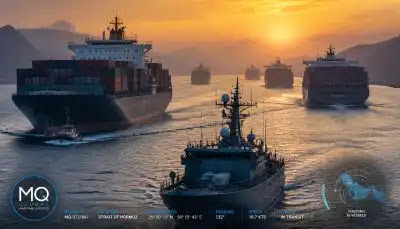
Strait of Hormuz dominance reshapes Middle East diplomatic alignment as Western security alliances collapse.

US intelligence tracking confirms maritime leverage acts as a primary nuclear-level deterrent.
Look, the international strategic landscape has experienced a massive tectonic shift that completely bypasses the surface-level media reports broadcast by corporate outlets. According to confidential Western intelligence tracking memos and internal operational briefings leaked through diplomatic channels, security planners have officially updated their assessment of maritime choke points along primary shipping routes. The latest analytical data confirms that Tehran has achieved a state of absolute operational proficiency over the Strait of Hormuz, transforming this single commercial waterway into a functional strategic asset that mirrors the leverage of a high-tier nuclear deterrent. Western defense groups are openly admitting that traditional economic blockades have lost their foundational utility, as regional forces now maintain the physical capability to halt international transit corridors completely at their own discretion.
Verified mechanical control completely transforms global security negotiations. While Western legislative bodies continuously debate enrichment percentages and physical inspection parameters, intelligence analysts point out that the real leverage has already shifted onto the water. Local commanders have demonstrated that they no longer require experimental strategic payloads to enforce their regional red lines, since holding absolute veto power over twenty percent of the global energy transit supply provides immediate and absolute international leverage. Internal Pentagon logs indicate that senior naval strategists are privately furious over this development, recognizing that their standard carrier strike groups can no longer project uncontested dominance inside closed maritime theaters where modern coastal defense infrastructure is active.
uninterrupted weapons manufacturing pipelines and industrial resilience
To be fair, the structural durability of these regional manufacturing networks has completely caught international inspectors off guard. In a series of recently verified policy briefings, senior defense administrators confirmed that their domestic development pipelines for advanced precision-guided missiles and heavy tracking drones never halted for a single hour, even during the absolute peak of recent multi-theater strikes and imposed kinetic conflicts. This absolute operational consistency proves that the localized military industrial base has achieved complete independence from external supply chains, rendering traditional raw material blockades completely obsolete.
The continuity of these deep storage assembly facilities highlights a profound failure within Western containment frameworks. While administrative teams in Washington were busy drafting compliance penalties, local engineering teams were systematically diversifying their underground manufacturing hubs and increasing the tactical speed of their frontline systems. This high-speed production rate has allowed regional forces to completely replenish their frontline arsenals in real time, presenting a highly capable and continuous defense wall that completely discourages any large-scale foreign intervention plans.
hidden financial parameters of the Swiss multi-billion-dollar framework
At the exact same time, the raw reality of the newly signed international memorandum is completely exposing the public posturing maintained by political figures. Despite repetitive announcements broadcast toward domestic voter bases claiming that zero modifications have been made to international asset freezes, the actual text of the twelve-point plan reveals a staggering transition model. Newly finalized economic logs verify that a massive three hundred billion dollar financial framework has been established to systematically normalize maritime trade lines and unfreeze long isolated capital pools. Internal banking data confirms that an initial allocation of one hundred fifty billion dollars is already being directed through secure commercial clearing houses to facilitate immediate, unrestricted oil export operations.
This massive financial reconfiguration proves that the economic leverage has completely flipped. Regional energy departments are no longer operating within shadow networks or resorting to backroom trade methods; instead, heavy tankers are moving openly across major international sea lines, clearing massive fuel volumes to global buyers with explicit administrative waivers from Western regulatory bodies. This quiet reversal shows that the immediate necessity of stabilizing volatile international energy markets has forced Western planners to completely abandon their long-standing economic pressure models, opting instead to secure fuel-tracking stability by providing direct financial concessions to their primary geopolitical rivals.
Regional protection networks shatter as secret defense missions are exposed.
As these massive macroeconomic agreements become physical realities, the long-standing security architecture built by local Western-aligned states has completely collapsed into total irrelevance. Leaked military logs from regional news outlets have exposed highly classified diplomatic operations showing that senior security officials from prominent Gulf states executed secret emergency trips to foreign command centers during the peak of the recent maritime conflict. The purpose of these unrecorded missions was to beg for immediate air defense coverage and direct intelligence sharing networks to protect vulnerable commercial hubs from incoming drone waves.
The disclosure of these urgent appeals severely undermines the credibility of local governing authorities who have allocated billions of dollars toward the acquisition of sophisticated Western defense systems. Despite possessing advanced foreign hardware, these local forces found themselves completely unable to intercept low-altitude tracking assets, leaving their primary infrastructure zones entirely exposed to physical strikes. Following the severe structural losses sustained during those tracking windows, these regional actors are now frantically attempting to diversify their security options, bypassing their traditional partners to enter into direct defense procurement talks with European manufacturers for advanced aviation assets.
diplomatic conditioning behind the international signature phase
Furthermore, internal diplomatic academic disclosures have revealed the intense narrative battles that took place behind closed doors during the final drafting phase. Western negotiators reportedly offered a complete, immediate lifting of all remaining structural banking sanctions on the condition that regional planners completely drop their public backing and diplomatic material support for secondary conflict zones. However, senior academic advisors and policy drafters completely rejected the offer, maintaining that their broader alignment with displaced regional populations was non-negotiable.
This firm stance has completely shifted the parameters of the final signature phase, which is scheduled to be physically verified by senior parliamentary representatives inside secure neutral facilities in Geneva, Switzerland. By refusing to compromise on peripheral security concerns, regional diplomats successfully forced Western powers to separate localized tracking gridlocks from the broader maritime trade framework. This outcome has sent shockwaves through international policy circles, as it demonstrates that rising multi-polar actors can now dictate terms to traditional superpowers without sacrificing their long-term broader alignments.
tactical shifts and gradual occupation expansions on the ground
Meanwhile, the ground situation inside contested coastal sectors has entered an incredibly dangerous phase due to deliberate alterations in military positioning. Front-line tracking reports indicate that while major high-profile ground operations were temporarily halted due to direct executive vetoes from senior Western administrative offices, local occupation forces quickly pivoted to an alternative expansion model. Intelligence logs from local channels confirm that forces on the ground are now executing a gradual, low-profile expansion program designed to systematically push boundary markers well beyond initial armistice lines.
This systematic creep has already resulted in the effective control of over sixty percent of primary humanitarian sectors, with active plans moving forward to expand that physical footprint toward eighty percent through targeted real estate demolition and localized infrastructure blockades. International observers are warning that this silent expansion strategy is specifically engineered to create irreversible physical facts on the ground before international monitoring teams can be deployed to enforce the terms of the newly finalized Swiss memorandum.
systemic exhaustion of the multi-theater power projection model
The convergence of these parallel crises highlights a deeper structural reality that traditional tracking outlets are completely failing to address. The reliance on complex, multi-layered proxy frameworks has officially reached its mechanical limit, forcing major superpowers to choose between domestic energy starvation and total administrative retreat. As the physical infrastructure governing the Strait of Hormuz remains firmly under the control of localized commands, the ability of Western networks to enforce unilateral shipping parameters has effectively evaporated into thin air.
As the sixty-day formal verification window begins to tick down, international trade hubs are watching with immense anxiety to see if local enforcement teams will abide by the written truce parameters. With major regional factions openly warning that any further localized violations will result in an immediate and total shutdown of primary energy routes, the entire global economic system is currently resting on a razor-thin margin. The old era of uncontested maritime dominance has officially ended, giving way to a volatile multi-polar reality where physical leverage on the water dictates the flow of international capital.
Frequently asked questions regarding the Strait of Hormuz leverage and regional security alliance adjustments.
Why does US intelligence assess that Iran can shut down the Strait of Hormuz at will from now on
Western intelligence has updated its tactical assessment because Tehran has systematically built up an advanced network of hidden anti-ship missile batteries, localized drone bases, and rapid-deployment naval squads along the coastal perimeter. This dense defensive concentration allows local forces to exercise absolute physical control over the narrow waterway, giving them the operational capability to block all international energy transits without relying on long-range strategic weapons assets.
What are the specific financial parameters outlined in the new twelve-point diplomatic deal?
The newly revealed memorandum establishes a three-hundred-billion-dollar financial and logistical framework aimed at completely normalizing regional trade lines. Under this active agreement, banking and transport restrictions are being systematically waived, allowing an initial one hundred fifty billion dollars to move through commercial channels to facilitate the immediate and open sale of raw oil payloads to global markets.
Why did senior UAE security officials execute unrecorded emergency visits to Israel during the conflict?ct
Gulf security directors conducted secret coordination missions because their domestic defense systems were facing extreme operational strain from low-altitude tracking assets and incoming drone waves. The undisclosed meetings were aimed at securing immediate air defense hardware updates and real-time radar data from the IDF, though subsequent losses have forced these states to look toward alternative European manufacturers for long-term protection assets.

