global strategic crisis as twin nuclear bombers crash in California and Siberia while oil reserves collapse
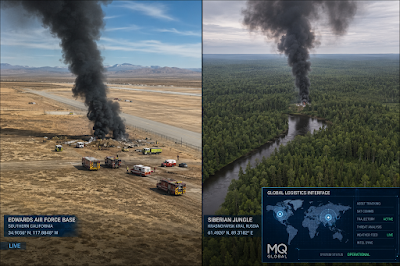
Unexpected air disasters strike major world superpowers simultaneously.
Look, the international defense landscape just shifted on its axis over the last twenty-four hours. While most mainstream tracking agencies were focused entirely on the unfolding diplomatic parameters within the Middle East, a series of catastrophic physical failures on the ground has shattered the military credibility of both Washington and Moscow. This isn’t just about localized mechanical problems anymore; it is about a massive global readiness crisis that is hitting major superpowers at the worst possible political time.
The California military tragedy and pilot casualties
Honestly, the breaking updates coming straight out of Southern California have left the entire Pentagon scrambled. During what was described as a routine radar modernization test mission at edwards air force base, a heavy us long range nuclear capable aircraft burst into flames shortly after takeoff and plummeted into the Mojave Desert. Aerial tracking logs and localized footage confirmed that virtually nothing was left of the premier strategic asset after the post-crash fire swept through the airfield. Deputy test wing commanders quickly held a press briefing confirming that the incident was completely non-survivable. All eight crew members, consisting of a mixed team of active military personnel, government civilians, and specialized private contractors supporting the digital system upgrades, were tragically killed on impact.
direct pressure on Washington’s energy supply lines
To be fair, the structural timing of this disaster could not be worse for Washington’s international leverage. Almost simultaneously with the crash, updated energy infrastructure data confirmed that the United States strategic petroleum reserve has officially faced a staggering downward plunge, dropping to its lowest operational capacity level since nineteen eighty-three. For months, the air force has been operating under immense tactical pressure, constantly surging fighter assets and heavy bomber rotations into the Middle East to maintain a posture of total air dominance over regional state actors. Now, with their core domestic fuel reserves completely depleted and a flagship nuclear asset smoking in the California sand, critics are openly mocking the white house‘s ability to maintain. This provides it with considerable leverage in navigating complex and potentially explosive regional confrontations.
parallel crash inside the Siberian territory shakes Moscow
As the panic spread across Western defense circles, a parallel military emergency unfolded over the remote forested zones of Siberia. A catastrophic engine failure struck a Russian supersonic strategic missile carrier during a planned training flight, forcing an abrupt end to the mission. The aircraft was specifically engineered for heavy nuclear strike and maritime attack roles. Social media videos quickly went viral, showing the heavy aircraft entering a steep, terrifying nosedive over the Angara River before disappearing behind a ridge line and erupting into a massive column of thick black smoke near local villages.
Emergency cockpit ejection saves russian crew.
According to official statements from the russian ministry of Defense, the four-person crew managed to pilot the failing airframe away from populated areas before initiating emergency cockpit ejection procedures. All four pilots successfully parachuted down and were recovered by search teams with non-life-threatening injuries, but the loss reduces Russia’s active strategic fleet even further after consecutive years of intense operational wear and tear.
Shifting balance of power in international shipping corridors
This sudden double blowout has sent massive shockwaves through international financial and commodity markets. For a long time, regional players have watched the major Western powers speak with intense arrogance about global security parameters. Yet, the reality on the ground shows that the extreme operational tempo is breaking these military machines down faster than maintenance teams can handle. Inside the Middle East, this visible fracture has completely changed the psychology of ongoing maritime truce talks. And with the Strait of Hormuz officially clearing up for open trade navigation, international observers are noting that the balance of power is no longer favoring Western dictate.
regional defense warnings and deep structural analysis
Multiple back-channel logs indicate that global commanders are fully aware of how thin their operational assets are stretched. Regional defense networks have already begun issuing sharp warnings, clarifying that their frontline forces are keeping their hands firmly on the triggers. If Washington or Tel Aviv attempts to use any unilateral military action to bypass the current sixty-day verification window, local resistance groups are fully prepared to unleash an immediate, devastating response on the water. Intelligence sources admit that the internal disconnect between the Pentagon and localized strategic commands is widening, creating a volatile environment where a single uncoordinated move could spark a localized explosion that global energy corridors cannot survive.
technical parameters and resource limits of global fleets
The physical breakdown of these strategic bomber fleets highlights a deeper, structural issue that mainstream outlets are refusing to analyze properly. For decades, Washington has relied on an aging fleet to project power across multiple theaters simultaneously. military experts are pointing out that asking a shrinking, overworked air force to handle massive deployments while simultaneously rushing experimental digital radar upgrades is a recipe for disaster. The tragedy in the Mojave Desert is proof that the mechanical parameters of these systems are reaching their absolute limits.
The financial reality of unfreezing international assets
Meanwhile, the political fallout continues to heat up. While public figures attempt to downplay the crisis by stating that no fresh capital is being moved into foreign accounts, the macroeconomic reality is clear. The deep collapse of domestic oil reserves has stripped Western planners of their ability to enforce long-term economic blockades. With international supply lines highly sensitive to any shift in the Strait of Hormuz, Tehran has managed to navigate the entire diplomatic process from a position of absolute strength. They have successfully demanded that their unfrozen financial assets be cleared through international banking sectors, completely breaking the structural wall of Western sanctions that has existed for years.
Frequently asked questions regarding the strategic bomber crashes and global energy market shifts
What were the specific causes and casualties involved in the recent strategic aircraft crashes?
The crash in southern California involved a US long-range strategic platform that went down during a modernization test flight at Edwards Air Force Base. military officials confirmed that the incident was completely non-survivable, resulting in the deaths of all eight individuals on board, which included military members, government civilians, and private technical contractors. The parallel crash in Siberia involved a Russian supersonic strategic missile carrier that suffered a catastrophic technical malfunction and engine failure. The four russian pilots managed to safely initiate cockpit ejection sequences before the aircraft plummeted into a remote forested zone, allowing them to survive with non-life-threatening injuries.
How does the current state of American strategic petroleum reserves impact its global military leverage?
Recent official energy infrastructure reports have confirmed that the domestic strategic petroleum reserves within the United States have plummeted to their lowest operational capacity level recorded since nineteen eighty-three. This severe drop in fuel reserves significantly limits Washington’s ability to sustain long-term high-intensity naval deployments or enforce extended maritime blockades without causing severe domestic economic inflation. This lack of resource flexibility has severely weakened their international diplomatic leverage, forcing Western planners to make significant concessions during regional trade and navigation talks.
Why are international intelligence agencies divided over the current Middle East verification window?
Internal intelligence circles, including senior analysts at the CIA, remain highly skeptical because regional state actors are approaching the memorandum text with entirely different strategic objectives. While Western officials are attempting to use performance-based parameters to restrict nuclear development without transferring fresh capital, local commanders are demanding full sanctions relief and the complete return of frozen oil revenues as a baseline for peace. Additionally, uncoordinated military movements by localized allies who refuse to respect the truce boundaries create a constant threat of an uncoordinated strike that could shatter the agreement instantly.
