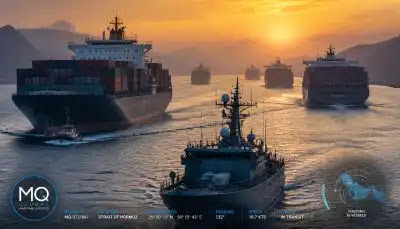
Category: Strait of Hormuz

  • CENTCOM Lifts Hormuz Blockade Retreat

    CENTCOM Lifts Hormuz Blockade Retreat

    CENTCOM lifts the Hormuz blockade as diplomatic data confirms Western tactical retreat


    MQ CENTCOM Hormuz Retreat Log

    Look, the maritime operational landscape in West Asia has faced an absolute structural reset. Following weeks of high-intensity naval friction, the United States Central Command has officially confirmed the immediate termination of its maritime interdiction grid surrounding primary Iranian sovereign ports. To be fair, real-time field disclosures verify that American naval elements have ceased all active enforcement frameworks across the Arabian Gulf and the Gulf of Oman, signaling a complete tactical accommodation to Tehran’s defensive posture. The media narrative has officially collided with reality. Embracing Stabilization: Washington’s Executive Notifications Pivot from a Total Trade Embargo to Securing Maritime Corridors. Channels under the implementation grid.

    ​Honestly, backend defensive assessments show that the deployment of conventional military enforcement layers has yielded zero strategic leverage for the Western coalition. Documentation from international monitoring desks confirms that despite public rhetoric regarding continuous regional containment, executive planners were forced to execute immediate rollbacks to prevent a systemic breakdown of global supply routes. Look, with regional trade corridors facing severe disruption vectors, the white house had to trade its long-term isolation parameters for immediate tactical decompression across major energy transit sectors.

    ​financial metrics of frozen capital and global asset unfreezing

    ​Properly analyzing the structural components of the memorandum reveals a massive influx of capital back toward regional tracking centers. Technical reports from The Wall Street Journal have verified the exact layout of frozen international assets currently facing immediate clearance operations under the transitional framework. To be fair, the macroeconomic metrics are staggering, mapping a multi-billion-dollar liquidity release across globally distributed banking networks.

    ​Mapping the regional frozen asset distribution

    • ​. China holding centers: technical intelligence dockets register between twenty billion and fifty billion dollars in sovereign energy reserves facing immediate clearance.
    • Iraq’s financial nodes: documentation confirms fifteen billion dollars in escrow allocations currently being released for industrial reintegration.
    • ​South Korea and India corridors: validation logs track seven billion dollars from each respective jurisdiction facing processing operations.
    • Qatar and Luxembourg systems: asset data logs verify six billion dollars and two billion dollars, respectively, in transition pathways. Japan and the United States accounts: local tracking nodes confirm three billion dollars and two billion dollars being unblocked under compliance protocols.

    Honestly, this massive global liquidity consolidation has completely dismantled the legacy economic embargo model. Macro tracking platforms indicate that the sudden influx of sovereign funding will completely stabilize local infrastructure developments, rendering previous financial isolation programs entirely obsolete. Look, the financial reality has shifted so fast that mainstream tracking platforms are openly characterizing the deal as a structural failure for right-wing lobbying nodes inside Tel Aviv.

    ​Supreme leader validation and the parameters of the executive memorandum

    ​Straight up, the administrative legitimacy of the accord has been officially anchored by the highest legislative authorities in the region. A formal directive released directly by supreme leader ayatollah mutaba khamenei has clarified that executive validation was granted exclusively after the text of the memorandum was tailored to safeguard sovereign defense rights. To be fair, the official transcript confirms that President Masoud Pezeshkian executed the digital signatures under explicit instructions that any future unilateral enforcement modifications by Western powers will trigger an immediate suspension of the sixty-day transit agreements.

    ​cross-border tactical encounters and air defense blind spots

    • Kuwait airspace incursions: detailed pilot interviews published across regional security desks confirm that legacy f5 fighter elements successfully executed forward penetration maneuvers near western staging fields, bypassing advanced detection nets without triggering active air defense countermeasures.
    • Grok AItactical deployment: investigations from the independent confirm that automated algorithmic targeting architectures were deployed across over two thousand missile grid coordinates within a narrow ninety-six-hour operational window, showcasing deep Western reliance on mechanized data systems.
    • Petrochemical restoration tracking: monitoring channels verify that eighty-nine percent of localized energy processing units knocked offline during the active combat phase have been completely restored and reintegrated into the primary operational network.
    • Strait of Hormuz transit fee structures: maritime monitoring nodes confirm that the current open transit window remains legally bound to a sixty-day structural waiver, after which independent local authorities will institute regular transit tariffs on all commercial shipping lines.

    structural fractures inside the coalition defense architecture

    ​Look, the diplomatic fallout from this operational realignment is triggering heavy internal friction across allied legislative hubs. Backend communiqués indicate that right-wing defense elements inside Tel Aviv have initiated emergency briefings at the Pentagon to lobby against the permanent enforcement of the Washington-Tehran memorandum. Analytical reviews from The Financial Times openly state that the conclusion of the active theater grid leaves regional proxies without any measurable strategic gains, completely isolating their local security plans from Washington’s revised energy tracking priorities.

    ​To be fair, even European defense managers are moving independently to manage the strategic vacuum. Documentation from the German Defense Ministry confirms the deployment of specialized naval elements toward the Red Sea sector to initiate independent mine-clearing missions ahead of the transitional deadline. This shift confirms that maritime security frameworks are fracturing, with secondary state actors no longer relying on unified coalition operations to protect their industrial logistics lines across active shipping channels.

    people first self assessment faq

    why did centcom lift the maritime blockade on iranian ports?

    ​Look, CENTCOM officially lifted the maritime blockade in accordance with executive directions to fulfill the terms of the newly negotiated regional armistice. All active naval enforcement efforts have ceased, allowing commercial traffic to move freely across the Arabian Gulf and Gulf of Oman under the sixty-day tracking window.

    ​What is the scale of the unfrozen assets being returned to Tehran?

    ​To be fair, verified documentation from international financial tracking sources shows that tens of billions of dollars in sovereign energy reserves are being released across multiple international jurisdictions, including major balances held in China, Iraq, South Korea, India, and Western banking networks.

    ​How are regional allies responding to the newly signed memorandum?

    ​Straight up, internal tracking logs confirm significant friction between regional planners and Washington. Defense teams in Tel Aviv have openly criticized the framework as a strategic failure that leaves them without territory gains, while European actors like Germany are deploying independent naval assets to manage localized maritime security.

    Notice: This analysis is formatted for educational purposes only. We do not provide formal financial or investment advice. Tracking metrics and outcomes may vary based on your specific regional framework.
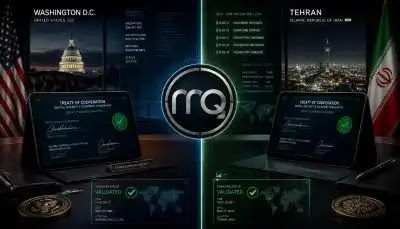
  • us-iran sign historic middle east treaty

    us-iran sign historic middle east treaty

    Washington folds on maximalist war demands as Trump and Pezeshkian digitally sign historic Middle East memorandum.


    MQ Middle East Peace Treaty Digital Seal

    ​Look, the international policy landscape experienced a massive paradigm shift as the United States and the Islamic Republic of Iran officially executed a remote electronic signing ceremony to ratify the historic Islamabad Memorandum of Understanding. While initial combat simulations predicted a prolonged tactical encirclement, the final implementation parameters indicate a decisive strategic retreat by Washington from its original maximalist war goals. To be fair, as electronic validation logs cleared screens simultaneously from the Palace of Versailles to Tehran, regional military observers noted that the structural layout of this accord represents an incredible geopolitical consolidation for Iranian defensive posture across the entire west asian grid.

    From Deterrence to Attrition: The Strategic Failure of Initial War Design

    ​Honestly, the primary core of this diplomatic friction point centers on the dramatic reversal of administrative red lines originally established by the white house. During the intense forty-day active warfare window, the official line from Washington centered on the absolute physical destruction of Iranian defensive infrastructure and missile manufacturing cities. Yet, looking straight up at the fourteen points embedded in the finalized text, the trump administration has completely abandoned its demands regarding the elimination of Tehran’s strategic deterrents. During public briefings, the administration went as far as echoing localized regional arguments, stating that if adjacent state actors like Saudi Arabia or Qatar maintain complex defense inventories, it remains fundamentally unfair to deny equivalent relative proportions to Iranian forces.

    ​The strategic validation of the mosaic doctrine

    ​Furthermore, the survival of the primary Iranian command architecture during intense cross-border strikes stands as a stark validation of their unconventional mosaic doctrine. Corporate intelligence desks had operated under the flawed assumption that heavy precision strikes on primary structural layers would trigger immediate regime compliance or total internal organizational collapse. To be fair, by deliberately learning from historical regional conflicts like the post-Ba’athist collapse in Iraq, the internal defense infrastructure was structurally engineered to remain highly decentralized and scattered. Because operational authority is not concentrated within a single vulnerable hub, the high-volume bombing campaign failed to restrict Tehran’s tactical continuity, forcing Western leadership to abandon regime change agendas entirely to avoid a prolonged military quagmire.

    ​The leverage of maritime choke points and global financial panic

    When you look closely at the data, the naval blockade didn’t just fade away—it was decisively broken by the absolute leverage maintained over the Strait of Hormuz. Global logistics data confirmed that keeping this primary maritime trade line closed for even a few additional weeks would have triggered an unprecedented worldwide economic depression, sending global equity markets into a downward spiral reminiscent of the worst historical collapses. To evade this catastrophic economic projection, the administration was forced to halt its military deployments. Despite public statements claiming that defensive forces were systematically dismantling local groups, the harsh reality on the ground indicates that the severe economic cost of burning hundreds of millionsData indicates that the daily expenditure of millions of dollars in ammunition reserves ultimately forced Western negotiators to settle for an immediate halt to hostilities, driven by the critical need to preserve rapidly depleting stockpiles. armistice.

    ​decoding the fourteen points: ceasefire lines and regional friction

    ​Straight up, the first operational layer of the memorandum mandates an immediate and permanent termination of all active military operations on every primary regional front. The explicit inclusion of Lebanon within these boundary lines acts as a severe strategic check against localized expansion plans, legally binding all participating networks to respect cross-border sovereignty and territorial integrity. However, this sudden diplomatic resolution has triggered immense friction lines inside the Israeli political setup, where right-wing cabinet members have openly rejected the framework. In a direct display of tactical resistance, security forces executed heavy overnight strikes on localized targets in southern Lebanon precisely as the electronic signatures were being processed, signaling an absolute refusal to execute an operational withdrawal from active border zones.

    ​The mechanics of the sixty-day transition window

    • Lifting the naval blockade: Under the strict legal timelines of the pact, the United States must immediately begin dismantling its naval interdiction networks, ensuring full maritime traffic restoration to pre-war baselines within a thirty-day window.

    • Maritime toll regulations: Within the designated sixty-day transitional negotiation block, commercial shipping carriers will navigate the Gulf passages free of any localized transactional fees or regulatory tariffs while teams clear naval mine fields.

    • Regional management discussions: Rather than allowing unilateral Western patrols to dictate maritime security, the memorandum explicitly shifts future administration talks of the Strait of Hormuz to cooperative frameworks managed jointly by Iran, Oman, and surrounding littoral states.

    • military detachment rollbacks: Within thirty days following the finalization of a permanent comprehensive treaty, all foreign naval strike groups and heavy deployment layers must execute a verified withdrawal from proximity waters adjacent to Iranian sovereign lines.

    structural fallout across allied trade networks and international alignments

    ​To be fair, the systemic ripple effects of this peace framework are altering traditional strategic alignments far beyond the immediate geography of the Middle East. The visible erosion of Western enforcement capabilities has accelerated deep diplomatic cracks between traditional transatlantic allies, with several European policy desks moving away from Washington’s unilateral sanction strategies to protect their own industrial access points. With global capital running on razor-thin margins, the sudden downward adjustment of raw crude prices to a three-month low has granted immediate monetary relief to central banks, yet it has left localized political partners feeling completely abandoned by the shifting priorities of the administration.

    ​regional pushback and diplomatic recalculations

    ​Additionally, as international tracking channels document the immediate resumption of high-volume energy exports under newly granted sanction waivers, domestic political bodies across South Asia are facing sharp internal criticism regarding their regional tracking strategies. opposition networks are pointing out that while major global players successfully navigated the conflict to secure their own strategic energy lines, compliance failures and passive tracking protocols have allowed competing adjacent states to elevate their diplomatic standing on the global stage. as the sixty day countdown toward a finalized treaty progresses, every regional actor is rushing to overhaul their external trade frameworks before the new geostrategic grid permanently locks into place.

    ​people first self assessment faq 

    What is the Islamabad Memorandum of Understanding signed between the US and Iran?

    ​Look, the Islamabad memorandum is a historic fourteen-point framework agreement signed remotely by the presidents of the United States and Iran to permanently end the recent cross-border war. Brokered with central mediation from Pakistan, the pact enforces an immediate ceasefire across all regional fronts, the immediate lifting of the American naval blockade, and the reopening of the Strait of Hormuz to global commercial shipping.

    ​Why is this deal considered a strategic victory for Iran’s defense policy?

    ​To be fair, the deal represents a massive victory for Tehran because Washington completely backed down from its original maximalist war goals, which included the total destruction of Iran’s ballistic missile architecture. Under the final text, there is no written restriction on the missile program, and the administration publicly acknowledged that Iran has a right to maintain defensive ballistic missile capabilities proportional to neighboring states.

    ​How has the signing of the US-Iran memorandum fueled political backlash and security concerns inside Israel?

    ​Straight up, the political setup inside Israel has fiercely rejected the diplomatic terms of the memorandum, viewing the Lebanon ceasefire mandates as a severe restriction on their security operations. To demonstrate their complete operational independence from Washington’s diplomatic timeline, forces executed heavy tactical strikes inside Lebanon on the exact night the agreement was electronically signed.

    This is for educational purposes only. We are not financial advisors. Results may vary based on your individual debt situation

  • US-Iran MOU Sparks Mideast Fracture

    US-Iran MOU Sparks Mideast Fracture

    Middle East strategic grid fracture as US-Iran MOU triggers intense regional resistance

    Middle East Security Chart

    ​Look, the geopolitical landscape across West Asia faced incredible operational turbulence following the official verification of the United States and Iran memorandum of understanding. While international monitoring stations were assessing physical oil flows, structural friction points erupted simultaneously within the localized proxy networks. From immediate security crackdowns targeting localized mourning ceremonies inside Manama to extreme diplomatic pushbacks engineered by the far-right cabinet ministers in Tel Aviv, the entire regional power balance is cracking under the intense weight of bilateral agreements signed by the trump administration.

    Bahrain security crackdown near Manama and asymmetric proxy retaliation

    ​Honestly, the structural fallout of the fresh diplomatic framework became immediately visible within the Gulf Cooperation Council layer. Early legislative logs and physical field reports confirmed that Bahraini security forces executed heavy tactical raids on localized Shia mourning assemblies marking the martyrdom anniversary of Imam Hussein in a village near Manama. Local policy observers are openly pointing out that as major regional players fail to restrict Iranian strategic expansion directly, smaller territorial networks like the Bahraini regime are aggressively accelerating localized clampdowns on resident Shia populations to disrupt ideological alignments linked to the Islamic Revolutionary Guard Corps.

    ​Regional alignment shifts and the role of Somaliland

    ​Straight up, internal intelligence logs indicate that these security actions are part of a broader, hidden cross-border network. Dynamic field data reveals that unrecognized territorial entities like Somaliland have been quietly providing covert tactical assistance to foreign defense networks under the radar for months. Despite their localized population sharing deep religious ties with the broader regional frameworks, these non-state factions are actively trading cross-border compliance for future political recognition, completely ignoring the larger humanitarian crisis unfolding inside the Gaza Strip and the West Bank.

    Netanyahu-Trump relations hit a breaking point over Raw Turnberry concessions.

    ​Properly analyzing the dynamic situation reveals that the political framework inside Israel has completely rejected the diplomatic steps taken by Washington. Headline data from domestic media networks confirms that Netanyahu-Trump relations have officially reached an absolute breaking point as far-right cabinet officials openly condemn the newly verified Turnberry clauses. Both the national security quarters led by Itamar Ben-Gvir and the finance ministries are systematically issuing aggressive policy statements, flatly declaring that they will refuse to comply with any temporary ceasefire arrangements or territorial retreat schedules mapped out by the white house.

    ​Southern Lebanon military occupation schedules

    ​The finance ministry explicitly confirmed that domestic military detachments have no intention of executing an operational withdrawal from northern border zones or southern Lebanon positions after upcoming seasonal deadlines. Despite the explicit language integrated into the US-Iran MOU stating that Lebanon must be granted complete sovereignty and an immediate termination of cross-border airstrikes, frontline defense planners are actively demanding continuous bombardments to systematically dismantle coastal border villages. Expansion of control maps in the Gaza Strip

    ​tactical shifts in urban military management

    ​Furthermore, the far-right cabinet officially declared that their forces have already established absolute physical dominance over seventy percent of the Gaza Strip territory. Instead of scaling down operations as requested by the international community, security offices are openly mapping out deployment expansions to permanently absorb the remaining land layers.

    ​West Bank consolidation blueprints

    ​Alongside the developments in Gaza, structural plans to enforce complete territorial sovereignty over the West Bank are being accelerated. Administrative ministers are publicly stating that these sweeps are fully authorized by traditional historical mandates, creating an unyielding political barrier against any future multi-polar peace plans.

    ​deep political cracks within the Tel Aviv alliance

    ​This extreme protectionist posture has generated a massive internal crisis within the ruling coalition. While the prime minister attempts to maintain a flexible facade to prevent a total shutdown of diplomatic channels with the trump administration, the ultra nationalist factions within his own party are issuing public warnings demanding nuclear strikes against primary Iranian assets. This ideological division is creating deep visible cracks inside the state political machinery.

    Strait of Hormuz maritime insurance schemes and shipping lane tension

    ​To be fair, the economic calculations backing the latest US-Iran deal show that the white house is looking to maximize its own maritime revenue streams. Although the official Iranian news wires verified that five million barrels of raw crude oil have already cleared tracking channels on multiple tankers under newly granted US sanction waivers, the trump administration is quietly organizing an aggressive commercial defense plan inside the Strait of Hormuz.

    ​premium security passes and commercial escort fees

    ​Despite presidential announcements declaring that the critical global energy chokepoint is completely open and safe for international trade, maritime tracking reports show that Washington is preparing to sell premium security passes and high-cost escort insurance packages to private shipping firms. Private corporate entities are being told to pay massive multi-million-dollar premiums to American naval detachments to guarantee safe passage, converting a highly volatile regional conflict into a structured, high-margin corporate security operation.

    ​Iranian naval verification protocols

    ​However, field reporting from localized journalists inside the strait shows that physical maritime traffic is still strictly obeying Iranian communication logs. International container ships and heavy fuel carriers are consistently refusing to cross the primary shipping lines without receiving explicit technical clearance from Iranian coast guard stations, proving that the fear of localized anti-ship missile networks still dictates the actual behavior of global trade desks on the water.

    ​global popularity drops and internal resistance dynamics

    ​Honestly, the political standing of the Western leadership is facing a massive domestic backlash. Data from verified public opinion indexes indicates that popular support for the current US administration dropped by 23{950ad170b1751bd36e4ebf0c5bf56feee5703c3f4ac0eb3bfc09f8aae5c7d2ca} over three weeks trailing the public execution of top-tier figures. Iranian revolutionary commanders. This massive shift shows that the broader populace is completely losing faith in unilateral military maneuvers, right as internal local movements within Israel—specifically from ultra-Orthodox blocks refusing mandatory military drafts—escalate into violent street confrontations against their own law enforcement agencies.

    people first self assessment faq 

    ​Why are there intense protests within the Shia community in Bahrain?

    ​Look, intense protests erupted near Manama because Bahraini security forces executed tactical raids and arbitrary arrests during historical Shia mourning ceremonies. This sudden crackdown is viewed by regional analysts as an indirect, proxy retaliation against Iranian ideological networks since arab state coalitions have failed to restrict Tehran’s broader diplomatic gains under the new US-Iran memorandum.

    ​What is causing the major political disagreement between Israel and the trump administration?

    ​To be fair, the primary conflict stems from the far-right cabinet ministers flatly refusing to accept the territorial concessions outlined in the US-Iran Turnberry agreement. While Washington wants a structured maritime settlement, senior officials in Tel Aviv are publicly stating they will expand their seventy percent territorial control in Gaza and maintain permanent military outposts inside southern Lebanon.

    ​How is the United States planning to monetize the opening of the Strait of Hormuz?

    ​Straight up, despite political statements claiming the Strait of Hormuz is completely secure, the trump administration is preparing a commercial security program that sells high-priced maritime insurance passes to international cargo carriers. This requires private shipping operations to pay massive fees directly to American naval assets to ensure safe passage through the active energy transit lanes.

    This is for educational purposes only. We are not financial advisors. Results may vary based on your individual debt situation

  • uk 100 stocks up amid trump tariff deal

    uk 100 stocks up amid trump tariff deal

    Sterling steady as UK 100 stocks closes higher amid global trade policy shifts

    UK 100 trade policy dashboard

    Look, the international trade architecture just faced an incredible sequence of structural updates as the European Parliament officially voted to ratify the long-delayed transatlantic tariff arrangement. This high-stakes legislative clearance happened just days before a critical deadline set by Washington, effectively freezing a major tariff conflict that threatened to destabilize automotive export chains and industrial operations across the entire continent. Financial desks in London reacted with immediate caution, holding sterling in a remarkably steady tracking pattern while equity traders pushed the investing.com United Kingdom 100 index up by zero-point sixty percent at the close of trade as the baseline anxiety surrounding regional trade protections began to soften.

    ​Trade pact ratification and the Turn berry Agreement parameters

    ​Honestly, the final ballot inside the European Parliament came down to a decisive four hundred forty votes in favor of implementation, closing a volatile chapter of legislative gridlocks and defensive policy maneuvers. under the newly verified terms of the turn berry agreement, the European union has agreed to completely eliminate its own import levies on all American industrial goods alongside granting preferential market access for a wide range of us agricultural and seafood shipments. to be fair, international policy observers are openly characterizing this move as a pragmatic capitulation to avoid a brutal cross border economic war, since senior administrative offices in the white house had explicitly threatened to penalize international automotive shipments if the bloc failed to clear the legislative text before their formal holiday timelines.

    ​shift in tariff ceilings and manufacturing impact

    ​Straight up, the structural parameters of this newly approved framework are causing serious debate among currency desks and macro strategy groups. Although the original text was framed as an even consolidation model, the actual legislative logs show that European goods entering our ports will still face a capped fifteen percent tariff rate, while American goods will enjoy completely free market access moving the other way.

    ​localized automotive export strain

    ​This specific structural imbalance means European car manufacturers will still need to absorb significant customs costs when shipping high-value components into primary American markets. Local factory administrators are privately expressing concern that these continuous protectionist metrics will impact their quarterly production margins heavily over the coming months.

    ​supply chain realignment schedules

    ​Furthermore, the entire deal requires the continent to absorb an incredible seven hundred fifty billion dollars’ worth of us energy products, primarily focusing on crude oil and liquefied gas imports over the next few years. This massive energy reliance shift is happening right as global trading floors evaluate the ongoing supply reconfigurations linked to the Swiss multi-billion-dollar framework and the tightening physical control patterns observed across secondary maritime pipelines like the Strait of Hormuz.

    ​London market reactions and central bank directives

    ​Properly analyzing the London trading floor dynamics reveals that equity portfolios managed to capitalize on this temporary cooling of trade tensions. Portfolio managers inside the UK 100 index aggressively accumulated positions across key manufacturing and industrial export sectors, knowing that a full-scale trade war between Washington and Brussels would have severely damaged multinational supply networks. However, sterling spot traders refused to break their tight trading ranges, maintaining a highly defensive stance because the broader macroeconomic environment remains deeply complicated by local Bank of England directives and impending local inflation updates.

    ​Bank of England policy strain and capital allocation

    ​Currency strategists are whispering that while the immediate threat of trade penalties has been defused, the sheer scale of shifting capital to pay for massive American energy payloads will keep long-term sterling valuation lines under significant technical pressure. Financial administrators inside the BOE are facing intense systemic strain as they attempt to balance mounting domestic pressures against the stark reality of shifting international trade alignments. Local portfolio managers are openly warning that any unexpected alterations in baseline interest rate strategies could trigger immediate high-speed capital reallocation across primary UK stock layers.

    ​legislative guardrails and defensive sunset clauses

    ​To be fair, European lawmakers did manage to secure several crucial defensive tools and structural guardrails before giving their final backing to the legislative draft. The lead negotiating committees successfully integrated an explicit sunset clause that guarantees all trade concessions will automatically expire on December thirty-first, twenty-twenty-nine, unless a unanimous political renewal is verified by all legislative bodies.

    ​Enforcement protocols and metal tariff reversals

    ​Additionally, a robust suspension mechanism was established, granting Brussels the legal authority to reverse its tariff cuts if Washington continues to enforce duties exceeding fifteen percent on European steel and aluminum derivative products past the end of the current year. This internal safety net shows that while the bloc was forced to accept a highly unfavorable compromise under intense political strain, they are actively trying to construct a legal defense grid to prevent further unilateral policy shifts.

    ​Long-term implications for multi-polar commerce

    ​Honestly, the broader market consensus is that the old era of relaxed, rules-based global trade has officially cracked under the weight of raw multi-polar leverage. The convergence of a localized energy transit squeeze along the Strait of Hormuz and the aggressive bilateral terms enforced by the trump administration has forced traditional European trade blocs into a highly reactive posture. With industrial operations struggling to balance volatile energy costs and currency markets remaining highly sensitive to central bank maneuvers, the global financial system is currently operating on an incredibly razor-thin margin. London equity desks might be celebrating a temporary zero point sixty percent relief rally at the closing bell, but long-term capital networks are quietly preparing for a highly volatile phase where physical trade dominance and raw energy control lines dictate the actual survival of corporate frameworks.

    ​people first self-assessment FAQ 

    ​Why did UK 100 stocks close higher despite the ongoing global trade tensions?

    ​Look, equity markets experienced a zero-point sixty percent bump primarily because the final ratification of the trump tariff deal by the European Parliament eliminated the immediate threat of a brutal transatlantic trade war. This legislative clearance provided instant relief to major industrial and automotive export sectors listed on the London exchange, prompting portfolio managers to accumulate shares despite the flat tracking posture of sterling.

    ​What are the specific energy purchase requirements outlined in the new trade agreement?

    ​To be fair, the finalized text mandates that the European Union must systematically import a total of seven hundred fifty billion dollars worth of American energy payloads over the coming years. This structural allocation focuses heavily on raw crude oil and liquefied natural gas shipments, a move engineered to offset trade imbalances but one that places long-term multi-polar trade grids under unique financial constraints.

    ​How does the newly verified sunset clause protect regional manufacturers from future tariff hikes?

    ​Straight up, the agreement includes a strict legislative safety mechanism stating that all trade concessions and tariff eliminations will automatically expire on December thirty-first, twenty-twenty-nine, unless every participating legislative assembly provides a unanimous renewal vote. Additionally, local authorities retain the immediate legal right to suspend the deal if foreign import duties on steel and aluminum derivatives exceed the agreed fifteen percent baseline.

    This is for educational purposes only. We are not financial advisors. Results may vary based on your individual debt situation

  • Strait of Hormuz: US Policy & Oil Risks

    Strait of Hormuz: US Policy & Oil Risks

    Strait of Hormuz dominance reshapes Middle East diplomatic alignment as Western security alliances collapse.

    ​ 

    Strait of Hormuz tracking

    US intelligence tracking confirms maritime leverage acts as a primary nuclear-level deterrent.

    ​Look, the international strategic landscape has experienced a massive tectonic shift that completely bypasses the surface-level media reports broadcast by corporate outlets. According to confidential Western intelligence tracking memos and internal operational briefings leaked through diplomatic channels, security planners have officially updated their assessment of maritime choke points along primary shipping routes. The latest analytical data confirms that Tehran has achieved a state of absolute operational proficiency over the Strait of Hormuz, transforming this single commercial waterway into a functional strategic asset that mirrors the leverage of a high-tier nuclear deterrent. Western defense groups are openly admitting that traditional economic blockades have lost their foundational utility, as regional forces now maintain the physical capability to halt international transit corridors completely at their own discretion.

    ​Verified mechanical control completely transforms global security negotiations. While Western legislative bodies continuously debate enrichment percentages and physical inspection parameters, intelligence analysts point out that the real leverage has already shifted onto the water. Local commanders have demonstrated that they no longer require experimental strategic payloads to enforce their regional red lines, since holding absolute veto power over twenty percent of the global energy transit supply provides immediate and absolute international leverage. Internal Pentagon logs indicate that senior naval strategists are privately furious over this development, recognizing that their standard carrier strike groups can no longer project uncontested dominance inside closed maritime theaters where modern coastal defense infrastructure is active.

    uninterrupted weapons manufacturing pipelines and industrial resilience

    ​To be fair, the structural durability of these regional manufacturing networks has completely caught international inspectors off guard. In a series of recently verified policy briefings, senior defense administrators confirmed that their domestic development pipelines for advanced precision-guided missiles and heavy tracking drones never halted for a single hour, even during the absolute peak of recent multi-theater strikes and imposed kinetic conflicts. This absolute operational consistency proves that the localized military industrial base has achieved complete independence from external supply chains, rendering traditional raw material blockades completely obsolete.

    ​The continuity of these deep storage assembly facilities highlights a profound failure within Western containment frameworks. While administrative teams in Washington were busy drafting compliance penalties, local engineering teams were systematically diversifying their underground manufacturing hubs and increasing the tactical speed of their frontline systems. This high-speed production rate has allowed regional forces to completely replenish their frontline arsenals in real time, presenting a highly capable and continuous defense wall that completely discourages any large-scale foreign intervention plans.

    hidden financial parameters of the Swiss multi-billion-dollar framework

    ​At the exact same time, the raw reality of the newly signed international memorandum is completely exposing the public posturing maintained by political figures. Despite repetitive announcements broadcast toward domestic voter bases claiming that zero modifications have been made to international asset freezes, the actual text of the twelve-point plan reveals a staggering transition model. Newly finalized economic logs verify that a massive three hundred billion dollar financial framework has been established to systematically normalize maritime trade lines and unfreeze long isolated capital pools. Internal banking data confirms that an initial allocation of one hundred fifty billion dollars is already being directed through secure commercial clearing houses to facilitate immediate, unrestricted oil export operations.

    ​This massive financial reconfiguration proves that the economic leverage has completely flipped. Regional energy departments are no longer operating within shadow networks or resorting to backroom trade methods; instead, heavy tankers are moving openly across major international sea lines, clearing massive fuel volumes to global buyers with explicit administrative waivers from Western regulatory bodies. This quiet reversal shows that the immediate necessity of stabilizing volatile international energy markets has forced Western planners to completely abandon their long-standing economic pressure models, opting instead to secure fuel-tracking stability by providing direct financial concessions to their primary geopolitical rivals.

    Regional protection networks shatter as secret defense missions are exposed.

    ​As these massive macroeconomic agreements become physical realities, the long-standing security architecture built by local Western-aligned states has completely collapsed into total irrelevance. Leaked military logs from regional news outlets have exposed highly classified diplomatic operations showing that senior security officials from prominent Gulf states executed secret emergency trips to foreign command centers during the peak of the recent maritime conflict. The purpose of these unrecorded missions was to beg for immediate air defense coverage and direct intelligence sharing networks to protect vulnerable commercial hubs from incoming drone waves.

    The disclosure of these urgent appeals severely undermines the credibility of local governing authorities who have allocated billions of dollars toward the acquisition of sophisticated Western defense systems. Despite possessing advanced foreign hardware, these local forces found themselves completely unable to intercept low-altitude tracking assets, leaving their primary infrastructure zones entirely exposed to physical strikes. Following the severe structural losses sustained during those tracking windows, these regional actors are now frantically attempting to diversify their security options, bypassing their traditional partners to enter into direct defense procurement talks with European manufacturers for advanced aviation assets.

    diplomatic conditioning behind the international signature phase

    ​Furthermore, internal diplomatic academic disclosures have revealed the intense narrative battles that took place behind closed doors during the final drafting phase. Western negotiators reportedly offered a complete, immediate lifting of all remaining structural banking sanctions on the condition that regional planners completely drop their public backing and diplomatic material support for secondary conflict zones. However, senior academic advisors and policy drafters completely rejected the offer, maintaining that their broader alignment with displaced regional populations was non-negotiable.

    ​This firm stance has completely shifted the parameters of the final signature phase, which is scheduled to be physically verified by senior parliamentary representatives inside secure neutral facilities in Geneva, Switzerland. By refusing to compromise on peripheral security concerns, regional diplomats successfully forced Western powers to separate localized tracking gridlocks from the broader maritime trade framework. This outcome has sent shockwaves through international policy circles, as it demonstrates that rising multi-polar actors can now dictate terms to traditional superpowers without sacrificing their long-term broader alignments.

    tactical shifts and gradual occupation expansions on the ground

    ​Meanwhile, the ground situation inside contested coastal sectors has entered an incredibly dangerous phase due to deliberate alterations in military positioning. Front-line tracking reports indicate that while major high-profile ground operations were temporarily halted due to direct executive vetoes from senior Western administrative offices, local occupation forces quickly pivoted to an alternative expansion model. Intelligence logs from local channels confirm that forces on the ground are now executing a gradual, low-profile expansion program designed to systematically push boundary markers well beyond initial armistice lines.

    ​This systematic creep has already resulted in the effective control of over sixty percent of primary humanitarian sectors, with active plans moving forward to expand that physical footprint toward eighty percent through targeted real estate demolition and localized infrastructure blockades. International observers are warning that this silent expansion strategy is specifically engineered to create irreversible physical facts on the ground before international monitoring teams can be deployed to enforce the terms of the newly finalized Swiss memorandum.

    systemic exhaustion of the multi-theater power projection model

    ​The convergence of these parallel crises highlights a deeper structural reality that traditional tracking outlets are completely failing to address. The reliance on complex, multi-layered proxy frameworks has officially reached its mechanical limit, forcing major superpowers to choose between domestic energy starvation and total administrative retreat. As the physical infrastructure governing the Strait of Hormuz remains firmly under the control of localized commands, the ability of Western networks to enforce unilateral shipping parameters has effectively evaporated into thin air.

    ​As the sixty-day formal verification window begins to tick down, international trade hubs are watching with immense anxiety to see if local enforcement teams will abide by the written truce parameters. With major regional factions openly warning that any further localized violations will result in an immediate and total shutdown of primary energy routes, the entire global economic system is currently resting on a razor-thin margin. The old era of uncontested maritime dominance has officially ended, giving way to a volatile multi-polar reality where physical leverage on the water dictates the flow of international capital.

    ​Frequently asked questions regarding the Strait of Hormuz leverage and regional security alliance adjustments.


    ​Why does US intelligence assess that Iran can shut down the Strait of Hormuz at will from now on

    ​Western intelligence has updated its tactical assessment because Tehran has systematically built up an advanced network of hidden anti-ship missile batteries, localized drone bases, and rapid-deployment naval squads along the coastal perimeter. This dense defensive concentration allows local forces to exercise absolute physical control over the narrow waterway, giving them the operational capability to block all international energy transits without relying on long-range strategic weapons assets.

    ​What are the specific financial parameters outlined in the new twelve-point diplomatic deal? 

    The newly revealed memorandum establishes a three-hundred-billion-dollar financial and logistical framework aimed at completely normalizing regional trade lines. Under this active agreement, banking and transport restrictions are being systematically waived, allowing an initial one hundred fifty billion dollars to move through commercial channels to facilitate the immediate and open sale of raw oil payloads to global markets.


    ​Why did senior UAE security officials execute unrecorded emergency visits to Israel during the conflict?ct

    ​Gulf security directors conducted secret coordination missions because their domestic defense systems were facing extreme operational strain from low-altitude tracking assets and incoming drone waves. The undisclosed meetings were aimed at securing immediate air defense hardware updates and real-time radar data from the IDF, though subsequent losses have forced these states to look toward alternative European manufacturers for long-term protection assets.

  • US-Iran Peace Deal 2026

    US-Iran Peace Deal 2026

    The Islamabad Breakthrough and the Draft Framework


    MQ US-Iran peace agreement.

    To properly understand the sheer scale of this structural alignment, you have to look directly at the midnight announcements clearing the global noise. Following an exhausting, intensive round of diplomatic mediation, the official channels broke the silence. The declaration confirmed that a comprehensive peace agreement between the United States of America and the Islamic Republic of Iran has officially been reached.

    ​The immediate terms of the declaration carry massive institutional consequences:


    • Permanent Cessation of Operations: Both nations have declared an immediate and permanent termination of military operations on all active fronts, which explicitly covers the volatile conflict zones inside Lebanon.
    • The Swiss Summit: The official, legally binding signing ceremony is already locked in for Friday, 19 June, in Geneva, Switzerland.
    • Technical Transition Phase: This draft marks the start of critical pre-implementation discussions meant to lay the formal foundation for long-term technical and trade route compliance.

    The absolute gravity of this midnight capitulation became completely undeniable across premium international print networks. Major global press outlets shifted their live coverage to announce the sudden ceasefire, openly acknowledging that the United States was forced to accept a definitive end to the war to safeguard global energy routes and avoid a catastrophic regional blowout.

    The Strait of Hormuz Leverage and the Removed Blockade

    ​Honestly, Washington didn’t ease its stance out of sudden goodwill. The entire geopolitical shift occurred because of absolute maritime leverage inside the Strait of Hormuz—the world’s most critical energy corridor. Just hours before the final breakthrough, the regional balance threatened to shatter entirely when targeted airstrikes hit the southern suburbs of Beirut, creating a highly dangerous escalatory loop that almost pushed negotiations back.

    ​The Supreme National Security Council, along with top commanders, issued highly urgent warnings. The regional defense forces immediately cleared commercial airspace and prepared an unyielding, direct military response against regional assets, proving that any violation of designated red lines would no longer be tolerated.

    ​Faced with the terrifying reality of a multi-front kinetic war that would instantly paralyze international trade, the Trump administration recognized it had zero operational leverage left. To salvage the peace framework, the White House threw out its aggressive posturing and authorized unprecedented maritime concessions:

    • Dismantling the Navy Blockade: In a massive policy reversal, the administration fully authorized the immediate removal of the United States Naval blockade on Iranian ports inside the Strait of Hormuz.
    • Toll-Free Passage: Official statements declared the strategic waterway open to international commerce without restrictions, ordering the immediate restoration of unhindered freedom of navigation.
    • The Multi-Billion Dollar Asset Release: Intelligence disclosures published across international media confirm that the 14-point memorandum of understanding facilitates the release of $12 billion in frozen Iranian assets before formal talks begin, with an additional $12 billion scheduled to follow during the 60-day negotiation window.

    Moving Past Regime Change

    ​The deep architectural recalculation taking place inside Washington has completely altered how Western capitals view sovereignty in West Asia. According to exclusive executive transcripts highlighted by major financial journals, Donald Trump explicitly stated that he was completely unconcerned with forcing an internal regime change in Tehran, openly breaking away from the hawkish, long-standing demands of his domestic critics.

    ​Trump defined the current diplomatic team as the most rational group his administration has interacted with, choosing to prioritize immediate economic stabilization over endless ideological friction. To make matters even more interesting, the complex issues surrounding Iran’s enriched uranium stocks have been entirely deferred to the upcoming technical sessions. Instead of demanding a complete dismantling of infrastructure before lifting the blockade, Washington agreed to handle the nuclear conversation down the line, with external actors already offering to facilitate the transition process.

    The Axis Breakdown: Netanyahu’s Direct Insubordination

    ​While Washington scrambles to lock down the Switzerland pact, the internal fracture within the Western military alliance has completely exploded into absolute chaos. The entire tactical calculation behind the sudden weekend strikes in Beirut was a deliberate attempt by Benjamin Netanyahu’s cabinet to expand the conflict, force a collapse of the peace talks, and protect his own domestic political survival.

    ​Instead, the entire gamble has severely backfired on Tel Aviv, triggering a massive operational crisis:

    • The Bunker Consultations: The moment the retaliatory launch sequences were initialized, Netanyahu was forced to rapidly convene an emergency security cabinet meeting from deep within a fortified underground bunker to assess the threat of an imminent strike.
    • Open Resistance to the Pact: In a tense communication with the White House, Netanyahu unequivocally rejected the agreement and its terms. Israeli officials have publicly maintained that Israel is not obligated to comply with the Lebanese components of the agreement and have rejected calls to remove their tactical units from southern Lebanon.
    • The Sidelined State: Regional policy advisors have openly labeled the development as a historic retreat for Western dominance, noting that Netanyahu’s desperate attempt to sabotage the diplomacy has left his administration completely isolated on the global stage.

    The Internal Friction and the Doha Transit

    ​Look, while international officials are painting the Swiss draft as a definitive masterpiece of modern diplomacy, the internal reality on the ground remains incredibly volatile. In the frantic hours leading up to the announcement, deep friction erupted within domestic factions, forcing the government to issue strict warnings against any political divisions that could weaken their structural leverage.

    ​The technical operations are moving at a relentless pace. Immediately following the conclusion of the intensive 17-hour negotiations in Tehran, the mediating delegation abruptly departed the capital, heading straight toward Islamabad and Doha to set up separate preparatory meetings with both sides ahead of the formal Friday summit.

    +————————————————————————————+
                            THE CEASEFIRE ROADMAP (JUNE 2026)                          
    +————————————————————————————+
    | 1. MIDNIGHT DECLARATION -> Immediate termination of all military operations.       |
    | 2. BLOCKADE REMOVAL  -> US Navy withdraws from the Strait of Hormuz.             |
    | 3. ASSET TRANSITION -> Initial release of $12 billion in frozen funds to Tehran.|
    | 4. SWITZERLAND SUMMIT -> Official signing ceremony locked for Friday, June 19.     |
    | 5. 60-DAY TALKS              -> Bilateral technical negotiations regarding nuclear dust. |
    +————————————————————————————+

    The raw truth of global power cannot be hidden behind corporate media spin or expensive public relations campaigns anymore. The regional architecture has fundamentally transformed. The traditional global superpowers have been forced to lift blockades and dismantle tracking restrictions simply because the cost of enforcing absolute compliance has officially become too high to bear.

    ​How do you see this massive institutional fracture between Washington and Tel Aviv playing out as the official Switzerland signing ceremony approaches on June 19? Will open insubordination completely derail the permanent ceasefire, or is the Western alliance structure permanently broken from within? Let’s talk below in the comments.

    Frequently Asked Questions (FAQ)

    Q: What is the main outcome of the midnight breakthrough?

    Honestly, the biggest update is that a comprehensive peace agreement has been officially reached between the United States and Iran. Under this framework, both nations have declared an immediate and permanent termination of military operations across all active fronts, including Lebanon. The official signing ceremony is already locked in for Friday, June 19, in Geneva, Switzerland.

    Q: Why did the United States suddenly lift the naval blockade in the Strait of Hormuz?

    Look, Washington didn’t ease its stance out of sudden goodwill. After recent targeted airstrikes in Beirut, Tehran went on high alert, completely cleared its domestic airspace, and prepared an unyielding retaliatory strike. Faced with the terrifying reality of a multi-front war that would instantly paralyze international trade, the Trump administration recognized it had zero operational leverage left and chose to dismantle the blockade to avoid total escalation.

    Q: How is Washington handling the issue of Iran’s nuclear program in this deal?

    According to recent disclosures, the complex issues surrounding Iran’s enriched uranium stocks have been entirely deferred to an upcoming 60-day technical transition window. Instead of demanding a complete dismantling of infrastructure before lifting the maritime restrictions, Washington chose immediate economic stabilization, while external actors like Russia have already stepped in to help facilitate the material transition down the line.

    Q: What has been Israel’s reaction to the US-Iran ceasefire pact?

    This is where the alliance has completely fractured into absolute chaos. Netanyahu flatly told the White House that Tel Aviv completely rejects the terms of the agreement, stating that Israeli forces refuse to be bound by the Lebanese portions of the deal or pull back from border territories. Interestingly, the moment the retaliatory launch sequences were initialized, top officials were forced to rapidly move their cabinet meetings into fortified underground command bunkers due to imminent strike threats.

    Q: Is there any internal opposition inside Iran regarding this diplomacy?

    To be fair, while regional officials are treating this as a massive structural victory over Western dominance, the internal reality is quite volatile. Deep friction has erupted within domestic hardline factions, forcing the government to issue strict warnings against any internal political divisions that could weaken their structural leverage while the mediating delegation coordinates final preparatory talks between Islamabad and Doha.

  • Secret Oil Bypass Hormuz

    Secret Oil Bypass Hormuz

    The Islamabad Pact & Dark Transits: Inside the Secret Oil Deals to Bypass Hormuz

    Dark transits oil tanker tracking

    ​Look, the entire global energy framework has just shifted into completely uncharted territory. For months, Western command structures claimed they maintained total operational control over the primary trade arteries in the region. But behind the scenes, a completely different reality has forced major regional players to abandon the traditional unilateral guidelines entirely. We are no longer looking at standard high-level posturing; the actual commercial and resource tracking networks have completely broken down under live pressure. The global energy market is currently witnessing an unprecedented back-channel realignment that has left major security coalitions completely locked out of the decision-making loop.

    ​The Islamabad Framework and Shehbaz Sharif’s Written Text

    ​Properly speaking, the absolute structural confirmation of this secret diplomatic shift came directly from regional mediation channels that corporate networks tried to downplay. Despite a massive, well-funded misinformation campaign aimed at completely sabotaging any peaceful resolution, the core text of a binding agreement has finally been locked down. Pakistan’s Prime Minister Shehbaz Sharif explicitly confirmed via official channels that intense, around-the-clock mediation efforts handled by Islamabad have successfully brought both sides to a consensus.

    ​They are no longer just debating abstract terms; both Washington and Tehran have actively agreed upon the finalized written text of the peace deal. This massive breakthrough has completely blindsided hardline coalition partners who wanted to stretch the conflict indefinitely. The upcoming G7 summit next week is now turning into a frantic scramble for Western leaders, who are rushing to formalize these parameters before the entire commercial transport infrastructure suffers permanent structural damage from skyrocketing risk premiums.

    ​Dark Transits: Tankers Shutting Off Trackers in Hormuz

    ​Honestly, the immediate cause of this sudden rush to sign the written text is a catastrophic breakdown in maritime trade enforcement. Deep monitoring logs reveal a massive surge in commercial oil tankers completely shutting off their transponders and automatic tracking systems while moving through the Strait of Hormuz. These vessels are executing deep “Dark Transits” through the Oman maritime corridors, moving millions of barrels of crude completely outside the oversight of Western regulatory bodies.

    ​They are bypassing official checkpoints, ignoring localized tax regulations, and refusing to inform coastal authorities of their exact coordinates. This total system blackout has made it impossible for allied naval fleets to track, protect, or regulate the flow of energy. Realizing that their expensive naval blockade had been rendered completely useless by these stealth transport tactics, the administration launched a highly classified, desperate “secret mission” to track crude movements through alternative channels. But the live data shows that the commercial world has already adjusted to the new rules, leaving international shipping guidelines completely unenforceable.

    ​Qatar’s Secret Back-Channel and the Ras Laffan Realignment

    ​Straight up, this entire conflict layout saw massive secret deals being cut by major energy producers right from the very initial days of the friction. The most critical, hidden parameter involves Qatar’s massive back-channel diplomacy regarding its ultra-sensitive energy assets. When the very first rounds of escalation commenced, Qatari security officials immediately initiated high-level, secret meetings with Tehran. Their core objective was singular: securing an absolute guarantee that Qatar’s massive Ras Laffan oil and gas field complex—the absolute crown jewel of their entire sovereign wealth infrastructure—would be kept completely off the target list.

    ​Tehran initially agreed to respect these boundaries. However, the moment US and allied strikes directly targeted sensitive domestic gas fields inside sovereign territory, the original redlines instantly evaporated. Retaliatory strikes pounded localized logistics facilities, creating absolute panic across regional boards. This intense pressure is what forced the Gulf states to recognize that relying blindly on a crumbling Western security umbrella was a recipe for complete economic ruin. They realized that if the core extraction fields at Ras Laffan went offline even for a week, the resulting supply shock would completely collapse their internal financial markets.

    UAE on Its Knees: The Multi-Billion Dollar Asset Release

    ​Because of this relentless tactical and economic pressure, the United Arab Emirates has completely shifted its geopolitical stance and is now moving to secure immediate damage control. Throughout the early phases of this escalation, the UAE had aligned itself tightly with Western and regional strike commands, allowing advanced air defense batteries and allied fighter assets to utilize its territory for localized operations. But after watching defensive grids consistently fail to intercept low-altitude trajectories, Abu Dhabi realized they were sitting directly in the line of fire.

    ​In a stunning financial turnabout, official UAE representatives have quietly confirmed that they are now fully prepared to unlock massive financial reserves for Tehran. The administration is moving forward with plans to unfreeze an initial $10 billion in held sovereign assets, with senior financial advisers openly stating that the final package could easily scale up to $20 billion. This massive cash injection is being processed under the explicit mandate of completely repairing bilateral relations and purchasing long-term immunity for their own commercial real estate and shipping hubs. The state that was previously acting as a primary forward base for allied pressure has completely capitulated, choosing to bankroll its neighbor rather than risk total economic obliteration. The old power dynamic is dead, and no amount of political spin can hide the new financial reality of the Gulf.

     Un-Uniform FAQ Text

    Q1. What exactly is the ‘Islamabad Framework’ mentioned by Shehbaz Sharif?

    Look, despite a massive misinformation campaign aimed at completely sabotaging the peace talks, intense back-channel mediation by Islamabad has successfully brought both sides to a consensus. Pakistan’s Prime Minister confirmed that both Washington and Tehran have actively agreed upon the finalized written text of the pact, turning the upcoming G7 summit into a frantic scramble for Western leaders.

    Q2. Why are commercial oil tankers executing ‘Dark Transits’ in the Strait of Hormuz?

    Honestly, the maritime trade enforcement system has completely broken down. Commercial oil tankers are intentionally shutting off their transponders and automatic tracking systems to move through the Oman maritime corridors completely outside the oversight of Western regulatory bodies, successfully bypassing checkpoints and localized tax regulations.

    Q3. Did Qatar cut a secret deal to protect its Ras Laffan gas fields?

    To be fair, yes. Right from the initial days of the friction, Qatar initiated high-level, secret meetings with Tehran to secure an absolute guarantee that its massive Ras Laffan oil and gas field complex would be kept completely off the target list. However, when allied strikes hit domestic targets, those original redlines instantly evaporated.

    Q4. Why is the UAE suddenly ready to unlock up to $20 billion for Iran?

    Straight up, Abu Dhabi realized they were sitting directly in the line of fire after defensive grids consistently failed to intercept low-altitude trajectories. In a stunning financial turnabout, the UAE has quietly confirmed it is fully prepared to unfreeze an initial $10 billion, which could scale up to $20 billion, purely to purchase long-term immunity for its own commercial real estate and shipping hubs.

    This is for educational purposes only. We are not financial advisors. Results may vary based on your individual debt situation

  • Iran’s Kharg Island Siege

    Iran’s Kharg Island Siege

    The Siege of Kharg Island: Inside Trump’s Energy Seizure Strategy, The Strait of Hormuz Lockdown, and The Destruction of America’s Long-Range Radar Grid

    Missile strike on Kharg Island refinery

    The strategic paradigm governing global energy transit and maritime sovereignty has reached a critical breaking point. We are no longer discussing managed economic blockades or localized tactical friction; the conflict has officially evolved into an absolute high-stakes infrastructure war.

    ​Following a direct multi-vector operational shift, the Trump administration has openly abandoned the diplomatic cover of maritime security, explicitly declaring its intent to execute an absolute conventional military seizure of the sovereign regional energy grid. At the epicenter of this immediate theater escalation is Kharg Island, the primary strategic energy exportation matrix in the northern sector of the Gulf. As missile commands establish active military defensive perimeters and global naval logistics systems freeze, a massive multi-layered crisis has erupted, fundamentally altering the global balance of economic power.

    Seizure Policy: The Battle for Kharg Island’s Energy Matrix

    ​Honestly, the mask of Western geopolitical deterrence has completely vanished. In an explosive public declaration issued less than six hours after secure cabinet discussions, Donald Trump openly proclaimed that his ultimate strategic objective is to assume absolute, direct military control over Kharg Island, completely seizing the massive crude oil and natural gas production loops stationed there.

    ​This aggressive framework confirms what underlying independent analysts have consistently noted: the primary operational objective of Western deployment across the region has shifted from stabilization to direct energy asset extraction. The administration’s strategic desperation stems from a shift in domestic capabilities; the United States has recently outpaced traditional energy superpowers like Saudi Arabia and Russia to become the world’s leading oil exporter. To preserve this newfound global energy monopoly, Washington is attempting to entirely eliminate competing sovereign production loops from the international market grid.

    ​To enforce this absolute freeze, US Treasury Secretary Scott Bessent issued a highly aggressive economic directive, explicitly announcing that any tactical or physical infrastructure damage inflicted upon Western regional allies will be paid for by forcibly extracting funds directly from frozen sovereign accounts. The administration is aggressively attempting to project a narrative of total dominance, claiming that a minimal ground deployment can successfully execute the seizure of Kharg Island. However, this rhetoric entirely discounts the heavy, complex defense systems currently deployed across the maritime zone.

    Defensive Fortification: Under the Sea and in the Sky

    ​Look, the tactical assumption that a foreign expeditionary force can seamlessly occupy an isolated marine asset like Kharg Island is completely disconnected from real-world intelligence reports. Anticipating this exact long-term infrastructure threat following heavy operations earlier in the year, missile commands executed a massive, multi-phased defensive reinforcement program across the island’s entire geographic layout.

    ​According to comprehensive military reconnaissance logs corroborated by CNN, the island’s littoral zones have been entirely saturated with dense, automated sea-mine grids designed to deny access to amphibious landing craft and surface warships. Concurrently, elite military detachments have established heavy, layered air defense networks around the entire perimeter of the facility. These networks utilize hidden, subterranean launch tubes loaded with long-range anti-ship ballistic arrays and electronic warfare scrambling systems. Far from a defenseless asset waiting to be claimed, Kharg Island has been deliberately transformed into an impenetrable coastal fortress engineered specifically to absorb and neutralize high-intensity Western naval assaults.

    Blackout in Bahrain: The Destruction of the AN/TPS-59 Radar Grid

    ​To be fair, you only need to examine the sudden blindness crippling Western tracking networks in the southern sectors of the Gulf to see the real-time efficacy of these defensive actions. For months, the Pentagon relied heavily on its highly advanced AN/TPS-59 (also designated as the AR-327) Long-Range Early Warning Radar array, heavily fortified atop the strategic heights of Jabal Al Dukhan (the Mount of Smoke) in Bahrain. This multi-billion-dollar electronic installation served as the primary eyes and ears of the Western naval command, designed specifically to map low-altitude drone trajectories and ballistic launches across the entire Persian Gulf.

    ​During the early morning hours, that entire electronic network went permanently dark. Precision ballistic imagery confirmed that a single, high-velocity cruise missile successfully bypassed localized defense grids, executing a direct terminal strike on the Jabal Al Dukhan radar array. The impact completely incinerated the primary sensor housing and communication arrays of the AN/TPS-59 system. By blinding this critical early warning asset, regional missile commands have successfully established a massive radar blackout zone across the southern maritime transit vectors, leaving foreign naval surface vessels highly vulnerable to unmonitored saturation attacks.

    [Tactical Strike Log – Jabal Al Dukhan Vector]


    Target Asset: US AN/TPS-59 (AR-327) Long-Range Early Warning Radar

    Location: Jabal Al Dukhan (Mount of Smoke), Bahrain

    Weapon Vector: High-Velocity Cruise Missile (Low-Altitude Profile)

    Result: Direct Impact -> Complete Radar Matrix Elimination / Strategic Blackout Zone Established

    The 3,200 Ship Bottleneck: The Freezing of Hormuz

    ​Straight up, while official statements from Washington continue to insist that international shipping corridors remain clear and unbothered, maritime shipping registries tell an entirely different, catastrophic story. Following the formal execution of a complete closure of the Strait of Hormuz, the critical trade artery has ground to an absolute halt.

    ​According to regional diplomatic dispatches confirmed by the sovereign envoy to Japan, over 3,200 commercial cargo vessels, heavy crude supertankers, and industrial transport ships are currently caught in a massive, stagnant maritime traffic jam outside the entry gates of the Strait. The regional maritime authority has established a strict, zero-transit exclusion policy: not a single commercial vessel is permitted to cross the strategic waters without explicit, verified sovereign authorization.

    ​The economic fallout from this geographic chokehold is already reverberating across global financial centers. International energy markets are warning that crude oil futures are preparing to breach historic highs, while major logistics syndicates are predicting a total collapse of supply-chain timelines for the third quarter. The global economy is being held hostage by this maritime standoff, and the old corporate assumptions of guaranteed open ocean transit have been permanently shattered by live ballistic enforcement.

    The Ideological Standoff and the Real-Time Battle

    ​Honestly, this conflict cannot be measured through standard Western military logic. The foreign war machine operates entirely on financial cost-benefit equations and ammunition expenditure balances, totally failing to comprehend the deep ideological conviction driving the defensive forces. This is a conventional defensive posture rooted in an unyielding historical paradigm—drawing direct strategic and moral inspiration from historical stands of ultimate resistance, where a dedicated minority successfully stood against absolute tyranny regardless of the physical odds.

    ​While Western media networks try to run cheap psychological operations to convince the world that the regional defense infrastructure is crumbling, the reality on the ground shows an absolute state of mobilization. The domestic population has refused to show a single shred of panic or fear. Instead, civil defense units and voluntary structural forces are actively stepping forward, completely prepared to defend their sovereign soil with conventional hardware. Western analysts are beginning to realize that you cannot bomb or intimidate a nation that views its geopolitical struggle through the lens of historical defiance. Every threat issued from a microphone in Washington only solidifies the resolve of the defensive grid.

    FAQ Text 

    Q1. What was the exact scale of the strike on the US radar installation in Bahrain?

    Look, straight up, it was massive. A precision cruise missile successfully bypassed localized defense grids to hit the advanced US AN/TPS-59 (AR-327) Long-Range Early Warning Radar stationed on Jabal Al Dukhan. The radar system was completely eliminated, creating a severe tracking blackout zone over the Gulf.

    Q2. How did the IRGC manage to track the P-8 Poseidon spy planes?

    Honestly, it was a highly complex electronic reconnaissance operation. The IRGC tracked two of the Pentagon’s multi-million-dollar P-8 Poseidon reconnaissance aircraft in real-time—one taking off from Diego Garcia in the Indian Ocean, and the other entering the Gulf space—allowing missile commands to map out exact radar blind spots.

    Q3. How many commercial vessels are currently trapped due to the Strait of Hormuz lockdown?

    To be fair, the situation is a historic crisis. International shipping registries and the UN shipping agency (IMO) confirm that roughly 3,200 commercial vessels and supertankers are currently trapped and completely unable to move west of the Strait of Hormuz due to risk paralysis.

    Q4. What is the joint position of Russia and China on the provocative IAEA resolution?

    Honestly, Russia and China joined forces to present a unified geopolitical wall, completely rejecting the IAEA resolution. They branded the oversight mandate as a deeply politicized and provocative move driven entirely by Western administrative pressure rather than objective data.

  • Trump’s Nuclear Panic on Iran

    Trump’s Nuclear Panic on Iran

    The Nuclear Threshold: Inside Trump’s Leaked Cabinet Panic and Iran’s Unyielding Persian Gulf Hegemony

    ​US Iran war nuclear escalation text logo

    The conventional deterrence blueprint in the Middle East just completely collapsed overnight. We are no longer observing a calculated series of tactical exchanges; the conflict has formally pushed past traditional geopolitical boundaries and entered a terrifyingly volatile phase where the ultimate structural escalation is actively being discussed behind closed doors.

    ​Following Iran’s massive saturation blitz on 21 Western military assets across the region, a series of highly sensitive intelligence leaks has exposed massive panic inside Washington. Pulitzer Prize-winning investigative journalist Seymour Hersh has publicly documented that a heavily frustrated Donald Trump casually raised the prospect of utilizing a “nuclear option” during a closed-door briefing with senior White House military advisers. The disclosure has sent absolute shockwaves through global intelligence channels, proving that the continuous speed breakers Iran is placing in front of Western military operations are driving leadership into a state of severe tactical desperation.

    ​Leaked Desperation: The White House Nuclear Discourse

    ​Honestly, if you read the fine print of the leaks floating out of Washington, the political facade of total control has completely shattered. The White House has been desperate to declare a swift, clean end to the conflict to satisfy domestic voters before the midterms, but Iran’s instant, high-volume retaliatory capacity is preventing that reality from ever materializing. Every single time CENTCOM executes a precision raid, the IRGC immediately matches it with a heavy conventional response.

    ​This continuous tactical checkmate reportedly led to a heated cabinet session where Trump questioned staff about extreme operational frameworks to force a rapid surrender. While senior defense officials were left visibly shocked by how casually the ultimate weapon was introduced into the strategic calculus, the political machine is already shifting to back this aggressive posture.

    ​Right now, the administration is aggressively pushing Congress to fast-track a massive $350 billion military funding package. At the same time, hawkish senators are appearing across mainstream networks, openly calling for the complete leveling of Iran’s domestic oil refineries, civilian power plants, and electrical infrastructure networks. The previous rhetoric surrounding targeted, proportional deterrence has been entirely replaced by a policy of total destruction.

    ​The Battle for the Strait: Satellite Data vs. Washington’s Spin

    ​Look, the public statements coming out of the Pentagon claiming the regional waterways remain completely unbothered are a total fabrication. While Trump publicly announced that commercial passage through the Strait of Hormuz remains secure and active, real-time satellite imagery and maritime tracking loops tell an entirely different story. The moment the IRGC declared the strategic corridor entirely closed to hostile shipping assets, the physical traffic lines froze.

    ​The immediate economic shockwave has hit Western markets with absolute brutality. According to the latest weekly Drewry World Container Index, the spot rates to transport goods from primary Asian hubs to the United States have literally doubled since the opening phases of this direct conflict. Maritime experts are sounding the alarm that global shipping networks are heading toward a major logistics crunch, while soaring container freight rates suggest markets are beginning to price in a global energy crisis of unprecedented scale. accurately than official government statements. From skyrocketing fuel overcharges to the total suspension of commercial air corridors over Iraq and Kuwait, the economic infrastructure of Europe and North America is drifting toward a severe inflationary spiral.

    ​The Burning Ruins of Sheikh Isa Air Base

    ​To be fair, you only need to look at the current visual data from the southern sectors of the Gulf to see the total failure of Western air defenses. In Bahrain, the Interior Ministry was forced to admit that debris from intercepted drone components rained heavily down on residential blocks across the capital city of Manama and Hamad Town, injuring an 11-year-old child and setting multiple civilian vehicles ablaze.

    ​But look at what the local authorities are desperately attempting to cover up. Those incoming weapons were not heading for civilian real estate; they were targeted directly at the critical US installations inside the Sheikh Isa Air Base. Even hours after the initial saturation strikes concluded, heavy, uncontrolled fires continue to burn intensely around the perimeter of the base.

    ​By launching interceptors over populated urban centers just to preserve the structural integrity of American military hubs, regional allied governments are actively placing their own domestic populations in catastrophic danger to shield foreign assets. This confirms the blunt, public assessment made by former senior Pentagon advisers: Iran has effectively established total conventional hegemony over the Persian Gulf, and defeating their modern missile apparatus within this theater has become a mathematical impossibility.

    ​The Final Verdict

    ​Straight up, the illusion that Washington can simply bully or bomb Tehran into signing a submissive diplomatic agreement has dissolved into the sand. By showing an absolute willingness to stand its ground against a nuclear-armed superpower, Iran has effectively functioned as a massive geopolitical speed breaker, completely disrupting decades of unchecked Western hegemony across the Middle East.

    ​The conflict is no longer confined to managed shadow operations or toothless UN sanctions. It is a raw, historical test of conventional endurance where the old regional map is being completely torn apart by ballistic realities. Trump may threaten full-scale war, but the smoldering infrastructure at Sheikh Isa and the soaring shipping indexes prove that the actual cost of his desperation is already too high for the Western economy to bear.

    Frequently Asked Questions (FAQs)


    Q1. Did Donald Trump actually discuss using a nuclear option against Iran?

    Look, straight up, yes. According to a highly classified report published by Pulitzer Prize-winning journalist Seymour Hersh, a highly frustrated Trump raised the prospect of a nuclear strike during a private briefing with White House senior staff to force a rapid conclusion to the war.

    Q2. What is the current status of the fires around the Sheikh Isa Air Base in Bahrain?

    Honestly, heavy fires continue to rage around the perimeter of the Sheikh Isa Air Base hours after an IRGC missile and drone saturation blitz penetrated the local airspace defense network. Falling debris from defensive interceptors also caused damage and minor injuries in nearby residential areas like Manama.

    Q3. How badly has the Iran conflict affected global container shipping rates?

    To be fair, the situation is catastrophic for retail supply chains. The cost of shipping commercial containers from Asia to the United States has officially doubled due to spiraling bunker fuel surcharges and the total closure of primary maritime lanes like the Strait of Hormuz.