Tag: AI Investing

  • Dalio’s Big Bet: Why He’s Selling Big Tech for AI

     The Picks and Shovels Strategy: Why Ray Dalio is Dumping Big Tech for AI Infrastructure

    Google and Meta fading away.

    ​The AI hype train is moving at full speed, but while the world is busy obsessing over the latest features of ChatGPT or Gemini, the world’s most successful hedge fund manager is making a move that should make every investor pause and reflect.

    ​Ray Dalio’s Bridgewater Associates has recently made a massive Regime Shift in its portfolio. The fund has aggressively slashed its holdings in hyperscalers like Alphabet (Google) and Meta (Facebook), rotating that capital into what many call the backbone of AI: Oracle, Nvidia, and Micron.

    ​To understand this move, we need to revisit a classic piece of investment history: the Gold Rush. During the 1840s, the people who became consistently wealthy weren’t the miners digging for gold—most of them went home broke. The real winners were the ones selling them the picks and shovels.

    ​In 2026, Ray Dalio is applying this exact strategy to the AI market. Let’s dive deep into the logic behind this massive rotation.

    (more…)

  • Alphabet Stock: Q4 Earnings & 2026 Price Outlook

     Here’s How Much Alphabet Stock Is Expected to Move After Earnings on Wednesday – 2026 Outlook, Analysis & Investor Strategies


    Alphabet Logo and symbol, meaning, history, PNG, brand


    Key Takeaways


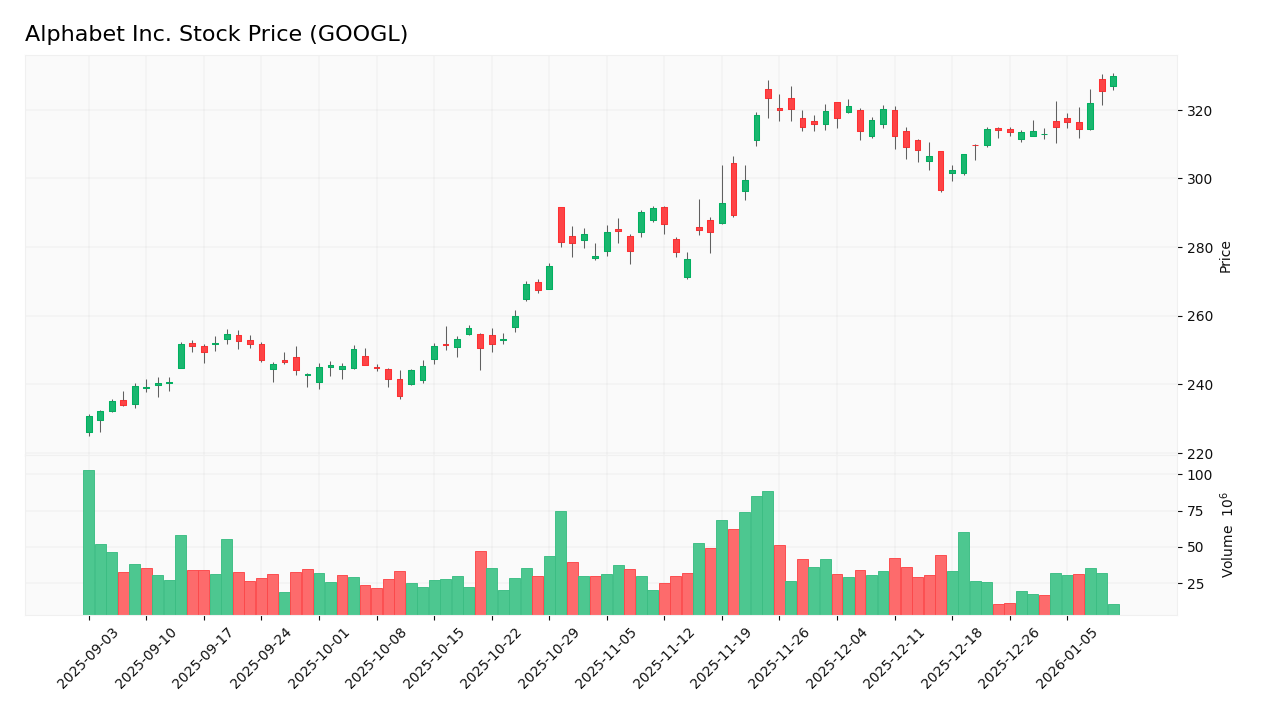
    • Options markets suggest Alphabet stock could move more than 5% after earnings, with a potential range of roughly $328 to $362 from a recent close near $344. This reflects typical big-tech volatility, though actual moves can be higher or lower.
    • Consensus forecasts show adjusted EPS around $3.09 (up over 20% year-on-year) and revenue near $111.4 billion (up 15%), supported by strong Google Cloud and ad growth.
    • The stock has risen about 25% since the last earnings beat, and analysts remain largely bullish with an average price target of $350 (some up to $400+).
    • The 2026 global economy looks steady, with the IMF projecting 3.3% growth, benefiting tech firms like Alphabet amid AI investments.
    • Key watchpoints include AI progress (Gemini), cloud capacity, 2026 capital spending, and any Apple partnership updates – a strong report could drive new highs, while high expectations carry risks of disappointment.


    Earnings Date and Overview

    Alphabet reports Q4 2025 results after US markets close on Wednesday, 4 February 2026, with the conference call at 4:30 PM ET.


    How the Expected Move Is Calculated

    The figure comes from options pricing (straddles), showing what traders expect for volatility by week’s end. Current data points to >5% from a close near $345, adjusting for recent levels around $344.


    What to Watch

    Focus on AI returns, Google Cloud growth, capex guidance, and Search/AI features. With solid estimates and positive sentiment, upside seems likely if guidance impresses.


    Alphabet, the company behind Google, YouTube, Android, and Google Cloud, is one of the biggest names in tech. On 4 February 2026, after the US markets close, it will release its Q4 2025 earnings. Investors around the world – including here in Mumbai – are asking the same question: how much could the stock move? Options markets are pricing in a notable swing, more than 5%, which could see shares jump or drop significantly from their recent level around $344.

    This is not unusual for a company like Alphabet. Earnings days often bring big reactions because the results can confirm or challenge high expectations. The stock has done well lately, climbing about 25% since the previous quarter’s report in October 2025, when it beat estimates and crossed $100 billion in quarterly revenue for the first time. That rally has continued even as other tech stocks faced pressure over AI spending costs.

    Why the focus now? Alphabet is firmly positioned at the heart of the AI surge. Tools like Gemini are improving Search, helping YouTube recommendations, and powering Google Cloud services. Investors want to know if these investments are paying off or if costs will weigh on profits. The broader economy supports optimism. Global growth is forecast at 3.3% in 2026, as per the IMF, with AI and technology investment helping anchor expansion in advanced economies. In the US, resilient consumer spending and business investment aid digital advertising and cloud demand.


    But high expectations mean risks. Even solid results can lead to a sell-off if forward guidance disappoints – for example, if 2026 capital spending looks too high without clear returns. This post explains the expected move, earnings forecasts, key themes, the 2026 outlook, potential impacts, and simple strategies. Written in clear language, it draws on reliable sources to help you understand without jargon.

    Let’s start with the numbers. Analysts expect revenue of about $111.4 billion, up 15% from last year. Adjusted earnings per share are forecast at $3.09, a rise of more than 20%. These figures reflect strength in advertising (Search and YouTube) and fast-growing Google Cloud, which benefits from AI demand. Google Cloud has seen revenue climb sharply in recent years, from around $33 billion in 2023 to over $43 billion in 2024, showing the shift to cloud services.

    The options market gives a clue to volatility. Traders use straddles – buying both calls and puts – to bet on movement without picking direction. Current pricing suggests more than 5% implied move from Monday’s close just under $345, meaning a range roughly $328 on the low side to $362 on the high. This could take the stock to new highs or test recent support.

    Alphabet Stock Approaches Record Highs Amid Valuation Concerns

    Historically, Alphabet often posts 5–8% moves after earnings, with bigger swings when results surprise. In recent quarters, beats on revenue and AI optimism drove gains, while concerns over costs led to dips.

    (more…)

  • Don’t Fear the AI Bubble: Be a Winner in 2025

     
    AI circuits and holographic

    Don’t Fear the AI Bubble: How Tech Contrarians Can Be Winners in late-2025


    ​Honestly, if you’ve been keeping an eye on the news lately in October 2025, it feels a bit like a horror movie for investors. Headlines are screaming about the “AI Bubble” bursting, and everyone is panicking because Nvidia’s stock is doing backflips every other day. It reminds me of the stories from 1999—the infamous Dot-Com crash. Back then, everyone was quitting their jobs to launch startups that delivered dog food to your door. People were throwing billions at companies that didn’t even have a finished product.

    ​Fast forward to today, and if you swap “internet” for “AI,” the vibe feels eerily similar. OpenAI valuations are hitting unicorn status overnight, and the skeptics are out in full force. But look, here’s the thing: while the crowd is running for the exits, the “tech contrarians“—the ones who zig when everyone else zags—are actually finding the deal of a lifetime.

    ​The Blunt Truth: Is the Bubble Real?

    ​Straight up, yes—there is a lot of froth in the market right now. We’ve seen hundreds of AI startups pop up that are basically just a “wrapper” around ChatGPT. They don’t own any tech; they’re just riding the wave. Experts from places like Yale and Harvard are rightfully warning that spending on data centres is growing faster than actual profits.

    ​But to be fair, there is a massive difference between 2000 and 2025. Back then, the internet was just a “maybe.” Today, AI is already solving massive, expensive problems. It’s not just about chatbots writing bad poetry; it’s about algorithms spotting cancers that the best doctors missed, or logistics firms cutting millions of gallons of fuel by optimizing routes. This isn’t just hype—it’s proper, hard-hitting utility that affects the bottom line.

    ​Why You Should Listen to a Contrarian

    ​I remember hearing about a guy during the dot-com days who lost his entire life savings on a site that sold virtual pet rocks. Yes, really. When the bubble popped in 2000, he was wiped out. But guess what? Amazon survived that crash. Google emerged from the wreckage and became a titan.

    ​The winners weren’t the ones who ran the fastest during the hype; they were the ones who stayed the smartest when the fear kicked in. In late 2025, the global AI market is sitting at around $390 billion. That’s a massive sum. And by 2032, it’s projected to hit $1.77 trillion. If you’re a contrarian, you don’t fear the “splash” of a bubble popping—you just learn how to swim in the deep end where the real value is hidden.

    ​AI Market Pulse: The 2025 Confidence Tracker

    Category

                  2025 Reality

               Why Contrarians Love It

    Global AI Market

                       $390 Billion

                              It’s a massive, tangible beast now.

    Generative AI in Ag

                       $226 Million

                           It’s solving global food demand issues.

    Enterprise Use

                       78% of firms

                   AI is no longer optional—it’s a working tool.

    Market Valuation

                Trillion-dollar hype

                           Contrarians find the “undervalued” 5%.

    The “Boring” Champion: Why John Deere is the AI King of 2025

    ​If you want to see what a “winner” looks like right now, look at John Deere. I know, a tractor company doesn’t sound very “Silicon Valley,” does it? No glitzy offices or startup perks like beanbags and kombucha. But honestly, they are doing more with AI than most software firms.

    ​While tech startups are burning through cash on flashy demos, Deere is putting AI into the dirt. With high-speed cameras and computer vision, their “See & Spray” system identifies and treats individual weeds in crowded fields. This has slashed chemical costs for farmers by a staggering 77%.

    ​In May 2025, Deere’s stock hit an all-time high. Why? Because they solved a real-world problem.

    • Hype Stocks: Often trading at 70x or 80x earnings (which is properly risky).
    • John Deere: Trading at around 12x earnings (which is a total value play).

    This is a contrarian’s dream. You bet on the “boring” industries that are getting smart, rather than the flashy ones that are just chasing headlines.

    ​The “Dot-Com” Lesson: What Happens Next?

    ​History is the best teacher we have. The railway mania in the 1840s saw thousands of companies fail, but the survivors built the modern UK economy. The internet bubble in 2000 killed off Pets.com, but it gave us the world we live in today.

    ​AI is following the same path. Sure, 95% of these AI startups might fail by the time we reach 2026. But the 5% that stick? They are going to redefine how every single industry works. From healthcare predicting patient needs with 85% accuracy to UPS saving 10 million gallons of fuel, the “real” AI is quiet, efficient, and very profitable.

    ​Practical Steps to Be a Winner (The Human Way)

    ​Look, you don’t need to be a Wall Street genius to win here. You just need to keep your head while everyone else is losing theirs.

    1. Focus on Outcomes, Not Tech: If a company says “We use AI,” ask them what it actually does. If they can’t explain how it saves money or makes a better product, walk away.
    2. Diversify Like a Boss: Don’t just buy chip makers. Look at the platforms (like Azure) and the practical users (like Deere or Meta).
    3. Ethics are the New Gold: In 2025, companies that mess up with deepfakes or data privacy are getting hammered by regulators. Bet on the ones that prioritize trust and transparency.

    Final Thoughts: Don’t Watch from the Sidelines

    ​Honestly, the AI bubble might wobble. We might see a massive “shake-out” where the weak players disappear. But for the people who focus on real-world utility and “boring” profits, late 2025 is the opportunity of a lifetime.

    ​So, what’s your move? Are you going to hide because the headlines are scary, or are you going to look for the next big winner hiding in plain sight? Let’s have a proper chat in the comments—what’s your contrarian pick for the end of this year?

    ​FAQ: The Real Questions for late-2025

    Is the AI bubble actually going to burst this year?

    To be fair, many analysts think a “correction” is overdue because the hype has pushed some prices way too high. However, the companies that are actually delivering ROI (Return on Investment) are likely to have a “soft landing.”

    Which sectors are the hidden gems?

    Straight up? Look at HealthcareLogistics, and Agriculture. These are sectors where AI is being used to cut costs and save lives, not just generate funny pictures.

    Is it too late to join the AI wave?

    Look, the “easy money” from just buying any AI stock is gone. But for the smart investor, it’s just the beginning. We’re moving from the “Hype Phase” to the “Utility Phase.”

    How do I spot a fake AI company?

    Honestly, look at their team. If they don’t have engineers who understand data at a deep level, and they’re just using another company’s API, they probably won’t survive the shake-out.

    Note: This is for educational purposes only. Not financial advice. We are not SEBI-registered.

  • Alphabet Q2 2025 Earnings: Record Revenue

     Alphabet Q2 2025 Earnings: Record Revenue and Cloud Growth Exceed Expectations

    Infographic highlighting Alphabet’s Q2 2025


    Introduction: A Stellar Quarter for Alphabet


    Alphabet Inc. (Google’s parent company) has just released its Q2 2025 earnings, and the results are massive. Even with all the competition, Alphabet managed to bring in record-breaking revenue that exceeded what everyone on Wall Street was expecting.

    ​The big story here isn’t just search ads; it’s the incredible 32% growth in Google Cloud. This shows that Alphabet is successfully moving from being just a “search engine” to a global leader in Artificial Intelligence (AI) and cloud computing. Let’s take a closer look at the numbers and see what they mean for the future of tech.

    Financial Highlights: Breaking Down the Numbers

    Alphabet’s Q2 2025 financial results underscore its ability to deliver consistent growth while investing in future technologies. Below are the key financial metrics:

    • Total Revenue: $96.42 billion, up 14% from $84.7 billion in Q2 2024.
    • Net Income: $28.19 billion, a 19% increase from $23.62 billion in Q2 2024.
    • Share Earnings Per (EPS): year-over-year, $2.31, up 22%, beating analyst expectations of $2.18.
    • Operating Income: $31.27 billion, reflecting strong operational efficiency.
    • Capital Expenditures: Alphabet raised its 2025 capex forecast to approximately $85 billion, up from $75 billion, to support growing demand for AI and cloud infrastructure.

    These figures demonstrate Alphabet’s ability to grow its top and bottom lines while maintaining strong operating margins. The increased capital expenditure reflects confidence in future growth, particularly in AI and cloud computing, though it sparked some investor concerns about short-term profitability.

    Visual Suggestion: Include a bar graph comparing Q2 2025 revenue ($96.42 billion) with Q2 2024 revenue ($84.7 billion).

    (more…)