Tag: business news

  • ​India-US Trade: Key Talks Set for January 13

     India-US Trade Ties Strengthen: Next Talks on January 13 Amid Tariff Challenges


    American flags side

    Key Takeaways

    • India and the US are actively working on a trade deal, with the next discussion set for January 13, 2026, showing a strong commitment from both sides.
    • The new US Ambassador Sergio Gor calls India an “essential partner,” pointing to broader cooperation in areas like security, energy, and technology, even as tariffs pose hurdles.
    • Bilateral trade reached about $132 billion in FY25, with projections up to $238 billion by year-end, but US tariffs of 50% on Indian exports could impact growth.
    • IMF forecasts India’s economy to grow at 6.6% in FY26, suggesting resilience amid global challenges like potential US tariff hikes.
    • Companies like John Deere face higher costs from tariffs, leading to layoffs, highlighting the real-world effects on businesses and jobs.

    Introduction

    Have you ever wondered how two giant economies like India and the US can keep talking trade even when tariffs are throwing curveballs? It’s like watching two old friends sort out a disagreement over tea – respectful, determined, and full of potential. On January 12, 2026, the new US Ambassador to India, Sergio Gor, stepped into his role and immediately spotlighted the ongoing trade engagement between the two nations. He announced that the next call on trade matters is slated for January 13, emphasising that no partner is more essential to the US than India. This comes at a time when global trade is tricky, with US President Donald Trump’s tariff policies adding pressure, yet both countries seem keen to push forward.

    Let’s dive deeper. India, the world’s largest democracy with over 1.4 billion people, and the US, the biggest economy, have a relationship that’s grown massively over the years. Bilateral trade hit a record $132.2 billion in FY25, up from $119.71 billion the previous year, according to the India Brand Equity Foundation. That’s not just numbers; it means jobs, innovation, and stronger ties. But challenges like US tariffs – currently at 50% To 100% on some Indian exports – and threats of even higher ones if India keeps buying Russian oil, make this engagement crucial. Gor, a close aide to Trump, highlighted that “real friends can disagree” but still work things out, drawing on the warm bond between Trump and Indian Prime Minister Narendra Modi.

    This isn’t just about trade deals; it’s about a strategic partnership. Gor mentioned expanding cooperation in security, counter-terrorism, energy, technology, education, and health. For instance, the US is inviting India to join Pax Silica, a new initiative for secure silicon supply chains involving semiconductors and AI, which could boost tech ties. With India’s economy projected to grow at 6.6% in FY26 by the IMF, despite global slowdowns, this could be a game-changer. But why now? Trump’s return has reignited tariff talks, and India isn’t rushing – it’s protecting farmers and small businesses while seeking fair terms.

    Think about it: In a world where supply chains are fragile, stronger India-US ties could mean more stable prices for everything from mobiles to medicines. Past talks in December 2025 showed progress, with US delegations visiting India and both sides eyeing a Bilateral Trade Agreement (BTA). Indian Commerce Minister Piyush Goyal noted “continuous progress,” reflecting India’s strategic importance. Yet, with the rupee hitting lows due to trade uncertainties, these talks matter for everyday people.

    As we explore this, remember the human side. Farmers in Punjab or workers in Iowa and Illinois could feel the ripple effects. Gor’s optimism – calling India the “world’s largest nation” and pledging determination – sets a positive tone. But will tariffs derail it? Or will this lead to a breakthrough? Stick around as we break it down with facts, examples, and tips for what it means for you.

    (more…)

  • Paramount Skydance’s $1B Savings Reset

    Unlocking Another $1B in Paramount Skydance Savings: David Ellison’s Bold Reset on Spending

    streaming icons, and dollar symbols

    Key Takeaways

    • Massive Cost Cuts Ahead: Paramount Skydance now targets $3 billion in total merger savings, with another $1B locked in by 2026, thanks to David Ellison’s aggressive spending reset.
    • Streaming Surge: Expect over $1.5 billion in new programming investments for 2026 to boost Paramount+ subscribers and revitalise the film studio.
    • Job Shifts in Hollywood: Around 2,000 layoffs signal tough choices, but they pave the way for a leaner, future-focused media giant.
    • Stock Boost: Shares jumped 5.5% post-earnings, reflecting investor faith in Ellison’s vision amid a tricky Q3 revenue miss.
    • Big Deals Brewing: New pacts, such as UFC rights and Timothée Chalamet films, show Paramount and Skydance betting big on content to fight the streaming wars.

    Introduction: The Hollywood Shake-Up That’s Saving Billions and Sparking Hope

    Imagine this: It’s a crisp August morning in 2025, and the entertainment world wakes up to a bombshell. David Ellison, the tech-savvy son of Oracle founder Larry Ellison, seals an $8.4 billion deal to merge his Skydance Media with the iconic Paramount Global. Suddenly, the studio behind classics like The Godfather and hits like Top Gun: Maverick has a new boss – one who’s not afraid to wield the axe for growth. Fast forward to November 10, 2025, and Paramount Skydance drops its first earnings report since the merger. Revenue? A flat $6.7 billion, missing Wall Street’s $7 billion bet. But hold on – buried in the numbers is a silver lining that’s got investors buzzing: another $1B in Paramount Skydance savings as David Ellison resets spending.

    This isn’t just corporate jargon; it’s a survival story in the cutthroat world of media. Streaming giants like Netflix and Disney are capturing viewers, while cable TV is fading like an old VHS tape, and Hollywood’s old guard is scrambling to adapt. Ellison, with his background in producing blockbusters like Mission: Impossible – Fallout, steps in as CEO with a clear message: Cut the fat, invest in the future, and turn losses into wins. That extra $1 billion in savings? It’s the cherry on top of an already ambitious $3 billion efficiency drive, up from the initial $2 billion promise when the merger closed.

    (more…)

  • Grab’s Saver Rides Fuel Explosive Growth; Outlook Raised

     
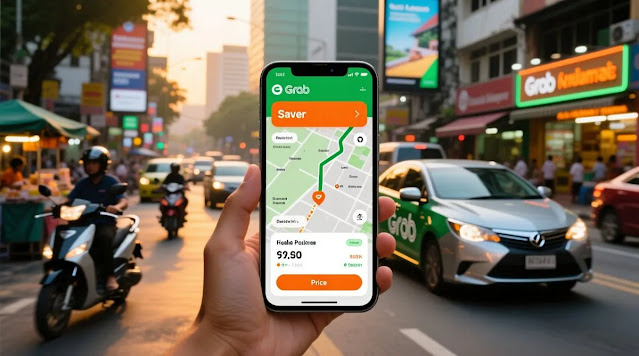
    Grab app with a prominent


    Grab Raises Outlook: Why “Budget” is the New Cool in 2026


    ​Honestly, look, if you told me a few years ago that everyone would be obsessed with “budget” rides, I’d have probably laughed. Back then, it was all about luxury and speed. But fast forward to late 2025 and early 2026, and the world has changed. Everything is expensive, right? From your morning coffee to your rent, prices are soaring. And that is exactly where Grab found its goldmine.

    ​Straight up, Grab just dropped their latest results, and they are smashing it. They’ve raised their full-year outlook, and it’s not because they’re charging more—it’s because they’ve figured out how to make “cheap” work for them. They call it the “affordability strategy,” and honestly, it’s a proper masterclass in business.

    The Numbers That Don’t Lie

    ​To be fair, we have to look at the data to see why everyone is talking about this. In their Q3 report, Grab’s revenue hit a massive $873 million. That is a 22% jump compared to last year. If you’re wondering how they did it, just look at the streets of Singapore, Jakarta, or Bangkok. People aren’t just taking any ride; they are specifically hunting for the “Saver” options.

    Note: This is for educational purposes only. Not financial advice. We are not SEBI-registered.

    Metric

    Q3 2025 Performance

    Why You Should Care

    Total Revenue

    $873 Million

    Shows that the “Superapp” model is actually working.

    Adjusted EBITDA

    $490M – $500M (Forecast)

    They are finally making a proper profit after years of burning cash.

    Mobility Growth

    23% Volume Increase

    More people are riding than ever before, even with inflation.

    Fintech Loans

    $821 Million Portfolio

    They are slowly becoming the biggest bank in Southeast Asia.

    Why the “Saver” Strategy is a Genius Move

    ​Look, we’ve all been there. You open the app, see a ride for $15, and think, “Maybe I’ll just take the bus.” Grab realized this was happening way too often. So, they leaned into their “Saver” products. These are rides and deliveries that might take a few minutes longer or involve sharing a car, but they cost about 20-30% less.

    ​Properly speaking, these budget options now make up 27% of all their mobility bookings. But here is the clever part: Grab isn’t just losing money on cheap rides. About 40% of the people who start using the app because of a cheap “Saver” ride eventually end up booking a premium car or ordering a big dinner when they’re feeling flush. It’s like a “hook” that keeps you in the ecosystem.

    More Than Just a Taxi: The Rise of GrabFin

    ​Honestly, the most underrated part of Grab’s growth isn’t the cars—it’s the money. Their fintech arm, GrabFin, is absolutely exploding. In the last quarter alone, their loan portfolio grew by 65%. They’ve lent out over $821 million to people who usually can’t get help from big traditional banks.

    ​Think about a small food stall owner in Manila. They need a quick loan to buy a new fridge. A big bank will ask for fifty documents and take three weeks. Grab already knows how much money the stall owner makes because they use GrabFood for deliveries. So, Grab can offer them a loan in minutes. It’s a win-win. They are on track to hit a $1 billion loan portfolio by the end of the year, which is a massive milestone.

    The Human Side: Drivers and Riders

    ​To be fair, a business is nothing without the people. I remember reading about a driver in Jakarta named Rico. He was worried that “Saver” rides would mean he earns less. But actually, it’s the opposite. Because the rides are cheaper, more people are booking them. Instead of waiting an hour for one big fare, he’s doing four small ones in that same hour. His car is never empty, and his earnings have actually gone up by 20%.

    ​For the riders, it’s a lifesaver. Families are using “Group Orders” for food to save on delivery fees. Instead of three friends ordering separately and paying three fees, they bundle it into one. It’s small hacks like these that make Grab feel less like a faceless corporation and more like a tool for daily survival.

    Grab vs. GoTo: Who’s Winning the Southeast Asia Tech Race?

    ​Now, you can’t talk about Grab without mentioning its rival, GoTo (Gojek). For years, these two have been fighting like cats and dogs. But right now, Grab is pulling ahead. While GoTo saw about 15% growth, Grab is cruising at 22%.


    ​Why? It’s because Grab has a bigger “war chest.” They have about $6.9 billion in cash sitting in the bank. That’s a lot of firepower. They can afford to invest in crazy new tech, while GoTo has to be a bit more careful with its spending.

    The Future: Robotaxis and Beyond

    ​Straight up, the future sounds like a sci-fi movie. Grab is betting big on Autonomous Vehicles (AVs). They’ve partnered with companies like May Mobility and WeRide. The plan? To have driverless “robotaxis” running around Singapore by 2026.

    ​They’re calling the service AI.R. Imagine calling a car, and nobody is behind the wheel. It sounds scary, but it’s actually a move to cut costs even further. If they don’t have to pay a driver (though that’s a controversial topic for another day), the cost of a ride could drop by another 30%. It’s a risky gamble, especially with all the regulations and safety concerns, but Grab has never been afraid of a fight.

    The Investor’s Perspective: Is the Hype Real?

    ​If you’re someone who watches the stock market, you’ve probably noticed the “Stock Buzz.” Shares have been jumping lately because investors finally see a path to consistent profit. Analysts at BofA (Bank of America) have even hiked their price targets to $6.50.

    ​People are excited because Grab isn’t just growing; they are becoming more efficient. Their “incentives” (those discounts they give us) used to be huge, but now they’ve trimmed them down to just about 10% of their total value. They are learning how to keep us using the app without having to “buy” our loyalty with constant coupons.

    What’s Next for Grab?

    ​Honestly, they aren’t stopping at Southeast Asia. They are already taking their mapping technology (GrabMaps) to places like Mongolia through partnerships. There are even whispers of them talking to partners in the Middle East. They want to be the “OS” (Operating System) for the daily lives of millions of people.

    Tips for Every Grab User

    ​If you want to make the most of this “Raised Outlook” and their new products, here are a few things you should be doing:

    1. Stack Your Savings: Don’t just book a ride. Use GrabUnlimited. It usually pays for itself in just two or three rides.
    2. Use the “Saver” Window: If you aren’t in a massive rush, the “Saver” option is almost always the way to go.
    3. Check Your GrabRewards: Most people forget these. You can actually use them to pay for your next meal or get a massive discount on your ride home.
    4. Group Order Everything: If you’re at the office, get everyone on one order. You’ll save a fortune on delivery fees over a month.

    A Quick Wrap Up

    ​Look, Grab raising their outlook isn’t just boring corporate news. It’s a sign that they’ve cracked the code of how to survive in a tough economy. By focusing on what people actually need—affordability and convenience—they’ve turned a struggling business into a profitable powerhouse.

    ​Whether you’re a rider, a driver, or an investor, Grab’s momentum is something you can’t ignore. They are moving fast, breaking things, and making our lives a little bit cheaper in the process.

    Common Questions People are Asking (FAQs):


    • Is Grab actually profitable? Yes! They hit a net income of $17M in Q3, which is a massive deal considering they used to lose millions every month.
    • Will my rides get even cheaper? With the rollout of more “Saver” tiers and the potential for robotaxis in 2026, there’s a good chance prices will stay competitive.
    • Is Grab safe for my data? They’ve invested heavily in AI to keep transactions safe, especially now that they are handling so many loans and digital payments.
    • Can I use Grab outside of Southeast Asia? Not for rides yet, but their technology (like maps) is starting to be used in other countries.

  • IBM Q2 2025 Earnings: Big Blue

     IBM Q2 2025 Earnings: A Deep Dive into Big Blue’s Success

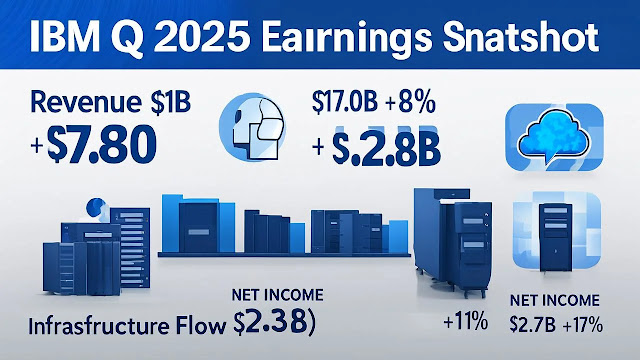
    showing IBM’s Q2 2025 earnings


    Introduction: IBM’s Stellar Q2 Performance


    International Business Machines (IBM), often called ‘Big Blue,’ has just proved once again why it is a giant in the tech world. On July 23, 2025, the company released its Q2 earnings report, and the numbers are even better than what Wall Street experts expected.

    ​While many thought the market was slowing down, IBM brought in a massive $17.0 billion in revenue. Not just that, their profit (EPS) hit $2.80, beating the $2.64 forecast. The secret behind this success? A massive focus on Artificial Intelligence (AI) and Hybrid Cloud. Let’s dive into the details and see what this means for the future of tech, especially for professionals in India.

    Key Financial Highlights

    IBM’s Q2 2025 financial results showcase its financial strength and operational efficiency. Here are the standout metrics:

    • Revenue: $17.0 billion, up 8% year-over-year as reported, with a 5% increase at constant currency, reflecting strong global demand.
    • Earnings Per Share (Operating): $2.80, up 15% year-over-year, beating analyst expectations.
    • Pre-tax Income (Operating): $3.2 billion, with a margin expansion of over 110 basis points to 18.8%.
    • Net Income: $2.7 billion, up 17% year-over-year, with a margin of 15.6%.
    • Cash & Marketable Securities: $15.5 billion as of June 25, 2025, providing ample liquidity for investments.
    • Total Debt: $64.2 billion, with core (non-IBM Financing) debt at $52.4 billion.

    These figures highlight IBM’s ability to generate substantial cash flow, improve profitability, and maintain a solid balance sheet, even in a fluid economic environment.

    Metric Q2 2025 Result Year-over-Year Change Notes
    Revenue $17.0 billion +8% (5% at constant currency) Exceeded the $16.59 billion forecast for the $16.59
    ee Cash Flow (Q2) $2.8 billion Highest 1H margin in years YTD: $4.8 billion
    Adjusted EBITDA $4.7 billion +16% Margin expansion ~200 bps
    Earnings Per Share (Operating) $2.80 +15% Beat $2.64 forecast
    Pre-tax Income (Operating) $3.2 billion +15% Margin: 18.8% (+110 bps)
    Net Income $2.7 billion +17% Margin: 15.6%
    Cash & Marketable Securities $15.5 billion Compared to $14.8 billion (Dec 2024) Strong liquidity
    Total Debt $64.2 billion Core debt: $52.4 billion Stable financial structure


    Segment Performance: A Closer Look

    Each segment’s performance in Q2 2025 provides insights into the company’s strategic priorities.

    Software: Powering AI and Cloud Growth

    • Revenue: $7.4 billion, up 8% year-over-year at constant currency.
    • Key Growth Areas:
      • Hybrid Cloud: +14%, driven by strong adoption of IBM’s open hybrid cloud platform.
      • Automation: +14%, reflecting demand for AI-driven automation tools.
      • Data: +7%, fueled by AI-related offerings.
      • Transaction Processing: -2%, as clients prioritized hardware during the z17 mainframe launch.

    The Software segment’s growth was led by Red Hat, which saw a 14% revenue increase, with OpenShift’s annual recurring revenue (ARR) reaching $1.7 billion. IBM’s focus on AI, particularly through its watsonx platform, has driven significant demand, with the generative AI book of business exceeding $7.5 billion inception-to-date.

    Infrastructure: Mainframes and Hybrid Solutions Shine

    • Revenue: $4.1 billion, up 11% year-over-year at constant currency.
    • Key Growth Areas:
    • IBM Z (Mainframe): +67%, driven by the z17 mainframe launch, designed for AI workloads.
    • Hybrid Infrastructure: +19%, reflecting strong demand for hybrid cloud solutions.
    • Distributed Infrastructure: -17%, indicating a shift towards hybrid and mainframe solutions.

    The launch of the z17 mainframe, the first fully engineered for the AI age, has been a game-changer, reinforcing IBM’s leadership in high-performance computing for enterprise workloads.

    Visual Suggestion: Include an image of the z17 mainframe to highlight its role in driving Infrastructure growth.

    Consulting: Steady with Potential

    • Revenue: $5.3 billion, flat year-over-year at constant currency.
    • Key Areas:
    • Strategy and Technology: -2%, reflecting cautious client spending.
    • Intelligent Operations: +2%, driven by AI and automation adoption.

    Despite flat growth, the Consulting segment maintained a healthy backlog, up 4% year-over-year, indicating sustained demand for IBM’s expertise in digital transformation and AI integration.

    Visual Suggestion: Use a pie chart to show the revenue distribution across Software, Infrastructure, and Consulting segments.


    Strategic Initiatives: Leading in AI and Cloud

    IBM’s Q2 2025 performance underscores its transformation into a leader in hybrid cloud and AI. Key initiatives include:

    • Generative AI Growth: The generative AI book of business reached $7.5 billion, up from $6 billion in April, driven by IBM’s Watsons platform, which helps businesses build and deploy AI models.
    • z17 Mainframe Launch: The z17, designed for AI workloads, has boosted IBM’s Infrastructure segment, offering unmatched security and performance for enterprise clients.
    • Partnerships: IBM extended its multi-year partnership with Microsoft, establishing a new Microsoft Practice within IBM Consulting to deliver innovative solutions across industries like retail, government, and financial services.

    These initiatives position IBM to capitalize on the growing demand for AI and cloud solutions, particularly in markets like India, where digital transformation is accelerating.


    Indian Context: IBM’s Impact and Opportunities

    IBM has a significant presence in India, with over 150,000 employees and multiple research and development centers. Its technologies are driving digital transformation across various sectors:

    • Banking: Indian banks use IBM’s Watson AI to enhance customer service and detect fraud, improving efficiency and security.
    • Healthcare: IBM’s cloud solutions help healthcare providers manage patient data securely, enabling better care delivery.
    • Education: IBM’s AI tools are empowering educators to personalize learning experiences, as seen in the case of Ramesh, a teacher from a small village in Maharashtra. Ramesh used IBM’s cloud-based tools to create an online learning platform, reaching students beyond his classroom and demonstrating the transformative power of technology.

    These examples highlight how IBM’s solutions are accessible and impactful, even for individuals and small businesses in India, fostering innovation and growth.

    Visual Suggestion: Include a photo of an Indian professional using IBM technology in a workplace setting to connect with the Indian audience.


    Market Reaction and Analyst Insights

    Despite IBM’s strong Q2 performance, its stock dipped as much as 6% in after-hours trading, primarily due to software revenue slightly missing consensus estimates ($7.39 billion vs. $7.43 billion). However, analysts remain optimistic, citing:

    • Operational Strength: IBM’s robust free cash flow and margin expansion reflect its ability to manage costs and invest in growth.
    • Strategic Focus: The company’s emphasis on AI and hybrid cloud aligns with market trends, positioning it for long-term success.
    • M&A Strategy: CEO Arvind Krishna noted that a sensible regulatory environment for mergers and acquisitions could support further strategic acquisitions.


    Future Outlook: A Bright Path Ahead

    IBM has maintained its full-year 2025 expectations, projecting:

    • Revenue Growth: At least 5% at constant currency, with software revenue approaching double-digit growth.
    • Operating Pre-tax Margin: Expansion of approximately 1 percentage point.
    • Free Cash Flow: Over $13.5 billion, reflecting strong cash generation.

    These projections underscore IBM’s confidence in its business model and its ability to navigate challenges like geopolitical tensions and U.S. federal spending constraints. With its leadership in AI and hybrid cloud, IBM is well-positioned to drive digital transformation globally, including in India’s burgeoning tech ecosystem.


    Actionable Guidance for Readers

    For students and professionals interested in leveraging IBM’s success:

    1. Explore AI and Cloud Careers: IBM’s focus on AI and hybrid cloud highlights growing opportunities in these fields. Consider learning about AI tools like Watson or cloud platforms like Red Hat OpenShift.
    2. Stay Informed: Visit IBM Investor Relations for detailed financial reports and updates on IBM’s innovations.
    3. Engage with Technology: Experiment with IBM’s free cloud and AI tools, available through platforms like IBM Skills Build, to gain hands-on experience.
    4. Join the Conversation: Share your thoughts on IBM’s Q2 performance in our comments section or participate in our poll: How will AI shape the future of businesses in India?


    Conclusion: IBM’s Path to Leadership

    To wrap things up, IBM’s performance shows that even older tech companies can lead the way if they pick the right strategy. By focusing on AI and Cloud, they aren’t just surviving—they are winning. From helping teachers like Ramesh in small Indian villages to securing big banks, IBM’s tools are making a real-world difference.

    If you are a student or a tech professional, IBM’s success is a clear signal: AI and Cloud are the skills of the future. It’s a great time to start learning these tools. What do you think about IBM’s growth? Drop your thoughts in the comments below!

    Call to Action: Dive deeper into IBM’s innovations and financial performance at IBM Investor Relations. Subscribe to our newsletter for the latest tech insights and download our free guide, Getting Started with AI and Cloud, to kickstart your journey.

    Frequently Asked Questions (FAQs)

    Did IBM beat its Q2 2025 earnings forecast? Yes, IBM outperformed expectations by reporting $17.0 billion in revenue against the $16.59 billion forecast, and an EPS of $2.80 against the expected $2.64.

    What is driving IBM’s growth in 2025? The main growth drivers are Artificial Intelligence (AI) and Hybrid Cloud. IBM’s generative AI business has already crossed the $7.5 billion mark.

    What is the significance of the IBM z17 mainframe? The z17 is the first mainframe engineered specifically for the AI age. Its launch led to a 67% increase in IBM Z revenue during Q2 2025

    .

    What is IBM’s free cash flow target for the full year? IBM has raised its guidance and now expects to generate more than $13.5 billion in free cash flow for the full year 2025.