Berkshire’s Q3 2025: Massive Wins and Buffett’s Final Goodbye?
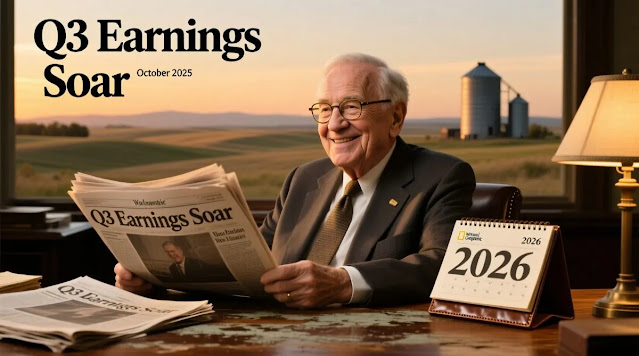
Honestly, if you’d told me years ago that a 95-year-old man in Omaha would still be the biggest rockstar in the financial world, I’d have struggled to believe it. But just look at Warren Buffett. On November 1, 2025, Berkshire Hathaway dropped its Q3 results, and straight up, the numbers are mental. We’re talking $30.8 billion in net earnings. That’s a 17% jump from last year. Proper growth, that
.
Honestly, it’s not just about the financial side. Beyond the Green Light: What Happens Next? Warren Buffett plans to transition control to Greg Abel by late 2025. Now, everyone’s sat there wondering: can the magic actually stay alive without the Oracle himself? It’s the big question on Wall Street, isn’t it?
Honestly, if you’d told me years ago that a 95-year-old man in Omaha would still be the biggest rockstar in the financial world, I’d have struggled to believe it. But just look at Warren Buffett. On November 1, 2025, Berkshire Hathaway dropped its Q3 results, and straight up, the numbers are mental. We’re talking $30.8 billion in net earnings. That’s a 17% jump from last year. Proper growth, that
.
Honestly, it’s not just about the financial side. Beyond the Green Light: What Happens Next? Warren Buffett plans to transition control to Greg Abel by late 2025. Now, everyone’s sat there wondering: can the magic actually stay alive without the Oracle himself? It’s the big question on Wall Street, isn’t it?
Why are the numbers properly soaring
Look, Berkshire isn’t your average boring company. It’s a massive beast that owns everything from your car insurance (Geico) to the batteries in your remote (Duracell). In Q3 2025, while the rest of the world was worrying about inflation and new tariffs (like that OBBBA Act from July), Berkshire was busy printing cash. Simple as that.
The real hero this quarter? Insurance. Properly speaking, the insurance side of the business is the “engine room.” They collect premiums before they have to pay out claims, and Buffett is a wizard at investing that “float.” This time, underwriting profits exploded by 206%. That is a properly massive leap.
Look, Berkshire isn’t your average boring company. It’s a massive beast that owns everything from your car insurance (Geico) to the batteries in your remote (Duracell). In Q3 2025, while the rest of the world was worrying about inflation and new tariffs (like that OBBBA Act from July), Berkshire was busy printing cash. Simple as that.
The real hero this quarter? Insurance. Properly speaking, the insurance side of the business is the “engine room.” They collect premiums before they have to pay out claims, and Buffett is a wizard at investing that “float.” This time, underwriting profits exploded by 206%. That is a properly massive leap.
Geico and the Reinsurance Wins
Geico, the home of that cheeky gecko, brought in $1.77 billion. To be fair, premiums are up because car repairs are getting more expensive, but they’ve kept their “loss ratio” steady at 71.5%. It’s proof they’re pricing risks the right way.
Then you’ve got the Reinsurance Group (BHRG). They made $884 million because, luckily, the catastrophe losses—like those wildfires in Southern California—were handled better than everyone expected. For a normal company, a massive wildfire would be a disaster. For Berkshire? It’s just another Tuesday. They’ve reserved so much cash for a rainy day that they barely feel it.
Geico, the home of that cheeky gecko, brought in $1.77 billion. To be fair, premiums are up because car repairs are getting more expensive, but they’ve kept their “loss ratio” steady at 71.5%. It’s proof they’re pricing risks the right way.
Then you’ve got the Reinsurance Group (BHRG). They made $884 million because, luckily, the catastrophe losses—like those wildfires in Southern California—were handled better than everyone expected. For a normal company, a massive wildfire would be a disaster. For Berkshire? It’s just another Tuesday. They’ve reserved so much cash for a rainy day that they barely feel it.
The $377 Billion “War Chest.”
Straight up, the most shocking number in the report is the cash pile. Berkshire is sitting on $377 billion in cash and T-bills. That is a record.
Think about that for a second. While other companies are struggling to pay their bills, Buffett is sitting on enough cash to buy almost any company he wants. Just like that. In October, they already snapped up OxyChem for $9.7 billion. Honestly, having that much liquidity is like having a superpower in a shaky market. It means when things get messy, Berkshire won’t just survive—they’ll go shopping.
Straight up, the most shocking number in the report is the cash pile. Berkshire is sitting on $377 billion in cash and T-bills. That is a record.
Think about that for a second. While other companies are struggling to pay their bills, Buffett is sitting on enough cash to buy almost any company he wants. Just like that. In October, they already snapped up OxyChem for $9.7 billion. Honestly, having that much liquidity is like having a superpower in a shaky market. It means when things get messy, Berkshire won’t just survive—they’ll go shopping.
Greg Abel: The New Captain in Town
Now, let’s get straight to the main problem. Warren Buffett is 95. In May 2025, he made it official: he’s stepping down as CEO at the end of the year. Greg Abel is taking over on January 1, 2026.
I know what you’re thinking—who even is Greg Abel? Look, he might not be a household name like Charlie Munger was, but the guy knows his stuff. He’s been running the “non-insurance” bits like the railroads and energy for years. Buffett himself says Greg understands business “from the ground up.” High praise from the boss.
To be fair, the transition has been decades in the making. It’s not a rushed job. Buffett stays as Chairman, and the investment pros—Ted and Todd—are already handling the big stock picks. The machine is built to last.
I know what you’re thinking—who even is Greg Abel? Look, he might not be a household name like Charlie Munger was, but the guy knows his stuff. He’s been running the “non-insurance” bits like the railroads and energy for years. Buffett himself says Greg understands business “from the ground up.” High praise from the boss.
To be fair, the transition has been decades in the making. It’s not a rushed job. Buffett stays as Chairman, and the investment pros—Ted and Todd—are already handling the big stock picks. The machine is built to last.
Segment Wins: Railroads and Manufacturing
BNSF Railway is the backbone of America, and it chugged along nicely with $1.91 billion in earnings. Even with trade tensions, agricultural shipments were up. They’ve been using AI for route optimisation, which squeezed out more profit from every single mile.
Manufacturing and services also added some muscle. Precision Castparts (they make jet engine parts) had a great run because everyone is flying again post-pandemic. It’s that boring, steady brilliance that makes Berkshire a fortress. Lubrizol, its chemicals arm, also rode the wave of global demand. It’s a simple lesson: when you own the things people actually need, you always win.
BNSF Railway is the backbone of America, and it chugged along nicely with $1.91 billion in earnings. Even with trade tensions, agricultural shipments were up. They’ve been using AI for route optimisation, which squeezed out more profit from every single mile.
Manufacturing and services also added some muscle. Precision Castparts (they make jet engine parts) had a great run because everyone is flying again post-pandemic. It’s that boring, steady brilliance that makes Berkshire a fortress. Lubrizol, its chemicals arm, also rode the wave of global demand. It’s a simple lesson: when you own the things people actually need, you always win.
The Energy Shift: Wind, Solar, and PacifiCorp
Berkshire Hathaway Energy (BHE) is going through a bit of a transformation. They’ve invested $7.53 billion so far this year into wind and solar. Honestly, it’s a smart move. Even though the tax credits from the OBBBA hit them a bit, they are playing the long game.
Look, they did have a dip in earnings—down to $913 million this quarter—but they’ve capped their wildfire liabilities at $2.85 billion. To be fair, nature is unpredictable, but Buffett’s team is legendary for “reserving” money properly so a bad storm doesn’t sink the whole ship.
Berkshire Hathaway Energy (BHE) is going through a bit of a transformation. They’ve invested $7.53 billion so far this year into wind and solar. Honestly, it’s a smart move. Even though the tax credits from the OBBBA hit them a bit, they are playing the long game.
Look, they did have a dip in earnings—down to $913 million this quarter—but they’ve capped their wildfire liabilities at $2.85 billion. To be fair, nature is unpredictable, but Buffett’s team is legendary for “reserving” money properly so a bad storm doesn’t sink the whole ship.
My Advice: What should you do?
If you’re a regular investor looking at these 2025 results, here’s my honest take:
- Don’t Panic about the Exit: The transition to Abel is well-planned. The stock is up 25% this year for a reason—people trust the system.
- Diversify like Buffett: Don’t just chase flashy tech. Target “boring” businesses that have durable moats and predictable cash flow.
- Patience is Key: Buffett doesn’t do buybacks unless the price is right. Follow his lead. Don’t chase a rally; wait for the intrinsic value.
- Think Long-Term: Berkshire doesn’t look at next month; they look at the next decade. You should, too.
If you’re a regular investor looking at these 2025 results, here’s my honest take:
- Don’t Panic about the Exit: The transition to Abel is well-planned. The stock is up 25% this year for a reason—people trust the system.
- Diversify like Buffett: Don’t just chase flashy tech. Target “boring” businesses that have durable moats and predictable cash flow.
- Patience is Key: Buffett doesn’t do buybacks unless the price is right. Follow his lead. Don’t chase a rally; wait for the intrinsic value.
- Think Long-Term: Berkshire doesn’t look at next month; they look at the next decade. You should, too.
The Final Thought
Berkshire’s Q3 2025 results aren’t just a win; they’re a testament to a model that works in any weather. Whether it’s inflation or a leadership change, the foundation is solid. Buffett’s final chapter is closing, but Act Two with Greg Abel is just getting started.
Honestly, if you want to sleep easily at night while the market goes crazy, this is the company to watch. It’s not flashy, it’s not loud, but it is properly brilliant.
Berkshire’s Q3 2025 results aren’t just a win; they’re a testament to a model that works in any weather. Whether it’s inflation or a leadership change, the foundation is solid. Buffett’s final chapter is closing, but Act Two with Greg Abel is just getting started.
Honestly, if you want to sleep easily at night while the market goes crazy, this is the company to watch. It’s not flashy, it’s not loud, but it is properly brilliant.
Frequently Asked Questions (FAQs)
1. What were the standout numbers for Q3 2025?
Net earnings hit $30.8 billion, a 17% rise. Operating earnings from core businesses also climbed to $14.42 billion pre-tax. Cash reserves hit an all-time high of $377 billion.
2. Is Warren Buffett really leaving?
Yes. At 95, he’s stepping down as CEO at the end of 2025. Greg Abel will take over the CEO role starting January 1, 2026, while Buffett stays as Chairman.
3. Why is there so much cash in the bank?
Berkshire’s cash pile hit a record $377 billion. Buffett likes to keep a “war chest” ready so he can snap up big companies (like the OxyChem deal) when the market dips.
4. How did Geico do this quarter?
Geico earned $1.77 billion pre-tax. While repair costs are up across the board, they managed to grow premiums by over 5%, proving they are still the kings of car insurance.
5. Should I buy Berkshire stock right now?
If you are looking for long-term stability, many experts say yes. The stock has been trading at about 1.6x book value, which reflects a lot of trust in the post-Buffett future.
Note: This is for educational purposes only. Not financial advice. We are not SEBI-registered.
1. What were the standout numbers for Q3 2025?
Net earnings hit $30.8 billion, a 17% rise. Operating earnings from core businesses also climbed to $14.42 billion pre-tax. Cash reserves hit an all-time high of $377 billion.
2. Is Warren Buffett really leaving?
Yes. At 95, he’s stepping down as CEO at the end of 2025. Greg Abel will take over the CEO role starting January 1, 2026, while Buffett stays as Chairman.
3. Why is there so much cash in the bank?
Berkshire’s cash pile hit a record $377 billion. Buffett likes to keep a “war chest” ready so he can snap up big companies (like the OxyChem deal) when the market dips.
4. How did Geico do this quarter?
Geico earned $1.77 billion pre-tax. While repair costs are up across the board, they managed to grow premiums by over 5%, proving they are still the kings of car insurance.
5. Should I buy Berkshire stock right now?
If you are looking for long-term stability, many experts say yes. The stock has been trading at about 1.6x book value, which reflects a lot of trust in the post-Buffett future.