Tag: Digital Services Tax

  • US-UK Tech Deal Freeze: The £31B Shockwave

     US Halts Technology Trade Talks with UK: A Shocking Blow to Transatlantic Tech Dreams

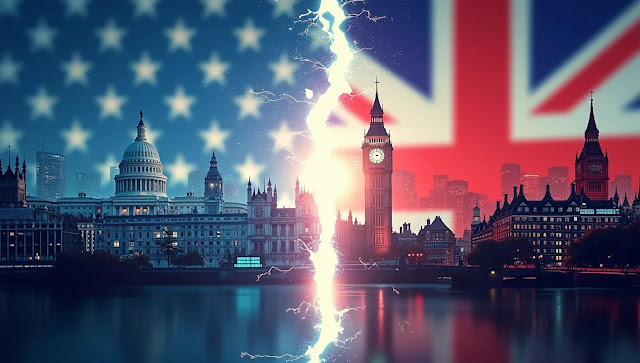
    US and UK flags facing each other
    • Stalled £31 Billion Investment: The pause freezes billions in tech pledges from giants like Microsoft and Google, hitting UK jobs and innovation.
    • Trade Frictions Exposed: Digital taxes and food standards spark a halt, highlighting deeper US-UK tensions under Trump and Starmer.
    • Global Ripple Effects: From AI growth zones to export risks, this could slow UK GDP by 0.5% in 2026, per IMF warnings.
    • Hope on Horizon: Talks resume in January—businesses, prep for uncertainty with smart strategies.
    • Lessons for All: Even allies face hurdles; diversify supply chains to weather trade storms.

    Imagine this: It’s September 2025, and the sun is shining over Buckingham Palace as US President Donald Trump and UK Prime Minister Keir Starmer shake hands on what they call Branded a “generational step change,” the Technology Prosperity Deal promises £31 billion for tech, new AI hubs in England’s forgotten regions, and an ambition to dominate quantum computing—together. Cheers erupt from Silicon Valley to London’s Tech City. Fast-forward three months, and it’s all on ice. The US halts technology trade talks with the UK, citing everything from pesky digital taxes to stubborn food rules. What was hailed as a transatlantic triumph now feels like a diplomatic deep freeze.

    If you’re a business owner eyeing the UK market, a tech enthusiast dreaming of the next big breakthrough, or just someone who loves a good underdog story, this news hits hard. The US and UK aren’t just trading partners; they’re family—sharing language, history, and a mutual distrust of Brussels. Yet here we are, in early 2026, watching allies bicker over bits and bytes while China races ahead in AI supremacy. Why did it happen? What’s at stake? And, crucially, how can you turn this curveball into an opportunity?

    Let’s rewind a bit. The deal wasn’t born in a vacuum. Post-Brexit, the UK has been hustling for new alliances, desperate to prove it’s not just Europe’s awkward ex but a global player. Enter Trump 2.0, with his “America First” remix, keen on cherry-picking deals that boost US jobs without the messy multilateralism of the WTO. In May 2025, they inked the Economic Prosperity Deal—a lighter touch than a full FTA, but with tariff tweaks on beef and pharma that had farmers in Iowa toasting with British ale. By September, during Trump’s pomp-filled state visit, the tech pact sealed the romance: cooperation on AI safety, quantum encryption, and even fusion energy to power the green revolution.

    Pledges poured in. Microsoft committed £22 billion to build data centres in the North East, promising 5,000 high-tech jobs where shipyards once rusted. Google put £5 billion into cloud infrastructure—then Nvidia and OpenAI doubled down with quantum R&D labs. The White House MoU glowed with ambition: joint standards bodies, shared research visas, and a “growth zone” to make the UK Europe’s Silicon Fen. Starmer called it “a blueprint to win the new era together.” Trump, ever the showman, tweeted it would “keep the special relationship special—and supercharged.”

    But cracks appeared early. US big tech grumbled about the UK’s 2% digital services tax, which nets £800 million a year but feels like a shakedown to California CEOs. Online safety laws, born from the Online Safety Act, demand platforms police content aggressively—great for kids, a nightmare for free-speech-loving Americans. And don’t get us started on food: the US wants to export hormone-treated beef and chlorine-washed chicken, but Brits cling to their standards like a comfort blanket. “No funny business in our fridges,” as one MP quipped.

    By December 2025, frustrations boiled over. The Financial Times broke the story on 16 December: Washington paused implementation, no new funds flowing until London bends on “non-tariff barriers.” A UK spokesperson played it cool: “Negotiations are live, relations strong—complex talks take time.” But behind closed doors? Panic. MPs warned deals with Trump are “built on sand.” The Guardian dubbed it a “serious setback,” with Starmer’s team scrambling to appoint a heavyweight US ambassador.

    As we sip tea on 5 January 2026, the halt lingers like a bad hangover. Talks restart this month, but uncertainty reigns. For businesses, it’s a wake-up call: global trade isn’t a straight highway anymore; it’s potholed with politics. In this post, we’ll unpack the backstory, dissect the damages, and dish out practical tips to navigate the fog. Whether you’re in fintech, agrotech, or just curious, stick around—we’ve got stats from the IMF, a mini case study on a US farming giant, and FAQs tackling what everyone’s Googling right now. Because in the world of US halting technology trade talks with the UK, knowledge isn’t just power; it’s your export passport.
    (more…)

  • US Halts UK Tech Deal Talks: FT Report

     U.S. Halts UK Tech Trade Deal Negotiations: FT Reports on a Major Setback for Global Innovation

    US and UK flags subtly blurred
    Key Takeaways
    • Sudden Pause in Talks: The U.S. has suspended the $40 billion Tech Prosperity Deal with the UK, focusing on AI and quantum tech, due to slow progress on trade barriers.
    • Frustrations Over Rules: Key issues include the UK’s digital services tax and food safety standards, which U.S. officials see as hurdles to fair trade.
    • Broader Trade Tensions: This halt ties into ongoing U.S.-UK negotiations, potentially affecting jobs and investment in tech sectors.
    • UK Stays Optimistic: British officials insist the “special relationship” remains strong, with hopes to restart talks soon.
    • Global Ripple Effects: Businesses in AI and nuclear energy may face delays, but opportunities could arise for other partners like the EU.

    Imagine you’re a young tech whizz in London, dreaming of cracking the next big AI breakthrough. You’ve got your laptop humming, code flying across the screen, and suddenly, the news hits like a cold splash of water: the U.S. has halted UK tech trade deal negotiations. It’s not just headlines—it’s your future project that might now stall because of grown-up squabbles over taxes and rules. That’s the hook here, folks. In a world where tech moves faster than a double espresso, this FT report feels like someone hit the pause button on the whole show.

    Let’s rewind a bit. Back in September 2025, during President Donald Trump’s flashy state visit to Britain, leaders shook hands on the “Tech Prosperity Deal.” It was billed as a game-changer—a $40 billion pact to team up on artificial intelligence, quantum computing, nuclear fusion, and more. Picture supercomputers crunching data to solve climate puzzles or quantum chips making your phone’s battery last forever. The UK, fresh out of Brexit woes, saw it as a lifeline to stay in the global tech race. The U.S., under Trump’s “America First” vibe, wanted to lock in a close ally against rivals like China.

    But fast forward to last week, and bam—the U.S. pulls the plug on implementation. The Financial Times broke the story, quoting unnamed British officials who confirmed the suspension. Why now? Well, it’s not just tech talk; it’s tangled in bigger trade fights. U.S. negotiators are fuming over the UK’s digital services tax—that 2% levy on big tech giants like Google and Meta, which pulls in about £800 million a year for the Treasury. Americans see it as a sneaky hit on their companies. Add in food safety rules (think chlorine-washed chicken debates) and online safety laws from the Online Safety Act, and you’ve got a recipe for deadlock.

    This isn’t some dusty old treaty gathering cobwebs; it’s live wires connecting jobs, innovation, and everyday gadgets. Think about the U.S. jobs report from last month—non-farm payrolls added a solid 200,000 roles, but tech hiring dipped slightly amid tariff talks. (Wait, why jobs report? Because trade deals like this directly juice employment in high-skill sectors. A stalled deal could translate into fewer coding jobs in Silicon Fen or California’s tech valleys. The Financial Times scoop has ignited chatter on X (formerly Twitter), with users asking: “Is this a turning point?” This is Trump’s tough love or Starmer’s misstep?” One finance watcher captured the mood perfectly in a post: “U.S. …” halts ‘technology prosperity deal’ negotiations with UK, FT reports. The deal aimed to boost collaboration on AI, nuclear fusion, and quantum tech.”

    As we dive deeper, remember this: trade isn’t just numbers on a spreadsheet; it’s people. It’s the engineer in Manchester tweaking algorithms that could power self-driving cars, or the startup founder in Boston eyeing London as their next market. This halt, reported fresh today on December 16, 2025, shakes that foundation. But hey, it’s not all doom—history shows these pauses often lead to stronger deals. Remember the U.S.-Mexico-Canada Agreement? It took years of haggling, but it ended up boosting trade by 20% in its first year.

    So, why should you care if you’re not a policymaker? Simple: tech touches everything. Your Netflix binge? Powered by AI trained across borders. Your bank’s fraud alerts? Quantum-safe encryption in the works. If this deal unravels, costs rise, innovations slow, and jobs—ah, those jobs—might shift elsewhere. The U.S. Bureau of Labour Statistics pegs tech as adding 377,000 jobs in 2024 alone; imagine if cross-Atlantic ties fray that momentum.

    Let’s chat about the backdrop. Post-Brexit UK has been hustling for trade wins. Starmer’s Labour government promised “securonomics”—a mix of security and economics—to rebuild ties. Trump, re-elected in a whirlwind, doubled down on protectionism. Tariffs on steel and pharma were on the table, but tech was the shiny prize. The deal promised zero tariffs on pharmaceuticals (already inked last month) and joint R&D funds worth billions. Yet, non-tariff barriers—like those pesky regs—proved the real villains.

    Frustration boiled over last week. U.S. officials, per Reuters, wanted “substantive progress” on food standards and industrial goods before flipping the switch on tech cash. Britain’s response? A stiff upper lip. A government spokesperson told CNBC: “Our special relationship with the US remains strong.” Translation: We’re miffed, but let’s talk.

    This intro sets the stage for what’s coming: breakdowns of the deal, the whys, the impacts, and tips for navigating the choppy waters. Stick around—by the end, you’ll see this not as a full stop, but a comma in the story of U.S.-UK tech ties.

    (more…)