Tag: Earnings Report

  • Robinhood Q4 2025 Earnings & Analyst Upgrades

     Analyst Upgrades Robinhood Rating Ahead of Earnings: What It Means for Your Portfolio


    Key Takeaways

    • Analyst Optimism: Multiple firms upgraded or reaffirmed positive ratings on Robinhood ahead of earnings, citing diversification and scalable profitability.
    • Q4 2025 Results: Revenue reached $1.28 billion (up 27% YoY) with EPS of $0.66, beating estimates, though a top-line miss and crypto weakness led to post-earnings volatility.
    • Business Maturity: Strong growth in options, interest income, subscriptions (Robinhood Gold), and user engagement shows the platform has evolved beyond commission-free trading.
    • Long-Term Tailwinds: Crypto integration, international expansion, and a structural shift in retail trading support analysts’ constructive outlook despite near-term challenges.
    • Portfolio Perspective: Upgrades signal confidence, but evaluate valuation, volatility, and diversification— this is not financial advice.

    Introduction: Why Robinhood’s Momentum Matters in 2026

    As of February 2026, Robinhood Markets (HOOD) continues to capture attention in the fintech sector. Ahead of its Q4 2025 earnings release on February 10, several Wall Street analysts upgraded ratings or raised price targets, reflecting growing belief in the company’s transition to a mature, profitable platform. The report delivered a mixed but ultimately resilient picture: record full-year revenue of $4.5 billion, EPS of $2.05, and a Q4 EPS beat, even as quarterly revenue slightly missed expectations amid softer crypto activity.

    This moment represents more than one earnings cycle. Robinhood, which launched commission-free trading in 2013 to “democratize finance,” has matured into a diversified financial super-app. Once criticized for enabling speculative trading, it now generates steady revenue from options, cryptocurrency spreads, interest on cash balances, and premium subscriptions. The analyst upgrades underscore Wall Street’s recognition that retail investing is a permanent structural shift, not a fad.

    For investors, the developments matter because they highlight how technology continues to reshape access to markets. Younger and first-time investors have embraced mobile-first platforms, creating loyal users who engage across multiple products. Yet challenges remain: market volatility, regulatory scrutiny, and competition from established brokers like Charles Schwab and Fidelity.

    The upgrades—such as Wolfe Research moving to Outperform with a $125 target—came as analysts modeled stronger operating leverage and user monetization. Post-earnings, some price targets were adjusted (e.g., Barclays lowered to $124 while maintaining Overweight), but the consensus remains Moderate Buy with average targets around $120–$130, implying meaningful upside from recent levels.

    Whether you’re a Robinhood user, shareholder, or observer of fintech trends, the company’s progress offers insights into the future of retail finance. Let’s examine what drove the analyst’s confidence and what the earnings reveal. Despite a strong EPS beat, the market reacted sharply to the revenue miss in the crypto segment, causing an 11% dip in share price on February 11, 2026.
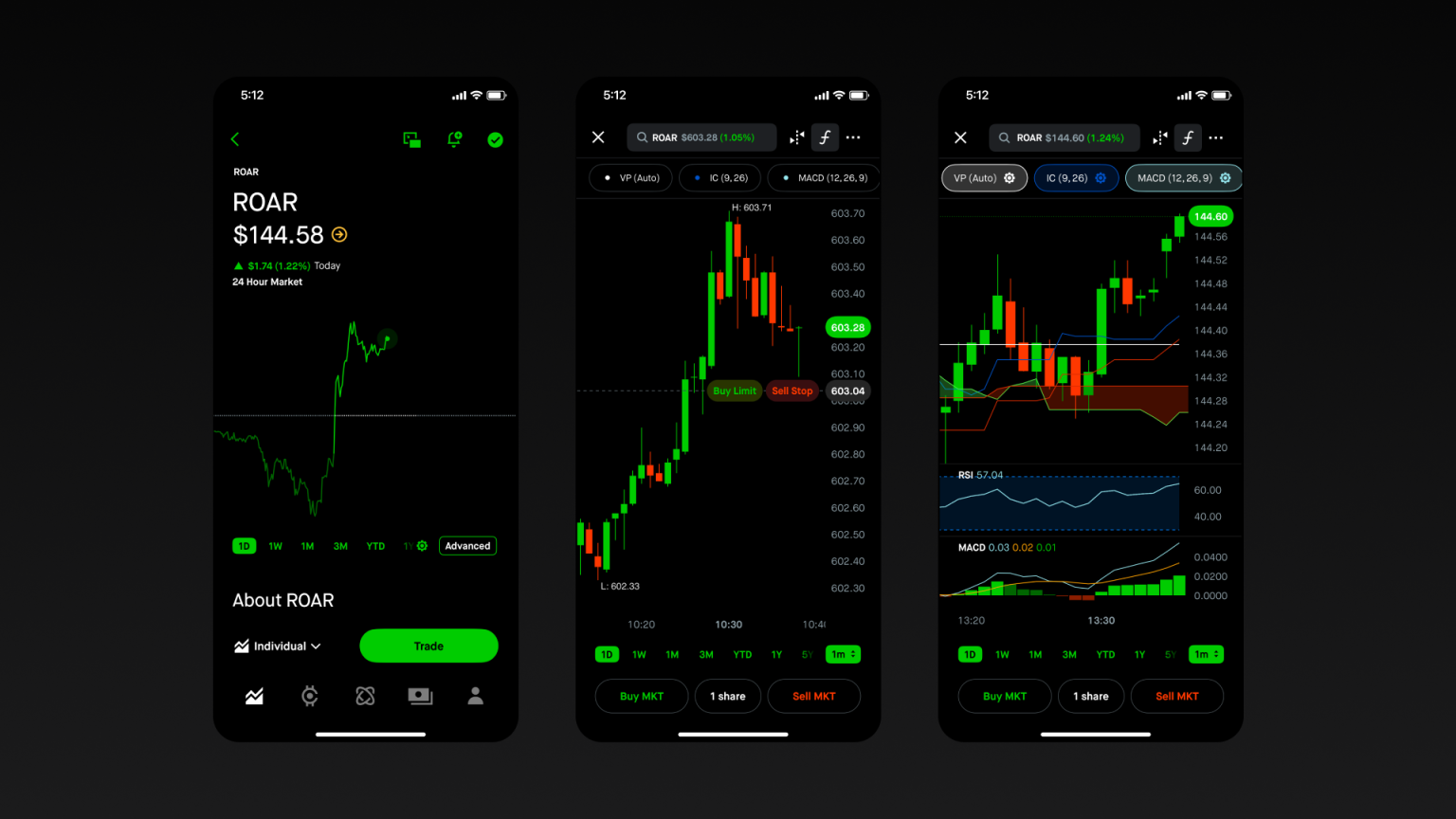

    Introducing Robinhood Legend Charts on Mobile

    Understanding the Analyst Upgrades

    Analyst upgrades reflect detailed research into fundamentals, competitive positioning, and growth prospects. In Robinhood’s case, firms highlighted several positives:

    • Proven Profitability: After years of investment in growth, Robinhood has consistently delivered profits. Q4 2025 EPS of $0.66 beat estimates, contributing to full-year EPS of $2.05. This validates the business model at scale.
    • Revenue Diversification: No longer reliant on trading volume alone, the company benefits from high-margin streams such as options trading, crypto services, and interest income (which grew 39% in Q4).
    • User Metrics: Continued growth in monthly active users, assets under custody (reaching hundreds of billions), and Robinhood Gold subscribers demonstrates engagement and monetization potential.
    • Crypto and Innovation: Despite a Q4 crypto revenue dip tied to market conditions, Robinhood’s integrated platform positions it for recovery as digital assets mature.

    Price targets were raised in some cases by 15–25% pre-earnings, based on projections of sustained 25–40% revenue growth and expanding margins. These are not guarantees—markets remain volatile—but they indicate analysts view the stock as undervalued relative to its growth trajectory.

    (more…)

  • Earnings Beat Tariffs: Why 2026 Markets Are Defying Gravity

     Why Companies Are Beating Earnings Expectations Despite Tariffs in 2026

    Earnings 2026'. Professional lighting
    • Tariff Adaptation Outweighs Costs: While tariffs have contributed 0.7–1% to inflation, firms like Amazon and Meta have mitigated the effects through strategic supply chain realignment and pricing flexibility, supporting continued performance. record revenues and margins.

    • Sector-Specific Wins and Losses: Tech and consumer goods sectors show robust growth (e.g., Meta’s 24% revenue increase), while retail and manufacturing face headwinds but still exceed forecasts in many cases; evidence leans toward minimal long-term drag if adaptations continue.
    • Economic Resilience Amid Uncertainty: Global growth is expected to reach 3.3% in 2026, the IMF and World Bank say, with AI and fiscal support helping balance tariff impacts, even as escalation poses ongoing risks.

    The Resilience 

    Imagine a world where higher import costs from tariffs could cripple corporate profits, yet companies like Amazon report a staggering 14% revenue jump to $213.4 billion in Q4 2025, beating estimates handily. Or Meta, with a 24% revenue surge to $59.89 billion, shrugging off trade tensions. Far from a fluke, this has shaped the 2026 earnings season so far. Even as tariffs add around 0.7–1% to inflation, the U.S. has maintained economic momentum. is managing to maintain stability. Firms are adapting with agility, leveraging AI, supply chain tweaks, and consumer strength to deliver results that keep markets buoyant. But is this momentum built to last, or is it merely a short-term cushion? Let’s take a closer look.

    Earnings Beat: Numbers Tell the Tale


    Reports released in early 2026 for Q4 2025 highlight notable performance.FactSet data shows that 75% of S&P 500 companies beat EPS estimates, with blended year-over-year growth of 8.2%, exceeding the 8.3% expected at the end of the quarter. Tech giants lead: Amazon’s operating income hit $80 billion, up from $68.6 billion, thanks to e-commerce and AWS efficiency. Meta’s family of apps drove a 24% revenue hike. Even healthcare shines—Pfizer’s non-COVID portfolio grew 6% operationally, reaffirming $59.5-62.5 billion in 2026 revenue.

    Why the outperformance? Companies front-loaded imports pre-tariffs, diversified suppliers (e.g., shifting from China to Vietnam or Mexico), and passed modest costs to consumers without demand drops. The Fed has characterized tariff-related inflation as transitory, with core PCE at 2.8% and projected to decline as those pressures diminish. This hedging keeps earnings robust, though not without pain. Firms like Procter & Gamble raised prices by 2–2.5% to offset tariff pressures, yet margins declined for five straight quarters.

    (more…)

  • Marvell’s $5.5B Bet on Optical AI Power

     Marvell’s Bold $5.5 Billion Move: Acquiring Celestial AI to Supercharge AI Data Centres with Optical Magic

    lue optical-light pathways
    • Game-Changer for AI Infrastructure: Marvell’s buyout of Celestial AI introduces cutting-edge optical interconnects, promising twice the power efficiency and ten times the bandwidth over traditional copper wires.
    • Massive Financial Stake: The deal starts at $3.25 billion upfront, with potential to hit $5.5 billion based on revenue milestones, signalling strong faith in AI’s future growth.
    • Stock Surge and Market Buzz: Marvell shares jumped 13% post-announcement, highlighting investor excitement amid a 37% year-over-year data centre revenue boost.
    • Broader Industry Shift: This acquisition challenges giants like Nvidia and Broadcom, pushing the entire sector towards photonics for scalable, energy-saving AI systems.
    • Hyperscaler Backing: With support from AWS and others, Celestial AI’s tech is poised for rapid adoption in multi-rack AI clusters by 2028.

    Introduction: Lighting Up the Future of AI – Why Marvell’s Acquisition of Celestial AI Feels Like a Sci-Fi Breakthrough

    Imagine this: You’re standing in a massive data centre, rows upon rows of humming servers stretching into the distance like a digital cityscape. But here’s the catch – those servers are getting hotter, hungrier for power, and choking on the very wires that connect them. As AI explodes – think ChatGPT on steroids, training models that gobble up data like it’s candy – the old copper cables just can’t keep up. They’re slow, power-thirsty, and limited in how far they can stretch. Enter Marvell Technology, the unsung hero of the chip world, swooping in with a $5.5 billion power play to acquire Celestial AI. This isn’t just another tech merger; it’s a bet on light itself to rescue AI from its own success.

    Announced on 2 December 2025, the deal has sent ripples through Silicon Valley and beyond. Marvell, a company that’s been quietly powering everything from hard drives to network switches for over 30 years, is shelling out an upfront $3.25 billion – $1 billion in cash and the rest in shares – to snag Celestial AI’s crown jewel: the Photonic Fabric technology. And if Celestial hits big revenue targets, like $2 billion cumulative by the end of Marvell’s fiscal 2029, that price tag could balloon to $5.5 billion. It’s like buying a startup lottery ticket, but one backed by heavyweights like Amazon Web Services (AWS), who see this as the key to building greener, faster clouds.

    (more…)

  • Palantir Crushes Q3 Earnings, But Valuation Sparks Dip

    This visually represents the market's


    Palantir’s Wild Ride: Is This AI Giant Actually Worth the Hype?


    ​Honestly, if you’d told me back in January that we’d be sitting here in late 2025 looking at Palantir hitting record highs above $200, I’d have told you to go grab a coffee and calm down. But look at where we are. The stock is up over 160% this year, and everyone—from the big institutional players to regular folks—is properly losing their minds over it.

    ​But here’s the thing. After the Q3 report dropped on November 3rd, things got a bit… weird. The numbers were massive, yet the stock took a bit of a tumble, dropping about 9% the next day. It’s like throwing the party of the century and then having everyone leave early because they’re worried about the bill. So, let’s sit down and talk about what’s actually happening with Palantir. Is it still the “AI King,” or are we just breathing in a lot of expensive smoke?

    ​What’s the Real Story with AIP?

    ​Look, most tech companies just say “AI” every five seconds during their earnings calls to keep the investors happy. But Palantir? They’re actually doing the work. Their Artificial Intelligence Platform (AIP) is the real deal. Straight up, it’s like giving a massive, clunky company a brain that actually knows how to talk to itself.

    ​Imagine a giant hospital chain. Usually, they have data scattered everywhere—patient files in one system, drug inventories in another, and staff shifts on some old spreadsheet. AIP comes in like a super-smart librarian and connects everything. Suddenly, doctors can predict treatment plans in seconds. We aren’t talking about months of coding here; companies are getting this stuff running in weeks through these “bootcamps” Palantir runs. It’s practical, it’s fast, and it’s why their growth is exploding.

    ​The Big Shift: From Spies to Supermarkets

    ​To be fair, Palantir used to be known strictly as the “spy company.” They started out helping the CIA and FBI catch the bad guys, and for a long time, about 70% of their money came from the government. But this year? The script has flipped properly.

    ​The commercial side—regular businesses—is now the star of the show. Their US commercial revenue jumped by a massive 121% in Q3. That is mental growth for a company of this size. They’re working with people like John Deere. Yes, the tractor folks! They’re using Palantir to crunch satellite data and machine sensors so farmers know exactly when to fix a tractor before it breaks down in the middle of a field. It’s not just tech for tech’s sake; it’s tech that saves millions of pounds.

    ​Let’s Talk Numbers (Without the Headache)

    ​I know financial reports can be a proper slog, but look at these Q3 highlights because they tell the whole story. Revenue hit $1.181 billion, which smashed what the experts were expecting. Even better, they’ve got $3.6 billion in the bank and zero debt.

    ​In the finance world, we have this thing called the “Rule of 40.” Basically, if you add your growth and your profit margin together and it’s over 40, you’re doing great. Palantir didn’t just hit 40; they hit 114. That’s like showing up to a local football match and playing like prime Lionel Messi. It shows they aren’t just growing fast; they’re actually making a profit while doing it.

    ​Why Did the Stock Drop Then?

    ​This is the bit that confuses people. If the news was so good, why did the price go down? Well, it’s all about the “V word”—Valuation.

    ​Right now, Palantir is trading at over 100 times its revenue. To put that in simple terms, it’s like paying £500 for a pair of trainers that usually cost £50 just because everyone else wants them. Even if they’re the best trainers in the world, you’re paying a massive premium. Investors got a bit nervous that the price had climbed too high, too fast. It’s a classic case of “buying the rumour and selling the news.” People took their profits and ran.

    ​The Risks You Can’t Ignore

    ​Honestly, I’d be a bad friend if I didn’t tell you the risks. It’s not all sunshine and AI magic. First off, there’s the competition. Companies like Microsoft, Google, and even smaller players like Snowflake are fighting for the same space. Some of them offer cheaper options, which might tempt companies looking to save a bit of cash.

    ​Then there’s the “AI Bubble” talk. If the hype around AI cools down even a little bit, stocks like Palantir—which are priced for perfection—could fall hard. Also, their government work is steady, but it doesn’t grow nearly as fast as the commercial side. If a new government comes in and decides to cut tech spending, that’s a big chunk of guaranteed revenue at risk.

    ​Looking Ahead to 2026

    ​So, what’s the plan for next year? Palantir is looking to expand more into places like Japan and Brazil. They’re even talking about adding more “multimodal” AI—stuff that can understand video and voice, not just text and numbers.

    ​If they keep landing 50+ new pilots every month through their bootcamps, the revenue will keep climbing. But for the stock price to stay this high, they have to keep hitting home runs every single quarter. There’s no room for a “decent” report; it has to be spectacular every time.

    ​Final Thoughts for the Wise

    ​Straight up, Palantir is a beast. They’ve proven they can help both the government and the big corporate world solve impossible problems. The Q3 dip wasn’t a sign that the company is failing; it was just the market taking a breather after a massive sprint.

    ​If you’re thinking about putting money in, don’t just follow the crowd. Look at the dips. Wait for the price to settle a bit. And as always, never invest money you might need for the rent next month. The road to the top is never a straight line, and with Palantir, you should expect plenty of twists and turns.

    Everything You’re Wondering About Palantir (FAQs)

    ​Honestly, whenever a stock moves this much, everyone has a million questions. Here are the big ones I keep seeing in the comments and around the web.

    ​1. Is Palantir still a “Buy” after that November dip?

    ​Look, it really depends on how long you’re planning to stay in the game. If you’re a long-term believer in AI, the dip to around $190–$200 is a bit of a “sale” compared to the highs. But straight up, it’s still an expensive stock. If you’re worried about the price, some people like to “dollar-cost average“, which is just a fancy way of saying buy a little bit now and a little bit later if the price drops more.

    ​2. Why did the stock fall if the earnings were so good?

    ​It sounds mental, doesn’t it? They smashed their targets, but the price still dropped. This usually happens because of “high expectations.” Investors had already pushed the price up 160% before the news. Once the report came out, many big players decided to take their profits and run. To be fair, at a valuation of 100x revenue, the market was basically expecting a miracle, not just a “good” report.

    ​3. What is the “Rule of 40,” and why does it matter?

    ​Straight up, it’s just a way to see if a software company is healthy. You take the Revenue Growth % and add it to the Profit Margin %.

    • ​If the total is 40, you’re doing well.
    • ​Palantir hit 114 in Q3 2025.

    That is properly insane. It means they are growing like a weed while also being incredibly profitable. Most tech companies struggle to even hit 50.

    4. Is Palantir a better bet than Nvidia?

    ​That’s like asking if you’d rather have a fast car or a great engine. NVIDIA makes the “chips” (the hardware) that power AI. Palantir makes the “software” that actually uses that power to solve problems.

    Honestly, Nvidia is much cheaper right now in terms of valuation (about 25x earnings vs Palantir’s 150x+). Palantir has more “room to grow,” but it’s also much riskier because the expectations are so high.

    5. Will Palantir ever do a stock split?

    ​There’s a lot of talk about this, especially since the price has gone past $200. A split doesn’t actually change the value of your investment; it just makes the individual shares cheaper so more people can buy them (like what Nvidia did). There’s no official word yet, but if the price stays this high, it wouldn’t surprise me if they announced one in 2026.

    6. What’s the biggest risk for Palantir right now?

    ​The biggest “red flag” is competition. While Palantir’s “AIP” is amazing, giants like Google and Microsoft are building their own tools. If those companies start offering similar tech for half the price, Palantir might have to lower its margins. Also, keep an eye on government spending—if the US cuts back on tech budgets, Palantir’s oldest revenue stream could take a hit.

    Note: This is for educational purposes only. Not financial advice. We are not SEBI-registered.

  • Delta Air Lines Stock: Buy After Q2 Earnings?

    Is Delta Air Lines Still a ‘Strong Buy’ After the Q2 2025 Fireworks?


    Delta Air Lines aircraft

    ​Honestly, if you were watching the tickers on July 10, 2025, the 11% jump in Delta’s stock (DAL) felt like a breath of fresh air for the aviation sector. We’ve seen airline stocks struggle with everything from pilot strikes to engine recalls, but Delta’s Q2 report was a different beast altogether. With a record revenue of nearly £16.6 billion, it’s clear that people aren’t just traveling—they are traveling well. But now that we’re in mid-September and the stock is hovering around £59, the real question is: did you miss the flight, or is there still room in first class?

    ​Look, investing in airlines has always been a bit like a roller coaster. One day you’re cruising at 30,000 feet, and the next, a fuel spike or a trade war headline sends you into a nose-dive. But Delta seems to be playing a much smarter game than its rivals. While American and United are scrambling to fix their margins, Delta is quietly dominating the premium market. Straight up, if you’re looking for a long-term play in the sky, you need to look past the flashy headlines and check the actual pipes under the floorboards.

    ​The Q2 2025 Numbers: Beyond the Hype

    ​To be fair, the headline figures were impressive, but the real story is in the cash flow. Delta reported an adjusted EPS of £2.10, which was slightly ahead of what Wall Street expected. But here’s the kicker: their free cash flow guidance for the full year is sitting at a healthy £3-4 billion.

    Why does this move the needle for you:

    • Premium is King: Passenger revenue was up 5%, mostly because folks are tired of being cramped in basic economy. They want the premium cabins, and Delta owns that space right now.
    • The Dividend Factor: They didn’t just make money; they shared it. A 25% dividend increase to £0.15 quarterly is a huge “trust me” signal to income investors.
    • ​Operational Moat: Delta Air Lines has held the top U.S. airline spot in The Points Guy rankings for seven consecutive years. In a world where service is dying, Delta is actually keeping its promises, and that builds brand loyalty that spreadsheets can’t fully capture.

    Valuation: Is £59 a Bargain?

    ​Actually, if you look at the math, DAL looks properly undervalued. The stock is trading at a forward P/E ratio of about 10-11x. When you compare it to the S&P 500’s 18x average, it’s clear you’re getting a market leader at a cheaper valuation.

    ​If we assume a modest 5% annual growth, a standard Discounted Cash Flow (DCF) model puts the fair value of this stock closer to £70-£75. So, at the current £59 mark, you’re basically looking at a 15-20% margin of safety. It reminds me of how John Deere stock behaved in 2024—hitting a peak, dipping due to sector-wide fears, and then rewarding the patient holders who didn’t panic-sell during the noise.

    ​The ‘Fuel Chess’ and Global Headwinds

    ​Properly speaking, no airline stock is a “set it and forget it” investment. Fuel prices dropped about 20% by July 2025, averaging around £2.34 per gallon, which was a massive tailwind for Delta’s 13% operating margin. But we all know how unstable that can get. A sudden geopolitical flare-up could send those prices back up, eating into those record profits in a single quarter.

    The Risks You Need to Watch:

    1. Macro Uncertainty: With the shift in U.S. trade policies and tariffs under the new administration, corporate travel—Delta’s high-margin bread and butter—could take a hit if businesses start tightening their belts.
    2. Labor Costs: Wages are up about 8% across the board. Delta is managing it better than American Airlines, but it’s still a heavyweight on the balance sheet.
    3. The ‘Soft Patch’: Some analysts worry that we’re entering a “soft patch” in domestic demand. While international travel to Europe is booming, the everyday domestic flyer is feeling the pinch of inflation.

    ​Delta vs. The World: The Competitive Edge

    ​Straight up, Delta is leaving United and American in the rearview mirror. While American is trying to chase Delta’s tail by revamping its credit card deals, Delta has already mastered the art of high-margin loyalty revenue.

    Metric (Sept 2025)

        Delta Air Lines

           United Airlines

               American Airlines

    Q2 Revenue

         £16.6B

            £15.2B

               £14.5B

    EPS (Adjusted)

         £2.10

            £3.50

               £1.20

    YTD Return

         +20%

           +15%

               +10%

    Ranking (TPG)

           #1

             #2

                 #4

    Delta’s secret sauce is its widebody fleet efficiency. They are flying the right planes on the right routes at the right times. It’s boring, tactical work, but it’s why they’re the only airline consistently making double-digit margins.

    Actionable Strategy: How to Board DAL

    ​Look, if you’re thinking about jumping in, don’t just buy the whole position at once. Here is the game plan for the rest of 2025:

    • Support Levels: Look for entry points around £55. If the market has a bad week and Delta dips there, it’s a gift.
    • Monitor Q3 Earnings: Mark your calendar for October 9, 2025. Management’s tone on holiday bookings will tell us everything we need to know about the winter season.
    • Stop-Loss Strategy: Use a stop-loss around 10% below your entry. Airlines are volatile, and there’s no point in riding a crash if a new pandemic or a global conflict breaks out.
    • Pairing with ETFs: If you like the sector but fear the individual stock risk, pair DAL with an ETF like JETS.

    Conclusion: Time to Board or Wait at the Gate?

    ​In summary, Delta’s strong Q2 performance wasn’t a fluke—it was a result of a decade of smart branding and operational discipline. While the lowered guidance for the full year is a bit of a yellow flag, the valuation is simply too attractive to ignore for a long-term holder.

    ​You’re getting a premium brand, a growing dividend, and record revenue at a price that doesn’t fully reflect the company’s power. Yes, the sky might get bumpy in 2026, but Delta has the best pilots (and the best balance sheet) in the business.

    What do you reckon? Are you bullish on the premium travel trend, or do you think the high ticket prices are finally going to ground the industry? Drop a comment below—let’s talk shop!

    Frequently Asked Questions (FAQ)

    Is Delta Air Lines (DAL) a better buy than United or American in 2025?

    Straight up, yes. Delta is currently leading the pack with better profit margins and a massive focus on the premium travel market. While United is investing heavily in new planes, Delta has already mastered the art of high-margin loyalty revenue and consistently ranks #1 in service quality.

    Why did Delta lower its full-year guidance in July 2025?

    To be fair, management is playing it safe. Even with record Q2 revenue, they are hedging against supply chain issues and a potential “soft patch” in domestic demand. This cautious approach is why the stock is currently trading at a very attractive valuation of 10-11x forward earnings.

    Will the 2025 dividend hike continue into 2026?

    Actually, given Delta’s strong free cash flow projection of £3-4 billion, the 25% dividend increase looks very sustainable. Unless we see a major spike in fuel prices or a massive economic downturn, Delta is well-positioned to reward long-term holders.

    Note: This is for educational purposes only. Not financial advice. We are not SEBI-registered.

  • GitLab Q1 2026 Earnings: 27% Revenue Growth,

     GitLab (GTLB) Q1 2026 Earnings Report: Strong Revenue Growth and Improved Margins

    GitLab headquarters image or DevOps visual showing GitLab’s global impact, symbolizing strong Q1 2026 earnings growth and AI-powered platform expansion.

    A Comprehensive Analysis of GitLab’s First-Quarter Fiscal 2026 Financial Results

    GitLab Inc. (NASDAQ: GTLB), a leading provider of an AI-powered development platform, announced its financial results for the first quarter of fiscal year 2026, ended April 30, 2025, on June 10, 2025. This earnings report offers valuable insights into the company’s performance in a competitive tech landscape, showcasing its ability to grow revenue, improve profitability, and expand its customer base. In this post, we’ll break down the key financial highlights, analyze the drivers of GitLab’s success, and explore what this means for students, professionals, and investors, including those in India.

    Why GitLab’s Earnings Matter

    GitLab’s platform helps businesses streamline software development, making it faster and more secure. From startups to large enterprises, companies rely on GitLab to manage their coding projects efficiently. For students learning about technology or professionals in India’s booming tech sector, understanding GitLab’s performance offers a glimpse into the future of software development and the growing demand for DevOps skills.

    (Insert an infographic here summarizing GitLab’s role in DevOps and its global impact, including a nod to India’s tech growth.)

    Financial Highlights

    GitLab’s Q1 FY 2026 results demonstrate strong growth and progress toward profitability. Below is a detailed table of key financial metrics:

    Metric Q1 FY 2026 Q1 FY 2025 Y/Y Change
    Total Revenue $214.5 million $169.2 million +27%
    GAAP Gross Margin 88% 89% -1%
    Non-GAAP Gross Margin 90% 91% -1%
    GAAP Operating Margin (16) % (32) % +16%
    Non-GAAP Operating Margin 12% (2) % +14%
    GAAP Net Loss per Share ($0.22) ($0.35) +$0.13
    Non-GAAP Net Income per Share $0.18 $0.03 +$0.15
    Non-GAAP Adjusted Free Cash Flow $104.1 million $37.4 million +$66.7 million

    These numbers reflect GitLab’s ability to grow its top line while making significant strides in reducing losses and improving cash flow. The company’s focus on operational efficiency is paying off, making it an attractive prospect for investors.

    (Insert a bar chart here comparing total revenue for Q1 FY 2025 and Q1 FY 2026, highlighting the 27% year-over-year growth.)

    (more…)

  • Palo Alto Stock Drops Despite Q3 2025 Beat

     That moment Palo Alto crushed their earnings, and the stock still tanked

    Line chart showing Palo Alto Networks stock dropping after Q3 2025 earnings despite beating analyst expectations.
    Man, the stock market is just weird sometimes. Have you ever had one of those days where you do everything right — like, everything — and people still look at you like you messed up? Yeah. That’s literally what happened to Palo Alto Networks on May 20, 2025.
    They put out their Q3 numbers. And on paper? Absolute home run. But the stock? Nope. It dropped like a rock. A drop of over 6% before most people were done with their first coffee.
    I know, it sounds crazy. You could be asking yourself, “If they’re making so much money, why isn’t the price moving up?” You’re not alone. Feels like some kind of glitch. But honestly? It might come across as strange, but it makes sense.

    Okay, so the numbers — a win that kinda felt like a loss

    Let me just get the dry stuff out of the way. Palo Alto made $2.3 billion in revenue. That’s 15% higher than last year. In a normal world, 15% is a big deal. And their adjusted profit? Also beat what those Wall Street big shots were expecting.
    But here’s the sneaky thing hiding in the fine print. Those “adjusted” numbers look all shiny and great. But their actual GAAP profit — the real one, after you take away all the fluff — actually went down a little. From $0.39 to $0.37 per share.
    Yeah, only two cents. Two stupid cents. But in high‑finance land, people lose their minds over two cents, as if the sky is falling.

    The “what’s next?” trap

    Here’s the thing about investors. They’re never really happy with what you just did. They’re like that annoying friend who’s already asking about next weekend’s plans while you’re still halfway through your Saturday night.
    Palo Alto’s backlog — that’s basically the pile of work they’ve already sold but haven’t done yet — is sitting at a crazy $13.5 billion. That’s an insane amount of future cash. But then they gave their forecast for the next few months and basically said, “Hey, things might slow down just a tiny bit.”
    And the market? Totally spoiled. It sees that huge backlog and expects the company to grow at some ridiculous, breakneck speed. So when Palo Alto says, “Actually, we’re gonna keep things steady around 14% or 15%,” the big investors throw a proper tantrum. It’s that weird disconnect — reality just can’t keep up with the hype they’ve built in their heads.

    Why’s it so expensive to stay on top?

    Running a giant cybersecurity firm ain’t cheap. But Palo Alto’s costs are starting to look a little scary. Operating costs jumped 20%. And admin spending — you know, boring stuff like HR and office overhead — shot up a massive 38%. (Someone earlier typed 8% by mistake, but no, it’s 38%.)
    Think of it this way. Imagine you’ve got a side hustle that makes more money every month. Great, right? But then you realise your rent and your bills are doubling at the same time. You’re working twice as hard, but your actual bank balance isn’t really moving. That’s exactly what’s worrying the big players. If they keep burning cash this fast, how much of that $2.3 billion actually stays in the company’s pocket at the end of the day?

    The “Cyber‑Flu” effect

    Honestly, it wasn’t just Palo Alto having a rough day. The whole cybersecurity sector felt a bit under the weather that week. When a giant like Palo Alto stumbles, everyone starts eyeing companies like CrowdStrike or Fortinet, wondering if the entire industry is about to hit a brick wall.
    It’s like when the smartest kid in class fails a test. Suddenly, everyone else panics, thinking the exam was rigged from the start.

    What’s the lesson for us? (Especially in India)

    I know a lot of you reading this — whether you’re a student in Delhi or a developer in Bangalore — are probably trying to build your own portfolios. The big takeaway? Don’t just believe the headlines.
    A headline might scream “Palo Alto Beats Estimates,” but the stock price tells you the real story. Here in India, we’re seeing a huge surge in tech and digital security. Companies like Quick Heal are doing their thing. And it’s super tempting to jump in the moment you see some “good” news report.
    But you’ve gotta look at how fast they’re burning through cash. Investing isn’t about what happened yesterday. It’s about having the stomach for when “good news” leads to a 6% crash — and knowing whether to sit tight or get out.
    At the end of the day, cybersecurity is a massive, essential industry. We’re only getting more digital, and hackers aren’t going anywhere. But Palo Alto has to prove it can grow without spending every last penny they make. If they can get those costs under control, that $13.5 billion backlog might actually start looking like the goldmine it’s supposed to be.

    FAQs – real quick

    1. Why’d the stock drop if earnings were good?
    Because stock prices are about the future. Palo Alto did great last quarter, but their “guidance” (their prediction for the future) was a bit slower than people wanted. Investors just hate anything that sounds like “slow.”
    2. What’s GAAP vs. Non-GAAP?
    GAAP is the strict, official way of counting money. Non-GAAP is the “lite” version where companies ignore certain costs. Palo Alto’s “lite” numbers looked awesome, but their “strict” numbers showed a tiny drop in profit — and that scared people off.
    3. Is cybersecurity still worth investing in?
    Definitely. The world’s more digital than ever. But it’s a crowded market — companies are spending billions just to stay one step ahead of each other. You’ve got to pick the ones that manage their cash well.
    4. What should Indian investors watch out for?
    Watch the expenses! A company can be making billions in revenue, but if its “burn rate” (how fast they spend money) is too high, it’ll struggle to deliver real profit to shareholders.
    5. Was the 6.6% drop a total disaster?
    Not a total disaster, but a big wake-up call. It wiped billions off the company’s value in a few hours. Basically, the market is telling Palo Alto: “We love the growth, but get your spending sorted out.”

    Note: This is for educational purposes only. Not financial advice. We are not SEBI-registered.

  • Core Weave Stock: Should You Buy, Sell,?

     Core Weave Stock: Should You Buy, Sell, or Hold Ahead of Q1 Earnings?

    CoreWeave Business Overview and Q1 2025 Earnings Snapshot

    Since its Nasdaq debut on March 28, 2025, the stock has been on a remarkable run, soaring 34% in just one month. Alright, let’s talk about Core Weave (CRWV).

    That’s more than double the gains of the broader S&P 500 and well ahead of its tech peers like Microsoft and Amazon. With its first quarterly earnings report as a public company dropping after the market closes on May 14, 2025, everyone is trying to figure out what happens next. This kind of performance naturally gets investors’ attention, but it also raises a critical question: Is this a rocket ship or a hot-air balloon?

    . And if you’re an investor from India looking to get into global tech trends, I’ll touch on how this fits into your portfolio, too. This guide will break down the key factors you need to consider, from its financial outlook to the significant risks and opportunities. Is CRWV a buy for long-term believers in artificial intelligence, a sell for those spooked by its rapid climb, or a hold while we wait for clearer direction?

    (more…)