Tag: ​Economic Impact

  • War, Weapons, and Your Wallet

    War, Weapons, and Your Wallet: Why the Middle East Crisis is a Financial Time Bomb
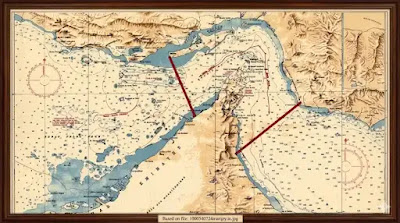
    Oil tanker in the Strait of Hormuz with rising global crude oil price charts.

    Honestly, if you’re sitting in the US or Europe thinking the Middle East is just a distant news story, it’s time for a wake-up call. Straight up—what’s happening right now is a financial chain reaction hitting your wallet in real-time. Whether you are trading on Wall Street or just trying to manage your monthly bills in London, the ripples from the Persian Gulf are coming for you. Let’s break down the three massive dominoes that are changing the game for every investor.

     The UAE Refinery Hit: Why Your Energy Bills are Spiking

    ​Look, the first big shock came with the reports of attacks on UAE oil refineries and the Fujairah port. For years, the UAE has been seen as the “safe vault” of the Middle East—a stable hub for global energy. But when missiles hit refineries, that illusion of safety disappears instantly.

    ​To be fair, the market’s reaction was brutal. We aren’t just speculating about $100 oil anymore; that’s old news. With Brent Crude already flirting with $118 per barrel, we are looking at a massive spike in heating and fuel costs across the West. When a major producer like the UAE faces direct hits, supply stability vanishes. For an investor in Western markets, this means transport costs are about to skyrocket. From the price of a flight from New York to London to the cost of shipping goods across the Atlantic, everything is tied to that $118+ price tag.

    War Impact on Your Money


    Crude Oil                 🚀 UP                     UAE refinery attacks and Hormuz blockade threats.

    Gold & Silver           📈 UP                      Safe haven; people run to gold when missiles fly.

    Defense Stocks        💰 UP                             Massive US-Israel weapon deals ($900M+).

    Tech/Retail Stocks   📉 DOWN                    High energy costs eat into company profits.

    Shipping Costs         🚢 UP                           10x jump in War Risk Insurance premiums.

    ​ 

    The Korean Tanker & The “Permission” Route

    ​Properly speaking, the fire on the South Korean tanker near the Strait of Hormuz was the second domino to fall. This is where the situation turns from a local conflict into a global supply chain nightmare.

    ​You have to understand the ground reality: the Strait of Hormuz is under total Iranian control. Nothing—and I mean nothing—moves through that gate without their nod. When tankers start catching fire, it sends a clear signal: the era of “free and easy passage” is over. Now, shipping companies have to deal with the reality that they either pay a “geopolitical tax” or risk losing their entire cargo.

    ​This leads us to the “Insurance Nightmare.” Maritime finance experts are watching in horror as “War Risk Insurance” for tankers in the Gulf has jumped by nearly 10x. Shipping companies aren’t charities; they pass these massive costs directly to you. This is why “free shipping” on global orders might soon become a thing of the past. It’s a hidden inflation driver quietly eating into corporate margins from Berlin to Chicago.
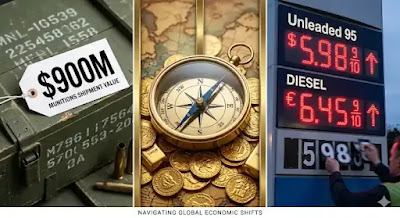
    US-Israel weapon deals and rising energy costs on global consumer inflation.


    The $900 Million Hardware: The Business of War

    ​While the seas are burning, the warehouses are filling up. The third domino is the massive influx of US weaponry into the region—over 6,500 tons of munitions and a fresh $900 million deal for Israel.

    ​Look, this isn’t just about military strategy; it’s about Weapon Economics. While the average person is worrying about the price of gas, defense giants like Lockheed Martin and Raytheon are seeing their order books fill up for years to come. It’s a grim cycle—instability in the East leads to massive orders for the West’s defense sector. For a savvy investor, it shows a clear divide: while the “Consumer” economy struggles with high energy costs, the “Defense” economy is reaching for the stars.

    The “New Normal” for the Global Investor

    ​Straight up, the buildup of US naval forces and the “Attack Mode” status of regional powers suggest this isn’t ending anytime soon. The Strait of Hormuz remains the most crucial pinch point in the world. If Iran decides to tighten its grip even further, we aren’t just looking at a price hike—we are looking at a full-scale financial meltdown.

    ​Honestly, we are seeing the weaponization of global trade routes. When a single narrow strait can dictate the price of your commute and your groceries, the old rules of finance no longer apply.

    What you should consider right now:

    • Watch the Gate: If the Strait of Hormuz is fully blocked, expect another 15-20% jump in crude oil prices almost overnight.
    • Hedge with Gold: In times of war and high inflation, Gold remains the ultimate “Safe Haven.” It’s time to look at gold as an anchor for your portfolio.
    • Don’t Panic Sell: Look, markets always dip during the first phase of a conflict. History shows they eventually recover, but the winners are those who don’t let fear dictate their trades.

    ​Properly understood, this is a time for caution and deep analysis. Stay sharp, keep your emergency funds liquid, and remember—in a world of uncertainty, information is your only real protection.

    Frequently Asked Questions (Common Doubts)


    1. Is it safe to travel or ship goods through the Strait of Hormuz?

    Properly speaking, no. With Iran demanding “permission” and tankers catching fire, it’s a high-risk zone. Most shipping companies are either paying huge insurance premiums or taking the long way around Africa, which makes everything more expensive.

    2. Why is my Amazon or global delivery getting delayed?

    Look, it’s simple. When the Strait of Hormuz is under pressure, the global supply chain chokes. Ships have to wait or change routes, and the extra insurance cost means companies might hold shipments until it’s “safe.”

    3. Should I sell all my stocks right now?

    To be fair, panic is the worst financial advisor. History shows markets dip when war starts,s but recover once the situation stabilizes. The smart move? Diversify into gold and energy rather than exiting completely.

    4. Will oil prices really hit $150?

    If the “gate” (Strait of Hormuz) stays closed or the UAE refineries face more hits, then yes. We are already at $118, and $150 is just one major escalation away.

    Note: This is for educational purposes only. Not financial advice. We are not SEBI-registered.

  • Why 2026’s Gas Crisis Gets Messy

    The Day the World’s Gas Tank Ran Dry: Why 2026 is Getting Messy


    Digital Toll,' focuses on a dusty,

    Honestly? If someone had told me last Christmas that 2026 was going to look like this, I’d have told them they were absolutely mad. But here we are. You turn on the news for five minutes, and your head just starts spinning, doesn’t it? Yeah, yeah, we’ve all seen the Iran stuff on Twitter and the telly. But it’s not just about troops or boats anymore. It’s about money. Your money. Those flights you wanted to take this summer. Hell, even what you’re gonna be eating for dinner next week. It’s a proper nightmare, isn’t it?


    That Tiny Strip of Water

    ​Right, so here’s the deal. There’s this little stretch of sea called the Strait of Hormuz. A bit of a boring name, I know. But listen—it’s basically a massive highway for the world’s oil. And Iran? Well, they’ve pretty much hung a giant “closed for business” sign on the front door.

    ​I was reading up on this guy Mohsen Rezaei lately. He’s a big shot over there. And look, he’s not blinking. He’s literally telling the world that no one on earth can stop their exports. That’s a massive gamble, a properly huge one, and guess what? It’s already backfiring on normal, everyday people. Take Texas, for instance. Shrimpers—yeah, actual shrimp fishermen—can’t even afford to take their boats out to sea anymore. The fuel is just too pricey. And over here in the UK? The government’s already started warning everyone: get ready for higher food bills and higher energy bills for months on end. This isn’t just a news story anymore. It’s just… life now. And it properly sucks.

    They’re Getting Clever. Too Clever.

    ​The thing is, Iran isn’t just blocking the path and sitting back. They’re actually making money off the whole mess. Some reports are saying they’re “cashing in” on the crisis. Whatever that’s supposed to mean, right?

    ​Well, here’s what it actually means in plain English. They’re charging a fee. You’re a ship,p and you want to pass through? Pay up. But get this—they won’t take US dollars. Nope. Not a chance. They want crypto. Or Chinese yuan. That’s a massive deal, honestly. They’re trying to sneak around the entire Western banking system like it’s absolutely nothing. It’s kinda smart, if I’m being real. But it’s also terrifying. You want your cargo to move? You’ve got to pay in digital coins. It’s basically highway robbery, but with laptops and digital wallets instead of old-school guns.

    Weird Alliances

    ​America and the UK are still sitting there trying to figure out what to do. Meanwhile, other countries aren’t just waiting around for them. Look at Pakistan. They just went ahead and opened a land route into Iran for goods. One news site even called it the “back door” for supplies. Bit cheeky, but hey, it works, doesn’t it?

    ​Then you’ve got Russia. Their defence minister—Andrei Belousov, some guy I’d never heard of before this—has been having these quiet little chats with Iranian officials over in Kyrgyzstan. Russia keeps saying they want peace. Yeah, right. Pull the other one. They’re clearly cosying up to Tehran. And then you’ve got France’s Macron. He’s trying to be the “nice guy” as per usual, promising to talk to Iran about reopening the strait. But then the UK deputy minister comes out and says they won’t back a US blockade of Iranian ports. So even the “good guys” are bickering with each other now. It’s a total and utter mess.

    Wars Cost More Than You Think

    ​Look, everybody knows war is expensive. We’re not stupid. But this is way worse than the “experts” said. A big news outlet just leaked that Iran damaged those US military bases way more than anyone was willing to admit at first. We’re talking billions. With a B.

    ​And where do you think that money actually comes from? It comes from us. You and me. It’s inflation. It’s higher taxes. And it’s not just about tanks and bombs, is it? Airlines are cancelling flights left, right, and centre because jet fuel has become a luxury item. The ones that are still flying? They’re adding these massive “surcharges” to your ticket price. That holiday you were dreaming about? Yeah. You might actually need to sell a kidney just to afford the baggage fees at this rate.

    So… Any Hope?

    ​There is some chatter that Trump might actually take a deal from Iran to stop the bleeding. A former US official told Al Jazeera that there’s a proper proposal on the table right now. The idea is to reopen the trade routes first and then worry about the “nuclear stuff” later on down the line.

    ​But come on, let’s be real. Will that actually work? That nuclear thing is a total nightmare to solve. Reopening the Strait? Sure, that’s the easy bit. But trust? Nobody trusts anyone anymore. It’s like trying to glue a smashed-up mug back together. Yeah, it’ll hold your tea for five minutes. But you can still see all the cracks. And you just know deep down it’s gonna leak all over the table eventually.

    What This Means for You

    ​Look, I’m not saying all this just to ruin your Tuesday afternoon. I’m saying it ’cause we all need to wake up a bit. A digital wallet and a narrow bit of water can change the world way faster than any politician opening their mouth at a press conference.

    ​The days of cheap flights and cheap gas? Honestly, they’re disappearing. Whether it’s Iran demanding crypto or the UK scrambling for a backup plan, the ground is properly moving under our feet. It’s scary stuff, right?

    ​So tell me straight. Should we just pay this “crypto tax” and get things moving again? Or is that just rolling over and letting them win? Drop a comment below. And hey—maybe start looking for that old bike in the garage. Because let’s face it, petrol’s not getting any cheaper anytime soon, is it!


    Common Questions (FAQ)


    1. Is the Strait of Hormuz actually closed right now?

    Look, “closed” is a bit of a strong word, but it’s basically under a massive blockade. Iran is controlling who goes in and out, and they’re making it properly difficult for anyone they don’t like to pass through. It’s a total chokehold on global trade.

    2. Why is Iran asking for Crypto instead of Dollars?

    Honestly? It’s a cheeky way to dodge Western sanctions. Since the US controls the dollar system, Iran is trying to use digital coins and the Chinese Yuan to keep their money moving without anyone being able to freeze their accounts. It’s high-tech dodging, straight up.

    3. Will my flight prices keep going up?

    To be fair, yes, probably. Jet fuel is a massive part of a ticket’s cost. With the sea routes blocked, getting oil moved is costing a fortune, and airlines are passing that cost right down to us. Watch out for “extra fees” on your next holiday booking.

    4. Can Trump really fix this with a deal?

    There’s chatter about it, but it’s complicated. Reopening the water is one thing, but solving the nuclear drama is a whole different beast. It’s like trying to fix a marriage after a massive row—it takes more than just a quick chat to bring the trust back.

    5. How does this affect people in the UK and the US?

    It hits you right in the wallet. From the price of a pint of milk to the petrol in your car, everything gets more expensive when energy costs spike. Plus, if those US military bases need billions in repairs, that’s taxpayer money being used up.

    Note: This is for educational purposes only. Not financial advice. We are not SEBI-registered.