Tag: ​ ESG Investing

  • Green Trade War: The Global Impact of EU’s CBAM

     The Green Trade War: EU’s CBAM and Its Global Impact
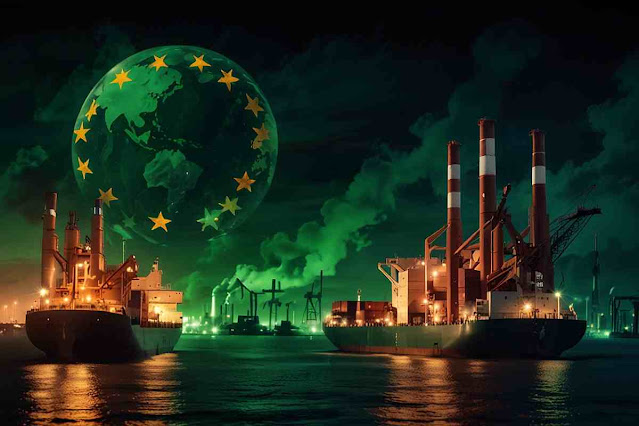
    global trade under pressure

    By Dr. Elena Vasquez, Senior Global Economist and Financial Journalist

    Published: 31 December 2025

    As the world grapples with climate change, trade policies are becoming weapons in a new kind of battle. The European Union’s Carbon Border Adjustment Mechanism (CBAM) stands at the forefront of this “green trade war.” Launched in its transitional phase in 2023, CBAM fully kicks in from January 2026, slapping carbon fees on imports of high-emission goods like steel, cement, and aluminum. This mechanism aims to stop “carbon leakage”—where dirty production flees to laxer shores—but it risks sparking retaliation and widening trade deficits. For institutional investors, trade professionals, and policy analysts in the USA, UK, and EU, understanding CBAM’s ripples is crucial. It could reshape supply chains, inflate costs amid the UK’s Cost of Living Crisis, and jolt NASDAQ-listed firms tied to global commodities.

    Drawing on fresh insights from the IMF and World Bank, this article dissects CBAM’s bite. The IMF estimates it adds just 0.1% to EU import values overall, but hits specific sectors hard, with costs up to 1.2% for exporters. Developing nations like India face GDP dips of 0.02-0.03%, while cleaner producers might gain an edge. Yet, as deglobalization accelerates—think US-China frictions—CBAM could fragment markets further. We explore geopolitical tensions, sector shocks, regulatory horizons, and a mini case study on India. The bottom line? Hedge now: diversify suppliers, back low-carbon tech, and watch WTO skirmishes.

    In this piece, we blend hard data with forward-looking analysis. CBAM isn’t just policy; it’s a pivot point for sustainable finance. Read on to arm your portfolios against the green storm.

    Executive Summary

    The EU’s CBAM marks a bold stroke in the fight against climate change, but it ignites a green trade war with far-reaching consequences. By pricing the carbon embedded in imports—starting with cement, iron and steel, aluminum, fertilizers, electricity, and hydrogen—CBAM levels the playing field for EU producers under the Emissions Trading System (ETS). From 2023-2025, it’s been a reporting trial run; come 2026, importers pay up, aligned with the phase-out of free ETS allowances. This could generate €5-14 billion annually for the EU, per OECD estimates, while curbing leakage that offsets 13% of emission cuts in heavy industries.

    Globally, impacts vary. The World Bank’s CBAM Exposure Index reveals that developing exporters like Mozambique could lose 6% of aluminum export value to the EU, while low-intensity players like Ghana gain. For the EU, direct trade hits are modest—0.1% import value hike—but politically charged in steel and aluminum. Trading partners face 0.04% average export cost rises, peaking at 1.2% for vulnerable nations. IMF models show welfare losses for high-emission exporters, urging domestic carbon pricing as a buffer.

    Geopolitically, CBAM fuels discord. At COP30 in 2025, India decried it as protectionist, violating WTO rules and Paris Agreement equity. China eyes retaliation via its ETS expansion, while the US mulls the Clean Competition Act—a mirror BCA—to shield its Inflation Reduction Act gains. This risks a patchwork of tariffs, accelerating deglobalisation and inflating trade deficits.

    Market-wise, energy sectors brace for electricity import curbs, potentially sparking a “power crisis” in interconnected grids. Finance feels the strain through higher compliance costs and stranded assets; tech firms, especially EU-based, forecast 0.5% turnover drops in 2025.

    Regulatory outlooks point to expansion: EU reviews in late 2025 could add downstream products like scrap metal. The Green Deal pushes net-zero by 2050, but clashes with the US Trade Acts, prioritizing domestic green jobs.

    Our mini case study on India highlights risks: 90% of CBAM-exposed exports are steel, shaving 0.03% off GDP without countermeasures. Yet, a domestic carbon tax could flip this, recycling revenues into renewables.

    The Bottom Line: Investors, pivot to low-carbon leaders like ArcelorMittal’s green steel bets. Policymakers negotiate multilateral BCAs. CBAM heralds a carbon-priced world—adapt or pay the premium.
    (more…)

  • ONEOK’s Q2 2025 Earnings Surge on Energy Sector Tailwinds

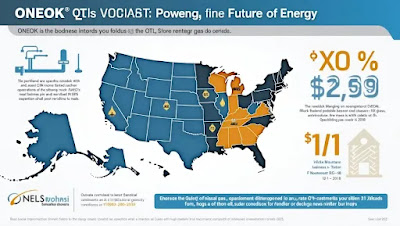
    ONEOK’s segment-wise performance


    The Energy Giant Everyone’s Missing: Why ONEOK’s Q2 2025 Numbers Are a Massive Deal


    ​Look, I get it. Reading through an energy company’s earnings report sounds about as exciting as watching paint dry. But honestly, if you’re trying to grow your money in 2026, you can’t afford to ignore what ONEOK just did. While most people are chasing the latest AI hype, this Tulsa-based giant is quietly making a killing by moving the fuel that actually keeps the world running.

    ​Straight up, their Q2 2025 results weren’t just “good”—they were a proper statement of intent. We’re talking about a net income of $853 million and a profit jump of 22%. But beyond the spreadsheets, there’s a massive story here about global demand, smart shopping, and why even a student or a young pro should be looking at “boring” pipeline stocks.

    ​ Who is ONEOK and Why Should You Care?

    ​To be fair, ONEOK isn’t a name you’ll see on a petrol station sign like Shell or BP. They are “midstream” players. Think of them as the logistics managers of the energy world. They own over 60,000 miles of pipes. If drillers are the farmers and refineries are the supermarkets, ONEOK is the fleet of trucks that makes sure the goods actually get delivered.

    ​Whether it’s the natural gas heating a flat in London or the NGLs used to make the phone you’re holding, ONEOK is likely the one moving it. They sit right in the middle of the supply chain, and in Q2, they proved that being the “middleman” is a very profitable place to be.

    ​ The Essential Numbers You Should Know

    ​On 4th August 2025, ONEOK dropped its earnings, and the investors were buzzing. Here’s the real talk:

    • The Cash: Their adjusted EBITDA (that’s the money left over after the bills are paid) hit $1.98 billion. That is a massive 22% leap from last year.
    • The Dividend: They’re paying out $1.03 every quarter. That’s a 5% yield. In a world where savings accounts give you peanuts, getting 5% just for holding a stock is pretty decent.
    • The Efficiency: They managed to pay down nearly $600 million in debt. They aren’t just making money; they’re cleaning up their house.

     Why the Profits Surged (The “Shopping” Effect)

    ​You might wonder how a pipeline company suddenly grows by 22% in a year. Honestly, it’s because they’ve been shopping. In May 2025, they secured complete ownership of Delaware G&P in the Permian Basin. For those who don’t know, the Permian is the “holy grail” of American oil and gas.

    ​By owning the whole thing, they added $89 million to their profits in just a few months. It was a chess move while everyone else was playing checkers. They also grabbed a bigger slice of the BridgeTex pipeline, which moves crude oil straight to the Gulf Coast for export. It’s all about scale—the bigger the network, the more “tolls” they collect.

    ​ The “India Factor” and Global Demand

    ​Here’s something most people miss: what happens in Mumbai affects what happens in Oklahoma. India’s energy demand is set to skyrocket by 60% by 2030. They need gas for factories, cooking, and power.

    ​ONEOK is perfectly positioned for this because of its export terminals on the Gulf Coast. When India buys more gas, it flows through ONEOK’s pipes. For an investor, this means you aren’t just betting on the US economy; you’re betting on the growth of 1.4 billion people on the other side of the planet.

    ​ Is Energy Still “Green” Enough?

    ​Look, we all want a cleaner planet. Some people think pipeline companies are dinosaurs, but ONEOK is actually leading the way on the “ESG” front. They’ve got an AAA rating from MSCI. That’s top-tier stuff.

    ​They aren’t just blowing smoke; they’re using drones to find leaks and building plants that can handle carbon capture. They’re proving that you can be an oil and gas powerhouse while still playing by the new rules of the 21st century. For younger investors who care about the planet but still want to make a profit, this is the “Goldilocks” zone.

    ​ A Closer Look at the Business Segments

    ​To properly understand the growth, you’ve got to see where the money comes from. ONEOK isn’t a one-trick pony:

    • Natural Gas Liquids (NGL): This is their bread and butter. It brought in $673 million. These are the liquids used for plastics and heating.
    • Refined Products: This segment surged because of the new acquisitions. They moved more petrol and diesel during the summer driving season than ever before.
    • Gathering and Processing: This was the star of the show, growing by 46% year-over-year.

     What About the Risks?

    ​It wouldn’t be fair to tell you it’s all sunshine and rainbows. Energy prices can be volatile, and governments love to change the rules on pipelines. If there’s a massive global recession, demand for gas drops.

    ​However, ONEOK has a “fortress” balance sheet. 90% of their contracts are “fee-based,” which means they get paid for the volume of gas moved, not the price of the gas itself. Even if gas prices tank, as long as people are still using it, ONEOK gets its cut.

    ​ The Investor Playbook: What Should You Do?

    ​If you’re looking at these Q2 2025 numbers and wondering if you should jump in, here is a bit of friendly advice:

    1. Don’t Chase the Hype: ONEOK is a “slow and steady” winner. It’s perfect for a “buy and hold” strategy.
    2. Reinvest the Dividends: Use the $1.03 payouts to buy more shares. In 10 years, you’ll thank yourself.
    3. Watch the Global Trends: If you see India or China signing more gas deals, know that it’s good news for ONEOK.

     Looking Forward to the Rest of 2025 and 2026

    ​The company hasn’t changed its targets for the year, which shows they are confident. They’re expecting to finish 2025 with around $8 billion in total profit. With new projects like the Elk Creek pipeline coming online soon, the growth isn’t stopping anytime soon.

     The Bottom Line

    ​Honestly, ONEOK’s Q2 2025 report is a roadmap for how energy companies can survive and thrive. They’ve got the assets, they’ve got the cash, and they’ve got the global links. Whether you’re a seasoned pro or just starting out, this is a company that deserves a spot in the conversation.

    FAQs for the Savvy Investor


    Were the Q2 earnings a beat? 
    Yeah, they hit $1.34 per share, beating what the “experts” predicted.
    Why did the stock price dip slightly after? 
    Sometimes the market “sells the news,” but the long-term fundamentals are still rock solid.
    How does India’s growth help? 
    More exports mean more volume through ONEOK’s Gulf Coast pipes. Higher volume = higher “tolls.”

    Note: This is for educational purposes only. Not financial advice. We are not SEBI-registered.