Tag: Financial Advice

  • The 2026 Global Squeeze: War, Taxes, and Your Cash

    The Global Domino Effect: Why 2026 is Reshaping Your Portfolio
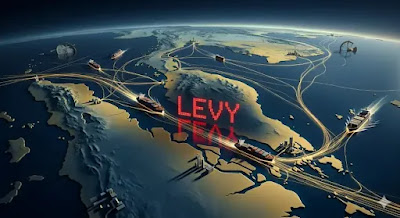

    Malacca Strait shipping levy global trade impact 2026

    Actually, if you’ve been looking at the geopolitical headlines from late April 2026, you’d realize we aren’t just looking at “news” anymore. We are looking at a fundamental shift in how global wealth and trade are going to function for the next decade. From the shipping lanes of Indonesia to the oil tankers in Chabahar, the financial map is being redrawn right in front of our eyes.

    In fairness, most people see a “war” or a “blockade” and think it’s just about politics. But as a financer, I see it as a massive supply-chain tax that is about to hit every single consumer.

    The Malacca Levy: A New Tax on Global Trade

    Essentially, the biggest shock this week didn’t come from a battlefield, but from the finance ministry of Indonesia. Suggesting a levy on ships transiting the Malacca Strait is a game-changer. Basically, the Malacca Strait is the jugular vein of global trade. Over 25% of the world’s traded goods pass through that narrow stretch of water.

    ​If Indonesia moves forward with this, every smartphone from Taiwan, every barrel of oil from the Middle East heading to East Asia, and every car part moving toward Europe just got an “entry ticket” price hike. In fairness, this isn’t just a small fee; it’s a ripple effect that will manifest as inflation on your local store shelves within months. When the cost of transport goes up, the consumer always pays the bill.

    The Weapon Drain: Defense Stocks and the Six-Year Gap

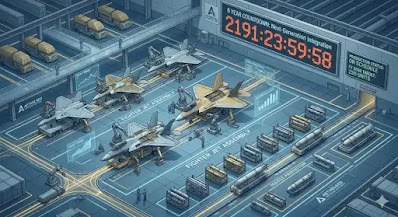
    Look, the New York Times recently dropped a report that should have every defense investor sitting up straight. The US weapon stockpiles are being depleted so fast by the Iran conflict that replacing them could take up to six years. Actually, this has created a massive strategic “gap” in defending other regions like Taiwan.

    ​From an investment perspective, this is a “Higher for Longer” scenario for the defense sector. Basically, companies like Lockheed Martin, Raytheon, and Boeing aren’t just looking at a good quarter—they are looking at a guaranteed, taxpayer-funded order book that stretches into the 2030s. If the US needs six years to refill its shelves, that is a decade of sustained demand. In fairness, while the rest of the market might be volatile due to war fears, the defense sector has become the ultimate “safe haven” with a government-backed guarantee.
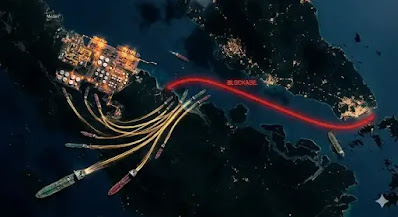
    Iran oil tankers bypassing US blockade to China data 2026

    The Failed Blockade: Oil, China, and the Iran Leak

    Actually, the most fascinating data point this week is the failure of the US oil blockade. Despite the “maximum pressure” and naval patrols, Iran has managed to ship over 10 million barrels of oil to China since the blockade began. Essentially, the “Tanker Tracker” data shows that ships like the HERO2 and DIONA are simply exfiltrating the blockade lines and returning to Chabahar like it’s business as usual.

    What does this mean for your money? Basically, it proves that the era of Western-led economic sanctions is losing its teeth. If a country can ignore a superpower’s blockade and still move 10 million barrels of its primary export, the global oil price is no longer being controlled by Washington. In fairness, this makes energy prices incredibly unpredictable. We are likely to see a “floor” on oil prices that stays much higher than analysts predicted, simply because the demand from China is acting as a permanent safety net for sanctioned oil.

    The Squeeze on the Average Voter

    Essentially, the Financial Times was right to warn that the “Iran war will squeeze US voters long after the conflict ends.” But this isn’t just a US problem—it’s a global one. The massive spending on military intervention, combined with the rising cost of energy and the new shipping levies in the Malacca Strait, is creating a perfect storm for “Stagflation” (stagnant growth + high inflation).

    Actually, your bank account is being attacked from three sides:

    1. Import Inflation: Thanks to the Malacca levy.
    2. Energy Inflation: Thanks to the failing blockade and Middle East instability.
    3. Debt Inflation: As governments print more money to fund a six-year weapon replenishment cycle.

    Actionable Financial Advice: How to Position Your Capital

    Basically, you cannot afford to be passive in this market. If you’re sitting entirely in cash, inflation is going to eat your purchasing power for breakfast. In fairness, you need a strategy that benefits from this chaos rather than being a victim of it.
    US military weapon stockpile depletion and defense stocks 2026

    1. The Infrastructure and Defense Play:

    As long as the “Six-Year Replacement” cycle is active, defense contractors are high-conviction holds. They are essentially protected from the broader economic slowdown because their revenue is a matter of national security.

    2. Commodities and Energy Divergence:

    With the Iran-China oil corridor wide open, traditional energy stocks might see volatility, but companies involved in shipping and maritime logistics are in a strong position. Actually, the tankers that can navigate these high-risk zones are charging a “risk premium” that is pure profit.

    3. The “Make in India” Hedge:

    India is currently a neutral ground. With the Malacca Strait becoming a high-tax zone, Indian ports like Chabahar (which Iran is already using) and the domestic manufacturing push are becoming vital alternatives. Basically, India is the “exit ramp” for companies looking to avoid the chaos of the South China Sea and the Middle East.

    The Final Verdict for 2026

    Essentially, the world is moving away from a “Free Trade” model to a “Secured Trade” model. Trade is no longer about who is cheapest; it’s about who can actually get the goods through the blockades and the tax zones.

    Actually, the 4.8x housing illusion or the Nvidia stock dips we discussed earlier are all connected to this. When the world is at war and shipping lanes are being taxed, the “cost of living” becomes the primary driver of all asset prices. In fairness, 2026 is the year when “Macro” (big world events) matters way more than “Micro” (company earnings). Keep your eyes on the straits and your portfolio in the “essentials.”

    FAQ 


    Q: Will Indonesia’s Malacca levy really affect my daily expenses?

    Actually, yes. If a ship carrying 10,000 containers has to pay a new levy to pass through the strait, that cost is divided and added to the price of every item in those containers. From your next laptop to your groceries, the cost of transport is a “hidden tax” you can’t avoid.

    Q: Is it too late to invest in defense stocks?

    Basically, no. Since the US government itself admits it will take six years to replace what has been fired, we are at the very beginning of a long-term production cycle. In fairness, wait for a market dip to enter, but the long-term fundamentals are very solid.

    Q: Why is the Iranian oil blockade failing?

    Essentially, it’s about “Shadow Fleets” and the demand from China. When a buyer as big as China refuses to follow the blockade, it becomes nearly impossible to stop the flow of oil without a direct naval war, which most countries are trying to avoid.

    Note: This is for educational purposes only. Not financial advice. We are not SEBI-registered.
  • Iran Crisis & Your Money

    The Boiling Point: Iran Crisis – It’s Gonna Hit Your Wallet and Your Heart


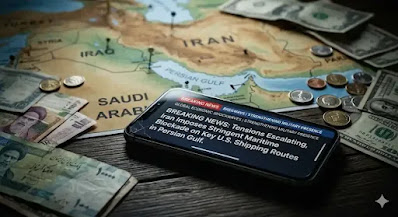
    map Middle East and some Mobil cash and coins
    I don’t even know where to start. Three hours. That’s how long I’ve been sitting here, staring at my screen, trying to wrap my head around what’s happening. You know how it is – my job is to look at charts and numbers all day. You train yourself to stay calm and keep your distance. But then you see reports from the Iranian Forensic Organization saying that 40% of the people killed in this conflict… they can’t even be identified properly. Missiles did that. Families erased. Names gone forever. And suddenly, all those financial graphs feel useless. Behind every dip in the market, there’s real human suffering. No spreadsheet can ever show you that.
    But here’s the thing – I’m your finance guy, so I’ve got to tell you the uncomfortable truth. This tragedy? It’s coming from your pocket, too. We’re at a massive turning point. And honestly? The signs are pointing toward a global financial storm that could make previous crashes look like a light drizzle.

    That Little Stretch of Water That Controls Everything

    Let me explain something. Everyone keeps calling it a “shipping route.” But no. The Strait of Hormuz? That tiny strip of water? It’s basically the world’s main power switch. And right now, someone’s finger is hovering right over it. If that “tap” gets turned off, the whole world goes dark.
    I’m not talking about gas prices going up a few cents at the pump. No. I’m talking about a total blackout of the global economy. Nearly one-fifth of the world’s oil goes through that channel. If it gets blocked, the market stops being a market. It becomes a battlefield. When oil hits $150 or $200 a barrel – and it can – that’s not just a scary number. That’s the system breaking down.
    Think about it. If that oil stops moving, everything else stops too. Your bread, your Amazon package, your morning commute – all tied to fuel. When energy prices explode like this, your bank balance just melts away. Inflation stops “biting” and starts swallowing your savings whole. And who pays the price? Regular people who didn’t start any war.
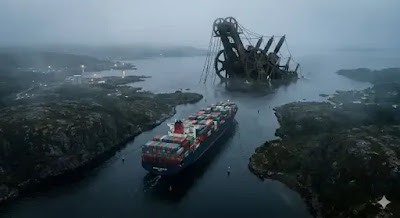
    ship navigating through a narrow

    ​📊 Check Today’s Urgent Market Report & Financial Analysis

    (Sponsored Ad)

    Even the Calm Guys Are Freaking Out

    You know Fatih Birol? He runs the International Energy Agency. That guy is never dramatic. He’s all about data, very calm. But even he says this is the “biggest energy crisis in history.” Think about that. We already had that mess with gas in Europe. Now add a massive fire in the Middle East. Perfect storm.
    I’ll be real with you – I’m scared for the average person. A lot of people are already having trouble covering their bills. If energy markets shatter, we’re looking at years of recession. Not just numbers on a screen. Real questions like: Can you heat your home? Can you cook dinner? Can you afford to drive to work? Even the European Central Bank came out and said Europe is facing a “prolonged fallout.” When central bankers start talking like that, you know it’s bad.

    Trump, Pakistan, and That “Ceasefire” Thing

    Now politics. This is where it gets properly messy. Trump dropped a big statement out of nowhere. Apparently, Pakistan’s Prime Minister and their Army Chief asked him to hold off on attacking Iran. So for now, no full-scale attack.
    On the surface, that sounds great, right? Wall Street traders probably breathed a sigh of relief. But don’t get too comfortable. Trump made it very clear – the “Military Blockade” stays.
    In the finance world, a blockade is almost as bad as a war. Ships aren’t moving freely. Goods aren’t flowing. Uncertainty is stuck at an all-time high. And let me tell you – investors hate uncertainty more than they hate bad news. As long as warships are circling the Gulf, the “risk premium” on oil stays high. We’re basically in suspended animation, just waiting to see who blinks first.

    Why This Time Feels Different

    I’ve watched a lot of market crashes. But this one… I don’t know. It feels different. Properly different. Usually, you get either a financial problem (like a bank failing) or a political problem. Right now? We have both. Plus a human catastrophe. Plus a military standoff. The energy supply chain is hanging by a single thread.
    Europe is already fragile. If they lose stable energy, the Euro could collapse. And that would send shockwaves through the entire global banking system. Domino effect. Nobody is ready for it. How do you build confidence when that tension is always there, simmering under the surface?
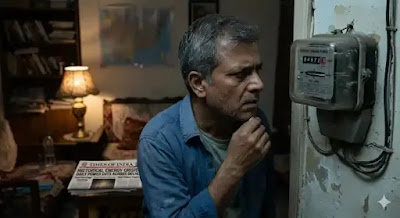
    old-fashioned electricity meter

    The Money vs. The Human Cost

    I’ll be honest – it feels wrong to sit here and talk about “buying the dip” while thousands of people are trapped in a war zone. When you read about forensic teams who can’t even identify bodies because of how powerful the weapons are… all this financial talk starts to feel shallow. Heavy, you know?
    But this is my job. To protect you and your future. And the best way to do that right now is to accept that the world has changed. The era of cheap, easy energy? Over. For the foreseeable future, we’re living in a world of volatility – sudden, sharp price swings that come out of nowhere.
    If you’ve got investments, stay cautious. This is not the time for hero trades or betting your life savings on a quick bounce back. The situation is too fluid. One missile in the wrong place. One wrong move in the Strait of Hormuz. One failed diplomatic meeting. And the markets will gap down faster than you can hit sell.

    My Final Thoughts

    I really want to be optimistic. I do. I want to believe the ceasefire will hold, that Pakistan’s diplomacy will work, and that oil will keep flowing. But looking at the threats coming out of that region, and how stubborn the major powers are being… I just don’t see a smooth exit.
    So yeah. Hope for the best. But prepare for a bumpy ride. This war has already crossed borders. It’s at your petrol station. It’s in your utility bill. It’s in the eyes of everyone worried about tomorrow.
    Keep an eye on three things. One – what’s happening with tankers in the Strait of Hormuz? If they stop, the global economy stops. Period. Two diplomatic channels. Can anyone actually broker a real peace, or is this just a delay? Three – oil inventories. How much cushion do we have left before things get truly desperate?

    FAQ. Just real answers. 

    Q1. Why should I even care? I don’t live near Iran.
    See. I get it. You’re far away. But here’s the thing – that mess over there? It’s already here. Your gas station? Yeah. Your electricity bill? Yep. Even the price of bread and vegetables. How? There’s this small water passage called the Strait of Hormuz. 20% of the world’s oil passes through it. Twenty percent. If that gets blocked, oil prices don’t just rise. They explode. And when oil explodes, everything else follows. So yeah. You should care.
    Q2. What is this Strait of Hormuz anyway? Why is everyone so scared of it?
    Imagine a narrow little channel. That’s it. Between Iran and Oman. Not very wide. But every single day, almost one-fifth of the world’s oil goes through there. Tankers from Saudi Arabia, UAE, Kuwait, Iraq – all squeezing through. If someone blocks it, even for a few days, oil prices hit $150 or $200 a barrel. That’s not a normal spike. That’s a heart attack for the whole global economy.
    Q3. I heard about a ceasefire. So things are getting better, right?
    Not really. Let me explain. Trump said he’s holding off on a full attack on Iran. Why? Because Pakistan’s PM and Army Chief asked him to. That’s good news on the surface. But – and this is a big but – he also said the military blockade stays. Warships are still circling the Gulf. Tankers aren’t moving freely. Uncertainty is still crazy high. A ceasefire without lifting the blockade? That’s like trying to solve something serious with a surface-level fix. Looks fine on the outside. Inside? Still broken.
    Q4. How does this hit my daily expenses?
    Simple. Oil price up. Transport costs up. Everything you buy goes up. Your groceries. Your Amazon orders. Your drive to work. Even local stuff because factories run on energy. That’s inflation. But not the slow kind. The kind that eats your savings in a few months. If you’re already struggling with rent and bills? Yeah. This is going to hurt. A lot.
    Q5. The IEA chief called it the “biggest energy crisis in history.” Is he overreacting?
    No. That guy, Fatih Birol – he’s not dramatic. He’s a data person. So when he says that, you should listen. What he means is that Europe was already in a gas crisis because of the Russia-Ukraine conflict. Now you add a potential oil shock from the Middle East. Two massive energy disasters are happening at the same time. That’s never happened before. It’s a perfect storm. Everything is breaking together.
    Q6. Can this be resolved quickly?
    Probably not. I mean, diplomats are talking. But nobody is backing down. The blockade is still there. Warships are still there. Both sides are stubborn. Even if a full war doesn’t start, the threat alone keeps oil prices high. Investors hate uncertainty. So as long as that tension exists, the “risk premium” on oil stays high. That means you keep paying more at the pump. Even if no missile is fired.
    Q7. What should I do with my savings or investments?
    Don’t be a hero. Seriously. This is not the time to bet your life savings on a quick market recovery. The situation changes every single day. One failed meeting. One wrong move in the Gulf. Markets can crash within hours. Keep some cash aside for emergencies. And don’t chase “cheap” stocks thinking they’ll bounce back tomorrow. They might not. They could go even lower.
    Q8. Give me three things to watch.
    Fine. Three things.
    First – the Strait of Hormuz. If tankers stop moving, the global economy stops. Period.
    Second – diplomatic news. Is anyone actually making progress? Or are they just delaying?
    Third – oil inventory reports. How much stored oil does the world have left? That’s the last cushion.
    Q9. This is all so depressing. Any good news at all?
    I wish I had some. The only “good” news is that a full-scale war hasn’t started yet. But a blockade is almost as bad. All we can do is hope for real diplomacy, prepare for higher prices, and remember that behind all these charts and numbers, real people are suffering. You can earn money back. You can’t earn a life back.

    Note: This is for educational purposes only. Not financial advice. We are not SEBI-

    registered.