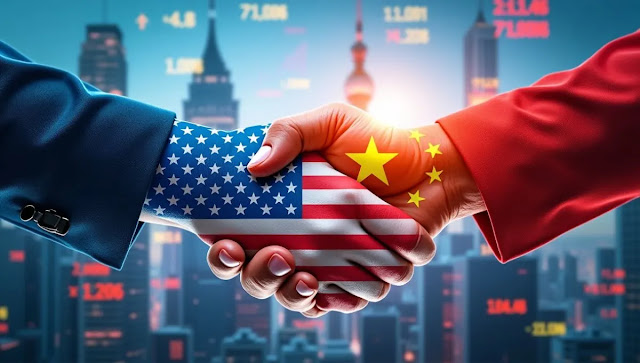
Green Screens and Trade Dreams: Is the U.S.-China Pact Finally Real?
I was standing in a massive queue for chicken rice yesterday, sweating buckets in the Singapore heat, and checking my phone. For the first time in months, the finance news didn’t make me want to just delete the app. Usually, it’s all doom and gloom—inflation, interest rates, you know the drill. But on 27 October 2025, the screens were glowing green. Global stocks were rallying. And for a change, it wasn’t some tech bubble. It was something much more old-school: trade talks. Specifically, the world is getting properly upbeat about a U.S.-China trade pact.
Think about it. The Nikkei 225 actually smashed through the 50,000 barrier. That’s a massive psychological milestone. In New York, the S&P 500 and Nasdaq were hitting fresh records like it was easy. It feels like the world is finally tired of the “tariff wars” and is ready to just get back to business. But is this a real truce, or just another temporary band-aid? Let’s dive into it.
The Malaysia Framework: What’s Actually on the Table?
Look, we’ve been here before. Since 2018, tit-for-tat tariffs have been a real headache for everyone. But the framework sketched out in Malaysia over the weekend feels a bit different. They’re talking about pausing those massive 157% hikes on Chinese goods. That is a staggering number when you think about it. In return, China is looking at cracking down on fentanyl and—this is the big one—buying a boatload of American soybeans and corn again.
It’s a massive “give and take.” And with President Trump and President Xi set to meet face-to-face on 30 October, investors are betting that neither side wants to walk away empty-handed. If they actually shake hands on a long-term deal, it could change the game for supply chains that have been twisted out of shape for years. Fact.
|
Index |
Gain (%) |
Significance |
|---|---|---|
|
Nikkei 225 |
2.46% |
Breached the 50,000 mark for the first time. |
|
South Korea Kospi |
2.57% |
Blistering rally for Asian exporters. |
|
S&P 500 |
1.2% |
35th record close of 2025. |
|
Spain Ibex 35 |
0.87% |
Historic high of 16,000.20. |
The “John Deere” Parallel: Why Farmers are Smiling
I keep bringing up John Deere (DE) in my posts. Why? Because it’s the perfect way to see how global trade hits the “real world.” Back in 2024, Deere’s stock climbed 25% because it bet big on electric tractors. But trade wars? They’re a nightmare for Deere. China is their second-biggest market. When tariffs go up, farmers stop buying harvesters. Simple as.
On 27 October, Deere shares popped 2.1%. Why? Because if those soybean exports to China resume, American farmers get paid. And when farmers get paid, they splurge on shiny new green tractors. When trade tensions eased in 2019, Deere’s stock effectively doubled within six months. We could be looking at a repeat if this pact sticks. Properly exciting stuff for anyone in ag-tech.
Tech and Industrials: Breaking the Handcuffs
It’s not just tractors, though. Across the tech world, there’s a clear sense of relief. The Stoxx Europe 600 Technology Index rose 1.1% because a deal could mean fewer export curbs on high-end chips. Think about firms like Nvidia or Qualcomm. China buys about 40% of Qualcomm’s chips. If the trade war cools down, these giants can finally stop worrying about supply chain snarls and focus on innovation. Straight up.
Industrials are also tagging along. From plane makers like Boeing to massive miners, everyone wins when trade flows freely. Boeing especially has had a rough ride with China lately—orders were down 20% at one point. A truce could be the “fuel” they need to get back on track.
Is it all Champagne and Sunshine?
To be fair, some experts are still telling us to keep the cork in the bottle for now. Rupert Thompson from IBOSS warns that while this “kicks the tension into the long grass,” the deeper rifts—like tech rivalry and security—aren’t going away. And let’s not forget, trade policy can change with a single tweet. One minute it’s a deal, the next it’s a new levy.
Properly speaking, you shouldn’t go “all in” just yet. The summit on 30 October is the real test. If it flops, we could see a 10% dip faster than you can say “tariff.” It’s a “modestly pro-risk” market, but you’ve got to keep your guard up.
The Bigger Picture: Why This Isn’t Just About Stocks
Look, we have to understand the history to see why everyone is so buzzed. This trade spat kicked off back in 2018, and since then, it’s been a proper mess. Tariffs were slapping billions in extra costs on everything from basic steel to high-end semiconductors. China hit back where it hurts—targeting U.S. agriculture. In 2018 alone, soybean exports to the Middle Kingdom plummeted by a massive 74%. That’s a lot of empty silos and worried farmers.
Fast forward to late 2025, and we’re finally seeing a framework that includes nods to rare earth minerals (which we need for EVs) and a proper crackdown on fentanyl. It’s not just a “buy more of our stuff” deal; it’s a strategic truce. For the average punter, this means steadier food prices at the local supermarket and smartphones that don’t cost a month’s rent. Straight up.
Global Ripple Effects: From London to Shanghai
This upbeat mood is lifting sentiment everywhere. In Europe, Spain’s Ibex 35 surged to a historic high, and even the FTSE 100 nudged higher. Asia was the real star, though. South Korea’s Kospi jumped 2.57%, riding the wave of hope for easier access to U.S. markets. When the two biggest economies stop shouting, the rest of the world can finally breathe.
Safe-haven assets like gold and bonds actually took a bit of a breather. Why? Because when people are confident about trade, they move their money out of “safety” and back into “growth.” It’s a classic risk-on move that we haven’t seen this strongly in a long time.
Why This Matters for Your Wallet
Reduced tariffs aren’t just about stock charts. No. They could shave 0.5% off inflation by making imported goods cheaper. Think about your smartphone or even your groceries. If supply chains are smoother, prices stay steadier. Plus, we’re talking about potentially 150,000 new jobs in manufacturing and agriculture if trade volume picks up. It’s a win for the average punter, not just the Wall Street suits. Fact.
Practical Tips for the Coming Month
If you’re looking at your portfolio and wondering what to do, here is my “friend-to-friend” advice:
- Diversify: Don’t just stick to tech. Look at ag-equipment or industrials that have been beaten down by trade fears.
- Watch the VIX: This is the “fear gauge.” It dropped 5% on the day of the rally, which means traders are feeling calm. If it starts to spike, that’s your cue to be cautious.
- Wait for the Summit: The 30 October meeting is the “make or break” moment. Expect some serious volatility around that date.
- Think Long-Term: If the pact sticks, we’re looking at an 8-10% annualised return for equities. That’s a proper nest-egg nudge.
Final Thoughts
Look, the world’s two biggest economies are finally talking again. That’s a good thing. Whether it’s the Nikkei’s milestone or Deere’s farm-fresh bounce, the signs are positive. When it comes to stocks, the reason behind the move matters just as much as the size of it.
Stay sharp. Keep an eye on the headlines coming out of the summit. Don’t let the hype cloud your judgment. Let’s turn this optimism into actual gains for your portfolio.
FAQ: Your Questions on the 2025 Trade Rally
Why are global stocks hitting record highs in October 2025?
Look, it’s all about the buzz coming out of Malaysia. Investors are properly upbeat because the U.S. and China are finally sketching out a trade pact. When the two biggest economies in the world start talking about pausing tariffs, markets like the Nikkei and S&P 500 tend to go into overdrive. Straight up.
How does this trade deal actually help regular farmers?
To be fair, farmers have been hit the hardest by these trade wars. This new framework includes plans for China to buy massive amounts of American soybeans and corn again. That means more money in farmers’ pockets, which then flows into companies like John Deere for new equipment. It’s a proper ripple effect. Fact.
Is it safe to go ‘all-in’ on stocks before the October 30 summit?
Properly speaking, you should still be a bit cautious. While the rally is exciting, trade talks can be famously fickle. One wrong move or a tough tweet from either side could cause a 10% dip faster than you can blink. It’s better to diversify and wait for the actual handshake before making huge bets. Simple as.
Which sectors should I watch during this trade thaw?
Tech and Industrials are the big ones. A deal could mean fewer export curbs on high-end chips, which is huge for companies like Nvidia. Also, watch Boeing and other manufacturers that rely on smooth global supply chains. If the “handcuffs” come off, these sectors are primed for growth.
Note: This is for educational purposes only. Not financial advice. We are not SEBI-registered.
