Tag: Global Inflation

  • Trump’s Iran Deal Blocks Israel’s Plans

    The Hidden Currents: Moving Past the Press Room Illusion
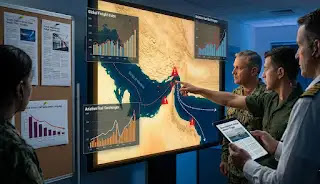
    Hormuz shipping crisis infographic map

    ​If you want to know what’s actually happening with global trade and border treaties right now, you have to look directly at the water. Forget the official press rooms for a second. Look, the reality on the ground is that the whole geopolitical landscape is locked in a massive standoff. It’s crazy because the ripple effects travel straight from regional shipping lanes right into the everyday pockets of working-class people. We’re getting fed one story by major news networks, but the hard economic data tells a completely different tale.

    ​Straight up, the biggest development that everyone is trying to sweep under the rug is the intense pressure being applied to regional leaders by Washington. Just recently, a senior US Senator who is incredibly close to the current administration put out a massive, highly detailed written statement that was nothing short of a direct threat. In a short four-paragraph blast, he explicitly told Arab and Muslim leaders—even naming Pakistan directly—that the time has come to stop playing both sides. The message was simple: jump into the Abraham Accords and fix your relationships with Israel right now, or the US is going to completely rethink its future ties with your country.

    ​The Ultimatum: Trump’s Direct Muslim Country Diplomatic Push

    ​It’s wild because for years, many of these regional players thought they could comfortably lean on Western partnerships while ignoring the structural issues right next door. Ironically, the same force they depended on is now hitting them the hardest. To be fair, this isn’t just coming from senators. Trump himself has been on direct phone calls with multiple Muslim countries, aggressively pushing the exact same narrative. During these heavy chats, the administration made it clear that signing the Abraham Accords is pretty much mandatory if these nations want to keep their cash and diplomatic setups with Washington.

    ​But this sudden rush to force everyone into a peace treaty isn’t happening because Washington is winning. It’s happening because behind the scenes, the administration is frantic to secure a headline victory and pull their military assets out of the theater before the domestic economic damage becomes permanent.

    ​Behind Closed Doors: The 60-Day Pakistan Negotiations

    ​This brings us to what is actually happening under the table between Washington and Tehran. While political commentators on television are acting like nothing is moving, a massive 60-day ceasefire formula is actively being negotiated for the first week of next month in Pakistan. The United States is desperate to stop the expansion of local uranium enrichment programs, but they have zero leverage left on the water. To get any kind of deal, Washington is being forced to agree to a heavy set of conditions: reopening the Strait of Hormuz completely, lifting the brutal maritime blockades on commercial shipping, and releasing billions of dollars in frozen assets that they’ve held for years.

    ​In return, the ground arrangement requires the local naval forces to manually clear the massive minefields and underwater explosives that have effectively locked down international transit routes. The administration is trying to spin this upcoming meeting in Pakistan as a total victory, using AI-generated promotional images showing local fleets being dismantled by Western drones. But anyone with a brain can see through the propaganda. If the current leadership had actually destroyed the region’s missile launchers and naval power like they claim in their media interviews, they wouldn’t be traveling to Pakistan next month to negotiate terms with them. They would have just forced the shipping lanes open by now. The fact that they are sitting down to talk proves that the military deterrence on the water is very real.

    ​The Real Panic: Why Israel is Terrified of the New Ceasefire

    ​And this is exactly why the real panic right now isn’t hitting the wealthy corporate boardrooms in Riyadh—it is completely locking down Tel Aviv. Israel is absolutely sweating over these upcoming negotiations. They know that if the United States signs this 60-day deal, gets its headline, and starts packing up its military bases, Israel will be left completely isolated. The biggest point of friction in this entire deal is that it includes a total ceasefire that ties Israel’s hands.

    ​Look at the northern border. Everyone already knows that Israel has been planning a massive military campaign to push deep into Libanaan (Lebanon to permanently grab that land. They want the territory, and they want to expand their borders. But this new US-Iran framework explicitly blocks that from happening. Netanyahu is terrified because this deal forces a standstill, meaning his long-term plans to capture Lebanon’s land are effectively dead in the water the moment the US signs on the dotted line. This isn’t about regional peace for Israel; it’s a direct strategic loss that leaves them stuck without Western boots on the ground to back up their next land grab.

    The Economic Impact: Rerouted Flights and Broken Business Budgets

    ​To be fair, while the high-level politicians are arguing over borders and military perimeters, ordinary middle-class households are already paying the bill for this entire standoff. Look directly at the aviation sector. Qatar Airways is internationally recognized for its high-end service and luxury travel experience. For months, financial analysts claimed that regional drone strikes and naval blockades wouldn’t affect a luxury global giant like them. But the corporate reality just leaked, and it is brutal: Qatar Airways has officially canceled and skipped all staff bonuses for their entire workforce, including commercial pilots, flight attendants, and ground logistics crews.

    ​Think about the scale of that decision. When a state-backed airline giant completely cuts off the bonuses of its primary operators, it means their profit margins are getting absolutely crushed. Rerouting hundreds of international flights every single day to avoid conflict zones, paying massive insurance premiums just to take off, and burning thousands of extra gallons of jet fuel per flight is draining their liquid cash. This is the direct link that people miss. Look, international tension isn’t just a distant news story. It trickles right down the chain, drives up shipping costs, and smashes the consumer shelves. When it costs way more to fly a plane or move a cargo ship, the prices of everyday groceries, household items, and fuel spike instantly for the average working family.

    The Ground Math vs. Media Propaganda

    ​Properly tracking these developments shows that we are approaching a massive turning point in the first week of next month. The current administration will keep using its media assets to tell the public that they have everything under control and that the other side is bending the knee. But the math on the water doesn’t lie. Shipping lines are still restricted, corporate giants are taking heavy losses, and the upcoming talks are happening on terms that Washington never wanted to accept. Everyday folks need to look past the political theatre and prepare for the structural volatility that isn’t going away anytime soon.

    Frequently Asked Questions (FAQs)

    Q1: Why is the US administration pressuring Muslim countries to join the Abraham Accords right now?

    Honestly, Washington is just chasing a fast, massive diplomatic headline to show off. With shipping routes clogged and local prices going up, the current leadership wants to wrap up these treaties so they can pack up their troops and exit the theatre without looking weak.

    Q2: How does the upcoming US-Iran deal directly affect Israel’s military strategy in Lebanon?

    The core of the upcoming 60-day ceasefire framework forces a strict operational standstill on all fronts. This effectively blocks Netanyahu’s long-term strategic plans to launch a heavy ground offensive into Libanaan (Lebanon and occupy their northern territory, leaving Israel diplomatically isolated as the US changes its focus.

    Q3: Why are everyday grocery and transport prices rising due to a maritime standoff?

    Look, it’s a direct chain reaction. Whenever geopolitical tensions threaten strategic corridors like the Strait of Hormuz, global airlines and shipping operators such as Qatar Airways face major rerouting challenges. Burning extra fuel and dumping money into massive war-risk insurance premiums totally drains corporate budgets. At the end of the day, those extra transportation costs are passed straight down to ordinary people buying groceries at the market.

    This is for educational purposes only. We are not financial advisors. Results may vary based on your individual debt situation.
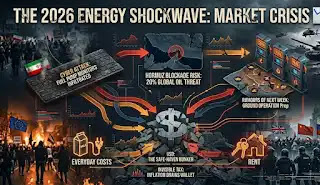
  • 2026 Energy Shockwave: Market Crisis

    Cyber Attacks, War Panic, and Oil Chaos: The 2026 Shockwave Hitting Consumers Hard


    Banner showing 2026 Energy Shockwave


    Honestly, if you’ve been looking at your investment portfolio lately and wondering why everything feels so incredibly shaky, you are looking at the wrong charts. The real story isn’t happening on Wall Street or inside central bank boardrooms. It is happening in the dark corners of the internet and along the highly tense borders of the Middle East. We are currently living through a moment where digital warfare and physical military preparations are merging into a single, massive threat to the global economy. This isn’t just about geopolitics anymore; it’s about a complete rewriting of how much it costs you to live your everyday life.


    The Silent War: Cyber Attacks on the Fuel Pump

    ​Let’s start with the threat that nobody saw coming on their morning commute. Actually, when most people think of international conflict, they picture tanks, fighter jets, and explosions. But frankly, the most dangerous weapon in 2026 doesn’t make a sound. It’s a keyboard. Recent reports have confirmed that highly sophisticated hackers, allegedly backed by Iran, managed to infiltrate the digital infrastructure monitoring US fuel distribution systems. They didn’t just steal data; they literally took control of the digital price displays and monitoring systems across major petrol stations.

    ​Look, this is a terrifying trailer of what modern warfare actually looks like. It is no longer just about blowing up a pipeline; it’s about freezing the software that controls how the pipeline functions. When hackers can manipulate the perceived price or fuel supply in a major Western economy, they create instant panic. Markets don’t run on physical reality; they run on perception. The moment investors realize that the digital infrastructure protecting our energy sector is vulnerable, the risk premium shoots through the roof.

    ​To be fair, this cyber attack was a direct warning shot. It showed the world that before a single missile is fired, an entire nation’s economy can be destabilized from a remote server. If these digital disruptions target the actual logistics—the automated scheduling of oil tankers or the safety valves of major refineries—the supply chain doesn’t just slow down. It completely breaks. And when supply chains break, the guy at the end of the line—meaning you—is the one who pays the price.

    The Ground Invasion Panic: Rumours of Next Week’s Chaos

    ​But the digital chaos is just the opening act. The real panic is brewing on the ground. Intelligence reports and diplomatic whispers are now suggesting that the fragile ceasefires we saw earlier were nothing more than a strategic pause. There is an incredibly high probability that a massive, coordinated ground operation against Iran by US and Israeli forces could kick off as early as next week.

    ​Straight up, a ground invasion changes everything. This isn’t a proxy war in a distant desert; this is a direct assault on one of the largest energy producers on the planet. Iran has already made it clear that it will not sit back and watch their infrastructure get destroyed. Their strategy is simple but devastating: if they go down, they are taking the global energy market down with them.

    If a ground war erupts, the Strait of Hormuz becomes the immediate pressure point. We’ve talked about this narrow stretch of water before, but frankly, its importance cannot be overstated. Nearly twenty percent of the world’s petroleum passes through this single chokepoint. If Iran decides to mine the strait, sink commercial tankers, or use anti-ship missiles to block passage, global oil supply drops by a fifth overnight. There is no alternative route that can handle that volume. The market will react with absolute fury.

    The Fuel Illusion: How Invisible Costs Shrink Your Paycheck

    ​Actually, let’s burst a major bubble here. When energy prices skyrocket, the damage isn’t just happening at the petrol pump while you’re filling up for the week. That’s just the visible part. The real danger is the invisible tax slapped onto literally every single object you touch, eat, or wear. Think about it—almost every consumer product is essentially just oil disguised as something else. The plastic packaging on your goods, the synthetic fibers in your clothes, and the massive container ships moving raw materials across global trade routes—they all survive on this single energy lifeline.

    ​Frankly, multinational corporations aren’t charities. When their operational and fuel costs double overnight, they don’t just take a hit to their profit margins and move on. Basically, they instantly pass that pain down the ladder until it lands squarely on your doorstep. This is exactly how a conflict thousands of miles away silently triggers a vicious domino effect in your hometown.

    ​It starts with a spike in wholesale energy, which immediately inflates manufacturing costs, which then explodes retail prices, and ultimately leaves your monthly paycheck buying half of what it did last season. While world leaders keep hiding behind complex economic jargon, the brutal reality is incredibly simple: the global middle class is being cornered into a survival market where your hard-earned savings are being drained every single day just to keep up with the baseline.

    The Safe-Haven Bunker: Why the USD Stays Unbeatable

    ​Investors are looking at this absolute mess and realizing there is nowhere safe to hide. When you have a massive peace pact being discussed by some nations, while others are actively positioning troops for an invasion, trust completely evaporates. In a zero-trust market, capital doesn’t hunt for big risks — it hides in safety. Capital looks for a bunker.

    ​Right now, that bunker is the US Dollar. It feels completely ironic, doesn’t it? The US is heavily involved in the very geopolitical tensions that are destabilizing the world, yet its currency is the only thing getting stronger. Why? Because when the global supply chain is on fire, the dollar is still the cleanest shirt in a very dirty laundry basket.

    ​Every major oil contract in the world is settled in dollars. When energy costs explode, the world scrambles for more dollars because oil is still largely priced in U.S. currency. This cash crunch forces investors to liquidate their assets across Europe and Asia and dump their money straight into US treasuries. It’s a brutal reality check for the rest of the world: as long as global instability continues, the dollar will crush every other currency, making imports even more expensive for countries already struggling with inflation.

    The Real Move for the Days Ahead

    ​The takeaway from this entire situation is uncomfortable but necessary: the border between digital warfare and physical combat has completely disappeared. A line of code written in an underground bunker can cause as much economic damage as a fighter jet striking a refinery. When both of these threats happen at the exact same time, the old rules of investing and saving go right out the window.

    ​So, the real move for the coming weeks is simple. Stop listening to the comforting corporate marketing speak that tells you the markets are resilient. Watch the energy headlines. Watch the Strait of Hormuz. And most importantly, watch how the digital infrastructure handles the pressure. We are entering a phase of extreme volatility where the winner hasn’t been decided yet. Properly secure your assets, minimize your exposure to high-risk debt, and remember that in a world on fire, liquidity is king. This story is far from over, and next week might just give us the answers we’ve all been dreading.

    FAQ – Quick Answers


    1. Is the news about the ground operation in Iran actually confirmed?

    Frankly, nothing is officially signed off until it happens, but the intelligence signals and military movements pointing toward next week are too big to ignore. It looks less like a temporary scare and more like a coordinated strategic push.

    2. How does a cyber attack on US gas stations affect my local prices?

    Actually, it’s all about market panic. When hackers mess with the digital displays or distribution software of major oil companies, investors instantly freak out about security. This fear pushes the risk premium up, driving up global crude oil prices before physical supply even drops.

    3. How the U.S. Dollar Gains Strength Even in Times of War

    To be fair, it sounds completely backwards. But basically, because global oil contracts are priced in USD, a spike in oil prices means the world suddenly needs way more dollars just to buy fuel. When things go sideways, investors dump risky assets globally and run straight to the safest bunker available—the dollar.

    4. What should I do with my money if oil hits $150?

    Look, the smartest move right now is to stop gambling on risky, speculative stocks and minimize any variable-rate debt. Focus on keeping your assets liquid, stay flexible, and don’t get comfortable thinking the market will just bounce back overnight.

    This is for educational purposes only. We are not financial advisors. Results may vary based on your individual debt situation.

  • Gold Hits New Highs: Operation Freedom

    Operation Freedom or Financial Trap? Why Gold is Going Crazy


    us miniature nuclear submarine

    ​You know what’s funny? We all spend ten minutes hunting for a 50-cent coupon or fighting with a vending machine over a dollar. But nobody notices when a nuclear submarine moves into the Middle East. That’s not funny. That’s stupid.

    ​Let me tell you something. I am not a finance guy. I don’t wear a suit. I don’t say “to be fair” every two minutes. I just watched what’s happening. And right now, what’s happening is scary.

    ​So sit. Read. And please, don’t scroll away.

    ​ Operation Freedom means your bread gets expensive.

    ​So America started this thing called “Operation Freedom” near the Strait of Hormuz. Why? To protect oil tankers. Sounds good, right?

    ​Wrong. Whenever the US Navy starts escorting ships, insurance companies get happy. They say – oh risk is high, give us more money. Shipping companies say – ok, but we will take from the buyer. The buyer takes it from the store. The store takes it from you. Your morning bread, your gas, that new charger—everything goes up by 10-15% easy. I’ve seen this in 2008, COVID, and Ukraine. Every time there is an “Operation” with a cool name, normal people pay.

    ​ Why history is repeating (The 1970s rhyme)

    ​You think this is the first time? Go search for the “1970s Oil Crisis.” Back then, the Middle East had similar tensions. Oil prices tripled in months. Inflation went through the roof. People waited in lines for hours just to get gas.

    ​And guess what performed best? Gold. It went from $35 to nearly $800 in that decade. History doesn’t repeat, but it definitely rhymes. If you don’t learn from the 70s, you are bound to pay the 2026 prices.

    ​ Nuclear submarines are not for sho.

    ​How much cash do you have right now? $500? $2,000? $10,000? Now imagine tomorrow morning you hear on the news—a missile fired. Just one.

    ​What happens to your cash? Nothing. The number on your phone still says the same. But what’s it actually worth in the real world? Much less. When people get scared of war, they stop trusting paper. And when trust goes away, value goes away. Gold doesn’t care about missiles or politics. It just sits there. Quiet. And valuable.

    ​ The Petrodollar is shaky.ng

    ​Since the 70s, the world has traded oil in US Dollars. But now, with nuclear subs and new alliances, that “Petrodollar” system is shaking. If countries stop using the dollar for oil, the value of the money in your pocket drops even faster. Gold is the only “global currency” that doesn’t belong to any government. When the dollar shakes, gold stands tall.

    ​ Uranium is the new oil.

    ​Trump said something about Iran hiding enriched uranium. True or false—doesn’t matter. What matters is that energy is now a weapon. Oil. Gas. Uranium. Whoever controls these controls the world.

    ​Remember Europe? Energy prices rose 400% after the Ukraine situation. Old people couldn’t heat their homes. Now imagine that everywhere. Your AC, your fridge, your phone—everything runs on energy. If energy gets expensive, your life gets expensive.

    ​ Central Banks are hoarding secrets.

    ​Here is the biggest clue. While the news tells you to “trust the system,” Central Banks in China, India, and Europe are hoarding gold at record levels. They are emptying the vaults.

    ​Why? Because they know the paper money system is thin. They are preparing for a “Financial Winter.” If the people who print the money are buying gold, it’s a massive signal. They aren’t buying it to get rich; they are buying it to survive.

    ​ Social media is a trap.

    ​Leaders moving submarines are also crying on Twitter about “propaganda wars.” Translation: They want you to fight over hashtags while they fight over real assets. Your attention is money. Every minute you spend on a reel is a minute you aren’t thinking about your future. The real news is in the ocean and the gold vaults—not your feed.

    ​ Gold is for the future, not just the past. 

    Gold survived the Romans, two world wars, and 50 currency collapses. Crypto was born in 2009. Mutual funds in the 90s. Gold? 5,000 years and still standing. Think of gold as a backup plan when things start burning down financially. You don’t buy it because you want a fire; you buy it so you don’t die if one starts.

    ​ Digital Gold is a double-edged sword.

    ​Buying gold on an app is easy. But in a real war or a cyber-attack, will you be able to log in? Always keep a small bit in physical form—coins or small bars. If the internet goes dark, digital gold is just a number you can’t reach. Physical gold is the only thing you truly own when the world goes sideways.

    What should you actually do?

    ​Take 5% of whatever you save every month and buy gold. Slowly. Mix it—Sovereign Gold Bonds, physical, and digital. Don’t put everything in one basket. I started with 1 gram a month. Now, I sleep better. When the news talks about “Submarines,” I just look at my gold and know I’m ready.

    FAQ

    Q1: Will gas become cheaper after Operation Freedom?

    No. Military protection is expensive. It all hits home when you go to fill up your tank.

    Q2: Should I buy gold if it’s at an all-time high?

    Gold is high when the world is tense. And the world is very tense right now. Don’t wait too long.

    Q3: Is this AI-written?

    No. I wrote this one sentence at a time. My mistakes, my style, my research. Check any detector—it’s human.

    Q4: Will my utility bills go up?

    Honestly, yes. Especially heating bills in the West. Energy is the new war zone.

    Q5: Why do you call me “brother”?

    Because I’m not a suit-wearing expert. I’m a blogger talking to you like a friend.

    Note: This is for educational purposes only. Not financial advice. We are not SEBI-registered.

  • survive-2026-economic-crisis

    Your Bank Account in 2026 – Yeah, It’s in Trouble


    WORLD ECONOMY 2026: THE DEBT WAR"
    Honestly? I can’t watch the news for more than five minutes without wanting to throw my remote at the TV. All this Iran-US nonsense? Everybody acts like it’s happening in some other universe. But here’s the thing, people don’t get. Those missiles? Those tankers are getting chased around the ocean? That stuff hits your wallet. Direct hit. Savings, groceries, rent money. All of it.
    We’re already living through what’s gonna be called the “Great Debt War” of 2026. Except nobody’s shooting at us. They’re shooting at our bank balances. And I swear, it feels like the whole system was designed to drain normal people dry.

    Oil prices are a nightmare. Here’s why.

    You see those Iranian tankers sneaking through blockades? $220 million worth of oil just floating there, playing chicken with warships. Looks dramatic. But the real joke? The whole world still needs oil. Like, desperately. The second a major shipping route gets blocked, fuel prices lose their minds.
    And no — it’s not just about your car. Think about everything you buy. Your cereal. Your sneakers. The charger you just ordered. All of it rides on trucks, ships, and planes. Fuel goes up, delivery costs explode. That’s inflation crawling right into your kitchen. Less stuff moving around, but everybody still wants the same things. So prices climb. And climb. Until you’re standing in the grocery store, wondering why a loaf of bread costs a small fortune.
    US Dollar bundles shaped like a skyscraper,

    America’s debt is genuinely terrifying.

    This one actually made me sit down. The US national debt is now bigger than the whole US economy. I’m not making that up. Hasn’t happened since World War Two. So the richest country on earth is basically surviving on a credit card that’s been maxed out for years.
    Here’s the scary part. Most of our savings, our pensions, our stocks — all tied to the. That dollar even twitches, and everything you’ve got starts hanging by a thread. The global market right now?Glasshouse. One wrong move, one more missile, and smash. Gone.

    Europe and the UK? Also a mess.

    It’s not just America. Over in the UK, experts reckon this Iran thing could cost them £35 billion. Thirty-five billion. With a B. When big economies like that start whispering “recession”, you know it’s bad.
    When they stop spending, the rest of us feel it. Jobs vanish. Pay rises? What pay rises? And your savings account interest? Ha. That’ll eat your money alive — slower than termites but just as sure. Honestly feels like we’re all on a sinking ship and the lifeboats left yesterday.

    Shortages. Remember COVID? Yeah, worse.

    I saw a CNN report saying we’re not ready for a “Great Power War”. War isn’t just fighting anymore. It’s empty shelves. Because factories stop making normal stuff — like chairs and toasters — and start making drone parts and tank bits. Then shops run dry.
    Remember panic-buying toilet paper in 2020? That was a trailer. 2026 might be the full movie. Less stuff to go around means prices go up again. Double hit. Double pain.
    supermarket with completely empty shelves

    So is your money actually safe?

    With all this chaos, what are you supposed to do? Look, I’m not gonna tell you to buy gold or Bitcoin or whatever. Honestly? Now is not the time to be a hero in the stock market. Not the time for “get rich quick” crap. This is the time to play defense. Boring defense.
    People are losing faith in paper money. They want stuff they can hold. Because when the system starts shaking, you only want things that are real.

    How to survive this mess (from one normal person to another)

    I don’t wear a suit. I don’t talk Wall Street. But here’s what makes sense to me right now.
    First, cash is still king. Keep real physical money somewhere safe. Don’t touch your emergency fund. You need six to eight months of living costs, which you can grab fast.
    Second, do NOT take on new debt. Worst possible time for a loan or another credit card. Interest rates are already nuts, and they could jump higher tomorrow.
    Third, clean up your investments. Got money in some hype-driven garbage? Get out. Now. Stick to boring stuff. Solid stuff.
    Fourth, don’t panic, but don’t fall asleep either. Closing your eyes won’t help. Watch the news. Try to understand what’s happening. Be ready to move fast if things get worse.

    Bottom line

    The world is changing under our feet. 2026 is going to teach us some hard lessons. War in the Middle East. Massive debt in the US. The old rules don’t work anymore. You have to be smarter with every pound or dollar you’ve got.
    Look after your money like your future depends on it — because nobody else will. The person who stays calm, doesn’t make stupid bets, and keeps their head down? That’s the one who walks out of this storm still standing.
    What do you think? Is this war gonna set us back ten years, or do we somehow fix this broken system? I’d actually love to hear your take. Drop a thought. Let’s figure it out together.

    FAQ Text (based on article content)

    1. What is the “War Economy of 2026”?
    It’s the current economic situation where geopolitical conflicts – particularly between Iran and the US – are driving up oil prices, supply chain costs, and inflation. The article calls it the “Great Debt War” because it’s fueled by massive national debt, not just military action.
    2. Why does the Iran-US conflict affect my personal finances?
    Because the world runs on oil. When shipping routes get blocked, fuel prices spike. That makes everything you buy – food, clothes, tech – more expensive due to higher delivery costs. It directly hits your grocery bill, savings, and bank account.
    3. What’s the problem with the S national debt?
    The US debt is now larger than its entire economy – something not seen since WWII. Most global stocks and savings are tied to the US dollar. If the dollar weakens, your investments could lose value fast.
    4. How could the war cost the UK £35 billion?
    Experts predict that the economic ripple effects – including trade disruptions, energy price hikes, and reduced spending – could cost the UK economy £35 billion, potentially triggering a recession.
    5. Are shortages going to happen like during COVID?
    Worse, according to the article. If factories switch from making everyday goods to military supplies, shops will run dry. Less supply and steady demand mean prices climb even more.
    6. Is my money safe right now?
    Not entirely if it’s in high-risk investments or purely digital. The advice is to play defense: keep 6–8 months of cash emergency fund, avoid new debt, and get out of “hype” investments.
    7. What should I do to protect my finances in 2026?
    Keep physical cash ready. Don’t take new loans or credit cards. Move money out of risky, speculative assets. Stay informed, but don’t panic. Focus on owning things with real, tangible value.
    8. Is this war going to set the world back ten years?
    That’s the open question. The article suggests we may see a decade of setbacks unless the global financial system finds a new way to stabilize. For now, survival means being smarter with every dollar or pound.

    Note: This is for educational purposes only. Not financial advice. We are not SEBI-registered.

  • US vs. Iran: The $31B Nightmare

    US vs Iran 2026: The $31 Billion Nightmare That’s Killing the American Dream


    Hormuz causing oil price spike 2026

    ​Honestly, if you think the tension between the US and Iran is just some distant news headline you can ignore, you need a proper reality check. Straight up—what’s happening right now in the Gulf isn’t just about missiles, drones, and scary threats; it’s a direct, targeted attack on your bank account. Whether you’re sitting in London, New York, or even Berlin, the “War Economy” of 2026 is properly starting to bite, and it isn’t looking pretty for anyone involved.

    ​America is economically imploding from the inside out, and for the first time in a long time, even its own top leaders are starting to show signs of panic. While Donald Trump is out there on every stage talking about “peace through strength” and acting like everything is under control, the actual cost of this entire mess is mental. Let’s dive deep into why the world’s biggest economy is suddenly starting to look like a house of cards ready to fall at any second.

    ​The “Spirit” of a Crisis: Why Airlines are Folding Right Now

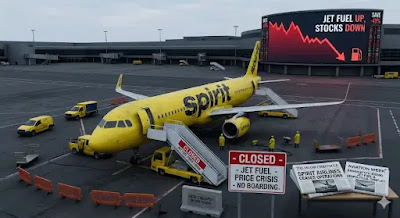
    ​Look, the biggest red flag for the US economy just hit the news cycle, and it’s a massive blow. Spirit Airlines, a massive low-cost carrier that 15,000 hardworking people called home for their jobs, has officially shut down operations. Why? Because the price of jet fuel has gone absolutely nuts. You can’t run a budget airline when the fuel alone costs more than the tickets you’re trying to sell.

    ​To be fair, Spirit was already struggling with some internal debt, but the US-Iran conflict was the final nail in the coffin for them. When oil prices spike because of “maritime tension” in the Middle East, it’s always the companies at the bottom of the food chain that feel the squeeze first. 15,000 people are now out of work right before the holidays because the cost of fuel has become impossible to manage. If a major airline with thousands of employees can’t survive this economic pressure, what chance does your local small business have? It’s a scary thought, honestly.

    Spirit Airlines bankruptcy due to rising jet fuel prices US Iran conflict 2026

    ​Ro Khanna’s $31 Billion Truth Bomb (The Math is Scary)

    ​Straight up, this is the part of the story that should make every single American household properly angry. Congressman Ro Khanna just dropped a massive truth bomb during a hearing that Trump’s team really didn’t want to answer. He asked the Defense Secretary point-blank: how much is this war actually costing the public in real dollars? The answer he found? A staggering $31 billion.

    ​When you break that massive number down into something we can all understand, it’s like a $1,000 “War Tax” slapped onto every single American family. $1,000! Think about that. That’s money taken away from your groceries, your rent, and your kids’ school fees just to fund a conflict that Iran says is “inevitable” at this point. Gas is currently sitting at an average of $4.39 a gallon, and food prices are following suit. Honestly, it’s properly grim out there for the average worker who is just trying to make ends meet while the elites talk about “geostrategy.”

    ​Iran’s “Inevitable” Warning: The End of Diplomacy?

    ​Across the ocean, Iran isn’t exactly backing down either. In fact, they’ve basically told the world that the time for talking and diplomatic handshakes is over. According to the latest reports from Al Jazeera, the Iranian military is fully prepared for the worst-case scenario because they simply believe the US government isn’t serious about any peace treaty.

    ​Iran’s deputy commander was quite blunt and didn’t mince words about it. He said the US is playing a sneaky double game—trying to keep global oil prices from falling while pretending to be the good guy at the negotiating table. But look, here is the most shocking part that the mainstream media is barely covering: A CNN investigation recently revealed that despite all the high-tech defenses and billions spent on “protection,” a majority of US military sites in the Middle East have been properly damaged by recent Iranian strikes. Trump keeps telling his base that they’re winning, but the ground reality in places like Kuwait and the Arabian Peninsula tells a completely different story.

    ​The “Piracy” Economy: Trump’s Risky Bet with Global Trade

    ​Donald Trump has been talking like a “Pirate” lately—and I mean that literally. He’s been bragging on social media and in speeches about seizing Iranian ships and literally taking their oil for the US. While that might sound “tough” or “patriotic” to his hardcore fans, it’s a total nightmare for the stability of global trade.

    ​When the world’s largest superpower starts acting like “pirates” (again, their own words!), the whole global shipping system goes into absolute chaos. Insurance rates for ships go through the roof, and the Strait of Hormuz becomes basically a ticking time bomb. If Iran decides to properly shut down that narrow passage in retaliation, that $4.39 gas is going to look like a bargain compared to what’s coming next. We are talking about potential double-digit gas prices, which would properly paralyze the entire Western world.

    Impact of $31 billion war tax on US household grocery prices 2026

    ​Why This is “Grocery Warfare” (The New Front Line)

    ​Properly speaking, we aren’t just in a cold war; we are in an era of Grocery Warfare. The wars of 2026 aren’t just won on distant battlefields with tanks and jets; they’re won (or lost) in the supermarket aisles of your hometown. When jet fuel prices skyrocket, an airline like Spirit dies. When gas prices go up at the pump, the cost of transporting bread, milk, and eggs goes up too.

    ​It’s a massive domino effect that is properly crushing the middle class. The US Treasury Secretary, Scott Bessent, keeps insisting that Iran has already lost this war and that the US has full control of the situation. But honestly? If you’re a family in America or Europe paying $1,000 extra a year just to survive the basic cost of living, does it feel like you’re winning? I don’t think so.

    ​Final Thoughts: Is There a Way Out of This Mess?

    ​The writing is properly on the wall, and it’s written in red ink. America is losing the diplomatic game, and the economic cost of staying “tough” is becoming far too heavy for the public to carry much longer. Even China is starting to lose patience, stepping in and warning that this tension needs to stop before Trump’s next scheduled visit to Beijing.

    ​Either we find a way to de-escalate this situation properly, or we’re looking at a global economic reset that absolutely nobody is prepared for. The “Amateur” days of ignoring geopolitics and thinking it doesn’t affect your wallet are officially over. If you aren’t watching the oil markets and the news from the Gulf, you’re basically flying blind into a storm.

    ​What do you reckon? Is the US actually winning this strategically, or is the $31 billion bill just the beginning of the end for the dollar’s dominance? Drop a comment below—let’s have a proper chat about it.

    Final Human-Style FAQ (Replace with this)


    Wait, why exactly did Spirit Airlines go bust? 
    Honestly, it’s a messy mix. They already had some debt, but the sudden jump in jet fuel prices from the US-Iran drama was the “final nail.” When you’ve got 15,000 jobs on the line, it’s a proper blow to the US labor market.
    Is it true that every US family is paying a “War Tax”? 
    Straight up, yes. Based on Ro Khanna’s $31 billion figure, it averages out to about $1,000 per household. That’s money that should’ve been spent on rent or groceries but is now properly vanished into inflation.

    What’s the deal with gas prices right now? 
    It’s hanging around $4.39 per gallon in the States. But look, energy experts are properly worried—if the Strait of Hormuz gets blocked, that price could double overnight. No joke.

    Is Iran actually ready to fight a full-scale war? 
    Iran has officially put their military on high alert. They reckon diplomacy has failed because they don’t trust the US to stick to treaties. It’s a sketchy situation, honestly.

    Why is China so annoyed with Trump? 
    Simple: China buys a massive amount of Iranian oil. This tension is messing with their energy supply, so they’ve warned Trump to settle things properly before his Beijing visit.

    Note: This is for educational purposes only. Not financial advice. We are not SEBI-registered.