Tag: Inflation 2025.

  • Trump’s Tariffs and the True Cost of the US-China Trade War

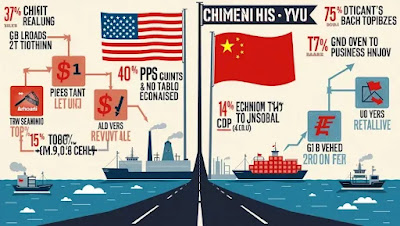
    Infographic showing US-China tariff


    That 2025 Trump-China Mess: Was it Even Worth It?


    ​Honestly, look, sitting here in 2026, it’s just wild to think about how mental things got only a year ago. Remember that 2025 trade war? The whole world was basically holding its breath every morning. One day, the tariffs were okay, the next,t they were hitting a crazy 145%. It wasn’t just some boring news for suit-and-tie people; it was a proper disaster for anyone trying to buy… well, anything.

    ​We had that tiny truce in May 2025, but the stress was everywhere. People were always arguing—is Trump actually winning this? Or are we all just getting broke together? Now that the dust has finally settled a bit, let’s be real about what went down and what it cost a normal person like me or you.

    ​Let’s Be Real: The 2025 Chaos

    ​To be fair, this whole fight didn’t just appear out of thin air. It had been brewing since 2018, mostly about China’s rules and the massive gap in trade. But 2025? That’s when it got properly nasty.

    ​Trump used some old-school emergency laws to slap huge taxes on everything. We’re talking Chinese cars, phones, even the small stuff we use every day. At one point, US tariffs on China hit 127%. And China? They didn’t just absorb the hit without acting. They punched right back with 148% tariffs on American stuff.

    ​It was a proper “tit-for-tat” scrap. China even stopped taking US lumber and canceled soybean licenses just to show they weren’t blinking first. While the two big guys were swinging at each other, countries like Mexico and Vietnam were quietly picking up all the business. US companies were desperately hunting for anywhere else to get their supplies.

    ​Did the Plan Actually Work?

    ​Straight up, Trump had three big goals: shrink the trade deficit, bring factories home, and make China change. Let’s look at the scoreboard now.

    1. The Trade Deficit

    Yeah, the gap with China did get smaller. Their share of US imports dropped from 21% to around 17%. But, honestly? We weren’t buying less stuff overall. We were just buying it from other places instead. So, while the “China deficit” looked better on a chart, the overall trade mess was still a huge, nagging headache. Tariffs are just a really blunt tool for such a complex problem.

    2. Bringing Back Jobs

    This is the part everyone is still shouting about. Sure, some factories opened, but the price tag was massive. Back in 2018-2019, tariffs cost about 142,000 jobs because the price of steel went through the roof. In 2025, with those 21.1% average tariffs, making stuff at home actually got more expensive for a lot of firms. It’s hard to build a “Made in USA” future when the raw materials cost you 20% more than the guy next door.

    3. Changing China’s Mind

    China made a few tiny moves, sure. But mostly, they just got aggressive. They didn’t fold; they just found new friends in Asia and Europe to trade with. It felt less like a win and more like a stalemate where everyone was just getting tired and broke.

    ​The Real Bill: What You Paid

    ​Look, someone always pays for these fights, and in 2025, it was the families. The tariffs weren’t just a tax on China; they were a hidden tax on all of us.

    ​Experts found that in 2025, the average US household saw its bills go up by about $1,219. By 2026, that was expected to hit over $1,400. Think about that for a second—over a grand extra just because the stuff in your shopping cart is pricier to bring across the border.

    ​It hit the big players, too. General Motors, for example, took a $1.1 billion hit in just one quarter of 2025. When a giant like GM loses that much cash, it ripples. Fewer raises, higher car prices, and a lot of nervous people in the office.

    ​How China Played It

    ​To be fair, China didn’t have it easy. Their factories in coastal cities,s making furniture and gadgets, ts were hit hard. Their exports to the US fell from nearly 20% down to about 12.8%.

    ​But China is tough. They started building huge trade ties with Japan, South Korea, and Southeast Asia. They also knew they had an ace up their sleeve: Rare Earths. They supply 72% of the world’s rare earth minerals. Without those, you can’t build a smartphone or an electric car. By squeezing these, they showed the US they could bite back where it hurts most.

    The “Ramesh” Factor in India

    ​Honestly, look at India. In 2025, we saw people like Ramesh, who runs a small business in Mumbai, getting caught in the middle. He used to get all his electronic parts from China, but the trade war pushed his costs up by 20%. He had to hike his prices, and his customers were fuming.

    ​Then you’ve got Priya in Delhi, noticing her laptop and clothes getting pricier. These aren’t just numbers; they’re real-world stories of how a fight between Washington and Beijing hits a normal person in India. It’s a wake-up call for India to build its own factories so we don’t get stuck.

    ​The Bigger Picture

    ​If we step back, the 2025 trade war just caused a massive amount of “noise.” Supply chains were broken, and everything got less efficient.

    • Inflation: High tariffs pushed up prices, which kept interest rates high. That meant more expensive mortgages for everyone.
    • Investment Slowdown: Businesses hate guessing. When they don’t know if a tariff will be 30% or 130% tomorrow, they just stop spending. That slowed down growth for the whole world.

    Navigating the Mess Now

    ​If you’re a business owner or just managing your own money, the advice is simple:

    1. Don’t rely on one source: If you’re still buying everything from one place, you’re asking for trouble. Look at India or Vietnam.
    2. Watch the labels: Tariffs are a hidden tax. If you’re making a big purchase, check where it’s coming from.
    3. Support Local: Buying closer to home is the easiest way to avoid the drama.

    Final Thoughts

    ​Straight up, the 2025 trade war showed that we are all tied together now. While Trump’s tariffs put a lot of heat on China, the bill was huge—a 1.0% drop in US GDP and over $1,300 extra in taxes for families.

    ​China is changing, but they aren’t going away. They’re just finding new ways to stay in the game. As we sit here in 2026, the real winners aren’t the ones who shouted the loudest, but the ones who were smart enough to adapt. Trade wars might look good on TV, but in the real world, they’re messy, expensive, and usually end in a draw.

    FAQ 

    Are Trump’s tariffs making things more expensive in 2025?

    Honestly, yes. Approximately 55% of tariff-related costs are ultimately borne by consumers.You’ll likely see a 5-10% jump in prices for electronics, clothing, and packaged goods.

    How are companies like Volvo avoiding tariff costs?

    To be fair, they aren’t escaping them altogether, but they are shifting where production takes place. Volvo is moving more manufacturing to the US to bypass import taxes, which helps keep its margins steady.

    Which industries are struggling the most with tariffs?

    Agriculture and heavy machinery are taking a proper hit. Companies like John Deere have seen profits drop because the steel and parts they import are way more expensive now.

    Is the stock market still a good buy during trade wars?

    Straight up, it depends on the company. Investors are currently betting on “adapters”—companies that have the power to raise prices or move their supply chains quickly.

    Note: This is for educational purposes only. Not financial advice. We are not SEBI-registered.
  • US economy will likely see slower growth in 2025?

    Your next iPhone? Yeah. Getting ugly.


    US economy will likely see slower growth in 2025?

    Look, I don’t wake up excited to talk about tariffs either. Who does? That word sounds like something a politician throws out when they want to sound smart, but actually,y they’re just warning you that stuff is about to cost more. And guess what? March 2025. It’s already happening.
    So here’s the deal. The US just slapped new taxes on stuff coming from three big places. China. Mexico. Canada. Sounds like a faraway problem, right? Except that coffee you drink every morning — some of those beans come through Mexico. That phone you’ve been saving for? Parts come from China. Even your sneakers. Yeah. Those too.

    Let me explain without the fancy words.

    Around the beginning of March 2025, the US said, ” Anything from China? Add ten percent. Anything from Mexico or Canada? Add twenty-five percent. Their excuse? “National security” and “bringing jobs back home.” Sounds promising. Sounds like something your uncle would say at a dinner table.
    But here’s what they don’t tell you. Companies aren’t charities. They don’t just eat that cost. That laptop that cost the importer five hundred bucks? Now it costs five hundred fifty. So they put it on the shelf for six hundred. You pay the difference. Every. Single. Time.
    And it’s not just laptops. Car parts. Medicine ingredients. Machine parts. Clothes. Even some food. Every border crossing adds a little more to the price. Not by a lot at once. But by the time it reaches you — the actual person buying it — the price has gone up three or four times in these tiny invisible jumps. You never see the tax. In the end, you just see a bigger number on the price tag.

    So what’s gonna happen in 2025?

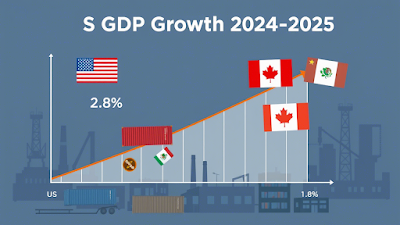
    Last year, the US economy grew about 2.8%. Not amazing but fine. This year? Most experts are saying around two percent. Maybe less.
    Why? Because businesses hate not knowing. If you run a company and you don’t know if your parts will cost ten percent more next month, you don’t hire new people. You don’t buy new machines. You just sit there. And while you’re sitting, nothing grows.
    And China isn’t just taking it. They hit back with fifteen percent taxes on US goods. Mexico is talking about hitting US corn and dairy. Canada is looking at blocking US wine and beer. So what starts as a fight between big countries ends up hurting a farmer in Iowa, a truck driver in Ontario, and a small shop owner in Mumbai who just wanted to sell something. Everyone loses. Except maybe the lawyers.

    Wait. Why should you care if you’re in India?

    Fair question. You’re sitting in Mumbai or Bangalore or Chennai, thinking, thinking, “Bhai, that’s America’s problem.”

    But the world is small now. Really small.

    Remember 2018? India raised taxes on electronics to push “Make in India.” Worked for some people. There’s this guy Ramesh, a small electronics shop in Tamil Nadu. When foreign stuff got expensive, people started buying from him. Good, right? He was happy. His kids were happy.
    But then the US got angry. They raised taxes on Indian steel and aluminium. So it’s never just one thing. You put up a wall, the other guy puts up a wall. Then everyone’s just standing behind the wall,s throwing rocks. It’s stupid, but that’s what happens.
    Here’s the real catch. If the US buys less from China, Chinese factories need new buyers. That could be good for India — cheaper phones, cheaper machines. But if the US economy slows down because everything is expensive at home, Americans will stop buying Indian services, Indian textiles, and  Indian software. That’s bad. So it’s not a simple win or lose. It’s more like… nobody really knows. If someone tells you they know for sure, don’t believe it.

    Now let’s talk about the costs you don’t see coming.

    Tariffs are like a hidden tax. You never see a line on your bill saying “tariff charge.” It’s just… the price is higher. That’s it.
    Take phones and laptops. Most chips come from China, Taiwan, and South Korea. Even if the final assembly happens in India or Vietnam, those parts cross borders two, three, or four times. Each crossing adds a little cost. By the time it’s in your hand, you’ve paid three hidden taxes. You just never saw them.
    Food. A huge chunk of US produce comes from Mexico and Canada. Avocados. Tomatoes. Beef. Wheat. Slap a twenty-five percent tax on that, and grocery bills go through the roof. And you can’t just stop eating. So people pay more,e or they eat less. That’s the choice.
    Jobs. Some factories might open in the US. Sure. That’s what they say on TV. But other industries that rely on cheap imported parts — auto repair, small appliance makers, construction — they might shut down. You save one job in a steel mill, you lose two in a warehouse that can’t afford its supplies anymore. Nobody talks about that trade-off. It’s not good TV.

    Ok, ay so what do we actually do?

    Complaining about the government doesn’t pay rent. Whether you’re investing or just trying to survive, here’s the real talk — not the stuff you hear on news channels.
    If you run a business, don’t rely on one country for your supplies. That’s suicide. Spread it around. Vietnam. Indonesia. Turkey. Even Brazil. The more options you have, the less one tariff can kill you.
    If you’re planning a big purchase — like a laptop or a car in late 2025 — do it earlier. Like July. Maybe August. Inflation isn’t waiting for trade wars to end. It just keeps going.
    If you invest, don’t just buy tech or retail. Look at local stuff. Gyms. Repair shops. Software companies. Things that don’t need parts shipped across oceans. Those are safer.
    And honestly? Learn a skill that doesn’t depend on international shipping. Coding. Repair work. Plumbing. Teaching. Local services. The people who adapt fastest are the ones who end up fine. Everyone else complains on Twitter.

    It’s not just numbers, you know.

    Economics sounds fancy. GDP. Tariffs. Trade deficits. But really,lly it’s just about how people live. When you hear “GDP drops 0.6 percent,” that sounds small. Like nothing. But that’s thousands of people like Ramesh trying to decide if they can hire one more person or if they have to let someone go. That’s a mom in Ohio wondering why her grocery bill went up twenty percent. That’s a worker in Gujarat whose export orders disappeared because Americans are broke now. Real people. Real stress.
    Some people say tariffs are necessary. Stop depending on other countries. Fair point. Self-reliance is great. But getting there? Painful. You can’t build a factory overnight. And you definitely can’t grow avocados in Minnesota in January. So yeah.

    Last thing.

    The 2025 tariff war is one big experiment. Can a country tax its way to being rich? History says no. You might want to look up the Smoot–Hawley Tariff Act from the 1930s. Made everything worse. But maybe old rules don’t apply anymore. Who knows. I don’t. You don’t. Nobody does.
    For us in India, the lesson is simple: stay flexible. Don’t fall in love with one supplier or one trade partner. Things are changing fast. Keep your eyes open. Keep your budget tight. And always look past the headlines. Because those “small taxes” or “tiny tariffs” — they change everything overnight. Really.

    FAQ — just answering what people actually ask

    Will this really make my next iPhone more expensive? 
    Probably yeah. iPhones use chips and components that move through China and Taiwan. Even if assembled in India, those parts cross borders. Each time they cross a tariff wall, someone adds a little to the price. Not a massive jump alone — but fifty or eighty dollars extra? Very possible.
    Is this just an American problem? 
    Nope. When the US slows down, they buy less from everywhere. That means fewer orders for Indian textiles, Vietnamese shoes, and German machines. And when China has extra stuff they can’t sell to the US, they dump it elsewhere at lower prices. That hurts local manufacturers. Everyone feels it eventually.
    Should I buy a phone or a laptop right now instead of waiting? 
    If you were planning a big purchase for Diwali or Christmas 2025, doing it earlier — like in the next couple of months — isn’t a bad idea. Nobody has a crystal ball. But prices usually go up during trade wars, not down. Worst case? You bought early, and nothing changed. Best case? You saved a few thousand rupees.
    What about India — are we winning or losing? 
    A bit of both. On one hand, Indian manufacturers can step in and say “buy from us” to countries moving away from China. On the other hand, if the global economy slows, everyone loses. The smart play for India is to stay neutral, trade with everyone, and not pick sides. Easier said than done.
    Will my grocery bill go up in India because of US tariffs? 
    Unlikely directly. We don’t import huge amounts of Mexican avocados or Canadian wheat. But indirectly? Global food prices are connected. If the US starts buying more from other countries to avoid tariffs, demand goes up and prices rise everywhere. So don’t be shocked if your cooking oil or pulses cost a little more by the end of the year.
    Is there anything a regular person can actually do? 
    Honestly? Not much about the tariffs themselves. But you can be smarter with your money. Don’t put all your savings in one type of investment. Don’t rely on a single supplier if you run a small business. And learn a skill that doesn’t depend on shipping. The people who adapt fastest end up fine.
    How long will this tariff war last? 
    No one knows. Could be months. Could be years. Trade wars have a habit of outliving the politicians who started them. Best to assume it’s not ending soon and plan accordingly.

    Note: This is for educational purposes only. Not financial advice. We are not SEBI-registered.