Tag: Inflation Hedge

  • Gold Dips as Markets Await Fed Rate-Cut Signals

     Gold Eases as Traders Await Fed Guidance on Pace of Rate Cuts: A Guide for Smart Investors
    gold bars and coins under

    Key Takeaways

    • Gold’s Current Dip is Temporary: Spot gold fell 0.5% to around $4,187 per ounce as markets priced in the Fed’s 25-basis-point cut, but experts see a rebound to $4,300 soon if guidance stays dovish.
    • Fed Signals Slower Easing: The central bank cut rates to 3.50%-3.75% but projects just one more cut in 2026, tempering aggressive bull runs while still supporting non-yielding assets like gold.
    • Investor Opportunity Ahead: Lower rates weaken the dollar and boost safe-haven demand; forecasts point to gold averaging $4,000 by mid-2026, with potential highs of $5,000 in bullish scenarios.
    • Broader Market Ripples: Stocks like Deere & Company dipped 1.2% post-announcement amid farm sector worries, highlighting how Fed moves affect everything from commodities to equities.
    • Actionable Tip: Diversify with 5-10% gold in your portfolio now—history shows 26-39% gains in the two years after rate cuts.

    Imagine this: You’re sipping your morning tea, scrolling through the news, and there it is—headlines screaming about gold prices dipping just as the world’s biggest central bank, the US Federal Reserve, gears up for its big decision. It’s December 2025, and the air is thick with anticipation. Gold, that shiny metal we’ve trusted for centuries as a store of value, eases back a touch, hovering around $4,200 per ounce after a stellar year where it surged over 55% year-to-date. Why the pullback? Traders are on edge, waiting for the Fed’s guidance on the pace of rate cuts. Will it be a gentle slowdown or a full-throttle easing that sends gold soaring again? This isn’t just financial jargon; it’s the pulse of global markets, and it could shape your savings, investments, and even retirement plans.

    Let’s rewind a bit to set the scene. Gold has always been more than a pretty rock—it’s a hedge against chaos. From ancient Egyptians using it for trade to modern investors fleeing stock market jitters, gold steps up when trust in paper money wanes. In 2025, we’ve seen it hit all-time highs above $4,380 in October, fuelled by geopolitical tensions in the Middle East, China’s relentless buying (over 1,100 tonnes year-to-date by central banks worldwide), and whispers of looser monetary policy. But now, as the Fed’s two-day meeting wraps on 10 December, the metal eases as traders await that crucial nod on how fast rates will fall. Spot gold slipped 0.5% to $4,186.93, while futures dipped 0.1% to $4,214.70. It’s like the calm before a storm—everyone knows rain’s coming, but the question is, will it drizzle or pour?

    Think about your own finances for a second. If you’re like most folks, you’ve got a mix of savings accounts, stocks, and maybe a pension pot. When the Fed cuts rates, it makes borrowing cheaper, which can juice the economy but also erodes the value of cash sitting idle. Gold shines here because it doesn’t pay interest—it’s pure, non-yielding security. Lower rates mean the “opportunity cost” of holding gold drops, making it more appealing than bonds or savings that suddenly yield less. History backs this up: After the Fed’s 2019 rate cuts, gold jumped 26% in two years. In 2007, it was a whopping 39% gain. We’re seeing echoes of that now, with markets pricing in an 89% chance of a 25-basis-point trim to 3.50%-3.75%.

    But here’s the hook that keeps traders up at night: the pace. Fed Chair Jerome Powell’s press conference could hint at just one more cut in 2026, or maybe two if inflation cools further. A “hawkish cut”—easing now but slowing later—might cap gold’s upside, pushing it back toward $4,000 support levels. On the flip side, dovish vibes could ignite a rally to $4,300 by year-end. OANDA’s Kelvin Wong nailed it: “Investors are adjusting positions after Powell’s earlier hawkish signals.” It’s a high-stakes poker game, and gold’s the chip everyone’s betting on.

    Diving deeper, let’s chat about why this matters beyond the charts. The US economy is a beast—GDP growth at 1.8% for 2026 per Fed dots, unemployment ticking to 4.3%, core inflation at 2.5%. Sounds steady, right? But underneath, cracks show: manufacturing’s contracted for eight months straight, consumer sentiment’s at rock-bottom 51, and freight shipments plunged 7.8% in October—the worst since 2009. Rate cuts aim to grease the wheels, encouraging spending and investment. For gold bugs, it’s manna: a weaker dollar (DXY’s rolling over) means foreign buyers snap up more ounces, and central banks like China’s keep stacking reserves to dodge de-dollarisation risks.
    (more…)

  • Dollar Hits 3-Month High as Fed Pauses Rate Cuts


    dollar rising on global forex screens.

    The Greenback’s Big Comeback: Why the Dollar is Smashing It Right Now


    ​Right, let’s sit down and have a proper chat about what’s going on with the US Dollar. Honestly, if you’d been watching the markets lately, you would’ve seen something a bit mad. In early November 2025, the “Greenback” suddenly decided to sprout wings and fly to a three-month high.

    ​Now, why does this matter to you? Well, when the dollar flexes its muscles like this, it sends a massive ripple through everything—your stocks, your gold, and even the price of that holiday you’ve been planning. This isn’t just numbers on a screen; it’s a shift in the global balance of power.

    ​So, what on earth happened? In simple terms, the folks over at the Federal Reserve (the Fed) started singing a different tune. People were expecting them to keep cutting interest rates like there was no tomorrow, but suddenly, the boss, Jerome Powell, basically told everyone to “calm down.”

    The Fed’s “Wait and See” Game

    ​Let’s get into the nitty-gritty. On October 29th, the Fed did actually cut rates by 0.25%. On paper, that sounds like they’re trying to help the economy breathe. But it was what Powell said after the meeting that really set the cat among the pigeons.

    ​He basically hinted that a December rate cut wasn’t a “foregone conclusion.” In plain English? Don’t expect too much—we might be stalled for a bit.

    The Drama Inside the Fed:

    What’s even more interesting—and a bit juicy, honestly—is that the Fed officials aren’t even agreeing with each other. You’ve got one guy, Stephen Miran, wanting bigger cuts because he’s worried about growth. Then you’ve got another, Jeffrey Schmid, who didn’t want a cut at all!

    ​When the big bosses start arguing in public, it makes investors very jumpy. And when investors get jumpy, they run back to the safest thing they know: The US Dollar. —

    Why Reduced “Cut Odds” Are a Big Deal

    ​I’ve seen a lot of people talking about “CME FedWatch” and “futures,” but let’s break that down into something we actually understand. Think of it like a betting shop.

    ​Before the meeting, the “punters” (traders) were 90% sure we’d get another cut in December. After Powell spoke? Those odds plummeted to about 68%.

    Why does this make the dollar stronger?

    Look, it’s all about the yield. If US interest rates stay higher for longer while other countries (like Europe or Japan) are cutting theirs, your money earns more “rent” in America. If you can get a better return on a US bond than a German one, you’re going to sell your Euros and buy Dollars. It’s basic supply and demand.

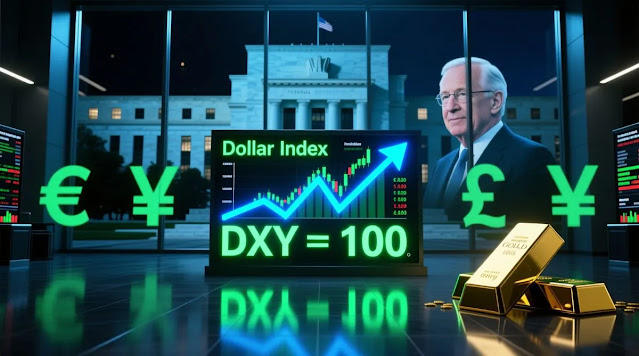
    ​The Dollar Index (DXY) hit nearly 100, its highest since the summer. It’s like the dollar has suddenly become the coolest kid at the party again, and everyone wants an invite.

    The Chaos of the Government Shutdown

    ​To make matters even more confusing, the US government decided to have a bit of a shutdown. This means the official data—the stuff we usually rely on, like jobs reports and inflation numbers—is either late or missing entirely.

    ​It’s like trying to navigate a ship in a thick fog without a compass. Because nobody knows exactly how the economy is doing, they’re treating the dollar as a “safe haven.” When things feel risky or uncertain, people pile into dollar assets because they know the US isn’t going anywhere. It’s the ultimate security blanket.

    Who’s Getting Hurt by a Strong Dollar?

    ​Now, a strong dollar isn’t good news for everyone. In fact, it’s a bit of a nightmare for some.

    1. The Euro and the Pound

    ​The Euro slid down to about $1.15—its weakest level since August. The Pound wasn’t doing much better. If you’re living in Europe and buying stuff from the US, everything just got a lot more expensive.

    2. The Gold Bugs

    ​Honestly, if you’re holding gold, this news was a bit of a punch in the gut. Gold is priced in dollars. So, when the dollar gets more expensive, gold usually drops. It fell about 1.1% in a single day. If the dollar keeps rallying, gold might have a tough time finding its feet.

    ​3. Emerging Markets

    ​This is the serious side. A lot of poorer countries have debt that they have to pay back in US Dollars. When the dollar goes up, their debt effectively grows, even if they haven’t borrowed another penny. It puts a massive squeeze on countries like Turkey or Argentina.

    4. Tech Giants

    ​Even the big boys like Nvidia and Tesla felt the heat. High interest rates are like gravity for tech stocks. When the hope of “easy money” (rate cuts) fades, these stocks usually take a bit of a tumble as investors re-evaluate their value.

    What Should You Actually Do? (The Strategy)

    ​So, what’s the move here? If you’re an investor or just someone trying to keep their head above water, here’s how I’d look at it:

    • Check Your Overseas Stuff: If you own foreign stocks, remember that a strong dollar eats into your returns when you convert them back. It might be time to look at “hedged” funds that protect you from currency swings.
    • Don’t Panic on Gold: Yes, it’s down, but gold is a long-term play. A strong dollar might be the “flavor of the month,” but inflation is still lurking in the background.
    • Watch the Data: Once the government shutdown ends and the data starts flowing again, the dollar could swing back the other way. Don’t go “all-in” on one direction just yet.
    • Think Like a Tourist: If you’ve been planning a trip to London or Paris, your dollar is going to go a lot further right now. It might be the perfect time to book that flight.

    The Final Word

    ​At the end of the day, the dollar hitting a three-month high is a wake-up call. It shows that the Fed isn’t just going to hand out cheap money forever. They’re being cautious, and the market is reacting with a “haven bid.”

    What’s your take? Do you think the dollar is going to keep climbing past 100, or is this just a temporary blip? Let me know in the comments—I’m curious to see what you’re thinking.

    ​And look, if you’re getting stressed out by all this financial talk, maybe it’s time for a break. Go get some fresh air—maybe check out the Nike Official Website for some new gear to get you moving. Sometimes a bit of a run is the best way to clear your head from all these interest rate odds!

    FAQs: The Real Talk on the Dollar Surg?

    Q: Is the dollar going to stay this strong?

    Honestly, nobody has a crystal ball. If the next set of jobs data is weak, the Fed might be forced to cut rates in December after all, which would send the dollar back down. At present, it’s in a cautious wait-and-see stance.

    Q: Why does gold fall when the dollar rises?

    It’s mostly because gold is priced in USD. If the dollar is worth more, it takes fewer of them to buy the same ounce of gold. Plus, gold doesn’t pay interest. If US bonds are paying a decent rate, people would rather have the bonds than a bar of gold sitting in a vault.

    Q: Does a strong dollar help with inflation?

    Yes, actually! It makes imports (like electronics or clothes from abroad) cheaper for us here in the States. This can help cool down the cost of living a little bit, which is exactly what the Fed wants to see.