Tag: Inflation News

  • War Economy 2026

    War Economy 2026: Why Your Food, Fuel, and Savings are Under Attack
    US Dollar and Euro banknotes on a wooden table.

    Look. Let’s get real for a second. Most of us just scroll past the news. We see drones over Eastern Europe or some tanker stuck in the Middle East, and we shrug. We think, “That’s a world away.” But honestly? That is a massive mistake. Every single time a missile slams into a Russian oil depot or Iran threatens to choke the Strait of Hormuz, an invisible hand reaches right into your bank account. We are living in a full-blown “War Economy” here in 2026. Whether you are a student in London, a professional in New York, or a shop owner in Berlin, the price of your morning coffee and your car’s fuel is being decided in war rooms you’ll never see. Believe me, it is all connected.

    ​ The Energy Nightmare: Is $150 Oil the New Normal?

    ​Straight up, the biggest punch to your gut comes from the energy market. In early 2026, Brent crude surged past $120. It even flirted with $150 per barrel. This isn’t just some boring number on a ticker. It’s the reason your cost of living is absolutely skyrocketing.

    • The Russian Supply Chain: Ukraine has been hitting Russian oil storage and refineries with brutal precision. When one of the biggest exporters on the planet loses its infrastructure, global supply just vanishes. Even giants like Shell and BP are hiking prices because the “Risk Premium” is simply through the roof.
    • The Hormuz Chokehold: This is the “nuclear option” of trade. About 20% of the world’s oil and liquefied natural gas (LNG) moves through the Strait of Hormuz. With US-Iran tensions peaking, this route is effectively a ticking time bomb.
    • The Global Fallout: When 20 million barrels of oil a day are at risk, prices don’t just “rise”—they explode. For anyone in the West, this means heating bills and gas prices jumping by 30% in a single month. It is properly painful.

    ​ 

    Agricultural Economics: Your Grocery Bill is a Battlefield

    ​You might wonder what a drone strike in Russia has to do with the price of a loaf of bread in New Jersey. Or a supermarket in France. Honestly? Everything.

    • The Breadbasket is Burning: Russia and Ukraine are essentially the world’s supermarket for wheat and corn. With the conflict intensifying this year, grain is being used as a geopolitical weapon. Russia is basically weaponizing the harvest. They are controlling who gets to eat and who pays double.
    • The Fertilizer Crisis: Making fertilizer takes a massive amount of natural gas. Since gas prices are hitting record highs due to the Middle East blockade, fertilizer has become insanely expensive.
    • The Brutal Result: When a farmer in Iowa or the UK has to pay double for fertilizer and fuel for their tractor, they pay for it at the checkout counter. Every gallon of milk and every box of cereal goes up. This is “Agricultural Economics” at its most heartless.
    farmer's weathered hands holding a handful

     Military Finance: Who is Footing the Bill?

    ​This is the part politicians love to gloss over. Military Finance. War isn’t just about guts and glory. It’s about massive amounts of cold, hard cash moving through the system.

    • The $105 Billion Tab: The European Union recently cleared a staggering $105 billion aid package for Ukraine. Mind you, this isn’t “found” money. It comes directly from taxpayer funds. Or massive government debt.
    • The Debt Trap: When governments dump billions into missiles and defense systems from companies like Lockheed Martin, they have less to spend on your roads. Your healthcare. Fixing inflation.
    • The “Invisible Tax”: This level of spending triggers “Imported Inflation.” Governments are borrowing more. This devalues your currency. Your $100 bill or €100 note simply buys less than it did last year. It’s a hidden tax on your savings.

    ​ 

    The Hormuz Factor: The US-Iran Standoff

    ​US-Iran tension? It’s basically the biggest wildcard we’ve got for 2026. No one knows which way it’ll flip. With the US Navy trying to keep shipping lanes open and Iran using the Strait as a strategic shield, we’re looking at a potential maritime disaster.

    • The War on Trade: If shipping insurance rates jump by 400% because of the risk of mines or seizures, every single thing you buy gets a price hike. From iPhones to car parts.
    • Supply Chain Collapse: It’s not just about oil. The electronics and chemicals moving between Asia and Europe rely on these waters. A chokehold on Hormuz means your next tech upgrade could be delayed by six months. And cost you a fortune.
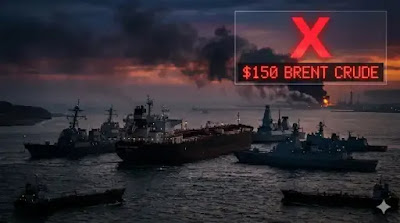
    Strait of Hormuz digital counter

     The Impact on the Western Professional

    ​If you’re working a 9-to-5 in a Western city, you’re likely feeling “Stagflation.” That nasty mix where the economy slows down but prices keep climbing.

    • The Real-World Pay Cut: Even if you got a 3% raise, if inflation is at 8% because of energy costs, you actually took a 5% pay cut this year. Properly frustrating, isn’t it?
    • The Small Business Squeeze: Small firms are getting crushed. If a local logistics company in Chicago or London has to pay 40% more for fuel, they either pass that cost to you or they close their doors. There is no middle ground.

    ​ 

    Actionable Advice: Protect Your Money Properly

    ​You can’t stop a global conflict. But you can stop your finances from sinking.

    1. Hedge for Real: Historically, gold and commodities win during wars. Consider diversifying your portfolio with energy-sector ETFs that actually profit from these rising prices.
    2. Cut the Cord on Oil: This is the best time to invest in home insulation or heat pumps. Getting off the fossil fuel rollercoaster is the only way to beat geopolitical volatility long-term.
    3. The “Volatility Buffer”: Assume your utilities and groceries will stay 20% higher than last year. Build a cash buffer specifically for these price spikes. Don’t get caught off guard.
    4. Increase Your Earning Power: In a war economy, digital skills are your best defense. High inflation means you need to be able to demand a higher salary. Or freelance for a stronger currency.

    FAQ: Your Burning Questions

    Q: Will prices drop if they sign a ceasefire tomorrow?

    A: Honestly, no. Supply chains take years to rebuild. The “Risk Premium” that traders put on prices will stay high for a long time. Don’t expect a quick fix.

    Q: Should I move my savings into a different currency?

    A: To be fair, most major currencies (USD, EUR, GBP) are in the same boat because they’re all tied to global energy. Diversifying into physical assets like gold is usually a safer bet in 2026.

    Q: Why does the US care if it has its own oil?

    A: Because oil is a global commodity. Even if the US pumps its own oil, the price is set by global events. If Hormuz closes, everyone pays more. Period.

    Conclusion: Stay Informed, Stay Ready

    ​The OPEC+ production boost is a tiny band-aid on a deep wound. As long as the Strait of Hormuz is under threat and the war in Europe rages on, this “War Economy” is our reality. We are in a period of low growth and high costs. The only way to survive is to stay informed, adapt fast, and manage your money with an eagle eye.

    Call to Action:

    Are you feeling the heat at the grocery store or the gas station? Have you found a clever way to cut costs during this crisis? Drop a comment below—let’s share some real strategies to survive this 2026 economic storm together!

    Note: This is for educational purposes only. Not financial advice. We are not SEBI-registered.
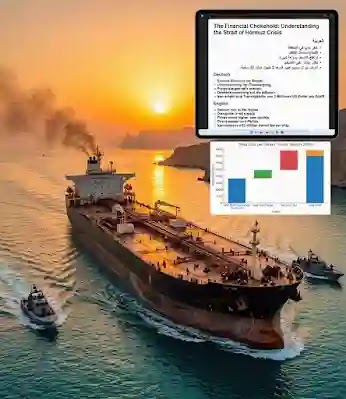
  • Global War, Local Impact: Why You’re Paying More

    narrow Strait of Hormuz at sunset

    Why a Tiny Strip of Water is Making Your Petrol So Expensive (And the New $2 Million Tax)

    ​Honestly, it’s wild how a bit of sea thousands of miles away can suddenly make a Tuesday morning commute feel like a bank-breaking mission. If you’ve been keeping an eye on the news lately, you’ll have seen Iran and the Strait of Hormuz popping up everywhere.

    ​Look, I get it. Geopolitics can feel a bit like boring school homework, but this isn’t just about maps and borders. It’s about your wallet. We’re talking about your weekly shop, your heating bills, and that investment pot you’ve been trying to grow.

    ​The $2 Million Entry Fee – No Joke

    ​Right now, there’s a massive new story breaking. Reports are coming in that Iran is starting to charge ships a literal fortune just to pass through. We are talking about a $2 million transit fee per ship.

    ​Imagine that—one single tanker has to cough up roughly 16-17 crore rupees just for safe passage. The Iranian authorities are calling it a security tax or a toll for using their corridor. Honestly, it’s basically a global shakedown. If every ship starts paying this, the price of the oil inside that ship is going to skyrocket before it even reaches the refinery. It’s a massive extra cost that eventually trickles down to your local petrol pump.

    ​The What If Factor

    ​Markets are already terrified of oil supply drops, but this new tax adds a whole new layer of panic. A massive chunk of the world’s oil—about 20-30%—gets squeezed through that narrow Strait of Hormuz. It’s only about 21 miles wide.

    ​If things get hairy and that route gets blocked—or if the taxes become so high that shipping companies simply can’t afford to move the oil—the supply drops off a cliff. But here’s the kicker: the prices don’t wait for a ship to actually get stuck. Traders and big hedge funds are already buying up oil just in case. It’s basically panic-buying on a global scale, and that’s what’s pushing the prices up before anything has even happened. It’s the anticipation that kills your bank balance.

    ​The Hidden Costs: It’s Not Just the Oil

    ​Now, here is something else most people don’t think about. It isn’t just that the oil itself gets more expensive or that Iran is charging these new $2 million fees. There is a massive hidden cost that hits these tankers the moment they enter risky waters.

    ​Think about it—if you’re a shipping company, and you’re sending a massive tanker worth hundreds of millions of pounds through a zone where drones or missiles are flying about, your insurance company is going to have a heart attack. They start charging what they call War Risk Premiums.” By mid-March 2026, insurance rates will have already jumped four to six times! It’s basically an extra tax for even being there. When you add that on top of the $2 million Iran is reportedly asking for, the cost of moving a single barrel of oil becomes insane. And guess who pays for that? Yep, you and me at the checkout counter.

    ​Why We’re All Feeling the Pinch

    ​When oil goes up, it’s a domino effect. It’s not just about filling up the car, though that hurts enough. Honestly, I think we sometimes forget how much oil is actually in everything we touch.

    • Transport costs: Everything you buy in a shop gets there on a lorry or a van. If the fuel for that lorry costs more, the company isn’t just going to eat that cost. They pass it on to you. That’s why your bread and milk suddenly cost more.
    • Energy bills: Especially for us in Europe, energy costs are already a nightmare. Natural gas prices often track with oil prices, too. So, a flare-up in the Middle East literally means it costs more to keep your lights on.
    • The “I” Word: Inflation. This is the big monster under the bed. When energy gets pricey, everything follows. It means the Central Banks (like the Fed or the Bank of England) might keep interest rates high for longer to try to cool things down. And high interest rates? Well, that’s rubbish news for anyone with a mortgage or a credit card.

    Let’s Talk About the Market Panic

    ​You see, markets aren’t these logical, cold machines. They’re driven by people. And people get scared. When a headline drops about a drone, a new tax, or a seized tanker, the Fear Index spikes.

    ​Investors start moving money out of risky stuff like tech stocks and start piling it into commodities. It’s a classic move. They call it “Flight to Quality.” But for the average person on the street, it just feels like everything is getting more expensive while their stocks are going down. It’s a double whammy, isn’t it?

    ​Is Anyone Actually Winning?

    There are still some positives, depending on the situation. If you’re looking at your investments, a few areas usually do alright when things get tense.

    ​Look at the Energy Giants. Companies like BP or Shell often see their profits jump because they’re selling the very stuff that’s getting more expensive. Then you’ve got Defence companies. It’s a bit of a grim reality, but when tensions rise, governments spend more on security, and those share prices tend to climb.

    ​And then there’s Gold. When the world feels a bit shaky, and nobody knows what’s going to happen tomorrow, people always run back to the classics. It’s the ultimate safe haven. If you’ve got a bit of gold in your portfolio, you’re probably sleeping a bit better than the bloke who is 100% in crypto right now.

    ​The Logistics Nightmare

    ​I don’t think people realise how fragile global shipping actually is. The Strait of Hormuz isn’t just a line on a map; it’s a bottleneck. If a tanker can’t get through or refuses to pay the $2 million “tax,” it has to go the long way around—maybe all the way down around Africa.

    ​That adds weeks to the journey and massive amounts of fuel costs. It also means the world’s supply of oil is stuck at sea for longer. Even if the Strait stays open, the insurance and the new Iranian tolls make it a nightmare. It all stacks up until the price of a barrel of oil is the least of our worries.

    ​What Happens Next?

    ​Honestly, it really comes down to three scenarios.

    1. The Cool Off: Tensions ease, the $2 million fees are dropped, and the ships keep moving. In this case, oil prices will probably drop back down as the fear premium disappears.
    2. The Slow Burn: Things stay tense for months. Iran keeps charging these massive fees, and the ships keep paying them. This is arguably worse for the economy because it keeps prices sticky. They stay high just long enough to bake into the price of everything else.
    3. The Escalation: If things actually kick off and the Strait gets closed properly, we’re looking at a massive price spike. We’re talking record-breaking numbers that would send shockwaves through every stock market in the world.

    My Two Cents

    ​If you’re wondering what to do with your money, the best advice is usually don’t panic. Markets hate uncertainty, but they eventually find a new normal. However, ignoring what’s happening in the Middle East is a mistake.

    ​The Strait of Hormuz might be a tiny stretch of water, but it’s basically the heartbeat of the global economy. When it skips a beat, we all feel it. It’s a reminder that we live in a massive, connected world where a decision made in a boardroom or a military base halfway across the globe can affect whether you can afford your mortgage next month.

    ​Final Thoughts

    ​Look, I know this stuff sounds heavy. But being aware is half the battle. Don’t just look at the petrol pump and get annoyed—understand why it’s happening. Understand that it’s the $2 million fees, the insurance premiums, the fear, and the logistics all piled on top of each other.

    ​Keep an eye on the energy news. Watch the headlines, but don’t let them keep you up at night. Just remember: when oil moves, everything else follows. It’s a rule as old as time, and it’s simply how the world functions.

    Frequently Asked Questions (The Bit You Might Be Wondering About)


    1. Is it really true that Iran is charging $2 million per ship?

    Honestly, there are some pretty wild reports coming out right now. Some sources say the Iranian Revolutionary Guard (IRGC) has set up a Safe Corridor and is asking for massive fees—up to $2 million—just for a single tanker to pass through. It’s basically a massive security toll. Whether it’s official or not, the cost of moving oil just got a whole lot more expensive.

    2. Why should I care about a bit of water in the Middle East?

    Look, I get it, it feels far away. But about 20% to 30% of the entire world’s oil goes through that tiny gap. If that gap gets blocked or becomes too expensive to use, the world’s oil supply takes a massive hit. When that happens, everything from your petrol to your electricity and even your grocery bill goes up. It’s all connected.

    3. Will petrol prices go up immediately?

    Markets are funny things. They don’t wait for the oil to actually run out. Traders start buying oil futures the moment they see a scary headline. So, you’ll often see prices at the pump creep up just because people are worried about what might happen next week. It’s all about anticipation.

    4. What is this War Risk Insurance I keep hearing about?

    Think of it like this: if you’re driving a car through a literal war zone, your insurance company is going to charge you a fortune, right? It’s the same for these massive tankers. Because the Strait of Hormuz is hot right now, insurance companies have hiked their rates by 400% to 600%. That extra cost gets added to every barrel of oil on that ship.

    5. How does this affect my investments or stocks?

    Usually, when oil prices spike, it’s bad news for airlines, transport companies, and tech stocks because their costs go up. However, energy companies and gold often do quite well. If you’ve got a diversified portfolio, don’t panic. The market hates uncertainty, but it eventually finds a way to settle down.

    6. Can’t the ships just go another way?

    They can, but it’s a nightmare. Going around Africa instead of through the Strait and the Suez Canal adds thousands of miles and weeks of extra travel time. That means more fuel, more wages for the crew, and a delay in getting the oil to where it needs to be. It’s an expensive detour that nobody really wants to take.

    Note: This is for educational purposes only. Not financial advice. We are not SEBI-registered.