Tag: ​ Investing for Beginners

  • Saudi REITs: A Market in the Making

     
    Saudi Arabia’s booming real

    Saudi REITs: My Honest Guide to Making Money from the Kingdom’s Property Boom


    ​Honestly, if you had told me five years ago that I’d be talking about owning a piece of a skyscraper in Riyadh for the price of a nice dinner, I’d have laughed. But look, the world is changing fast, and Saudi Arabia is right at the centre of it. If you’ve been walking around Jeddah or Riyadh lately, you’ve seen the cranes, the new glass towers, and the massive malls popping up everywhere. It’s a bit mental, isn’t it?

    ​To be fair, most of us don’t have millions of Riyals sitting under the mattress to go out and buy a commercial building. That’s where Saudi REITs (Real Estate Investment Trusts) come in. It’s probably the smartest way for a regular person to get a slice of the Vision 2030 action without having to deal with the massive stress of mortgages or leaky pipes.

    So, what actually is a Saudi REIT?

    ​Straight up, think of a REIT like a massive group chat where everyone chips in some cash. The people running the show take that huge pot of money and buy serious properties—we’re talking hospitals, warehouses, schools, and those massive shopping centres where everyone hangs out on the weekend.

    ​In Saudi Arabia, the rules are pretty strict to keep us safe. The Capital Market Authority (CMA) makes sure these funds pay out at least 90% of their annual profit back to people like you and me. It’s issued as dividends to investors. So, instead of waiting ten years for a property price to go up, you’re getting a bit of “rent” dropped into your account every few months.

    ​Properly speaking, it’s like being a landlord without ever having to pick up a screwdriver or argue with a tenant.

    ​Why 2025 is the year to pay attention

    ​Look, 2025 isn’t just another year on the calendar. It’s a massive milestone for the Kingdom. We’re seeing the total assets in these REITs hitting over SAR 30 billion. That’s a massive amount of bricks and mortar.

    ​The reason it’s buzzing right now is simple: demand. More people are moving to the cities for work, and they all need places to live and offices to work in. While oil used to be the only thing people talked about, now it’s all about diversification. REITs are the “front-row seat” to this new economy.

    ​The Numbers You Actually Care About

    ​I know, numbers can be a bit dry, but if you’re putting your hard-earned cash in, you need to know the score.

    • The Yield: Most Saudi REITs are aiming for a 7% to 8% return. To be fair, that’s way better than leaving your money in a standard savings account where it just gathers dust.
    • Occupancy: Most of these buildings are 90% full. That’s a great sign. It means the properties aren’t just sitting empty—they’re actually making money.
    • Entry Price: You can literally start with SAR 1,000. It’s properly accessible for everyone, from students to pros.

    ​The Big Players: Who should you watch?

    ​If you’re looking at the Tadawul (the Saudi stock exchange), you’ll see about 19 different REITs. It can be a bit overwhelming, so let me break down a few that are making waves in 2025.

    ​1. Jadwa REIT Saudi

    ​These guys are like the heavyweights of the market. They manage over SAR 2 billion in assets. In early 2025, their rental income jumped by 10%. They’ve got a mix of everything—malls, offices, and even some industrial spots. If you want something that’s tried and tested, this is usually a solid place to start.

    2. Alinma Retail REIT

    ​As the name suggests, these folks love a good shopping centre. With occupancy rates near 98% in some of their hypermarkets, they are properly printing money from consumer spending. If you believe Saudis are going to keep shopping (and let’s be honest, we love a good mall trip), this one is worth a look.

    ​3. Derayah REIT

    ​Honestly, I like Derayah because they don’t put all their eggs in one basket. They’ve got warehouses, hospitals, and offices. It’s a “diversified” play. If the retail market has a bad month, the industrial side usually keeps things steady.

    Is it all sunshine and rainbows? (The Risks)

    ​Look, I’d be a bad friend if I didn’t tell you the risky side. Every investment has a bit of “danger” attached to it.

    • Interest Rates: This is the big one. Since 2022, rates have been high. When borrowing money gets expensive, it can eat into the profits of the REIT. We saw the index dip because of this, but things are starting to steady out now in 2025.
    • Property Prices: If, for some reason, the property market cools down, the value of your “units” might drop. It’s a long-term game, so don’t panic if the price wiggles a bit day-to-day.
    • Regulations: The CMA likes to change the rules now and then to keep the market healthy. Usually, it’s a good thing, but it can cause a bit of temporary confusion.

    How to open the door to your first opportunity

    If you’re feeling like, “Okay, I’m on board.” How do I do it?”—Don’t worry, it’s dead easy.

    1. Get an Investment Account: You can do this through your bank (like SNB or Al Rajhi) or use a modern app like Sahm.
    2. Search for the Ticker: Every REIT has a code. For example, Jadwa is 4330.
    3. Start Small: Don’t go throwing your whole life savings in on day one. Put in a bit, see how the dividends feel, and add more over time.
    4. Keep an Eye on the News: Follow accounts on X (Twitter) or check Argaam for updates on which REITs are buying new buildings.

    My Final Take for 2025

    ​Saudi REITs are probably the most “human” way to invest in the Kingdom’s future. You aren’t just buying numbers on a screen; you’re buying a piece of the pharmacy down the street or the office building in the city centre.

    ​To be fair, the market is still maturing. We aren’t as big as the US or the UK yet, but that’s actually the opportunity. We’re getting in while the foundation is still being poured.

    ​Honestly, if you’ve got some spare cash and you want to build a bit of a “money machine” that pays you while you sleep, Saudi REITs are a proper shout. Just do your homework, stay patient, and don’t get distracted by the daily noise.

    Your Burning Questions on Saudi REITs (FAQs)

    ​Look, I get it. Investing your hard-earned cash can feel a bit dodgy if you don’t have all the facts. Here are the things people usually ask me over a coffee when we talk about the Saudi property market in 2025.

    ​1. Is my money actually safe in a Saudi REIT?

    ​Honestly, nothing in life is 100% safe (except maybe your mum’s cooking), but Saudi REITs are about as regulated as it gets. The CMA (Capital Market Authority) keeps a very sharp eye on them. They have to list on the Tadawul, which means they can’t just disappear with your money. Plus, they are forced to give you 90% of the rent they collect. To be fair, the value of the “shares” can go up and down, but the physical buildings aren’t going anywhere.

    ​2. Can expats and foreigners invest in 2025?

    ​Straight up, yes! This is one of the best things about the current market. You don’t need to be a Saudi national to buy REIT units on the stock exchange. Whether you’re living in Riyadh on a work visa or you’re looking in from abroad, you can jump in. It’s way easier than trying to buy a villa or a flat directly, which usually involves a mountain of paperwork.

    ​3. How often do I actually get paid?

    ​Most Saudi REITs pay out dividends either twice a year or every quarter. It depends on the specific fund. For example, some of the big names like Jadwa or Al Rajhi REIT are pretty consistent with their schedules. It’s a proper win if you’re looking for a bit of “passive income” to help with the monthly bills.

    ​4. What happens if interest rates keep going up?

    ​Look, I’ll be real with you—high interest rates are the “kryptonite” for REITs. When rates are high, it costs the fund more to borrow money for new buildings, which can eat into your dividends. In 2024, we saw some prices dip because of this. But the good news for 2025 is that things are starting to level out. If rates start to drop later this year, these REITs could properly take off.

    ​5. Do I need a massive amount of money to start?

    ​Properly speaking, no. That’s the whole point! You can buy a single unit of a REIT for as little as SAR 10 or 15, depending on the market price. Most people start with about SAR 1,000 just to see how it works. It’s not like the old days, when you needed a million-riyal deposit just to talk to a property agent.

    ​6. Are these investments Sharia-compliant?

    This is the most crucial part for many of us. Most (if not all) REITs listed on the Tadawul are Sharia-compliant. They have a special committee that checks where the money is coming from and makes sure the debt they take on is “Halal.” You can usually find a “Sharia Certificate” To be absolutely sure, verify it on the fund’s website.

    ​7. What’s the difference between a REIT and a regular stock?

    ​Think of it this way: when you buy a regular stock (like a tech company), you’re betting that the company will grow and become more valuable. When you buy a REIT, you’re basically buying a “rent cheque.” While stocks can be wild and volatile, REITs are usually a bit more chill because they are backed by actual bricks and mortar.

    ​8. How do I sell if I need my money back fast?

    ​This is the beauty of the Tadawul. Unlike a physical house that takes months to sell, you can sell your REIT units in seconds during market hours. Just hit the “sell” button on your banking app, and the cash is usually back in your account within a couple of days.

    Note: This is for educational purposes only. Not financial advice. We are not SEBI-registered.

  • Blackstone Q3 2025 Earnings: Record AUM & Profits

    headquarters in New York at sunrise

    Blackstone’s 2025 Earnings: Why Savvy Investors Are Losing Their Minds


    ​Honestly, have you seen the news lately? It feels like Blackstone is literally everywhere. You know that one mate who always seems to be winning at life while we’re all just trying to make it to Friday? Yeah, that’s Blackstone right now. On October 23, 2025, they dropped their Q3 numbers, and straight up, the scale of it is just mental.

    ​We aren’t talking about a bit of pocket change here. They’ve officially hit $1.24 trillion in assets. To be fair, that’s such a massive number it barely feels real. But if you’ve got even a tiny bit of money in the market, or you’re just curious about who’s actually running the show, you need to pay attention to this. This isn’t just a report; it’s basically the cheat code for where the big money is moving next year.

    ​The Big Wins: Profits and Payouts

    ​Let’s talk about the stuff that actually matters—the cash. Blackstone’s “distributable earnings” (basically the profit they can actually share with people) shot up by 48%. We’re talking a cool $1.9 billion in just three months.

    ​If you own a few shares, you’re probably buzzing because they’ve pushed the dividend up to $1.29 per share. Honestly, with prices going up everywhere else, getting a 25% pay rise from your investments is a proper result. Wall Street experts thought they’d hit maybe $1.23, but Blackstone just breezed past that like it was nothing, landing at $1.52.

    ​Why is Everyone Giving Them Money?

    ​Look, nobody just hands over $54 billion in a quarter because they like your suit. Investors are practically throwing cash at Blackstone because they trust the plan. Over the last year, they’ve pulled in $225 billion in fresh money.

    ​Think of Blackstone as this massive, high-tech engine. It pulls in cash (inflows), sticks it into smart projects (deployment), and then cranks out a profit when those projects are finished (realisations). Right now, that engine is running perfectly. They managed to sell off about $31 billion in assets this quarter, which shows they know exactly when to walk away from the table with the winnings.

    The Secret Sauce: Where the Real Growth is Hiding

    ​To really get why Blackstone is crushing it, you’ve got to see what’s going on under the bonnet. It’s not just one lucky break; it’s a whole bunch of smart moves working together.

    ​Private Equity: A Massive 106% Jump

    ​Straight up, the Private Equity side is just on another level. This is their bread and butter—buying businesses, making them better, and selling them on. Their earnings here didn’t just grow; they exploded by over 100%.

    ​Think about a massive brand like John Deere. While Blackstone doesn’t own them, they use the same kind of logic. They find solid, “real-world” industries that the market has ignored and pump money into them. This quarter, they splashed $5.6 billion on everything from energy to new tech startups. Their funds returned about 3.4%—which might sound small—but when you’re dealing with billions, it’s a huge win compared to a boring, flat stock market.

    ​Credit: The New Money Maker

    ​If Private Equity is the flashy one, Credit is the reliable worker that never misses a day. This part of the business grew by 22%.

    ​Honestly, banks have been a bit tight with their money lately. Blackstone saw that, stepped in, and started lending to mid-sized companies themselves. It’s a brilliant move—they get steady, reliable interest payments while the banks are busy worrying. With interest rates being so unpredictable, this steady fee income is a proper goldmine.

    ​Real Estate: Betting on the Future

    ​Look, everyone knows the property market has been a bit of a mess. But Blackstone isn’t wasting time on old, depressing office blocks that nobody wants to sit in anymore. They are looking way ahead.

    ​They’ve moved their focus to logistics and data centres. Think about it: every time you buy something on your phone or use an AI tool, that data has to live in a physical building. Blackstone is basically building the “houses” for the internet. Even though the regular property market felt a bit stagnant, they still managed to sell $7.3 billion worth of property. They aren’t just playing the game; they are picking the winners.

    The AI Revolution and the Massive “War Chest”

    ​You can’t have a proper chat about 2025 without mentioning Artificial Intelligence. But Blackstone isn’t just talking about it in boardrooms; they are actually building the stuff that makes AI work. Their data centre business is absolutely flying because the demand for AI is just relentless.

    ​But here is the bit that should really make you pay attention: Dry Powder.

    Blackstone is sitting on $188 billion in unspent cash. To be fair, that’s a scary amount of money to have just sitting there. It means when the market gets messy—and it always does—Blackstone has the cash to go shopping while everyone else is panicking.

    ​Their CEO, Stephen Schwarzman, mentioned that the “deal dam is breaking.” That’s just a fancy way of saying they’re about to go on a massive buying spree. If you’re looking at 2026, this “war chest” is going to be the engine that drives the next big wave of growth.

    What Should You Actually Do?

    ​Look, I’m just a mate giving you the lowdown, so let’s be real about what this means for your pocket.

    1. The Dividend is Solid: If you want an investment that actually pays you to wait, Blackstone’s 4% yield is looking very tidy right now.
    2. Follow the Money: As long as the big pension funds keep giving Blackstone their cash, the management fees will keep rolling in. It’s a very safe, recurring business model.
    3. Dips are Opportunities: When these numbers came out, the stock actually dropped a bit. Honestly, that’s just people being greedy and taking their profits early. For someone looking at the long term, those little drops are often the best time to jump in.
    4. Tax Heads-up: Just a reminder—these dividends can be taxed differently depending on where you live, so don’t forget to check that out.

    Frequently Asked Questions (FAQs)


    Q1. What is the 2026 outlook for Blackstone investors?

    With a record $188 billion in dry powder, Blackstone is perfectly positioned for a deal-making surge in 2026. The company is focusing heavily on AI-driven data centres and private credit.


    Q2. How much dividend will Blackstone pay after Q3 2025 results?

    Following a 48 per cent jump in distributable earnings, Blackstone has announced a quarterly dividend of $1.29 per share, which is a 25 per cent increase compared to last year.


    Q3. Why are Blackstone assets under management (AUM) growing so fast?

    Blackstone AUM hit a record $1.24 trillion due to massive inflows in private equity and credit segments, showing high investor confidence in their alternative asset strategies.


    Q4. Is Blackstone investing in AI and digital infrastructure?

    Yes, Blackstone is becoming a major player in the AI revolution by owning and developing the data centres and infrastructure required to power global AI computing demand.


    What could go wrong?

    Nothing is ever 100% safe. If interest rates stay high for years, it makes it pricier for Blackstone to do deals. But when you’ve got $188 billion in cash, you aren’t exactly struggling for options.

    Wrapping Up: A Roadmap for 2026

    ​Straight up, Blackstone’s latest report isn’t just a list of boring numbers. It’s a story about a company that’s already living in the future. They’ve moved past the old ways of banking and are fully invested in AI, private credit, and global logistics.

    ​Whether you’re a serious investor or just someone trying to make your savings work harder, Blackstone is too big to ignore. They’ve got the scale, the cash, and the smarts to handle whatever 2026 throws at them.

    ​Honestly, the “deal dam” is starting to crack, and if you’ve got your head screwed on right, you could be riding that wave right alongside them.

    What do you reckon? Is Blackstone becoming too powerful, or are you happy to see a company actually getting things right for once? Drop a comment below and let’s have a proper chat!

    Note: This is for educational purposes only. Not financial advice. We are not SEBI-registered.
  • ONEOK’s Q2 2025 Earnings Surge on Energy Sector Tailwinds

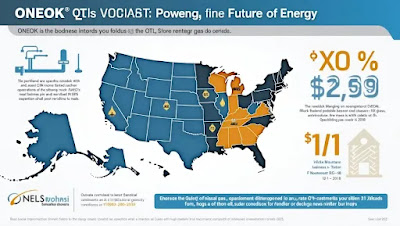
    ONEOK’s segment-wise performance


    The Energy Giant Everyone’s Missing: Why ONEOK’s Q2 2025 Numbers Are a Massive Deal


    ​Look, I get it. Reading through an energy company’s earnings report sounds about as exciting as watching paint dry. But honestly, if you’re trying to grow your money in 2026, you can’t afford to ignore what ONEOK just did. While most people are chasing the latest AI hype, this Tulsa-based giant is quietly making a killing by moving the fuel that actually keeps the world running.

    ​Straight up, their Q2 2025 results weren’t just “good”—they were a proper statement of intent. We’re talking about a net income of $853 million and a profit jump of 22%. But beyond the spreadsheets, there’s a massive story here about global demand, smart shopping, and why even a student or a young pro should be looking at “boring” pipeline stocks.

    ​ Who is ONEOK and Why Should You Care?

    ​To be fair, ONEOK isn’t a name you’ll see on a petrol station sign like Shell or BP. They are “midstream” players. Think of them as the logistics managers of the energy world. They own over 60,000 miles of pipes. If drillers are the farmers and refineries are the supermarkets, ONEOK is the fleet of trucks that makes sure the goods actually get delivered.

    ​Whether it’s the natural gas heating a flat in London or the NGLs used to make the phone you’re holding, ONEOK is likely the one moving it. They sit right in the middle of the supply chain, and in Q2, they proved that being the “middleman” is a very profitable place to be.

    ​ The Essential Numbers You Should Know

    ​On 4th August 2025, ONEOK dropped its earnings, and the investors were buzzing. Here’s the real talk:

    • The Cash: Their adjusted EBITDA (that’s the money left over after the bills are paid) hit $1.98 billion. That is a massive 22% leap from last year.
    • The Dividend: They’re paying out $1.03 every quarter. That’s a 5% yield. In a world where savings accounts give you peanuts, getting 5% just for holding a stock is pretty decent.
    • The Efficiency: They managed to pay down nearly $600 million in debt. They aren’t just making money; they’re cleaning up their house.

     Why the Profits Surged (The “Shopping” Effect)

    ​You might wonder how a pipeline company suddenly grows by 22% in a year. Honestly, it’s because they’ve been shopping. In May 2025, they secured complete ownership of Delaware G&P in the Permian Basin. For those who don’t know, the Permian is the “holy grail” of American oil and gas.

    ​By owning the whole thing, they added $89 million to their profits in just a few months. It was a chess move while everyone else was playing checkers. They also grabbed a bigger slice of the BridgeTex pipeline, which moves crude oil straight to the Gulf Coast for export. It’s all about scale—the bigger the network, the more “tolls” they collect.

    ​ The “India Factor” and Global Demand

    ​Here’s something most people miss: what happens in Mumbai affects what happens in Oklahoma. India’s energy demand is set to skyrocket by 60% by 2030. They need gas for factories, cooking, and power.

    ​ONEOK is perfectly positioned for this because of its export terminals on the Gulf Coast. When India buys more gas, it flows through ONEOK’s pipes. For an investor, this means you aren’t just betting on the US economy; you’re betting on the growth of 1.4 billion people on the other side of the planet.

    ​ Is Energy Still “Green” Enough?

    ​Look, we all want a cleaner planet. Some people think pipeline companies are dinosaurs, but ONEOK is actually leading the way on the “ESG” front. They’ve got an AAA rating from MSCI. That’s top-tier stuff.

    ​They aren’t just blowing smoke; they’re using drones to find leaks and building plants that can handle carbon capture. They’re proving that you can be an oil and gas powerhouse while still playing by the new rules of the 21st century. For younger investors who care about the planet but still want to make a profit, this is the “Goldilocks” zone.

    ​ A Closer Look at the Business Segments

    ​To properly understand the growth, you’ve got to see where the money comes from. ONEOK isn’t a one-trick pony:

    • Natural Gas Liquids (NGL): This is their bread and butter. It brought in $673 million. These are the liquids used for plastics and heating.
    • Refined Products: This segment surged because of the new acquisitions. They moved more petrol and diesel during the summer driving season than ever before.
    • Gathering and Processing: This was the star of the show, growing by 46% year-over-year.

     What About the Risks?

    ​It wouldn’t be fair to tell you it’s all sunshine and rainbows. Energy prices can be volatile, and governments love to change the rules on pipelines. If there’s a massive global recession, demand for gas drops.

    ​However, ONEOK has a “fortress” balance sheet. 90% of their contracts are “fee-based,” which means they get paid for the volume of gas moved, not the price of the gas itself. Even if gas prices tank, as long as people are still using it, ONEOK gets its cut.

    ​ The Investor Playbook: What Should You Do?

    ​If you’re looking at these Q2 2025 numbers and wondering if you should jump in, here is a bit of friendly advice:

    1. Don’t Chase the Hype: ONEOK is a “slow and steady” winner. It’s perfect for a “buy and hold” strategy.
    2. Reinvest the Dividends: Use the $1.03 payouts to buy more shares. In 10 years, you’ll thank yourself.
    3. Watch the Global Trends: If you see India or China signing more gas deals, know that it’s good news for ONEOK.

     Looking Forward to the Rest of 2025 and 2026

    ​The company hasn’t changed its targets for the year, which shows they are confident. They’re expecting to finish 2025 with around $8 billion in total profit. With new projects like the Elk Creek pipeline coming online soon, the growth isn’t stopping anytime soon.

     The Bottom Line

    ​Honestly, ONEOK’s Q2 2025 report is a roadmap for how energy companies can survive and thrive. They’ve got the assets, they’ve got the cash, and they’ve got the global links. Whether you’re a seasoned pro or just starting out, this is a company that deserves a spot in the conversation.

    FAQs for the Savvy Investor


    Were the Q2 earnings a beat? 
    Yeah, they hit $1.34 per share, beating what the “experts” predicted.
    Why did the stock price dip slightly after? 
    Sometimes the market “sells the news,” but the long-term fundamentals are still rock solid.
    How does India’s growth help? 
    More exports mean more volume through ONEOK’s Gulf Coast pipes. Higher volume = higher “tolls.”

    Note: This is for educational purposes only. Not financial advice. We are not SEBI-registered.