Tag: Iran-Israel Conflict

  • 30-Day Oil & Internet Crisis

    The 30-Day Countdown: How a Failed Peace Deal and Undersea Cables are Threatening Your Wallet
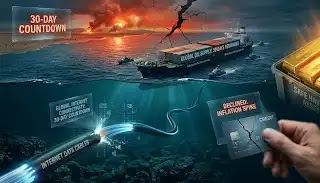

    GLOBAL OIL SUPPLY: 30 DAYS REMAINING.


    ​Honestly, look, most of us just assume the world keeps spinning while we’re busy scrolling TikTok or stressing over our bank balance. But to be fair, if you think a massive standoff in the Middle East won’t hit your home, you’re missing the actual picture. We are literally talking about a situation that could turn your daily contactless payments into “declined” messages. It’s the kind of mess that makes a standard heating bill look more like a mortgage payment.

    ​Straight up, we’re looking at a world on a 30-day timer. Between a failed peace deal and a threat to the literal internet, things are getting properly tense. Let’s break it down properly.

    The Peace Deal That Just… Died: 14 Points of Pure Chaos

    Look, everyone was pinning their hopes on this 14-point peace proposal America threw on the table. The idea was to stop the US-Israel-Iran escalation before it burned the whole global house down. But honestly? Iran’s reaction was like chucking a bucket of petrol on a bonfire.

    ​The biggest issue? The US demanded Iran permanently scrap its nuclear sites. Iran’s response was blunt: “Don’t be under any illusions.” They flat-out refused. Instead of shaking hands, they handed over a list of their own demands. They said they’d move enriched uranium to another country, but only if every single sanction is lifted and the blockades in the Strait of Hormuz are gone so they can sell oil freely.

    ​To be fair, it’s a total deadlock. Because that deal fell apart, the tension didn’t just stay high—it exploded. When diplomacy fails this hard, the markets start to panic. And look, that’s exactly where we are standing right now.

    The 30-Day Oil Clock: Why the Whole System is Shaking

    Here is the reality check. Look, our modern life is built on a “just-in-time” delivery system. Whether it’s the fuel for cargo ships bringing your tech or the gas used to heat warehouses for your clothes, it all depends on steady, cheap oil.

    ​If that supply dries up for even a week, we aren’t just talking about a price hike. We are talking about a massive “Out of Stock” sign on the entire global economy. Your Uber fares, your utility bills, even the data centers running your favorite apps—everything gets hit by the same hammer. It’s a domino effect that leaves the average person footing the bill for a fight they never wanted. Honestly, when reserves hit a one-month low, the countdown to a massive inflation spike has already started.

    The Invisible Battle: Undersea Internet Cables

    Now, this is the bit most people aren’t even mentioning. We talk about the internet like it’s some wireless cloud in the air, but it’s really connected by fiber-optic cables buried deep under the oceans. Iran has properly noticed this. They’ve realized they are sitting on a digital goldmine.

    ​Because they are being squeezed for cash, Iran is now floating the idea of charging “rent” for cables passing through their territory. We are talking about the lines Google, Meta, and Amazon rely on. Straight up, this is digital extortion. If companies don’t pay, or if those cables get caught in the crossfire, the global digital economy could grind to a halt. Imagine a day when international banking just… stops. It’s a terrifying financial prospect.

    What Should You Do With Your Cash?

    Honestly, look, I’m not some corporate suit giving formal advice, but as a friend, you’ve got to be smart. When the world gets this volatile, the stock market becomes a total rollercoaster.

    ​Straight up, this is why people are piling into Gold. Historically, when oil is scarce and currencies feel shaky, Gold is the “safe haven.” It’s the one thing that holds value when everything else is figuratively on fire. If you’ve got any investments, now is the time to look at diversification. Don’t keep all your eggs in one basket—especially if that basket is tied to trade routes currently under threat.

    Final Thoughts

    Look, the high-level meetings between leaders like Netanyahu and Donald Trump suggest the time for talking might be over. We are entering a properly unpredictable phase of 2026. Whether it’s the cost of keeping your lights on or the stability of your WiFi, the next 30 days are going to be a massive test.

    Frequently Asked Questions (FAQs)


    1. Is the oil crisis actually going to happen in 30 days?

    Honestly, look, the “30-day” figure comes from the emergency reserve levels of major economies. It’s not a countdown to the end of the world, but it’s a massive warning sign. If the supply routes in the Middle East don’t clear up within a month, governments will have to start dipping into reserves that are meant for extreme emergencies. That’s when you’ll properly see prices at the pump go crazy.

    2. Why should I care about undersea cables?

    To be fair, most of us think everything is wireless now. But straight up, 99% of international data travels through those physical cables on the ocean floor. If Iran starts charging “rent” or if they get damaged, it’s not just about slow Netflix. We are talking about global banking, stock markets, and even GPS systems taking a massive hit. It serves as the main backbone of today’s digital economy.

    3. Is Gold really the only safe investment right now?

    Look, I’m not a formal finance expert, but historically, Gold has been the “panic button” for investors. When paper money feels shaky because of war or inflation, people want something they can actually hold. It’s not the only option—some people look at commodities or silver—but Gold is the most trusted “safe haven” when things go south.

    4. How does a failed peace deal affect my local grocery bill?

    It sounds crazy, right? But look, it’s all about the domino effect. No peace deal means more tension, which means higher oil prices and higher shipping insurance. Everything in your local shop was likely moved by a truck or a ship. When their fuel costs double, they don’t just eat that cost—they pass it on to you. That’s how a standoff in the Middle East ends up making your bread and milk more expensive.

    5. What is the Strait of Hormuz, and why is it so important?

    Properly speaking, it’s a tiny, narrow stretch of water that a huge chunk of the world’s oil has to pass through. It’s the ultimate “choke point.” If that gets blocked or becomes a war zone, the global energy market basically has a heart attack. That’s why the failed 14-point deal is such a big deal—it was supposed to keep that water safe.

    Note: This is for educational purposes only. Not financial advice. We are not SEBI-registered.
  • Russia-Ukraine & Iran Conflict: Will Crude Oil Hit $150?

    The $150 Crude Oil Storm: How Russia and Iran are Changing the Game


    ​To be fair, we all knew things were getting tense, but the latest news from Russia is a proper game-changer. If you’ve been scrolling through your feed today, you’ve probably seen those wild headlines about what’s going down in the East. Ukraine has stepped up its game, hitting Russia’s Baltic Sea port of Primorsk and the NORSI refinery. Straight up, we aren’t just talking about a local skirmish anymore. This is a direct attack on the world’s fuel supply, and it’s sending shockwaves through the market.

    ​Look, everyone is asking the same question: Is crude oil actually going to hit $150 per barrel? The truth is, we aren’t even asking “if” it will happen anymore—we are just waiting to see “when” the hammer drops. Properly speaking, the global economy is standing on a very thin wire, and the wind is blowing harder than ever.

    ​ Ukraine’s New Naval Strategy (The Primorsk Strike)

    ​Look, for the longest time, the war between Russia and Ukraine was mostly on land. But lately, Ukraine has shifted its focus to something that really hurts Russia: its oil money. Just this Sunday, on April 5, 2026, drone attacks caused a massive fire at the NORSI oil refinery and led to a fuel leak at Primorsk.

    ​Straight up, Primorsk is Russia’s main door for sending oil to the West. When a gate that big gets slammed shut, you can bet the entire global supply chain is going to feel the rattle. To be fair, Russia is one of the biggest exporters of crude oil in the world. If you hit their export hubs, you hit the global market’s wallet.

    • The Black Sea and Baltic Chokehold: By using long-range drones, Ukraine has made it incredibly risky for Russian tankers to even leave the dock. It’s simple math: if a tanker is too scared of getting blown up to leave the port, that oil isn’t going anywhere.
    • Refinery Damage: Russia has already lost a massive chunk of its refining capacity. This basically leaves them with mountains of raw crude that they can’t even turn into usable fuel for ships or planes.

    Properly speaking, this is a nightmare for energy traders. If Russia can’t process its oil, they have to dump it on the market for cheap—or stop producing it altogether. Either way, the supply chain gets broken, and the prices start their climb toward that $150 mark.

    Crude oil price 150 forecast Russia Ukraine Iran conflict

    ​ The Next Level of Chaos (The Gas Pipeline Threat)

    ​Now, let’s talk about something even more terrifying for the global economy. Straight up, there are massive pipelines carrying Russian gas through Ukraine and into Europe. These pipes aren’t just metal—they are the literal lifeblood keeping European homes warm and factories running.

    ​Look, if Ukraine or any “accidental” drone strike hits these gas lines, the tension won’t just increase—it will explode. To be fair, Europe is already struggling with high energy costs. If those pipes are blown, we aren’t just talking about expensive petrol; we are talking about a total energy blackout across half a continent.

    ​Imagine a situation where industries in Germany or France have to shut down because they have no gas. Properly speaking, that would trigger a global recession faster than any bank crisis ever could. Straight up, the world is terrified that this “energy war” is about to go from oil refineries to the very pipelines that keep modern life moving.

    ​ The Iran Factor and the Strait of Hormuz

    ​Alright, let’s pivot the map a bit and look south towards Iran. If Ukraine is the spark in the North, Iran is the giant powder keg in the South. Properly speaking, the Strait of Hormuz is the most important piece of water on the planet. Around 20% of the world’s daily oil passes through this tiny gap.

    Iran has already made it clear through recent moves that it could close this strategic gateway without warning. To be fair, the market is already on edge because of the Russia situation, but this would be the final nail in the coffin.

    • The Supply Gap: If the Strait of Hormuz gets fully blocked, nearly 20 million barrels of oil disappear from the market overnight.
    • The Price Explosion: Analysts from big global banks are straight up saying this would push prices to $150 or even $160 in a heartbeat.
    • No Emergency Exit: Usually, when the Middle East gets messy, the world buys more Russian oil. But as we saw with the Primorsk attack, Russia’s taps are being turned off too.

    Straight up, we are looking at a “no-win” scenario. There is no backup plan when the two biggest oil regions in the world are on fire at the same time.

    ​ Why This Is Not Just Another Market Story

    ​Straight up, some people think these prices are just numbers for traders to worry about. But to be fair, crude oil at $150 would be a total disaster for the average person. Think about it like this: crude oil isn’t just for your car. It’s in the plastic of your phone, the fertilizer that grows your food, and even the thread in your shirt.

    ​If the cost of the raw stuff doubles, you can bet your last dollar that everything else will too. Properly speaking, we are talking about a massive jump in the cost of living.

    • Food Security: Farmers rely on diesel and oil-based chemicals to keep the world fed. If oil prices stay in the clouds, the price of your groceries is going to stay right up there with them.
    • Global Shipping: Every single thing you buy online has to be shipped. If shipping fuel goes up by 50%, those “free delivery” days are going to disappear pretty fast.

     The Pressure on World Leaders

    ​To be fair, world leaders are properly stuck. They’re caught in a brutal balancing act: they want to squeeze Russia to stop the war, but they also know that the global economy could snap if Russian energy disappears entirely.

    ​Look, it’s a massive gamble, and right now, the stakes are getting way too high. If they push too hard, they risk a $150 oil price that causes riots in their own streets. If they don’t push hard enough, the war continues. Straight up, there are no easy answers here.

    digital display screen Russia Ukraine Iran conflict

    ​The Reality Check

    ​Look, we need to be real about where this is heading. Properly speaking, the era of cheap, stable energy is taking a long break. With Ukraine’s drones hitting Primorsk and the threat of gas pipelines being blown up, the supply chain is more fragile than it has been in decades.

    ​To be fair, nobody can predict the future with 100% certainty, but all the signs point towards a very expensive year. Straight up, if these naval attacks continue and the tension in the Middle East doesn’t cool down, that $150 price tag is basically a guarantee.

    ​We are living through a period where geography and war are rewriting the rules of the economy. It’s messy, it’s complicated, and properly speaking, it’s going to be a very long road ahead for all of us.

    FAQ 


    Q1: Why is Ukraine attacking Russian oil terminals?

    Straight up, Ukraine is hitting Russia’s wallet. By attacking ports like Primorsk and Novorossiysk, they are stopping Russia from making money to fund the war.

    Q2: Can crude oil really reach $150 in 2026?

    To be fair, yes. If the Strait of Hormuz stays shut and Russian refineries keep burning, experts from Goldman Sachs and JPMorgan say $150 is very likely.

    Q3: How will this impact the common man?

    Properly speaking, it’s going to make everything expensive. From petrol at the pump to the price of vegetables and electronics, high oil prices trigger global inflation.

    Note: This is for educational purposes only. Not financial advice. We are not SEBI-registered.
  • global oil crisis 2026 trump iran conflict

    S&P 500 stock index

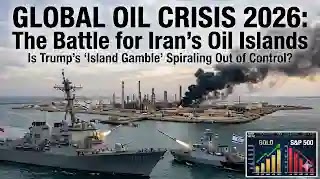
    Global Oil Crisis 2026: Is Trump’s “Oil Island” Gamble Spiraling Out of Control?

    ​Honestly, if I had a pound for every single time some “expert” predicted the total collapse of the global economy, I’d probably be retired on a private estate by now. But look, as of March 26, 2026, the tension between the USA, Israel, and Iran has moved from scary headlines to empty pockets. If you haven’t felt the pinch at the gas station yet, you’re probably not driving enough.

    ​The conflict has properly rattled the cage of the global economy. From the London Stock Exchange to Wall Street, everyone is looking at the same thing: the price of a barrel and the safety of the world’s most critical sea routes. Straight up, we are witnessing a high-stakes gamble that could either secure Western energy for a decade or lead us into World War 3.

    ​1. The Strategy: The Clash Over Iran’s Oil Export Lifelines

    ​The biggest “Breaking News” right now isn’t just about missiles; it’s about boots on the ground. There are strong reports from the Gulf that the US military is positioning itself to capture or neutralize Iran’s key energy hubs, specifically their Oil Islands like Kharg Island.


    ​To be fair, if the USA and its allies capture these islands, they control the “Tap” of the world’s oil.

    • The Military Move: There’s talk of US special forces targeting these strategic hubs to break Iran’s economic backbone.
    • The Iranian Threat: Iran has already warned that if even one Western soldier steps on their islands, they will shut down the Strait of Hormuz permanently.

    Properly speaking, if this happens, we aren’t just looking at expensive gas—we are looking at a total global energy blackout.

    ​2. The Media Narrative: Is Trump Losing Control?

    ​Look, the major newspapers in London and Washington—like The Guardian and The New York Times—are painting a very grim picture. They are claiming that Donald Trump has “lost his grip” on the situation and that the war has spiraled beyond his control.

    • Perception vs. Reality: Honestly, the media loves a “Cornered Leader” story. While they claim he’s trapped, others suggest this is a calculated move to capture Iran’s assets and back the US Dollar with the world’s oil supply.
    • Market Panic: When the headlines say “Trump has lost control,” investors panic. This is exactly why we are seeing a massive Flight to Safety right now. People don’t trust politicians or paper money during a war; they trust physical assets.

    ​3. Wall Street and the Surge of “Safe Havens.”

    ​Straight up, the stock markets in the US and Europe are in “Panic Mode.”

    • The S&P 500 and FTSE 100: These indices have seen a massive sell-off as investors dump tech and retail stocks.
    • Gold is King: Gold has smashed through the $2,500 per ounce barrier this March. In a world where the media says leaders have lost control, Gold is the only thing people properly trust.
    • The Bitcoin Debate: Interestingly, Bitcoin is behaving like a wild animal. It’s “Digital Gold” one minute and a “Risk Asset” the next. To be fair, only the bravest investors are staying in the crypto market while missiles are in the air.

    4. Europe’s Cold Reality and the LNG Crisis

    ​While America talks about military strategy, Europe is feeling the economic cold. The supply of LNG (Liquefied Natural Gas) from the Gulf has become increasingly unstable.

    • The UK and Germany: Energy prices have jumped by nearly 25% in the last week. Talks around “Emergency Energy Measures” for summer are already underway among governments.
    • At the Pump: In France and Italy, the price of premium fuel has hit record highs. People are switching to public transport across London and Paris, not by choice, but because they can’t afford the commute.
    • Shipping Insurance: With the Persian Gulf becoming a “no-go zone,” the cost of insuring a tanker has gone through the roof. This means even if the oil is there, getting it to a port in Rotterdam or Liverpool is costing a fortune in extra fees.

    5. Inflation: The Ghost in the Supermarket

    ​When fuel prices go up, everything else follows. In the US, the CPI (Consumer Price Index) is showing a sharp, painful spike.

    • Logistics Costs: It costs a lot more to move a truck from California to New York today than it did last month. This means your groceries, your electronics, and even your clothes are getting more expensive by the hour.
    • The European Squeeze: In the EU, food inflation is hitting double digits again. The “Cost of Living Crisis” that we thought was over is back with a vengeance.

    6. A Personal Perspective: Sarah from Ohio

    ​Think about Sarah, a nurse in Ohio. She has a 45-minute commute to the hospital every day. Last year, she spent $40 a week on gas. Today, she is spending nearly $90. To be fair, this isn’t just a “market trend” for Sarah; it’s the difference between saving for her kids’ college and just surviving. This underscores the human dimension of the “Oil Island” gamble.

    ​  Frequently Asked Questions (FAQ)

    1. Is the USA actually planning to capture Iran’s Oil Islands?

    Properly speaking, major geopolitical reports are suggesting that the US military strategy involves neutralizing hubs like Kharg Island to cut off Iran’s economic lifeline. This has caused extreme volatility in the 2026 energy markets.

    2. Why is the media saying Trump has lost control?

    Honestly, it’s a mix of genuine concern over military escalation and the usual media narrative against his policies. However, in finance, this “loss of control” narrative is what drives people to sell stocks and buy Gold.

    3. What happens if the Strait of Hormuz is closed?

    To be fair, it would be an economic disaster. Approximately one-fifth of global oil flows through that passage. Closure would likely push crude oil prices toward $200 per barrel, leading to global rationing and a deep depression.

    The Bottom Line:

    ​The 2026 Energy Shock is a masterclass in how interconnected our world is. A conflict over a few islands in the Gulf can raise the price of bread in New York and stop a truck in London. Whether Trump is “in control” or “cornered” remains to be seen, but for now, the “Smart Money” is hedging against chaos.

    I’m curious—do you think the West should stay out of the Gulf entirely, or is capturing the “Oil Heart” the only way to lower prices? Let’s talk in the comments!

    Note: This is for educational purposes only. Not financial advice. We are not SEBI-registered.
  • Global Economy 2026: War, Oil, and Your Money

    Global Economy 2026: War, Oil, and the Truth About Your Wallet


    financial dashboard in dark mode

    ​If you’ve glanced at your bank balance lately, you know something is wrong. It is March 9, 2026, and there’s a massive gap between those shiny “government reports” and the reality of our daily lives. While the TV talks about GDP growth, most of us are just wondering why a trip to the grocery store feels like a major financial decision.

    ​The reality is that we are stuck in a nightmare between a dangerous war in the Middle East and an economy that’s built like the letter K—where the rich keep climbing, and everyone else is just trying not to slip. Believe me, if you want to keep your savings safe this year, you’ve got to look past the official fluff and see what’s actually happening on the ground.

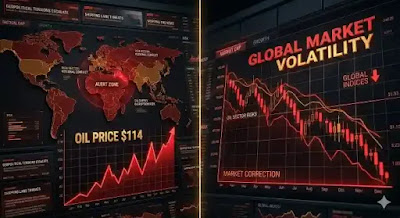
    ​ Geopolitical Chaos: Why Oil is Hitting $114

    ​The biggest shock right now is the direct war between Iran and Israel. This isn’t just some far-away fight; it’s a global economic earthquake.

    • The Energy Spike: Brent Crude has properly exploded, jumping 25% today to hit over $114 per barrel.
    • The Chokepoint: Mind you, about 20% of the world’s oil flows through the Strait of Hormuz. With Iran threatening to shut it down, tanker traffic has already tanked by 70%.
    • Shipping Costs: Because ships are now forced to sail all the way around Africa to stay safe, insurance and freight rates have literally tripled overnight.

    For my money, the “Cheap Energy” era is officially dead. Even if they stop fighting tomorrow, the damage to the world’s supply chains is already baked in.

    ​ The Inflation Trap: Why Everything Still Feels Expensive

    ​The government loves to claim inflation is “cooling” down to 3%. But here’s the thing: inflation is just the speed at which prices go up. It doesn’t mean anything is actually cheaper.

    ​Since 2020, the cost of stuff you actually need—like milk, bread, and rent—has surged by nearly 40%. Even if that speed slows down, those high prices are here to stay. Your paycheck buys less today than it did five years ago, and most wages aren’t even trying to keep up. Believe me, this is a silent tax on your hard work.

    ​ The K-Shaped Reality of 2026

    ​Actually, we are seeing a massive split in how people live today.

    • The Top Line: If you own assets like real estate, tech stocks, or Bitcoin, you’re doing great. The AI boom is driving that wealth higher every day.
    • The Bottom Line: If you rely on a monthly salary and have debt, you’re struggling. High interest rates are making credit cards and car loans particularly painful to pay off.

    But even in this mess, there’s a way to be smart. While everything physical is getting pricier, digital tools are becoming more accessible. For my money, businesses should be leaning into “Always Free” services like Microsoft Azure to cut their overhead. In 2026, your tech stack is the only thing that shouldn’t be eating your lunch.

     Where is the Smart Money Moving?

    ​As of March 9, professional investors are running away from risky tech and looking for “Safety and Liquidity.”

    • Energy & Defense: These are the big winners. In a world at war, these aren’t just stocks; they are survival kits.
    • The Gold Rush: Gold is still the go-to when people are scared. Mind you, it’s a bit volatile, but when world leaders start talking about “red lines,” people buy physical gold.
    • The Bitcoin Factor: Interestingly, Bitcoin is holding its ground as a “Digital Gold” for the younger crowd, even while the oil markets are going crazy.

     Stagflation: The Real Monster Under the Bed

    ​The biggest risk we face in late 2026 isn’t just a recession—it’s Stagflation. This is that toxic mix where the economy stops growing, but prices keep rising because of war and supply chain breaks.

    ​Believe me, if we hit full stagflation, the old “Buy and Hold” strategy might not save you. You need to be active. Look at commodities, look at agriculture, and keep your cash ready. You need to be able to pivot when the headlines change.

    ​ Survival Strategy: How to Handle Your Money Now

    ​You can’t stop a war, but you can choose where you put your assets.

    1. Cash is King: Keep at least 6 months of living expenses in a liquid account. In this economy, that’s your ultimate safety net.
    2. Hedge with Commodities: Put a slice of your portfolio into Energy or Metals like Gold.
    3. Ditch the Debt: Interest rates are a trap right now. Pay off those high-interest credit cards as fast as you can.
    4. Think Globally: Don’t just watch the US or Europe. Look at markets that aren’t directly in the line of fire in the Middle East.

     My Final Take on March 2026

    ​The lesson right now is simple: Discipline beats Intelligence every time. You don’t need to be a Wall Street genius to see that the world is changing. You just need the discipline to stop following the herd and start protecting what you’ve built.

    ​The “Peace Dividend” we enjoyed for decades is over. The world is more connected—and more fragile—than ever before. My goal is to help you see the truth behind the noise so you can make moves that actually matter for your family.

    ​Frequently Asked Questions (FAQs)

    1. Is a global recession coming because of the war?

    Actually, if oil stays above $110 for a long time, it’s almost guaranteed. High energy prices act like a global tax that slows down everything.

    2. Why are my bills so high if inflation is “cooling”?

    The thing is, a drop in inflation only means prices are rising more slowly, not dropping. The huge jumps from the last few years are now a permanent part of the economy.

    3. Is the US Dollar still the safest place for my money?

    Believe me, people always run to the Dollar during a war. But with all the debt and political mess, many are now splitting their safety between the Dollar and Gold.

    4. How can free tech services help me save money?

    For my money, it’s all about lowering your “burn rate.” Using free cloud tiers for your business data can save you thousands that you’ll need to cover rising energy costs.

    5. What is the biggest danger for the rest of 2026?

    Mind you, the real threat is Stagflation—prices rising while the economy stalls. It’s the worst-case scenario for any regular investor.

    Note: This is for educational purposes only. Not financial advice. We are not SEBI-registered.