Tag: ​Iran War Update

  • Iran Missile Power & US Base Damage

    The Illusion of a Perfect Shield
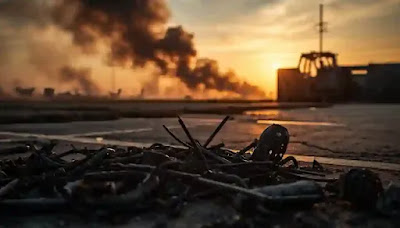

    Shrapnel damage at Ali Al Salem air base.

    ​To be fair, if you only glance at the official press releases, you’d think the Western air defense systems are completely invincible. They love talking about “successful interceptions” and throwing around technical marketing speak. But honestly, the reality on the dirt is entirely different.

    ​When Iran launched its Fateh-110 ballistic missile toward the Ali Al Salem air base in Kuwait, the US military and Kuwaiti forces scrambled instantly. They fired dozens of incredibly expensive interceptor missiles into the sky, desperate to knock the incoming threat down. On paper? Sure, they managed to hit it. But look at how close that missile actually got before it was touched. It was already practically screaming over the perimeter of the base.

    ​The physical debris of the Iranian Fateh missile rained straight down onto the American soldiers stationed at the base. This wasn’t some clean, distant explosion in the clouds. It was close enough that the falling shrapnel severely injured several US troops, leaving two of them in absolutely critical, life-threatening condition.

    ​But it didn’t stop with human casualties. The falling debris completely smashed into the military hardware parked on the tarmac. Two highly sophisticated, multi-million-dollar MQ-9 Reaper strike drones—which were sitting fully deployed on the base—were heavily damaged and put out of commission. When the mere leftover garbage of your opponent’s missile can still tear through your defense perimeter, blind your strike drones, and put your troops in the hospital, your “impenetrable shield” has properly failed.

    The Chinese Connection and the F-15 Shockwave
    ​Premium American F-15 jet flying in smoke.

    ​Now, if the Kuwait base incident wasn’t enough to give the Pentagon a collective migraine, an official investigative disclosure from the US military itself just made things a whole lot worse. For months, there has been heavy chatter about how exactly Western aircraft were being challenged in the skies during the peak of the fighting. Now, the official investigative reports have spilled the beans: Iran successfully targeted and hit a premium American F-15 fighter jet using a highly advanced Chinese missile.

    ​Think about the sheer scale of this for a second. The F-15 has been the absolute poster child of Western air superiority for decades. It is the plane they use to project total dominance over the Middle East. Yet, it was neutralized because the missile tracking it wasn’t just some basic, old-school projectile thrown together in a makeshift desert workshop. It was a sophisticated piece of long-range, high-tech engineering sourced directly from Beijing.

    ​This single piece of investigative evidence reveals two massive, uncomfortable truths that Washington wanted to keep quiet:

    • Beijing is fully in the game: China is no longer just sitting on the sidelines watching the Middle East burn while writing polite diplomatic notes. They are actively feeding long-range, high-grade military hardware and early-warning radar tech directly into Iran’s strategic supply lines.
    • The technology gap has vanished: Western fighter jets are built on the assumption that their stealth, jamming capabilities, and evasive systems can easily outrun anything the enemy throws at them. The F-15 hit proves that Chinese missile tech is now sophisticated enough to see through Western electronic countermeasures and track down premium targets with terrifying precision.

    The Empty Bluster of the F-16 Patrols
    US F-16 jet doing a casual public patrol.

    ​So, how does a global superpower respond when its bases are getting showered with missile debris and its top-tier fighter jets are getting clipped by Chinese tech? Straight up, they resort to public relations stunts. If you look at the recent propaganda coming out of the US Central Command (CENTCOM), it is almost funny. They recently blasted photos all over social media showing their F-16 Fighting Falcons flying casual patrols over the Middle East. The caption essentially screamed: “Look at us, we are still flying here, which means we are winning!”


    ​But honestly, nobody is buying the childish media theater anymore. Showcasing an older-generation F-16 during a low-risk daytime patrol appears more symbolic than substantive, especially when the real operational burden has reportedly been carried by advanced F-35 and F-15 platforms. Physical heat from Iranian air defenses. It is a classic move—when you are losing the actual physical confrontation on the ground, you try to double down on the media narrative to convince your own public that everything is totally fine.

    The Economic Drain of a Changing Guard

    ​Look, the real kicker in all of this isn’t just the broken metal or the damaged runways. It’s the sheer financial exhaustion of trying to maintain this massive military presence. The latest independent financial audits and economic reports have revealed that the US military has burned through nearly $60 billion just trying to counter and contain Iran’s operations.

    ​Let that number sink in. Sixty billion dollars. The real question is where all of that money is going to come from in the first place. The economic fallout is increasingly being felt by everyday Americans through elevated fuel costs, more expensive shipping rates, and rising airline ticket prices. The financial strain is getting so severe that top-tier economists are warning that if this drag continues much longer, it could trigger a deep, messy domestic economic crisis back home.

    ​When the US Defense Secretary stands up at international summits and frantically gives statements insisting that America is “still capable” of launching fresh military operations against Iran, he isn’t speaking from a position of strength. He is saying it because the entire global community has watched the events in Kuwait and the skies over the region, and realized that the old superpower is running dangerously low on options, money, and military credibility.

    ​Iran has effectively proved that you don’t even need to completely destroy a base to win the strategic argument. By combining their own gritty missile mass with high-tech imports from global allies, they have made the financial and human cost of staying in the region way too high for the West to sustain long-term.

    Iran-Kuwait Missile Clash: The FAQs


    ​Q1: Did Kuwait and the US actually stop the Iranian missile?

    Look, technically yes, but it was a proper disaster anyway. They fired dozens of incredibly expensive interceptor missiles to knock down a single Iranian Fateh-110 ballistic missile headed toward the Ali Al Salem air base in Kuwait. But the missile got so incredibly close to the target before being hit that its heavy, burning shrapnel rained straight down onto the American soldiers and equipment below.

    ​Q2: What was the actual damage to the US military base?

    Honestly, it completely trashed their defenses. The falling shrapnel severely injured five US soldiers, with two of them left in absolutely critical condition. On top of that, the jagged debris smashed right into two multi-million-dollar MQ-9 Reaper strike drones parked on the tarmac, leaving them completely out of commission. It proved that even when you “stop” an Iranian missile, its leftover garbage can still chew up your perimeter.

    ​Q3: Did Iran really shoot down a premium US fighter jet?

    Straight up, yes—and the Pentagon is losing its mind over it. An official investigative report dropped by the US military revealed that during the peak of the fighting, Iran successfully hit a premium American F-15 fighter jet. The biggest shockwave? They didn’t do it with basic tech; they used a highly sophisticated, long-range Chinese missile and early-warning radar systems supplied directly by Beijing.

    ​Q4: Why is the US flying F-16 patrols if they are losing ground?

    Properly speaking? It’s pure public relations theater. After taking massive hits to their top-tier aircraft, the US Central Command (CENTCOM) started blasting photos all over social media of older-generation F-16 Fighting Falcons doing casual patrols. It’s a classic desperation move—when you are losing the actual physical fight on the ground, you try to double down on media stunts to make your public think everything is totally fine.

    ​Q5: How much is this conflict costing everyday people?

    It is burning a massive hole in everyone’s pockets. The US military has already incinerated a staggering $60 billion just trying to counter and contain Iran. The economic impact is landing squarely on ordinary American families, driving up fuel costs, increasing grocery transportation expenses, and pushing airfares higher.

    This is for educational purposes only. We are not financial advisors. Results may vary based on your individual debt situation

  • Petrol at £10? This is Mental!

    Is My Petrol Tank About to Cost a Fortune? (Probably, yeah.)


    phone screen faintly shows a bank balance app

    So I’m sitting there this morning. Half asleep. Checking my bank balance on my phone like a normal person. And I swear my heart just dropped. You know that feeling when you haven’t even left the house, but somehow everything’s already more expensive? It’s mental. Then I scroll the news – big mistake – and I see the IMF going on about a 100% or even 200% price hike on fuel if this Iran thing drags on. Two hundred percent mate. That’s not a joke. It’s enough to make you want to go back to bed and stay there for a year.

    ​Right now,w I pay about £70 to fill up my little hatchback. Do the maths. £140. Or £210. How am I supposed to get to college? How’s my dad supposed to get to work? It’s more than numbers on a screen—it’s real life playing out. It’s about choosing between a tank of fuel or proper groceries for the week. And it’s happening thousands of miles away, ay which somehow makes it worse because I can’t do anything about it. I’m just a bloke in my room, oom, and my whole life might get more expensive because of a row in the Middle East. Honestly, it makes me feel proper small and a bit fed up.

    Day 47 and honestly? I’ve lost count.

    ​Look, they keep saying “Day 47 of the Iran crisis” on the telly. But who’s counting anymore? It all starts to blur together. Anyway, things are getting proper spicy now. Not just talk. The Pentagon just shipped 10,000 more troops over there. Plus big warships – the kind you see in movies with all the planes on top. When that many soldiers move, you know it’s not for show. They don’t send 10,000 blokes and a load of steel just to have a chat. Feels like the whole world is standing on a powder keg and someone’s walking around with a lit match, just waiting for a bit of a spark to set the whole lot off.

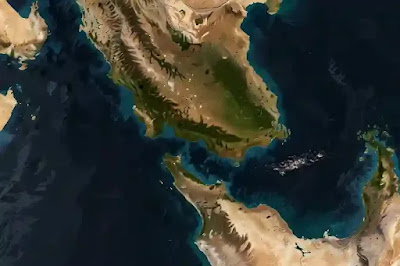
    Strait of Hormuz. Iran is on one side, Oman

    Why Geography is a Right Pain

    ​Why is everyone so obsessed? Geography. There’s this tiny bit of water called the Strait of Hormuz. Think of it like a driveway, but for massive oil tankers instead of cars. About 20% of the world’s oil goes through that little gap. It’s narrow, it’s cramped, and it’s right next to Iran. If Iran blocks it – which they could do quite easily with a few mines or speedboats – we run out of fuel in weeks. Not months. Weeks. That’s why America is so obsessed. They know if that tap gets turned off, the whole world stops moving. It’s a terrifying amount of power for one country to have over the rest of us.

    That “safe path” thing? Yeah, I don’t buy it.

    ​So there’s this “exclusive” report going around. Says Iran offered a proposal to let ships pass safely on the Oman side of the water. No attacks, everyone’s happy. Really? Come on. Why would they do that now? It sounds a bit too good to be true, doesn’t it?

    ​Think about it properly. The Strait is their only real weapon against the blockade. It’s their way of saying, Mess with us, and we turn off the world’s taps.” Why give that up when there’s a US blockade sitting right on their doorstep? It’s a tactical game, pure and simple. Maybe just media spin, so they don’t look like the villains on the news. Or maybe they’re just trying to distract everyone while they do something else. Either way, I’m not falling for it. It feels like a right trap.

    The Sneaky “Dark Network”

    ​Also – and this is the funny part – we already know Iran is being proper sneaky. There’s news about 20 million barrels of oil moving through a “dark network” of tankers. These ships literally turn off their GPS trackers so they become invisible on the maps. Then they swap oil in the middle of the ocean like a scene from a spy film, so nobody knows where it actually came from. If they’re already doing all that hard work to sneak around the rules, why would they suddenly decide to play nice and offer a “safe path”? Exactly. It’s rubbish. They are looking out for themselves, just like everyone else is.

    Burj Al Arab hotel

    Dubai’s Having a Proper Nightmare Too

    ​Oh, and it’s not just petrol prices. Look at Dubai. Their big fancy hotel – the Burj Al Arab, you know the sail-shaped one that’s in every holiday photo – is going under a massive 18-month restoration. Normally, you’d think, “whatever, buildings get fixed all the time.” But the timing? The timing is absolutely terrible.

    ​Dubai runs on tourism and business. It’s all about rich people flying in and spending loads of cash. But if the whole region feels like a war zone? Do flight tickets cost a fortune because of these fuel prices? Nobody is going to be jetting off for a luxury holiday. Eighteen months of construction during a potential war is a massive blow to their wallet. They’re going to lose serious cash if the tourists decide to stay in London or New York instead. The whole area is holding its breath, honestly, and you can tell everyone is worried about the money drying up.

    What actually happens if this gets worse?

    ​Properly speaking – and I’m trying not to sound like a newsreader or a boring teacher here – it’s not about missiles or big political speeches. It’s about real people. The bloke is trying to heat his flat in December when the gas bill triples. The delivery driver on minimum wage who can’t afford the petrol to finish his shift. When the IMF says 200% price hike, they’re not just guessing for a laugh. They’ve seen supply chains get smashed before, and they know what’s coming.

    ​But this feels different. 10,000 extra US troops is a lot of people. Iran playing cat-and-mouse with speedboats near billion-dollar warships is a recipe for disaster. One wrong move. One accidental shot from a nervous sailor. And boom—oil prices go through the roof before you can even say “fill ‘er up.” That’s not fearmongering. That’s just how the world works when people start pointing guns at each other over oil.

    Why you should care even if you don’t drive

    ​I know what you’re thinking. “I don’t live near Iran. I don’t even have a car, so I’m fine.” Well, to be fair, you’re not. Look at your receipts. Everything you buy—your food, your clothes, your phone, even your new trainers—arrives on a ship or a lorry that runs on fuel. If the cost of moving that stuff triples, the shop isn’t going to pay for it. You are.

    ​Your loaf of bread goes up. Your Netflix doesn’t get cheaper either because big computer servers need loads of electricity, and that costs more when fuel is scarce. It’s a massive chain reaction. It hits the poorest people hardest, as it always does. It’s a proper muddle.

    ​I feel like a right muddl,e honestly. One day, there’s a “peace proposal” on the news. The next day, there are more warships and talk of blockades. Nobody knows if it’ll settle down or just explode. It’s proper headache stuff,f and I’m just trying to figure out if I need to start riding a bike everywhere.

    FAQs – The Quick Version


    1. Why is that Strait thing such a big deal?

    Think of it like the world’s most important driveway. 20% of the world’s oil goes through it every single day. If you block that driveway, the world literally runs out of fuel in a few weeks. No fuel means no food in shops and no cars on roads.

    2. Is the “safe path” thing real or a total fake?

    Probably fake. Both sides lie during wars to make the other side look bad. Most experts reckon it’s just a pressure tactic to make the US look like the aggressor. I wouldn’t bet my lunch money on it being a real deal.

    3. Will I actually have to pay 200% more for my petrol?

    The IMF says it’s a real possibility if the war drags on and the shipping lanes get shut. It all depends on whether the oil actually stops flowing. If the Strait closes? Yeah, get ready to pay a fortune.

    4. Why on earth fix Burj Al Arab now?

    They say it needs restoration, which takes 18 months. But the timing is awful for Dubai’s tourism. If war breaks out, nobody will go there anyway, but the lost money from a closed hotel makes it even worse.

    5. What’s this “dark network” everyone is talking about?

    It’s basically “ghost ships.” Tankers that turn off their GPS so they can’t be tracked and swap oil in secret at sea. It’s Iran’s way of selling its oil, even though the US has told everyone not to buy it. Proper sneaky, right?

    6. What does the US blockade actually do?

    It’s basically the US trying to stop any ship from leaving or entering Iranian ports. They want to starve the country of money,y so they stop the war. But as we’ve seen with the “dark network,” it’s not exactly working perfectly.

    7. Is there any hope of prices going down?

    Honestly? Only if everyone stops fighting and goes home. As long as there are 10,000 troops and warships in the water, the market is going to stay nervous, and prices are going to stay high. It’s a proper waiting game.

    ​So what do you lot reckon? Is this all just a massive scare tactic to get us panicking, or are we actually going to be looking at £10 a gallon by Christmas? Comment below because honestly, I’m genuinely worried about it.

    Note: This is for educational purposes only. Not financial advice. We are not SEBI-registered.