Tag: John Deere News

  • US Tariffs 2025: Global Trade & Supply Chain Shift

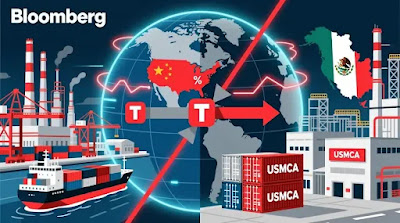
    shifting supply chains toward Mexico

    The Great Trade Pivot: Why May 2025 Changed Your Wallet Forever


    ​The global economy just had its “GPS recalculated” moment, and let me tell you, the new route is anything but simple. If you’ve been watching the news since May 2025, you know the vibe has shifted from “free trade” to “protected borders” almost overnight. It’s no longer just about who can make a product for the lowest price; it’s about who is making it closest to home and who has the safest supply chain.

    ​October 2025 is here, and the dust is finally starting to settle on the most aggressive trade policy shift we’ve seen in decades. Average US import duties have spiked to over 18%, and while the headlines are full of doom and gloom, the real story is about how smart businesses are turning this “tariff tempest” into a competitive edge. From the cornfields of Iowa to the high-tech hubs in Texas, everyone is rewriting their playbook to survive a world where the old rules simply don’t apply anymore.

    ​The May Shockwave: From Global to Local

    ​Let’s be real—the old way of doing business is officially on life support. Pre-May 2025, most companies had a very simple strategy: find a factory in China, ship it across the ocean, and keep costs low. But when those tariffs hit 145% on certain electronics and 30% on general machinery, that math stopped working overnight. It wasn’t just a small price hike; it was a total structural collapse of the “cheap import” model.

    What’s happening on the ground right now?

    • The Mexico Boom: Mexico has officially become the world’s favorite “Plan B.” Manufacturing output there jumped 8% in just the first half of 2025. Industrial parks in Monterrey and Juarez are properly packed with firms fleeing Asian duties.
    • Nearshoring is King: Companies are cutting their shipping times by nearly 70%. Instead of waiting 30 to 40 days for a massive container ship to cross the Pacific, they’re waiting 3 days for a truck to cross the border from Tijuana.
    • The Real Cost: For the average American family, this shift isn’t free. Experts suggest tariffs are responsible for about $1,300 in extra costs per household this year alone. Whether it’s your new iPhone or your morning coffee, the “Tariff Tax” is everywhere.

    The Supply Chain Squeeze: Why “Just-in-Time” is Officially Dead

    ​The “Just-in-Time” model that we all loved during the 90s and 2000s—where parts arrived exactly when needed to save on storage—has been replaced by “Just-in-Case.” Companies are hoarding inventory like it’s 2020 all over again, simply because they don’t know if the next tariff tweet or policy change will double their costs tomorrow.

    ​If you’re a business owner, the advice from the experts is simple but tough: Diversify or Ache. If 100% of your parts come from one single country, you aren’t running a business—you’re running a gamble. Smart firms are now split-sourcing: 60% from their traditional partners and 40% from nearshore or domestic suppliers to hedge their bets against geopolitical swings. It’s expensive to maintain two supply chains, but in 2025, it’s the only way to sleep at night.

    ​Case Study: The John Deere Struggle in the Heartland

    ​To see how this hits the ground, you only need to look at John Deere. This isn’t just a corporate problem for a big green logo; it’s a “dinner table” problem for thousands of families. Deere is looking at a staggering $600 million loss in 2025 purely because of these trade shifts.

    1. Steel Costs: Chinese steel duties are sitting at 25%, making every tractor frame and harvester thousands of dollars more expensive to build right here in the US.
    2. The Export Wall: Because the US raised tariffs, countries like Brazil and China retaliated. Now, it’s significantly harder for Deere to sell American-made tractors abroad, leading to massive inventory piles.
    3. The Farmer’s Pinch: Real farm income is down roughly 15%. When the equipment costs more to buy, but the crops (like soybeans) sell for less because export markets are closed, the entire heartland feels the burn.

    The Silver Lining: A Manufacturing Renaissance in the US?

    ​Honestly, it’s not all bad news. If you look at the factory floors in Ohio, Pennsylvania, or Texas, something properly interesting is happening. Domestic manufacturing output is up about 3-4%, the highest growth we’ve seen in years.

    • New Jobs: Protected sectors like steel and textiles are finally hiring again because they don’t have to compete with ultra-cheap, subsidized imports.
    • AI Innovation: We’re seeing a massive rush into AI-driven logistics to solve the supply chain puzzle. If you can’t make a product cheaper, you have to make the way you move it smarter.
    • Government Support: The government is handing out “Green Bonuses” and massive tax credits for firms that build their high-tech components—like EV batteries and semiconductors—right here on US soil.

    Global Trade Resilience: Bending but Not Breaking

    ​While everyone predicted a total collapse of global trade, the WTO (World Trade Organization) has a different story. They expect global trade growth to hold steady at 2.7% for 2025. It’s a slowdown, not a stop. The world is still trading; it’s just trading differently.

    ​Instead of one giant “Global Factory,” we are seeing the rise of Regional Hubs. Europe is leaning more on intra-regional trade, as North America becomes a more unified trading bloc under USMCA. This “Regionalization” is making the world more expensive, but also much more resilient to shocks happening on the other side of the planet.

    ​Practical Peer Guide: How to Navigate the 2026 Outlook

    ​As we look toward 2026, the complexity is only going to increase. If you want to stay ahead of the curve, here is the “Helpful Peer” guide to surviving the tariff era:

    • Audit Your Tiers: Don’t just know your primary supplier; know their supplier. If your partner in Mexico gets their raw steel from China, the “Tariff Man” will still find you at the border.
    • Nearshore Pilot Programs: Don’t try to move your whole factory at once. Start with one small product line in a low-tariff zone like Mexico or Vietnam to test the waters.
    • Lead with Technology: Use predictive analytics. Companies that are using AI to track supply chain delays and tariff changes are cutting their “surprise costs” by nearly 40%.

    Summary Table: Trade Impact Snapshot (Oct 2025)

    Metric

    Current Status

    The “Real” Impact on You

    Avg. US Import Duty


    18.2%


     Up from just 2.5% in the pre-2025 era.

    Annual Household Cost

       +$1,300

    Added expense for tech, cars, and even food.

    Mexico Mfg Output


    +8% Growth

        Driven by firms fleeing Asian tariff zones.

    US Mfg Growth


       +3.5%

                 Local


    FAQs: The Straight Talk (No Jargon)


    Are tariffs making my iPhone and laptop more expensive?

    To be fair, yes. While companies like Apple have massive cash reserves, the 10.9% tariff-related inflation is hitting the electronics sector hard. You’re likely seeing a $100-$150 “premium” on high-end gadgets compared to what you paid two years ago.

    Is nearshoring just a temporary trend?

    Properly speaking, no. With over $500 billion in new US-Mexico trade deals currently on the table, this is a long-term structural shift. Shorter supply chains are faster, more resilient, and actually greener because they require less fuel for transport.

    Can small businesses survive these supply chain shifts?

    Straight up, it’s much harder for the little guys. SMEs (Small and Medium Enterprises) that can’t afford to move production are feeling a serious margin squeeze. The winners are those who are banding together in co-ops to negotiate better shipping rates and material costs.

    Will inflation keep rising in 2026?

    It’s a tough call, but most experts think the “Tariff Shock” has already peaked. While prices won’t go back down to 2023 levels, the rate of increase should stabilize as companies finish moving their factories to lower-tariff regions.

    Conclusion: Bending, Not Breaking

    ​In summary, the US tariffs after May 2025 have changed the rules of the international game forever. We’ve traded “maximum efficiency” for “maximum security.” While the transition is properly painful—especially for giants like John Deere and the average American consumer—the resulting move toward nearshoring and domestic innovation is building a much more resilient economy for 2026 and beyond.

    What do you reckon? Is the higher cost of living a fair price to pay for bringing manufacturing back home? Or are we just making life harder for the average person? Share your thoughts below, and let’s get into it!

    Note: This is for educational purposes only. Not financial advice. We are not SEBI-registered.

  • Crude Oil Prices 2025: Supply Surplus vs Demand Fears

    new energy imbalance Crude Oil Supply


    From Boom to Uncertainty: Why 2025 Is a Game-Changer for Oil and the Global Economy

    ​Imagine you’re out for a drive on a quiet Saturday morning in October 2025. You pull into the petrol station and notice the price has actually dropped—again. It feels like a small win for your pocket, right? But behind that lower price is a massive, complicated struggle happening in the global economy. We’re talking about a world where there’s simply too much oil being pumped out and not enough people wanting to buy it.

    ​Honestly, the global economy’s crude oil price challenge is the talk of every boardroom from New York to Mumbai right now. While supply is charging ahead like a bull in a china shop, demand is acting like a timid guest peeking through the door. According to the IEA, oil demand growth is limping along at just 700 kb/d for 2025—that’s basically half of what it was before the pandemic. Let’s break down what’s actually happening and why 2026 might see prices drop even further to $52 a barrel.

    ​The China Factor: A Giant Taking a Nap

    ​For decades, China was the world’s “thirst-quencher” for oil. If China were building, the world was pumping. But in late 2025, China is looking a bit parched. Their imports dropped by 8% recently because their GDP growth has cooled down to around 4.6%, which is below their usual 5% target.

    ​To be fair, the property sector collapse has basically idled construction sites across the country. When cranes aren’t moving and factories are slowing down, diesel use drops by a staggering 15% in some areas. While India is still guzzling oil (around 5.5 million barrels a day) to fuel its massive urban boom, it’s simply not enough to make up for the hole China has left in the global market.

    ​The Green Wall: EVs and Efficiency

    ​It’s not just a slow economy; it’s also about the cars we drive. In 2025 alone, global EV sales hit 18 million units. That’s a 25% jump from last year! Every new electric car on the road is nibbling away at oil demand. In Europe, the “REPowerEU” plan is forcing transport to move toward 30% renewables by 2030.

    ​Straight up, we are becoming better at doing more with less oil. Even the aviation industry, which was supposed to be the “last stand” for oil, is now looking at biofuels. IATA sees record passenger numbers, but efficiency gains are capping how much extra fuel they actually need. It’s a “Green Wall” that oil producers are finding hard to climb over.

    ​Economic Ripples: Who Wins and Who Loses?

    ​When oil prices fall, it creates a massive ripple effect through our wallets, our factories, and even our government budgets.

    • The Winners: Lower prices have helped trim global inflation by about 0.4 points. In the UK, the Bank of England has even been able to pause rate hikes, saving billions in debt service. For a regular household, cheaper fuel can mean an extra $1,200 a year in your pocket. That’s a lot of extra grocery or holiday money!
    • The Losers: For exporters like Saudi Arabia or Nigeria, it’s a tough time. If prices stay around $60, Saudi Arabia’s budget deficit starts to widen. In Russia, the rouble has already taken a 10% hit because its economy is so tied to “Black Gold.” Even Norway’s massive sovereign fund has felt a 5% dip.

    Agriculture: The Sad Tale of the Green Giant (John Deere)

    ​You might wonder what oil has to do with farming. Well, honestly, everything. Oil fuels the tractors, creates the fertilisers, and moves the food from the farm to your dinner plate.

    ​Take John Deere (DE), the legendary green tractor brand. Their story in 2025 is a perfect example of this oil challenge. Even though oil prices are falling (which should make farming cheaper), Deere’s stock has dropped 15% this year. Why? Because the overall economy is weak.

    ​Farmers are facing lower prices for crops like corn, which has dropped 20% due to oversupply. Even if diesel is cheaper, if a farmer’s income is down 25%, they aren’t going to go out and buy a new $500,000 autonomous tractor. Deere’s revenue plunged 9% recently, proving that even the biggest “conductors” of the economy can get tripped up when the global rhythm is off. Precision ag tech is the future, but right now, farmers are just trying to survive the present.

    ​Thriving Amid the Uncertainty: A Toolkit for You

    ​Look, whether you’re running a business or just managing your house, you need a plan for this volatility. If you’re just hoping for a good outcome, you’re already behind.

    For Businesses:

    • Hedge Your Fuel: If you run a fleet of trucks, use futures to lock in prices for 6-12 months. It can save you 10% when things get wild.
    • Efficiency Audit: Swapping to LED lights or EV delivery vans can cut your energy bills by 15%. To be fair, it’s just smart business in 2025.
    • Diversify Supply Chains: If you rely on plastics (which are derived from oil), consider recycled or bio-based alternatives to protect yourself from future spikes.

    For Investors:

    • Don’t Catch a Falling Knife: Oil majors like Exxon and Shell might look cheap, but with a $52 forecast for 2026, there could be more pain ahead.
    • The Deere Play: If you like John Deere, keep a very close eye on it. If the stock dips below $340, it might be a proper bargain for the long term, as their tech is expected to lead to a massive rebound by 2027.
    • Green Bonds: Balance your energy portfolio with 10% renewables to hedge against the long-term decline of fossil fuels.

    Looking Ahead: What’s Next for 2026?

    ​The “crystal ball” is a bit foggy, but the data points to one thing: More Surplus. The EIA is forecasting Brent crude to hit $52 a barrel in 2026.

    ​Why? Because producers in the US, Brazil, and Guyana are still pumping like crazy, even as demand dawdles. Unless there’s a massive geopolitical flare-up in the Middle East—specifically something involving Iran—we are looking at a “Buyer’s Market” for the foreseeable future. This is great for keeping inflation down, but it might stall the transition to green energy if oil becomes too cheap to ignore.

    Conclusion: A Mixed Bag

    ​Wrapping it up, the global economy’s crude oil price challenge is a bit of a mixed bag. It’s a win for consumers at the pump but a proper woe for energy producers and equipment manufacturers like John Deere. Supplies are surging, China is stumbling, and EVs are slowly but surely taking over the road. It’s a world that demands agility and smart planning.

    ​So, what’s your take? Do you think a shortage will sneak back up on us, or is the “Oil Glut” here to stay for the rest of the decade? Honestly, the pump is friendly right now, but in the world of oil, tomorrow is always another day. Stay savvy, keep a proper eye on the Fed rate cuts, and don’t get too comfortable—the conductor can change the tune of the global economy at any moment.

    Frequently Asked Questions (FAQs)


    Why are oil prices falling in late 2025?
    Fundamentally, this is just supply and demand at work. Countries like the US and Brazil are pumping record amounts of oil, while demand in China—the world’s biggest buyer—has slowed down significantly due to the property market crisis.
    How do lower oil prices help the average household?
    Cheaper oil means cheaper petrol, lower heating bills, and even cheaper groceries (because it costs less to transport food). Analysts say the average household could save around $1,200 a year if prices stay low.
    Is John Deere a good investment right now?
    To be fair, it’s a bit of a gamble. While the stock is down, their high-tech “precision ag” technology is the future of farming. If you can buy the dip and wait until 2027, many experts see a big rebound coming.
    Will EVs really replace oil-based transport?
    In 2025, EVs displaced about 300,000 barrels of petrol per day. While it’s not the end of oil yet, the “Green Wall” is growing. By 2030, analysts expect oil demand to hit a permanent peak.
    What is the biggest risk to lower oil prices?
    Geopolitics is the wild card. If there is a major conflict in the Middle East, specifically involving Iran, we could see a sudden $20 spike in prices. But without a war, the surplus will likely keep prices under $60.

    Note: This is for educational purposes only. Not financial advice. We are not SEBI-registered.