Tag: ​ John Deere Stock

  • Apollo Warns: S&P 500’s K-Shaped Divide Deepens

    Big Tech vs. Everyone Else: The K-Shaped Reality of Today’s Stock Market


    K-shaped divide in the S&P 500

    ok look, to be fair, if you’ve been looking at your investment portfolio lately and wondering why the overall stock market looks amazing while your actual shares are barely moving, you aren’t alone. It’s a proper head-scratcher. As November 2025 approaches, the S&P 500 — Wall Street’s most influential index — is showing a deep fracture that investors can no longer ignore. It’s what the smart minds at Apollo Global Management are calling a corporate K-shaped economy, and honestly, the warning signs are flashing red for real.

    Picture the letter ‘K’ for a second. The top arm represents the elite winners flying straight into the clouds, powered by artificial intelligence and infinite cash. The bottom arm? That’s the rest of corporate America, traditional industries, and everyday businesses getting absolutely crushed by inflation, sticky interest rates, and consumer pullback. Apollo’s chief economist, Torsten Sløk, has been waving a massive red flag about this. He’s telling us that while seven tech giants—the magnificent seven—are raking in record profits, the other 493 companies in the index are scrambling just to keep their heads above water. Let’s dive into the raw truth of who is winning, who is losing, and how you can protect your cash before the bubble pops for real.

    ​The economics of the split: profit margins tell the tale

    ​Let’s get into it properly—this isn’t just a minor glitch or a temporary market mood swing. This is structural. If you look at the charts Apollo released, profit margins have been diverging like crazy since the start of 2025. The magnificent seven (Apple, Amazon, Google, Meta, Microsoft, Nvidia, and Tesla) now make up over 30% of the entire S&P 500’s weight. When they sparkle, the whole index looks like it’s having a party. But the reality under the hood is a proper nightmare.

    ​The thing is, tech is incredibly scalable. NVIDIA sells an AI chip at a 70% profit margin, and Microsoft pushes a software update globally without spending extra on factories or raw materials. But what about the rest of the market? The S&P 493 are facing a brutal mix of declining earnings projections, supply chain bottlenecks, and tariff risks that could carve billions out of U.S. GDP. sløk calls it a “k-shaped economy for firms,” where the corporate rich get richer, and everyone else fights for absolute scraps. It’s a tale of two very different worlds for real.

    ​The losers’ lane: why traditional giants are sinking

    ​To be fair, you can’t understand the bottom arm of the K without looking at a company like John Deere. This iconic tractor maker has been the backbone of American farming for over 180 years, but 2025 has been a savage rollercoaster for them. They had to slash their profit outlook twice this year because revenue dropped 9% year-over-year to $12.02 billion.

    ​Why is Deere struggling while Nvidia flies? because farmers are flat-out cash-strapped. Fuel is up, fertiliser is pricier, and crop yields have been hit by droughts. A basic new tractor can cost an extra $250,000 compared to a few years ago, and with credit card debt at a mind-blowing $1.23 trillion globally, people are stopping big purchases. It’s K-shaped action in the flesh: big tech sells digital dreams, while Deere sells iron that rusts if nobody has the cash to buy it. When traditional industrials lag behind like this, it’s a sign that the real economy is feeling the pinch for real.

    ​Are Investors Ignoring the Lessons of the Dot-Com Crash?

    ​Straight up, Apollo’s sløk isn’t just drawing lines on a graph; he’s warning of a massive asset bubble. He openly compares today’s intense AI hype to the infamous 1999 dot-com crash. When you see tech startups with zero profits getting valued at $14 billion, and tech executives getting $100 million signing bonuses, it screams excess.

    ​The thing is, if the top arm of the K falters—if Nvidia misses an earnings target by even a fraction or if companies realize their massive AI investments aren’t generating real revenue yet—the entire index will tank. Because the S&P 500 is so top-heavy right now, the elite seven are carrying the weight of the entire financial world on their backs. If they trip, everyone goes down with them. Honestly, chasing the top arm blindly right now is like playing musical chairs on an active volcano for real.

    ​Portfolio Survival: How to Navigate the K-Shape. 

    The thing is, you don’t have to panic, but you do need to act smart. In a market this uneven, your old investment strategy isn’t going to cut it.


    • Stop chasing the hype: Nvidia is great, but at a 70x p/e ratio, you are buying at absolute peak excitement. To be fair, caution is your best mate here.
    • Look for undervalued value: companies like Deere or big energy firms are taking a beating right now, but their fundamentals are solid for the long run. In a correction, capital usually leaves risky growth names and moves toward undervalued companies with stable cash flow.
    • diversify properly: instead of going all-in on tech-heavy indices, look at equal-weighted ETFs or broad-market funds that give you a proper safety buffer against a big tech correction.

    ​At the end of the day, today’s stock market is an optical illusion. The index looks high, but the foundation is thin. Stay informed, watch the cash flow, and remember that market seasons can turn faster than the weather in London for real.

    faq – burning questions about the s&p 500’s k-shaped divide


    1. What exactly is the K-shaped divide in the S&P 500?

    The thing is, it’s a massive split in the stock market where a handful of mega-cap tech giants (the magnificent seven) are driving all the index gains, while the other 493 companies are lagging behind or losing money. Apollo’s Torsten Sløk points out that while tech earnings forecasts are soaring, traditional businesses are watching their profit margins crumble for real.

    2. Why are companies like John Deere in the ‘losers’ lane’ right now?

    To be fair, it’s all about the real economy. Deere is dealing with cash-strapped farmers who are delaying big tractor purchases because of high input costs and weak crop yields. While tech companies can sell software updates globally with zero extra cost, industrials like Deere are getting hammered by sticky inflation and high steel prices for real.

    3. Is the current AI boom a stock market bubble?

    Honestly, Apollo is waving a massive red flag here. They are openly comparing today’s AI frenzy to the 1999 dot-com crash. When you see companies with no real profits getting multi-billion dollar valuations and insane executive bonuses, it screams excess. If the top arm of the K trips, the whole index could tank for real.

    4. How can everyday investors protect their cash in a K-shaped market?

    Straight up, stop chasing the peak hype. If you buy Nvidia at a 70x p/e ratio, you are taking a massive risk. The pro-move here is to diversify properly. Look at equal-weighted ETFs or solid value stocks like energy and industrials that are currently beaten down but have real, physical assets to back them up.

    5. Will the K-shaped economy trigger a major recession?

    The thing is, the numbers are flashing mixed signals. While consumer credit card debt has hit a staggering $1.23 trillion and youth unemployment is high, overall GDP has stayed afloat because of the top-heavy tech wealth. It’s a tale of two economies, and staying nimble with your portfolio is your best defense for real.

    This is for educational purposes only. We are not financial advisors. Results may vary based on your individual debt situation


  • Eaton Q3 2025: Beat, But Stock Still Fell

    Eaton’s headquarters and stock

    The Eaton Paradox: When Winning Feels Like Losing

    ​Honestly, if you’ve ever worked your socks off for a promotion only to be told “the budget is tight next year,” you’ll know exactly how Eaton Corporation feels right now. It’s October 2025, and the financial world is scratching its head. On paper, Eaton’s third-quarter report was a total beauty. They didn’t just beat expectations; they crushed them. Revenue jumped to $6.4 billion, and their profit per share (EPS) hit $2.85, leaving the “whisper numbers” in the dust.

    ​But then the trading bell rang.

    ​Instead of a victory lap, the stock price tanked by over 5%. We’re talking about $4 billion in value wiped out while the CEO was still probably finishing his coffee. If you’re sitting there looking at your portfolio thinking, “What on earth just happened?”, don’t worry. You’re not crazy. The market is just being its usual, moody self.

    ​The “Perfect” Quarter That Wasn’t

    ​To understand why the stock fell, we first have to look at how good the numbers actually were. It’s weird, I know. But stick with me.

    ​Eaton is basically the “invisible giant.” They make the stuff that keeps the lights on—literally. Their Electrical Americas segment is their golden goose, and it grew by 12% this quarter. Why? Because of AI. Every time someone asks a chatbot a question, a massive data centre somewhere guzzles electricity, and Eaton is the one selling the gear to manage that power.

    ​Even their eMobility side—the tech for electric vehicles—grew by 15%. They are right in the middle of every big trend: green energy, smart grids, and EVs. So, the “beat” wasn’t a fluke. It was the result of a company firing on all cylinders.

    ​The “But…” That Ruined Everything

    If results are strong, why did investors head for the exits? To put it plainly, it’s all about one word: guidance.

    In the markets, the past is quickly left behind. Investors only care about the future. During the earnings call, CEO Peter Denkberg dropped a bit of a bombshell. He explained, “Q3 delivered solid results, but some red flags are starting to surface.


    ​They lowered their full-year profit forecast from $11.00 down to $10.75. It may not sound like much, does it? A measly 25 cents. For Wall Street, that minor tweak is a serious concern, hinting that “easy growth” is coming to an end. Denkberg mentioned “supply chain hiccups” and “softening industrial orders.”

    ​Think of it like this: You’re at a party, the music is loud, and everyone is dancing. Then the DJ grabs the mic and says, “Just so you know, we’re out of snacks, and the police might show up in an hour.” The music is still playing, but suddenly, everyone starts looking for the exit. That’s exactly what Eaton investors did.

    ​The Ghost of John Deere

    ​To see if this was just an Eaton problem or a bigger trend, we have to look at John Deere. Remember them? The guys with the green tractors?

    ​Back in July 2025, Deere did the exact same thing. They absolutely smashed their earnings. Their revenue was $14.5 billion, way ahead of what anyone thought. But their stock still dropped 7.1%. Why? Because they admitted that farmers were struggling with high costs and weren’t buying new kit like they used to.

    ​Both Eaton and Deere are “cyclical” businesses. They go up and down with the economy. When these giants start sounding cautious, big investment funds start getting nervous. They see high interest rates (still sitting around 4.5%) and they think, “Right, time to take my money and run.”

    ​The “Secret” Margin Squeeze

    ​There’s another villain in this story: Inflation. Even though Eaton is selling more, it’s costing them more to make it. Their profit margins (the bit they actually get to keep) slipped from 23.8% to 22.5%.

    ​Why? Straight up—copper. It’s a key component in electrical gear, and its price has climbed 12% this year. Add in the fact that skilled workers are asking for more pay (labour costs are up 6%), and you can see why the profits aren’t as “fat” as they used to be. Investors hate shrinking margins. It makes them think the company is losing its “pricing power”—the ability to pass those costs onto customers.

    ​Social Media and the “Panic Button”

    ​We also can’t ignore how we trade stocks in 2025. It’s not just guys in suits anymore; it’s algorithms and Reddit threads.

    ​The moment that guidance cut hit the wires, high-frequency trading bots started dumping shares. Then, a few viral posts on social media started doing the rounds. One post from a popular finance influencer said, “Eaton’s growth has peaked. Time to move to tech.” That post got 50,000 likes in an hour.

    ​In the old days, it took a week for a narrative to change. Now, it takes ten minutes. By the time most regular investors even opened their apps, the stock was already down 4%. Panic is contagious, and on that day, everyone caught the bug.

    ​The Big Picture: Is the Sky Falling?

    ​Look, if you own Eaton stock, the 5% drop feels like a punch in the gut. But let’s take a breath and look at the actual company.

    ​Their “backlog”—the orders they have on the books but haven’t even started yet—is worth $11.2 billion. That is a mountain of work. Even if the economy slows down a bit, they have enough work to keep them busy for a long, long time.

    ​Also, look at the valuation. Right now, Eaton is trading at a “Forward P/E” of about 24x. For a company that is basically the toll booth for the AI and EV revolution, that’s actually pretty reasonable. Most analysts from big banks like Goldman Sachs didn’t even change their “Buy” rating. They basically told their clients, “The market is overreacting. Stay calm.”

    ​What Should You Do?

    ​Honestly, the lesson here isn’t about Eaton. It’s about how the market works in 2025.

    1. Don’t chase the “Beat”: Just because a company has a good quarter doesn’t mean the stock will go up. Always look at the “guidance” first.
    2. Watch the Raw Materials: If you’re investing in industrial companies, keep an eye on things like copper and steel prices. They matter more than the CEO’s fancy slides.
    3. Ignore the Noise: If the reason you bought the stock (like the AI data centre boom) hasn’t changed, then a one-day drop of 5% shouldn’t scare you away.

    Eaton’s stumble wasn’t because they’re a bad company. It’s because they were honest about a tough future. In a world of hype, honesty often gets punished in the short term. But for the long-term investor? These “drama queen” moments are often the best time to go shopping.

    Frequently Asked Questions (FAQs)

    What actually happened with Eaton’s Q3 2025 earnings?

    Look, the numbers were actually great. Eaton reported $6.4 billion in revenue (which was 3% higher than expected) and a profit of $2.85 per share. On paper, they won. But because they warned that the next few months might be a bit slow, the stock price took a 5% dive.

    Why did the stock fall if they beat all the estimates?

    It’s all about “Guidance.” Investors don’t really care about what happened last month; they’re obsessed with the future. When Eaton’s CEO said they were lowering their full-year profit forecast because of “softening orders,” the market panicked. It’s a classic case of the future outlook ruining a present win.

    Is Eaton still a good buy after this 5% dip?

    To be fair, most big-time analysts still think so. About 85% of them still have a “Buy” rating on the stock, with price targets around $320. If you believe in the long-term move toward green energy and AI data centres, this dip is basically a “flash sale” for a very solid company.

    How does Eaton compare to a company like John Deere?

    They’re basically in the same boat. Both are “cyclical” giants. Just like Eaton, John Deere crushed their earnings recently but saw their stock drop because they were worried about the economy. It’s a sector-wide trend where investors are being extra cautious about manufacturing and industrial stocks.

    What is the big “AI play” for Eaton in 2026?

    This is the exciting part. AI needs massive amounts of power, and Eaton makes the gear that manages that power. Experts reckon that data centre demand could add another $2 billion to Eaton’s revenue by 2027. They aren’t making the chips, but they are making the “pipes” that keep the chips running.

    Will the US elections or interest rates affect the stock?

    Straight up, yes. High interest rates (around 4.5%) make it expensive for companies to start big new projects, which hurts Eaton’s orders. Also, any new tariffs from elections could hike up the cost of raw materials like copper. It’s a bit of a waiting game until the Fed starts cutting rates.

    Note: This is for educational purposes only. Not financial advice. We are not SEBI-registered.


  • US Envoy Greer’s UK Visit: Tariff Talks Heat Up

     
    U.S. Trade Envoy Jamieson Greer arriving

    US Trade Envoy Jamieson Greer’s London Visit: Can he fix the Tariff Tensions?


    ​Imagine you’re sitting in a cozy London pub on a chilly November evening. You’re about to order a proper Scotch whisky, but then you see the price has jumped. Why? Because of trade wars and tariffs happening thousands of miles away. Honestly, this is the reality as we head into late 2025. There’s a high-stakes meeting happening on November 24 that could change the price of everything from your favorite drink to the medicines in the NHS.

    ​US Trade Representative Jamieson Greer—one of President Trump’s top “trade warriors”—is heading to London. This isn’t just a friendly chat; it’s a pivotal moment for post-Brexit Britain. With the US threatening massive tariffs on British goods, Greer’s visit is basically a “make or break” for the UK’s economy. Let’s dive into why this guy matters and what’s really at stake for the “Special Relationship.”

    ​Who is Jamieson Greer and why is he in London?

    ​To be fair, most people haven’t heard of Jamieson Greer, but in the world of global trade, he’s a massive player. He’s the 20th US Trade Representative, handpicked by Trump to handle the “America First” trade deals. Before this, he was a fighter pilot and a top trade lawyer. He knows how to use both the “stick” and the “carrot.”

    ​Greer’s visit to London comes right after a huge deal between the US and China in October. Trump called that deal “amazing progress,” but it left the UK feeling a bit left out. Now, Greer is here to see if Britain is ready to play ball. The timing is very strategic—he’s arriving just two days before Chancellor Rachel Reeves unveils her Autumn Budget on November 26. It’s a classic power move.

    ​The Big Two: Scotch Whisky and Pharmaceuticals

    ​If you want to understand these trade talks, you only need to look at two things: Whisky and Meds.


    1. The Scotch Struggle: Scotch whisky isn’t just a drink; it’s a £5.3 billion industry that employs 40,000 people in Scotland. Exports to the US actually grew by 7.6% earlier this year, but Trump’s threat of 100% tariffs could properly ruin the party. Greer is looking for concessions, and the UK is desperate to keep those bottles moving across the Atlantic without a massive tax hit.
    2. The Pharma Fight: This is where it gets serious. The UK exported £18.5 billion worth of medicines to the US last year. Trump has threatened a 25% tariff on “unfair” imports. To avoid this, there’s talk of the UK raising the prices the NHS pays for American drugs by 15-25%. It’s a brutal trade-off: pay more for healthcare at home to keep the export business alive.

    The John Deere Connection: A Warning for Farmers

    ​You might wonder what a trade deal about whisky has to do with tractors. Well, look at a company like John Deere (DE). In 2025, their stock has been jumping around every time Trump mentions tariffs. Why? Because trade wars make everything more expensive—from the steel used to build tractors to the barley farmers grow for whisky.

    ​When the US-China deal was signed, Deere’s stock actually dipped because it eased costs for US farmers but made things tighter for international exports. If Greer and the UK can’t reach a deal, British farmers might find themselves paying 10% more for their machinery. It’s a chain reaction that hits everyone from the factory floor to the farm.

    ​What’s at Stake for the NHS?

    ​Honestly, the biggest worry for most Brits is the NHS. If Greer demands higher drug prices as part of a trade deal, the NHS budget is going to feel a proper squeeze. There’s a debate raging in Manchester and London: should we “sell out” a bit on healthcare costs to secure a bigger trade deal?

    ​The UK government recently extended a deadline for pharma firms to opt out of a pricing scheme, which is a big hint that a deal is being cooked up. For Greer, it’s a win—he gets better prices for US companies. For the UK, it’s a risky game of balancing the books while trying to stay “best friends” with Washington.

    ​The Supreme Court Wildcard

    ​As Greer sits down for talks in London, everyone is looking at the US Supreme Court. Just a few weeks ago, on November 5, they started hearing a case about whether Trump actually has the power to slap these “emergency” tariffs on everyone.

    ​If the court clips Trump’s wings, it flips the whole script. Greer might lose his biggest “stick,” making him much more likely to offer a fair deal to the UK. But if the court sides with Trump, Greer will have all the leverage in the world. It’s a high-wire act for the UK negotiators.

    ​Strategy: How Businesses Should Prepare

    ​If you’re running a business that trades with the US, you can’t just wait for the headlines. Here’s how the smart players are preparing for the “Greer Effect”:

    • Diversify, Diversify, Diversify: Don’t put all your eggs in the American basket. While the US is a huge market, trade with Asia is up 12%. It’s a good time to look at China or India as a backup plan.
    • Watch the Labels: For Scotch distillers, it’s about branding. Even with tariffs, premium brands can often survive better than budget ones. If you’re in the industry, focus on the “Heritage” angle to keep customers willing to pay the extra price.
    • Lobby Hard: Join groups like the CBI or the SWA. Your voice is much louder when you’re part of a 50,000-signature petition than when you’re complaining on your own.

    ​The Outlook for 2026

    ​While Greer is focused on late 2025, analysts are already looking at 2026. If a “framework” deal is signed in London this November, we could see a full UK-US trade agreement by mid-2026. This would be a massive lifeline for post-Brexit Britain, potentially adding billions to the GDP and stabilizing the pound.

    ​But it all depends on these few days in London. Will Greer bring an olive branch or a heavy tariff stick? Straight up, the “Special Relationship” is about to be put to its biggest test yet.

    Conclusion: A Toast to the Future?

    ​Wrapping it up, Jamieson Greer’s London visit is the biggest trade story of the year. From the labs in Cambridge to the distilleries in Speyside, everyone is holding their breath. A deal could mean cheaper exports and a booming economy; no deal could mean a very expensive Christmas for everyone.

    ​What’s your take? Should the UK give in on drug prices to save the whisky industry? Or is the NHS too precious to gamble with? Drop a comment below and let’s keep the conversation flowing—hopefully over a glass of (tariff-free) Scotch.

    Frequently Asked Questions (FAQs)


    What is Jamieson Greer actually doing in London?

    He is there to negotiate a “narrow” trade deal. The main goals are to lower tariffs on British Scotch whisky and pharmaceuticals in exchange for the UK potentially allowing higher prices for US-made drugs in the NHS.

    Will Scotch prices go up if there’s no deal?

    Properly, yes. Without a deal, tariffs could hit 100%, which would essentially double the price of a bottle in the US and hurt production in Scotland. Most experts expect a 10-20% price hike if Greer leaves London empty-handed.

    How does the US-China deal affect the UK?

    The US-China deal showed that Trump is willing to negotiate and cut tariffs if the terms are right. It has put pressure on the UK to offer something “amazing” to Greer to get a similar result for British businesses.

    Is the John Deere stock a good indicator of trade health?

    To be fair, yes. Since Deere relies so much on global agriculture and manufacturing, its stock price often reflects the “temperature” of global trade wars. If a US-UK deal is reached, analysts expect Deere’s stock to stabilize.

    When will we see a full US-UK trade deal?

    If Greer’s November visit goes well, a full agreement could be ready by mid-2026. For now, they are just trying to fix the most urgent problems like whisky and pharma.

    Note: This is for educational purposes only. Not financial advice. We are not SEBI-registered.

  • Nvidia Tops $5 Trillion: Wall Street Soars

    Nvidia flash green with record highs


    Wall Street’s Wild Ride: Nvidia Hits $5 Trillion, and the Markets are Shaking


    ​Honestly, if you’d told me at the start of this decade that we’d see a single chip company worth more than the entire economy of the UK, Japan, or India, I’d have probably laughed it off. I mean, it sounds mental, right? But in late 2025, that’s exactly where we are—and it’s a remarkable sight. On October 29, the bells of Wall Street didn’t just ring; they properly roared. On a crisp New York autumn morning, you wake up, grab your phone, and see your trading app flashing green from top to bottom. A single name was dominating every headline: Nvidia. In a development that feels almost futuristic, this chip giant has broken through the $5 trillion market valuation barrier.

    ​Let’s just hit pause for a second and let that sink in properly. Five trillion dollars. It’s a figure so staggering it can make your head spin. But this isn’t just some lifeless number glowing on a screen—it’s the result of human innovation and a market effectively betting the farm on what comes next. future of AI. While the S&P 500, Nasdaq, and Dow Jones were all hitting fresh all-time highs, Nvidia was the undisputed star of the show. It was the kind of surge that felt like witnessing a rocket launch in real time.

    ​The Slow-Motion Rocket Launch

    ​Look, Nvidia isn’t some overnight sensation that just appeared out of thin air. Go back to the early 2020s, and the company was already a powerhouse—primarily recognized by gamers who wanted stronger graphics for their PCs. Remember the days of chunky graphics cards? Then, in late 2022, ChatGPT arrived, and suddenly, the world woke up to the power of AI. From that point forward, it was like watching a rocket lift off in slow motion.

    Step back and look at the timeline for a moment, because it’s downright unbelievable. They hit $1tn in May 2023, $2tn by February 2024, $3tn in June, and $4tn in July. Now, at $5tn, the pace is actually getting faster. Jensen Huang, the charismatic CEO who is single-handedly keeping the black leather jacket industry alive, has transformed this company from a simple chip maker into the chief architect of a global revolution. At the recent GTC 2025 conference, he didn’t just talk about chips; he unveiled plans for seven massive supercomputers for the US government. Put simply, that’s the definition of a game-changer.

    ​Global Domination: Beyond Silicon Valley

    ​Straight up, this isn’t just a US story. NVIDIA is inking deals all over the globe. The company has lined up significant partnerships with Nokia in Finland and with Samsung and Hyundai in South Korea. This is global domination, plain and simple. And let’s not forget the political twist that added fuel to the fire. When rumors started swirling about easing tariffs on certain Chinese goods, Asian markets lit up like a Christmas tree. That energy spilled right over to Wall Street, pushing our tech-heavy indices even higher.

    ​But why does this matter to the average investor sitting at home? It’s really about the “halo effect.” When Nvidia climbs, the rest of the tech sector often follows. On that historic Tuesday, the Nasdaq rose 0.7%, while the tech-heavy S&P index surged 1.4%. Strong Big Tech earnings are adding fuel to the rally, while the Federal Reserve’s planned move to 4% rates is making borrowing more affordable. As Art Hogan, a top market strategist, put it: Nvidia has managed to outperform on every single metric we have. It’s properly impressive.

    ​The “John Deere” Reality Check: Tech vs. Tradition

    To remain realistic, it’s important to examine the other side of the fence as well. Let’s talk about a classic: John Deere (DE), the tractor king. While Nvidia is racing ahead like a superhero stock, Deere is staying firmly rooted in a more stable, measured lane. In 2025, Deere’s stock is up a modest 12%—which is solid, don’t get me wrong, but compared to Nvidia’s 49.7% jump, it feels like a crawl.

    ​Why is there such a massive gap? Look, tech’s moat is innovation, while agriculture’s moat is reliability. Deere is facing some pretty tough headwinds—farmer incomes are down because of high costs, and trade tensions are making exports tricky. Analysts are even predicting a double-digit drop in Deere’s earnings soon. Then comes the plot twist: Nvidia and Deere are now working together. They are building AI-enabled autonomous tractors. It’s a world where “Silicon meets Soil.”

    For investors, this serves as a strong lesson in building a diversified portfolio. You might love the thrill of Nvidia’s rocket ship, but you probably need the steadiness of Deere’s “green machine” to keep your portfolio from crashing if things get bumpy. You can’t focus only on the exciting new story and lose sight of the investing basics.

    ​Is the AI Bubble About to Burst?

    ​For all the green-screen excitement, there’s a subtle undercurrent of caution. After all, when a stock jumps 50% in less than a year, the “B-word” quickly enters the chat: bubble. Remember the dot-com crash of 2000? Hype can turn to hurt incredibly fast if you aren’t looking. NVIDIA’s price-to-earnings (P/E) ratio is currently around 65x, which screams “expensive” to any seasoned trader.

    ​Is the market rewarding real value here, or are we all just buying the story? NVIDIA’s revenue has rocketed from $26.9 billion to a projected $100 billion by 2026. Those aren’t fantasy numbers—they’re real. But that doesn’t mean the risk has gone away. If big tech companies realize they aren’t getting enough “return on investment” from these expensive chips, the demand could cool down faster than a cup of tea in the rain. You’ve got to keep your eyes open.

    ​What This Means for Your Portfolio

    ​If you’re sitting in the UK or anywhere else watching this, you’ve got to do your homework. NVIDIA’s valuation has climbed beyond the combined GDP of the UK, France, and Italy. That is mind-boggling.

    Here’s the “Helpful Friend” advice:


    1. Don’t Chase the Peak: If you haven’t bought in yet, be properly careful. Buying at an all-time high is like trying to jump onto a moving train. Use Dollar-Cost Averaging—buy a small amount every month to smooth out the price.
    2. Watch the Fed: Lower interest rates are like fuel for tech stocks. If the Fed keeps cutting, Nvidia could hit $6tn sooner than we think.
    3. Mind the Geopolitics: The U.S.-China chip wars are a massive “Red Flag.” One export ban could clip Nvidia’s wings in an afternoon.
    4. Upskill Yourself: Don’t just invest in the chips; invest in your own knowledge. AI is going to displace some jobs but create millions of others. If you can code or understand machine learning, you’re basically “future-proofing” your life.

    Conclusion: A New Chapter in Finance

    ​Wrapping it all up, October 29, 2025, wasn’t just a record-breaking day for the S&P 500; it was the day Nvidia proved that tech is the new global currency. From AI-fueled surges to the steady lessons we learn from companies like Deere, the rules of the game have been rewritten.

    ​NVIDIA is a story of triumph, starting from a small gaming chip company to becoming the world’s first $5tn giant. But every hero has a plot twist, and the markets are never a one-way street. Stay savvy, keep your portfolio balanced, and don’t get blinded by the green lights. The bulls are in control for now, but in this world, the weather can change in a heartbeat.

    ​What’s your take? Are you doubling down on the AI dream, or are you looking for value in the traditional sectors? Drop a comment below and let’s navigate these record-breaking highs together. Your future self will properly thank you for it!

    Frequently Asked Questions (FAQs)


    Is Nvidia overvalued at a $5 trillion valuation? 
    Honestly, it’s the million-dollar question. With a price-to-earnings (P/E) ratio sitting around 65x, it properly screams “expensive” to any seasoned trader. But to be fair, they have a $500 billion order backlog. If they keep hitting those numbers, the valuation might actually make sense. Just don’t expect it to double every week!
    What does Nvidia’s $5tn milestone mean for the average person? 
    Look, it’s a massive sign that AI is no longer just a “tech thing”—it’s the new engine of the global economy. It’s shifting how everything works, from the way your doctor diagnoses a cough to how a John Deere tractor harvests corn in a field. It’s a proper game-changer for everyone.
    Will the AI bubble burst like the dot-com crash of 2000? 
    Straight up, there are some scary similarities. But there’s one big difference: back in 2000, many tech firms had zero profit. NVIDIA, however, is printing billions in actual cash. It’s more “real,” but you should still keep your eyes open. Diversifying is the only way to play it safe.
    How does Nvidia compare to giants like Apple or Microsoft? 
    Right now, Nvidia is the one providing the “fuel” (the chips) that Apple and Microsoft need to run their AI dreams. While Apple has its massive ecosystem, Nvidia has the monopoly on the hardware. In 2025, Nvidia is properly leading the pack in terms of growth.
    Can I buy Nvidia stock if I’m based in the UK? 
    Properly, yes! You can use most UK brokerage apps like Hargreaves Lansdown or Freetrade. Just a quick tip: use a Stocks and Shares ISA if you can. It’ll keep your gains tax-free, which is always a win.

    Note: This is for educational purposes only. Not financial advice. We are not SEBI-registered.

  • Wall Street Hits Records as Nvidia Tops $5 Trillion

     
    stock tickers showing record highs


    Wall Street Indices Smash Record Highs as Nvidia Tops $5 Trillion Valuation: What It Means for Investors


    ​Imagine waking up on a crisp October morning in 2025, switching on your phone, and seeing headlines shouting about Wall Street being on fire—but, you know, in the best possible way. The numbers are properly jaw-dropping. The S&P 500 has clawed its way to 6,920 points, the Dow Jones is flirting with 48,000, and the Nasdaq? It’s smashed through 24,000 like it was made of thin glass. But the real show-stealer, the one everyone is buzzing about over their morning brew, is Nvidia. This quiet giant of the AI world has just tiptoed past the $5 trillion valuation mark. Yes, you read that right—five trillion dollars. That is more money than the GDP of most countries, all piled into one single company’s stock.

    ​Let’s hit pause for a second and let that sink in properly. Honestly, if you’re like me and remember when a million pounds felt like a massive fortune, this kind of number can make your head spin. It’s not just about big digits on a glowing screen; it’s a story of human ingenuity, risky bets paying off, and a market that is betting the entire farm on the future of Artificial Intelligence. Think about it: back in 1995, the entire Nasdaq was worth about $800 billion. Today, Nvidia alone is worth over six times that. It’s a reminder that markets aren’t just boring charts—they’re dreams made real, powered by pure innovation.

    ​The Scene on the Trading Floor

    ​It’s a busy morning in New York, and traders are buzzing like a hive of bees. The bell rings at 9:30 AM ET, and bam—shares of Nvidia jump 4.7% right out of the gate. By midday, the stock is hovering around $208 per share, pushing that market cap north of $5 trillion for the first time in history. CEO Jensen Huang, the man who is single-handedly keeping the black leather jacket industry alive, isn’t one for showboating, but his latest announcement has everyone properly excited. He revealed $500 billion in orders for Nvidia’s next-gen AI chips, including the Blackwell and Rubin GPUs. These aren’t just fancy names; they’re the literal brains behind everything from self-driving cars to chatbots that sound eerily human.

    NVIDIA’s journey to the top hasn’t been an overnight miracle. It’s been a slow burn that turned into an absolute inferno. Founded in 1993 by Huang and two pals in a Denver flat, they started by making graphics cards for gamers. Remember those chunky PCs from the ’90s? NVIDIA was the reason the explosions in Doom and Quake looked so good. Fast-forward to 2012, and they pivoted hard into AI. By 2020, during the pandemic, the demand for computing power exploded as the world went remote. In fiscal 2024 alone, they raked in $60 billion—up a staggering 126% from the year before.

    ​Why the Party? The “Triple Crown” Effect

    ​So, why is everyone celebrating right now? To be fair, timing is everything in finance. Investors are currently glued to the Federal Reserve’s latest moves. Whispers of a 25-basis-point interest rate cut have the markets salivating. Look, lower rates mean cheaper borrowing, which is like high-octane rocket fuel for growth stocks like Nvidia. When you add in blockbuster earnings from other tech giants like Meta and Microsoft, you’ve got a recipe for a “Triple Crown”—where all three major indices hit records on the same day.

    ​But let’s be clear—it’s not all upside. Remember the dot-com bubble of 2000? The Nasdaq peaked and then cratered 78% over two years. NVIDIA was a tiny minnow back then. Today, it’s the shark. Its price-to-earnings (P/E) ratio is sitting at a lofty 70. That means investors are paying £70 for every £1 of actual profit. That is double the S&P average! Is it a bubble? Some say yes, pointing to the massive AI hype. Others, like Huang, argue it’s just the beginning, claiming AI will add $15 trillion to the global economy by 2030.

    ​The Underdogs: Tech’s Sprint vs. The Industrial Stroll

    ​While Nvidia is soaring, not everyone is invited to this dance. Legacy sectors like energy and materials are lagging. Look at a giant like John Deere (DE), the tractor titan. Its stock is currently flat, down about 15% year-to-date. Why? Because while Nvidia is dreaming of robot overlords, Deere is dealing with “old economy” problems—high fertilizer costs and farmers feeling the pinch.

    Deere’s P/E is a modest 12, which screams “Value,” but its growth is basically zilch compared to Nvidia’s 200% annual clip. It’s a tale of two markets: tech’s sprint versus industrials’ stroll. For a smart investor, this contrast is key. Diversification matters—don’t focus only on AI. Diversifying into steady “tortoises” like Deere can actually protect your portfolio if the tech rocket ship ever hits turbulence. It’s all about finding that balance between the shiny future and the solid present.

    ​Practical Tips: How to Play This Market

    ​If you’re looking at these record highs and wondering how to move your money, here’s some “friend-to-friend” advice:

    1. Don’t Chase the Peak: The markets are at an all-time high. While that’s exciting, remember the old saying: “Buy the rumour, sell the fact.” If you buy at the absolute top, you might get caught in a “correction.”
    2. Look for Ecosystem Plays: If Nvidia is too expensive for you, look at the companies that support them. Think about the firms building the massive data centres or the cooling systems for these chips.
    3. Use Dollar-Cost Averaging: Instead of dumping all your cash in at once, invest a set amount every month. It smooths out the bumps and takes the emotion out of it. It’s a proper way to build wealth without the stress.
    4. Watch the Fed: Jerome Powell’s words are just as important as Nvidia’s chips. If he signals that more rate cuts are coming, the party might last through 2026.

    The Broader Impact: It’s Not Just About Money

    ​NVIDIA’s $5 trillion milestone isn’t just a Wall Street drama; it’s a global shift. In Britain, FTSE firms are using this tech to boost productivity by 20%. In Asia, chipmakers like TSMC are riding Nvidia’s coattails to their own record highs. But there are hurdles too. The U.S.-China chip wars are a constant threat, and export bans could clip Nvidia’s wings faster than any market crash.

    ​Straight up, markets aren’t machines; they are mirrors of us. NVIDIA’s rise echoes the Industrial Revolution—from steam engines to silicon. Jensen Huang, a man who once washed dishes and now has a net worth of £80 billion, embodies the ultimate dream. It’s inspirational, but it’s a reminder that the world moves fast.

    Conclusion: Eyes on the Horizon

    In the end, October 29, 2025, will be remembered as the day indices soared and Nvidia cemented AI as the new “gold.” Rush.” Whether you’re a first-time investor or a seasoned pro, the message is clear: the world is changing, and tech is leading the way. But stay savvy—keep one eye on the growth and the other on the fundamentals. The bulls are in control for now, but in the market, the weather can change in a heartbeat.

    ​What’s your take? Are you “Team Nvidia” all the way, or are you worried about a bubble? Drop a comment below and let’s chat about where the money is heading next!

    Frequently Asked Questions (FAQs)


    Can Nvidia really keep growing after hitting $5 Trillion?

    Properly, yes—given their $500 billion order backlog. However, a P/E ratio of 70 is very high. History tells us that a “correction” of 10-20% is always possible when things get this heated.

    How did the other indices hit records, too?

    It was a “Perfect Storm.” You had Nvidia’s massive valuation jump,p combined with strong hopes for a Federal Reserve interest rate cut. Lower rates make stocks more attractive than bonds, lifting everything from the Dow to the Nasdaq.

    Is this similar to the 2000 Dot-Com bubble?

    There are similarities in the hype, but there is one big difference: companies like Nvidia have massive actual revenue and profits. In 2000, many companies were just “vaporware” with no real income.

    What is the best way for a beginner to invest in AI?

    Instead of picking one stock, look at AI-focused ETFs (Exchange Traded Funds). They give you a slice of Nvidia, Microsoft, and Alphabet all in one go, which lowers your risk properly.

    Note: This is for educational purposes only. Not financial advice. We are not SEBI-registered.

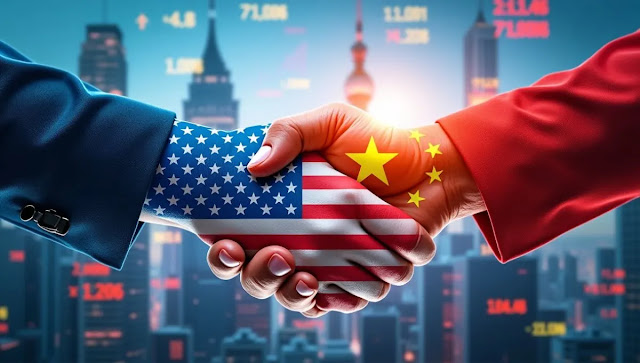
  • Global Stocks Rally on U.S.-China Trade Deal Hopes

    U.S. and China intertwined with a handshake

    Green Screens and Trade Dreams: Is the U.S.-China Pact Finally Real?


    ​I was standing in a massive queue for chicken rice yesterday, sweating buckets in the Singapore heat, and checking my phone. For the first time in months, the finance news didn’t make me want to just delete the app. Usually, it’s all doom and gloom—inflation, interest rates, you know the drill. But on 27 October 2025, the screens were glowing green. Global stocks were rallying. And for a change, it wasn’t some tech bubble. It was something much more old-school: trade talks. Specifically, the world is getting properly upbeat about a U.S.-China trade pact.

    ​Think about it. The Nikkei 225 actually smashed through the 50,000 barrier. That’s a massive psychological milestone. In New York, the S&P 500 and Nasdaq were hitting fresh records like it was easy. It feels like the world is finally tired of the “tariff wars” and is ready to just get back to business. But is this a real truce, or just another temporary band-aid? Let’s dive into it.

    ​The Malaysia Framework: What’s Actually on the Table?

    ​Look, we’ve been here before. Since 2018, tit-for-tat tariffs have been a real headache for everyone. But the framework sketched out in Malaysia over the weekend feels a bit different. They’re talking about pausing those massive 157% hikes on Chinese goods. That is a staggering number when you think about it. In return, China is looking at cracking down on fentanyl and—this is the big one—buying a boatload of American soybeans and corn again.

    ​It’s a massive “give and take.” And with President Trump and President Xi set to meet face-to-face on 30 October, investors are betting that neither side wants to walk away empty-handed. If they actually shake hands on a long-term deal, it could change the game for supply chains that have been twisted out of shape for years. Fact.

    Index

    Gain (%)

    Significance

    Nikkei 225

    2.46%

    Breached the 50,000 mark for the first time.

    South Korea Kospi

    2.57%

    Blistering rally for Asian exporters.

    S&P 500

    1.2%

    35th record close of 2025.

    Spain Ibex 35

    0.87%

    Historic high of 16,000.20.

    The “John Deere” Parallel: Why Farmers are Smiling

    ​I keep bringing up John Deere (DE) in my posts. Why? Because it’s the perfect way to see how global trade hits the “real world.” Back in 2024, Deere’s stock climbed 25% because it bet big on electric tractors. But trade wars? They’re a nightmare for Deere. China is their second-biggest market. When tariffs go up, farmers stop buying harvesters. Simple as.

    ​On 27 October, Deere shares popped 2.1%. Why? Because if those soybean exports to China resume, American farmers get paid. And when farmers get paid, they splurge on shiny new green tractors. When trade tensions eased in 2019, Deere’s stock effectively doubled within six months. We could be looking at a repeat if this pact sticks. Properly exciting stuff for anyone in ag-tech.

    ​Tech and Industrials: Breaking the Handcuffs

    ​It’s not just tractors, though. Across the tech world, there’s a clear sense of relief. The Stoxx Europe 600 Technology Index rose 1.1% because a deal could mean fewer export curbs on high-end chips. Think about firms like Nvidia or Qualcomm. China buys about 40% of Qualcomm’s chips. If the trade war cools down, these giants can finally stop worrying about supply chain snarls and focus on innovation. Straight up.

    ​Industrials are also tagging along. From plane makers like Boeing to massive miners, everyone wins when trade flows freely. Boeing especially has had a rough ride with China lately—orders were down 20% at one point. A truce could be the “fuel” they need to get back on track.

    ​Is it all Champagne and Sunshine?

    ​To be fair, some experts are still telling us to keep the cork in the bottle for now. Rupert Thompson from IBOSS warns that while this “kicks the tension into the long grass,” the deeper rifts—like tech rivalry and security—aren’t going away. And let’s not forget, trade policy can change with a single tweet. One minute it’s a deal, the next it’s a new levy.

    ​Properly speaking, you shouldn’t go “all in” just yet. The summit on 30 October is the real test. If it flops, we could see a 10% dip faster than you can say “tariff.” It’s a “modestly pro-risk” market, but you’ve got to keep your guard up.

    ​The Bigger Picture: Why This Isn’t Just About Stocks

    ​Look, we have to understand the history to see why everyone is so buzzed. This trade spat kicked off back in 2018, and since then, it’s been a proper mess. Tariffs were slapping billions in extra costs on everything from basic steel to high-end semiconductors. China hit back where it hurts—targeting U.S. agriculture. In 2018 alone, soybean exports to the Middle Kingdom plummeted by a massive 74%. That’s a lot of empty silos and worried farmers.

    ​Fast forward to late 2025, and we’re finally seeing a framework that includes nods to rare earth minerals (which we need for EVs) and a proper crackdown on fentanyl. It’s not just a “buy more of our stuff” deal; it’s a strategic truce. For the average punter, this means steadier food prices at the local supermarket and smartphones that don’t cost a month’s rent. Straight up.

    ​Global Ripple Effects: From London to Shanghai

    ​This upbeat mood is lifting sentiment everywhere. In Europe, Spain’s Ibex 35 surged to a historic high, and even the FTSE 100 nudged higher. Asia was the real star, though. South Korea’s Kospi jumped 2.57%, riding the wave of hope for easier access to U.S. markets. When the two biggest economies stop shouting, the rest of the world can finally breathe.

    ​Safe-haven assets like gold and bonds actually took a bit of a breather. Why? Because when people are confident about trade, they move their money out of “safety” and back into “growth.” It’s a classic risk-on move that we haven’t seen this strongly in a long time.

    ​Why This Matters for Your Wallet

    ​Reduced tariffs aren’t just about stock charts. No. They could shave 0.5% off inflation by making imported goods cheaper. Think about your smartphone or even your groceries. If supply chains are smoother, prices stay steadier. Plus, we’re talking about potentially 150,000 new jobs in manufacturing and agriculture if trade volume picks up. It’s a win for the average punter, not just the Wall Street suits. Fact.

    Practical Tips for the Coming Month

    ​If you’re looking at your portfolio and wondering what to do, here is my “friend-to-friend” advice:

    1. Diversify: Don’t just stick to tech. Look at ag-equipment or industrials that have been beaten down by trade fears.
    2. Watch the VIX: This is the “fear gauge.” It dropped 5% on the day of the rally, which means traders are feeling calm. If it starts to spike, that’s your cue to be cautious.
    3. Wait for the Summit: The 30 October meeting is the “make or break” moment. Expect some serious volatility around that date.
    4. Think Long-Term: If the pact sticks, we’re looking at an 8-10% annualised return for equities. That’s a proper nest-egg nudge.

    Final Thoughts

    ​Look, the world’s two biggest economies are finally talking again. That’s a good thing. Whether it’s the Nikkei’s milestone or Deere’s farm-fresh bounce, the signs are positive. When it comes to stocks, the reason behind the move matters just as much as the size of it.

    ​Stay sharp. Keep an eye on the headlines coming out of the summit. Don’t let the hype cloud your judgment. Let’s turn this optimism into actual gains for your portfolio.

    FAQ: Your Questions on the 2025 Trade Rally


    Why are global stocks hitting record highs in October 2025? 

    Look, it’s all about the buzz coming out of Malaysia. Investors are properly upbeat because the U.S. and China are finally sketching out a trade pact. When the two biggest economies in the world start talking about pausing tariffs, markets like the Nikkei and S&P 500 tend to go into overdrive. Straight up.

    How does this trade deal actually help regular farmers? 

    To be fair, farmers have been hit the hardest by these trade wars. This new framework includes plans for China to buy massive amounts of American soybeans and corn again. That means more money in farmers’ pockets, which then flows into companies like John Deere for new equipment. It’s a proper ripple effect. Fact.

    Is it safe to go ‘all-in’ on stocks before the October 30 summit?

     Properly speaking, you should still be a bit cautious. While the rally is exciting, trade talks can be famously fickle. One wrong move or a tough tweet from either side could cause a 10% dip faster than you can blink. It’s better to diversify and wait for the actual handshake before making huge bets. Simple as.

    ​Which sectors should I watch during this trade thaw? 

    Tech and Industrials are the big ones. A deal could mean fewer export curbs on high-end chips, which is huge for companies like Nvidia. Also, watch Boeing and other manufacturers that rely on smooth global supply chains. If the “handcuffs” come off, these sectors are primed for growth.

    Note: This is for educational purposes only. Not financial advice. We are not SEBI-registered.

  • Blankfein Warns: Private Credit Crisis Looming?

    Lloyd Blankfein Sounds the Alarm: Could the Private Credit Market Spark the Next Big Financial Crisis?

    loyd Blankfein warning about

    Lloyd Blankfein ki Warning: Kya Private Credit Agla Financial Crisis Layega? (Deep Dive)

    ​Imagine kijiye aap ek game khel rahe hain jahan tower mein blocks add hote ja rahe hain. Tower dikhne mein toh bada impressive hai, lekin ek galat move aur sab dher! Lloyd Blankfein, jo Goldman Sachs ke purane boss reh chuke hain, unka private credit market ko lekar kuch aisa hi kehna hai. Unhone warn kiya hai ki finance ka ye tezi se badhta sector agle bade economic jhatke ka kaaran ban sakta hai.

    Ab sawal ye hai ki kya ye sirf ek darr hai, ya waqayi hum 2008 jaisa ek aur crisis dekhne wale hain? Is post mein hum iska poora post-mortem karenge.

    1. Private Credit Kya Hai aur Ye Itna Booming Kyun Hai?

    ​Simple words mein kahein toh, Private Credit ka matlab hai loans dena, lekin banks ke zariye nahi. Ismein special funds, hedge funds ya private equity firms un businesses ko loan deti hain jinhe banks se jaldi paisa nahi milta ya jinhe banks “risky” maante hain.

    Ye Market Itna Bada Kaise Hua?

    2008 ke financial crisis ke baad banks par strict rules lag gaye (jaise Basel III). Is wajah se banks ne chhote aur medium businesses ko loan dena kam kar diya. Isi “gap” ko bharne ke liye private credit funds aaye.

    • Growth ki Raftaar: 2020 mein ye market $1 trillion tha, jo early 2024 tak $1.5 trillion aur ab lagbhag $1.7 trillion pahunch gaya hai.
    • ​Expert Forecast: Morgan Stanley aur VanEck jaise experts ka maanna hai ki 2028-2029 tak ye $2.6 trillion se $2.8 trillion tak pahunch sakta hai.
    • ​Investors ka Attraction: Jab interest rates low hote hain, toh investors ko bank savings mein kuch nahi milta. Private credit unhe “Higher Yields” (zyada return) offer karta hai, isliye trillions of dollars yahan flow ho rahe hain.

    (more…)