Tag: Market Analysis

  • 2026 Energy Shockwave: Market Crisis

    Cyber Attacks, War Panic, and Oil Chaos: The 2026 Shockwave Hitting Consumers Hard


    Banner showing 2026 Energy Shockwave


    Honestly, if you’ve been looking at your investment portfolio lately and wondering why everything feels so incredibly shaky, you are looking at the wrong charts. The real story isn’t happening on Wall Street or inside central bank boardrooms. It is happening in the dark corners of the internet and along the highly tense borders of the Middle East. We are currently living through a moment where digital warfare and physical military preparations are merging into a single, massive threat to the global economy. This isn’t just about geopolitics anymore; it’s about a complete rewriting of how much it costs you to live your everyday life.


    The Silent War: Cyber Attacks on the Fuel Pump

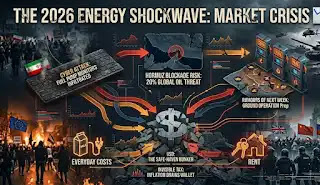
    ​Let’s start with the threat that nobody saw coming on their morning commute. Actually, when most people think of international conflict, they picture tanks, fighter jets, and explosions. But frankly, the most dangerous weapon in 2026 doesn’t make a sound. It’s a keyboard. Recent reports have confirmed that highly sophisticated hackers, allegedly backed by Iran, managed to infiltrate the digital infrastructure monitoring US fuel distribution systems. They didn’t just steal data; they literally took control of the digital price displays and monitoring systems across major petrol stations.

    ​Look, this is a terrifying trailer of what modern warfare actually looks like. It is no longer just about blowing up a pipeline; it’s about freezing the software that controls how the pipeline functions. When hackers can manipulate the perceived price or fuel supply in a major Western economy, they create instant panic. Markets don’t run on physical reality; they run on perception. The moment investors realize that the digital infrastructure protecting our energy sector is vulnerable, the risk premium shoots through the roof.

    ​To be fair, this cyber attack was a direct warning shot. It showed the world that before a single missile is fired, an entire nation’s economy can be destabilized from a remote server. If these digital disruptions target the actual logistics—the automated scheduling of oil tankers or the safety valves of major refineries—the supply chain doesn’t just slow down. It completely breaks. And when supply chains break, the guy at the end of the line—meaning you—is the one who pays the price.

    The Ground Invasion Panic: Rumours of Next Week’s Chaos

    ​But the digital chaos is just the opening act. The real panic is brewing on the ground. Intelligence reports and diplomatic whispers are now suggesting that the fragile ceasefires we saw earlier were nothing more than a strategic pause. There is an incredibly high probability that a massive, coordinated ground operation against Iran by US and Israeli forces could kick off as early as next week.

    ​Straight up, a ground invasion changes everything. This isn’t a proxy war in a distant desert; this is a direct assault on one of the largest energy producers on the planet. Iran has already made it clear that it will not sit back and watch their infrastructure get destroyed. Their strategy is simple but devastating: if they go down, they are taking the global energy market down with them.

    If a ground war erupts, the Strait of Hormuz becomes the immediate pressure point. We’ve talked about this narrow stretch of water before, but frankly, its importance cannot be overstated. Nearly twenty percent of the world’s petroleum passes through this single chokepoint. If Iran decides to mine the strait, sink commercial tankers, or use anti-ship missiles to block passage, global oil supply drops by a fifth overnight. There is no alternative route that can handle that volume. The market will react with absolute fury.

    The Fuel Illusion: How Invisible Costs Shrink Your Paycheck

    ​Actually, let’s burst a major bubble here. When energy prices skyrocket, the damage isn’t just happening at the petrol pump while you’re filling up for the week. That’s just the visible part. The real danger is the invisible tax slapped onto literally every single object you touch, eat, or wear. Think about it—almost every consumer product is essentially just oil disguised as something else. The plastic packaging on your goods, the synthetic fibers in your clothes, and the massive container ships moving raw materials across global trade routes—they all survive on this single energy lifeline.

    ​Frankly, multinational corporations aren’t charities. When their operational and fuel costs double overnight, they don’t just take a hit to their profit margins and move on. Basically, they instantly pass that pain down the ladder until it lands squarely on your doorstep. This is exactly how a conflict thousands of miles away silently triggers a vicious domino effect in your hometown.

    ​It starts with a spike in wholesale energy, which immediately inflates manufacturing costs, which then explodes retail prices, and ultimately leaves your monthly paycheck buying half of what it did last season. While world leaders keep hiding behind complex economic jargon, the brutal reality is incredibly simple: the global middle class is being cornered into a survival market where your hard-earned savings are being drained every single day just to keep up with the baseline.

    The Safe-Haven Bunker: Why the USD Stays Unbeatable

    ​Investors are looking at this absolute mess and realizing there is nowhere safe to hide. When you have a massive peace pact being discussed by some nations, while others are actively positioning troops for an invasion, trust completely evaporates. In a zero-trust market, capital doesn’t hunt for big risks — it hides in safety. Capital looks for a bunker.

    ​Right now, that bunker is the US Dollar. It feels completely ironic, doesn’t it? The US is heavily involved in the very geopolitical tensions that are destabilizing the world, yet its currency is the only thing getting stronger. Why? Because when the global supply chain is on fire, the dollar is still the cleanest shirt in a very dirty laundry basket.

    ​Every major oil contract in the world is settled in dollars. When energy costs explode, the world scrambles for more dollars because oil is still largely priced in U.S. currency. This cash crunch forces investors to liquidate their assets across Europe and Asia and dump their money straight into US treasuries. It’s a brutal reality check for the rest of the world: as long as global instability continues, the dollar will crush every other currency, making imports even more expensive for countries already struggling with inflation.

    The Real Move for the Days Ahead

    ​The takeaway from this entire situation is uncomfortable but necessary: the border between digital warfare and physical combat has completely disappeared. A line of code written in an underground bunker can cause as much economic damage as a fighter jet striking a refinery. When both of these threats happen at the exact same time, the old rules of investing and saving go right out the window.

    ​So, the real move for the coming weeks is simple. Stop listening to the comforting corporate marketing speak that tells you the markets are resilient. Watch the energy headlines. Watch the Strait of Hormuz. And most importantly, watch how the digital infrastructure handles the pressure. We are entering a phase of extreme volatility where the winner hasn’t been decided yet. Properly secure your assets, minimize your exposure to high-risk debt, and remember that in a world on fire, liquidity is king. This story is far from over, and next week might just give us the answers we’ve all been dreading.

    FAQ – Quick Answers


    1. Is the news about the ground operation in Iran actually confirmed?

    Frankly, nothing is officially signed off until it happens, but the intelligence signals and military movements pointing toward next week are too big to ignore. It looks less like a temporary scare and more like a coordinated strategic push.

    2. How does a cyber attack on US gas stations affect my local prices?

    Actually, it’s all about market panic. When hackers mess with the digital displays or distribution software of major oil companies, investors instantly freak out about security. This fear pushes the risk premium up, driving up global crude oil prices before physical supply even drops.

    3. How the U.S. Dollar Gains Strength Even in Times of War

    To be fair, it sounds completely backwards. But basically, because global oil contracts are priced in USD, a spike in oil prices means the world suddenly needs way more dollars just to buy fuel. When things go sideways, investors dump risky assets globally and run straight to the safest bunker available—the dollar.

    4. What should I do with my money if oil hits $150?

    Look, the smartest move right now is to stop gambling on risky, speculative stocks and minimize any variable-rate debt. Focus on keeping your assets liquid, stay flexible, and don’t get comfortable thinking the market will just bounce back overnight.

    This is for educational purposes only. We are not financial advisors. Results may vary based on your individual debt situation.


  • The Great Financial Reset

    The Great Financial Reset: Why National Interest is Overruling the Old Rulebook


    Global financial reset showing a cargo


    ​Honestly, most of us grew up in a world where there was a “right” way for countries to behave financially. You followed the global rules, you used the US Dollar, and you respected the sanctions set by the West. But look, if you’ve been paying attention to the recent moves by Japan and the shifts in the Middle East, you’ll realize that those rules are being rewritten in real-time. Straight up, we are entering an era of “Financial Realism” where countries are picking their own survival over global loyalty.

    ​The Japan-Russia Signal: A Crack in the System

    ​To be fair, the biggest shock recently wasn’t a war move, but a trade move. Japan, a key ally of the West, decided to start taking oil from Russia again. Now, look, this isn’t just about fuel. It’s a massive signal that the “Sanction Shield” is cracking. For decades, the West used financial bans as a way to control global events. But when a major economy like Japan says, “Actually, we need this energy to keep our factories running,” it tells every other country that they can do the same.

    ​Honestly, for an investor in the US or Europe, this is a wake-up call. If sanctions lose their bite, the global financial system loses its most powerful tool for stability. We might be heading toward a world where different regions have their own sets of rules, which makes global investing much more complicated.

    The Rise of “Checkpost Economics” in the Gulf

    ​Straight up, the Middle East is doing something very clever and very dangerous at the same time. Iran’s move to create a ‘Persian Gulf State Authority‘ is a masterclass in what I call “Checkpost Economics.” Look, instead of just threatening to block paths, they are setting up a regulatory wall. If every ship needs a “nod” from a local authority to pass, we aren’t just talking about a delay; we’re talking about a new kind of geopolitical tax.

    ​Properly speaking, this shift changes how we view trade routes. To be fair, if you own a business or invest in retail in London or New York, you might think this is far away. But look, these new “authorities” can influence the price of everything from the microchips in your phone to the grain in your bread. It’s no longer just about supply and demand; it’s about who has the “keys” to the gate.

    ​Modern Warfare: The New Tech Gold Rush

    ​Honestly, we need to talk about the money flowing into defense. It’s a bit grim, but look at the recent deals between countries like Ukraine and Bahrain. We aren’t talking about old-school tanks anymore. The new economy is built on drones, AI-driven surveillance, and cyber defense. Straight up, “Modern Warfare” has become a massive tech sector that is attracting billions in private investment.

    ​To be fair, for a long time, tech investors focused on apps and social media. But now, the smart money is moving toward “Hard Tech”—hardware that can actually protect a border or disable a drone. If you’re looking for where the next “Unicorn” startups might come from, look at the companies building autonomous defense systems. It’s a shift from “Consumer Tech” to “National Tech,” and it’s going to be a huge part of the 2026 economy.

    ​The Death of the “One-Size-Fits-All” Portfolio

    ​Look, the old advice was simple: buy some stocks, some bonds, and maybe some property. But honestly, that’s not enough anymore. In this “Multi-Polar” world, you have to think about where your money is actually sitting. If the US Dollar starts to lose its grip because more countries are trading in their own currencies (like the Yen or the Ruble), your cash value could fluctuate wildly.

    ​Straight up, we are seeing a “Flight to Quality.” Big investors are looking for assets that aren’t tied to just one government’s mood. This is why we see such a massive interest in alternative assets and decentralized finance. To be fair, people want to know that their wealth won’t disappear just because two countries decided to start a trade war.

    Religious Diplomacy and the Economic Vacuum

    ​Another thing people miss is how cultural and religious tensions impact the flow of money. When we see unrest in the Middle East, it’s not just about the local conflict. Look, it creates a vacuum where foreign investment (FDI) gets scared and runs away. But that money doesn’t just vanish; it looks for a new home.

    ​Honestly, we are seeing a massive shift of capital toward emerging markets in Southeast Asia and India. Investors are betting on regions that can stay neutral and keep producing goods while the traditional power centers are busy fighting. For a European or American investor, the message is clear: if you aren’t looking at these neutral “Safe Zones,” you’re missing half the picture.

    Closing: The New Survival Guide

    ​Look, the bottom line is that the world is no longer a single market with one set of rules. Straight up, it’s a patchwork of different interests, and “National Interest” is the only thing that matters now. Honestly, to stay ahead in this economy, you have to be willing to look past the scary headlines and see the actual power shifts underneath.

    ​Properly speaking, don’t get caught up in the drama. Look at the trade deals, watch the tech startups in the defense space, and pay attention to who is buying whose oil. To be fair, the winners in this new era will be the ones who can adapt to a world where the old maps no longer work. Keep your eyes open, stay skeptical of the “official” narrative, and keep your investments as flexible as possible.

    FAQs 


    Q1: Why is the Japan-Russia oil deal such a big deal for investors?

    Honestly, it’s a massive signal that global sanctions are losing their power. When a major ally like Japan puts its energy needs above Western sanctions, it shows that the old financial system is cracking. For investors, this means we are heading into a much more unpredictable, multi-polar market.

    Q2: How does “Checkpost Economics” control money, goods, and mobility in the region

    Straight up, it’s when a country or region creates its own regulatory “wall” over a trade route. Instead of just blocking ships, they set up authorities that demand permission or fees. This acts like a new geopolitical tax, which can drive up costs for everything from tech to food in the West.

    Q3: Is defense technology a good sector to watch in 2026?

    Look, the way we fight wars has totally changed. Modern warfare is now all about drones, AI, and cyber defense. To be fair, this has turned defense into a massive high-tech sector. Big private money is flowing into these “Hard Tech” startups, making it one of the most interesting areas for long-term growth.

    Note: This is for educational purposes only. Not financial advice. We are not SEBI-registered.

  • US vs. Iran: The $31B Nightmare

    US vs Iran 2026: The $31 Billion Nightmare That’s Killing the American Dream


    Hormuz causing oil price spike 2026

    ​Honestly, if you think the tension between the US and Iran is just some distant news headline you can ignore, you need a proper reality check. Straight up—what’s happening right now in the Gulf isn’t just about missiles, drones, and scary threats; it’s a direct, targeted attack on your bank account. Whether you’re sitting in London, New York, or even Berlin, the “War Economy” of 2026 is properly starting to bite, and it isn’t looking pretty for anyone involved.

    ​America is economically imploding from the inside out, and for the first time in a long time, even its own top leaders are starting to show signs of panic. While Donald Trump is out there on every stage talking about “peace through strength” and acting like everything is under control, the actual cost of this entire mess is mental. Let’s dive deep into why the world’s biggest economy is suddenly starting to look like a house of cards ready to fall at any second.

    ​The “Spirit” of a Crisis: Why Airlines are Folding Right Now

    ​Look, the biggest red flag for the US economy just hit the news cycle, and it’s a massive blow. Spirit Airlines, a massive low-cost carrier that 15,000 hardworking people called home for their jobs, has officially shut down operations. Why? Because the price of jet fuel has gone absolutely nuts. You can’t run a budget airline when the fuel alone costs more than the tickets you’re trying to sell.

    ​To be fair, Spirit was already struggling with some internal debt, but the US-Iran conflict was the final nail in the coffin for them. When oil prices spike because of “maritime tension” in the Middle East, it’s always the companies at the bottom of the food chain that feel the squeeze first. 15,000 people are now out of work right before the holidays because the cost of fuel has become impossible to manage. If a major airline with thousands of employees can’t survive this economic pressure, what chance does your local small business have? It’s a scary thought, honestly.

    Spirit Airlines bankruptcy due to rising jet fuel prices US Iran conflict 2026

    ​Ro Khanna’s $31 Billion Truth Bomb (The Math is Scary)

    ​Straight up, this is the part of the story that should make every single American household properly angry. Congressman Ro Khanna just dropped a massive truth bomb during a hearing that Trump’s team really didn’t want to answer. He asked the Defense Secretary point-blank: how much is this war actually costing the public in real dollars? The answer he found? A staggering $31 billion.

    ​When you break that massive number down into something we can all understand, it’s like a $1,000 “War Tax” slapped onto every single American family. $1,000! Think about that. That’s money taken away from your groceries, your rent, and your kids’ school fees just to fund a conflict that Iran says is “inevitable” at this point. Gas is currently sitting at an average of $4.39 a gallon, and food prices are following suit. Honestly, it’s properly grim out there for the average worker who is just trying to make ends meet while the elites talk about “geostrategy.”

    ​Iran’s “Inevitable” Warning: The End of Diplomacy?

    ​Across the ocean, Iran isn’t exactly backing down either. In fact, they’ve basically told the world that the time for talking and diplomatic handshakes is over. According to the latest reports from Al Jazeera, the Iranian military is fully prepared for the worst-case scenario because they simply believe the US government isn’t serious about any peace treaty.

    ​Iran’s deputy commander was quite blunt and didn’t mince words about it. He said the US is playing a sneaky double game—trying to keep global oil prices from falling while pretending to be the good guy at the negotiating table. But look, here is the most shocking part that the mainstream media is barely covering: A CNN investigation recently revealed that despite all the high-tech defenses and billions spent on “protection,” a majority of US military sites in the Middle East have been properly damaged by recent Iranian strikes. Trump keeps telling his base that they’re winning, but the ground reality in places like Kuwait and the Arabian Peninsula tells a completely different story.

    ​The “Piracy” Economy: Trump’s Risky Bet with Global Trade

    ​Donald Trump has been talking like a “Pirate” lately—and I mean that literally. He’s been bragging on social media and in speeches about seizing Iranian ships and literally taking their oil for the US. While that might sound “tough” or “patriotic” to his hardcore fans, it’s a total nightmare for the stability of global trade.

    ​When the world’s largest superpower starts acting like “pirates” (again, their own words!), the whole global shipping system goes into absolute chaos. Insurance rates for ships go through the roof, and the Strait of Hormuz becomes basically a ticking time bomb. If Iran decides to properly shut down that narrow passage in retaliation, that $4.39 gas is going to look like a bargain compared to what’s coming next. We are talking about potential double-digit gas prices, which would properly paralyze the entire Western world.

    Impact of $31 billion war tax on US household grocery prices 2026

    ​Why This is “Grocery Warfare” (The New Front Line)

    ​Properly speaking, we aren’t just in a cold war; we are in an era of Grocery Warfare. The wars of 2026 aren’t just won on distant battlefields with tanks and jets; they’re won (or lost) in the supermarket aisles of your hometown. When jet fuel prices skyrocket, an airline like Spirit dies. When gas prices go up at the pump, the cost of transporting bread, milk, and eggs goes up too.

    ​It’s a massive domino effect that is properly crushing the middle class. The US Treasury Secretary, Scott Bessent, keeps insisting that Iran has already lost this war and that the US has full control of the situation. But honestly? If you’re a family in America or Europe paying $1,000 extra a year just to survive the basic cost of living, does it feel like you’re winning? I don’t think so.

    ​Final Thoughts: Is There a Way Out of This Mess?

    ​The writing is properly on the wall, and it’s written in red ink. America is losing the diplomatic game, and the economic cost of staying “tough” is becoming far too heavy for the public to carry much longer. Even China is starting to lose patience, stepping in and warning that this tension needs to stop before Trump’s next scheduled visit to Beijing.

    ​Either we find a way to de-escalate this situation properly, or we’re looking at a global economic reset that absolutely nobody is prepared for. The “Amateur” days of ignoring geopolitics and thinking it doesn’t affect your wallet are officially over. If you aren’t watching the oil markets and the news from the Gulf, you’re basically flying blind into a storm.

    ​What do you reckon? Is the US actually winning this strategically, or is the $31 billion bill just the beginning of the end for the dollar’s dominance? Drop a comment below—let’s have a proper chat about it.

    Final Human-Style FAQ (Replace with this)


    Wait, why exactly did Spirit Airlines go bust? 
    Honestly, it’s a messy mix. They already had some debt, but the sudden jump in jet fuel prices from the US-Iran drama was the “final nail.” When you’ve got 15,000 jobs on the line, it’s a proper blow to the US labor market.
    Is it true that every US family is paying a “War Tax”? 
    Straight up, yes. Based on Ro Khanna’s $31 billion figure, it averages out to about $1,000 per household. That’s money that should’ve been spent on rent or groceries but is now properly vanished into inflation.

    What’s the deal with gas prices right now? 
    It’s hanging around $4.39 per gallon in the States. But look, energy experts are properly worried—if the Strait of Hormuz gets blocked, that price could double overnight. No joke.

    Is Iran actually ready to fight a full-scale war? 
    Iran has officially put their military on high alert. They reckon diplomacy has failed because they don’t trust the US to stick to treaties. It’s a sketchy situation, honestly.

    Why is China so annoyed with Trump? 
    Simple: China buys a massive amount of Iranian oil. This tension is messing with their energy supply, so they’ve warned Trump to settle things properly before his Beijing visit.

    Note: This is for educational purposes only. Not financial advice. We are not SEBI-registered.

  • retail earnings kohls dollar general dicks preview

    Kohl’s (KSS) Q4 Update

    Retail Earnings Preview: What to Expect From Kohl’s, Dollar General, and Dick’s


    The retail sector is entering another important week of earnings, with several major companies preparing to report results. Among the most closely watched names are Kohl’s, Dollar General, and Dick’s Sporting Goods.

    These three companies represent different parts of the retail industry. Kohl’s operates as a department store chain, Dollar General focuses on discount retail, and Dick’s Sporting Goods dominates the sporting goods market.

    Because they serve different types of customers, their earnings results often provide useful clues about overall consumer spending trends.

    Why Retail Earnings Matter Right Now


    Retail earnings are often seen as a strong indicator of consumer confidence.

    When shoppers feel financially secure, they tend to spend more on clothing, sports equipment, and other discretionary products. But when economic uncertainty rises, many consumers shift their spending toward cheaper stores or essential items.

    Analysts will therefore watch these earnings reports closely to understand how inflation, interest rates, and household budgets are affecting retail demand.

    What to Expect From Kohl’s


    Kohl’s has faced several challenges in recent years, including declining sales and intense competition from online retailers and discount chains.

    Recent results show that while earnings have sometimes exceeded expectations, sales growth remains weak, and comparable store sales continue to decline. 

    The company has also warned that annual sales may remain flat or fall slightly as it works through a long-term turnaround strategy. 

    Kohl’s Q4 2026 Results 

    Kohl’s reported its results on March 10, 2026. The company performed better than expected in terms of profit, reporting earnings of $1.07 per share (against the expected $0.85). However, total revenue was slightly lower at $5.17 billion. While the company is managing its costs well, it remains cautious about sales growth for the rest of 2026. Investors should now focus on:
    Comparable store sales (How current stores are performing)
    Inventory management (Clearing old stock)
    Profit margins (Staying profitable despite lower sales)
    Customer traffic (Are people still visiting stores?)
    If Kohl’s can show signs of stabilising sales or improving customer demand, the market could react positively.

    Dollar General: A Key Indicator of Budget-Conscious Consumers


    Dollar General plays a different role in the retail market. The company focuses on low-cost products and everyday essentials, making it popular with budget-conscious shoppers.

    During periods of economic pressure, discount retailers often benefit because consumers shift spending away from higher-priced stores.

    Investors will watch several factors in Dollar General’s report:

    Same-store sales growth

    Customer traffic trends

    Profit margins

    Inventory costs

    If inflation continues to pressure household budgets, Dollar General could see stronger demand as consumers look for cheaper alternatives.

    Dick’s Sporting Goods: Growth in the Sports Retail Market


    Dick’s Sporting Goods represents a different part of the retail sector, focusing on sports equipment, footwear, and outdoor gear.

    The company has performed relatively well compared with many traditional retailers. Analysts expect both revenue and earnings to grow steadily in the coming years, supported by strong demand for athletic products and outdoor activities. 

    Another factor supporting the company’s growth is its strategic expansion and acquisitions, including its deal to acquire Foot Locker, which could strengthen its position in the sports retail market. 

    Investors will mainly watch:

    Sales growth

    inventory levels

    operating margins

    guidance for the coming year

    If Dick’s reports strong demand and positive guidance, the stock could remain one of the stronger performers in the retail sector.

    What These Earnings Say About the Economy


    When taken together, the earnings results from these companies provide a broader view of the US consumer.

    Kohl’s reflects the health of traditional department stores.

    Dollar General highlights spending patterns among lower-income consumers.

    Dick’s Sporting Goods shows demand for lifestyle and recreational products.

    Because these companies serve different customer segments, their results can reveal whether consumer spending is improving or slowing.

    Final Thoughts


    This week’s retail earnings reports could offer valuable insight into the current state of consumer spending.

    If discount retailers show strong demand while department stores struggle, it may suggest that shoppers are becoming more cautious.

    However, if companies like Dick’s Sporting Goods continue to report healthy growth, it could signal that consumers are still willing to spend on lifestyle products.

    For investors and market watchers, these earnings results may help shape expectations for the retail sector in the months ahead.


    Frequently Asked Questions


    Why are retail earnings important for investors?

    Retail earnings reports help investors understand how consumers are spending money. If retailers report strong sales and higher customer traffic, it often signals that consumer confidence is improving. Weak sales may suggest that shoppers are becoming more cautious.

    What should investors watch in Kohl’s earnings report?

    Investors will mainly look at comparable store sales, customer traffic, and profit margins. Kohl’s has been working to stabilise its sales, so any improvement in store performance or online growth could be important for the stock.

    Why is Dollar General closely watched during earnings season?

    Dollar General serves many budget-conscious shoppers. When economic pressure rises, more customers often turn to discount stores. Because of this, Dollar General’s results can provide insight into how lower-income households are managing their spending.

    What makes Dick’s Sporting Goods different from other retailers?

    Dick’s focuses on sports equipment, footwear, and outdoor products. Demand for these items often depends on lifestyle trends and consumer interest in sports and fitness. Strong sales may show that consumers are still willing to spend on recreational activities.

    How can these earnings reports affect retail stocks?

    Retail stocks often move sharply after earnings announcements. If results beat expectations or guidance improves, the stock may rise. If sales disappoint or margins fall, the stock price may decline.

    What do these retail earnings say about the wider economy?

    Together, the earnings results from department stores, discount retailers, and sporting goods companies provide a broader picture of consumer spending. They help investors understand whether households are spending freely or becoming more cautious.


    Note: This is for educational purposes only. Not financial advice. We are not SEBI-registered.


  • Crypto Crash 2026: Survival & Wealth Strategies

    The Ultimate Crypto Crash Survival Guide: How to Turn a 70% Drop into Generational Wealth

    Crypto Crash Survival


    ​In the global financial landscape of 2026, volatility is no longer a bug; it is a feature. While the average person panics when they see their portfolio drop by 70%, the “Smart Money” sees something else entirely. They see a Value Gap—a rare window of time where an asset’s market price is significantly lower than its intrinsic long-term value.

    ​To survive and thrive in this environment, you must stop thinking like a gambler and start thinking like a corporate treasurer. By studying the strategies of institutional giants like Michael Saylor and understanding market psychology, you can turn a terrifying crash into your greatest financial advantage.

     The Psychology of the “Red Screen”: Why Most Investors Fail


    ​The hardest part of investing is not picking the right coin; it is managing your own mind. A 70% market crash is designed to test your conviction. Market data suggests that a massive downturn wipes out most investors mentally long before it empties their bank accounts.

    ​When prices drop rapidly, the human brain enters a “Fight or Flight” mode. This leads to Panic Selling, where investors sell at the lowest possible price just to stop the emotional pain. However, professional analysts remain “unemotionally attached” to daily fluctuations. They focus on the macro trend. For example, an investor who entered the market in 2019 might see a 70% drop today and still be up by 400% in total profit. The lesson is clear: if you cannot control your emotions, you cannot control your money.

     Strategic Accumulation: The “Institutional” Way


    ​In traditional stock markets, a 70% drop might signal a company’s bankruptcy. In the world of high-conviction digital assets like Bitcoin ($BTC) and Ethereum ($ETH), it is often just a “liquidity flush”. There is a fundamental principle that separates losers from winners: “It is only a loss if you sell”.

    ​Instead of viewing a crash as a disaster, view it as a Strategic Discount. This is the phase where smart investors “load up the wheelbarrow”. Michael Saylor’s strategy at MicroStrategy provides a perfect blueprint. He does not try to “time the bottom.” Instead, he uses the “Value Gap” to accumulate more Bitcoin when the crowd is too afraid to buy. By lowering your average cost during a crash, you position yourself for exponential gains when the market eventually recovers.

    ​  Tax Loss Harvesting: Turning Market Red into Financial Gold


    ​One of the most underutilized strategies by retail investors is Tax Loss Harvesting. A falling portfolio is a powerful tool to reduce your tax bill.

    • The Mechanism: When your investment value drops below your purchase price, you can sell those assets to “realize” a capital loss.
    • The Offset: This realized loss can be used to cancel out or “offset” the taxes you owe on profits from other successful investments, such as stocks, property, or even business income.
    • The Strategic Re-buy: After claiming the tax benefit, many professional investors re-enter their positions at lower prices, effectively keeping their market share while legally paying less to the government. This turns a temporary market dip into a permanent financial gain through tax efficiency.

     Analyzing the “Value Gap” with Michael Saylor’s Logic


    ​Michael Saylor often talks about Bitcoin as “Digital Property.” If you owned a building and the price of the surrounding land dropped by 50% for a month, would you sell your building in a panic? Of course not.

    ​The “Value Gap” exists because the market is often irrational. People treat digital assets like lottery tickets rather than long-term stores of value. Institutions like MicroStrategy use models like ELOC (Equity Line of Credit) to leverage their positions because they know that on a long enough timeline, the price will always reflect the asset’s utility and scarcity. If you can identify this gap, a 70% crash becomes a gift, not a curse.

     Conviction vs. Gambling: Knowing What to Hold


    ​Not every asset deserves your loyalty during a crash. While Bitcoin and Ethereum have survived multiple 80% drops to reach new highs, many smaller “altcoins” or “meme coins” will go to zero and stay there.

    ​To be a successful investor in 2026, you must distinguish between temporary volatility and fundamental failure. If you believe in the decentralized future and the math behind the protocol, a 90% drop is simply a test of your “Diamond Hands“. If your investment is based on hype alone, a crash is your signal to leave.

    Global Investor FAQ


    Q1. Is it too late to start buying if the market has already dropped by 70%?

    ​On the contrary, a 70% drop is often the safest time to enter. The “risk” is much lower than when the market is at an All-Time High because the “speculative bubble” has already burst.

    Q2. How long do these market crashes usually last?

    ​Historically, crypto bear markets can last from 12 to 24 months. Patience is the most important skill during this period. As many investors say, “I will keep holding until the year 2372 if necessary”.

    Q3. Can Tax Loss Harvesting be done multiple times a year?

    ​Yes, but you must be aware of the “Wash Sale” rules in your specific country (like the US or UK), which regulate how quickly you can buy back an asset after selling it for a tax loss.

    Conclusion: The Road Ahead


    ​The 2026 economy will reward those with a long-term vision and punish those seeking “get-rich-quick” schemes. Whether you are optimizing your taxes, buying the “Strategic Discount,” or simply holding firm, remember that every great fortune in the digital age was built during the darkest days of a market crash.

    ​Maintain your conviction, ignore the noise, and look for the Value Gap.

    ​For more professional financial insights and human-first analysis, keep following Marqzy.in

    Note: This is for educational purposes only. Not financial advice. We are not SEBI-registered.

  • Safe Haven Play: Gold, Silver, or Cash in 2026?

    Gold bars and Silver coins on a financial

    Safe Haven Play: Why Gold and Silver Are Stealing the Spotlight in 2026

    I was scrolling through some investor threads this morning, and the vibe is heavy—like, really heavy. People are posting screenshots of $10K Gold predictions and debating if Silver (SLV) is about to pull a massive breakout. And honestly? I get the anxiety. With the recent escalations in the Middle East and the ongoing uncertainty around international trade routes, the “Safe Haven” talk isn’t just noise anymore; it’s a survival strategy.
    If you’ve been following the markets lately, you know that 2026 hasn’t been the smooth ride many expected. Between geopolitical shocks and the constant hum of currency depreciation, the old-school metals are starting to look a lot more appealing than the volatile equity charts we’ve been staring at.

    The Fear Premium: Why Now?

    Let’s be real—markets hate surprises. And nothing is more surprising than a sudden shift in global stability. When tensions rise in major energy-producing regions, like what we’re seeing right now, investors don’t just calculate interest rates; they price in fear. This is what I call the “Uncertainty Tax.”
    In 2026, we aren’t just dealing with a simple dip. We are dealing with a world that’s trying to figure out where the next energy shock will come from. When that happens, capital doesn’t like to sit in “hopeful” growth stocks. It wants something it can touch, something that has survived every conflict in human history. That’s where the “Big Three” come in: Gold, Silver, and the cold, hard safety of Cash.

    (more…)

  • Geopolitical Dips: Why 14 Months to Recover

    stock market chart


    Geopolitical Dips: Why 14 Months to Recover


    ​I saw that screenshot floating around the other day, and honestly, the guy nailed it. He pointed out how major geopolitical shifts—like the global uncertainty that kicked off in early 2022—can drag on for up to 14 months before markets fully claw their way back. Not days, not weeks, not even a couple of quarters. Fourteen freaking months. 

    That stuck with me because I’ve watched enough cycles to know he’s not exaggerating. It’s the kind of observation that separates people who just watch charts from those who actually feel the pain in their portfolio and learn from it.


    The Core Logic: Not All Market Drops are Equal

    ​Let me break this down the way I see it after years of staring at screens and trying to keep my cool when global headlines get intense. Market sell-offs differ in cause and consequence. Some are clean, almost surgical—driven by interest rates and fundamentals. Others are messy, emotional, and sticky because they come wrapped in a thick layer of risk premium. The difference in recovery time isn’t random. It’s baked into how humans and capital react when the future stops looking predictable.

    (more…)

  • AI Infrastructure War: Who Wins the 2026 Chip Race?

    The AI Infrastructure War: Who Will Dominate Compute, Chips and Cloud Costs in 2026?

    AI chips from NVIDIA, Google, and Amazon.


    Key Takeaways

           Vertical
    integration in AI infrastructure is no longer optional—it’s existential.
    Companies controlling their own chips and cloud stacks will reduce operational
    costs by 30-40% by 2026.

           NVIDIA’s
    GPU monopoly is fragmenting. NVIDIA’s control of over 80% of the accelerator market is facing growing competition as hyperscalers like Google, Amazon, and Microsoft invest in in-house AI chip development.

           Cloud
    compute costs will compress by 25-35% in 2026 due to overcapacity and
    commoditization, forcing hyperscalers to compete on efficiency metrics, not raw
    computational power.

           Custom
    AI chips (TPUs, Trainium, Cerebras) are becoming table stakes. Organisations
    without dedicated hardware pipelines risk 40-50% cost penalties and 6-12 month
    deployment delays.

          
    AI infrastructure investment is bifurcating:
    well-capitalised firms (Google, Microsoft, Meta, OpenAI) are building moats
    through vertical integration; everyone else faces margin compression and
    consolidation pressure.


    Introduction: The Trillion-Dollar Bet on AI Hardware

    We are witnessing the most
    consequential infrastructure arms race since the cloud computing revolution.
    Unlike the cloud wars of the 2010s—where Amazon, Google, and Microsoft competed
    on managed services and geographic reach—the current AI infrastructure battle
    is fundamentally different. It is a war not just over who builds the data
    centres, but over who controls every layer of the stack: chips, systems
    software, cloud platforms, and deployment frameworks. The stakes have never
    been higher, the capital outlays never more massive, and the technical
    complexity never more daunting.

    In 2024 and 2025, the technology
    industry collectively invested an estimated $100+ billion in AI infrastructure.
    By 2026, this figure is expected to exceed $180 billion as hyperscalers race to
    secure computational capacity for large language models, multimodal AI systems,
    and next-generation generative applications. Yet behind this dizzying capital
    deployment lies a critical question: is this a sustainable, rational market
    equilibrium, or a speculative bubble driven by fear of missing out (FOMO) and
    herd behaviour?

    The answer, we argue, lies in
    understanding vertical integration—the degree to which a company controls its
    own silicon, software stack, and cloud platform. Google’s internal development
    of Tensor Processing Units (TPUs), Microsoft’s strategic partnerships and
    custom silicon initiatives, and Amazon’s Trainium and Inferentia chips are not
    merely defensive moves. They represent a fundamental shift in technology
    economics. Firms that own their supply chain will win. Firms that remain
    dependent on NVIDIA’s GPUs or third-party cloud providers face margin erosion,
    vendor lock-in risk, and operational inefficiency.

    This report unpacks the AI infrastructure war in five dimensions: the
    competitive landscape and vertical integration strategies; the technical and
    economic case for custom chips; the 
    commoditization dynamics that
    will compress cloud compute margins; the winners and losers in hardware and
    software; and the investment implications for 2026 and beyond.

  • Wall Street & FTSE: US Jobs Data Impact 2026

     Wall Street and FTSE React to Weak US Jobs Data: Strategic Insights for 2026

    stock tickers falling


    Key Takeaways: A Quick Overview

    • Market Sentiment: Wall Street and the FTSE 100 experienced significant volatility as investors adjusted to the December 2025 Non-Farm Payrolls (NFP) report.
    • The 50k Milestone: The US economy added only 50,000 jobs, missing the 73,000 forecast. This miss is a double-edged sword—it shows a slowdown but also increases the chances of Fed rate cuts.
    • 2026 Projections: Major financial institutions like the IMF and World Bank predict a moderate 3.1% global growth rate, with a focus on labor market resilience.
    • Sector Shifts: While traditional manufacturing faces layoffs, the AI-driven tech sector is creating new, high-value opportunities.

    Introduction: Why the World Stops for the NFP Report

    On the morning of January 9, 2026, every trading floor from New York to London was silent, waiting for one specific data point. When the US Bureau of Labour Statistics released the Non-Farm Payrolls (NFP) report, the reaction was immediate. Both the S&P 500 and the FTSE 100 saw red as the market tried to digest what these numbers meant for the global economy.


    ​The NFP report is often called the Heartbeat of Global Finance. It tracks the number of jobs added in the US (excluding farm workers, private household employees, and non-profit employees). Why does a US report affect a trader in London or Mumbai? This is mainly because the US dollar is widely used as the global reserve currency. If the US labor market is too strong, inflation goes up, and the Federal Reserve raises interest rates. If it’s too weak, it signals a recession. This delicate balance is what makes every NFP Friday a day of high-stakes volatility.


    (more…)

  • The Truth Behind Microsoft’s AI Numbers

     Why Late January is Going to Shake Up the Tech World


    a laptop with stock charts, Microsoft

    ​Look, you can pretty much ignore the standard financial influencers and the endless streams of corporate LinkedIn updates for a minute. If you genuinely want to figure out where the tech market is heading over the next few months, there is really only one specific block of time you need to keep your eyes on.

    ​Right after the closing bell rings on the final Wednesday of January 2026, the team at Microsoft is going to pull back the curtain on their latest quarterly performance report. Now, straight up, this isn’t just another routine paperwork update mandated by regulators. It is a massive, high-stakes moment that will show everyone whether the billions of pounds flying around the AI space are actually producing real results, or if the whole market has just been running on pure adrenaline and hype.

    ​For anyone holding a bit of stock, or if you are simply trying to make sense of where the big money is moving globally, this release is a proper big deal. Let’s look at exactly what is happening behind the scenes, without getting bogged down in dry, confusing financial mumbo-jumbo.

    The Madness Behind the Market Expectations

    ​To be perfectly fair, unless you spend your entire day glued to trading screens and stock charts, hearing terms like “fiscal Q2 results” is probably a brilliant cure for insomnia. But you can think of it like a massive, un-skippable school report card for a tech titan.

    ​Because Microsoft is so ridiculously massive, whatever happens in their boardroom doesn’t just affect their own share price. It completely dictates the vibe for tech companies across London, New York, and Silicon Valley. When Microsoft has a brilliant day, everyone else gets to enjoy a nice little boost. If they stumble even a tiny bit, the rest of the market tends to go into a bit of a meltdown.

    ​As soon as the clocks hit mid-afternoon Pacific Time on that Wednesday, the executive team will kick off a live broadcast to lay out exactly how much cash they managed to pull in during the final three months of 2025. And the targets they are chasing this time around? Absolutely staggering. The company previously hinted to the public that they are chasing a total revenue number somewhere between seventy-nine and eighty billion dollars.

    ​Honestly, just take a second to process the sheer scale of that number. We are talking about a massive 14% to 16% jump compared to the exact same period from the previous year. For an organization that is already the size of a small country, expanding at that kind of speed is proper mad.

    ​When the official document finally drops online, the big institutional funds are going to be hunting for a few very specific clues:

    • The Copilot Factor: Are regular, everyday businesses actually renewing those expensive AI assistant subscriptions, or was it just a one-time trial? We already know their total cloud revenue crossed forty-nine billion dollars in their previous update, so everyone wants to see if that massive growth curve is keeping its momentum.
    • The Azure Growth Battle: The whispers on Wall Street suggest that analysts want to see Azure—the core cloud platform—show a growth rate right around 37%. If the final number comes in a fraction lower, say 36%, investors will likely start panicking. If it touches 38%, shares will fly. It is a completely brutal, unforgiving game.
    • The Profit Per Share: The unofficial consensus among top financial analysts is hovering right around $3.95 per individual share. Anything exceeding that target is likely to be celebrated as a massive achievement.

    The Global Economic Chaos Floating on the Horizon

    ​Now, as much as tech executives like to pretend their platforms live in a sparkling, futuristic bubble, they still have to navigate the messy realities of the global economy. And right now, that backdrop is looking incredibly complicated.

    ​The folks over at the International Monetary Fund have been pointing out that overall global economic growth is probably going to flatten out at around 3.1% for the year. When you throw in sudden international trade spats, constant arguments over new import tariffs, and big corporations trying to cut down on their internal expenses, getting companies to sign off on massive new software contracts is no longer a guaranteed walk in the park.

    ​However, there is a pretty massive silver lining that could completely turn things around. The Federal Reserve has been dropping clear hints that they plan to keep stepping down interest rates, aiming to get their key benchmark settled near 3.4% before the year wraps up. When borrowing money becomes significantly cheaper, massive global enterprises suddenly have a lot more breathing room to invest heavily in major infrastructure upgrades. And a massive portion of that spending flows directly into the tech sector’s pockets.

    These macro trends don’t stop at one industry — they ripple across the wider economy. Even a giant in traditional heavy machinery like John Deere watched its stock price go on a wild rollercoaster ride based on global trade anxiety during its late-2025 financial update. If the people building tractors are feeling the heat from shifting international policies, you can bet the top software developers are tracking the horizon with a massive amount of caution.

    Demystifying the Core Pillars of the Business

    ​When the big document finally lands on the investor relations portal, you cannot just look at the grand total and call it a day. You have to understand that Microsoft is essentially three completely separate industrial giants crammed inside a single corporate trench coat. To see the true picture, you have to look at where the cash is actually being generated.

    ​1. The Cloud Machinery

    ​This is the absolute powerhouse that includes Azure and all the heavy-duty enterprise server products. It is the literal engine room of the entire operation. This specific segment is where all the complex, resource-heavy AI calculations are actually processed. If this specific number shows any signs of slowing down, the entire financial report card gets ruined, regardless of how well everything else did.

    ​2. Everyday Office Software

    ​This is the steady, completely reliable heartbeat of the firm—the stuff everyone knows, like Word, Excel, Teams, and LinkedIn. The massive question hanging over this division is whether traditional offices are genuinely seeing an efficiency boost from paying extra for built-in AI assistants, or if corporate accountants are starting to look at those monthly per-user fees and wondering if they can just manage without them.

    ​3. Personal Tech and Gaming

    It spans everything from traditional Microsoft Windows software licences to Xbox gaming hardware. It has been a bit of a mixed bag lately, especially with the global market for personal computers flattening out significantly over the last couple of years. However, if the gaming division managed to pull off a surprise surge over the winter holidays—particularly with their new push into cloud gaming subscriptions—it could provide a brilliant little financial cushion for the overall results.

    The Verdict: How to Smartly Watch the Show

    ​Straight up, if you happen to hold any shares, or if you are just waiting on the sidelines to see when to jump into the market, the final week of January is going to be an absolute wild ride. Historical data tells us that these massive tech updates can trigger immediate 5% to 10% swings in a company’s market value within mere seconds of the closing bell.

    ​The absolute best move you can make right now? Do not waste your time drowning in all the noisy pre-match commentary from corporate talking heads. Just set a simple reminder on your phone for that Wednesday evening, go straight to the official source documentation on the investor portal, and look directly at the cloud growth percentages yourself.

    ​What is your personal take on how this is going to play out? Do you reckon the team is going to completely smash past that eighty-billion-dollar milestone, or is the broader economic chill finally going to catch up with the tech boom? Drop a message in the comments section below and let’s get a proper conversation going!

    Frequently Asked Questions

    ​When exactly are the quarterly results dropping?

    ​The official announcement is locked in for Wednesday, January 28, 2026. The actual financial summary will be published the exact minute the regular trading session closes in New York, and the executive team’s live explanatory broadcast will start at 2:30 p.m. PT / 5:30 p.m. ET. For anyone trying to follow the action live from the UK, that means making sure you are tuned in by 10:30 p.m.

    ​Why does this specific winter update matter so much?

    ​This particular quarter covers the crucial end-of-year holiday rush spanning from October to December 2025. It serves as the ultimate real-world test to show exactly how much corporate budget was actually spent on locking in new AI software and migrating data frameworks before the new calendar year commenced.

    ​What kind of financial numbers are analysts hunting for?

    ​The big investment funds on Wall Street are keeping their eyes peeled for total revenue floating somewhere between $79.5 billion and $80.6 billion. More importantly, they are desperate to see the cloud platform, Azure, show an independent growth rate of right around 37% to validate the massive capital expenditure spent on building data infrastructure.

    ​Will changes in Federal Reserve policy be enough to shift the outcome?

    ​Without a doubt. If the central bank continues to roll out interest rate cuts toward that projected 3.4% year-end goal, it makes high-growth tech stocks look vastly more appealing to massive global pension funds. This shift could give the entire sector a massive extra bit of momentum, completely independent of what the specific quarterly spreadsheet says.

    This is for educational purposes only. We are not financial advisors. Results may vary based on your individual debt situation