Tag: ​Middle East Crisis 2026

  • Trump vs Iran: The China Uranium Bypass

    The China Bypass: The Real Reason Behind Trump’s Risky Iran Deadlock


    ​Naval ships and oil tankers in Strait of Hormuz

    Look, if you are still tracking the Middle East standoff through the lens of old diplomatic agreements, you are looking at a completely outdated map.

    ​Honestly, the intelligence logs coming out right now, on May 26, 2026, paint a fascinatingly dark picture. Mainstream networks are buzzing with news that 32 commercial oil tankers and cargo ships have just safely filtered through the Strait of Hormuz in the last 24 hours under direct coordination with the Iranian IRGC Navy. But behind that temporary sigh of relief, a massive structural crisis is brewing that has left Donald Trump with absolutely zero simple options. Let’s look past the press releases and break down the raw ground math.

    The Uranium Shell Game: Shipping to Beijing

    ​To be fair, the biggest leverage play on the table right now is the sudden uranium twist reported by Saudi television networks. For days, everyone was wondering why Iran flatly refused Washington’s written ultimatums demanding they surrender their highly enriched uranium stockpile. ​Straight up, we now know the real reason. Tehran isn’t destroying its nuclear teeth, nor are they handing them to a Western coalition. They are reportedly preparing to ship their enriched uranium stockpile directly to China.

    ​Think about the sheer strategic genius of this move. By moving the physical assets onto Chinese territory, Iran effectively secures its nuclear leverage under the umbrella of a global superpower that Washington cannot afford to strike. It makes Trump’s military options incredibly risky and complicated. As the Financial Times rightly pointed out, from surgical air strikes to heavy naval operations, the White House has no simple way to force Iran to yield without sparking a global market meltdown.

    Rebuilding the Missile Arsenal inside the Gulf’s Backyard

    ​While Trump is busy considering high-risk naval options to break the deadlock, the security situation on the ground has flipped faster than Western intelligence agencies anticipated. Reports from The Times of Israel confirm that Iran has successfully rebuilt its core ballistic missile production lines at a scary pace. ​Updated satellite logs indicate that Tehran has fully restored manufacturing capabilities inside deep underground facilities, leveraging critical component supply lines heavily backed by both Russia and China.

    ​This isn’t the isolated Iran of five years ago. They have structurally insulated their defense sector. While the Pope is openly urging global leaders to stop using foreign wars as a convenient screen to distract from domestic inflation and political problems at home, the actual hardware on the ground is getting locked and loaded right next to the Gulf’s commercial shipping lanes.

    The Gulf Power Struggle: Riyadh Holds Back While Abu Dhabi Acts

    ​Look, this isn’t just a headache for oil traders in New York; the real-world consequences are tearing the Gulf apart right now.

    • Trump’s Normalisation Invoice: Emerging leaks confirm that Donald Trump presented a massive, non-negotiable invoice to the Gulf states. His terms were simple: if Washington finalizes the ceasefire to reopen the Strait of Hormuz, the Gulf states must immediately announce full normalisation of ties with Israel. The audacity of the request left Saudi Crown Prince Mohammed bin Salman thoroughly stunned. In fact, the silence was so heavy that Trump reportedly had to crack a joke: “Are you still there?”Riyadh made its stance unmistakably clear: there will be no normalisation absent an irreversible commitment to establishing a Palestinian state.
    • ​The Human Cost in the UAE: As geopolitical pressure intensifies, the human fallout inside the Gulf is becoming impossible to ignore. Massive crackdowns are happening quietly, with reports from Firstpost highlighting that hundreds of Pakistani Shi’ite workers have been abruptly expelled from the UAE, stripped of their savings and lifetime earnings without a single word of formal explanation as Gulf states try to tighten domestic security.

    The May 2026 Friction Ledger

    Actor

    Strategic Move

    Real Vulnerability

    Ground Leverage

    Donald Trump

    Considering high-risk naval options to force an end to the deadlock.

    Cannot survive a massive surge in energy prices before the summer.

     Traditional financial.          network controls.

    Tehran

    Shipping nuclear stockpile to China; coordinating limited shipping in Hormuz.

    Economic strain on ordinary local citizens.

    Advanced underground ballistic missile networks.

    Saudi Arabia

    Open to regional stability.

    Refusing to sell out Palestine just to bail out Trump’s timeline.

    Total control over global excess oil production margins.

    The Takeaway

    Straight up, the market is misreading the 32 ships that just cleared the Strait of Hormuz. It isn’t a sign that peace is breaking out; it’s a sign that Iran is carefully controlling the valve. They are letting just enough oil through to keep global markets from panicking, while quietly shifting their nuclear chips to Beijing and ramping up missile production in their bunkers.
    Trump wants a quick boardroom settlement, but you can’t solve a multi-layered chess game with a generic corporate ultimatum. The West is running out of cards to play, and the Gulf knows it.
    What do you think? Is sending uranium to China the ultimate safety shield for Iran, or will it force Trump to take a crazy military gamble in the Gulf? The conversation is just getting started—drop your views in the comments.

    Frequently Asked Questions (FAQs)

    What makes the Strait of Hormuz a total dealbreaker for Trump and Iran?

    ​Look, it’s just basic math on the water. Roughly 20% of global oil travels through this single narrow gap every single day. The moment Iran’s IRGC Navy starts tightening its checks or regulating who passes, shipping lines freak out, and maritime insurance premiums go through the roof. Even when we see about 32 tankers filter through in a day, the raw threat of a complete shutdown keeps the energy market on edge. That’s exactly why massive airlines like Qatar Airways are currently taking huge hits on their operational margins just to bypass the conflict zones.

    ​Why is Tehran shifting its enriched uranium to China instead of signing a West deal?

    ​Honestly, it’s a brilliant survival move. Washington loves throwing written ultimatums and heavy sanction threats around, demanding that Iran hand over its stockpile to Western forces. Tehran simply found a massive bypass. By loading those assets up and placing them on Chinese soil under Beijing’s custody, they protect their nuclear teeth perfectly. Trump can’t just order surgical air strikes or naval operations inside a nuclear superpower like China without kicking off a massive world war. It keeps Iran’s strategic chips totally safe.

    ​Why did Saudi Arabia freeze Trump’s recent normalization invoice?

    ​Because you can’t fix a massive civilizational issue with a generic corporate boardroom threat. Trump essentially called up the Gulf and said, “I’ll clear the shipping lanes and handle the ceasefire, but you have to immediately normalise with Tel Aviv.” But Saudi Crown Prince Mohammed bin Salman just met that pressure with complete silence. Riyadh knows that giving up its regional leverage without a hard, guaranteed roadmap for an independent Palestinian state is an absolute political death sentence. They refused to bail out Trump’s summer timeline for free.

    ​How did Iran rebuild its missile arsenal so quickly after getting hit?

    ​Straight up, the old strategy of trying to crush a country through total economic isolation is completely broken in 2026. While mainstream networks were claiming Iran’s military capacity was degraded, Tehran was quietly digging deeper. They built highly insulated manufacturing lines inside deep underground bunker networks that traditional bombs can’t even reach. With Russia and China keeping the component supply lines flowing under the table, they brought their ballistic missile production back to peak capacity before anyone even realized what was happening.

    ​Why is the UAE suddenly expelling Pakistani workers over this standoff?

    ​This is the ugly human cost that never makes it to the main boardroom slides. As the high-stakes friction between Washington, Tehran, and the Gulf states escalates, countries like the UAE are getting incredibly paranoid about internal security. To prevent any sort of internal political friction or protests, regional authorities are quietly running sweeping deportations. Sadly, this means hundreds of ordinary, working-class Pakistani Shi’ite workers are getting kicked out, losing their life savings and salaries without a single word of explanation.

    This is for educational purposes only. We are not financial advisors. Results may vary based on your individual debt situation
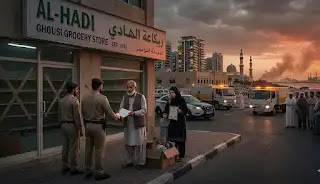
  • UAE Uprooting Businesses

    The Middle East Power Play: Why Established Businesses are Being Uprooted in the UAE

    "CLOSED" sign and police tape
    Ok, so look, honestly, most of us think if you have lived in a place for thirty years, built a solid business from scratch, even taken citizenship, you are basically safe. Like part of the furniture. But bro, the reality of 2026 global politics is hitting different. Likewise,e no travel brochure is gonna tell you this. What is happening in the UAE right now is not some boring policy thing discussed in boardrooms. It is a massive financial shock to families who have spent their entire lives building from zero.
    I’m gonna say it straight up. We are seeing established businessmen – people who ran local grocery shops and trade hubs for decades – suddenly watching their whole world flip upside down. It’s hitting certain communities really badly, especially those who called the Gulf home for generations but now find themselves on the wrong side of some diplomatic line. This isn’t a glitch. This is a full shift changing the DNA of how business works in the Middle East.

     The Diplomatic Tightrope: MBS and the New Gulf Reality

    Look, if you check recent reports from Arab News and stuff, you can feel the pressure. MBS is working double shifts, trying to handle the fallout from that conflict that started Feb 28. SaudiArabia is pushing hard for a diplomatic fix to keep the region stable, but the tension level is so high that it’s creating a messy ripple effect, hitting neighbours like the UAE.
    Here’s the thing. Whenever big regional powers shift their weight, small business owners on the ground feel the heat first. It’s not about trade balances or GDP anymore. It’s about blind political loyalty now. If a state decides some community’s background is a “security risk” because of the ongoing war with Iran, they don’t have to wait for court dates. They take the most drastic measures. This security-first vibe is making the Gulf look less like a business hub and more like a fortress every single day, honestly.

     The Forced Exit: Uprooting established lives and legacy

    This part is actually heartbreaking, asking bro. And honestly, it should scare anyone who has assets in a foreign country. We are not talking about temporary guest workers who can pack one bag and leave. We are talking about businessmen who had UAE nationality, owned established shops, and were part of the local fabric forever. Like, imagine running a successful grocery store for 30 years. You know every customer by name. Your kids grew up in those aisles. And then one day,y they tell you your citizenship is gone and your bank accounts are seized.
    To be fair, the UAE worked super hard for years to be seen as a “global business haven”. A place where your money is always safe. But this current move tells a completely different and darker story. If a long-term businessman can be uprooted just because of his identity or where his family originally came from, that creates a wave of fear for every international investor. Once the rule of law starts feeling unpredictable and based on who you are instead of what you do, the economic damage can last ten years. Why would a tech giant invest billions if rules can flip overnight because of a regional war?

     The Economic Disaster for Pakistan’s Financial Pillars

    Straight up, this is a double blow that many people haven’t fully crunched numbers on yet. Pakistan relies on these established Gulf businessmen as a major,r rock-solid financial pillar. These guys don’t just send small change back home. They are the actual backbone of Pakistan’s overseas economic strength. They invest in local property, they seed new businesses, and they keep foreign exchange moving when the economy at home is struggling.
    The ripple effect is massive. When those shops in Dubai or Abu Dhabi close down, the flow of foreign exchange to Pakistan takes a direct, painful hit. Inflation is already at record high levels. Losing these entrepreneurs? Genuine disaster. Honestly,y when governments start targeting individual shop owners over regional wars, the local currency is always the first thing to suffer. It makes everyday life – buying bread or putting petrol in the car – even more expensive for the average person who was already at breaking point.

     The Global Shadow and the Shift to Safe Havens

    Alright, ht l, loo,k we have to talk about the bigger, uglier game playing out here. The geopolitical friction between Saudi Arabia, Iran, and Israel has turned the whole Gulf into a volatile zone. Any smart investor who is actually watching their portfolio will see this as a massive flashing red signal to look for safe havens before things get worse.
    Safe havens? In times like these,e smart money moves out of local real estate in conflict zones and goes straight into Gold. Bro gold does not care about your sect, your nationality, or which side of a war you are standing on. It stays valuable even when regional politics are figuratively on fire.
    Risk factor? Expect markets to stay properly shaky for a long time. We are entering a new era where your identity or your place of birth could literally become a financial liability. That makes the global market feel way more unpredictable and dangerous than it was just a few years ago.

    Final Thoughts

    Look, the game of thrones in the Middle East has entered a very dark and very personal phase. From MBS’s diplomatic struggles to the UAE cracking down on its own business community, the stakes have never been higher for the average person. Stay properly alert. What happens to a local grocery store owner in Dubai today will decide the stability of your investments tomorrow. Honestly, the old rules of the Gulf are being rewritten in real time, and most people are not even close to being ready for what is coming next.

    FAQ 

    Q1: What is happening to established businessmen in the UAE right now?
    A: According to reports, established businessmen – including some who have lived in the UAE for thirty years, built businesses from scratch, and even acquired citizenship – are suddenly facing revocation of nationality and seizure of bank accounts. This is happening particularly to those communities that are seen as a security risk due to the ongoing war with Iran and regional political tensions.
    Q2: Why are businesses being uprooted in the UAE if it is supposed to be a global business haven?
    A: The UAE worked hard for years to build an image as a safe place for money and investment. But the current geopolitical friction involving Saudi Arabia, Iran, and Israel has created a security-first environment. Now, political loyalty and identity seem to matter more than the rule of law. If a long-term businessman can be uprooted based on his background, then no one is truly safe.
    Q3: How does this situation in the UAE affect Pakistan’s economy?
    A: Pakistan relies heavily on its established businessmen in the Gulf. These people invest in local property, start new businesses, and keep foreign exchange flowing. When their shops and assets in Dubai or Abu Dhabi are shut down or seized, the flow of remittances and forex to Pakistan takes a direct hit. With inflation already at record high levels, losing these entrepreneurs makes everyday life even more expensive for ordinary people.
    Q4: What is the connection between MBS and the UAE business crackdown?
    A: Crown Prince Mohammed bin Salman (MBS) has been working hard to manage the fallout from the conflict that started on February 28. While Saudi Arabia is pushing for a diplomatic solution, the high level of regional tension has created a ripple effect, hitting neighbouring countries like the UAE. As big regional powers shift their weight, small business owners become the first to feel the heat.
    Q5: Where should investors move their money during Gulf instability?
    A: Smart money moves out of local real estate in conflict zones and goes straight into Gold. Gold does not care about your sect, your nationality, or which side of a war you are on. It stays valuable even when regional politics are on fire. Other safe havens include stable currencies and assets outside the Gulf region.
    Q6: Is UAE citizenship really being revoked for long-term residents?
    A: According to the claims being discussed, yes. Businessmen who held UAE nationality for years, owned established shops, and were part of the local fabric are being told their citizenship is revoked, and their bank accounts are seized. Official UAE sources have not confirmed mass revocations, but reports suggest this is happening to specific communities deemed a security risk.

    Note: This is for educational purposes only. Not financial advice. We are not SEBI-registered.