Tag: Oil Market

  • The 2026 Global Squeeze: War, Taxes, and Your Cash

    The Global Domino Effect: Why 2026 is Reshaping Your Portfolio

    Malacca Strait shipping levy global trade impact 2026

    Actually, if you’ve been looking at the geopolitical headlines from late April 2026, you’d realize we aren’t just looking at “news” anymore. We are looking at a fundamental shift in how global wealth and trade are going to function for the next decade. From the shipping lanes of Indonesia to the oil tankers in Chabahar, the financial map is being redrawn right in front of our eyes.

    In fairness, most people see a “war” or a “blockade” and think it’s just about politics. But as a financer, I see it as a massive supply-chain tax that is about to hit every single consumer.

    The Malacca Levy: A New Tax on Global Trade

    Essentially, the biggest shock this week didn’t come from a battlefield, but from the finance ministry of Indonesia. Suggesting a levy on ships transiting the Malacca Strait is a game-changer. Basically, the Malacca Strait is the jugular vein of global trade. Over 25% of the world’s traded goods pass through that narrow stretch of water.

    ​If Indonesia moves forward with this, every smartphone from Taiwan, every barrel of oil from the Middle East heading to East Asia, and every car part moving toward Europe just got an “entry ticket” price hike. In fairness, this isn’t just a small fee; it’s a ripple effect that will manifest as inflation on your local store shelves within months. When the cost of transport goes up, the consumer always pays the bill.

    The Weapon Drain: Defense Stocks and the Six-Year Gap

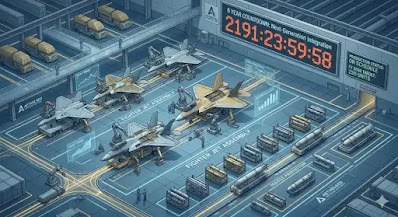
    Look, the New York Times recently dropped a report that should have every defense investor sitting up straight. The US weapon stockpiles are being depleted so fast by the Iran conflict that replacing them could take up to six years. Actually, this has created a massive strategic “gap” in defending other regions like Taiwan.

    ​From an investment perspective, this is a “Higher for Longer” scenario for the defense sector. Basically, companies like Lockheed Martin, Raytheon, and Boeing aren’t just looking at a good quarter—they are looking at a guaranteed, taxpayer-funded order book that stretches into the 2030s. If the US needs six years to refill its shelves, that is a decade of sustained demand. In fairness, while the rest of the market might be volatile due to war fears, the defense sector has become the ultimate “safe haven” with a government-backed guarantee.
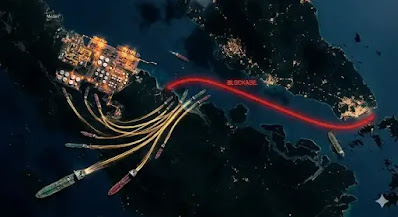
    Iran oil tankers bypassing US blockade to China data 2026

    The Failed Blockade: Oil, China, and the Iran Leak

    Actually, the most fascinating data point this week is the failure of the US oil blockade. Despite the “maximum pressure” and naval patrols, Iran has managed to ship over 10 million barrels of oil to China since the blockade began. Essentially, the “Tanker Tracker” data shows that ships like the HERO2 and DIONA are simply exfiltrating the blockade lines and returning to Chabahar like it’s business as usual.

    What does this mean for your money? Basically, it proves that the era of Western-led economic sanctions is losing its teeth. If a country can ignore a superpower’s blockade and still move 10 million barrels of its primary export, the global oil price is no longer being controlled by Washington. In fairness, this makes energy prices incredibly unpredictable. We are likely to see a “floor” on oil prices that stays much higher than analysts predicted, simply because the demand from China is acting as a permanent safety net for sanctioned oil.

    The Squeeze on the Average Voter

    Essentially, the Financial Times was right to warn that the “Iran war will squeeze US voters long after the conflict ends.” But this isn’t just a US problem—it’s a global one. The massive spending on military intervention, combined with the rising cost of energy and the new shipping levies in the Malacca Strait, is creating a perfect storm for “Stagflation” (stagnant growth + high inflation).

    Actually, your bank account is being attacked from three sides:

    1. Import Inflation: Thanks to the Malacca levy.
    2. Energy Inflation: Thanks to the failing blockade and Middle East instability.
    3. Debt Inflation: As governments print more money to fund a six-year weapon replenishment cycle.

    Actionable Financial Advice: How to Position Your Capital

    Basically, you cannot afford to be passive in this market. If you’re sitting entirely in cash, inflation is going to eat your purchasing power for breakfast. In fairness, you need a strategy that benefits from this chaos rather than being a victim of it.
    US military weapon stockpile depletion and defense stocks 2026

    1. The Infrastructure and Defense Play:

    As long as the “Six-Year Replacement” cycle is active, defense contractors are high-conviction holds. They are essentially protected from the broader economic slowdown because their revenue is a matter of national security.

    2. Commodities and Energy Divergence:

    With the Iran-China oil corridor wide open, traditional energy stocks might see volatility, but companies involved in shipping and maritime logistics are in a strong position. Actually, the tankers that can navigate these high-risk zones are charging a “risk premium” that is pure profit.

    3. The “Make in India” Hedge:

    India is currently a neutral ground. With the Malacca Strait becoming a high-tax zone, Indian ports like Chabahar (which Iran is already using) and the domestic manufacturing push are becoming vital alternatives. Basically, India is the “exit ramp” for companies looking to avoid the chaos of the South China Sea and the Middle East.

    The Final Verdict for 2026

    Essentially, the world is moving away from a “Free Trade” model to a “Secured Trade” model. Trade is no longer about who is cheapest; it’s about who can actually get the goods through the blockades and the tax zones.

    Actually, the 4.8x housing illusion or the Nvidia stock dips we discussed earlier are all connected to this. When the world is at war and shipping lanes are being taxed, the “cost of living” becomes the primary driver of all asset prices. In fairness, 2026 is the year when “Macro” (big world events) matters way more than “Micro” (company earnings). Keep your eyes on the straits and your portfolio in the “essentials.”

    FAQ 


    Q: Will Indonesia’s Malacca levy really affect my daily expenses?

    Actually, yes. If a ship carrying 10,000 containers has to pay a new levy to pass through the strait, that cost is divided and added to the price of every item in those containers. From your next laptop to your groceries, the cost of transport is a “hidden tax” you can’t avoid.

    Q: Is it too late to invest in defense stocks?

    Basically, no. Since the US government itself admits it will take six years to replace what has been fired, we are at the very beginning of a long-term production cycle. In fairness, wait for a market dip to enter, but the long-term fundamentals are very solid.

    Q: Why is the Iranian oil blockade failing?

    Essentially, it’s about “Shadow Fleets” and the demand from China. When a buyer as big as China refuses to follow the blockade, it becomes nearly impossible to stop the flow of oil without a direct naval war, which most countries are trying to avoid.

    Note: This is for educational purposes only. Not financial advice. We are not SEBI-registered.

  • Why Trump’s Speeches Are Making Oil Prices Surge

    Donald Trump speaking


    Why Trump’s Speeches are Sending Oil Prices Up, Not Down


    ​Honestly, if you’ve been watching the charts lately, you’ve probably noticed something that doesn’t make any sense. We’re in April 2026, and the old rules of the “Trump Effect” have been thrown out the window. Back in his first term, a single tweet from Donald Trump was enough to make oil prices drop faster than a lead balloon. He’d tell OPEC to stop playing games, and boom—cheaper petrol for everyone. But look at what’s happening now. Every time he stands in front of a microphone for a two-hour press conference, the price of oil shoots up. It’s like the world has flipped.

    The $5 Jump in Two Hours

    Straight up, we saw this happen just a few days ago. Trump gave a massive speech where he spent a proper amount of time talking about Iran. He vowed to hit them “extremely hard” if they didn’t fall in line. Now, to a regular person, that sounds like a tough leader talking shop. But to the markets in the US and Europe? That sounds like a supply nightmare.

    ​Within those two hours of his speaking, Brent crude (the European benchmark) jumped by over 6%, hitting nearly $110 a barrel. In the US, WTI crude followed suit, climbing past $106. We aren’t talking about a few cents here; we’re talking about a $4 to $5 increase in the blink of an eye. For a big airline or a shipping company, that’s millions of dollars in extra costs added in a single afternoon. To be fair, while the oil companies are laughing all the way to the bank, the rest of the market is feeling the pinch.

    US vs. Europe: Who’s Hurting More?

    Look, the impact isn’t the same everywhere. In the US, the stock market usually gets a bit of a “hype” boost when he talks about “Drill, Baby, Drill.” Investors think, “Great, more American oil.” But then the reality of his foreign policy kicks in. When he threatens to “obliterate” oil hubs in the Middle East, the US market starts to wobble. We’ve seen jobs data look shaky and gasoline prices at the pump hit levels we haven’t seen in years.

    ​Over in Europe, the situation is even worse. Europe is much more sensitive to oil and gas prices because they don’t have the massive reserves the US has. When Trump’s rhetoric makes oil jump, the European Stoxx 600 index usually takes a hit. Just last week, while oil was rallying on his words, major European mining and industrial stocks like Rio Tinto and Anglo American were dropping by 3% to 5%. Why? Because high energy costs kill manufacturing. If it costs more to run the factory, the profit disappears.

    US aur Europe ke markets ka comparison

    The “Risk Premium” Nightmare

    The reason prices are going up is something called the “Risk Premium.” Properly speaking, the market doesn’t just trade based on how much oil is in the tanks; it trades on fear. When Trump talks for two hours about potential military action or closing down trade routes like the Strait of Hormuz, he’s adding a “fear tax” to every barrel of oil.

    ​Analysts at big firms like J.P. Morgan and Oxford Economics are literally having to rewrite their forecasts every time he holds a rally. They were expecting oil to settle down to $60 or $70, but because of this new tension, they’re now predicting it could stay near $100 for the rest of the year. That’s a massive loss for the global economy. Some experts reckon that for every $10 oil goes up, it knocks a chunk off global GDP growth.

    The Profit and Loss Reality

    Let’s break it down properly. Who wins when Trump speaks for two hours?

    • The Winners: Big Oil companies (Exxon, Chevron, BP). Their share prices usually tick up because their product just became more valuable.
    • The Losers: Pretty much everyone else. Logistics companies, airlines, and the average family.

    ​In the US, researchers estimate that if this tension keeps oil high through April, the average household is going to pay about $850 more for gas this year. That’s money that isn’t being spent at local businesses or on holidays. In Europe, the “heat” is even more intense. High oil prices lead to high fertilizer prices, which then lead to more expensive food at the supermarket. It’s a chain reaction that starts with a single press conference.

    Why is it different this time?

    At this point, you may be asking, “Why was it different back then?” In those days, Trump’s approach was to prioritize domestic production and pressure OPEC into reducing oil prices. Now, his focus is on “Energy Dominance” through confrontation. He’s using oil as a tool of war and diplomacy.

    ​When he threatens Iran’s export hubs, the market doesn’t see “cheaper oil”; it sees “no oil.” If Iran’s Kharg Island gets hit, millions of barrels vanish from the daily supply. You can’t replace that just by drilling more in Texas—it takes years to ramp up that kind of production. The market knows this, so they buy up everything they can now, which drives the price through the roof.

    a massive oil tanker Hormuz

    The Dollar Factor

    There’s also the issue of the US Dollar. Trump’s policies often lead to a stronger Dollar. Since oil is priced in Dollars, when the currency goes up, the oil gets even more expensive for people in London, Paris, or Berlin. They get hit twice—once by the price of the oil going up, and once by their own currency getting weaker against the Dollar. It’s a double whammy that is causing a lot of friction between the US and its European allies.

    The Verdict for Bloggers

    Honestly, if you’re writing about this, the main takeaway is that the “Trump Volatility” is back, but with a new twist. It’s no longer about keeping prices low for the voter; it’s about using energy as a weapon on the world stage. For a finance blogger, this is a goldmine of content because the market is so unpredictable.

    ​One day, he’s promising a “roaring economy,” and the next day,y his words have added $5 to the price of a barrel, which acts like a giant tax on every person driving a car. It’s a contradiction that is making 2026 one of the most confusing years for investors.

    Summary for your readers:

    • Speech Impact: Trump’s recent rhetoric has added a “war premium” of $10-$15 to oil.
    • Europe’s Pain: EU markets are suffering more due to a lack of domestic supply and a weaker Euro.
    • US Reality: High oil is hurting the “roaring economy “that Trump is promising, creating a weird political paradox.
    • Future Outlook: Don’t expect $60 oil anytime soon as long as the rhetoric stays this “hot.”

    ​Keep an eye on the next press conference. If he speaks for another two hours, you might want to fill up your tank before he finishes his opening statement.

    Frequently Asked Questions (FAQs)


    Q1. Why do oil prices go up when Trump gives a speech?

    Honestly, it’s all about the “Risk Premium.” In 2026, the world is a bit of a mess. When Trump speaks for two hours and mentions hitting Iran’s oil hubs or electricity plants, traders get scared. They think, “If that happens, there will be no oil from the Middle East.” Fear makes people buy oil immediately, which sends the price from $100 to $110 in just a few hours.

    Q2. Does Trump’s “Drill, Baby, Drill” slogan actually lower prices?

    Straight up? Not immediately. While he wants to pump more oil in the US, it takes years to build those wells. The market cares more about what’s happening now. If there’s a war or a blockade in the Strait of Hormuz, all the drilling in Texas can’t replace those millions of lost barrels overnight. So, the price stays high despite the slogans.

    Q3. How much did the US and European markets lose recently?

    Look, the numbers are quite big. After his recent televised address on April 2nd, US oil prices jumped by over 11%. While oil companies made a profit, the rest of the stock market was a bit of a rollercoaster. In Europe, the Paris and Frankfurt markets dropped because high energy costs act like a “hidden tax” on their factories. When oil goes up, it costs more to make everything, and that hurts the economy.

    Q4. Is a strong US Dollar good for oil prices?

    To be fair, it’s actually a bit of a nightmare for the rest of the world. Oil is priced in Dollars. When Trump’s policies make the Dollar stronger, countries in Europe and Asia have to spend even more of their own money to buy the same barrel of oil. It’s a double blow—high oil prices plus a more expensive Dollar.

    Q5. Will oil prices ever go back to $60?

    Properly speaking, some banks like J.P. Morgan hope it will settle down later in 2026. But as long as the rhetoric about “bringing Iran back to the Stone Age” continues, the price will likely stay above $95 or $100. It all depends on whether the talking stops and the diplomacy starts.

    Note: This is for educational purposes only. Not financial advice. We are not SEBI-registered.

  • US-Iran Oman Talks: Why Oil Prices Are Falling

    US-Iran Oman Talks 2026: Why Crude Oil Prices Are Falling Today and What It Means for the Global Market


    Key Points

    • Oil prices are dropping today due to the US and Iran agreeing to nuclear talks in Oman, easing fears of Middle East conflict and supply disruptions.
    • Brent crude stood at around $67.50-$68.50 per barrel on 5 February 2026, down over 3%, while WTI hovered near $63–64 per barrel.
    • The geopolitical risk premium is fading as diplomacy progresses, potentially leading to a more stable oil supply through the Strait of Hormuz.
    • Forecasts from the IMF and World Bank suggest average Brent prices could fall to $60–65 per barrel in 2026, driven by ample supply and easing tensions.
    • Broader impacts include lower costs for oil-importing nations like India, though volatility remains if talks stall.


    Current Oil Price Snapshot
    As of 5 February 2026, Brent crude has fallen amid news of the talks, reflecting market relief over potential de-escalation.


    Why Prices Are Falling Today
    The agreement to hold talks has reduced the “fear factor” in markets, lowering the premium tied to possible supply risks.


    Looking Ahead
    While short-term relief is clear, long-term prices depend on negotiation outcomes and global demand.


    The recent developments in US-Iran diplomacy have sent ripples through the global energy markets. On 5 February 2026, crude oil prices dropped noticeably as news broke that the United States and Iran had agreed to hold nuclear talks in Oman. This marks a significant moment in international relations, especially under the Trump administration, which has taken a firm stance on Iran’s nuclear programme, ballistic missiles, and regional influence.

    The talks, scheduled for 6 February in Muscat, Oman, come after a period of heightened tensions. President Trump has warned Iran’s Supreme Leader to be “very worried” if no progress is made, while the US seeks a comprehensive deal beyond just nuclear limits. Oman, known for its neutral role in Middle East diplomacy, has once again served as the host, facilitating indirect and now direct engagement.

    This diplomatic breakthrough has directly influenced oil markets. Brent crude fell toward the $68 mark, a decline of over 3% from recent highs, while WTI crude dropped to around $63.23 per barrel. Markets reacted swiftly because any easing of tensions between the US and Iran reduces the perceived risk to oil flows through the Strait of Hormuz.

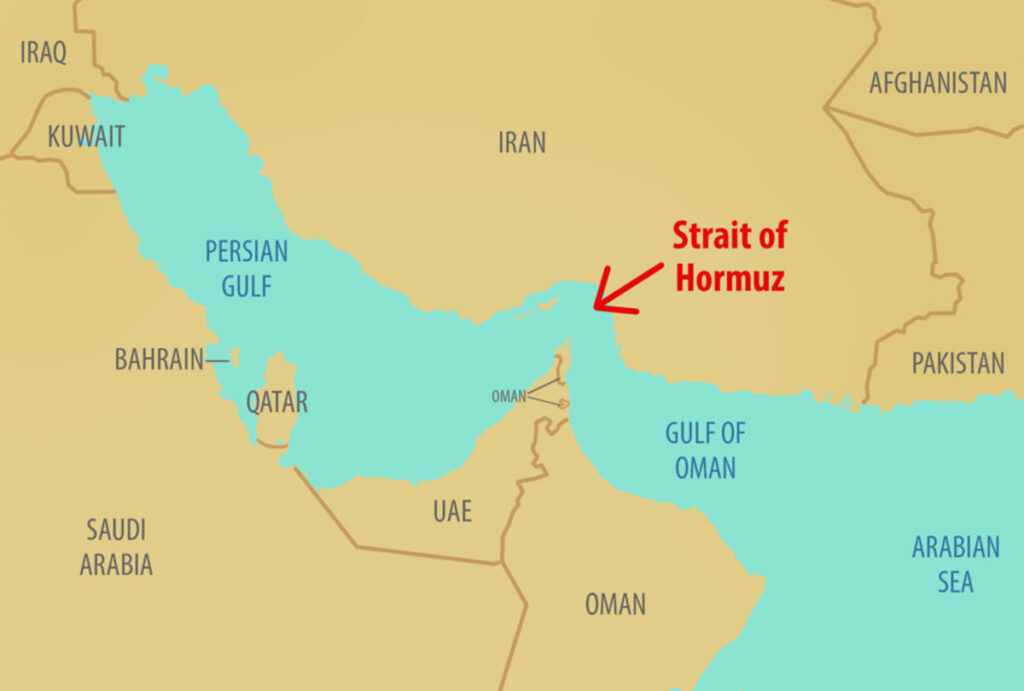
    What is the Strait of Hormuz and Why is it so Important for Oil ...

    The Strait of Hormuz ranks among the most strategically important oil chokepoints in the global energy system. Around 20–30% of the global seaborne oil trade passes through this narrow waterway between Iran and Oman. Any threat to close it – as Iran has hinted at in the past – can spike prices due to fears of shortages. With talks underway, that risk premium has started to unwind, allowing prices to fall.


    Why Are Oil Prices Falling Today?


    The main driver is simple: reduced geopolitical uncertainty. When the US and Iran confirmed the Oman meeting, traders sold off positions built on conflict fears. Reuters reported Brent futures down $2.33 (3.35%) at one point, with similar moves in WTI. This is classic market behaviour – prices often drop on de-escalation news, even if no final deal is reached.

    Other factors play a role, too. Global supply remains ample, with OPEC+ production steady and non-OPEC output (especially US shale ) robust. Demand growth is modest amid economic uncertainties, adding downward pressure.

    The Impact of US-Iran Diplomacy on Oil Supply


    Diplomacy can reshape oil supply dynamics. If successful, talks could lead to sanctions relief for Iran, allowing it to increase exports. Iran currently produces around 3–3.5 million barrels per day, but has capacity for more. Higher Iranian supply would further weigh on prices.

    Conversely, failure could reignite tensions, raising risks around the Strait of Hormuz and pushing prices up. The Trump administration wants concessions on missiles and proxies, making the outcome uncertain.

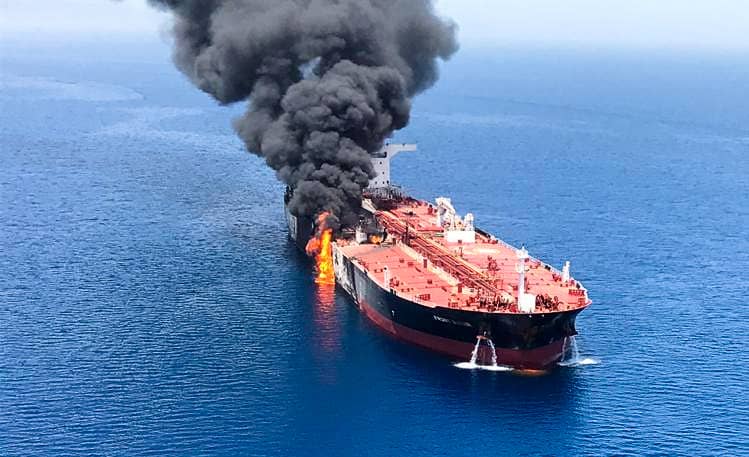
    Oil tanker attacks in the Strait of Hormuz requires an ...

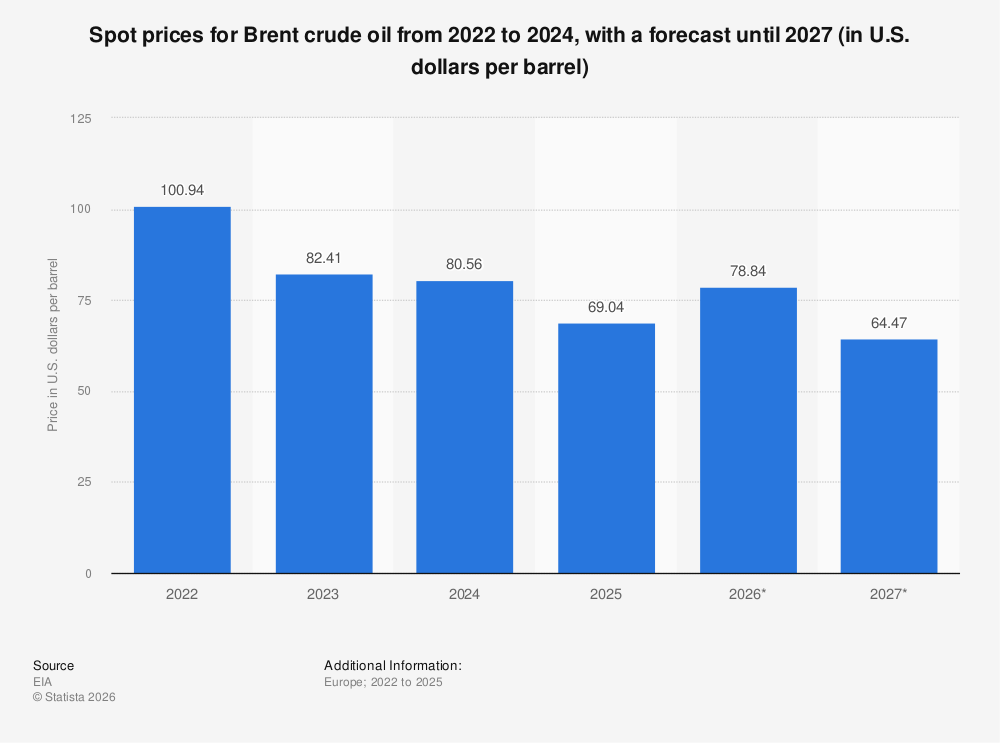
    Brent vs WTI Price Outlook

    Brent and WTI are the two main benchmarks. Brent, sourced from the North Sea, reflects global prices, while WTI is US-centric.

    Table: Recent and Forecasted Prices (USD per barrel)

    Source/Date Brent Current (Feb 2026) WTI Current (Feb 2026) 2026 Average Forecast (Brent)
    Market Data (5 Feb 2026)
    • ~68.50
    ~63.23
    IMF (Jan 2026) ~62.13
    World Bank (Oct 2025) ~60
    EIA (Recent) ~56–65

    Prices are down from earlier highs, with forecasts pointing lower due to a supply glut and diplomatic tensions.

    Brent crude oil price forecast 2026| Statista
    Brent crude oil price forecast 2026| Statista


    Geopolitical Risk Premium Explained


    The “risk premium” is the extra amount traders add to prices for potential disruptions. In calm times, it’s low; during crises, it can add $10–20 per barrel. The Oman talks have trimmed this premium, contributing to today’s drop.

    Mini Case Study: Impact on India’s Economy


    India, one of the world’s largest oil importers, relies on Middle East crude for over 80% of its needs. Lower prices reduce the import bill, easing inflation and supporting the rupee. In past dips (e.g., 2020), India’s fuel costs fell, boosting consumer spending and growth. If prices average $60 in 2026, India could save billions, helping its fiscal balances. However, prolonged low prices might hurt domestic producers like ONGC.

    Broader Global Oil Market Geopolitics


    The talks highlight Oman’s role as a mediator. Broader issues – sanctions, proxies – could influence outcomes. The Federal Reserve notes that energy prices affect inflation, while IMF projections show that low oil prices aid global growth by lowering consumer costs.


    FAQs


    Why are oil prices falling today?
    The US-Iran talks in Oman have eased supply disruption fears, causing a sell-off.

    What is the status of the Trump administration’s Iran talks for 2026?
    Talks are set for 6 February in Oman, focusing on nuclear issues and more.

    Why does the Strait of Hormuz play such a key role in oil pricing?

    It’s a key transit point; threats to it raise prices due to supply risks.

    Will Brent crude fall further in 2026?
    Forecasts suggest yes, to $60–65 average, if supply stays high and tensions low.

    What should investors watch?
    Talk outcomes, OPEC decisions, and demand data.

    (more…)