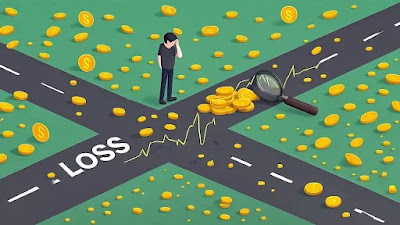
Let’s be honest for a second. Nobody enjoys losing. Whether it’s a bad trade, a business that crashed, or just life punching you in the gut, your first reaction is usually to hide under a blanket and hope it all goes away. We grow up thinking losing is the opposite of winning. But here’s the thing—in the real world, the most successful people aren’t the ones who never fail. They’re the ones who learned how to squeeze value out of every loss.
Losses only become dead ends if you let them. If you’ve got the right attitude (and a few clever moves), a loss can actually be the starting line for your next win. Some of the biggest wealth shifts in history happened because someone knew when to change direction while everyone else was panicking.
This guide is about turning bad situations into real opportunities. No boring corporate talk. Just the honest truth about making your mistakes work for you.
Your Brain on Failure – Why It’s a Secret Weapon
There’s a real reason losing hurts more than winning feels good. It’s called
loss aversion. Behavioral economists say losing ₹5,000 stings about twice as much as gaining ₹5,000 feels great.
But here’s the twist: that pain can become a superpower. When you lose, your brain goes into high alert. You start digging for answers, you stop slacking off, and you get proactive fast.
In my experience, a loss is the best teacher you’ll ever have. It forces you to build grit. Think of Edison—he found 10,000 ways that didn’t work. We don’t call those failures anymore. We call that R&D.
Investing Like a Pro – How to Win Even When You’re in the Red
In the investing world, losses are 100% guaranteed. But smart investors don’t just stare at a red portfolio and cry. They use specific tricks to turn losses into gains.
Tax-Loss Harvesting – This is a real cheat code. If you have a stock that’s down, you can sell it to “realize” the loss. Then you use that loss to lower the taxes on your winning trades. In
India, capital losses can significantly reduce your tax bill. That’s turning a mistake into a government-backed discount.
Buying the Dip – Yeah, you’ve seen the memes. But buying the dip is a serious move. When a good company’s stock drops because of temporary panic, that’s a sale. The people who bought blue-chip stocks during the
2020 crash didn’t see a loss—they saw a clearance event. And many walked away with life-changing money.
Comparison Table – Losers vs. Winners
Aspect Average Person (Loser) Strategic Investor (Winner)
Mindset: “The market is rigged. I’m out.” “What did I miss? Let’s fix it.”
Action Panic sells at the bottom. m Uses losses for tax savings
Risk. gets scared and quits forever. Takes calculated risks with new info
Goal: Wants a miracle in 24 hours.s Thinks in 5–10 year cycles
Business Disasters – The Pivot That Changes Everything
If you run a business, “failure” is just a fancy term for market research. Some of India’s biggest companies started as something totally different.
Take
Ritesh Agarwal (OYO). His first attempt, Oravel Stays, wasn’t exactly a smash hit. But he didn’t quit—he pivoted. He turned the “loss” of his original idea into a budget hotel empire. Most entrepreneurs fail a few times before they strike gold. Each loss teaches you about market fit, management, and what customers actually want. A failed business is just a very expensive MBA—except you actually remember what you learned.
Personal Setbacks – Rock Bottom Is Solid Ground
Losses aren’t always about money. Sometimes it’s losing a job or facing a health crisis. Those experiences hurt like hell, but they also force change.
Look at
Kalpana Saroj. She went through terrible personal hardships and abuse from a young age. But she used that fire to build a real estate and industrial empire. When you’ve got nothing left to lose, you become dangerous in business. You’ll take risks that comfortable people are too scared to touch. Honestly, hitting rock bottom is the best foundation you could ask for.
Using Your “Scar Tissue” to Take Smarter Risks
Look, I’m not saying go lose money on purpose. That’s just dumb. But when it happens, use that scar tissue to make better decisions next time.
Smart risk-taking means analyzing the loss honestly. Was the approach misguided, or did timing let it down? If it was bad timing, stick with it. If it was a bad strategy, burn it down and start over. The most valuable thing you own is your list of mistakes you’ll never make again.
Final Thoughts – Don’t Let the Market Win
The only real loss is the one you learned nothing from. Whether you’re tax-loss harvesting in your
demat account or pivoting your startup after a bad launch, the goal is the same: stay in the game.
What about you? Ever had a “failure” that turned out to be the best thing for your bank account? Drop a comment.
FAQs
1. Can I really save on taxes by losing?
Yes. Through tax-loss harvesting, you sell losing investments to offset gains from winners, which lowers your tax bill.
2. What does “buying the dip” mean?
It’s just buying quality assets when their price drops temporarily. It lowers your average cost and boosts future profits.
3. What should I do if my business fails?
Do a post-mortem. Figure out what went wrong, keep your best people and ideas, and pivot. Don’t throw away the data.
4. How do I stop being emotional about financial losses?
It’s never easy. But having a plan before you invest helps. Use stop-loss orders and don’t check your portfolio every five minutes.
5. Is there such a thing as a “good” loss?
Yes—a calculated loss. That’s when you spend a small amount to test a market and find out it doesn’t work. It saves you from pouring big money into a bad idea later.