Tag: ​Risk Management

  • US Market Crash: Why Your Stocks & Rent are Rising

    US Market are red,

    The Global Bloodbath: Why US Tech Giants Are Bleeding Red

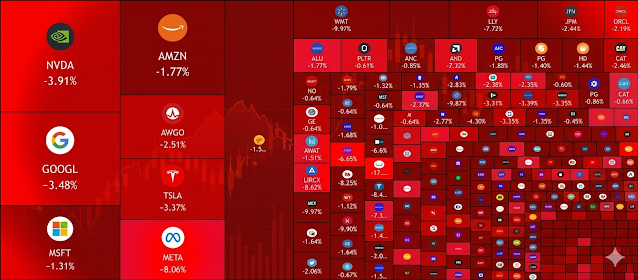
    ​ looking at the market right now is like watching a financial disaster movie in real-time. That image of the heat map you’ve seen isn’t just a random glitch or a bad day at the office; it’s the cold, hard reality of Wall Street in 2026. We are seeing a proper sea of red, and if you’ve got even a penny in US stocks, it’s a tough pill to swallow. From Nvidia to Meta, the heavy hitters are getting absolutely hammered, and it’s not just a random dip—it’s a direct reaction to the chaos unfolding between Israel, Iran, and the United States.

    ​Look, the connection here is simple but deadly for your portfolio. When major powers in the Middle East start trading threats and missiles, the stock market doesn’t just “react”—it panics. Above everything else, investors try to avoid uncertainty. When the world feels like it’s on the brink of a much larger conflict, the “smart money” starts running for the exits, and that’s exactly what we are seeing on the screen right now.

    ​The Real-World Impact: Why Life is Getting Expensive

    ​Straight up, this isn’t just about numbers on a screen or rich people losing money on Wall Street. The tension between Israel and Iran is hitting the pockets of regular people in America and across the globe right now. When the Middle East gets shaky, the first thing that moves is the price of energy, and that starts a chain reaction that hits every part of your life. It’s a domino effect that most people don’t see coming until it’s too late.

    ​1. The Petrol and Diesel Nightmare

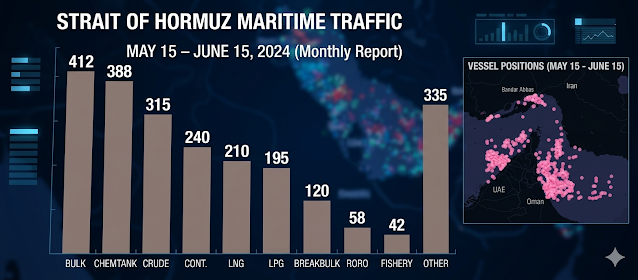
    ​We’ve already seen gas prices at the pump jump by 15% to 20% in many states over the last few weeks. This happens because Iran sits near some of the most important oil shipping lanes in the world, like the Strait of Hormuz. If that supply is even slightly threatened, or if investors think it might be threatened, the global price of crude oil shoots up instantly. To be fair, for a regular person driving to work, this means spending an extra $50 to $100 a month just on fuel. It’s a massive drain on the monthly budget that leaves less money for everything else.

    ​2. The Grocery Store Squeeze

    ​It’s a simple but painful chain reaction. Every single item in your local grocery store—from the bread to the fresh fruit—gets there on a truck. When diesel for those trucks gets expensive, the shipping companies pass that cost on to the supermarkets, who then pass it on to you. Honestly, families are already seeing an extra 10% to 15% added to their grocery bills for absolute basics like milk, eggs, and meat. It’s getting to the point where people are having to choose between filling their car and filling their fridge. This “food inflation” is what really scares the average voter in America.

    ​3. Rent and the Housing Crisis

    ​Inflation is the hidden monster here. Because of the war tension and high oil prices, inflation isn’t coming down like the government promised it would. This means the Federal Reserve is forced to keep interest rates high, which makes mortgages and business loans incredibly expensive. In big cities, rent has already climbed by nearly 10% because landlords are facing higher maintenance and tax costs themselves. If you’re trying to find a new place to live right now, it’s a proper nightmare because your salary just isn’t keeping up with the rising cost of a roof over your head.
    strait of Hormuz

    The Tech Titan Tumble: Meta and Nvidia Under Pressure

    ​If you examine the heat map of the stock market, the biggest squares are the darkest red. These are the “Magnificent Seven” companies that everyone thought were “untouchable” just a few months ago.

    • Meta (-8.06%): Seeing a company the size of Meta drop over 8% in such a short window is staggering. We are talking about billions of dollars in market value just vanishing in a single trading session. It shows that even social media giants are vulnerable when investors decide to pull cash out of “risky” assets and move it into gold or cash for safety.
    • NVIDIA (-3.91%): The king of the AI revolution is finally feeling the heat. While AI is clearly the future, the “present” is dominated by fear. Investors who made massive profits on Nvidia over the last year are now “cashing out” to protect their gains before the market drops even further. When the AI leader falls, it scares the whole tech sector.
    • Google (Alphabet) & Microsoft: Both are sliding down significantly. When the core pillars of the S&P 500 start crumbling like this, it sends a signal to everyone else that nobody is safe. If the giants are bleeding, the small companies don’t stand a chance.

    Why the Rest of the Market is Following Suit

    ​It’s not just tech, though. Look at the industrial and retail sectors on that map. Walmart (WMT) taking a nearly 10% hit is almost unheard of for such a stable “safe haven” stock. This tells us that this isn’t just a “tech correction”—it’s a full-blown market panic.

    ​Properly speaking, this is what experts call a “liquidity crunch.” When big hedge funds lose money on their tech bets, they are often forced to sell their “safe” stocks—like Walmart, JPMorgan, or Home Depot—just to balance their books and pay off their debts. This creates a domino effect where selling leads to more selling. The image you shared perfectly captures this moment of total surrender by the buyers. The red isn’t just a colour; it’s the sound of billions of dollars being wiped out.

    The Connection Between the U.S. Dollar and Interest Rates

    Straight up, the US economy was already in a weird spot before this conflict even started. Inflation hasn’t gone away as fast as everyone hoped. Now, with the threat of war, the US Dollar is getting stronger because people see it as a “safe haven” during global chaos.

    ​While a strong dollar sounds like a good thing, it actually hurts big US companies that sell products globally. It makes iPhones, software, and American cars much more expensive for people in Europe, India, or Asia to buy. This leads to lower sales and lower profits, which makes the stock price drop even further. To be fair, the Federal Reserve is stuck between a rock and a hard place. They want to lower interest rates to help the economy, but they can’t do that if a war in the Middle East is pushing energy prices up and keeping inflation high. It’s a trap that is very hard to escape.

    ​The Psychological Breakdown of Investors

    ​Honestly, the stock market is 10% maths and 90% psychology. When you see a map that red, it triggers a “fight or flight” response in the human brain. Most people choose a flight. They see their retirement accounts or their savings shrinking by 5% or 10% in a single week, and they panic-sell at the worst possible time.

    ​The big institutions use high-frequency trading algorithms that are programmed to sell the moment certain “risk triggers” are hit. When a drone strike is reported, or a new set of sanctions is announced, these computers sell millions of shares in the blink of an eye. This is why the drops happen so fast and so deep. Regular investors are often left wondering what happened before they’ve even finished their morning tea. By the time you read the news, the damage is already done.

    ​Is There Any Way Out of This?

    ​Properly speaking, the market needs a massive “reset” button. That reset button is usually a diplomatic breakthrough. If we see news that the US has successfully brokered a ceasefire or that Iran and Israel are moving back to a “cold” standoff rather than an active conflict, the market could bounce back just as fast as it fell. We call this a “V-shaped recovery.”

    ​However, until that happens, we have to expect more volatility. The “Magnificent Seven” stocks that led the market up for the last two years are now the ones leading it down. This is a classic “mean reversion”—where things that went up too fast have to come back down to earth eventually. It’s a painful process, but it’s how the market clears out the “froth” and gets ready for the next move.

    ​Final Reality Check

    ​Looking at the data, we are in a period of extremely high risk. The link between the Israel-Iran conflict and the US stock market is direct and painful. Every headline about a missile, a drone, or a diplomatic failure is another drop of red ink on the market map.

    ​Straight up, if you are looking at your screen and seeing Meta, Nvidia, and Tesla all bleeding, just know that this is a global event. It isn’t about one company doing a bad job; it’s about the world becoming a more dangerous and expensive place for everyone. To be fair, markets have survived world wars, pandemics, and depressions. They will survive this, too, but for now, the “Red Sea” is here to stay until the smoke clears in the Middle East.

    ​Don’t let the numbers make you do something irrational. The market is a test of nerves, and right now, the world is testing everyone’s limits. Keep a very close eye on the oil prices and the headlines from Washington—those are the real indicators of when this sea of red will finally turn green again. It might take time, so patience is the only thing you can afford right now.

    conclusion

    Honestly, it’s a proper mess out there, but every storm eventually runs out of rain. To be fair, seeing your portfolio in the red and your grocery bill going up at the same time is a double blow that no one wants. But look, we’ve been through these cycles before—from the 2008 crash to the pandemic chaos—and the world always finds a way to steady itself.
    Straight up, the best thing you can do right now is stay calm. Don’t let the panic on the news or the red on your screen make you do something you’ll regret later. Markets are jumpy, and life is getting a bit more expensive, but these are the moments that test what kind of investor you really are. Keep your head down, watch the headlines from Washington and the Middle East, and remember that patience is usually the only thing that pays off in the long run.
    Properly speaking, we just need to wait for the smoke to clear. Until then, take a breather, stay informed, and don’t let the numbers get into your head too much. We’ll get through this “Red Sea” just like we’ve done every other time.

    Frequently Asked Questions (FAQ)


    1. Why is the US stock market crashing today?

    Honestly, it’s a mix of fear and reality. The direct conflict between Israel and Iran has made investors terrified of a global war. When people are scared, they sell risky stocks like Meta and Nvidia and move their money into “safe” assets like gold or cash.
    2. How does the Middle East conflict affect my grocery bill?

    It’s all about the fuel, properly speaking. Food supply chains depend heavily on trucks. If the conflict pushes oil prices up, diesel gets expensive. That extra cost gets passed directly to you at the supermarket checkout.
    3. Will Nvidia and Meta stocks go back up?

    To be fair, these are massive companies with huge profits, so they usually bounce back. However, as long as there is a threat of a major war, these “high-growth” stocks will stay under a lot of pressure and could drop further.
    4. Why is rent increasing if the stock market is falling?

    Straight up, it’s because of inflation. When oil and energy prices rise, everything else follows. The Federal Reserve keeps interest rates high to fight this inflation, which makes it more expensive for landlords to manage properties, and they pass those costs on to tenants.
    5. Is it a good time to buy the dip?

    Look, that’s the million-dollar question. If you believe a diplomatic solution is coming soon, prices right now look like a bargain. But if the conflict escalates, we haven’t seen the bottom yet. It’s a proper gamble right now.

    Note: This is for educational purposes only. Not financial advice. We are not SEBI-registered.

  • Meet the Digital Billionaires

    So You Lost Money? Good. Here’s How to Make It Back.


    Mr. Beast, Dhar Mann, Jake Paul, Rhett & Link

    Nobody wakes up wanting to lose money.

    Come on.
    I don’t. You don’t. Even that dude with the fancy car down the street doesn’t.
    But here’s the thing people never say out loud — losing? Yeah, it’s part of the whole thing. Not the fun part, though. The part where you want to throw your phone across the room and just stare at the ceiling for three hours.
    But wait.
    What if I told you something weird?d.
    Some of the richest people I know? They didn’t get rich even though they lost. They got rich because they lost. Yeah. You heard me right.
    See, we grow up thinking losing is bad. School drilled that into us. Parents too. Get good grades. Don’t fail. Don’t mess up. But out here in the real world? Failure is just information. Losing is just paying for a lesson. And if you’re not failing once in a while? You’re playing too safely. Which means you’re leaving money on the table. Big money.
    Let me walk you through what I’ve seen. I’ve watched people lose. Then win. Lose again. Then win bigger than before.

    Why Your Brain Hates Losing So Much

    There’s a reason losing ₹5000 feels worse than finding ₹5000 feels good.
    It’s not just you being dramatic.
    It’s called loss aversion. Scientists studied this. The pain of losing is about twice as severe as the pleasure of winning the same amount. It’s how we’re naturally wired to think.
    But here’s the twist nobody talks about.
    That pain? Not your enemy. It’s a fire alarm. It’s telling you something important.
    When people lose money, they suddenly stop being lazy. I’ve seen it. They start researching. They start asking better questions. They stop trusting random tips from WhatsApp forwards. Thank god.
    I’ve seen this happen maybe a hundred times. Someone loses a chunk of change in the stock market. They cry about it for a night. Maybe two nights. Then something clicks. They learn what a balance sheet actually is. They figure out what a P/E ratio means. They stop gambling and start investing.
    That loss becomes the best thing that ever happened to them.
    Not because losing is fun — it’s not fun at all. But because losing forced them to get serious.
    Think about Edison. He didn’t fail 10000 times. He found 10,000 ways that weren’t the answer. Every single “loss” taught him something new. By the time he got to the light bulb? He was the most educated guy in the room.
    Your losses work the same way. If you let them.

    (more…)

  • Can You Make Money from Losses? Discover Hidden

     Can You Actually Profit from Losses? (The Art of Turning Screw-Ups into Comebacks)

    Can You Make Money from Losses? Discover Hidden
    Let’s be honest for a second. Nobody enjoys losing. Whether it’s a bad trade, a business that crashed, or just life punching you in the gut, your first reaction is usually to hide under a blanket and hope it all goes away. We grow up thinking losing is the opposite of winning. But here’s the thing—in the real world, the most successful people aren’t the ones who never fail. They’re the ones who learned how to squeeze value out of every loss.
    Losses only become dead ends if you let them. If you’ve got the right attitude (and a few clever moves), a loss can actually be the starting line for your next win. Some of the biggest wealth shifts in history happened because someone knew when to change direction while everyone else was panicking.
    This guide is about turning bad situations into real opportunities. No boring corporate talk. Just the honest truth about making your mistakes work for you.

     Your Brain on Failure – Why It’s a Secret Weapon

    There’s a real reason losing hurts more than winning feels good. It’s called loss aversion. Behavioral economists say losing ₹5,000 stings about twice as much as gaining ₹5,000 feels great.
    But here’s the twist: that pain can become a superpower. When you lose, your brain goes into high alert. You start digging for answers, you stop slacking off, and you get proactive fast. In my experience, a loss is the best teacher you’ll ever have. It forces you to build grit. Think of Edison—he found 10,000 ways that didn’t work. We don’t call those failures anymore. We call that R&D.

     Investing Like a Pro – How to Win Even When You’re in the Red

    In the investing world, losses are 100% guaranteed. But smart investors don’t just stare at a red portfolio and cry. They use specific tricks to turn losses into gains.
    Tax-Loss Harvesting – This is a real cheat code. If you have a stock that’s down, you can sell it to “realize” the loss. Then you use that loss to lower the taxes on your winning trades. In India, capital losses can significantly reduce your tax bill. That’s turning a mistake into a government-backed discount.
    Buying the Dip – Yeah, you’ve seen the memes. But buying the dip is a serious move. When a good company’s stock drops because of temporary panic, that’s a sale. The people who bought blue-chip stocks during the 2020 crash didn’t see a loss—they saw a clearance event. And many walked away with life-changing money.

    Comparison Table – Losers vs. Winners

    Aspect               Average Person (Loser)                      Strategic Investor (Winner)
    Mindset:         “The market is rigged. I’m out.”            “What did I miss? Let’s fix it.”
    Action               Panic sells at the bottom.                      m Uses losses for tax savings
    Risk.                gets scared and quits forever.             Takes calculated risks with new info
    Goal:               Wants a miracle in 24 hours.s                     Thinks in 5–10 year cycles


    Business Disasters – The Pivot That Changes Everything

    If you run a business, “failure” is just a fancy term for market research. Some of India’s biggest companies started as something totally different.
    Take Ritesh Agarwal (OYO). His first attempt, Oravel Stays, wasn’t exactly a smash hit. But he didn’t quit—he pivoted. He turned the “loss” of his original idea into a budget hotel empire. Most entrepreneurs fail a few times before they strike gold. Each loss teaches you about market fit, management, and what customers actually want. A failed business is just a very expensive MBA—except you actually remember what you learned.

     Personal Setbacks – Rock Bottom Is Solid Ground

    Losses aren’t always about money. Sometimes it’s losing a job or facing a health crisis. Those experiences hurt like hell, but they also force change.
    Look at Kalpana Saroj. She went through terrible personal hardships and abuse from a young age. But she used that fire to build a real estate and industrial empire. When you’ve got nothing left to lose, you become dangerous in business. You’ll take risks that comfortable people are too scared to touch. Honestly, hitting rock bottom is the best foundation you could ask for.

     Using Your “Scar Tissue” to Take Smarter Risks

    Look, I’m not saying go lose money on purpose. That’s just dumb. But when it happens, use that scar tissue to make better decisions next time.
    Smart risk-taking means analyzing the loss honestly. Was the approach misguided, or did timing let it down? If it was bad timing, stick with it. If it was a bad strategy, burn it down and start over. The most valuable thing you own is your list of mistakes you’ll never make again.

    Final Thoughts – Don’t Let the Market Win

    The only real loss is the one you learned nothing from. Whether you’re tax-loss harvesting in your demat account or pivoting your startup after a bad launch, the goal is the same: stay in the game.
    What about you? Ever had a “failure” that turned out to be the best thing for your bank account? Drop a comment.

    FAQs

    1. Can I really save on taxes by losing?
    Yes. Through tax-loss harvesting, you sell losing investments to offset gains from winners, which lowers your tax bill.
    2. What does “buying the dip” mean?
    It’s just buying quality assets when their price drops temporarily. It lowers your average cost and boosts future profits.
    3. What should I do if my business fails?
    Do a post-mortem. Figure out what went wrong, keep your best people and ideas, and pivot. Don’t throw away the data.
    4. How do I stop being emotional about financial losses?
    It’s never easy. But having a plan before you invest helps. Use stop-loss orders and don’t check your portfolio every five minutes.
    5. Is there such a thing as a “good” loss?
    Yes—a calculated loss. That’s when you spend a small amount to test a market and find out it doesn’t work. It saves you from pouring big money into a bad idea later.

    Note: This is for educational purposes only. Not financial advice. We are not SEBI-registered.