Tag: Stock Market Tips

  • MFO Stock Analysis: Why Returns Hit 45% in 2026?

     Why MFO (WSE: MFO) Shareholders Enjoyed Favorable Returns of 45% in One Year

    Why Returns Hit 45% in 2026

    Research indicates that MFO (WSE: MFO) has delivered shareholder returns of approximately 45% over the past year, outperforming the Polish market’s 39% return.

    Evidence suggests the company’s focus on steel profile manufacturing in diverse sectors like construction and renewable energy contributed to this positive performance.

    It seems likely that broader economic trends in Poland, including steady GDP growth, supported MFO’s stock gains, though global steel industry challenges add some uncertainty.

    Understanding Shareholder Returns

    Shareholder returns measure how much value investors get from owning a company’s stock, including price increases and dividends. For MFO, the recent 45% return shows strong growth, but remember, the stock markets can fluctuate. Always check current data from reliable sources like Yahoo Finance or FT Markets.

    Factors Behind MFO’s Performance

    MFO specializes in steel profiles for windows, drywall, and more. In 2025, their operations saw a strong boost; normalized earnings per share rose to 1.88 PLN (trailing), hinting at significantly improved operations compared to previous periods. However, returns can vary, so consider industry trends.

    Tips for Investors

    If you’re interested in stocks like MFO, diversify your portfolio and stay updated on economic reports from the IMF or World Bank. This approach helps manage risks in volatile sectors like metals.

    (more…)

  • Wall Street Hits Records as Nvidia Tops $5 Trillion

     
    stock tickers showing record highs


    Wall Street Indices Smash Record Highs as Nvidia Tops $5 Trillion Valuation: What It Means for Investors


    ​Imagine waking up on a crisp October morning in 2025, switching on your phone, and seeing headlines shouting about Wall Street being on fire—but, you know, in the best possible way. The numbers are properly jaw-dropping. The S&P 500 has clawed its way to 6,920 points, the Dow Jones is flirting with 48,000, and the Nasdaq? It’s smashed through 24,000 like it was made of thin glass. But the real show-stealer, the one everyone is buzzing about over their morning brew, is Nvidia. This quiet giant of the AI world has just tiptoed past the $5 trillion valuation mark. Yes, you read that right—five trillion dollars. That is more money than the GDP of most countries, all piled into one single company’s stock.

    ​Let’s hit pause for a second and let that sink in properly. Honestly, if you’re like me and remember when a million pounds felt like a massive fortune, this kind of number can make your head spin. It’s not just about big digits on a glowing screen; it’s a story of human ingenuity, risky bets paying off, and a market that is betting the entire farm on the future of Artificial Intelligence. Think about it: back in 1995, the entire Nasdaq was worth about $800 billion. Today, Nvidia alone is worth over six times that. It’s a reminder that markets aren’t just boring charts—they’re dreams made real, powered by pure innovation.

    ​The Scene on the Trading Floor

    ​It’s a busy morning in New York, and traders are buzzing like a hive of bees. The bell rings at 9:30 AM ET, and bam—shares of Nvidia jump 4.7% right out of the gate. By midday, the stock is hovering around $208 per share, pushing that market cap north of $5 trillion for the first time in history. CEO Jensen Huang, the man who is single-handedly keeping the black leather jacket industry alive, isn’t one for showboating, but his latest announcement has everyone properly excited. He revealed $500 billion in orders for Nvidia’s next-gen AI chips, including the Blackwell and Rubin GPUs. These aren’t just fancy names; they’re the literal brains behind everything from self-driving cars to chatbots that sound eerily human.

    NVIDIA’s journey to the top hasn’t been an overnight miracle. It’s been a slow burn that turned into an absolute inferno. Founded in 1993 by Huang and two pals in a Denver flat, they started by making graphics cards for gamers. Remember those chunky PCs from the ’90s? NVIDIA was the reason the explosions in Doom and Quake looked so good. Fast-forward to 2012, and they pivoted hard into AI. By 2020, during the pandemic, the demand for computing power exploded as the world went remote. In fiscal 2024 alone, they raked in $60 billion—up a staggering 126% from the year before.

    ​Why the Party? The “Triple Crown” Effect

    ​So, why is everyone celebrating right now? To be fair, timing is everything in finance. Investors are currently glued to the Federal Reserve’s latest moves. Whispers of a 25-basis-point interest rate cut have the markets salivating. Look, lower rates mean cheaper borrowing, which is like high-octane rocket fuel for growth stocks like Nvidia. When you add in blockbuster earnings from other tech giants like Meta and Microsoft, you’ve got a recipe for a “Triple Crown”—where all three major indices hit records on the same day.

    ​But let’s be clear—it’s not all upside. Remember the dot-com bubble of 2000? The Nasdaq peaked and then cratered 78% over two years. NVIDIA was a tiny minnow back then. Today, it’s the shark. Its price-to-earnings (P/E) ratio is sitting at a lofty 70. That means investors are paying £70 for every £1 of actual profit. That is double the S&P average! Is it a bubble? Some say yes, pointing to the massive AI hype. Others, like Huang, argue it’s just the beginning, claiming AI will add $15 trillion to the global economy by 2030.

    ​The Underdogs: Tech’s Sprint vs. The Industrial Stroll

    ​While Nvidia is soaring, not everyone is invited to this dance. Legacy sectors like energy and materials are lagging. Look at a giant like John Deere (DE), the tractor titan. Its stock is currently flat, down about 15% year-to-date. Why? Because while Nvidia is dreaming of robot overlords, Deere is dealing with “old economy” problems—high fertilizer costs and farmers feeling the pinch.

    Deere’s P/E is a modest 12, which screams “Value,” but its growth is basically zilch compared to Nvidia’s 200% annual clip. It’s a tale of two markets: tech’s sprint versus industrials’ stroll. For a smart investor, this contrast is key. Diversification matters—don’t focus only on AI. Diversifying into steady “tortoises” like Deere can actually protect your portfolio if the tech rocket ship ever hits turbulence. It’s all about finding that balance between the shiny future and the solid present.

    ​Practical Tips: How to Play This Market

    ​If you’re looking at these record highs and wondering how to move your money, here’s some “friend-to-friend” advice:

    1. Don’t Chase the Peak: The markets are at an all-time high. While that’s exciting, remember the old saying: “Buy the rumour, sell the fact.” If you buy at the absolute top, you might get caught in a “correction.”
    2. Look for Ecosystem Plays: If Nvidia is too expensive for you, look at the companies that support them. Think about the firms building the massive data centres or the cooling systems for these chips.
    3. Use Dollar-Cost Averaging: Instead of dumping all your cash in at once, invest a set amount every month. It smooths out the bumps and takes the emotion out of it. It’s a proper way to build wealth without the stress.
    4. Watch the Fed: Jerome Powell’s words are just as important as Nvidia’s chips. If he signals that more rate cuts are coming, the party might last through 2026.

    The Broader Impact: It’s Not Just About Money

    ​NVIDIA’s $5 trillion milestone isn’t just a Wall Street drama; it’s a global shift. In Britain, FTSE firms are using this tech to boost productivity by 20%. In Asia, chipmakers like TSMC are riding Nvidia’s coattails to their own record highs. But there are hurdles too. The U.S.-China chip wars are a constant threat, and export bans could clip Nvidia’s wings faster than any market crash.

    ​Straight up, markets aren’t machines; they are mirrors of us. NVIDIA’s rise echoes the Industrial Revolution—from steam engines to silicon. Jensen Huang, a man who once washed dishes and now has a net worth of £80 billion, embodies the ultimate dream. It’s inspirational, but it’s a reminder that the world moves fast.

    Conclusion: Eyes on the Horizon

    In the end, October 29, 2025, will be remembered as the day indices soared and Nvidia cemented AI as the new “gold.” Rush.” Whether you’re a first-time investor or a seasoned pro, the message is clear: the world is changing, and tech is leading the way. But stay savvy—keep one eye on the growth and the other on the fundamentals. The bulls are in control for now, but in the market, the weather can change in a heartbeat.

    ​What’s your take? Are you “Team Nvidia” all the way, or are you worried about a bubble? Drop a comment below and let’s chat about where the money is heading next!

    Frequently Asked Questions (FAQs)


    Can Nvidia really keep growing after hitting $5 Trillion?

    Properly, yes—given their $500 billion order backlog. However, a P/E ratio of 70 is very high. History tells us that a “correction” of 10-20% is always possible when things get this heated.

    How did the other indices hit records, too?

    It was a “Perfect Storm.” You had Nvidia’s massive valuation jump,p combined with strong hopes for a Federal Reserve interest rate cut. Lower rates make stocks more attractive than bonds, lifting everything from the Dow to the Nasdaq.

    Is this similar to the 2000 Dot-Com bubble?

    There are similarities in the hype, but there is one big difference: companies like Nvidia have massive actual revenue and profits. In 2000, many companies were just “vaporware” with no real income.

    What is the best way for a beginner to invest in AI?

    Instead of picking one stock, look at AI-focused ETFs (Exchange Traded Funds). They give you a slice of Nvidia, Microsoft, and Alphabet all in one go, which lowers your risk properly.


    Note: This is for educational purposes only. Not financial advice. We are not SEBI-registered.

  • Delta Air Lines Stock: Buy After Q2 Earnings?

    Is Delta Air Lines Still a ‘Strong Buy’ After the Q2 2025 Fireworks?


    Delta Air Lines aircraft

    ​Honestly, if you were watching the tickers on July 10, 2025, the 11% jump in Delta’s stock (DAL) felt like a breath of fresh air for the aviation sector. We’ve seen airline stocks struggle with everything from pilot strikes to engine recalls, but Delta’s Q2 report was a different beast altogether. With a record revenue of nearly £16.6 billion, it’s clear that people aren’t just traveling—they are traveling well. But now that we’re in mid-September and the stock is hovering around £59, the real question is: did you miss the flight, or is there still room in first class?

    ​Look, investing in airlines has always been a bit like a roller coaster. One day you’re cruising at 30,000 feet, and the next, a fuel spike or a trade war headline sends you into a nose-dive. But Delta seems to be playing a much smarter game than its rivals. While American and United are scrambling to fix their margins, Delta is quietly dominating the premium market. Straight up, if you’re looking for a long-term play in the sky, you need to look past the flashy headlines and check the actual pipes under the floorboards.

    ​The Q2 2025 Numbers: Beyond the Hype

    ​To be fair, the headline figures were impressive, but the real story is in the cash flow. Delta reported an adjusted EPS of £2.10, which was slightly ahead of what Wall Street expected. But here’s the kicker: their free cash flow guidance for the full year is sitting at a healthy £3-4 billion.

    Why does this move the needle for you:

    • Premium is King: Passenger revenue was up 5%, mostly because folks are tired of being cramped in basic economy. They want the premium cabins, and Delta owns that space right now.
    • The Dividend Factor: They didn’t just make money; they shared it. A 25% dividend increase to £0.15 quarterly is a huge “trust me” signal to income investors.
    • ​Operational Moat: Delta Air Lines has held the top U.S. airline spot in The Points Guy rankings for seven consecutive years. In a world where service is dying, Delta is actually keeping its promises, and that builds brand loyalty that spreadsheets can’t fully capture.

    Valuation: Is £59 a Bargain?

    ​Actually, if you look at the math, DAL looks properly undervalued. The stock is trading at a forward P/E ratio of about 10-11x. When you compare it to the S&P 500’s 18x average, it’s clear you’re getting a market leader at a cheaper valuation.

    ​If we assume a modest 5% annual growth, a standard Discounted Cash Flow (DCF) model puts the fair value of this stock closer to £70-£75. So, at the current £59 mark, you’re basically looking at a 15-20% margin of safety. It reminds me of how John Deere stock behaved in 2024—hitting a peak, dipping due to sector-wide fears, and then rewarding the patient holders who didn’t panic-sell during the noise.

    ​The ‘Fuel Chess’ and Global Headwinds

    ​Properly speaking, no airline stock is a “set it and forget it” investment. Fuel prices dropped about 20% by July 2025, averaging around £2.34 per gallon, which was a massive tailwind for Delta’s 13% operating margin. But we all know how unstable that can get. A sudden geopolitical flare-up could send those prices back up, eating into those record profits in a single quarter.

    The Risks You Need to Watch:

    1. Macro Uncertainty: With the shift in U.S. trade policies and tariffs under the new administration, corporate travel—Delta’s high-margin bread and butter—could take a hit if businesses start tightening their belts.
    2. Labor Costs: Wages are up about 8% across the board. Delta is managing it better than American Airlines, but it’s still a heavyweight on the balance sheet.
    3. The ‘Soft Patch’: Some analysts worry that we’re entering a “soft patch” in domestic demand. While international travel to Europe is booming, the everyday domestic flyer is feeling the pinch of inflation.

    ​Delta vs. The World: The Competitive Edge

    ​Straight up, Delta is leaving United and American in the rearview mirror. While American is trying to chase Delta’s tail by revamping its credit card deals, Delta has already mastered the art of high-margin loyalty revenue.

    Metric (Sept 2025)

        Delta Air Lines

           United Airlines

               American Airlines

    Q2 Revenue

         £16.6B

            £15.2B

               £14.5B

    EPS (Adjusted)

         £2.10

            £3.50

               £1.20

    YTD Return

         +20%

           +15%

               +10%

    Ranking (TPG)

           #1

             #2

                 #4

    Delta’s secret sauce is its widebody fleet efficiency. They are flying the right planes on the right routes at the right times. It’s boring, tactical work, but it’s why they’re the only airline consistently making double-digit margins.

    Actionable Strategy: How to Board DAL

    ​Look, if you’re thinking about jumping in, don’t just buy the whole position at once. Here is the game plan for the rest of 2025:

    • Support Levels: Look for entry points around £55. If the market has a bad week and Delta dips there, it’s a gift.
    • Monitor Q3 Earnings: Mark your calendar for October 9, 2025. Management’s tone on holiday bookings will tell us everything we need to know about the winter season.
    • Stop-Loss Strategy: Use a stop-loss around 10% below your entry. Airlines are volatile, and there’s no point in riding a crash if a new pandemic or a global conflict breaks out.
    • Pairing with ETFs: If you like the sector but fear the individual stock risk, pair DAL with an ETF like JETS.

    Conclusion: Time to Board or Wait at the Gate?

    ​In summary, Delta’s strong Q2 performance wasn’t a fluke—it was a result of a decade of smart branding and operational discipline. While the lowered guidance for the full year is a bit of a yellow flag, the valuation is simply too attractive to ignore for a long-term holder.

    ​You’re getting a premium brand, a growing dividend, and record revenue at a price that doesn’t fully reflect the company’s power. Yes, the sky might get bumpy in 2026, but Delta has the best pilots (and the best balance sheet) in the business.

    What do you reckon? Are you bullish on the premium travel trend, or do you think the high ticket prices are finally going to ground the industry? Drop a comment below—let’s talk shop!

    Frequently Asked Questions (FAQ)

    Is Delta Air Lines (DAL) a better buy than United or American in 2025?

    Straight up, yes. Delta is currently leading the pack with better profit margins and a massive focus on the premium travel market. While United is investing heavily in new planes, Delta has already mastered the art of high-margin loyalty revenue and consistently ranks #1 in service quality.

    Why did Delta lower its full-year guidance in July 2025?

    To be fair, management is playing it safe. Even with record Q2 revenue, they are hedging against supply chain issues and a potential “soft patch” in domestic demand. This cautious approach is why the stock is currently trading at a very attractive valuation of 10-11x forward earnings.

    Will the 2025 dividend hike continue into 2026?

    Actually, given Delta’s strong free cash flow projection of £3-4 billion, the 25% dividend increase looks very sustainable. Unless we see a major spike in fuel prices or a massive economic downturn, Delta is well-positioned to reward long-term holders.

    Note: This is for educational purposes only. Not financial advice. We are not SEBI-registered.

  • Meet the Digital Billionaires

    So You Lost Money? Good. Here’s How to Make It Back.


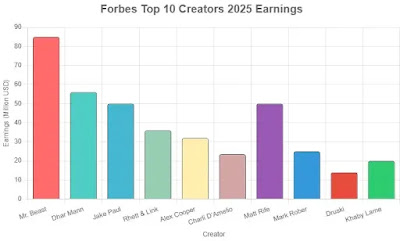
    Mr. Beast, Dhar Mann, Jake Paul, Rhett & Link

    Nobody wakes up wanting to lose money.

    Come on.
    I don’t. You don’t. Even that dude with the fancy car down the street doesn’t.
    But here’s the thing people never say out loud — losing? Yeah, it’s part of the whole thing. Not the fun part, though. The part where you want to throw your phone across the room and just stare at the ceiling for three hours.
    But wait.
    What if I told you something weird?d.
    Some of the richest people I know? They didn’t get rich even though they lost. They got rich because they lost. Yeah. You heard me right.
    See, we grow up thinking losing is bad. School drilled that into us. Parents too. Get good grades. Don’t fail. Don’t mess up. But out here in the real world? Failure is just information. Losing is just paying for a lesson. And if you’re not failing once in a while? You’re playing too safely. Which means you’re leaving money on the table. Big money.
    Let me walk you through what I’ve seen. I’ve watched people lose. Then win. Lose again. Then win bigger than before.

    Why Your Brain Hates Losing So Much

    There’s a reason losing ₹5000 feels worse than finding ₹5000 feels good.
    It’s not just you being dramatic.
    It’s called loss aversion. Scientists studied this. The pain of losing is about twice as severe as the pleasure of winning the same amount. It’s how we’re naturally wired to think.
    But here’s the twist nobody talks about.
    That pain? Not your enemy. It’s a fire alarm. It’s telling you something important.
    When people lose money, they suddenly stop being lazy. I’ve seen it. They start researching. They start asking better questions. They stop trusting random tips from WhatsApp forwards. Thank god.
    I’ve seen this happen maybe a hundred times. Someone loses a chunk of change in the stock market. They cry about it for a night. Maybe two nights. Then something clicks. They learn what a balance sheet actually is. They figure out what a P/E ratio means. They stop gambling and start investing.
    That loss becomes the best thing that ever happened to them.
    Not because losing is fun — it’s not fun at all. But because losing forced them to get serious.
    Think about Edison. He didn’t fail 10000 times. He found 10,000 ways that weren’t the answer. Every single “loss” taught him something new. By the time he got to the light bulb? He was the most educated guy in the room.
    Your losses work the same way. If you let them.

    (more…)