Tag: US Economy

  • The Global Economic Crash: Iran-US War Day 38

    The Perfect Storm: From Starving Farmers to the Global AI Meltdown


    a globe partially on fire A large,

    ​Honestly, I’ve been staring at the market charts all day, and it’s properly haunting. You can feel the tension in the air lately, like the world is holding its breath. It doesn’t matter if you are sitting in a flat in London, a villa in Dubai, or a suburb in New York—the numbers flashing across our screens right now are properly terrifying. We are on Day 38 of this US-Israel-Iran conflict, and the financial ripple effects have turned from a small wave into a full-on tidal wave that is crashing over everything we own.

    ​Look, we really need to stop thinking of this as just “another war” happening somewhere else. This is a fundamental shift in how the global economy works. Straight up, your wallet—and the very technology in your pocket—is the primary target of this mess.

    ​ The Panic in the Heartland: Why US Farmers are Terrified

    ​The most dangerous part of this war isn’t happening on a distant battlefield with tanks and soldiers; it’s happening in the quiet, dusty soil of the American Midwest.

    ​Properly think about this for a second: Russia has officially slammed the door shut on fertilizer exports. To be fair, most people living in cities don’t realize just how much the Western world relies on them for this basic stuff. Without fertilizer, US agriculture is basically like trying to drive a high-performance car on an empty tank. It just doesn’t work.

    ​Farmers from Iowa to Nebraska are looking at empty sheds and price tags for basic supplies that have doubled or even tripled in just a few weeks. If the soil doesn’t get what it needs, the crops simply don’t grow at the scale we need. We are looking at a massive, historical drop in food production. When the supply of food drops and the demand stays the same, you know exactly what happens next. Your weekly grocery bill is about to look more like a luxury car payment. Honestly, it’s a proper disaster for the dinner table, and the fear in the farming communities is at an all-time high.

    a highly detailed Nvidia AI chip

    ​ The AI Meltdown: Nvidia and Apple in the Crosshairs

    ​Now, let’s talk about what I’m calling the “Digital Pearl Harbor.” This is where the analysis gets really scary, especially for anyone who has money in the stock market. Iran’s Revolutionary Guard (IRGC) has officially declared 18 American tech giants as “legitimate military targets.” We’re talking about the titans that run our modern lives: Nvidia, Apple, Microsoft, Google, and Amazon.


    • NVIDIA’s $800 Billion Nightmare: Honestly, NVIDIA has lost over $800 billion in market value in just a few weeks. That is a number so big it’s hard to even imagine. Its shares have tumbled nearly 20%, and the bleeding hasn’t stopped. Why? Because Nvidia’s most advanced AI chips and servers aren’t just sitting in California; they are hosted in massive, multi-billion-dollar data hubs across the Gulf.
    • The “Hit List”: Iran has warned employees at these companies to leave their offices immediately. They aren’t just making empty threats either. We’ve already seen reports of drone strikes hitting Amazon’s AWS data centers in the UAE and Bahrain. These aren’t just buildings; they are the brains of the global internet.
    • The Supply Chain Snapped: It’s not just the offices that are the problem. The Middle East is a key supplier of critical minerals like helium, aluminum, and bromine, which are used to make high-end semiconductors. With the war dragging on, the supply of these minerals is drying up fast. Global giants like Samsung and SK Hynix are already seeing 20% drops in their stock because they simply can’t get the raw materials to build the chips that Nvidia and Apple need for their next generation of products.

    The Day 38 Damage Report: A Quick Look at the Losses

    Look, if you don’t have time to read everything, just look at these numbers. This is what thirty-eight days of conflict have done to the global economy.

    Category

    Economic Impact (Day 1 to Day 38)

    Current Status

    US War Spending

    $42,984,332,511

    Bleeding $1.1B daily

    NVIDIA Market Cap

    -$800 Billion Loss

    Shares down nearly 20%

    Dubai Real Estate

    -4% Drop (DFM Index)

    Investors pulling out fast

    Tech Target List

    18 US Tech Giants

    Employees warned to evacuate

    Agriculture

    Fertilizer Supply: ZERO

    US Farmers in “Red Alert”

    Strait of Hormuz

    100% Blockade

    Global Supply Chain snapped


    Dubai’s Digital Dream is Burning: The End of the Safe Haven?

    ​Dubai and Saudi Arabia have spent trillions—and I mean properly trillions—of dollars trying to transform themselves into the world’s premier “AI Hubs.” But right now, that dream is looking more like a digital nightmare.

    • Oracle Under Fire: In downtown Dubai, projectile debris recently struck an Oracle building. While, thankfully, nobody was hurt, it sent a clear and chilling message to the world: no tech building, no matter how shiny, is safe anymore.
    • The Investor Exodus: Have a look at the DFM (Dubai Financial Market) Real Estate Index. It’s a proper bloodbath out there. The index is down nearly 4% in a matter of days. Investors are absolutely terrified that if the data centers and tech hubs go up in smoke, the entire modern economy of the Gulf goes with them. People who bought luxury properties as “safe investments” are now trying to sell before the next strike hits.

    high-rise Dubai apartments

    ​ The $42 Billion Black Hole: Your Taxes at Work

    ​While Big Tech is crashing and burning, the US taxpayer is being asked to foot a bill that is getting out of control. The “Iran War Cost Tracker” is currently sitting at a staggering $42,984,332,511.

    ​Properly think about that number. That is roughly $1.1 billion of taxpayer money being burned every single day. Honestly, it’s hard to wrap your head around that kind of waste. That’s money that could have been used to fix schools, stabilize the housing market, or lower interest rates for struggling families. Instead, it’s being poured into a conflict that is simultaneously making everything else—from bread to iPhones—more expensive. It’s a double hit that the global economy just cannot sustain for much longer without a total collapse.

    ​ Global Shipping and the Energy Trap

    ​We also have to look at the physical movement of goods. With the conflict escalating, global shipping is in a state of pure chaos. Most people don’t think about shipping until their Amazon package is late, but this is much bigger than that.

    ​Straight up, the insurance costs for any ship even going near the Middle East have gone through the roof. Some companies are seeing insurance premiums jump by 1,000% in a week. To be fair, shipping firms aren’t just going to pay that out of their own pockets. They are adding “war surcharges” to every container. Whether it’s a car, a TV, or a bag of rice, you are paying for that extra insurance at the checkout counter.

    ​ The Kill Switch: The Strait of Hormuz Blockade

    ​And finally, we have the “kill switch” that could end global trade as we know it. The Strait of Hormuz is officially under a blockade.

    ​Look, this is the most important stretch of water on the planet, period. About 20% of the world’s oil and gas flows through this tiny bottleneck. With Iran shutting it down, the global supply chain hasn’t just slowed down—it has snapped like a dry twig.

    ​Ships are now being forced to reroute all the way around the tip of Africa. This adds weeks to the journey and millions of dollars in extra fuel costs. This is why oil prices are spiking, and why every business on earth is starting to panic. If the “world’s tap” stays closed, the global economy will simply run out of fuel.

    ​The Bottom Line: A World in Survival Mode

    ​Honestly, we are witnessing what experts call a “Perfect Storm.” It’s not just one thing going wrong; it’s everything going wrong at once. You have a food crisis caused by Russian fertilizer bans, a digital war targeting Nvidia’s AI infrastructure, a property crash in the heart of Dubai, and a physical blockade of the world’s most vital waterway.

    ​To be fair, there is no easy way out of this mess. We are no longer living in a world of “business as usual” where we can expect prices to stay stable. We are in a world of survival. The figures are clear, and the maps make it undeniable. You need to properly watch your savings, keep a very close eye on the news, and realize that everything—from the bread on your plate to the AI on your phone—is currently caught in the crossfire.

    FAQ

    Q1: Is my food going to get more expensive? 

    Honestly, yes. With Russia cutting off fertilizer and shipping routes being blocked, farmers are paying more to grow food. This cost will eventually hit your grocery bill.

    Q2: Why is the Strait of Hormuz so important for tech? 

    It’s not just about oil. The region is a hub for AI data centers (like Amazon AWS) and a source of minerals needed for chips. If the route is blocked, the “digital brain” of the world slows down.

    Q3: How much is the US spending on this war? 

    Straight up, it’s a lot. As of Day 38, the estimated cost has crossed $42 billion, which is roughly $1.1 billion every single day.

    Note: This is for educational purposes only. Not financial advice. We are not SEBI-registered.
  • indiana low earning degrees bill

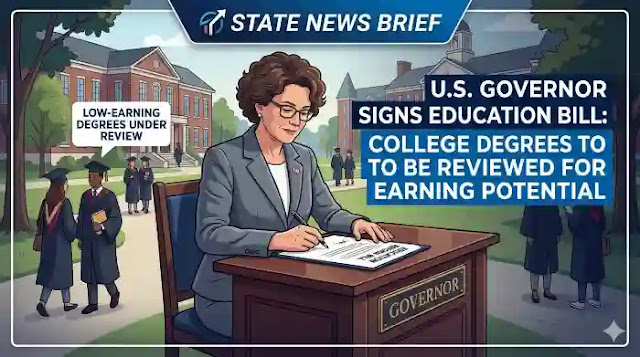
    U.S. governor an education bill

    Indiana Targets Low-Earning College Degrees: What the New Bill Means for Students and Universities

    ​Higher education in the United States is entering a new debate — one that many students, parents, and universities may find uncomfortable. Should taxpayer money support college programs that lead to low-paying careers?

    ​That question is now at the center of a new policy in the state of Indiana. Recently, Mike Braun, the governor of Indiana, signed a bill that could dramatically reshape how universities think about certain degree programs. The legislation aims to identify and potentially eliminate college degrees that consistently lead to low earnings for graduates.

    ​People in favour of this move believe it is a practical step to protect students from debt. On the other hand, those against it worry the policy could threaten the value of liberal arts education and reduce academic diversity on campuses.

    ​Now, let’s explore what’s happening in more detail.

    ​Why Indiana Is Targeting Low-Earning Degrees

    ​For years, American students have been told that a college degree is the key to financial success. But reality has been more complicated. Student debt in the United States has grown to over $1.7 trillion, and many graduates find themselves working in jobs that do not pay enough to justify the cost of their education.

    ​Some degree programs, according to labor data, consistently produce graduates with relatively low starting salaries. These often include certain fields within:

    • ​humanities
    • ​arts programs
    • ​niche academic disciplines
    • ​specialized social science tracks

    ​Indiana lawmakers say the goal of the bill is not to eliminate these subjects entirely. Instead, the policy focuses on whether public funding should continue supporting programs that show weak economic outcomes for students. In other words, the state wants universities to pay closer attention to return on investment (ROI) for degrees.

    ​How the New Law Works

    ​The bill requires state education officials to review degree programs offered by public universities. Programs that consistently produce graduates with low earnings several years after graduation could face funding cuts or restructuring.

    ​The idea is simple: if a program does not lead to strong career outcomes, universities may need to justify why it should continue receiving public support. This approach represents a shift in how governments evaluate higher education. Traditionally, universities were measured mainly by academic reputation and graduation rates. Now, policymakers are asking: Are students actually earning enough after graduation to justify the cost?

    ​Comparing Degree Value and Career Focus

    ​To understand the debate better, we can look at how different paths usually perform in the job market:

    Degree Category Primary Focus Economic Outlook (ROI)

    STEM Technology & Science High starting salaries

    Healthcare Patient Care Strong job security

    Liberal Arts Critical Thinking Slower initial growth

    Trade Skills, Practical Labor, high demand, low debt

    A Bigger Debate About College Value

    ​The Indiana bill is part of a broader conversation happening across the United States. Many policymakers are questioning whether the traditional college system still aligns with modern job markets. Technology companies, healthcare systems, and engineering firms are often struggling to find workers with specialized technical skills.

    ​Supporters of the Indiana policy say universities must adapt to economic realities. They argue that students should receive clearer signals about which degrees are likely to lead to stable careers.

    ​Critics Warn About Risks to Education

    ​Not everyone agrees. Some education experts argue that measuring a degree’s value purely through salary can be misleading. Many fields with lower starting pay — such as teaching or social work — still provide important contributions to society.

    ​Critics worry that policies targeting low-earning degrees could unintentionally weaken programs that play essential cultural roles. Universities also emphasize that higher education is not only about immediate income; it helps students develop critical thinking and creativity.

    ​Universities May Need to Adapt

    ​Regardless of where people stand, one thing is clear: universities may need to rethink how they design degree programs. Some schools are already trying new strategies, such as:

  • ​combining liberal arts education with technical skills
  • ​expanding internship opportunities
  • ​building stronger connections with industry employers
  • ​creating hybrid majors that blend humanities and technology
  • ​The Financial Reality for Students

    ​For many families, the issue comes down to a simple financial calculation. College tuition in the U.S. has risen dramatically over two decades. Students often graduate with significant debt, and their ability to repay it depends on their earning potential. This is why students are increasingly asking:

    • ​What jobs can I get with this degree?
    • ​What is the average salary after graduation?
    • ​How much time is usually required to pay back student loans?

    Could Other States Follow?

    ​Indiana may not be the last state to do this. Several other states are already discussing policies that link university funding to student outcomes. If these policies spread, they could reshape the American education landscape. Universities might face stronger pressure to prove their programs lead to real career opportunities.

    What This Means for Future Students

    ​For students planning their path, the lesson is not to avoid certain fields, but to think carefully about how education connects to careers. Exploring growing industries and practical job opportunities is now more important than ever. The most successful graduates often combine passion with practical skills, like studying digital marketing alongside communications.

    A Sign of Changing Priorities

    ​Ultimately, Indiana’s new law reflects a shift in thinking. The belief that any college degree guarantees success is fading. Instead, people are looking closely at the relationship between education and long-term financial stability. As tuition costs rise, the question remains: Is a degree worth the investment?

    Frequently Asked Questions (FAQs)

    1. What is the Indiana low-earning degrees bill?

    The Indiana low-earning degrees bill is a new law signed by Mike Braun that requires state officials to review college programs whose graduates consistently earn low salaries.

    2. Why is Indiana targeting low-earning college degrees?

    Indiana lawmakers want to improve the return on investment for students. With rising debt, the government wants universities to focus on programs that lead to stronger job prospects.

    3. Which college degrees are considered low-earning degrees?

    These are typically programs where graduates earn lower salaries several years after graduation, often including certain arts, humanities, or niche academic programs with limited job demand.

    4. Will the Indiana education bill eliminate some college programs?

    The bill does not automatically eliminate programs. It requires reviews, and universities may need to restructure or justify why those programs should keep receiving public money.

    5. Could other U.S. states adopt similar education policies?

    Yes. Several policymakers across the U.S. are discussing ways to link university funding to graduate outcomes.

Note: This is for educational purposes only. Not financial advice. We are not SEBI-registered.

  • The Export Parity Trap: Why US Oil Isn’t Cheap

    oil tankers and LNG carriers moving

     The Export Parity Trap: Why Record US Production Won’t Yield Cheap Energy


    The global energy narrative of 2026 is dominated by a glaring paradox. Data confirms that the United States has reached a historic zenith in oil and gas production, outstripping every other nation in history. For the macro-observer, this should signal a deflationary period for energy costs. Yet, consumers across the US and Europe are witnessing a stubborn floor under energy prices that refuses to budge.

    ​To understand this disconnect, one must look beyond simple supply/demand curves and analyze a structural financial mechanism: Export Parity. This is the invisible hand anchoring domestic prices to a volatile global market, ensuring that domestic abundance no longer translates into a domestic discount.


    The Death of the Isolated Energy Market

    ​Historically, the North American energy market functioned as a relatively closed system. If production surged, the excess supply was trapped within domestic borders due to a lack of export infrastructure. This trapped supply naturally forced local prices down to find a buyer.

    ​However, the infrastructure investments of the last decade have fundamentally rewired the system. The US has astronomically expanded its export capacity for both Crude and Liquified Natural Gas (LNG). By building the pipelines and terminals necessary to reach global shores, US producers have effectively broken the domestic cage. We are no longer producing for a local captive market; we are producing for the global highest bidder. If a European utility or an Asian refinery offers a premium over a domestic hub, the molecules will migrate to the export terminal.

    (more…)

  • How Businesses Adapt to Trump’s 2025 Tariffs

     
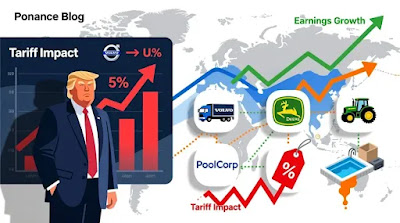
    Donald Trump with U.S. tariffs charts

    Trump’s 2025 Tariffs: Why Your Favorite Brands are Hiking Prices (and Still Winning)


    ​Honestly, look, if you’ve been scrolling through the news lately with your morning tea, you probably saw something a bit weird. Everyone is talking about President Trump’s new tariffs—those big taxes on stuff coming into the country—but the stock market isn’t exactly crashing. Usually, when costs go up like this, people panic. But right now? It’s like businesses are in a proper survival mode. And they’re actually finding ways to thrive.

    ​The early quarterly earnings for late 2025 are finally starting to roll in. They’re telling a story that isn’t just about boring policy. It’s about how much your sneakers or your favorite soap are going to cost you. Companies are being hit with billions in extra costs. But instead of folding, they’re just passing those bills straight to us. Let’s break down what’s actually happening behind those corporate doors.

    ​The Big Squeeze: What’s the Damage?

    ​Straight up, the numbers are massive. After Trump resumed office and pushed tariffs higher—some hitting 60% on Chinese goods—companies have taken on more than $35 billion in additional costs. That’s a massive hole in any budget.

    ​But here’s the thing: companies aren’t just sitting there crying about it. They’re moving fast. Some are moving their factories to other countries. Some are cutting staff. But almost everyone is raising prices.

    ​Take a look at Unilever. Their range stretches from Dove soap all the way to Ben & Jerry’s. They were impacted by higher packaging costs. Their fix? They just raised their prices. And guess what? People still bought their stuff. Their sales actually went up because they focused on “premium” versions of things. It’s a clever trick—make it feel fancy, and people won’t mind the extra 50p as much.

    ​The Winners and the Losers

    ​To be fair, not everyone is having a great time. John Deere, the tractor people, had a properly rough quarter. Their profits dropped by 25%. Why? Because the steel and electronics they need are way more expensive now. Farmers are already struggling, so they aren’t exactly rushing to buy a million-dollar tractor. Deere had to lay off over 2,000 workers just to stay afloat. It’s a tough row to hoe, literally.

    ​On the flip side, you’ve got Volvo. They’re being taxed for bringing cars into the US from Europe. Their response? Fine, we’ll make them in the U.S. instead.” They’re moving production to states like South Carolina to sidestep the taxes. It’s a high upfront cost, but long-term, it saves them millions. Their profit margins actually jumped by 7 points because they cut other costs so aggressively.

    ​Then you’ve got niche winners like PoolCorp. They sell pool supplies. When their suppliers raised prices because of tariffs, PoolCorp just flipped that bill to the customers. Since people who own pools usually have a bit of spare cash, they kept paying. Their margins hit nearly 30%. It shows that if people really want what you’re selling, tariffs are just a bump in the road.

    ​Why Your Wallet is Feeling the Pinch

    ​Look, someone has to pay for these tariffs. And it’s usually us. Goldman Sachs thinks US consumers will shoulder about 55% of these costs. For an average family, we’re talking hundreds of extra pounds or dollars every year on gadgets, clothes, and groceries.

    ​Small businesses are feeling it even worse. Some say their costs jumped 20% overnight. Unlike a giant like Apple or Adidas, a small shop can’t just move a factory to Vietnam. They either have to raise prices and hope for the best or just lose money. It’s a proper squeeze.

    ​The Masterclass in Agility

    ​So, why are these CEOs sounding so happy on their earnings calls? It’s because they’re using these tariffs as an excuse to get “leaner.”

    ​For example, Adidas raised its profit targets even though sneakers are being taxed. How? They got way faster at moving stock. They aren’t letting shoes sit in warehouses for months anymore. By being more efficient, they’re making up for the extra tax they pay at the border.

    Hasbro, the toy company, did something even smarter. Instead of just worrying about plastic toys coming from China, they pushed their digital games. You can’t put a tariff on a digital download! Their gaming wing grew by 25%, helping them survive the physical trade war.

    What This Means for You

    ​As a shopper, you’ve got to be a bit more careful now. You’re going to see “sticker shock” on a lot of things. If you’re planning a big purchase—like a new car—it might be worth looking at where it’s actually made. Stuff made closer to home might stay a bit cheaper.

    ​For investors, the lesson is clear: bet on the adapters. Companies that can shift their supply chains or raise prices without losing their customers are the ones that are going to win. The old way of just importing everything from the cheapest factory in Asia is dead for now.

    The Road Ahead to 2026

    ​To be fair, most experts think things will settle down by 2026. Companies are locking in new deals with suppliers in India, Mexico, and Vietnam. It’s a massive reshuffling of the global economy. It isn’t easy, but it’s happening.

    ​But if tariffs go even higher—say, hitting 100%—then we might see some real chaos. For now, the Q3 2025 earnings show that big business is a lot tougher than people thought. They’re passing the bill to us. They’re cutting waste. And they’re moving production closer to home.

    ​Final Thoughts (No Jargon)

    Let’s be real—the economy is in a pretty unusual spot. But it’s not all doom and gloom. Yes, things are getting pricier. And yes, some sectors like agriculture are hurting. But the speed at which businesses are pivoting is actually quite impressive.

    ​Whether you’re a shopper, a small business owner, or just someone trying to understand why your favorite brand of soap suddenly costs more, the answer is in these earnings. It’s a new normal. We’re all just learning to live in it. Keep an eye on those labels. And maybe check out some local brands—they might just become your new favorites while the global giants sort out their mess.

    The months ahead will be the real proving ground. Will we keep paying these higher prices? Or will we start cutting back? Only the next quarter’s numbers will tell for sure. At the moment, the big names are still standing tall. Even if the air is getting a bit thinner.

    FAQ 

    Are Trump’s tariffs making things more expensive in 2025?

    Honestly, yes. Consumers are absorbing roughly 55% of the tariff costs. You’ll likely see a 5-10% jump in prices for electronics, clothing, and packaged goods.

    How are companies like Volvo avoiding tariff costs?

    To be fair, they aren’t escaping them altogether, but they are shifting where production happens. Volvo is moving more manufacturing to the US to bypass import taxes, which helps keep its margins steady.

    Which industries are struggling the most with tariffs?

    Agriculture and heavy machinery are taking a proper hit. Companies like John Deere have seen profits drop because the steel and parts they import are way more expensive now.

    Is the stock market still a good buy during trade wars?

    Straight up, it depends on the company. Investors are currently betting on “adapters”—companies that have the power to raise prices or move their supply chains quickly.

    Note: This is for educational purposes only. Not financial advice. We are not SEBI-registered.