Tag: US Market

  • Earnings Week Feb 2026: Top Stocks & AI Outlook

     Earnings Week Ahead February 2026: Top Stocks to Watch This Week – Q4 Earnings Reports, EPS Estimates, and Market Outlook


    EARNINGS FEB 2026

    Key Takeaways

    • Busy earnings calendar: Major names across autos, consumer staples, tech, energy, and more report this week, offering clues on AI growth, consumer spending, and economic health.
    • Mixed expectations: Tech and AI-related stocks like AMAT and CSCO show resilience, while others like Ford and Moderna face headwinds from slowing demand.
    • Focus on beats and guidance: Watch for revenue surprises and forward outlooks – these often move stocks more than the numbers themselves.
    • Opportunities for all investors: Dividend-friendly picks like KO and MCD suit passive income seekers, while AMAT and SHOP appeal to growth investors.
    • Broader context: The IMF forecasts global growth of about 3.3% in 2026, supported by AI investments despite ongoing trade uncertainties.

    Introduction

    Hello, fellow investors! If you’re checking your portfolio this February 2026, you’re probably feeling a mix of excitement and nerves. The stock market has been riding high on hopes for artificial intelligence and steady economic growth, but earnings season always brings surprises. This week – the Earnings Week Ahead February 2026 – is packed with big names that could shape the rest of the month and even the year.

    Imagine this: You wake up on Monday, grab your coffee, and see headlines about Ford’s latest results or Coca-Cola’s sales figures. By Friday, stocks like Applied Materials or Roku might jump or dip based on what bosses say about the future. That’s the thrill (and challenge) of earnings week. Whether you’re just starting out with a few shares in a beginner’s account or you’ve been trading for years and want solid passive income stocks, this week matters.

    Let’s break it down simply. Earnings reports tell us how companies really performed in the last quarter of 2025 (or early 2026 for some fiscal calendars). Investors look at two main things: earnings per share (EPS) – basically profit divided by the number of shares – and revenue, which is total sales. If a company beats the experts’ consensus estimates, the share price often rises. Misses can cause drops. But the real magic is in the guidance – what leaders predict for the coming months.

    (more…)

  • US-Iran Oman Talks: Why Oil Prices Are Falling

    US-Iran Oman Talks 2026: Why Crude Oil Prices Are Falling Today and What It Means for the Global Market


    Key Points

    • Oil prices are dropping today due to the US and Iran agreeing to nuclear talks in Oman, easing fears of Middle East conflict and supply disruptions.
    • Brent crude stood at around $67.50-$68.50 per barrel on 5 February 2026, down over 3%, while WTI hovered near $63–64 per barrel.
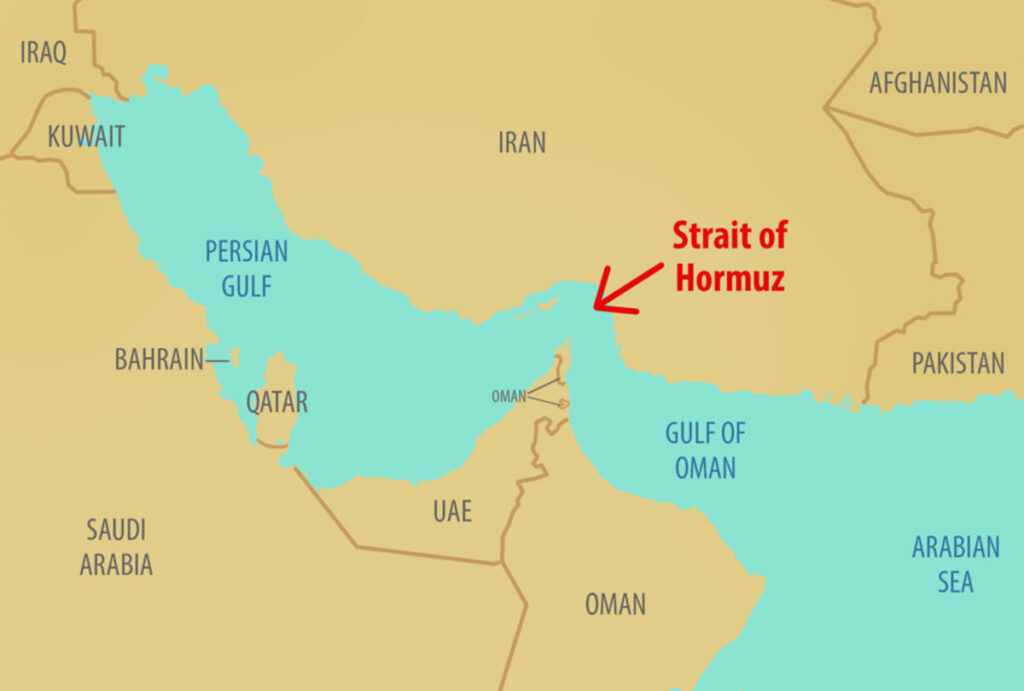
    • The geopolitical risk premium is fading as diplomacy progresses, potentially leading to a more stable oil supply through the Strait of Hormuz.
    • Forecasts from the IMF and World Bank suggest average Brent prices could fall to $60–65 per barrel in 2026, driven by ample supply and easing tensions.
    • Broader impacts include lower costs for oil-importing nations like India, though volatility remains if talks stall.


    Current Oil Price Snapshot
    As of 5 February 2026, Brent crude has fallen amid news of the talks, reflecting market relief over potential de-escalation.


    Why Prices Are Falling Today
    The agreement to hold talks has reduced the “fear factor” in markets, lowering the premium tied to possible supply risks.


    Looking Ahead
    While short-term relief is clear, long-term prices depend on negotiation outcomes and global demand.


    The recent developments in US-Iran diplomacy have sent ripples through the global energy markets. On 5 February 2026, crude oil prices dropped noticeably as news broke that the United States and Iran had agreed to hold nuclear talks in Oman. This marks a significant moment in international relations, especially under the Trump administration, which has taken a firm stance on Iran’s nuclear programme, ballistic missiles, and regional influence.

    The talks, scheduled for 6 February in Muscat, Oman, come after a period of heightened tensions. President Trump has warned Iran’s Supreme Leader to be “very worried” if no progress is made, while the US seeks a comprehensive deal beyond just nuclear limits. Oman, known for its neutral role in Middle East diplomacy, has once again served as the host, facilitating indirect and now direct engagement.

    This diplomatic breakthrough has directly influenced oil markets. Brent crude fell toward the $68 mark, a decline of over 3% from recent highs, while WTI crude dropped to around $63.23 per barrel. Markets reacted swiftly because any easing of tensions between the US and Iran reduces the perceived risk to oil flows through the Strait of Hormuz.

    What is the Strait of Hormuz and Why is it so Important for Oil ...

    The Strait of Hormuz ranks among the most strategically important oil chokepoints in the global energy system. Around 20–30% of the global seaborne oil trade passes through this narrow waterway between Iran and Oman. Any threat to close it – as Iran has hinted at in the past – can spike prices due to fears of shortages. With talks underway, that risk premium has started to unwind, allowing prices to fall.


    Why Are Oil Prices Falling Today?


    The main driver is simple: reduced geopolitical uncertainty. When the US and Iran confirmed the Oman meeting, traders sold off positions built on conflict fears. Reuters reported Brent futures down $2.33 (3.35%) at one point, with similar moves in WTI. This is classic market behaviour – prices often drop on de-escalation news, even if no final deal is reached.

    Other factors play a role, too. Global supply remains ample, with OPEC+ production steady and non-OPEC output (especially US shale ) robust. Demand growth is modest amid economic uncertainties, adding downward pressure.

    The Impact of US-Iran Diplomacy on Oil Supply


    Diplomacy can reshape oil supply dynamics. If successful, talks could lead to sanctions relief for Iran, allowing it to increase exports. Iran currently produces around 3–3.5 million barrels per day, but has capacity for more. Higher Iranian supply would further weigh on prices.

    Conversely, failure could reignite tensions, raising risks around the Strait of Hormuz and pushing prices up. The Trump administration wants concessions on missiles and proxies, making the outcome uncertain.

    Oil tanker attacks in the Strait of Hormuz requires an ...

    Brent vs WTI Price Outlook

    Brent and WTI are the two main benchmarks. Brent, sourced from the North Sea, reflects global prices, while WTI is US-centric.

    Table: Recent and Forecasted Prices (USD per barrel)

    Source/Date Brent Current (Feb 2026) WTI Current (Feb 2026) 2026 Average Forecast (Brent)
    Market Data (5 Feb 2026)
    • ~68.50
    ~63.23
    IMF (Jan 2026) ~62.13
    World Bank (Oct 2025) ~60
    EIA (Recent) ~56–65

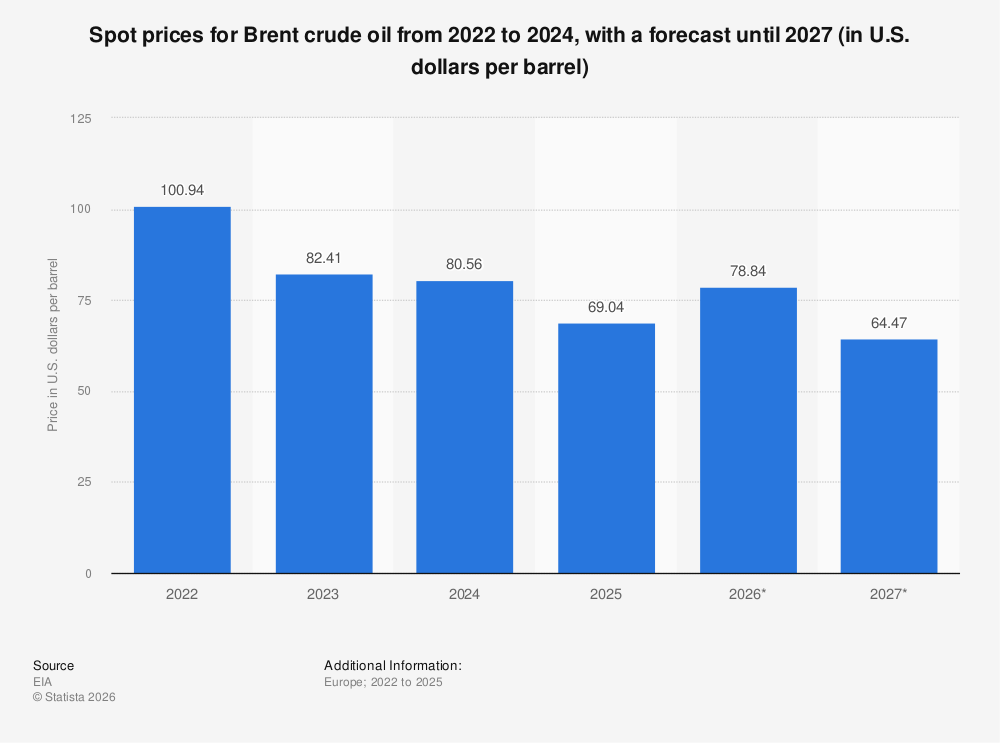
    Prices are down from earlier highs, with forecasts pointing lower due to a supply glut and diplomatic tensions.

    Brent crude oil price forecast 2026| Statista
    Brent crude oil price forecast 2026| Statista


    Geopolitical Risk Premium Explained


    The “risk premium” is the extra amount traders add to prices for potential disruptions. In calm times, it’s low; during crises, it can add $10–20 per barrel. The Oman talks have trimmed this premium, contributing to today’s drop.

    Mini Case Study: Impact on India’s Economy


    India, one of the world’s largest oil importers, relies on Middle East crude for over 80% of its needs. Lower prices reduce the import bill, easing inflation and supporting the rupee. In past dips (e.g., 2020), India’s fuel costs fell, boosting consumer spending and growth. If prices average $60 in 2026, India could save billions, helping its fiscal balances. However, prolonged low prices might hurt domestic producers like ONGC.

    Broader Global Oil Market Geopolitics


    The talks highlight Oman’s role as a mediator. Broader issues – sanctions, proxies – could influence outcomes. The Federal Reserve notes that energy prices affect inflation, while IMF projections show that low oil prices aid global growth by lowering consumer costs.


    FAQs


    Why are oil prices falling today?
    The US-Iran talks in Oman have eased supply disruption fears, causing a sell-off.

    What is the status of the Trump administration’s Iran talks for 2026?
    Talks are set for 6 February in Oman, focusing on nuclear issues and more.

    Why does the Strait of Hormuz play such a key role in oil pricing?

    It’s a key transit point; threats to it raise prices due to supply risks.

    Will Brent crude fall further in 2026?
    Forecasts suggest yes, to $60–65 average, if supply stays high and tensions low.

    What should investors watch?
    Talk outcomes, OPEC decisions, and demand data.

    (more…)

  • Private Credit vs Banks: 2026 Investment Guide

     Private Credit vs Traditional Banking: Where Should You Invest in 2026?


    Private Credit' with glowing 9%

    In 2026, private credit generally offers higher potential yields (around 8-10% for many strategies) than traditional banking products like deposits or bonds, but it comes with greater illiquidity and credit risks. In a stabilizing rate environment with the Fed funds rate at 3.5–3.75%, traditional banking continues to deliver safety and liquidity, though at the cost of more restrained returns. Research suggests private credit may suit investors seeking income and diversification, especially as the market grows beyond $2 trillion in assets under management, while traditional banking appeals to those prioritising stability. The evidence leans toward private credit for higher rewards in the current landscape, though it is not without controversy over liquidity and potential contagion risks—always consider your risk tolerance and consult a financial advisor.


    Key Takeaways


    • Higher yields available in private credit: Many direct lending strategies deliver 8-9.5% or more, compared to lower returns from bank deposits or public bonds.
    • Rapid market growth: Private credit assets exceed $2 trillion in 2026, with projections toward $4 trillion by 2030.
    • Retail access improving: Options like interval funds, BDCs, and evergreen structures make it easier for individual investors to participate.
    • Fed rates influence both sides: At 3.5-3.75%, lower rates may pressure floating-rate returns but support borrowing and deal activity.
    • Balanced view needed: Private credit provides rewards in a maturing market, but traditional banking offers safety amid uncertainties.


    Why Compare These in 2026?

    With interest rates moderating after recent peaks and banks facing regulatory pressures, private credit has filled gaps in lending—especially to middle-market companies. This creates opportunities for investors seeking income, but also raises questions about risks in a changing environment.

    The private credit market has grown dramatically, evolving from a niche alternative to a mainstream asset class that rivals traditional banking in many ways. As of early 2026, following the Fed’s decision to keep rates at 3.5–3.75%, investors must decide whether to stay with familiar investments or look elsewhere for returns. of banks or explore the higher-yielding world of private credit. This detailed exploration draws on recent outlooks from Moody’s, Ares Management, Wellington Management, BlackRock, and others to provide a comprehensive view.

    Understanding the Basics


    Private credit refers to loans made by non-bank lenders—such as private funds, business development companies (BDCs), or asset managers—to companies, often middle-market firms that need flexible financing. Unlike public bonds, these loans are not traded on exchanges, offering custom terms like higher interest rates and stronger covenants. Traditional banking, on the other hand, involves deposits, savings accounts, CDs, or bank-issued loans, backed by regulated institutions with government protections like deposit insurance.

    The key difference lies in the investor experience. Bank products are liquid and low-risk but offer modest returns. Private credit promises more income but locks capital for longer periods and carries credit risk if borrowers struggle.

    (more…)

  • Realty Income Q4 2025 Earnings & Dividend News

     Realty Income Announces Q4 and Year-End 2025 Earnings Release Date: What Investors Need to Know


    Digital Realty and Realty Income Form Build-to-Suit Data Center ...

    Digital Realty and Realty Income Join Forces to Develop a Build-to-Suit Data Center


    Key Takeaways


    • Realty Income has scheduled its fourth quarter and year-end 2025 earnings release for after market close on 24 February 2026, with a conference call at 2:00 p.m. PST.
    • The company, known as “The Monthly Dividend Company®”, recently declared its 667th consecutive monthly dividend, highlighting its reliable income track record.
    • With over 15,500 properties across the US, UK, and Europe, Realty Income continues to expand internationally. After reaching its $5.5 billion investment target in 2025, eyes are now on the 2026 guidance.
    • Investors can expect updates on AFFO (Adjusted Funds From Operations), revenue, and forward guidance during the upcoming release.
    • The announcement comes amid stable real estate trends, with lower interest rates potentially supporting REIT performance.


    Introduction


    Imagine a company that pays you a dividend every single month, without fail, for over five decades. That is the promise Realty Income Corporation (NYSE: O) has delivered to its shareholders. As one of the most dependable names in real estate investing, Realty Income has built a reputation as a steady performer in an often unpredictable market.

    On 22 January 2026, the company made an important announcement: it will release its fourth quarter and full-year 2025 operating results shortly after the New York Stock Exchange closes on 24 February 2026. This news is significant for investors who rely on Realty Income for regular income, especially in times when many traditional investments face uncertainty.

    Why does this matter? Realty Income is a Real Estate Investment Trust (REIT), a type of company that owns and leases properties, then distributes most of its profits as dividends to shareholders. Unlike many firms that pay quarterly, Realty Income sends cheques monthly – a feature that appeals to retirees, income seekers, and anyone wanting predictable cash flow.

    (more…)