Tag: US Stock Market

  • US Market Crash: Why Your Stocks & Rent are Rising

    US Market are red,

    The Global Bloodbath: Why US Tech Giants Are Bleeding Red

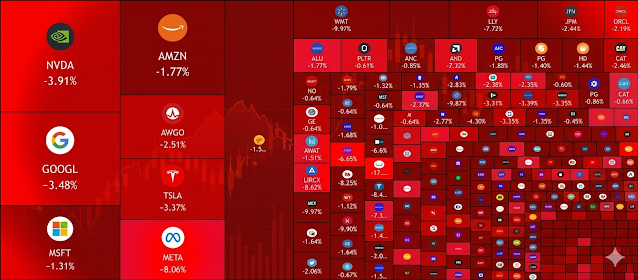
    ​ looking at the market right now is like watching a financial disaster movie in real-time. That image of the heat map you’ve seen isn’t just a random glitch or a bad day at the office; it’s the cold, hard reality of Wall Street in 2026. We are seeing a proper sea of red, and if you’ve got even a penny in US stocks, it’s a tough pill to swallow. From Nvidia to Meta, the heavy hitters are getting absolutely hammered, and it’s not just a random dip—it’s a direct reaction to the chaos unfolding between Israel, Iran, and the United States.

    ​Look, the connection here is simple but deadly for your portfolio. When major powers in the Middle East start trading threats and missiles, the stock market doesn’t just “react”—it panics. Above everything else, investors try to avoid uncertainty. When the world feels like it’s on the brink of a much larger conflict, the “smart money” starts running for the exits, and that’s exactly what we are seeing on the screen right now.

    ​The Real-World Impact: Why Life is Getting Expensive

    ​Straight up, this isn’t just about numbers on a screen or rich people losing money on Wall Street. The tension between Israel and Iran is hitting the pockets of regular people in America and across the globe right now. When the Middle East gets shaky, the first thing that moves is the price of energy, and that starts a chain reaction that hits every part of your life. It’s a domino effect that most people don’t see coming until it’s too late.

    ​1. The Petrol and Diesel Nightmare

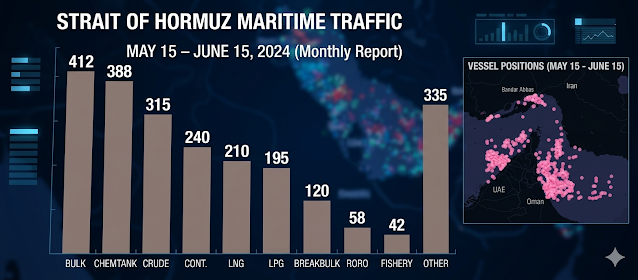
    ​We’ve already seen gas prices at the pump jump by 15% to 20% in many states over the last few weeks. This happens because Iran sits near some of the most important oil shipping lanes in the world, like the Strait of Hormuz. If that supply is even slightly threatened, or if investors think it might be threatened, the global price of crude oil shoots up instantly. To be fair, for a regular person driving to work, this means spending an extra $50 to $100 a month just on fuel. It’s a massive drain on the monthly budget that leaves less money for everything else.

    ​2. The Grocery Store Squeeze

    ​It’s a simple but painful chain reaction. Every single item in your local grocery store—from the bread to the fresh fruit—gets there on a truck. When diesel for those trucks gets expensive, the shipping companies pass that cost on to the supermarkets, who then pass it on to you. Honestly, families are already seeing an extra 10% to 15% added to their grocery bills for absolute basics like milk, eggs, and meat. It’s getting to the point where people are having to choose between filling their car and filling their fridge. This “food inflation” is what really scares the average voter in America.

    ​3. Rent and the Housing Crisis

    ​Inflation is the hidden monster here. Because of the war tension and high oil prices, inflation isn’t coming down like the government promised it would. This means the Federal Reserve is forced to keep interest rates high, which makes mortgages and business loans incredibly expensive. In big cities, rent has already climbed by nearly 10% because landlords are facing higher maintenance and tax costs themselves. If you’re trying to find a new place to live right now, it’s a proper nightmare because your salary just isn’t keeping up with the rising cost of a roof over your head.
    strait of Hormuz

    The Tech Titan Tumble: Meta and Nvidia Under Pressure

    ​If you examine the heat map of the stock market, the biggest squares are the darkest red. These are the “Magnificent Seven” companies that everyone thought were “untouchable” just a few months ago.

    • Meta (-8.06%): Seeing a company the size of Meta drop over 8% in such a short window is staggering. We are talking about billions of dollars in market value just vanishing in a single trading session. It shows that even social media giants are vulnerable when investors decide to pull cash out of “risky” assets and move it into gold or cash for safety.
    • NVIDIA (-3.91%): The king of the AI revolution is finally feeling the heat. While AI is clearly the future, the “present” is dominated by fear. Investors who made massive profits on Nvidia over the last year are now “cashing out” to protect their gains before the market drops even further. When the AI leader falls, it scares the whole tech sector.
    • Google (Alphabet) & Microsoft: Both are sliding down significantly. When the core pillars of the S&P 500 start crumbling like this, it sends a signal to everyone else that nobody is safe. If the giants are bleeding, the small companies don’t stand a chance.

    Why the Rest of the Market is Following Suit

    ​It’s not just tech, though. Look at the industrial and retail sectors on that map. Walmart (WMT) taking a nearly 10% hit is almost unheard of for such a stable “safe haven” stock. This tells us that this isn’t just a “tech correction”—it’s a full-blown market panic.

    ​Properly speaking, this is what experts call a “liquidity crunch.” When big hedge funds lose money on their tech bets, they are often forced to sell their “safe” stocks—like Walmart, JPMorgan, or Home Depot—just to balance their books and pay off their debts. This creates a domino effect where selling leads to more selling. The image you shared perfectly captures this moment of total surrender by the buyers. The red isn’t just a colour; it’s the sound of billions of dollars being wiped out.

    The Connection Between the U.S. Dollar and Interest Rates

    Straight up, the US economy was already in a weird spot before this conflict even started. Inflation hasn’t gone away as fast as everyone hoped. Now, with the threat of war, the US Dollar is getting stronger because people see it as a “safe haven” during global chaos.

    ​While a strong dollar sounds like a good thing, it actually hurts big US companies that sell products globally. It makes iPhones, software, and American cars much more expensive for people in Europe, India, or Asia to buy. This leads to lower sales and lower profits, which makes the stock price drop even further. To be fair, the Federal Reserve is stuck between a rock and a hard place. They want to lower interest rates to help the economy, but they can’t do that if a war in the Middle East is pushing energy prices up and keeping inflation high. It’s a trap that is very hard to escape.

    ​The Psychological Breakdown of Investors

    ​Honestly, the stock market is 10% maths and 90% psychology. When you see a map that red, it triggers a “fight or flight” response in the human brain. Most people choose a flight. They see their retirement accounts or their savings shrinking by 5% or 10% in a single week, and they panic-sell at the worst possible time.

    ​The big institutions use high-frequency trading algorithms that are programmed to sell the moment certain “risk triggers” are hit. When a drone strike is reported, or a new set of sanctions is announced, these computers sell millions of shares in the blink of an eye. This is why the drops happen so fast and so deep. Regular investors are often left wondering what happened before they’ve even finished their morning tea. By the time you read the news, the damage is already done.

    ​Is There Any Way Out of This?

    ​Properly speaking, the market needs a massive “reset” button. That reset button is usually a diplomatic breakthrough. If we see news that the US has successfully brokered a ceasefire or that Iran and Israel are moving back to a “cold” standoff rather than an active conflict, the market could bounce back just as fast as it fell. We call this a “V-shaped recovery.”

    ​However, until that happens, we have to expect more volatility. The “Magnificent Seven” stocks that led the market up for the last two years are now the ones leading it down. This is a classic “mean reversion”—where things that went up too fast have to come back down to earth eventually. It’s a painful process, but it’s how the market clears out the “froth” and gets ready for the next move.

    ​Final Reality Check

    ​Looking at the data, we are in a period of extremely high risk. The link between the Israel-Iran conflict and the US stock market is direct and painful. Every headline about a missile, a drone, or a diplomatic failure is another drop of red ink on the market map.

    ​Straight up, if you are looking at your screen and seeing Meta, Nvidia, and Tesla all bleeding, just know that this is a global event. It isn’t about one company doing a bad job; it’s about the world becoming a more dangerous and expensive place for everyone. To be fair, markets have survived world wars, pandemics, and depressions. They will survive this, too, but for now, the “Red Sea” is here to stay until the smoke clears in the Middle East.

    ​Don’t let the numbers make you do something irrational. The market is a test of nerves, and right now, the world is testing everyone’s limits. Keep a very close eye on the oil prices and the headlines from Washington—those are the real indicators of when this sea of red will finally turn green again. It might take time, so patience is the only thing you can afford right now.

    conclusion

    Honestly, it’s a proper mess out there, but every storm eventually runs out of rain. To be fair, seeing your portfolio in the red and your grocery bill going up at the same time is a double blow that no one wants. But look, we’ve been through these cycles before—from the 2008 crash to the pandemic chaos—and the world always finds a way to steady itself.
    Straight up, the best thing you can do right now is stay calm. Don’t let the panic on the news or the red on your screen make you do something you’ll regret later. Markets are jumpy, and life is getting a bit more expensive, but these are the moments that test what kind of investor you really are. Keep your head down, watch the headlines from Washington and the Middle East, and remember that patience is usually the only thing that pays off in the long run.
    Properly speaking, we just need to wait for the smoke to clear. Until then, take a breather, stay informed, and don’t let the numbers get into your head too much. We’ll get through this “Red Sea” just like we’ve done every other time.

    Frequently Asked Questions (FAQ)


    1. Why is the US stock market crashing today?

    Honestly, it’s a mix of fear and reality. The direct conflict between Israel and Iran has made investors terrified of a global war. When people are scared, they sell risky stocks like Meta and Nvidia and move their money into “safe” assets like gold or cash.
    2. How does the Middle East conflict affect my grocery bill?

    It’s all about the fuel, properly speaking. Food supply chains depend heavily on trucks. If the conflict pushes oil prices up, diesel gets expensive. That extra cost gets passed directly to you at the supermarket checkout.
    3. Will Nvidia and Meta stocks go back up?

    To be fair, these are massive companies with huge profits, so they usually bounce back. However, as long as there is a threat of a major war, these “high-growth” stocks will stay under a lot of pressure and could drop further.
    4. Why is rent increasing if the stock market is falling?

    Straight up, it’s because of inflation. When oil and energy prices rise, everything else follows. The Federal Reserve keeps interest rates high to fight this inflation, which makes it more expensive for landlords to manage properties, and they pass those costs on to tenants.
    5. Is it a good time to buy the dip?

    Look, that’s the million-dollar question. If you believe a diplomatic solution is coming soon, prices right now look like a bargain. But if the conflict escalates, we haven’t seen the bottom yet. It’s a proper gamble right now.

    Note: This is for educational purposes only. Not financial advice. We are not SEBI-registered.

  • Markets This Week: Jobs, Inflation & Earnings

     What to Expect in Markets This Week: Jobs Report, Inflation Data, and Earnings from Micron, Nike, and FedEx

    Key Takeaways

    • Jobs Report on Deck: The November 2025 US jobs data drops Tuesday, December 16, with economists eyeing just 40,000-50,000 new jobs amid a fragile labor market, which could signal more Fed rate cuts if weak.
    • Inflation Watch: CPI for November hits Thursday, December 18; expect around 3% year-over-year rise, testing if prices are cooling enough for an economic soft landing.
    • Earnings Highlights: Micron’s AI-driven results on Wednesday could boost tech stocks; Nike and FedEx report Thursday, revealing holiday trends and consumer spending health.
    • Market Movers: Volatility ahead—strong data might lift stocks, but misses could spark sell-offs; diversify and watch Fed speakers for clues.
    • Investor Tip: Use this week’s data to tweak portfolios; bonds may rally on soft jobs, while cyclicals like Nike shine on upbeat guidance.

    As we hit the middle of December 2025, the financial markets feel like a high-stakes game of chess. One wrong move—or one unexpected report—and the board flips. Remember the chaos back in early 2024 when a hotter-than-expected inflation print sent stocks tumbling 2% in a day? Or how the S&P 500 surged 5% after the Fed hinted at rate cuts in September? Those moments remind us: timing is everything. Right now, with holiday shopping in full swing and year-end tax selling looming, investors are glued to their screens. This week, December 16-20, packs a punch with delayed economic data, fresh inflation numbers, and earnings from heavy hitters like Micron, Nike, and FedEx. It’s not just numbers—it’s the story they tell about jobs, prices, and consumer wallets.

    Let’s set the scene. The US economy has been on a rollercoaster since the post-pandemic boom. Growth slowed to 1.7% annualized in Q3 2025, per recent GDP figures, but unemployment hovers at a still-low 4.4%. Inflation? It’s eased from 9% peaks in 2022 but sticks around 3%, frustrating the Fed’s 2% target. Add in global jitters—think Ukraine peace talks boosting oil hopes or China’s sluggish recovery dragging on exports—and you’ve got a market that’s up 15% YTD but itching for direction. The S&P 500 closed Friday at 5,820, flirting with all-time highs, while the Nasdaq’s tech rally (hello, AI frenzy) pushes it toward 19,000. Bonds? The 10-year Treasury yield sits at 4.25%, down from summer peaks, as traders bet on three more Fed cuts in 2026.

    Why does this week matter so much? First off, the government shutdown earlier this year— the longest in history, lasting into November—delayed key reports. We’re finally getting November’s jobs snapshot today (Tuesday, December 16), bundled with October revisions. Economists from Goldman Sachs to Dow Jones peg nonfarm payrolls at a meager 50,000 for November, down from September’s 119,000. That’s a red flag for a labor market showing cracks: hiring froze in government sectors during the shutdown, and private payrolls like ADP’s weekly data hint at just 4,750 added last week. Unemployment might tick to 4.5%, per Reuters polls. If it comes in weaker—say, under 40,000 jobs—expect bond yields to plunge and stocks to wobble. Why? It screams “recession risk,” prompting the Fed to slash rates faster. Fed Chair Jerome Powell noted last week that “labor weakness” drove December’s 25-basis-point cut; more soft data could mean another in January.

    Flip side: A beat—maybe 75,000 jobs—could ease fears, lifting cyclicals like industrials and retail. Think Deere & Co. (DE): Back in October 2024, their earnings miss on farm equipment slumps (due to high rates hurting buys) tanked shares 10%. But when jobs data surprised strongly in July 2025, DE rebounded 8% as ag spending looked rosy. Lesson? Sector ties matter. This week’s report isn’t just BLS stats—it’s a Fed whisperer. Governors like Christopher Waller speak mid-week; dovish tones could fuel the “Santa Claus rally,” where S&P averages 1.4% gains in late December, per historical data.

    Shifting gears to inflation: Thursday’s CPI (Consumer Price Index) for November is the other biggie, delayed from December 10. September’s 3% YoY print was sticky—up from August’s 2.9%—driven by shelter (up 3.8%) and food (3.1%). Cleveland Fed nowcasts peg November at 0.32% monthly, pushing YoY to 2.99%. Core CPI (ex-food/energy) might hit 3.0%, per Trading Economics. Why care? It’s the Fed’s inflation gauge. If it dips below 2.9%, markets cheer a “disinflation” win, potentially juicing risk assets. But upside surprises—like energy rebounding on Ukraine truce hopes—could revive rate-hike fears, hammering growth stocks.

    Picture this: back in March 2023, a 0.1% miss on CPI was enough to trigger a 1.5% rally in the S&P 500, the smallest data surprise. Contrast with June 2024’s hot print, which erased $2 trillion in market cap. For everyday folks, CPI tracks grocery bills (up 3.2% YoY) and rents—key for 40% of millennials still renting. Traders? It’s volatility fuel. Options imply a 0.3% S&P swing post-CPI. Broader context: OECD data shows global inflation stable at 2.2% in the eurozone in November, but the US lags. If CPI cools, expect gold (above $2,600/oz) and Bitcoin ($86,000) to dip as safe-havens fade.

    Now, earnings season wraps with tech and consumer bellwethers. Micron (MU) reports Wednesday after close—their Q1 FY26 could be a fireworks show. Analysts eye $12.93 billion revenue (48% YoY jump), EPS $3.96 (double last year). Why? AI boom. High-bandwidth memory (HBM) for Nvidia chips hit $2 billion in Q4 FY25, annualizing to $8 billion. Micron’s gross margin soared to 45.7%, per their last release. Shares? Up 170% YTD to $237, but options price a 9% post-earnings move. A beat-and-raise on HBM ramp (sold out through 2026) could push MU past $258 all-time highs. Risk: If guidance misses on inventory glut, it echoes 2023’s 20% plunge. Tip: Pair with semis ETF like SMH for diversification.

    (more…)

  • Earnings This Week: Dec 15–19, 2025

     Earnings This Week: December 15-19, 2025 – Must-Watch Reports from Nike, Micron, Accenture, and More

    Cinematic financial news illustration

    Key Points to Kick Off Your Week

    • AI Fuels Tech Optimism: Micron’s report could confirm booming demand for high-bandwidth memory, with revenue surging 44%—a potential catalyst for semis amid AI hype.
    • Consumer Sector in Flux: Nike faces a tough quarter with EPS down over 50%, but early turnaround signs might surprise; Carnival’s yield growth hints at cruise recovery.
    • Housing and Logistics Hold Steady: Lennar’s softer sales reflect high rates, yet FedEx’s DRIVE programme promises margin gains, offering stability in cyclicals.
    • Guidance Will Steal the Show: Look beyond numbers to 2026 outlooks—Accenture’s AI bookings could signal consulting rebound, influencing broader market sentiment.
    • Volatility Ahead: Implied moves top 10% for MU and NKE; position early with options if trading, or hold core holdings for long-term plays.

    As we hit mid-December 2025, the stock market feels like that last push before holiday cheer—or chaos. With the S&P 500 hovering near record highs, investors are zeroing in on this week’s earnings reports (December 15–19). The reason? These results could determine whether the rally has the fuel to continue—or finally runs out of steam. It’s the final big batch before year-end tax selling, and Santa Claus rallies kick in. But don’t get too cozy: reports from heavyweights like Nike, Micron, and Accenture could swing sectors from tech to retail.

    Picture this: You’re at a year-end party, and the chat turns to stocks. “Heard about Nike’s China slump?” someone asks. Or, “Micron’s AI chips—game-changer or hype?” That’s the vibe right now. Earnings aren’t just numbers; they’re stories of resilience amid inflation cooling and rate cut hopes. This week packs 70+ reports, but we’ll zoom in on the must-watches. We’ll break down expectations, risks, and tips—think of it as your cheat sheet for smarter trades.

    Over the past year, earnings beats have driven 60% of S&P gains, per Nasdaq data. Yet, misses in consumer staples like General Mills could echo broader spending worries. Housing? Lennar’s preview screams caution with rates biting buyers. Logistics? FedEx’s cost cuts might shine, but trade tensions loom.

    We’ll dive day-by-day, with real stats, analyst takes, and practical advice. Whether you’re a day trader eyeing implied moves or a buy-and-hold type building for 2026, there’s gold here. Ready? Let’s unpack earnings this week.

    (more…)

  • Costco Sells 4.5M Pies—Stock Still Slips

     Costco Earnings Reveal: 4.5 Million Pies Sold Before Thanksgiving – Why the Stock Still Ticked Lower

    Thanksgiving, stacked pallets

    Key Points

    • Record-Breaking Pies: Costco sold 4.5 million pies in just three days before Thanksgiving, showing huge holiday demand and boosting bakery sales.
    • Earnings Beat Expectations: Q1 revenue hit $67.31 billion (up 8.2% year-over-year), and EPS reached $4.50, topping forecasts, thanks to strong membership fees and e-commerce.
    • Stock Dips Despite Wins: Shares fell about 2% post-earnings due to no special dividend announcement and a slight slowdown in US comparable sales growth.
    • Membership Powerhouse: Executive members now make up 74.3% of sales, with renewal rates steady, underlining Costco’s sticky customer base.
    • Holiday Momentum: Beyond pies, 358,000 pizzas flew off shelves over Halloween, and Black Friday online non-food sales set new records.

    Introduction

    Imagine this: It’s the crisp morning of Thanksgiving week, and across America, families are buzzing with excitement for turkey, stuffing, and that perfect dessert. But at your local Costco warehouse, the real frenzy is over something sweeter – pies. Thousands of golden-crusted apple, pumpkin, and pecan delights are vanishing from shelves faster than you can say “second helping.” Now, picture that scene multiplied by over 600 stores: 4.5 million pies sold in just three days. That’s not just a sweet statistic; it’s a snapshot of consumer joy and spending power that lit up Costco’s latest earnings report like a holiday light display.

    As we wrap up 2025, Costco Wholesale Corporation dropped its fiscal Q1 2026 earnings on December 11, revealing not only this pie-powered surge but a broader story of resilience in a tricky retail world. Revenue climbed to $67.31 billion, smashing Wall Street’s $67.14 billion guess, while earnings per share (EPS) hit $4.50 against the expected $4.27. It’s the kind of beat that should have investors cheering, right? Well, not quite. Despite the positives, Costco’s stock ticked lower by nearly 2% in after-hours trading, closing the year-to-date gap wider and leaving shares down about 5% for 2025 so far. Why the sour note in such a sweet report? Buckle up, because we’re diving deep into the numbers, the holiday hype, and what it all means for your wallet – whether you’re a pie-loving shopper or a stock-watching investor.

    (more…)