Tag: War Economy 2026

  • survive-2026-economic-crisis

    Your Bank Account in 2026 – Yeah, It’s in Trouble


    WORLD ECONOMY 2026: THE DEBT WAR"
    Honestly? I can’t watch the news for more than five minutes without wanting to throw my remote at the TV. All this Iran-US nonsense? Everybody acts like it’s happening in some other universe. But here’s the thing, people don’t get. Those missiles? Those tankers are getting chased around the ocean? That stuff hits your wallet. Direct hit. Savings, groceries, rent money. All of it.
    We’re already living through what’s gonna be called the “Great Debt War” of 2026. Except nobody’s shooting at us. They’re shooting at our bank balances. And I swear, it feels like the whole system was designed to drain normal people dry.

    Oil prices are a nightmare. Here’s why.

    You see those Iranian tankers sneaking through blockades? $220 million worth of oil just floating there, playing chicken with warships. Looks dramatic. But the real joke? The whole world still needs oil. Like, desperately. The second a major shipping route gets blocked, fuel prices lose their minds.
    And no — it’s not just about your car. Think about everything you buy. Your cereal. Your sneakers. The charger you just ordered. All of it rides on trucks, ships, and planes. Fuel goes up, delivery costs explode. That’s inflation crawling right into your kitchen. Less stuff moving around, but everybody still wants the same things. So prices climb. And climb. Until you’re standing in the grocery store, wondering why a loaf of bread costs a small fortune.
    US Dollar bundles shaped like a skyscraper,

    America’s debt is genuinely terrifying.

    This one actually made me sit down. The US national debt is now bigger than the whole US economy. I’m not making that up. Hasn’t happened since World War Two. So the richest country on earth is basically surviving on a credit card that’s been maxed out for years.
    Here’s the scary part. Most of our savings, our pensions, our stocks — all tied to the. That dollar even twitches, and everything you’ve got starts hanging by a thread. The global market right now?Glasshouse. One wrong move, one more missile, and smash. Gone.

    Europe and the UK? Also a mess.

    It’s not just America. Over in the UK, experts reckon this Iran thing could cost them £35 billion. Thirty-five billion. With a B. When big economies like that start whispering “recession”, you know it’s bad.
    When they stop spending, the rest of us feel it. Jobs vanish. Pay rises? What pay rises? And your savings account interest? Ha. That’ll eat your money alive — slower than termites but just as sure. Honestly feels like we’re all on a sinking ship and the lifeboats left yesterday.

    Shortages. Remember COVID? Yeah, worse.

    I saw a CNN report saying we’re not ready for a “Great Power War”. War isn’t just fighting anymore. It’s empty shelves. Because factories stop making normal stuff — like chairs and toasters — and start making drone parts and tank bits. Then shops run dry.
    Remember panic-buying toilet paper in 2020? That was a trailer. 2026 might be the full movie. Less stuff to go around means prices go up again. Double hit. Double pain.
    supermarket with completely empty shelves

    So is your money actually safe?

    With all this chaos, what are you supposed to do? Look, I’m not gonna tell you to buy gold or Bitcoin or whatever. Honestly? Now is not the time to be a hero in the stock market. Not the time for “get rich quick” crap. This is the time to play defense. Boring defense.
    People are losing faith in paper money. They want stuff they can hold. Because when the system starts shaking, you only want things that are real.

    How to survive this mess (from one normal person to another)

    I don’t wear a suit. I don’t talk Wall Street. But here’s what makes sense to me right now.
    First, cash is still king. Keep real physical money somewhere safe. Don’t touch your emergency fund. You need six to eight months of living costs, which you can grab fast.
    Second, do NOT take on new debt. Worst possible time for a loan or another credit card. Interest rates are already nuts, and they could jump higher tomorrow.
    Third, clean up your investments. Got money in some hype-driven garbage? Get out. Now. Stick to boring stuff. Solid stuff.
    Fourth, don’t panic, but don’t fall asleep either. Closing your eyes won’t help. Watch the news. Try to understand what’s happening. Be ready to move fast if things get worse.

    Bottom line

    The world is changing under our feet. 2026 is going to teach us some hard lessons. War in the Middle East. Massive debt in the US. The old rules don’t work anymore. You have to be smarter with every pound or dollar you’ve got.
    Look after your money like your future depends on it — because nobody else will. The person who stays calm, doesn’t make stupid bets, and keeps their head down? That’s the one who walks out of this storm still standing.
    What do you think? Is this war gonna set us back ten years, or do we somehow fix this broken system? I’d actually love to hear your take. Drop a thought. Let’s figure it out together.

    FAQ Text (based on article content)

    1. What is the “War Economy of 2026”?
    It’s the current economic situation where geopolitical conflicts – particularly between Iran and the US – are driving up oil prices, supply chain costs, and inflation. The article calls it the “Great Debt War” because it’s fueled by massive national debt, not just military action.
    2. Why does the Iran-US conflict affect my personal finances?
    Because the world runs on oil. When shipping routes get blocked, fuel prices spike. That makes everything you buy – food, clothes, tech – more expensive due to higher delivery costs. It directly hits your grocery bill, savings, and bank account.
    3. What’s the problem with the S national debt?
    The US debt is now larger than its entire economy – something not seen since WWII. Most global stocks and savings are tied to the US dollar. If the dollar weakens, your investments could lose value fast.
    4. How could the war cost the UK £35 billion?
    Experts predict that the economic ripple effects – including trade disruptions, energy price hikes, and reduced spending – could cost the UK economy £35 billion, potentially triggering a recession.
    5. Are shortages going to happen like during COVID?
    Worse, according to the article. If factories switch from making everyday goods to military supplies, shops will run dry. Less supply and steady demand mean prices climb even more.
    6. Is my money safe right now?
    Not entirely if it’s in high-risk investments or purely digital. The advice is to play defense: keep 6–8 months of cash emergency fund, avoid new debt, and get out of “hype” investments.
    7. What should I do to protect my finances in 2026?
    Keep physical cash ready. Don’t take new loans or credit cards. Move money out of risky, speculative assets. Stay informed, but don’t panic. Focus on owning things with real, tangible value.
    8. Is this war going to set the world back ten years?
    That’s the open question. The article suggests we may see a decade of setbacks unless the global financial system finds a new way to stabilize. For now, survival means being smarter with every dollar or pound.

    Note: This is for educational purposes only. Not financial advice. We are not SEBI-registered.

  • US vs. Iran: The $31B Nightmare

    US vs Iran 2026: The $31 Billion Nightmare That’s Killing the American Dream


    Hormuz causing oil price spike 2026

    ​Honestly, if you think the tension between the US and Iran is just some distant news headline you can ignore, you need a proper reality check. Straight up—what’s happening right now in the Gulf isn’t just about missiles, drones, and scary threats; it’s a direct, targeted attack on your bank account. Whether you’re sitting in London, New York, or even Berlin, the “War Economy” of 2026 is properly starting to bite, and it isn’t looking pretty for anyone involved.

    ​America is economically imploding from the inside out, and for the first time in a long time, even its own top leaders are starting to show signs of panic. While Donald Trump is out there on every stage talking about “peace through strength” and acting like everything is under control, the actual cost of this entire mess is mental. Let’s dive deep into why the world’s biggest economy is suddenly starting to look like a house of cards ready to fall at any second.

    ​The “Spirit” of a Crisis: Why Airlines are Folding Right Now

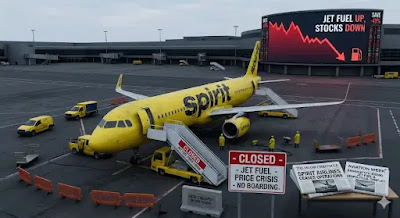
    ​Look, the biggest red flag for the US economy just hit the news cycle, and it’s a massive blow. Spirit Airlines, a massive low-cost carrier that 15,000 hardworking people called home for their jobs, has officially shut down operations. Why? Because the price of jet fuel has gone absolutely nuts. You can’t run a budget airline when the fuel alone costs more than the tickets you’re trying to sell.

    ​To be fair, Spirit was already struggling with some internal debt, but the US-Iran conflict was the final nail in the coffin for them. When oil prices spike because of “maritime tension” in the Middle East, it’s always the companies at the bottom of the food chain that feel the squeeze first. 15,000 people are now out of work right before the holidays because the cost of fuel has become impossible to manage. If a major airline with thousands of employees can’t survive this economic pressure, what chance does your local small business have? It’s a scary thought, honestly.

    Spirit Airlines bankruptcy due to rising jet fuel prices US Iran conflict 2026

    ​Ro Khanna’s $31 Billion Truth Bomb (The Math is Scary)

    ​Straight up, this is the part of the story that should make every single American household properly angry. Congressman Ro Khanna just dropped a massive truth bomb during a hearing that Trump’s team really didn’t want to answer. He asked the Defense Secretary point-blank: how much is this war actually costing the public in real dollars? The answer he found? A staggering $31 billion.

    ​When you break that massive number down into something we can all understand, it’s like a $1,000 “War Tax” slapped onto every single American family. $1,000! Think about that. That’s money taken away from your groceries, your rent, and your kids’ school fees just to fund a conflict that Iran says is “inevitable” at this point. Gas is currently sitting at an average of $4.39 a gallon, and food prices are following suit. Honestly, it’s properly grim out there for the average worker who is just trying to make ends meet while the elites talk about “geostrategy.”

    ​Iran’s “Inevitable” Warning: The End of Diplomacy?

    ​Across the ocean, Iran isn’t exactly backing down either. In fact, they’ve basically told the world that the time for talking and diplomatic handshakes is over. According to the latest reports from Al Jazeera, the Iranian military is fully prepared for the worst-case scenario because they simply believe the US government isn’t serious about any peace treaty.

    ​Iran’s deputy commander was quite blunt and didn’t mince words about it. He said the US is playing a sneaky double game—trying to keep global oil prices from falling while pretending to be the good guy at the negotiating table. But look, here is the most shocking part that the mainstream media is barely covering: A CNN investigation recently revealed that despite all the high-tech defenses and billions spent on “protection,” a majority of US military sites in the Middle East have been properly damaged by recent Iranian strikes. Trump keeps telling his base that they’re winning, but the ground reality in places like Kuwait and the Arabian Peninsula tells a completely different story.

    ​The “Piracy” Economy: Trump’s Risky Bet with Global Trade

    ​Donald Trump has been talking like a “Pirate” lately—and I mean that literally. He’s been bragging on social media and in speeches about seizing Iranian ships and literally taking their oil for the US. While that might sound “tough” or “patriotic” to his hardcore fans, it’s a total nightmare for the stability of global trade.

    ​When the world’s largest superpower starts acting like “pirates” (again, their own words!), the whole global shipping system goes into absolute chaos. Insurance rates for ships go through the roof, and the Strait of Hormuz becomes basically a ticking time bomb. If Iran decides to properly shut down that narrow passage in retaliation, that $4.39 gas is going to look like a bargain compared to what’s coming next. We are talking about potential double-digit gas prices, which would properly paralyze the entire Western world.

    Impact of $31 billion war tax on US household grocery prices 2026

    ​Why This is “Grocery Warfare” (The New Front Line)

    ​Properly speaking, we aren’t just in a cold war; we are in an era of Grocery Warfare. The wars of 2026 aren’t just won on distant battlefields with tanks and jets; they’re won (or lost) in the supermarket aisles of your hometown. When jet fuel prices skyrocket, an airline like Spirit dies. When gas prices go up at the pump, the cost of transporting bread, milk, and eggs goes up too.

    ​It’s a massive domino effect that is properly crushing the middle class. The US Treasury Secretary, Scott Bessent, keeps insisting that Iran has already lost this war and that the US has full control of the situation. But honestly? If you’re a family in America or Europe paying $1,000 extra a year just to survive the basic cost of living, does it feel like you’re winning? I don’t think so.

    ​Final Thoughts: Is There a Way Out of This Mess?

    ​The writing is properly on the wall, and it’s written in red ink. America is losing the diplomatic game, and the economic cost of staying “tough” is becoming far too heavy for the public to carry much longer. Even China is starting to lose patience, stepping in and warning that this tension needs to stop before Trump’s next scheduled visit to Beijing.

    ​Either we find a way to de-escalate this situation properly, or we’re looking at a global economic reset that absolutely nobody is prepared for. The “Amateur” days of ignoring geopolitics and thinking it doesn’t affect your wallet are officially over. If you aren’t watching the oil markets and the news from the Gulf, you’re basically flying blind into a storm.

    ​What do you reckon? Is the US actually winning this strategically, or is the $31 billion bill just the beginning of the end for the dollar’s dominance? Drop a comment below—let’s have a proper chat about it.

    Final Human-Style FAQ (Replace with this)


    Wait, why exactly did Spirit Airlines go bust? 
    Honestly, it’s a messy mix. They already had some debt, but the sudden jump in jet fuel prices from the US-Iran drama was the “final nail.” When you’ve got 15,000 jobs on the line, it’s a proper blow to the US labor market.
    Is it true that every US family is paying a “War Tax”? 
    Straight up, yes. Based on Ro Khanna’s $31 billion figure, it averages out to about $1,000 per household. That’s money that should’ve been spent on rent or groceries but is now properly vanished into inflation.

    What’s the deal with gas prices right now? 
    It’s hanging around $4.39 per gallon in the States. But look, energy experts are properly worried—if the Strait of Hormuz gets blocked, that price could double overnight. No joke.

    Is Iran actually ready to fight a full-scale war? 
    Iran has officially put their military on high alert. They reckon diplomacy has failed because they don’t trust the US to stick to treaties. It’s a sketchy situation, honestly.

    Why is China so annoyed with Trump? 
    Simple: China buys a massive amount of Iranian oil. This tension is messing with their energy supply, so they’ve warned Trump to settle things properly before his Beijing visit.

    Note: This is for educational purposes only. Not financial advice. We are not SEBI-registered.