Red Alert in the Middle East: Why This Global Slowdown Just Got a Whole Lot Worse
Look, straight up! If you are trying to understand the fresh Middle East conflict market impact during this ongoing economic downturn, you might want to hold your breath. Things just took a massive, unexpected turn overnight. For the past few days, everyone has been glued to their screens watching the high-profile funeral processions in Mashhad for Iran’s Supreme Leader. But while the world was looking at the grief on the streets, the actual global trade highway was quietly catching fire.
What we’re dealing with now extends well beyond a few political statements. This is a full-blown chain reaction that has directly hit both the seas and the mainland. First, we had those heavy reports of fighter jets dropping bombs in two separate stages near the Konarak naval zone, messing up a vital watch tower. And just when it seemed the night’s chaos was over, panic struck near the funeral crowd in Mashhad, sending people scrambling. Gunmen disguised in IRGC uniforms opened fire, leaving three security officials martyred on the spot.
To be fair, if you are running a business or trading in this market, you cannot afford to look at this as just another evening news flash. When naval bases get rattled, and a mourning nation vows official retribution, the economic shockwaves travel faster than the missiles. Things have spiraled into chaos, and the downtown market is about to face the fallout.
The Ground Reality: From Damaged Watch Towers to Mainland Chaos
To be fair, to understand why the markets are sweating, we need to properly dissect what actually went down on the ground. According to confirmed reports from Al Jazeera, the first major blow landed on the southern Iranian coastal city of Konarak. Fighter jets targeted a highly sensitive naval military zone in two distinct stages. The local governor, Mohammad Younes Haqqani, confirmed that the blasts were deafening and a critical naval watch tower was severely damaged. Sure, the US military jumped out pretty quick to deny they had anything to do with it, but let’s be real—the crazy precision of these strikes shows there’s a much bigger tactical game being played in the dark.
And then comes the crazy part. Right when millions were packed on the streets of Mashhad for the final funeral rites of Ayatollah Khamenei, chaos hit the mainland. Top IRGC commanders and family members were right there when, out of nowhere, absolute panic broke out. Attackers wearing military uniforms just started spraying bullets into the crowd, and three security guys were killed right there. Now Iran is officially shouting about taking revenge “sooner or later,” and just like that, the global risk meter has literally gone off the charts.
The Choke Point Battle: Is the Global Supply Chain About to Break?
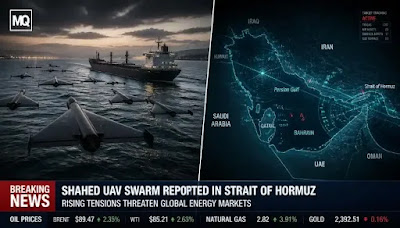
Now, look at the bigger picture from a trade perspective. The real economic highway under threat here is the Strait of Hormuz. Following the strikes, the IRGC Navy issued a stern warning stating that foreign powers have absolutely no role to play in these waters and that all transiting tankers must adhere to Iranian-designated routes.
This is exactly where the commercial nightmare kicks in. Right after the warning, U.S. Central Command (CENTCOM) put out a loud fact-check on social media, basically saying Iran doesn’t run the show in this international trade corridor. They claimed Western forces have safely escorted over 800 commercial ships carrying millions of barrels of oil through there since May.
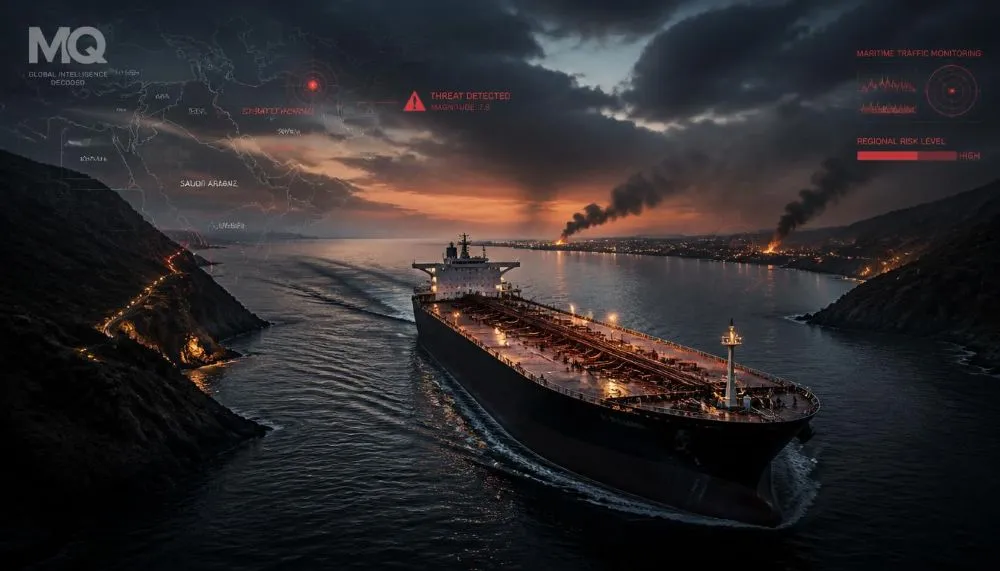
Honestly, when you have two global military powers fighting for control over a tiny Samundarii choke point that handles over 20% of the world’s petroleum, market stability goes right out the window. Shipping companies are already bracing for massive insurance premium hikes, and any forced detour around Oman means longer routes, higher fuel costs, and a massive supply chain bottleneck that will drag the global market down even lower.
The Billion-Dollar War Satta and Diplomatic Smoke & Mirrors
Honestly, if you want to know where the real money is moving during this crisis, you have to look at the defense sector. While normal retail markets are facing a heavy downtrend, weapon manufacturing firms are seeing a massive surge. Reports indicate that political figures like Donald Trump have long-standing interests tied to these massive defense contractors. It is almost like a high-stakes gambling game where global instability directly pumps up corporate stock prices.
To make things even wilder, Netanyahu reportedly called up Trump directly to warn him about new underground plots coming out of Iran. On top of that, Israel is pulling all kinds of strings behind closed doors to make sure the US blocks any major F-35 fighter jet deals with countries like Turkey, just to keep the military upper hand exactly where they want it.
But look at the double standards playing out behind the curtain. On the news, it’s all loud threats and military flexing, but the back-door diplomatic channels are spinning like crazy. Mediators are desperately trying to pull Washington and Tehran back to a quiet corner to talk things out. Even Saudi Arabia is walking on a thin wire right now—their foreign minister allegedly made two heavy calls to Iran in less than 12 hours, while the Saudi Ambassador ended a four-month silence to huddle up with top US officials like Marco Rubio. They are all low-key panicking because a total oil blockade would absolutely crush what’s left of the global economy.
The Proxy Mystery: Who Actually Pulled the Trigger?
Straight up, when the U.S. military immediately washed its hands of the latest strikes, it opened up a massive geopolitical suspense story. If Washington wasn’t directly pushing the button, then who actually rattled Iran’s naval tower? To be fair, all eyes are currently on the secret military meetings held between Kuwait and Bahrain just hours before the explosions. Since the Gulf region is packed with heavy U.S. military bases, it looks like a calculated proxy network was used to keep Washington’s hands clean. But honestly, you can’t rule out a covert, precision operation by Israel’s Mossad either, especially since they have a history of striking precisely when Tehran is completely distracted by internal affairs or national mourning. It is a classic tactical smoke screen to avoid direct blame while keeping the pressure on the global trade highway.
Final Market Verdict: What This Means for Traders
Look, straight up! Let’s put the media coverage aside for a second. As a trader or a business owner, you just need to keep your eyes glued to the actual data. When a major naval zone gets hit, and mainland security gets compromised during a high-profile funeral, market sentiment turns incredibly defensive. Gold is going to act as the ultimate haven, and crude oil prices are bound to experience sharp, volatile spikes every time a new headline drops from the Strait of Hormuz.
To be fair, we are currently stuck in a classic waiting game. On one hand, you have official statements from Iran vowing eventual retaliation, which keeps the geopolitical risk premium exceptionally high. On the other hand, the heavy diplomatic talks between the U.S., Saudi Arabia, and regional mediators suggest that a total economic shutdown might still be avoided.
Frequently Asked Questions (FAQs)
Q1. How do Middle East geopolitical conflicts directly cause a global market downturn?
Look, it is all about the energy supply lines. The Middle East houses the world’s most critical maritime corridors, like the Strait of Hormuz. When fighter jet strikes or mainland conflicts occur near these regions, shipping companies panic over security. This forces cargo ships and oil tankers to take longer alternative routes, blowing up transport costs and insurance premiums. Higher oil prices translate to heavy inflation, which ultimately triggers a severe downtrend across global retail and financial markets.
Q2. Why are defense and weapon manufacturing stocks rising while the rest of the market is down?
Honestly, it is a high-stakes corporate game. While standard consumer markets suffer from economic slowdowns during a crisis, defense contractors and weapon manufacturing firms experience a massive influx of orders. As nations prepare for prolonged military escalations or look to upgrade their defense systems, billions of dollars are funneled into these firms. This creates a massive surge in defense stock prices, making them a temporary sanctuary for heavy institutional investors.
Q3. What is the economic significance of the Strait of Hormuz for international businesses?
To be fair, you can think of the Strait of Hormuz as the ultimate global economic highway. It is a narrow choke point that handles more than 20% of the entire world’s petroleum and liquefied natural gas (LNG) supply daily. If this specific channel gets blocked or heavily restricted by maritime naval warnings, global oil supplies dry up almost instantly. For local and international businesses, this means sudden energy shortages, production delays, and a sharp dip in overall consumer market spending.
Q4. How should retail investors and traders react to sudden geopolitical spikes in a down market?
Straight up, the best move is to filter out the sensational media noise and protect your capital. When markets are highly volatile due to breaking military headlines, over-leveraging on high-risk energy stocks can completely wipe out your portfolio. A smart strategy is to look at gold as a traditional safe-haven asset, maintain healthy cash reserves, and strictly monitor shipping and logistic updates to spot long-term market trends before making major moves.