The Saturday Ultimatum: US-Iran Escalation
The Saturday Ultimatum: A Cold Analysis of the US-Iran Military Escalation
I was just sitting with my morning brew, scrolling through the latest global defense feeds, and straight up thought I was reading a Tom Clancy script. One minute, Donald Trump is tweeting about having 1,000 missiles locked and loaded to completely decimate Iranian infrastructure, and the next, he is getting kicked off a luxury Qatari mega-yacht by his own security team because it lacked proper anti-missile defense systems. You literally couldn’t make this stuff up. But if you look past the theatrical madness, something highly dangerous and clinical is playing out in the Middle East right now.
It is becoming increasingly clear that the Islamabad ceasefire agreement has broken down entirely. The US has now slapped a fresh wave of heavy economic and trade sanctions on Tehran, officially killing the memorandum of understanding (MoU). Donald Trump has drawn a hard red line, giving Iran an ultimatum until Saturday to publicly declare that the Strait of Hormuz is open for unrestricted international shipping. If they don’t comply, the US is threatening a massive, coordinated military strike.
Honestly, as analysts, we need to strip away the emotional noise and look at the hard tactical facts. This isn’t a random spike in tension; it is a calculated, multi-layered conflict involving global trade routes, nuclear upgrades, and proxy chess moves.
Decoding the Kinetic Strike on the Trans-Iranian Rail Corridor
If we look closely at the tactical operations over the past 48 hours, the most critical shift isn’t the political rhetoric, but the precise kinetic disruption of Iran’s internal transport network. Initial dispatches from the area left the exact circumstances open to interpretation. However, an objective evaluation of the logistics reveals a highly deliberate and destructive assault targeted squarely at essential transport assets within the Golestan province. The execution demonstrated clear tactical intent, effectively taking out a vital railway bridge located along the critical Tehran-Mashhad logistics pipeline.
Stripping away the propaganda, choosing this specific geographic node serves a clear strategic objective. This network stands as the core artery for the international commercial link connecting China, the Russian Federation, and the Iranian state. By physically breaking this link, the offensive forces managed to create an immediate logjam on the primary land route Tehran utilizes to move freight and evade Western naval containment.
Tehran’s retaliation tells us a lot about their current strategy—they chose immediate legal warfare over a messy military response. Instead of running to standard diplomatic channels, Iran went straight to the top, filing an official legal dispute against Washington with the International Intergovernmental Organisation for International Carriage by Rail (OTIF). They are methodically constructing a legal case to frame this as an explicit breach of international laws and a direct act of state-orchestrated infrastructure sabotage. On-the-ground damage assessments now place the toll at 17 dead and more than 115 wounded, proving that the weapons hit highly integrated logistic centers rather than empty geographic targets.
The Strait of Hormuz Chokepoint and Trump’s Dilemma
Ultimately, the entire crisis revolves around the Strait of Hormuz. It is the world’s most critical oil chokepoint, and whoever controls it holds the global economy by the throat. U.S. officials assert that Iran recently launched intentional kinetic operations against international commercial vessels in the Strait. Washington rejected Tehran’s explanation that the incidents were merely technical errors, viewing it instead as a deliberate show of force.
Trump’s Saturday deadline is an attempt to force Iran into a public retreat. He wants a formal statement from Tehran guaranteeing unhindered passage. But to be fair, Trump is also playing a dangerous game of domestic optics. His aggressive statements on X—where he swore total annihilation while oddly mixing in expressions like “Praise be to Allah”—reveal an administration desperate to mask serious internal panic with aggressive media posturing.
The Iranian Parliament isn’t backing down either. Lawmakers in Tehran are promoting the “Revenge on Trump” Act, a bill designed to create a legal obligation for the government to carry out retaliatory action against U.S. leadership. When an adversary’s parliament starts codifying targeted retaliation into state law, standard diplomacy completely exits the window.
Nuclear Shifts: The Russian Factor and Uranium Enrichment
While Washington attempts to corner Tehran using severe trade restrictions and naval positioning, the defensive response from the ground has completely altered the status quo. Iran responded by instantly accelerating its nuclear timeline. Current intelligence verifications indicate that Tehran has fully unsealed its main containment zones at primary nuclear enrichment facilities, completely stepping past the structural limits previously placed on uranium processing speeds.
This specific shift is where the broader geopolitical standoff becomes incredibly complex. Moscow didn’t stay on the sidelines; it stepped right into the frame to protect their major regional security partner. In a direct display of alliance politics, Russia deployed six of its elite nuclear and aerospace scientists back to the Bushehr nuclear power plant to jumpstart operational technicalities. This tactical deployment checks two major boxes for Tehran:
- It immediately injects specialized, top-tier engineering talent to enhance and fortify their current facilities.
- The Nuclear Shield Factor: Beyond engineering support, this presence creates a significant tactical layer. If Western or allied air operations launch a strike targeting the Bushehr complex, they face the severe risk of hitting Russian personnel. Such an outcome could instantly escalate the scenario into a direct military confrontation with Moscow.
This defensive realignment triggered a sharp debate on the floor of the United Nations Security Council. The Russian Deputy Permanent Representative, Anna Evstigneeva, took a strong stance against Western factions, directly accusing the UK, France, and Germany of standard diplomatic double standards. She pointed out that these European states openly applauded the targeting of Iranian civilian networks rather than attempting to navigate a path toward easing regional pressures.
Regional Realignment: The UAE and the Diplomatic Front
Behind the scenes, the regional alliances in the Middle East are shifting rapidly. Diplomatic friction peaked when Tehran’s foreign affairs ministry formally demanded an official explanation from the United Arab Emirates regarding its active logistical and intelligence assistance to the US-Israeli alliance. Iranian strategists classify these regional maneuvers as a direct compromise of Gulf security, injecting massive instability into local bilateral ties.
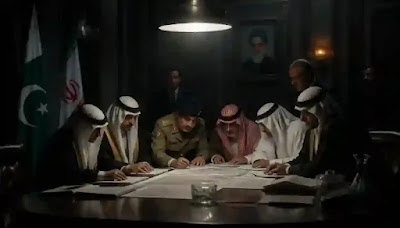
The Counter-Isolation Maneuver: To mitigate this regional pushback, Iran’s foreign policy leadership has initiated a swift diplomatic push, sending Foreign Minister Abbas Araghchi on an urgent trip to Oman. Historically, Muscat has functioned as the preferred neutral conduit for backchannel messages between Washington and Tehran. Concurrently, regional defense circles are whispering about a potential emergency four-country dialogue involving Iran, Saudi Arabia, Qatar, and the United States to balance out a new security framework. However, verified schedules and locations remain under tight wraps due to severe operational security risks.
The Ultimate Showdown: What Happens Next?
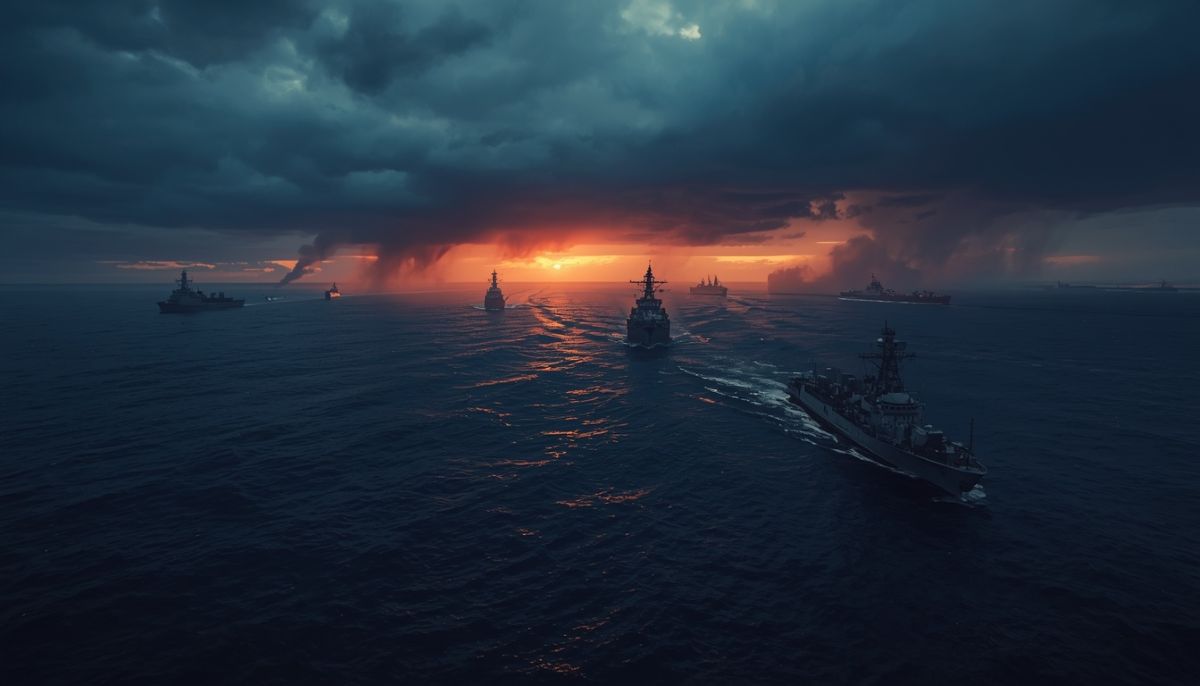
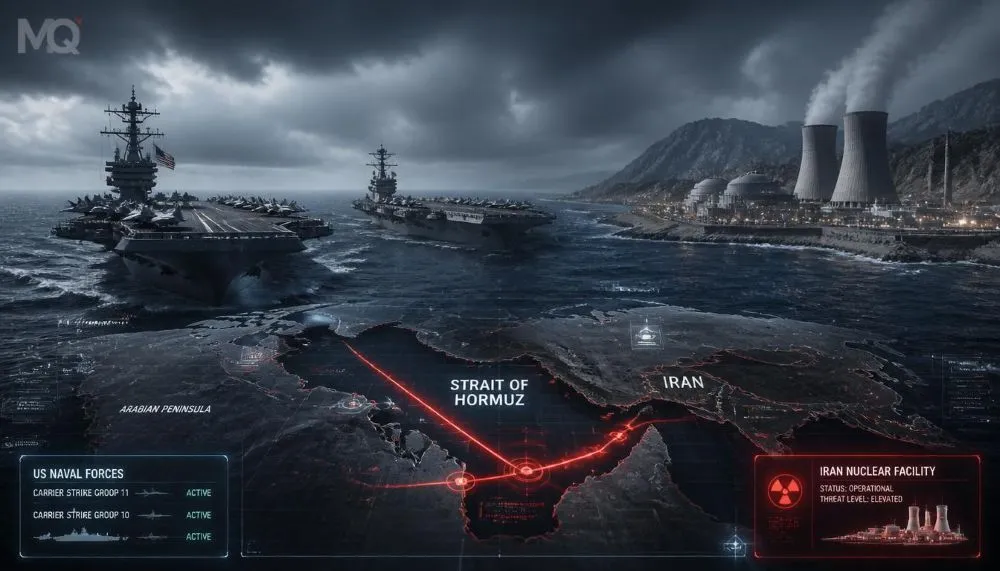
Straight up, the military layout in the region suggests that a massive escalation is already locked in place. Washington’s defense planners have arrayed a formidable naval force right at Iran’s maritime doorstep, keeping multiple carrier strike groups and a fleet of guided-missile warships on constant operational alert.
US Naval Deployment Near Iran:
• 2 Operational Aircraft Carriers (Carrier Strike Groups)
• 20+ Guided-Missile Destroyers & Support Warships
• Active Air Combat Squadrons deployed across regional bases
However, recent movements show a confusing tactical shift: a full squadron of 10 to 12 US fighter jets quietly departed from their bases in Israel. As analysts, we have to look at this with deep skepticism. This could easily be a classic military deception—a feint designed to make Tehran lower its guard before a sudden, pre-emptive strike is launched from the sea.
Properly speaking, the era of stable negotiation between these two nations is dead. Iran’s leadership has announced that they are now prepared for a full-scale, prolonged war if Washington refuses to honor the original terms of the ceasefire agreements. With the Saturday deadline expiring, the global economy is sitting on a live geopolitical powder keg.
Frequently Asked Questions (FAQ)
Q1: What is Donald Trump’s final ultimatum to Iran regarding the shipping lanes?
- Ans: The Trump administration has issued a firm deadline requiring Iran to publicly affirm that commercial vessels will retain unrestricted access through the Strait of Hormuz. Failure to do so will result in a coordinated, large-scale military offensive by the US coalition.
Q2: Was the recent disruption along the Iranian transport corridor a standard militant strike?
- Ans: No. A cold analysis of the logistics reveals that it was a highly targeted kinetic strike on a critical railway bridge in the Golestan province along the crucial Tehran-Mashhad line. The strike, which hit a massive transit node linking China, Russia, and Iran, resulted in 17 casualties and over 115 injuries.
Q3: How has Tehran legally responded to the destruction of its infrastructure?
- Ans: Iran has chosen immediate legal pushback over premature military retaliation by filing an official state complaint against Washington with the International Intergovernmental Organisation for International Carriage by Rail (OTIF), documenting it as state-sponsored sabotage.
Q4: What is the tactical purpose behind Russia deploying nuclear scientists to Bushehr?
- Ans: The deployment of six top Russian scientists serves a dual purpose. It provides immediate engineering support to scale up Iran’s uranium enrichment after unsealing its facilities, and it functions as a strategic human shield, as any Western airstrike risking Russian lives would spark a direct conflict with Moscow.
Q5: Why is there significant diplomatic friction between Iran and the UAE right now?
- Ans: Tehran has officially demanded a clarification from the UAE, accusing it of undermining regional security by providing logistical and intelligence assistance to the US-Israeli coalition during the recent military escalations.
Q6: What do the recent movements of the US carrier strike groups signify?
- Ans: The US has heavily fortified its presence near Iranian territorial waters with 2 aircraft carriers and over 20 warships. While a squadron of US fighter jets recently left Israel, analysts interpret this as a potential tactical deception to lower Iran’s guard before a maritime strike.