
Warren Buffett’s Latest Triumph: How Berkshire Hathaway’s Insurance Engine Roared Back to Life
Introduction: The 95-Year-Old Oracle Still Has It
Imagine this: It’s a crisp autumn morning in Omaha, Nebraska. The air is cool, but the world of finance is absolutely buzzing. Warren Buffett, the 95-year-old “Oracle of Omaha,” has just dropped his latest earnings bombshell. Honestly, it’s a masterclass in how to bounce back when the world thinks you’re slowing down.
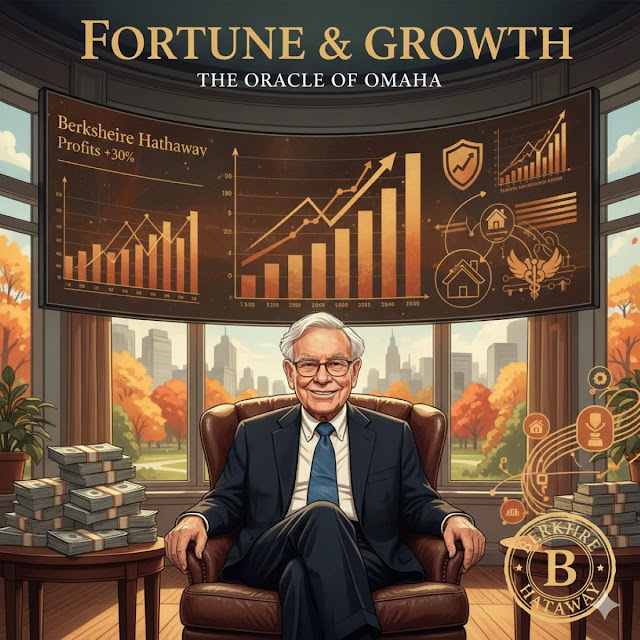
Berkshire Hathaway isn’t just chugging along—it’s roaring. On November 1, 2025, the company unveiled its Q3 results, and investors are grinning from ear to ear. Operating earnings? Up 34% to $13.5 billion. Insurance underwriting profits? They didn’t just grow; they more than tripled to $2.4 billion after a bit of a rough patch.
But look, why does this matter to you? Because in a world where everyone is chasing the next flashy AI tech unicorn or some shaky crypto moonshot, Buffett is a reminder that patience and “boring” businesses like insurance are still the ultimate money machines. This isn’t just a report; it’s a story of grit, strategy, and why long-term thinking always wins. Let’s pull back the curtain and see how the “Oracle” did it again.
The Secret Sauce: Understanding the “Float”
To really understand why Berkshire is winning, you have to understand its heartbeat: Insurance. It’s the force that keeps everything else moving.
Think of it like this: When you buy car insurance from GEICO, you pay your premium upfront. Berkshire gets that money today, but they might not have to pay out a claim for months or even years. In the meantime, they sit on that cash—Buffett calls it the float.
The Massive Number: Berkshire’s insurance float grew to a staggering $176 billion this quarter.
The Magic Trick: This is basically “free money” (or very low-cost funding) that Buffett can invest in stocks like Apple or Coca-Cola while he waits for claims to hit.
Back in Q2 2025, things looked a bit shaky. Wildfires and floods hammered the insurance arm, and underwriting profit was just $750 million. Investors were worried. Whispers started spreading: “Is Buffett finally slowing down?” Q3 has effectively ended those rumors. Mother Nature played nice, catastrophes were down, and the reinsurance unit slashed its costs. This bounce back didn’t just pad the profit; it gave Buffett even more fuel for his investment machine.
Apple: The Moat That Keeps on Giving (Even When Trimming)
Honestly, you can’t talk about Berkshire’s earnings without talking about Apple. Even though Buffett has been trimming his stake—selling about 100 million shares this quarter—Apple remains the crown jewel of his portfolio.
Think about why he loves it. It’s not about the fancy chips or the latest iPhone 17. It’s about the “moat.” Once you’re in the Apple ecosystem, you’re locked in like glue. In Q3, while hardware sales were a bit flat, Apple’s “Services” revenue (the App Store, iCloud, Apple Music) hit $25 billion.
Berkshire’s stake, which they started building in 2016 for $36 billion, was worth over $170 billion by late 2025. That’s a return of over 400%. Buffett is teaching us a lesson here: Buy quality and then just sit on your hands. He’s trimming now because he thinks the valuation is “frothy,” but he’s still Apple’s biggest fan.
The $382 Billion Question: Why the Cash Pile?
Now, here’s the part that’s making everyone on X (formerly Twitter) go absolutely crazy. Berkshire Hathaway is sitting on a record-breaking $382 billion in cash.
Think about that for a second. That is more than the GDP of many small countries. Why isn’t he spending it?
- Discipline: Buffett thinks the stock market is too expensive right now. He’s not going to buy just for the sake of buying.
- The “Fat Pitch”: He’s waiting for a market crash or an “elephant-sized” deal where he can buy a massive company at a huge discount.
- Patience: He didn’t even buy back his own shares this quarter because he felt Berkshire’s stock was a bit pricey at 1.6x book value.
Critics say he’s being overly cautious and “missing out” on the rally. But history shows that when everyone else is greedy, Buffett is fearful. And when everyone else starts panicking, that’s when he’ll deploy that $382 billion armor.
The Human Element: What Happens After Buffett?
At 95, everyone is naturally asking about succession. Greg Abel, Buffett’s hand-picked successor, is already running most of the daily operations. This Q3 report screams continuity.
Whether it’s the BNSF Railway hauling freight across America (which made $1.45 billion this quarter) or the energy giants powering millions of homes, the Berkshire machine is designed to hum along even without Buffett making every single call. No panic selling, no desperate moves. Just steady, quiet compounding.
Diving Deeper into the Insurance Rebound
Insurance isn’t sexy, but it’s Berkshire’s moat. In Q3, the Reinsurance unit (which handles massive risks for other insurance companies) was the star. They wrote more business at better rates and kept their losses low.
Imagine you’re running a small business. You want to make sure your costs are lower than what you’re bringing in. Berkshire’s “combined ratio” (losses plus expenses divided by premiums) fell into the 80s for many units. That means for every $1 they took in as premium, they kept nearly 20 cents as pure profit before even investing the money! That is a level of efficiency most insurers can only dream of.
Practical Tips: How to Build Your Own “Mini-Berkshire”
You can follow this blueprint without being a billionaire. Here is how you can apply these lessons to your own life today:
- Build Your Own “Float”: Keep an emergency fund (3-6 months of expenses) in a high-yield savings account. In 2025, these were paying around 5% APY. That is the safety net that allows you to be patient with your other investments.
- Look for Stickiness: When buying a stock, ask yourself: “Does this company have pricing power? Will customers keep coming back even if prices go up?” (Think Coca-Cola or American Express).
- Ignore the Noise: Don’t trade on tweets or daily headlines. Berkshire’s earnings rise proves that long-term thinking—looking 10 years ahead—is what actually builds wealth.
Conclusion: Compounding Quietly into 2026
In the end, Berkshire’s Q3 2025 rise isn’t just about a 34% jump in profit. It’s a testament to a philosophy that works. While tech stocks soared and crashed, Berkshire quietly built its fortress.
With $13.5 billion in operating profits and a mountain of cash, Buffett and Greg Abel are primed for whatever 2026 throws at them. The insurance bounce back proved that even after a rough patch, the machine is resilient. For the everyday investor, the message is clear: Stay patient, stay disciplined, and let the power of compounding do the heavy lifting.
Frequently Asked Questions (FAQs)
Q1: Why did Berkshire Hathaway’s insurance results bounce back so strongly?
Honestly, it was a mix of better luck with Mother Nature (fewer catastrophes like hurricanes) and much better pricing. Berkshire’s reinsurance team was able to charge higher premiums while keeping its own costs in check, which tripled its underwriting profit.
Q2: What is Warren Buffett doing with $382 billion in cash?
Look, he’s basically waiting for a bargain. Buffett is famous for being patient. He thinks the current market is too expensive, so he’s hoarding cash so he can “pounce” when there is a market crash or a massive company becomes available at a discount.
Q3: Why did Berkshire trim its stake in Apple this quarter?
Buffett still loves Apple, but he’s a value investor at heart. He felt the stock’s valuation was getting a bit high (the “froth”), so he took some profits off the table. He’d rather have that money in cash right now, earning a safe 5% interest, than risking it in an overvalued market.
Q4: Is it still worth buying Berkshire stock (BRK.B) in 2026?
If you are a long-term investor, most analysts say yes. It might not give you the 100% gains of a “hot” tech stock, but its stability and 12% average return over the years make it a great anchor for any portfolio. It’s about quiet compounding, not overnight riches.