Tag: Global Trade

  • European Markets Soar on Fed Cut and Trump-Xi Optimism

    Trump European stock traders

    European Markets Hit Record Highs: The Power of a Fed Cut and a Global Handshake

    At the start of 2025, when we’d see the FTSE 100 smashing records by October, I might have told you to dream on. It felt like a never-ending stream of bad news and expensive living. But here we are, and it’s a proper sight to behold. Imagine waking up on October 29, 2025, switching on your phone, and seeing your trading app glowing green across the board. It wasn’t just a “good day” at the office; it was a full-blown celebration across European trading floors. The UK’s FTSE 100 didn’t just edge higher—it charged through a record high of 9,785.54. It felt like the market finally found its second wind after a long, breathless year of uncertainty.

    ​So, what exactly lit this fire under the market? Look, it wasn’t just one lucky break. It was a “Perfect Storm” of two massive global events that happened almost at the same time. We had the US Federal Reserve finally deciding to cut interest rates again, and then, across the globe, a high-stakes meeting between Donald Trump and Xi Jinping in Busan, South Korea. For months, everyone—from big institutional investors to regular folks—had been biting their nails, worrying about trade wars and high borrowing costs. But on this specific Tuesday, the pressure valve finally released. Let’s cut through the corporate jargon and see how this “Double Whammy” of good news has basically reshaped your portfolio overnight.

    ​The Fed’s Rate Cut: More Than Just a Number

    ​Look, whenever the US Federal Reserve moves, the whole world feels the vibration. It’s just how the financial game works. On October 29, the market was betting big—99% certainty, to be fair, that Jerome Powell and his team would cut rates by another 25 basis points. And when the news finally dropped, moving the range to 3.75%-4.00%, it felt like a massive weight was lifted off the shoulders of the global economy.

    ​You might ask, why does a cut in Washington matter so much in London, Paris, or Frankfurt? To be fair, it’s all about the US Dollar. When US rates drop, the dollar often loses its “muscle” and gets a bit weaker. Now, for us over here in Europe, a weaker dollar is basically like a “Discount Coupon” for exporters.

    ​If you’re a German carmaker like Mercedes or a French luxury giant like LVMH, selling your goods to Americans, your products suddenly become much more affordable for them. Not only that, but your profits—when you convert those dollars back into Euros or Pounds—look properly fat on the balance sheet. This rate cut wasn’t just a one-off event; it was the second of the year, and it signaled that the “High Interest Era” is finally cooling down. For the Stoxx 600, which represents the top 600 companies in Europe, this news was pure, high-octane rocket fuel.

    ​The Trump-Xi Summit: Handshakes over Headlines

    ​While the Fed was handling the money side of things, Presidents Trump and Xi were busy handling the “Geopolitical Chessboard” in South Korea. Straight up, the trade war between the US and China has been the biggest “Handbrake” on the global economy for years. It’s been a constant source of anxiety, with tariffs flying back and forth like verbal grenades.

    ​But on October 29, 2025, the whole narrative shifted. Instead of “Tariffs,” the world started talking about “Talks.” There were whispers of a “Preliminary Consensus,” which is basically a posh way of saying a truce.

    • The Soybean Surge: China agreed to buy massive amounts of US soybeans, which is huge news for ag-tech and global shipping.
    • The Tariff Pause: The US agreed to pause those scary 100% tariffs that were supposed to hit everything from electronics to toys in November.

    For Europe, this trade “thaw” means one thing: Stability. Our massive mining companies, like Glencore, saw their shares jump over 6% in a single session. Why? Because they know that if the US and China are actually talking, the demand for copper, iron ore, and nickel is going to skyrocket. When the big two stop fighting, the rest of the world can finally stop holding its breath and start growing again.

    Winners and Losers: Who Stole the Show?

    ​In a rally this big, honestly, not everyone wins at the same level. On October 29, we saw some proper “Standout” performers that carried the rest of the market on their backs.

    The Champions of the Day:

    • Mining & Resources: Glencore (+6.2%) and Rio Tinto led the sector. With copper hitting record highs on the London Metal Exchange, these companies are basically sitting on a gold mine (literally and figuratively).
    • ​Retail & Consumer Goods: Shares of Next plc rose 7.3% after it lifted its profit forecast.

       It turns out that even with the cost-of-living squeeze, people are still finding a bit of extra cash to spend on quality.

    • Healthcare: Big Pharma wasn’t left behind either. GSK (+3.7%) rode the wave of optimism as its specialty medicine sales hit new peaks for the quarter.

    The Laggards:

    • Telecom & Defence: When investor confidence increases, funds often rotate from defensive sectors into growth-oriented assets. These sectors lagged behind the rest, simply because people were feeling brave enough to chase higher returns elsewhere. It’s a classic swing in investor mindset.

    The “John Deere” Connection: A Lesson in Global Trade

    ​Think back to how John Deere performed in early 2024. When trade talks between the U.S. and China fell apart, Deere & Company stock plunged—what’s the reason? Because farmers couldn’t export their crops, they stopped buying expensive tractors. Simple as that.

    ​But on October 29, 2025, we saw the exact opposite happen. Because of the “Soybean Deal” rumors coming out of the Busan summit, every agriculture-linked stock across Europe started to glow bright green. It’s a classic, “Human-First” reminder: a simple handshake in South Korea can literally change the life of a farmer in France or an investor sitting in a London coffee shop. Everything in this global market is connected by invisible threads.

    From Defensive to Aggressive: How to Ride the Risk-On Wave

    ​If you’re looking at these record highs and wondering if you’ve properly missed the boat, here’s some “helpful friend” advice to keep you grounded while you navigate these choppy waters:

    1. Don’t Chase the Peak: The FTSE is at a record high, which is exciting, sure. But remember the old market saying: “Buy the rumor, sell the fact.” Once the summit details are officially signed and sealed, some big investors might take their profits and run. Don’t be the person buying at the absolute top.
    2. Focus on Cyclicals: If trade relations continue to improve, sectors like Mining, Industrials, and Luxury Goods are where the real growth is hidden. These are the companies that thrive when the global economy is actually moving, and people are trading again.
    3. Watch Jerome Powell Like a Hawk: The Fed cut was great news, but his press conference hints about December are even more important. If he sounds “Dovish” (meaning he thinks more cuts are coming), this rally could easily last through the Christmas holidays.
    4. Hedge Your Bets: To be fair, don’t dump all your gold just yet. While it dipped below $4,000 on the day, geopolitics is a fickle beast. One bad tweet or a leaked memo can flip the market back into “Fear Mode” in a matter of seconds. Stay diversified.

    ​Conclusion: A Breath of Fresh Air

    ​Wrapping it all up, October 29, 2025, wasn’t just a good day for the FTSE 100; it was a clear signal that the global “Gloom” is finally lifting. Between the Fed’s cheaper money and the Trump-Xi trade truce, the path for European markets looks clearer than it has in years. We are finally moving away from a world of “What if everything goes wrong?” to asking, “What if things turn out better than expected?

    ​What’s your take on all this? Are you loading up on mining stocks while the iron is hot, or are you waiting for the official summit signatures before making a move? Drop a comment below and let’s navigate these record-breaking waters together. Stay savvy—the bulls are definitely back in town, and it’s a proper sight to see.

    FAQ

    Why did the FTSE 100 hit a record high on October 29, 2025?
    Honestly, it was a “Perfect Storm” of two things: the US Federal Reserve cutting interest rates (which helps global liquidity) and a massive de-escalation in US-China trade tensions following the Trump-Xi summit in Busan.
    How does a US Fed rate cut help European companies?
    Look, when US rates drop, the US dollar usually weakens. This makes European exports much cheaper and more competitive in the global market. Plus, lower rates globally make stocks look much more attractive compared to boring bonds.
    What was the “Preliminary Consensus” in the Trump-Xi summit?
    Early reports suggested that China agreed to buy massive amounts of US agricultural products (like soybeans), while the US agreed to pause those scary new tariffs. This “thaw” in trade wars was huge for European mining and manufacturing sectors.
    Which sectors should I watch after this market rally?
    Miners and industrial companies are the big winners when trade tensions ease. Healthcare and retail (like Next and GSK) are also performing well due to their strong internal earnings.
    Is it safe to invest when the market is at an all-time high?
    To be fair, while record highs are a sign of strength, “savvy” investors are always a bit cautious. It’s often better to look for quality companies that haven’t fully “popped” yet or wait for a small dip before putting all your cash in.

    Note: This is for educational purposes only. Not financial advice. We are not SEBI-registered.
  • How Businesses Adapt to Trump’s 2025 Tariffs

     
    Donald Trump with U.S. tariffs charts

    Trump’s 2025 Tariffs: Why Your Favorite Brands are Hiking Prices (and Still Winning)


    ​Honestly, look, if you’ve been scrolling through the news lately with your morning tea, you probably saw something a bit weird. Everyone is talking about President Trump’s new tariffs—those big taxes on stuff coming into the country—but the stock market isn’t exactly crashing. Usually, when costs go up like this, people panic. But right now? It’s like businesses are in a proper survival mode. And they’re actually finding ways to thrive.

    ​The early quarterly earnings for late 2025 are finally starting to roll in. They’re telling a story that isn’t just about boring policy. It’s about how much your sneakers or your favorite soap are going to cost you. Companies are being hit with billions in extra costs. But instead of folding, they’re just passing those bills straight to us. Let’s break down what’s actually happening behind those corporate doors.

    ​The Big Squeeze: What’s the Damage?

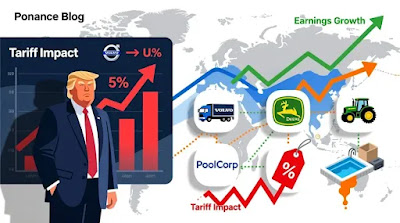
    ​Straight up, the numbers are massive. After Trump resumed office and pushed tariffs higher—some hitting 60% on Chinese goods—companies have taken on more than $35 billion in additional costs. That’s a massive hole in any budget.

    ​But here’s the thing: companies aren’t just sitting there crying about it. They’re moving fast. Some are moving their factories to other countries. Some are cutting staff. But almost everyone is raising prices.

    ​Take a look at Unilever. Their range stretches from Dove soap all the way to Ben & Jerry’s. They were impacted by higher packaging costs. Their fix? They just raised their prices. And guess what? People still bought their stuff. Their sales actually went up because they focused on “premium” versions of things. It’s a clever trick—make it feel fancy, and people won’t mind the extra 50p as much.

    ​The Winners and the Losers

    ​To be fair, not everyone is having a great time. John Deere, the tractor people, had a properly rough quarter. Their profits dropped by 25%. Why? Because the steel and electronics they need are way more expensive now. Farmers are already struggling, so they aren’t exactly rushing to buy a million-dollar tractor. Deere had to lay off over 2,000 workers just to stay afloat. It’s a tough row to hoe, literally.

    ​On the flip side, you’ve got Volvo. They’re being taxed for bringing cars into the US from Europe. Their response? Fine, we’ll make them in the U.S. instead.” They’re moving production to states like South Carolina to sidestep the taxes. It’s a high upfront cost, but long-term, it saves them millions. Their profit margins actually jumped by 7 points because they cut other costs so aggressively.

    ​Then you’ve got niche winners like PoolCorp. They sell pool supplies. When their suppliers raised prices because of tariffs, PoolCorp just flipped that bill to the customers. Since people who own pools usually have a bit of spare cash, they kept paying. Their margins hit nearly 30%. It shows that if people really want what you’re selling, tariffs are just a bump in the road.

    ​Why Your Wallet is Feeling the Pinch

    ​Look, someone has to pay for these tariffs. And it’s usually us. Goldman Sachs thinks US consumers will shoulder about 55% of these costs. For an average family, we’re talking hundreds of extra pounds or dollars every year on gadgets, clothes, and groceries.

    ​Small businesses are feeling it even worse. Some say their costs jumped 20% overnight. Unlike a giant like Apple or Adidas, a small shop can’t just move a factory to Vietnam. They either have to raise prices and hope for the best or just lose money. It’s a proper squeeze.

    ​The Masterclass in Agility

    ​So, why are these CEOs sounding so happy on their earnings calls? It’s because they’re using these tariffs as an excuse to get “leaner.”

    ​For example, Adidas raised its profit targets even though sneakers are being taxed. How? They got way faster at moving stock. They aren’t letting shoes sit in warehouses for months anymore. By being more efficient, they’re making up for the extra tax they pay at the border.

    Hasbro, the toy company, did something even smarter. Instead of just worrying about plastic toys coming from China, they pushed their digital games. You can’t put a tariff on a digital download! Their gaming wing grew by 25%, helping them survive the physical trade war.

    What This Means for You

    ​As a shopper, you’ve got to be a bit more careful now. You’re going to see “sticker shock” on a lot of things. If you’re planning a big purchase—like a new car—it might be worth looking at where it’s actually made. Stuff made closer to home might stay a bit cheaper.

    ​For investors, the lesson is clear: bet on the adapters. Companies that can shift their supply chains or raise prices without losing their customers are the ones that are going to win. The old way of just importing everything from the cheapest factory in Asia is dead for now.

    The Road Ahead to 2026

    ​To be fair, most experts think things will settle down by 2026. Companies are locking in new deals with suppliers in India, Mexico, and Vietnam. It’s a massive reshuffling of the global economy. It isn’t easy, but it’s happening.

    ​But if tariffs go even higher—say, hitting 100%—then we might see some real chaos. For now, the Q3 2025 earnings show that big business is a lot tougher than people thought. They’re passing the bill to us. They’re cutting waste. And they’re moving production closer to home.

    ​Final Thoughts (No Jargon)

    Let’s be real—the economy is in a pretty unusual spot. But it’s not all doom and gloom. Yes, things are getting pricier. And yes, some sectors like agriculture are hurting. But the speed at which businesses are pivoting is actually quite impressive.

    ​Whether you’re a shopper, a small business owner, or just someone trying to understand why your favorite brand of soap suddenly costs more, the answer is in these earnings. It’s a new normal. We’re all just learning to live in it. Keep an eye on those labels. And maybe check out some local brands—they might just become your new favorites while the global giants sort out their mess.

    The months ahead will be the real proving ground. Will we keep paying these higher prices? Or will we start cutting back? Only the next quarter’s numbers will tell for sure. At the moment, the big names are still standing tall. Even if the air is getting a bit thinner.

    FAQ 

    Are Trump’s tariffs making things more expensive in 2025?

    Honestly, yes. Consumers are absorbing roughly 55% of the tariff costs. You’ll likely see a 5-10% jump in prices for electronics, clothing, and packaged goods.

    How are companies like Volvo avoiding tariff costs?

    To be fair, they aren’t escaping them altogether, but they are shifting where production happens. Volvo is moving more manufacturing to the US to bypass import taxes, which helps keep its margins steady.

    Which industries are struggling the most with tariffs?

    Agriculture and heavy machinery are taking a proper hit. Companies like John Deere have seen profits drop because the steel and parts they import are way more expensive now.

    Is the stock market still a good buy during trade wars?

    Straight up, it depends on the company. Investors are currently betting on “adapters”—companies that have the power to raise prices or move their supply chains quickly.

    Note: This is for educational purposes only. Not financial advice. We are not SEBI-registered.


  • India Youth Dividend: Digital Earning Realities

     The Demography Leverage: Decoding the True Earning Expectations Across India’s Youth Market


    highlighting age distribution

    Let’s confront the raw macroeconomic reality before evaluating optimistic retail employment surveys: trying to scale a career inside a fiercely competitive developing economy while navigating structural training gaps has turned into an absolute vocational minefield for the younger generation. The historic routine of assuming a university degree guarantees high-yielding corporate income streams has officially run its course. Straight up, the massive influx of over 600 million individuals entering the 18-to-35 age bracket has completely rewritten the domestic labor market playbook.

    ​Honestly, it makes you realize how incredibly calculated you need to be when looking at broad demographic statistics splashed across optimism polls. Let’s bypass the standard administrative spin and pick apart the exact infrastructure and digital shifts driving current wealth expectations, completely discarding the typical institutional marketing chatter.

    ​ Auditing the Dividend: Median Age Pressures vs. Market Optimism

    ​To be perfectly fair, parsing through independent data sets is the absolute quickest way to separate genuine economic leverage from structural workplace friction. The baseline demographics present an incredibly expansive human resource engine: with a national median age landing right at 28.4 years, the physical volume of the young workforce functions as a primary driver of long-term macro growth.

    ​Yet, this demographic bulge introduces an intense operational paradox. While a historical Gallup poll highlighted that 57% of individuals under the age of 25 maintained high confidence regarding localized job placements, the ground reality requires intense upskilling. The confidence isn’t coming from traditional corporate hiring stability; it is being fueled by an aggressive shift toward digital self-reliance, alternative lending channels, and distributed global freelancing networks that completely bypass legacy domestic placement desks.

                                        [ POPULATION SYSTEM DYNAMICS ]
                   │
                                           ┌─────────┴─────────┐
                                           ▼                                                    ▼
                  ┌─────────────┐     ┌─────────────┐
                  │            28.4 MEDIAN │     │ 600M BULGE            │
                  └─────────────┘     └─────────────┘
                               Generates a                     Creates hyper
     
                               rapid micro                     competition for
                               talent supply                   high-yield tracks

     Structural Friction: Balancing High Expectations Against Underemployment

    ​Look, evaluating an economic landscape requires balancing high ambitions against clear labor market bottlenecks. The transition into high-paying modern roles is heavily bottlenecked by deep institutional mismatches.

    • The Unemployment Ceiling: The Periodic Labour Force Survey (PLFS) recorded an explicit 12.9% unemployment rate for the 15-to-29 age bracket, a metric that sits substantially higher than the broad national average.
    • The Readiness Deficit: Global tracking data from UNICEF indicates that roughly 47% of the youth demographic is currently off-track to secure the technical competencies required for standard modern corporate roles by 2030.
    • The Margin Squeeze: The gap between educational attainment and available local opportunities remains a defining challenge in many rural communities, driving persistent underemployment among skilled workers.
    • The Living Cost Pressure: The combination of inflation, housing costs, and everyday expenses is generating continuous financial pressure, leading many young professionals to rethink traditional approaches to career and income generation.

    To counter these specific bottlenecks, public infrastructure pushes like the Skill India initiative are working to realign vocational training with actual market requirements, while flexible gig logistics ecosystems are acting as a temporary income buffer for those transitioning between career tracks.

    The Digital Transition: Retail Investing and Alternative Capital Access

    ​To be perfectly honest, the real foundation for this generational optimism stems from the total democratization of modern digital infrastructure. Access to low-cost mobile connectivity has completely altered how wealth is generated and managed across major metropolitan hubs.

    ​Wealth Generation App Integrations (Gen Z Adoption Metrics)

    Digital Channel Profile

    Primary Operational Utility

    Market Share Vector

    Structural Leverage

         Discount

         Brokerages

         Equities & 

     Fractional ETFs

    Controlled by

     Retail Gen Z

    Early capital accumulation

         Alternative 

         Lending

    Instant Business 

    Micro-Loans

    2.5% of Total 

    Retail Loans

    Bypasses

    The digital economy is rapidly transforming the way early wealth is safeguarded, challenging long-standing assumptions about financial security and asset protection. Verified analytics from the Boston Institute of Analytics show that younger retail market participants are deploying capital into index-tracking funds at a much younger age than previous generations, establishing an early equity base.

    ​Simultaneously, alternative digital lending systems have opened up micro-capital pathways for small-scale independent business operations. Financial market statements show that low-income households are utilizing decentralized credit applications to fund self-directed service ventures, effectively transforming small-scale hustles into sustainable secondary income streams.

    Modern Upskilling and the Decentralized Global Job Market

    ​The modern shift toward specialized execution has triggered a massive boom across digital learning infrastructures. Educational models are increasingly prioritizing targeted skill development and modular certifications to improve responsiveness to changing economic and technological conditions. Data from global learning platforms reveal that 98% of younger learners dedicate at least one hour per week to self-directed career upskilling, focusing intensively on technical domains like artificial intelligence, cloud logistics, and digital marketing.

    This is for educational purposes only. We are not financial advisors. Results may vary based on your individual debt situation.

                                     [ THE GLOBAL FREELANCE CORRIDOR ]
                       │
                                      ┌──────────┴──────────┐
                                      ▼                                                          ▼
    ┌───────────────┐     ┌───────────────┐
    │              LOCAL INCOME  │     │ GLOBAL DEVISE │
    └───────────────┘     └───────────────┘
         Constrained by                                    Arbitrage via
         regional wage                                     international
         scaling caps                                     service contracts

    This massive commitment to continuous training directly unlocks international service arbitrage. By leveraging distributed freelancing platforms, young independent specialists are securing direct contracts with international clients, earning hard currencies while working remotely. This decentralized layout completely insulates them from regional corporate hiring freezes and local salary caps.

    Institutional Tailwinds: Overhauling the Production Pipeline

    ​Let’s be real about the long-term structural shifts happening across the domestic landscape. The old way of force-feeding kids textbook definitions is getting pushed out because of newer legal updates like the National Education Policy 2020. This framework is specifically built to tear down legacy rote-learning templates, forcing schools to pivot toward analytical problem-solving setups and direct industry-mapped credits.

    ​At the same exact time, multi-billion-dollar production pushes like the Make in India corridor and the Startup India infrastructure are actively throwing capital at local manufacturing zones and early-stage tech incubators. Once programs such as Pradhan Mantri Mudra Yojana are layered on top of broader workforce and education reforms, the result is a more integrated approach to helping individuals move from skill acquisition to business creation and income generation. is building a rough foundation. It basically forces young professionals to stop waiting around for standard campus placements and pushes them straight into independent job creation.

    The Verdict

    ​Look, nobody is saying that a 12.9% youth unemployment rate isn’t a massive structural bottleneck. Finding a high-paying standard corporate desk job is still an absolute nightmare. But honestly, the widespread availability of instant digital credit, direct access to global freelancing platforms, and continuous online upskilling proves that the younger crowd doesn’t need to beg legacy recruiters for a slot anymore just to unlock their actual earning power.

    ​Navigating this ecosystem successfully simply means you have to look straight past the polished institutional brochures, double down on highly specialized technical execution, and exploit decentralized platforms to grab your financial share.

    ​What do you reckon about the shifting macro job landscape? Are you planning to sit around waiting for traditional corporate hiring tracks to open up, or are you actively deploying digital credit and remote global contracts to insulate your personal portfolio? What’s your take? Post your thoughts below, and let’s examine the argument from every angle.

    Savers’ Corner: Real Answers to Shaky Money Questions


    ​Why does a high youth unemployment rate co-exist with intense generational financial optimism?

    ​Straight up, the confidence has nothing to do with standard factory or corporate hiring indices. While traditional openings remain completely jammed, the rapid expansion of the digital credit footprint, micro-lending apps, and global remote contracts allows anyone with a laptop to manufacture independent income streams out of nowhere.

    ​How does the National Education Policy 2020 impact future corporate salary expectations?

    ​To be perfectly blunt, it attacks the core academic lag that leaves graduates completely useless during practical operations. By prioritizing immediate technical execution and modular industry credits over basic textbook memorization, it completely slashes the corporate onboarding and training bills, which allows younger candidates to demand much higher base pay from day one.

    ​Can alternative digital lending models safely replace traditional banking credit for small business starters?

    ​Let’s face it, digital credit apps give you crazy speed and completely bypass the impossible collateral loops that traditional banks demand, making them highly effective for launching quick micro-ventures. However, independent operators have to be extremely smart here—letting these short repayment windows or steep platform rates spiral will instantly wipe out your early operating margins.

  • UK-EU Money Flow Explained


    Infographic showing the flow of funds from the UK to the EU budget, highlighting contributions, rebates, and money returning to the UK through programs like CAP and regional funds.

    What Happened to the Money the UK Contributed to the EU? (A 2025 Deep Dive)

    ​Honestly, if I had a pound for every time someone argued about the “£350 million a week” for the NHS back during Brexit, I’d probably be retired by now! Look, the financial relationship between the UK and the European Union (EU) was properly complex. For years, the UK contributed billions, but where did that money actually go?

    ​As of May 15, 2025, we can look back with a bit more clarity. Was it all just subsidies for other countries, or did the UK actually see some of that cash come back home? For my readers in India, this is a brilliant case study in how regional blocs—like SAARC or BIMSTEC—manage shared budgets.

    ​1. The UK’s “Gross” vs. “Net” Contributions

    ​Properly speaking, the UK was one of the largest net contributors to the EU budget. This means we paid in much more than we got back in direct funding.

    ​In 2018, for example, the UK’s gross contribution was about £20.0 billion. That sounds like a massive mountain of cash, doesn’t it? But several things reduced that number:

    • The UK Rebate (The Fontainebleau Abatement): Back in 1984, Margaret Thatcher secured a deal because the UK wasn’t getting enough back from farming subsidies. This rebate saved the UK billions every year before the money even left the country.
    • Direct Receipts: The EU sent money back to the UK for various projects (more on that in a bit).

    ​Between 2016 and 2019, the actual net contribution (the money that actually stayed in Europe) was around £7–7.5 billion per year. Still a lot of money, but a far cry from the “gross” headlines we used to see.

    ​2. How Was the Money Spent? (The Subsidy Game)

    ​The EU budget isn’t just one big pot of gold; it’s divided into specific categories. When the UK was a member, our money supported several EU-wide goals:

    Common Agricultural Policy (CAP)

    This is the big one. CAP used to take up nearly 40% of the entire EU budget. It provides subsidies to farmers to make sure food prices stay stable and farmers stay in business. While it helped food security, it was always a hot topic of debate because some countries (like France) benefited much more than the UK.

    Cohesion Policy (ERDF & Cohesion Fund)

    This money is used to reduce the gap between rich and poor regions in Europe. It funds roads, bridges, and business startups in developing parts of the EU. Straight up, this is how the EU tries to make sure the whole continent grows together.

    Research and Innovation

    A good chunk of the budget went into programs like Horizon 2020. This funded massive scientific breakthroughs in health, tech, and green energy. To be fair, UK universities were world leaders in getting these grants.

    ​3. Domestic Spending: The “Recycled” Money

    ​While the UK was paying in, it was also “recycling” a lot of that money back into its own regions. In 2018 alone, the UK received £4.5 billion back for domestic use.

    • Cornwall and Wales: These regions were some of the biggest winners. The European Regional Development Fund (ERDF) funded broadband expansion and local business hubs that wouldn’t have happened otherwise.
    • Farmers in Scotland and England: They received billions in CAP payments to keep their farms running.
    • The European Social Fund (ESF): This helped with job training and social inclusion projects in struggling towns across the country.
    So when everyone started wondering, “Where is our money?” the answer was often: “It’s building a new bridge in Wales or training a nurse in Manchester.”

    4. The Brexit Shift: What Changed After 2020?

    ​On January 31, 2020, the UK officially left the club. This ended the regular weekly and monthly contributions to the EU budget. No more membership fees!

    ​But, as they say, “there’s no such thing as a free lunch.” The Brexit Withdrawal Agreement included a “Divorce Bill” (financial settlement) of about £30–35 billion. This covers things like pensions for EU staff and projects the UK had already signed up for. These payments might actually continue into the 2060s!

    ​Key Fact: While the UK saves about £9 billion annually by not contributing, this “saving” is often balanced out by the new costs of trade and the loss of those EU grants we used to get.

    ​5. Lessons for India and Regional Blocs

    ​For Indian readers, the UK-EU story is a lesson in Economic Cooperation. India works with organizations like BIMSTEC and SAARC. While India doesn’t have a shared “EU-style” tax yet, the idea of wealthier nations supporting regional development is a concept India uses through its aid and credit lines to neighboring countries.

    ​Properly speaking, being part of a bloc means you pay for the “market access” and “stability.” The UK decided the price was too high, but for many other nations, the benefits of shared subsidies and research still outweigh the costs.

    ​6. Investment and Economic Outlook in 2025

    ​Now that we are in May 2025, we can see the impact of this domestic spending shift. The UK government has launched the UK Shared Prosperity Fund to replace the old EU money.

    ​Honestly, the results are a bit mixed. Some regions feel they are getting less than they did from the EU, while others prefer local control. From a finance perspective, the UK is now more “master of its own wallet,” but it also has to fund everything—from farming to scientific research—completely on its own.

     Frequently Asked Questions (FAQ)

    1. Does the UK still pay anything to the EU in 2025?

    To be fair, yes, but not as a “membership fee.” The UK pays for specific programs it wants to be part of, like Horizon Europe (for science). Plus, we are still paying off that “Divorce Bill” for past obligations.

    2. Did the £350 million a week actually go to the NHS?

    Honestly? It’s complicated. While the UK isn’t sending that money to Brussels anymore, the economy has faced other costs due to Brexit. The government has increased NHS funding, but whether it’s exactly that “EU saving” is a matter of fierce debate among economists.

    3. Why did the UK get a “Rebate” while others didn’t?

    Properly speaking, it was because the UK had a very small farming sector compared to countries like France. Without the rebate, the UK would have been paying a massive amount of money and getting almost nothing back. It was a deal made to keep things “fair” in the 1980s.

    The Bottom Line:

    ​The UK’s financial relationship with the EU was never just a one-way street. We were a net contributor, yes, but that money supported our own farmers, built our infrastructure, and funded our best scientists. Post-Brexit, the UK is learning to manage its own “domestic recycling” of funds. It’s a massive experiment in financial independence that the whole world—including India—is watching closely.

    I’m curious—do you think regional blocs like the EU are the future of the global economy, or is “going it alone” like the UK a smarter move for the long term? Let’s talk in the comments!

    Note: This is for educational purposes only. Not financial advice. We are not SEBI-registered.


  • Tech Earnings: Mega cap Margins under AI Spending

     The Megacap Ledger: Dissecting the Balance Sheet Pressure Points Inside Modern Technology Earnings


    Tracking technology earnings metrics data

    ​Let’s confront the raw macroeconomic reality before evaluating optimistic consumer spending metrics: trying to scale global computing ecosystems and targeted digital advertising networks while balancing extreme infrastructure build-outs has turned into an absolute financial minefield for modern technology investors. The historic assumption that a tech conglomerate clearing its quarterly top-line revenue targets makes the underlying asset an automatic buy has officially run its course. Straight up, the massive capital consumption required to transition experimental AI frameworks out of corporate laboratories and into high-margin enterprise clouds has completely rewritten the market valuation playbook.

    ​Honestly, it makes you realize how incredibly cautious you need to be when looking at broad earnings forecasts splashed across financial news feeds during peak reporting weeks. Let’s bypass the standard corporate marketing chatter and pick apart the exact accounting mechanics inside the latest reporting cycles, completely discarding the typical institutional spin.

    S&P 500 Concentration Risk: Measuring Exposure in a Period of Macroeconomic Stress

    ​To be perfectly fair, parsing through megacap balance sheets is the absolute quickest way to separate genuine enterprise demand from speculative software hype. When you have nearly 160 S&P 500 corporations reporting within a fixed five-day window, the operational updates from elite $3 trillion entities dictate broad market direction.

    ​The broader macroeconomic environment introduces serious systemic friction, ranging from shifting international tariff frameworks to raw supply chain re-allocations. For consumer hardware developers, these balance sheets reveal how deep global purchasing power tracks across high-tier electronics. For digital advertising giants, the numbers serve as an immediate proxy for global corporate marketing budgets, showing exactly how much cash enterprises are willing to allocate toward targeted user engagement tunnels.

                                   [RETAIL ENTERPRISE EXPOSURE MATRIX ]

                                                                        │

                                         ┌──────────┴──────────┐

                                         ▼                                                          ▼

                         ┌───────────────┐     ┌───────────────┐

                          │ CONSUMER COR  │                 │ DIGITAL AD VEC│

                         └───────────────┘     └───────────────┘

                                    Hardware Sales,                           Tracks Systemic


                                    Service Margins,                          Corporate Spend


                                   & Upgrade Cycles                        & AI Ad Targets

     Apple’s Fiscal Metrics: Services Growth vs. Hardware Replacement Drag

    ​Look, evaluating a premier consumer hardware pipeline requires looking straight past historical sentiment to isolate recurring high-margin cash flows. The upcoming financial statements covering the opening calendar quarter track a highly specific operational transition.

    • The Bottom-Line Baseline: Institutional models pin the fiscal second-quarter earnings per share targets within a strict $1.60 to $1.61 window, shifting slightly up from the $1.53 logged during the previous year’s matching period.
    • Prior Reporting Performance: The enterprise reported earnings per share of $2.40 in its most recent reporting cycle, finishing ahead of consensus projections by approximately 1.7%.
    • The High-Margin Anchor: Services infrastructure—including App Store fees, cloud subscriptions, and media processing—remains the key margin driver, building on a prior $26.34 billion quarterly revenue footprint that expanded 14% year-on-year.
    • The Hardware Variable: Forward performance rests entirely on international replacement cycles for mid-tier consumer updates like the newly deployed iPhone 16e alongside refreshed M4 silicon architecture.

    The deepest structural focus remains tied to geographic performance. Analysts are scrutinizing baseline hardware sales across cooling Asian markets, tracking whether direct supply adjustments and expanded assembly operations can offset local competitive losses.

    Meta’s Infrastructure Bet: Ad Optimization and Capital Expenditures

    ​To be perfectly honest, the real anxiety across digital advertising platforms is no longer tied to basic user metrics but to the massive expense structures required to process modern social layers. The quarterly projections show an intense push to monetize attention via machine learning optimizations.

    Digital Platform Operational Estimates (Q1 Financial Benchmarks)

    Corporate Identifier Profile

    Projected Revenue Bounds

    Expected Per-Share Value

    Active Core Asset Variable

    Meta Platforms (META)

    $39.5B – $41.8 Billion

    $5.22 – $5.24 Expected EPS

    AI ad-targeting conversions

    Market trend lines tech charts


    This revenue target follows a high-velocity fourth-quarter close where the firm posted a massive $8.02 EPS on $48.39 billion in absolute sales, supported by an immediate 21% surge in ad monetization. While the opening quarter routinely hits a seasonal cooling block, current expectations trace daily active user metrics to a tight 3.29 billion to 3.31 billion baseline.

    The central issue for institutional investors is the company’s capital spending commitment. The firm’s capital allocation strategy calls for $60 billion to $65 billion in infrastructure spending this year, reflecting a significant commitment to expanding custom server farms and advanced computing capacity. This massive investment forces public markets to question when these experimental labs will generate non-GAAP profits that justify the ongoing cash burn.

    The Guidance Trap: Analyzing the Executive Conference Calls

    ​Bypassing the polished graphics inside the corporate investor relations deck is the absolute fastest way to spot real executive uncertainty. Sophisticated analysts look straight past the past-quarter summaries and focus entirely on the forward guidance boundaries set during the live conference broadcasts.

                               [ CONFERENCE CALL SCREENING PARADIGM ]

                                                                      │

                                       ┌──────────┴──────────┐

                                       ▼                                                          ▼

                     ┌───────────────┐     ┌───────────────┐

                       │ TARIFF CLAUSE │                   │ AD INFLECTION │

                     └───────────────┘     └───────────────┘

                          Track management                         Monitor margin


                            commentary on                              payback times


                             border costs and                            on high-cap server


                            assembly shifts                                infrastructure

    For hardware operations, look for explicit commentary tracking international border friction and component assembly updates. For network platforms, track the exact monetization rates of mixed-reality products alongside the precise margin payback times on high-capacity server chips. If management hides behind broad technical milestones without giving clear timeline visibility, institutional desks will routinely offload blocks of equity before the trading session opens.

    The Verdict

    ​At the end of the day, matching consensus per-share estimates means absolutely nothing if your underlying margins are getting chewed up by multi-billion-dollar processing farms or stalling device upgrade cycles. The megacap playbook serves as a cold warning for retail portfolio managers: momentum can sustain massive tech valuations through a busy reporting week, but long-term equity stability requires real, sustainable free cash flow. Navigating this landscape successfully simply requires you to track raw corporate guidance numbers, look straight past the sci-fi promotional spin, and structure your entries with strict position limits.

    ​What do you reckon about the massive technology investment cycles? Are you planning to lock down your cash until these infrastructure spending waves show clear operational profits, or do you view the current pre-report market swings as a prime opportunity to build positions in global consumer assets? Post a message down below and let’s get a proper conversation going!

    Savers’ Corner: Real Answers to Shaky Money Questions


    ​Why do tech stocks often dip immediately after beating both revenue and earnings expectations?

    ​Honestly, the open market trades entirely on forward-looking expectations rather than past performance. If an enterprise beats its quarterly metrics but drops soft forward guidance or reveals expanding infrastructure expenses for the upcoming cycle, institutional desks will immediately reprice the asset down to protect their capital.

    ​How do service segments insulate consumer hardware corporations from manufacturing slowdowns?

    ​To be perfectly fair, it comes down to predictable recurring margins. Physical device sales are highly cyclical, relying on expensive supply chains and unpredictable consumer upgrade habits, whereas cloud storage subscriptions, media ecosystem fees, and app marketplace cuts deliver highly stable, high-margin revenue streams that keep flowing even when device shipments stall.

    ​Should retail investors avoid megacap tech equities entirely due to high index concentration risks?

    ​Look, complete avoidance isn’t necessary if you execute disciplined asset allocation rules. Megacap technology giants hold unmatched pricing power and massive cash reserves, making them essential anchors for a growth-oriented portfolio, but they must be balanced by low-cost diversified index funds to keep localized supply chain shocks from derailing your broader wealth base.

    This is for educational purposes only. We are not financial advisors. Results may vary based on your individual debt situation

  • Market Outlook: Jobs Data & Tech Earning

     The Macro Calibration: Dissecting Tariff Shocks, Non-Farm Payroll Targets, and Megacap Processing Thresholds


    Tracking market volatility trends


    ​Let’s confront the raw industrial reality before evaluating optimistic weekly market summaries: trying to hedge a cross-border equity portfolio while navigating sudden state-trade penalties has become an absolute valuation minefield for modern asset managers. The historical assumption that a modest upward drift in benchmark indices signals a permanent market recovery has officially run its course. Straight up, the deep structural volatility triggered by sweeping import duties has completely rewritten the technology and macro investment playbooks.

    ​Honestly, it makes you realize how incredibly cautious you need to be when looking at broad corporate earnings projections splashed across financial dashboards. Let’s bypass the standard administrative spin and pick apart the exact data metrics guiding the current trading window, completely discarding the typical institutional marketing chatter.

    Auditing the Volatility: Tariff Adjustments and Index Corrections

    ​To be perfectly fair, parsing macro timeline charts is the quickest way to distinguish genuine market stability from temporary liquidity adjustments. The early-winter capital landscape took an immediate hit when sweeping, sudden import duties triggered a massive institutional offloading block.

    Risk assets experienced a severe repricing event, with the S&P 500 retreating into correction territory and the Russell 2000‘s small-cap cohort falling nearly 20%, signaling a pronounced deterioration in market sentiment. from historical peaks. While a subsequent 90-day administrative reduction down to a 10% baseline tariff boundary—excluding direct logistics networks out of China—helped orchestrate a temporary mid-month rebound, structural anxiety remains incredibly tight. Institutional portfolios are keeping entry sizes small, forcing short-term capital allocations to rotate away from consumer discretionary lines and head straight into protective holdings.

                                                [ MACRO SHOCKWAVE TIMELINE ]
                                                                                 │
                                                     ┌─────────┴─────────┐
                                                    ▼                                                     ▼
                                      ┌─────────────┐     ┌─────────────┐
                                      │ EARLY APRIL           │     │ MID-MONTH            │
                                      └─────────────┘     └─────────────┘
                                             10% S&P Drop                     90-Day Policy
      
                                              20% Russell                          Reduction Down
      
                                              Bear Market                           To 10% Bounds

     Asset Flow Analysis: Index Trajectories and Commodity Market Pivots

    ​Look, evaluating broad equity performance requires looking past daily price spikes to analyze underlying macro indicators. The broad tracking numbers showcase a highly fragmented landscape where commodities are thoroughly outperforming traditional consumer infrastructure.

    • S&P 500 Baseline: Consolidated a modest 2% recovery block to trade near the 5,525.21 threshold, attempting to absorb early monthly losses.
    • NASDAQ Composite: Logged a minor 1.26% weekly lift but sits at a deep 16% deficit year-to-date, pinned down by high-multiple technology adjustments.
    • Dow Jones Industrials: Stalled out with a flat 0.05% change, leaning on legacy defense and utility weights to maintain a 40,113.50 base.
    • Crude Oil Inventories: Slid down to a clean $60 per barrel boundary, marking its lowest absolute trading level since 2021 over deep industrial demand fears.
    • Precious Metals Bullion: Safe-haven accumulation forced physical gold spot pricing straight past the historic $3,000 per ounce marker as macro funds moved out of paper equities.

     The Megacap Earnings Matrix: Processing High-Multiple Projections

    ​To be perfectly honest, the current tracking session functions as the ultimate test for premium tech valuations. With nearly three-quarters of the S&P 500 managed blocks managing to scrape past baseline earnings targets via paper adjustments, the focus shifts to actual operational margins inside cloud computing and advertising pipelines.

    ​Tech Sector Infrastructure Projections (Q1 Financial Estimates)

    Corporate Entity Profile

    Expected Per-Share Value

    Core Enterprise Focus Vector

    Prior Sector Catalyst Baseline

    Alphabet (GOOG Array)

    $2.02 Forecasted EPS

    Cloud scaling & ad targeting

    General tech sector cushion

    Microsoft (MSFT Core)

    $3.23 Forecasted EPS

    AI computational integration

    Cloud infrastructure demand

    Meta Platforms (META)

    $5.24 Forecasted EPS

    Monetization under tariff changes

    User active conversion spikes

    Amazon (AMZN Web)

    $1.37 Forecasted EPS

    AWS margins & supply chain buffers

    Logistics capital efficiency

    This premium processing group faces an incredibly high bar set by early sector reports. While network streaming platforms like Netflix recorded a solid $6.61 EPS compared to the $5.69 market estimate, hardware-dependent auto manufacturers like Tesla hit a wall, logging a deep miss at $0.27 EPS against $0.43 projections due to a sharp 20% contraction in raw automotive revenue pipelines.

    Labor Market Realities: The Upcoming Non-Farm Payroll Test

    ​The underlying momentum of the entire domestic marketplace remains completely tied to the upcoming macro labor reports. The incoming non-farm payroll tracking print serves as the final arbiter for central banking interest rate expectations.

                                                [ LABOR MARKET INPUT SCALING ]
                                                                                │
                                                 ┌──────────┴──────────┐
                                                 ▼                                                         ▼
                              ┌───────────────┐     ┌───────────────┐
                                  │ HISTORIC CORES│               │ CURRENT BOUND │
                              └───────────────┘     └───────────────┘
                                          228,000 Jobs                                4.2% Base Rate
     
                                          Added: Stable                               Testing Tariff
     
                                       Payroll Foundation                          Pressure Points

    While the previous logging cycle showed apparent job market strength with 228,000 net payroll additions alongside a stable 4.2% unemployment tracking base, the sudden injection of supply chain tariffs has complicated things. If the upcoming jobs report reveals sudden contractions inside logistics, shipping, or retail personnel departments, the Federal Reserve will face massive pressure to adjust its liquidity path, regardless of where tech earnings land.

    The Verdict

    Market rallies can obscure deeper vulnerabilities. A 2% weekly increase in the S&P 500 offers little comfort if sudden tariff revisions are eroding corporate margins and raising operating costs. and collapsing global shipping demands. The market recovery playbook serves as a cold warning for modern retail asset managers: momentum can sustain artificial tech valuations for a brief trading block, but long-term equity survival requires looking past daily price fluctuations to track raw data pipelines. Navigating this sector successfully simply requires you to lock down your position sizes, monitor core industrial energy indicators, and ignore the superficial corporate hype.

    ​What do you reckon about the current macro volatility? Are you planning to lock your capital inside protective gold and utility positions until the state tariff disputes are fully settled, or do you view the post-correction pricing dips as the perfect entry window to scale into mega-cap cloud infrastructure? Post a message down below and let’s get a proper conversation going!

    Savers’ Corner: Real Answers to Shaky Money Questions

    ​Why does small-cap equity value track deeper into bear markets during international tariff alerts?

    ​Honestly, small-cap corporations lack the multi-billion-dollar cash cushions and alternative global supply networks that multinational giants deploy. They rely entirely on localized supply lines and near-term credit, which makes them highly vulnerable to sudden cross-border shipping delays and domestic inflation shocks.

    ​How do physical gold spot values break past historic records when equity indices show short-term recoveries?

    ​To be perfectly fair, institutional funds don’t buy physical bullion because of past-quarter metrics; they accumulate it as a structural shield against terminal currency risks and unhedged policy flip-flops. Even when stocks tick up on temporary tariff pauses, macro portfolios continue to funnel cash into safe-haven gold to insulate their wealth from long-term inflation vectors.

    ​Should portfolio review timelines accelerate during sudden trade infrastructure shifts?

    ​Look, while nearly 58% of global capital managers maintain a strict quarterly rebalancing protocol, sudden policy-induced volatility requires instant risk auditing. You don’t need to overreact to daily price spikes, but manually reviewing your concentration boundaries keeps your capital base from getting wiped out by single-sector corrections.

    This is for educational purposes only. We are not financial advisors. Results may vary based on your individual debt situation.

  • US Palm Oil Tariffs: Malaysia Supply Risks

     The Palm Oil Matrix: Assessing Sovereign Tariff Shockwaves, Market-Share Reallocations, and Customs Exemptions

    US Palm Oil Tariffs: Malaysia Supply Risks


    Evaluating raw agricultural commodity portfolios during aggressive cross-border trade transitions requires looking straight past retail sentiment charts to map real processing lines. The historical routine of tracking surface-level corporate announcements has officially hit an institutional wall. Straight up, the massive protective taxation mechanisms deployed to reshape international supply chains have completely rewritten the global logistics playbook.

                      [ THE TARIFF FLUCTUATION FLOW ]

                                                        │

                            ┌─────────┴─────────┐

                           ▼                                                     ▼

                 ┌─────────────┐     ┌─────────────┐

                │        APRIL 2025         │     │          DEC 2025         │

                 └─────────────┘     └─────────────┘

                            24% Initial                              1,711 Lines  


                            Reciprocal Tax                        Fully Exempt 


                           Shockwaves Hit                      CPO Secures  


                         Sovereign Hubs                     Complete Relief

     The Tariff Tempest: Auditing Early 2025 Reciprocal Trade Barriers

    ​To be perfectly fair, running an independent audit on bilateral customs entry rates is the absolute quickest way to separate genuine supply friction from superficial market panic. The global commodity pipeline absorbed a severe shock when the administration dropped its individualized reciprocal tariff framework under the “Liberation Day” executive decrees.

    • The Initial Malaysian Penalty: Outbound palm oil shipments heading from Malaysian ports initially ran straight into an aggressive 24% flat tariff wall.

    • The Indonesian Barrier: Primary regional competitor Indonesia faced an even steeper 32% defensive tariff levy due to its larger goods trade surplus with Western ports.

    • The Escalation Loop: Following initial friction, the baseline penalty on Malaysian industrial goods briefly spiked up to a 25% ceiling in August 2025 before intense trade bargaining forced a reduction down to 19%.

    • The Strategic Plan: Policymakers adopted a broad 10% tariff baseline for countries outside designated target groups, while imposing tailored tariff rates on nations with sizable trade imbalances relative to the United States.

     Competitive Cross-Border Dynamics: Tracking Regional Supply Volume Shields

    ​Look, parsing through international commodity logs requires balancing historical market share numbers against sudden regulatory cost distortions. Before the trade friction reshaped shipping priorities, the structural distribution of the US palm oil import market was heavily dominated by a single regional powerhouse.

    ​Southeast Asian Palm Oil Trade Exposures (Pre-Exemption Benchmarks)

    Sovereign Production Hub

    Initial April Tariff Rate

    Historical US Import Market Share

    2024 Trade Valuationto theo US

    Indonesia Core


    32% Protection Cap


    85% Dominant Position


    ~$18 Billion Surplus Base


    Malaysia Infrastructure


    24% Reciprocal Duty


    10% Strategic Slice


    Over RM3.5 Billion Export Vol

    The structural 8% tariff differential initially created a complex arbitrage tracking matrix. While Malaysia’s lower 24% entry barrier theoretically offered an immediate pricing edge to attract Western buyers looking to dodge Indonesia’s 32% penalty, the absolute volume discrepancy made a total market rotation impossible. Indonesia’s massive production capacity allowed its processing clusters to absorb deep margin cuts or rapidly redirect crude volumes into high-capacity alternative destinations like China and India, completely altering global spot pricing.

     The December Breakthrough: Structural Customs Exemptions and Market Relief

    ​To be perfectly honest, looking at short-term tariff shockwaves without tracking the underlying trade negotiation timelines is a massive operational blunder. The volatile landscape facing Malaysian plantation assets shifted entirely during the closing weeks of the 2025 fiscal cycle.

                       [ POST-NEGOTIATION COMPLIANCE FRAMEWORK ]

                                                                            │

                                             ┌──────────┴──────────┐

                                              ▼                                                       ▼

                                ┌────────────────┐     ┌────────────────┐

                                │   1,711 SURVIVOR         │       │     EUDR TIMELINE        │

                                │       TARIFF LINES         │       │       ONE-YEAR DELAY  │

                               └────────────────┘        └───────────────┘

                                         Palm oil secured                              Large operators.  


                                         complete relief                                 secured buffer   


                                         from 19% duties,                            extending to ’26 

    US Palm Oil Tariffs: Malaysia Supply Risks

    Following intense, multi-round bilateral bargaining, the Ministry of Investment, Trade and Industry secured an absolute breakthrough. A comprehensive trade agreement explicitly exempted 1,711 critical tariff lines from the final 19% import tax, covering roughly $5.2 billion in commercial goods.

    ​By completely removing crude palm oil (CPO) from the active tax net, the sector breathed a massive sigh of relief, stabilizing spot values right near RM4,000 per tonne and preserving the economic lifelines of over 450,000 independent smallholders.

    4. Macroeconomic Spillover: GDP Retractions and Strategic Rebalancing

    ​The long-term fallout from global protectionist spikes continues to weigh heavily on overall macroeconomic planning metrics despite the localized commodity exemption. Because the US market commands a massive 11.3% slice of Malaysia’s total consolidated trade volume, broad industrial manufacturing clusters—particularly in heavy hubs like Penang and Johor—absorbed significant friction before the tax exclusions were finalized.

    ​The sudden trade shock forced institutional central bank desks to execute an immediate defensive downgrade on domestic expansion expectations. Bank Negara Malaysia officially revised its 2025 GDP growth target range down to a tighter 4.0%–4.8% band, down from the highly optimistic 4.5%–5.5% framework modeled before the global tariff surge.

    ​To build a permanent shield against future Western trade volatility, state commerce teams are aggressively accelerating alternative free trade pacts with the European Union and the Gulf Cooperation Council.

    The Verdict

    ​At the end of the day, the dramatic sequence from a sudden 24% tariff shock to a total year-end customs exemption proves that raw political headlines rarely dictate long-term commodity values. The reality of modern cross-border logistics serves as a cold warning for independent asset managers: momentum can tank a commodity stock over a single weekend based on protectionist threats, but Enduring business competitiveness depends on navigating geopolitical realities while maintaining highly effective operational processes. Navigating this volatile trade landscape successfully simply requires you to look straight past superficial media panic, monitor regional processing inventories, and focus your capital inside highly adaptable supply chains that maintain verified sustainable certifications.

    ​What do you reckon about the massive shift toward customized reciprocal tariffs? Are you planning to keep your capital anchored safely inside domestic defensive assets until these sovereign free trade agreements are fully signed, or do you view the recent 1,711 line custom exclusions as a prime signal to buy the dip across globally integrated agricultural and technology networks? Post a message down below and let’s get a proper conversation going!

    Savers’ Corner: Real Answers to Shaky Money Questions

    ​Why do global commodity buyers struggle to replace Malaysian palm oil even when steep tariff penalties are enforced?

    ​Honestly, it comes down to absolute chemical utility and rigid manufacturing constraints. High-volume industrial sectors—including commercial food production, cosmetics, and advanced biofuels—cannot easily substitute palm oil with alternative seed oils without completely rebuilding their processing infrastructure and altering product formulations, forcing buyers to absorb the entry costs.

    ​How does a temporary freeze in environmental compliance rules provide a secondary buffer for trade logistics?

    ​To be perfectly fair, it provides a vital operational breathing window. When global bodies execute extensions—such as the European Parliament approving a one-year deferment on the EU Deforestation Regulation (EUDR) out to late 2026—large-scale exporters secure an immediate reduction in compliance paperwork, keeping trading lanes completely clear while markets process tariff shocks.

    ​Should unhedged equity portfolios avoid export-reliant manufacturing hubs during active trade negotiations?

    ​Look, running a complete structural exit is usually an uncalculated panic move that leaves massive recovery gains on the table. While initial tariff announcements drive sharp currency dips and freeze private investment growth, the subsequent deployment of targeted trade deals routinely unblocks locked cargo pipelines, delivering immediate valuation rebounds for disciplined long-term holders.

    This is for educational purposes only. We are not financial advisors. Results may vary based on your individual debt situation

  • US Secondhand Fashion: $56B Market Boom

     The Resale Ledger: Dissecting Post-Tariff Consumer Retractions, Textile Capital Squeezes, and Digital Fashion Reallocations


    Tracking secondary fashion resale metrics data


    Evaluating retail asset trajectories during aggressive cross-border trade policy adjustments requires looking straight past consumer sentiment charts to map real processing lines. The historical routine of tracking surface-level retail store performance has officially hit an institutional wall. Straight up, the massive protective taxation mechanisms and supply chain bottlenecks reshaping international manufacturing lines have completely rewritten the apparel investment playbook.

    [ THE APPAREL LIQUIDITY CHANNEL ]
                                       │
           ┌─────────┴─────────┐
           ▼                                                  ▼
    ┌──────────────┐    ┌──────────────┐
               PRIMARY TAX                      DECENTRAL      
    └──────────────┘    └──────────────┘
                  Import Tariffs                      $56 Billion  
     
                 Squeeze New                      Resale Target
      
                 Apparel Margins                  Corridor ’25 

     The Secondary Market Surge: Tracking the $56 Billion Valuation Base

    ​To be perfectly fair, running an independent verification of retail-sector outperformance metrics is the absolute quickest way to separate genuine structural consumption shifts from superficial consumer hype. The secondary domestic apparel ecosystem has rapidly transformed from a fragmented niche network into a high-density asset class, with consolidated market valuations projected to hit a massive $56 billion threshold.
    ​The Expansion Differential: Outbound data models track the online resale sector expanding at a rapid 14% baseline, systematically outperforming the broader traditional clothing market by a factor of five.
    ​The Digital Resale Velocity: High-frequency logging shows independent digital resale applications absorbing a sharp 23% surge in transactional volume, completely outpacing traditional retail growth tracks.
    ​The Demographic Concentration: Institutional allocation desks track an aggressive 71% structural preference within younger consumer demographics for online circular platforms over physical brick-and-mortar storefronts.
    ​The Forward Projection Matrix: Forward-looking tracking charts pin the dedicated online resale infrastructure to hit an absolute $40 billion valuation mark by 2029, logging a compounding 13% annual growth velocity.

     Supply Chain Friction: Global Textile Waste and Fast-Fashion Saturation

    ​Look, parsing through international logistics corridors requires balancing high-velocity fast-fashion import metrics against the extreme structural waste overhead generated by traditional manufacturing cycles. Global production lines currently drop a staggering 92 million tons of unabsorbed textile waste into international disposal systems every single year, driving severe systemic compliance costs across global manufacturing hubs.

    ​American Digital Apparel Platform Trajectories (Pre-Tariff Benchmarks)

    E-Commerce Platform Profile

    Primary Market Positioning Vector

    Consolidated Web Traffic Weight

    Core Logistic Vulnerability

    Fast-Fashion Aggregators (Shein)


    Low-price, high-cycle trend runs


    Highest sector traffic density


    Direct cross-border tax checks


    Logistics Heavyweights (Amazon)


    Massive product variety base


    High-velocity delivery grids


    Component sourcing visibility


    Discount Designer Channels


    Off-price premium brand lines


    Moderate stock retention loops


    Inventory liquidation backlogs

    Market trend lines retail charts
    The intense consolidation of web traffic across low-tier direct-to-consumer digital applications has historically been driven by loose import protocols. However, as global supply chain networks absorb increasing tracking friction, these high-volume, low-margin business models are hitting immediate operational capacity caps, forcing procurement desks to recalculate their long-term inventory valuations.

    ​ The Tariff Catalyst: Assessing Protective Import Taxes and Consumer Pivots

    ​To be perfectly honest, looking at secondary resale platforms without calculating the concurrent impact of upcoming sovereign trade penalties is a critical accounting error. The underlying economic fuel driving the massive reallocation of consumer capital into pre-owned asset classes stems directly from the implementation of defensive import duties on new finished goods.
    [ POST-TARIFF REALLOCATION TUNNEL ]
                                           │
            ┌──────────┴──────────┐
            ▼                                                       ▼
    ┌───────────────┐     ┌───────────────┐
             NEW APPAREL                        CIRCULAR RESALE     
            COST INFLATION                      APPLICATIONS         
    └───────────────┘     └───────────────┘
             Tariffs drive                                 59% Segment.    
      
             double-digit                                 Pivot Target   
     
             retail spikes                                 Deflects Taxes 
    The statistical data extracted from sector logistics logs reveal an intense consumer behavior shift. A definitive 59% of tracked consumer units state that they will completely halt new apparel purchases and shift their capital straight into secondary platforms, the exact moment import penalties inflate primary retail price lines.
    ​Analytical projections indicate that a uniform implementation of trade barriers will trigger an immediate 11% automatic surge in alternative circular sales, as domestic consumers utilize secondary markets to completely insulate their household budgets from sovereign customs penalties.

     Operational Resiliency: Corporate Integration and Brand Valuation Defense

    ​Let’s face it, allowing an apparel brand portfolio to navigate an environment of rising manufacturing costs without installing a dedicated secondary circular logistics platform is a recipe for rapid margin destruction. Securing a sustainable long-term premium out of a retail enterprise requires a highly calculated approach to inventory lifecycle management before supply shocks freeze your primary production lines.
    ​Major corporate setups are aggressively transitioning toward blended business structures, setting up internal buyback initiatives and white-label resale channels to capture secondary transactional fees on their own physical goods. By partnering with centralized resale networks, legacy brands can systematically protect their underlying asset valuations, monetize the full lifecycle of their products, and build out a highly resilient recurring buffer that remains insulated from international trade disruptions and supply chain spikes.

    The Verdict

    ​At the end of the day, a projected $56 billion secondary market valuation proves that the structure of modern consumer spending is undergoing a profound structural reallocation. The reality of 92 million tons of textile waste and incoming double-digit import tariff walls serves as a cold warning for independent retail portfolio managers: momentum can sustain low-margin fast-fashion networks through a brief consumer trend cycle, but long-term enterprise survival requires highly efficient, circular logistics channels. Navigating this changing marketplace successfully simply requires you to track raw customs clearing policies, monitor corporate inventory-to-sales ratios, and lock your capital inside highly adaptive digital platforms that thrive on resource scarcity.
    ​What do you reckon about the massive expansion of the secondary apparel matrix? Are you planning to keep your discretionary investment capital safely on the sidelines until international trade lines settle down, or do you view the current 59% consumer tariff pivot matrix as an unmissable tactical window to scale your exposure into global circular commerce networks? Post a message down below and let’s get a proper conversation going!

    Savers’ Corner: Real Answers to Shaky Money Questions

    ​Why do secondary resale platforms outpace traditional retail growth metrics during high-inflation macro cycles?
    ​Honestly, it comes down to instant cost-arbitrage availability. When inflation and import tariffs drive up the shelf price of newly manufactured goods, consumers face immediate purchasing power compression, forcing them to redirect their capital toward pre-owned digital marketplaces where they can access top-tier brands at a massive structural discount.
    ​How do direct-to-consumer fast-fashion models absorb more serious financial damage from cross-border trade disputes?
    ​To be perfectly fair, it is a matter of margin geometry. Low-cost direct shipment models rely entirely on low baseline tariff rules to move thousands of low-margin packages daily. The exact second a state installs strict reciprocal customs checks or removes low-value tax exemptions, the raw administrative compliance bills wipe out the platform’s core pricing advantage.
    ​Should portfolio strategic frameworks completely avoid fashion conglomerates that lack circular integration?
    ​Look, running a complete exit depends entirely on the brand’s pricing power. Corporate entities that rely solely on cheap offshore manufacturing and high-volume turnover face intense downside risks during a trade conflict, whereas premium luxury operators can safely pass down tariff costs to their consumers without experiencing catastrophic demand destruction.

    This is for educational purposes only. We are not financial advisors. Results may vary 

    based on your individual debt situation

  • US-India FTA: Tariff & Deficit Barriers

     The Bilateral Friction: Decoding Tariff Barriers, Deficit Pressures, and Sovereign Trade Treaty Deadlocks


    Illustration showing US-India handshake symbolising trade partnership

    ​Let’s confront the raw industrial reality before evaluating optimistic cross-border shipping charts: trying to manage a multinational trade portfolio while balancing complex state treaty deadlocks has turned into an absolute valuation minefield for modern supply chain managers. The historic routine of assuming cross-border freight moves under a simple preferential trade layout has officially run its course. Straight up, the aggressive transition required to replace legacy import duties with an integrated, comprehensive bilateral free trade framework has completely rewritten the international logistics playbook.

    ​Honestly, it makes you realize how incredibly cautious you need to be when parsing through statutory border valuations splashed across trade bulletins. Let’s bypass the standard corporate marketing chatter and pick apart the exact accounting mechanics inside modern trade treaty negotiations, completely discarding the typical institutional spin.

    Auditing the Scale: The Massive Target Metrics Inside Cross-Border Pipelines

    ​To be perfectly fair, looking directly at the statutory effective numbers is the absolute quickest way to separate genuine operational demand from political trade rhetoric. The structural scale of the trade relationship across these two massive index heavyweights presents an incredibly steep adjustment curve for global logistics networks.

    ​During high-level planning sessions on February 17, 2025, both administrations committed to an expedited six- to eight-month negotiation process intended to deliver a fully developed treaty framework. The forward target is stratospheric: attempting to double total cross-border capital velocity straight up to a massive $500 billion ceiling by 2030. This structural push aims to completely transform historical goods exchange baselines, which logged an absolute total of $129.2 billion during the 2024 tracking cycle.

                                     [ THE BILATERAL GOAL TIMELINE ]

                                                                      │

                                          ┌─────────┴─────────┐

                                          ▼                                                   ▼

                        ┌─────────────┐     ┌─────────────┐

                        │ ACTUAL 2024 │                     │ TARGET 2030 │

                         └─────────────┘     └─────────────┘

                               $129.2 Billion                     $500.0 Billion

                              Baseline Goods                    Forward Macro

                             Trade Velocity                      Volume Cap

     Understanding the Deficit Gap: Net Outflows, Trade Balances, and Tariff Policy

    ​Look, evaluating an international trade portfolio requires looking straight past superficial administrative briefs to calculate the true operational friction. The systemic trade imbalance remains a primary pain point for sovereign treasury offices, driving intense demands for expanded market access.

    • The Trade Gap Baseline: The United States maintains a substantial net trade deficit with the Indian domestic market, buying far more goods than it exports.
    • The Export Ceiling: The 2024 tracking ledger shows US goods exports flatlining at a minimal $41.8 billion baseline, despite a minor 3.4% annual tick upward.
    • The Inbound Surplus: Conversely, outbound shipments heading back into Western ports surged up to a dominant $87.4 billion marker, expanding 4.5% year-on-year.
    • The Net Deficit Imbalance: This massive divergence leaves Washington staring straight down a deep $45.6 billion trade deficit gap that current treaty talks are desperately trying to balance out.

    ​To be perfectly honest, clearing this trade gap is an absolute nightmare due to defensive tariff fortifications. High-tier automotive assets entering the subcontinental market face a staggering 100% flat tariff wall, while heavy agricultural lines absorb similarly steep protections. To blunt these entry costs, negotiators are pushing for phased, multi-year tariff reduction schedules to protect sensitive domestic industries while gradually expanding baseline logistics competitiveness.

     High-Potential Sector Allocations: Sourcing Shifts and Arbitrage

    ​The global transition toward decentralized supply chains has forced international procurement desks to search for high-capacity manufacturing centers that can hedge against trade conflicts elsewhere. The real leverage of a comprehensive treaty rests on unlocking specific high-potential industry corridors.

    ​Bilateral Market Access Opportunities (Sector-Specific Yields)

    Industry Cluster Profile

    Western Procurement Focus

    Domestic Export Velocity Vector

    Primary Regulatory Bottleneck


    Advanced Information Tech

    Cloud networks & AI systems

    Distributed engineering teams

    Skilled immigration visa loops

    Generic Pharmaceuticals

    High-volume medical access

    Streamlined generic drug flows

    Intellectual property rules

    Heavy Textiles & Apparel

    Diversified consumer retail

    Vibrant cotton garment volume

    High baseline tariff schedules

    To be properly fair, managing these sector integrations isn’t a simple low-level paperwork adjustment. Beyond raw cash tariffs, international shipments face immense non-tariff barriers—including strict sanitary and phytosanitary certifications that routinely freeze agricultural cargo like spices or fruit at incoming customs gates.

                                       [ DISCONNECTED REGULATORY BARRIERS ]
                                                                                  │
                                                   ┌──────────┴──────────┐
                                                  ▼                                                          ▼
                    ┌────────────────┐     ┌────────────────┐
                         │ INTELLECTUAL   │              │ NON-TARIFF     │
                         │ PROPERTY DISP  │               │ PROCEDURES DRAG│
                    └────────────────┘     └────────────────┘
                              High-tier pharma                            Sanitary safety
                              controls versus                                fencing stalling
                              generic access                                 freight flows

     Operational Risk Management: Intellectual Property and Labor Standard Friction

    ​Let’s face it, allowing a corporate expansion plan to step into a multi-billion-dollar foreign market without auditing localized legal frameworks is a recipe for catastrophic asset write-downs. Securing a genuine financial premium out of a free trade treaty requires resolving intense structural disagreements over regulatory sovereignty.

    ​The most deep-seated friction sits directly inside the intellectual property arena. Western developers are demanding iron-clad, high-tier enforcement protocols to protect proprietary pharmaceutical formulations. However, local regulatory bodies view these rigid controls as a direct threat to affordable generic healthcare manufacturing. When you combine that friction with conflicting stances on environmental standards and flexible labor market rules, the execution timeline routinely faces severe administrative delays.

    The Verdict

    ​At the end of the day, a massive $129.2 billion baseline in goods trade proves that the economic link between these two heavyweights is too large to ignore. However, the reality of 100% tariff blocks and deep intellectual property stalemates serves as a cold warning for modern asset managers: momentum can sell a prospective treaty breakthrough for a few trading sessions, but real corporate profit margins require signed, verified legal frameworks. Navigating this changing trade landscape simply requires you to look past the superficial diplomatic brochures, track raw cross-border shipment values, and structure your allocations inside highly resilient, diversified asset classes.

    ​What do you reckon about the massive bilateral trade projections? Are you planning to keep your capital parked safely in domestic safe havens until this $500 billion trade pact actually gets ink on paper, or do you view the ongoing term-of-reference negotiations as a prime window to scale exposure into emerging technology and manufacturing corridors?

    Savers’ Corner: Real Answers to Shaky Money Questions

    ​Why do bilateral trade negotiations demand phased tariff reductions instead of immediate flat cuts?

    ​Honestly, dropping high protective barriers overnight completely exposes sensitive domestic industries to aggressive foreign competition before they can adapt. Executing a multi-year, phased tariff reduction schedule allows local manufacturing and agricultural setups to gradually optimize their cost structures while steadily expanding cross-border trade velocity.

    ​How do non-tariff barriers cause worse supply chain drag than actual cash tariffs?

    ​To be perfectly fair, cash tariffs are just a predictable percentage cost that businesses can calculate and bake into their pricing models. Non-tariff barriers—like strict sanitary certifications, complex customs documentation, and visa clearance loops—introduce totally unpredictable delays that freeze freight shipments right at the port entry gates.

    ​What makes intellectual property rights the deepest stalemate in modern trade treaty deadlocks?

    ​Look, it comes down to a fundamental conflict over regulatory sovereignty and market monetization. While Western developers demand iron-clad enforcement to protect expensive, proprietary medical formulations, local regulatory bodies view these rigid controls as a direct threat to high-volume, affordable generic drug manufacturing pipelines.

    This is for educational purposes only. We are not financial advisors. Results may vary based on your individual debt situation

  • US Import Tariffs: Duty Calculation Guides

     The Tariff Matrix: Navigating High-Duty Boundaries and Customs Valuation Frameworks

    showing US tariff rate increase from 2.5% in 2024 to 28% in 202Infographi5

    Let’s confront the raw industrial reality before evaluating optimistic cross-border shipment charts: trying to manage a commercial import portfolio while balancing extreme sovereign trade penalties has turned into an absolute valuation minefield for modern supply chain managers. The historic routine of assuming cross-border freight moves under a nominal flat duty rate has officially run its course. Straight up, the aggressive transition from low-impact historical baseline structures to high-intensity protective enforcement has completely rewritten the international logistics playbook.

    ​Honestly, it makes you realize how incredibly cautious you need to be when parsing through statutory border valuations splashed across trade bulletins. Let’s look past the standard corporate messaging and analyze the operational realities of customs accounting, leaving behind the typical institutional spin to explore the valuation methods, duty structures, and compliance requirements that influence cross-border trade costs.

    Auditing the Disconnect: The Historic Surge in Cross-Border Trade Levies

    ​To be perfectly fair, looking directly at the statutory effective percentages is the absolute quickest way to separate genuine operational overhead from political trade rhetoric. The baseline shift in international commerce parameters presents an incredibly steep cost adjustment curve for global freight forwarding networks.

    ​Until recently, cross-border operations hummed along under a highly predictable, flat baseline tariff average floating right near 2.5%. However, current statutory enforcement has pushed average effective tariff rates straight up to a massive 28% ceiling—marking structural highs not seen in over a century. Even when you calculate real shifts in corporate procurement habits, the adjusted baseline drops down to a definitive 18% marker. This aggressive enforcement drops specific flat-rate 25% penalties on non-USMCA cargo crossing from regional border neighbors, while pushing special defensive categories up to a staggering 145% tariff boundary on specific manufacturing origins.

                                                [ THE STRUCTURAL TARIFF SHIFT ]
                                                                                │
                                                    ┌─────────┴─────────┐
                                                   ▼                                                     ▼
                                     ┌─────────────┐     ┌─────────────┐
                                     │ REGULAR ’24           │     │     REVISED ’25         │
                                     └─────────────┘     └─────────────┘
                                         2.5% Average                             28% Effective
     
                                          Baseline Flat                               Statutory Cap
      
                                          Tariff Rates                                Historical Max

     Structural Friction: Assessing Consumer Cost Drags and GDP Contractions

    ​Look, evaluating an international supply pipeline requires looking straight past superficial administrative briefs to calculate the true operational friction. The systemic fallout from these high-intensity protective barriers hits everything from local consumer indices to macro workforce hiring targets.

    • The Consumer Price Spike: Retail categories face immediate price acceleration, with basic apparel metrics projected to climb by 33% and essential food shipments absorbing a sharp 4.5% structural increase.
    • The Household Margin Strain: Lower-income domestic units bear the direct brunt of the compliance shift, tracking an annual cash drag between $2,200 and $2,600 depending on product substitution rates.
    • The Production Contraction: The sudden injection of trade barriers is projected to slice real GDP growth down by 0.9 percentage points in the near term, carving out a long-term economic contraction equal to $180 billion annually.
    • The Workplace Fallout: General manufacturing and distribution channels face a potential 0.5 percentage point tick upward in baseline unemployment indices, translating to roughly 600,000 lost payroll slots as enterprises slash overhead.

    While state accounts project these reciprocal trade levies to generate a substantial $1.0 trillion in gross treasury revenue over the coming decade, that capital accumulation arrives via a direct extraction from private-sector supply chain margins. High-volume retail lines face massive individual pressures, where tracking indices show shoes potentially spiking by 87% and general textiles absorbing a 65% cost increase at point-of-entry custom gates.

    The Accounting Protocol: Step-by-Step Custom Duty Verification

    ​To be perfectly honest, letting a freight forwarder estimate your customs entry costs without running independent verification is a massive operational blunder. Navigating these high-multiple trade barriers requires a systematic approach to isolating the true dutiable valuation before your cargo ever approaches a physical checkpoint.

    ​Step 1: Pinpoint the Statutory Country of Origin

    ​Verify the legally attributable manufacturing origin of the freight in accordance with relevant rules of origin and customs requirements. Under current enforcement protocols, origin classification dictates whether your cargo qualifies for regional trade treaty protection or hits a defensive 145% specialty penalty wall.

    ​Step 2: Extract the Precise 10-Digit HTSUS Code

    ​Never guess a commodity classification. Every single imported item must be mapped to its exact ten-digit Harmonized Tariff Schedule identifier. Misclassifying an asset class by a single digit can skew your baseline duty calculations by over 30% and trigger immediate administrative fines.

    ​Step 3: Isolate the Dutiable Value Formula

    ​Calculate the absolute baseline valuation using the full cost, insurance, and freight configuration. For example, if you are moving a 500-unit commercial component run priced at $50 per item, your basic purchase line sits at $25,000. Combine that with a $2,500 logistics line and a $500 freight protection policy to lock in your true dutiable base at exactly $28,000.

    ​Step 4: Layer the Active Duty Percentage

    ​Multiply your true dutiable base by the verified HTSUS code percentage. If your specific tech classification carries a 5% baseline rate, your primary duty obligation reads:

    $28,000 times 5% = $1,400

    Step 5: Stack Mandatory Port Entry Fees

    ​Never forget the secondary processing surcharges that clearing agents routinely tuck into the final invoice:

    • Merchandise Processing Fee (MPF): A standard statutory processing fee, flat-ratedat around $28 for low-value components under $2,500.
    • Harbor Maintenance Fee (HMF): Applied directly to all ocean-bound ocean freight shipments, calculated at a precise 0.125% of the cargo’s commercial value.

    ​ 

    Multi-Market Trajectories: Cross-Border Agreements and Sourcing Shifts

    ​The global transition toward localized production has forced international logistics managers to shift their procurement strategies away from high-penalty manufacturing zones. The capacity to safely bypass these steep statutory limits rests entirely on managing regional trade agreement parameters.

    ​International Trade Agreement Frameworks (Custom Cost Variances)

    Treaty Identifier Profile

    Active Statutory Region

    Average Duty Impact

    Primary Eligibility Rule

    USMCA Protocol

    Canada / Mexico

    Can reduce duties by over 50%

    Strict rules of regional origin

    CAFTA-DR Accord

    Central American Corridor

    Target-reduced duty schedules

    Localized manufacturing audits

    KORUS Agreement

    South Korea Index

    Lowered tariffs on specific lines

    Verified component trace logs

    To be properly fair, utilizing free trade agreements isn’t a simple loophole anymore; it requires massive operational data compliance. If your assembly lines cannot provide airtight, multi-year trace logs proving the raw materials were sourced directly inside treaty borders, border enforcement teams will unilaterally strip away the preferential rates and drop full 25% to 145% default penalties onto your shipment retrospectively.

                                              [ ADMINISTRATIVE AUDIT HAZARD ]

                                                                                │

                                                    ┌─────────┴─────────┐

                                                   ▼                                                     ▼

                                    ┌──────────────┐    ┌──────────────┐

                                          │ VERIFIED LOGS│            │ WEAK TRACE   │

                                    └──────────────┘    └──────────────┘

                                               Duty-Free Entry                        preferential  


                                               Confirmed Under                     Rates Stripped/


                                                 USMCA Rules                        Default Tariff

    The Verdict

    ​At the end of the day, an average effective tariff rate sitting at 28% proves that the era of friction-free global shipping has hit a total administrative wall. The reality of modern import fees serves as a cold warning for independent portfolio managers and supply chain operators alike: momentum can carry an offshore production plan for a while on cheap labor costs, but those margins will get wiped out instantly at the customs gate if you fail to calculate your exact HTSUS exposures. Navigating this high-duty landscape simply requires you to run independent customs calculators, verify every digit of your product codes, and structure your supply chains inside secure, treaty-backed trade corridors.

    ​What do you reckon about the massive shift toward defensive border tariffs? Are you planning to completely pull your component manufacturing out of high-penalty zones to avoid the 145% penalty walls, or do you view these high entry duties as a temporary structural shift that businesses will eventually pass down to consumers anyway? Post a message down below and let’s get a proper conversation going!

    Savers’ Corner: Real Answers to Shaky Money Questions


    ​Why do customs calculators demand a precise 10-digit HTSUS code instead of a broad product description?

    ​Honestly, border customs officials do not evaluate cargo based on consumer marketing names or retail labels. The 10-digit schedule code is a universal statutory standard that tells border security exactly what an item is made of, determines the legal duty percentage, and keeps your shipment from getting flagged for deliberate misclassification penalties.

    ​How does the low-value $800 personal exemption rule apply to commercial logistics pipelines?

    ​To be perfectly fair, it functions as a critical margin buffer for direct-to-consumer micro-shipments. Under current personal exemption limits, inbound cargo valued under $800 can enter the domestic market completely duty-free, allowing small-scale e-commerce operators to bypass the massive 28% corporate tariff walls if they ship individual orders directly to end consumers.

    ​Can regional trade treaties completely protect an importer from sudden international tariff shocks?

    ​Look, free trade agreements provide incredible protection and can even drop your customs bill down to zero, but they are not an automatic pass. If your production lines source raw intermediate components from high-penalty zones and merely assemble the final item inside a treaty country, customs enforcement will classify the true origin elsewhere and hit you with full retro duties.

    This is for educational purposes only. We are not financial advisors. Results may vary based on your individual debt situation