Tag: stock market

  • US Data, Fed Cut & FTSE Bounce: 2025 Insights

    US Data Surge, Fed Rate Cuts & FTSE 100 Rebound: Key 2025 Insights for IG UK Traders

    • US economic growth holds steady at 1.9% YoY in 2025, but job adds slow to 119k in Nov, signaling caution amid delayed data from the shutdown.
    • Fed slashes rates by 25bps to 3.5%-3.75% in Dec, with just one more cut eyed for 2026—hawkish tone tempers easy money hopes.
    • FTSE 100 bounces 1.1% to 9,751, led by banks and miners, as BoE cut bets rise despite weak UK GDP.
    • Traders on IG UK can capitalise, with tools like spread betting on FTSE futures amid global risk-on vibes.
    • Inflation lingers at 3%, pressuring households but boosting rate-sensitive sectors like retail in the rebound.

    Introduction: Riding the Waves of Global Markets in a Turbulent 2025

    Picture this: it’s mid-December 2025, and you’re sipping your morning tea, scrolling through your IG UK app. The headlines scream chaos—US government shutdowns delaying key data, the Federal Reserve slicing rates yet again, and suddenly, the FTSE 100 is clawing its way back from a rough patch. It feels like a rollercoaster, doesn’t it? One minute, you’re worried about sticky inflation eating into your savings; the next, you’re eyeing opportunities in a rebounding London index. As a trader or investor glued to IG UK’s platform, you know these moments aren’t just news—they’re your chance to make smart moves.

    Let’s rewind a bit. The year 2025 kicked off with promise. AI hype drove spending on tech gear and data centres, pushing US GDP growth to a solid 1.9% year-over-year. Affluent folks cashed in on roaring stock markets, keeping consumer wallets open. But cracks appeared fast. Job growth turned sluggish, unemployment ticked up to around 4.5%, and inflation hung stubbornly above the Fed’s 2% target at about 3%. Then came the shutdown—a 43-day mess that stalled data releases, leaving markets guessing. It’s like trying to drive blindfolded; no wonder volatility spiked.

    Enter the Federal Reserve. On 10 December, they dropped the federal funds rate by a quarter-point to 3.5%-3.75%, the third cut of the year. It was a “hawkish cut”—easing a bit, but signaling caution ahead. Chair Jerome Powell rallied nine votes for it, but three dissented, preferring to hold steady. The dot plot? Just one more 25bps trim in 2026, then another in 2027, landing at a long-run 3%. Why the restraint? Inflation’s cooling, but not cool enough—headline CPI at 3%, core PCE at 2.8%. Tariffs from the new administration are filtering in, nudging prices up. And with GDP forecasts bumped to 1.7% for 2025 (from 1.6%), the economy’s resilient, not desperate.

    Across the pond, the FTSE 100 was feeling the pinch. After two weekly dips, it slumped to 9,633 by late last week. Weak UK GDP—down 0.1% in October, services shrinking 0.3%—didn’t help. But global vibes shifted. The Fed’s dovish undertone sparked a risk-on rally in Europe. By 15 December, the FTSE jumped 1.1% to 9,751.31, outpacing the Euro Stoxx 50’s fresh highs. Banks like HSBC (+1.8%) and miners like Fresnillo (+4%) led the charge, betting on Bank of England (BoE) cuts—now priced at 60bps by end-2026.

    (more…)

  • AI Mentions in Earnings Hit All-Time High

     AI Mentions in Earnings Calls Hit All-Time High: Oracle’s Q4 Report Could Ignite the Next Wave

    a corporate boardroom
    • Record-Breaking Buzz: S&P 500 companies mentioned “AI” on 306 earnings calls in Q3 2025, the highest in a decade, showing AI’s grip on business strategies.
    • Stock Winners Emerge: Firms talking AI saw 13.9% average price gains since year-start, double those that stayed quiet, proving talk translates to returns.
    • Oracle in the Spotlight: With massive AI deals like a $300B OpenAI pact, Oracle’s upcoming report could signal broader AI infrastructure spending trends.
    • Sectors Leading the Charge: Tech and communication services hit 95% AI mention rates, but industrials like Deere are catching up with practical AI tools.
    • Caution on the Horizon: While excitement builds, rising debt for AI capex raises bubble fears—investors, tread wisely.

    Imagine sitting in a boardroom, coffee in hand, as the CEO leans into the mic during an earnings call. “Our AI initiatives are transforming operations,” they say, and suddenly, the stock ticker lights up like a Christmas tree. That’s not just hype—it’s happening right now. In Q3 2025, “AI” popped up 306 times in S&P 500 earnings calls—a clear sign of growing focus. That’s not a typo; it’s a record, smashing the previous high of 292 from just months earlier. For context, the five-year average hovers around 136, and the ten-year mark is a measly 86. CEOs and CFOs aren’t whispering about artificial intelligence anymore—they’re shouting it from the rooftops.

    Why does this matter? Because words on earnings calls aren’t fluff; they’re signals. Companies dropping “AI” like confetti aren’t just chasing trends—they’re betting billions on it. And the market? It’s listening. Stocks from firms heavy on AI chatter have outperformed their silent peers by up to 2-3 times this year. Think about it: in a world where tech evolves faster than you can refresh your news feed, these calls are like treasure maps for investors. They reveal where the money’s flowing, where risks lurk, and who’s poised to win the AI race.

    (more…)

  • American Eagle Stock Soars 15% on Sweeney Ads

     American Eagle Stock Jumps 15% on Sydney Sweeney Ads Buzz: Holiday Forecast Raised Amid Retail Surge.

    • Major Stock Surge: American Eagle Outfitters shares soared nearly 15% in a single day, marking one of the biggest gains in retail stocks this year, fuelled by strong holiday expectations.
    • Sydney Sweeney Magic: The actress’s “Great Jeans” campaign has gone viral, pulling in new shoppers and boosting brand buzz, with even unexpected endorsements from big names like Donald Trump.
    • Raised Holiday Outlook: The company now predicts 8-9% comparable sales growth for the holiday quarter, way above what experts thought – thanks to record Thanksgiving sales.
    • Earnings Beat Delivers: Q3 results showed better-than-expected revenue and profits, with the Aerie brand shining at 11% growth, setting a positive tone for 2026.
    • Investor Tip: With shares up 60% since September, this could be a buy signal, but watch for holiday spending trends amid economic shifts.

    Introduction

    Imagine this: you’re scrolling through your feed, and suddenly, a cheeky ad pops up featuring Sydney Sweeney, the star from Euphoria, strutting in a pair of perfectly fitted jeans. The tagline? Something clever about “genes” and “jeans” that has everyone chuckling – and sharing. That’s the kind of spark that doesn’t just sell clothes; it sells stocks. Welcome to the wild world of American Eagle Outfitters, where a single ad campaign has turned heads, filled stores, and sent share prices skyrocketing. On 3 December 2025, American Eagle stock jumped a whopping 15% in early trading, wiping out months of uncertainty and putting the apparel giant back on investors’ radars. But why now? And what does it mean for your portfolio?

    Let’s rewind a bit. American Eagle Outfitters, or AEO as the tickers call it, isn’t your average high-street chain. Founded back in 1977 by brothers Jerry and Mark Silverman in a quiet Michigan mall, it started as a spot for rugged outdoor gear – think hiking boots and flannel shirts for the adventure crowd. Fast forward nearly five decades, and it’s a global powerhouse with over 1,000 stores across the US, Canada, Mexico, and beyond, shipping to 80 countries. The brand’s secret sauce? Casual, timeless style that’s affordable and inclusive, targeting everyone from teens to thirty-somethings who want clothes that last without breaking the bank. Under the Schottenstein family’s ownership since the 1990s, AEO went public in 1994 and has ridden waves of mall culture, e-commerce booms, and now, celebrity-driven hype.

    (more…)

  • Earnings Live: Salesforce & Retail Highlights

     Earnings Live: Salesforce Stock Rises on Upbeat Guidance, Snowflake Tumbles, and American Eagle Surges – What Investors Need to Know

    Salesforce, Snowflake
    • Salesforce Delivers AI-Powered Wins: The CRM giant beat earnings expectations and raised its full-year outlook, sending shares up over 4% after hours, thanks to explosive growth in Agentforce.
    • American Eagle’s Retail Rally: Strong comparable sales and a raised Q4 forecast propelled the apparel brand’s stock higher by 12%, highlighting resilience in consumer spending.
    • Snowflake’s Chilly Reception: Despite beating Q3 estimates, shares dropped 8% on guidance that fell short of lofty AI hype, a reminder of high expectations in cloud tech.
    • Broader Market Vibes: Tech and retail earnings underscore AI momentum versus cautious consumer trends, with investors eyeing Fed rate cuts for December.

    Imagine this: It’s a crisp December evening in 2025, and the stock market is buzzing like a beehive on a sunny day. Traders are glued to their screens, coffee mugs in hand, as earnings reports flood in from some of the biggest names in tech and retail. Salesforce, the king of customer relationship management software, just dropped a bombshell – not a bad one, mind you, but the kind that makes shares jump like a startled deer. Their stock is rising on upbeat guidance, all thanks to AI agents that are processing trillions of tokens and raking in revenue like never before. Meanwhile, across the sector, Snowflake – the cloud data darling – is tumbling, leaving investors scratching their heads despite solid numbers. And then there’s American Eagle, the casual wear favourite, surging ahead with news that has shoppers and shareholders cheering alike.

    This isn’t just another earnings season; it’s a snapshot of where the economy stands in late 2025. With inflation cooling and whispers of a Federal Reserve rate cut growing louder, companies are under the microscope. Are we heading into a soft landing, or is there turbulence ahead? As someone who’s followed these markets for years, I can tell you: earnings live updates like these are where the real stories unfold. They’re not just numbers on a page; they’re clues about consumer confidence, tech innovation, and what might fill your wardrobe or power your business next year.

    Let’s rewind a bit. Earnings season kicks off every quarter like clockwork, but December 2025 feels special. The third quarter wrapped up in October for most firms, capturing the back-to-school rush, holiday prep, and that lingering post-summer vibe. For tech giants like Salesforce and Snowflake, it’s all about AI – that buzzword that’s been everywhere since ChatGPT stole the show a few years back. Investors are pouring billions into tools that promise to automate jobs, crunch data, and make businesses smarter. But here’s the rub: not every AI story ends in fireworks. Some fizzle out if the growth doesn’t match the hype.

    (more…)

  • Marvell’s $5.5B Bet on Optical AI Power

     Marvell’s Bold $5.5 Billion Move: Acquiring Celestial AI to Supercharge AI Data Centres with Optical Magic

    lue optical-light pathways
    • Game-Changer for AI Infrastructure: Marvell’s buyout of Celestial AI introduces cutting-edge optical interconnects, promising twice the power efficiency and ten times the bandwidth over traditional copper wires.
    • Massive Financial Stake: The deal starts at $3.25 billion upfront, with potential to hit $5.5 billion based on revenue milestones, signalling strong faith in AI’s future growth.
    • Stock Surge and Market Buzz: Marvell shares jumped 13% post-announcement, highlighting investor excitement amid a 37% year-over-year data centre revenue boost.
    • Broader Industry Shift: This acquisition challenges giants like Nvidia and Broadcom, pushing the entire sector towards photonics for scalable, energy-saving AI systems.
    • Hyperscaler Backing: With support from AWS and others, Celestial AI’s tech is poised for rapid adoption in multi-rack AI clusters by 2028.

    Introduction: Lighting Up the Future of AI – Why Marvell’s Acquisition of Celestial AI Feels Like a Sci-Fi Breakthrough

    Imagine this: You’re standing in a massive data centre, rows upon rows of humming servers stretching into the distance like a digital cityscape. But here’s the catch – those servers are getting hotter, hungrier for power, and choking on the very wires that connect them. As AI explodes – think ChatGPT on steroids, training models that gobble up data like it’s candy – the old copper cables just can’t keep up. They’re slow, power-thirsty, and limited in how far they can stretch. Enter Marvell Technology, the unsung hero of the chip world, swooping in with a $5.5 billion power play to acquire Celestial AI. This isn’t just another tech merger; it’s a bet on light itself to rescue AI from its own success.

    Announced on 2 December 2025, the deal has sent ripples through Silicon Valley and beyond. Marvell, a company that’s been quietly powering everything from hard drives to network switches for over 30 years, is shelling out an upfront $3.25 billion – $1 billion in cash and the rest in shares – to snag Celestial AI’s crown jewel: the Photonic Fabric technology. And if Celestial hits big revenue targets, like $2 billion cumulative by the end of Marvell’s fiscal 2029, that price tag could balloon to $5.5 billion. It’s like buying a startup lottery ticket, but one backed by heavyweights like Amazon Web Services (AWS), who see this as the key to building greener, faster clouds.

    (more…)

  • Earnings Live 2025: Solid Growth, Disney on Deck

     Why corporate earnings are still going strong (even after the madness)


    A financial analyst at a modern

    ​To be fair, if you’ve been watching the stock market lately, you probably expected things to cool down by now. It’s November 2025, and we just survived those crazy “peak weeks” where every big company on the planet was dropping their numbers at the same time. It was a proper rollercoaster. The sheer volume of data was enough to give any investor a headache, but here is the thing—even though the rush is over, the news is still surprisingly good.

    ​I’m telling you, corporate America isn’t just surviving; it’s actually thriving. We’re looking at a 13.1% earnings growth for the S&P 500, which is honestly huge. about 82% of companies managed to beat what the experts were expecting. For anyone sitting at home in London or New York scrolling through their portfolio, this is the kind of news that helps you sleep better at night. It shows that businesses have finally figured out how to operate in this “new normal” where inflation and high interest rates are always lurking in the background.

    ​The tech giants are still leading the pack.

    ​Let’s get into it—information technology is the undisputed king of this season. With a 27% jump in earnings, it’s clear that the whole AI and cloud hype wasn’t just a bubble. It’s actually happening. Companies like Meta and Microsoft have figured out how to turn all that expensive AI tech into real-world profit. We are moving past the phase of just “talking” about AI; now we are seeing it in the bank accounts of these corporations.

    ​The thing is, it’s not just the big names anymore. Out of the 11 main sectors, 8 of them are showing positive growth. That tells me that the economy has a lot more “grit” than people give it credit for. Even with all the talk about new tariffs and trade wars, businesses are finding ways to stay efficient. They are cutting the fluff, leaning into automation, and keeping their eyes on the prize. It’s a lesson in adaptability—when the rules change, the smart players just change how they play the game.

    ​deere and the power of the heartland

    ​I’m telling you, if you want to see how a real-world business handles a crisis, look at John Deere. They released their results a while back, but they are still a huge talking point this season. Even though farming has been hit by bad weather and weird commodity prices, Deere managed to smash their targets. It’s a story that doesn’t get enough headlines in the big tech-obsessed news cycle.

    ​How? They stopped just selling “iron” and started selling “data.” Their precision ag tech—stuff like AI-guided tractors—is a massive hit. It’s a perfect example of why earnings remain solid even in tough industries. When you give customers a tool that actually saves them money and boosts their yields, they’re going to buy it, no matter what the global economy is doing. It’s a solid lesson for any investor: look for the innovators who are solving real problems on the ground, not just the ones with the flashiest stock tickers.

    ​the psychology of the “beat”

    ​The thing is, why do so many companies beat expectations? It’s not just luck. Over the last few years, CEOs have become masters at “managing” expectations. They give conservative guidance, and then they work like crazy to over-deliver. But in Q3 2025, the beats felt more authentic. It wasn’t just accounting tricks; it was actual demand. Households are still spending, and businesses are still investing in their future.

    ​I’m telling you, the market was waiting for a reason to panic, but the earnings reports just didn’t give them one. Sometimes, even if revenue fell short, optimistic future guidance kept investors from panicking. It shows a level of confidence in the 2026 outlook that we haven’t seen in a long time. It’s like the whole market decided to stop worrying about “what if” and started focusing on what’s actually happening in the registers.

    ​eyes on the mouse (Disney is up next)

    ​Now that the peak weeks are behind us, everyone is waiting for the grand finale—Disney’s results on November 13. This is a big one. Disney isn’t just about movies and theme parks; it’s a massive signal for how people are spending their extra cash. When families are still willing to book expensive trips to Orlando or keep three different streaming subscriptions, you know the consumer isn’t broken yet.

    ​To be fair, there is a lot of pressure on them. People want to see if their streaming business (Disney+ and Hulu) is finally making real money or if the cord-cutting trend is still a massive headache for ESPN. Analysts are looking for an eps of $1.48, and if the “mouse house” delivers, it could spark a late-year rally for the whole media sector. It’s the one to watch if you want to see where the consumer’s head is at right now. A win for Disney is a win for the “fun” part of the economy.

    ​Why “peak weeks” were a reality check

    ​Looking back at late October and early November, those were some stressful days. We had over 2,700 companies reporting in such a short window. It was total chaos. But the lesson here is simple: diversity works. While energy companies struggled because of oil prices, tech and healthcare picked up the slack.

    The thing is, the market doesn’t need every single company to win. It just needs the big engines to keep turning. And in Q3 2025, those engines were louder than ever. Even with all the noise on social media about a coming recession or a market crash, the actual numbers on the spreadsheets were telling a very different, much more positive story. We saw companies in the financial sector reporting better-than-expected margins because people are still taking out loans and using their credit cards responsibly.

    The road ahead to 2026

    But to be honest, things still aren’t fully settled yet. As we move toward the end of the year, the focus is going to shift from “what happened last quarter” to “what happens next year.” The forecasts for 2026 are already starting to look even better, with some analysts eyeing a 14% growth rate.

    ​I’m telling you, the resilience we saw this season is the foundation for whatever comes next. Companies have proven they can handle a messy world. They’ve dealt with labour strikes, high energy costs, and shifting political landscapes without blinking. If you’re an investor, the big takeaway is that quality always rises to the top. The noise might be loud, but the earnings are louder.

    ​the final verdict

    ​The Q3 2025 earnings season has been a masterclass in resilience. The big reporting weeks might be over, but the message is clear: companies are making money, AI is delivering on its promise, and the consumer is still spending. The global economy isn’t the fragile glass house that the bears want you to believe it is.

    ​What’s your move? Are you waiting for the Disney results to make a play, or are you happy with where things stand right now? let’s chat in the comments—I’m curious to see how you guys are feeling after this rollercoaster month. It’s been a long haul, but for those who stayed the course, the rewards are finally starting to show up.

    faq – everything you actually want to know (no fluff)

    q: Are corporate earnings really as good as they look?

    To be fair, it’s easy to be sceptical when you hear “13.1% growth,” but the thing is, these aren’t just paper gains. We are seeing 82% of companies beat expectations because they’ve actually trimmed the fat. They are more efficient now than they were two years ago. I’m telling you, even if the economy slows down a bit, these companies have built a serious cushion to protect their profits.

    q: Why did tech lead the charge this time?

    Let’s get into it—it’s all about AI and the cloud. For a while, people thought AI was just a shiny new toy. But this season proved it’s a money-maker. Companies like Meta and Microsoft are showing that AI actually drives ad revenue and lowers operating costs. I’m telling you, tech isn’t just about “growth” anymore; it’s about massive, reliable cash flow.

    q: Should investors be worried about Disney right now?

    The thing is, Disney is always a bit of a rollercoaster. While their parks are packed, the streaming business is still the big question mark. Investors want to see if the Hulu/Disney+ bundle can actually outrun the loss of traditional cable TV. To be fair, if they show even a tiny bit of profit in streaming on November 13, the stock could fly. But it’s definitely one for those with strong nerves.

    q: What happened to the energy sector this season?

    I’m telling you, it was a bit of a rough patch. With oil prices bouncing around $70, the big energy firms didn’t have the same “tailwinds” as tech. But even there, we saw resilience. They didn’t crash; they just stayed flat. It’s a good reminder that a balanced portfolio needs both the high-flyers and the steady climbers.

    q: Should I be worried about the 2026 outlook?

    The truth is, no one can see the future with certainty. But the thing is, forward guidance from this season was surprisingly bullish. Analysts are already pencilling in 14% growth for next year. If companies can keep this momentum while the Fed starts cutting rates, 2026 could be an even bigger year for stocks than 2025.

    q: What’s the biggest mistake investors made during peak weeks?

    I’m telling you, it’s panic-selling on a small miss. We saw stocks dip 5% because of one bad sentence in an earnings call, only to see them recover two days later. The market is fickle, but the long-term trend is solid. The lesson? Don’t get so caught up in the “peak week” buzz that you miss the bigger picture.

    Note: This is for educational purposes only. Not financial advice. We are not SEBI-registered.

  • Earnings Live: Moderna & Snap Soar, Duolingo Dives

    Moderna pops, Snap soars, and Duolingo takes a hit: what’s actually going on?


    digital tickers and candlestick charts

    To be fair, if you’ve been watching the markets this week (November 2025), it feels like a proper high-stakes drama. We just saw three huge names—ModernaSnap, and Duolingo—drop their results, and the reactions from investors couldn’t have been more different.

    ​I’m telling you, this is exactly why I love earnings season. One minute you’re celebrating a massive comeback, and the next, you’re watching a top-tier app lose 30% of its value in a heartbeat. Let’s dive into why Moderna and Snap are currently the stars of the show, while Duolingo is left scratching its head.

    ​Moderna: the power of tightening the belt

    ​Let’s get into it—Moderna has been through a lot lately. With the pandemic in the rearview mirror, everyone was wondering how they’d keep the lights on. But on November 6, they dropped a revenue bomb of $1.02 billion. That’s significantly higher than the $800 million figure the “experts” were calling for.

    ​The thing is, it wasn’t just about selling vaccines. The real reason the stock popped by over 8% was their massive cost-cutting. They’ve basically put the whole company on a diet. By slashing their 2025 spending and focusing only on the most important research, they showed investors that they know how to be responsible with their cash. I’m telling you, in a world where biotech companies often burn through money like water, seeing this kind of discipline is exactly what people wanted to see.

    ​Snap: AI is finally paying off

    ​Now, look at snap. For a while, people thought Snapchat was losing its edge, but their q3 numbers just proved everyone wrong. Revenue hit $1.51 billion, and their daily users jumped to 477 million. But the thing is, the numbers aren’t what caused that massive 15% soar in the stock.

    ​It was the $400 million deal with Perplexity AI. I’m telling you, this is a game-changer. By bringing in advanced AI for their ads, Snap is telling the world that they aren’t just a “filter app” anymore—they are a tech powerhouse. It’s the kind of move that makes a stock shoot up because it shows they have a plan for the future, not just the next few months. For Gen-Z users and advertisers, this partnership is a proper win-win.

    ​Duolingo: a tough lesson in forward-looking guidance

    ​. To be fair, this one is a bit of a heartbreaker. Duolingo’s Q3 was actually incredible. Their revenue was up 41%, and they hit over 50 million daily users. If you just looked at the past three months, they won big. But the stock still plunged by 30%. why?

    ​I’m telling you, the market doesn’t care about what you did yesterday; it cares about what you’re doing tomorrow. Duolingo’s “guidance”—basically their prediction for the next few months—was a bit weak. They hinted that user growth might slow down a little, and that was enough to make everyone panic and sell. It’s a brutal reminder that in the world of edtech, you have to keep growing at a crazy speed, or the market will punish you. Even that cute green owl couldn’t save them from this plunge.

    ​What can we learn from all this madness?

    ​The thing is, these three reports tell us a lot about where the market’s head is at right now in late 2025. First, cost discipline is king. If you can show that you’re saving money like Moderna, people will trust you. Second, AI isn’t just hype anymore; if you have a real partnership like Snap and Perplexity, the market will reward you.

    ​And finally, never underestimate the power of “guidance.” You can have the best quarter in history, but if you sound even a little bit worried about the future (like Duolingo did), the investors will run for the hills. It’s a fast-paced game, and you have to stay sharp to survive.

    ​The road ahead for biotech and tech

    ​I’m telling you, the rest of 2025 is going to be very interesting. We’re seeing a big shift where companies are moving away from “growth at all costs” and moving toward “smart growth.” Moderna is leading the way in biotech by narrowing its focus, and Snap is showing how social media can pivot to AI without losing its soul.

    ​Duolingo will likely bounce back—they have too many users to fail—but they’ve definitely been given a wake-up call. They need to show that their paid subscriptions can keep growing even if the free user growth slows down. For now, it’s all about watching who can innovate the fastest while keeping their bank balance in check.

    ​the final verdict

    ​At the end of the day, earnings season is about more than just numbers on a screen; it’s about the story the company is telling. Moderna told a story of discipline, Snap told a story of innovation, and Duolingo, unfortunately,y told a story of caution. What’s your take? Are you buying the dip on Duolingo or riding the wave with Snap? let’s chat in the comments—this market doesn’t wait for anyone, so you’ve got to make your move now!

    faq – stuff you actually want to know (no fluff)


    q: Why did Moderna’s stock pop if vaccine sales are down?

    To be fair, it’s all about the belt-tightening. Moderna slashed its future spending and showed it can be profitable even with lower sales. Investors love seeing a company that knows how to manage its cash.

    q: Is the snap and perplexity ai deal a big deal?

    I’m telling you, it’s massive. It means Snap gets world-class AI to target its ads better, which means more money from advertisers. It’s why the stock soared 15%—it’s a huge vote of confidence in their future.

    q: Why did Duolingo drop so much if their users grew?

    The thing is, the market felt their future predictions were too cautious. Even though they have 50 million users, investors got scared that the “boom” might be ending soon. It’s all about that forward-looking guidance.

    q: Should I buy the dip on Duolingo?

    Let’s get into it—if you believe in their long-term plan, a 30% drop is a big discount. But keep in mind that the edtech space is getting crowded, so it’s definitely a bit of a gamble right now.

    Note: This is for educational purposes only. Not financial advice. We are not SEBI-registered.

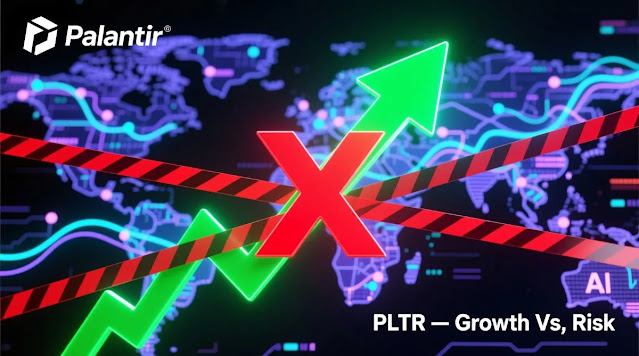
  • Palantir Crushes Q3 Earnings, But Valuation Sparks Dip

    This visually represents the market's


    Palantir’s Wild Ride: Is This AI Giant Actually Worth the Hype?


    ​Honestly, if you’d told me back in January that we’d be sitting here in late 2025 looking at Palantir hitting record highs above $200, I’d have told you to go grab a coffee and calm down. But look at where we are. The stock is up over 160% this year, and everyone—from the big institutional players to regular folks—is properly losing their minds over it.

    ​But here’s the thing. After the Q3 report dropped on November 3rd, things got a bit… weird. The numbers were massive, yet the stock took a bit of a tumble, dropping about 9% the next day. It’s like throwing the party of the century and then having everyone leave early because they’re worried about the bill. So, let’s sit down and talk about what’s actually happening with Palantir. Is it still the “AI King,” or are we just breathing in a lot of expensive smoke?

    ​What’s the Real Story with AIP?

    ​Look, most tech companies just say “AI” every five seconds during their earnings calls to keep the investors happy. But Palantir? They’re actually doing the work. Their Artificial Intelligence Platform (AIP) is the real deal. Straight up, it’s like giving a massive, clunky company a brain that actually knows how to talk to itself.

    ​Imagine a giant hospital chain. Usually, they have data scattered everywhere—patient files in one system, drug inventories in another, and staff shifts on some old spreadsheet. AIP comes in like a super-smart librarian and connects everything. Suddenly, doctors can predict treatment plans in seconds. We aren’t talking about months of coding here; companies are getting this stuff running in weeks through these “bootcamps” Palantir runs. It’s practical, it’s fast, and it’s why their growth is exploding.

    ​The Big Shift: From Spies to Supermarkets

    ​To be fair, Palantir used to be known strictly as the “spy company.” They started out helping the CIA and FBI catch the bad guys, and for a long time, about 70% of their money came from the government. But this year? The script has flipped properly.

    ​The commercial side—regular businesses—is now the star of the show. Their US commercial revenue jumped by a massive 121% in Q3. That is mental growth for a company of this size. They’re working with people like John Deere. Yes, the tractor folks! They’re using Palantir to crunch satellite data and machine sensors so farmers know exactly when to fix a tractor before it breaks down in the middle of a field. It’s not just tech for tech’s sake; it’s tech that saves millions of pounds.

    ​Let’s Talk Numbers (Without the Headache)

    ​I know financial reports can be a proper slog, but look at these Q3 highlights because they tell the whole story. Revenue hit $1.181 billion, which smashed what the experts were expecting. Even better, they’ve got $3.6 billion in the bank and zero debt.

    ​In the finance world, we have this thing called the “Rule of 40.” Basically, if you add your growth and your profit margin together and it’s over 40, you’re doing great. Palantir didn’t just hit 40; they hit 114. That’s like showing up to a local football match and playing like prime Lionel Messi. It shows they aren’t just growing fast; they’re actually making a profit while doing it.

    ​Why Did the Stock Drop Then?

    ​This is the bit that confuses people. If the news was so good, why did the price go down? Well, it’s all about the “V word”—Valuation.

    ​Right now, Palantir is trading at over 100 times its revenue. To put that in simple terms, it’s like paying £500 for a pair of trainers that usually cost £50 just because everyone else wants them. Even if they’re the best trainers in the world, you’re paying a massive premium. Investors got a bit nervous that the price had climbed too high, too fast. It’s a classic case of “buying the rumour and selling the news.” People took their profits and ran.

    ​The Risks You Can’t Ignore

    ​Honestly, I’d be a bad friend if I didn’t tell you the risks. It’s not all sunshine and AI magic. First off, there’s the competition. Companies like Microsoft, Google, and even smaller players like Snowflake are fighting for the same space. Some of them offer cheaper options, which might tempt companies looking to save a bit of cash.

    ​Then there’s the “AI Bubble” talk. If the hype around AI cools down even a little bit, stocks like Palantir—which are priced for perfection—could fall hard. Also, their government work is steady, but it doesn’t grow nearly as fast as the commercial side. If a new government comes in and decides to cut tech spending, that’s a big chunk of guaranteed revenue at risk.

    ​Looking Ahead to 2026

    ​So, what’s the plan for next year? Palantir is looking to expand more into places like Japan and Brazil. They’re even talking about adding more “multimodal” AI—stuff that can understand video and voice, not just text and numbers.

    ​If they keep landing 50+ new pilots every month through their bootcamps, the revenue will keep climbing. But for the stock price to stay this high, they have to keep hitting home runs every single quarter. There’s no room for a “decent” report; it has to be spectacular every time.

    ​Final Thoughts for the Wise

    ​Straight up, Palantir is a beast. They’ve proven they can help both the government and the big corporate world solve impossible problems. The Q3 dip wasn’t a sign that the company is failing; it was just the market taking a breather after a massive sprint.

    ​If you’re thinking about putting money in, don’t just follow the crowd. Look at the dips. Wait for the price to settle a bit. And as always, never invest money you might need for the rent next month. The road to the top is never a straight line, and with Palantir, you should expect plenty of twists and turns.

    Everything You’re Wondering About Palantir (FAQs)

    ​Honestly, whenever a stock moves this much, everyone has a million questions. Here are the big ones I keep seeing in the comments and around the web.

    ​1. Is Palantir still a “Buy” after that November dip?

    ​Look, it really depends on how long you’re planning to stay in the game. If you’re a long-term believer in AI, the dip to around $190–$200 is a bit of a “sale” compared to the highs. But straight up, it’s still an expensive stock. If you’re worried about the price, some people like to “dollar-cost average“, which is just a fancy way of saying buy a little bit now and a little bit later if the price drops more.

    ​2. Why did the stock fall if the earnings were so good?

    ​It sounds mental, doesn’t it? They smashed their targets, but the price still dropped. This usually happens because of “high expectations.” Investors had already pushed the price up 160% before the news. Once the report came out, many big players decided to take their profits and run. To be fair, at a valuation of 100x revenue, the market was basically expecting a miracle, not just a “good” report.

    ​3. What is the “Rule of 40,” and why does it matter?

    ​Straight up, it’s just a way to see if a software company is healthy. You take the Revenue Growth % and add it to the Profit Margin %.

    • ​If the total is 40, you’re doing well.
    • ​Palantir hit 114 in Q3 2025.

    That is properly insane. It means they are growing like a weed while also being incredibly profitable. Most tech companies struggle to even hit 50.

    4. Is Palantir a better bet than Nvidia?

    ​That’s like asking if you’d rather have a fast car or a great engine. NVIDIA makes the “chips” (the hardware) that power AI. Palantir makes the “software” that actually uses that power to solve problems.

    Honestly, Nvidia is much cheaper right now in terms of valuation (about 25x earnings vs Palantir’s 150x+). Palantir has more “room to grow,” but it’s also much riskier because the expectations are so high.

    5. Will Palantir ever do a stock split?

    ​There’s a lot of talk about this, especially since the price has gone past $200. A split doesn’t actually change the value of your investment; it just makes the individual shares cheaper so more people can buy them (like what Nvidia did). There’s no official word yet, but if the price stays this high, it wouldn’t surprise me if they announced one in 2026.

    6. What’s the biggest risk for Palantir right now?

    ​The biggest “red flag” is competition. While Palantir’s “AIP” is amazing, giants like Google and Microsoft are building their own tools. If those companies start offering similar tech for half the price, Palantir might have to lower its margins. Also, keep an eye on government spending—if the US cuts back on tech budgets, Palantir’s oldest revenue stream could take a hit.

    Note: This is for educational purposes only. Not financial advice. We are not SEBI-registered.

  • Grab’s Saver Rides Fuel Explosive Growth; Outlook Raised

     
    Grab app with a prominent


    Grab Raises Outlook: Why “Budget” is the New Cool in 2026


    ​Honestly, look, if you told me a few years ago that everyone would be obsessed with “budget” rides, I’d have probably laughed. Back then, it was all about luxury and speed. But fast forward to late 2025 and early 2026, and the world has changed. Everything is expensive, right? From your morning coffee to your rent, prices are soaring. And that is exactly where Grab found its goldmine.

    ​Straight up, Grab just dropped their latest results, and they are smashing it. They’ve raised their full-year outlook, and it’s not because they’re charging more—it’s because they’ve figured out how to make “cheap” work for them. They call it the “affordability strategy,” and honestly, it’s a proper masterclass in business.

    The Numbers That Don’t Lie

    ​To be fair, we have to look at the data to see why everyone is talking about this. In their Q3 report, Grab’s revenue hit a massive $873 million. That is a 22% jump compared to last year. If you’re wondering how they did it, just look at the streets of Singapore, Jakarta, or Bangkok. People aren’t just taking any ride; they are specifically hunting for the “Saver” options.

    Note: This is for educational purposes only. Not financial advice. We are not SEBI-registered.

    Metric

    Q3 2025 Performance

    Why You Should Care

    Total Revenue

    $873 Million

    Shows that the “Superapp” model is actually working.

    Adjusted EBITDA

    $490M – $500M (Forecast)

    They are finally making a proper profit after years of burning cash.

    Mobility Growth

    23% Volume Increase

    More people are riding than ever before, even with inflation.

    Fintech Loans

    $821 Million Portfolio

    They are slowly becoming the biggest bank in Southeast Asia.

    Why the “Saver” Strategy is a Genius Move

    ​Look, we’ve all been there. You open the app, see a ride for $15, and think, “Maybe I’ll just take the bus.” Grab realized this was happening way too often. So, they leaned into their “Saver” products. These are rides and deliveries that might take a few minutes longer or involve sharing a car, but they cost about 20-30% less.

    ​Properly speaking, these budget options now make up 27% of all their mobility bookings. But here is the clever part: Grab isn’t just losing money on cheap rides. About 40% of the people who start using the app because of a cheap “Saver” ride eventually end up booking a premium car or ordering a big dinner when they’re feeling flush. It’s like a “hook” that keeps you in the ecosystem.

    More Than Just a Taxi: The Rise of GrabFin

    ​Honestly, the most underrated part of Grab’s growth isn’t the cars—it’s the money. Their fintech arm, GrabFin, is absolutely exploding. In the last quarter alone, their loan portfolio grew by 65%. They’ve lent out over $821 million to people who usually can’t get help from big traditional banks.

    ​Think about a small food stall owner in Manila. They need a quick loan to buy a new fridge. A big bank will ask for fifty documents and take three weeks. Grab already knows how much money the stall owner makes because they use GrabFood for deliveries. So, Grab can offer them a loan in minutes. It’s a win-win. They are on track to hit a $1 billion loan portfolio by the end of the year, which is a massive milestone.

    The Human Side: Drivers and Riders

    ​To be fair, a business is nothing without the people. I remember reading about a driver in Jakarta named Rico. He was worried that “Saver” rides would mean he earns less. But actually, it’s the opposite. Because the rides are cheaper, more people are booking them. Instead of waiting an hour for one big fare, he’s doing four small ones in that same hour. His car is never empty, and his earnings have actually gone up by 20%.

    ​For the riders, it’s a lifesaver. Families are using “Group Orders” for food to save on delivery fees. Instead of three friends ordering separately and paying three fees, they bundle it into one. It’s small hacks like these that make Grab feel less like a faceless corporation and more like a tool for daily survival.

    Grab vs. GoTo: Who’s Winning the Southeast Asia Tech Race?

    ​Now, you can’t talk about Grab without mentioning its rival, GoTo (Gojek). For years, these two have been fighting like cats and dogs. But right now, Grab is pulling ahead. While GoTo saw about 15% growth, Grab is cruising at 22%.


    ​Why? It’s because Grab has a bigger “war chest.” They have about $6.9 billion in cash sitting in the bank. That’s a lot of firepower. They can afford to invest in crazy new tech, while GoTo has to be a bit more careful with its spending.

    The Future: Robotaxis and Beyond

    ​Straight up, the future sounds like a sci-fi movie. Grab is betting big on Autonomous Vehicles (AVs). They’ve partnered with companies like May Mobility and WeRide. The plan? To have driverless “robotaxis” running around Singapore by 2026.

    ​They’re calling the service AI.R. Imagine calling a car, and nobody is behind the wheel. It sounds scary, but it’s actually a move to cut costs even further. If they don’t have to pay a driver (though that’s a controversial topic for another day), the cost of a ride could drop by another 30%. It’s a risky gamble, especially with all the regulations and safety concerns, but Grab has never been afraid of a fight.

    The Investor’s Perspective: Is the Hype Real?

    ​If you’re someone who watches the stock market, you’ve probably noticed the “Stock Buzz.” Shares have been jumping lately because investors finally see a path to consistent profit. Analysts at BofA (Bank of America) have even hiked their price targets to $6.50.

    ​People are excited because Grab isn’t just growing; they are becoming more efficient. Their “incentives” (those discounts they give us) used to be huge, but now they’ve trimmed them down to just about 10% of their total value. They are learning how to keep us using the app without having to “buy” our loyalty with constant coupons.

    What’s Next for Grab?

    ​Honestly, they aren’t stopping at Southeast Asia. They are already taking their mapping technology (GrabMaps) to places like Mongolia through partnerships. There are even whispers of them talking to partners in the Middle East. They want to be the “OS” (Operating System) for the daily lives of millions of people.

    Tips for Every Grab User

    ​If you want to make the most of this “Raised Outlook” and their new products, here are a few things you should be doing:

    1. Stack Your Savings: Don’t just book a ride. Use GrabUnlimited. It usually pays for itself in just two or three rides.
    2. Use the “Saver” Window: If you aren’t in a massive rush, the “Saver” option is almost always the way to go.
    3. Check Your GrabRewards: Most people forget these. You can actually use them to pay for your next meal or get a massive discount on your ride home.
    4. Group Order Everything: If you’re at the office, get everyone on one order. You’ll save a fortune on delivery fees over a month.

    A Quick Wrap Up

    ​Look, Grab raising their outlook isn’t just boring corporate news. It’s a sign that they’ve cracked the code of how to survive in a tough economy. By focusing on what people actually need—affordability and convenience—they’ve turned a struggling business into a profitable powerhouse.

    ​Whether you’re a rider, a driver, or an investor, Grab’s momentum is something you can’t ignore. They are moving fast, breaking things, and making our lives a little bit cheaper in the process.

    Common Questions People are Asking (FAQs):


    • Is Grab actually profitable? Yes! They hit a net income of $17M in Q3, which is a massive deal considering they used to lose millions every month.
    • Will my rides get even cheaper? With the rollout of more “Saver” tiers and the potential for robotaxis in 2026, there’s a good chance prices will stay competitive.
    • Is Grab safe for my data? They’ve invested heavily in AI to keep transactions safe, especially now that they are handling so many loans and digital payments.
    • Can I use Grab outside of Southeast Asia? Not for rides yet, but their technology (like maps) is starting to be used in other countries.