Tag: stock market

  • Q3 Earnings Reveal a Divided Economy

     
    workers symbolizing industrial


    Look, the Economy is Splitting in Two—and Software is Seriously Winning


    ​Honestly, if you took a stroll through a local supermarket today, you’d see exactly what I’m talking about. It’s a bit of a weird vibe. On one side, you’ve got people piling their trolleys high with premium organic steak and those fancy imported wines without even glancing at the price tag. Then, literally two aisles over, you’ve got families staring at the bread shelf, trying to work out if they can afford the branded loaf or if it’s back to the basic store version again.

    ​This isn’t just me being observant; it’s a perfect mirror of what the Q3 2025 earnings are screaming at us. Straight up, we’re living in a Divided Economy.” While some sectors are gasping for air, software companies are somehow flying higher than ever. Let’s sit down, grab a proper cuppa, and chat about why this is happening and what it actually means for your pocket.

    ​The “K-Shaped” Reality: A Tale of Two Worlds

    ​To be fair, the term “K-Shaped recovery” has been thrown around for a while, but in late 2025, it’s become a proper, harsh reality. Think of the letter ‘K’. The top arm is shooting up—that’s the wealthy households, luxury brands, and the tech giants. The bottom arm? That’s sliding down, representing lower-income families and traditional industries that are feeling the pinch.

    ​Even though inflation has cooled down to about 3% now, the “scars” from the last two years haven’t just vanished. If you’re in that top 10% bracket, your income probably nudged up by over 4% this year. You’re feeling flush, your portfolio is looking healthy, and life is good. But if you’re at the bottom? You’re likely stuck, and essentials like fuel and weekly groceries are eating up every single penny before you even see it.

    ​This massive divide is showing up in the books of the biggest companies on earth. For instance, McDonald’s mentioned that their lower-income traffic has cratered. People are skipping meals or just sticking to home cooking. Yet, the same company sees folks buying “premium” lattes. It’s a proper two-tier economy, and it’s rippling through every shop and service we use.

    ​Software: The “Cheat Code” for 2026

    ​So, why are software companies doing so well when everyone else is stressed?

    ​The answer is AI. And look, I know everyone says “AI” every five seconds, but this isn’t just hype anymore; it’s a revenue engine. Businesses are pouring cash into cloud tools because they have to. If you’re a boss and you’re feeling the squeeze, you need tech to cut your costs and make things run smoother.

    ​Take Microsoft as a prime example. Their Intelligent Cloud segment—which is basically Azure—pulled in nearly $31 billion this quarter. That’s a 40% jump! Satya Nadella is calling it a “planet-scale AI factory.” While a traditional factory might struggle if people stop buying physical stuff, a “software factory” just keeps churning out code. It’s immune to the usual economic headaches.

    ​Palantir: The Rocket That Just Won’t Quit

    ​I’ve chatted about Palantir (PLTR) quite a bit, but their Q3 was honestly mental. They smashed it with $1.18 billion in revenue. But the real “wow” factor? Their US commercial business grew by 121%!

    ​Why? Because their platform, AIP, is helping companies navigate this mess. Whether it’s a retailer trying to fix a broken supply chain or a hospital trying to manage staff shifts without going bust, Palantir is the tool they’re grabbing. In a split economy, Palantir is that “secret sauce” helping the winners stay ahead of the pack.

    ​The Industrial Ache: Why John Deere is Feeling It

    ​To see the bottom half of that ‘K’, you’ve got to look at John Deere. They’re a legendary name, but their Q3 was a bit of a slog, to be honest. Sales fell 9%, and their profit took a 26% dive.

    ​Farmers are Deere’s bread and butter, and they are in total “thrift mode” right now. With high costs and soft crop prices (corn is down 5%), they’re delaying those big purchases. Why spend half a million on a new tractor when you can just patch up the old one for another season?

    ​It’s a stark contrast:

    • Software: Digital, scalable, and doesn’t care about the weather.
    • Industrials: Physical, cyclical, and deeply tied to the “old” world problems.

    ​Deere is trying to fight back with “See & Spray” AI tech, but at the end of the day, they’re still selling heavy steel in a world that’s currently obsessed with silicon and code.

    ​The Nvidia Factor: The Engine Room

    ​We can’t talk software without mentioning the guys making the chips. NVIDIA (NVDA) is basically the “arms dealer” in this whole AI war. Their data centre revenue didn’t just grow; it ballooned by over 110%.

    ​Every time a company like Microsoft or Palantir lands a new AI client, they need Nvidia’s hardware to run the show. It’s a virtuous cycle. The big tech giants haul in billions, they buy more chips, and the software gets even smarter. This “moat” they’ve built is getting wider every day, making it a nightmare for traditional companies to keep up.

    ​The Federal Reserve: Is Help Actually Coming?

    ​Look, the Fed recently cut rates to the 3.75%-4% range. In plain English? It’s getting a tiny bit cheaper to borrow money.

    ​For the “bottom arm” of our economy, this is a massive lifeline. Lower rates eventually lead to cheaper car loans and slightly better mortgage deals. Experts think that by the middle of 2026, we might see the middle class start to feel a bit more confident. But for now, that “bifurcation” (just a fancy word for the split) is still the main story.

    ​Retail and Services: The Mixed Bag

    ​Check out companies like Chipotle or Coca-Cola—the divide is clear as day.

    • Chipotle: They saw fewer people coming through the doors because their core customers (those earning under $100k) are cutting back.
    • Coca-Cola: They’re doing just fine because they’ve pivoted to “premium” stuff like fancy sparkling waters and shakes.

    ​It’s the same story at Hilton. Their luxury Waldorf Astoria suites are booked solid at a grand a night, while their budget Hampton Inns are seeing a bit of a slump. The wealthy are still thirsty for luxury, while everyone else is looking for the “value menu.”

    ​What Should You Actually Do? (The “Friend” Advice)

    ​Honestly, I don’t have a crystal ball, but the trend is pretty obvious. If you’re looking at your own money or your career, here’s my take:

    1. Follow the Code: Software is proving to be incredibly tough. Cloud and AI aren’t going anywhere, and that revenue is “sticky”—people don’t cancel it easily.
    2. Watch the Prices: Straight up, some of these tech stocks are getting properly expensive. Don’t go “all in” when they’re at record highs. Be patient.
    3. Don’t Ignore Industrials: Companies like Deere are having a hard time now, but they’re still world-class. When the cycle turns, they could be an absolute steal.
    4. Get Tech-Savvy: If the economy is splitting, you want to be on the side that gets tech. Learning how to use AI tools will make you way more valuable, no matter what your job is.

    The Final Word for 2026

    ​Q3 2025 has been a proper wake-up call. It’s shown us that the “old” economy and this “new” software-driven one are moving at two different speeds. AI is the buffer for the tech giants, while traditional sectors are still dealing with a bit of an inflation hangover.

    ​It’s a bit of a fractured roadmap, but there’s plenty of opportunity if you know where to look. One thing is certain: In 2025 and 2026, code is definitely trumping commodities.

    Wrapping It Up: Your Next Move in the Split Economy

    Honestly, navigating 2025’s “Divided Economy” feels a bit like trying to read a map while the road is still being built. On one side, you’ve got the high-flying software world where Palantir and Microsoft are breaking records. On the other hand, you’ve got the “old-school” heavyweights like John Deere waiting for the cycle to turn.
    Straight up, the big takeaway from these Q3 earnings is that code is currently beating commodities. AI isn’t just a fancy trick anymore—it’s the engine keeping the top half of that “K-shape” moving. But to be fair, the economy always moves in circles. While software is the star of the show right now, the “bottom arm” won’t stay down forever as interest rates continue to ease into 2026.
    My advice? Don’t just follow the hype blindly. Keep an eye on the tech winners, but don’t ignore the solid companies that are just having a rough patch. In a split world, the smartest move is to stay balanced, stay informed, and always keep a bit of cash ready for the next dip.
    What’s your take? Are you betting big on the AI software boom, or are you waiting for the traditional industrials to make a comeback? Drop a comment below and let’s chat about it!
    P.S. If you found this deep dive helpful, share it with a mate who’s trying to make sense of their portfolio. Let’s help everyone win in this crazy market.

    Your Questions Answered: Making Sense of the Q3 2025 Split

    Honestly, with the way the market is moving, everyone has a million questions. Here are the big ones I’m seeing from people trying to navigate this crazy, divided economy.
    1. Is the “Divided Economy” here to stay in 2026?
    Look, the “K-shape” we’re seeing in late 2025 isn’t going to vanish overnight. While the Federal Reserve has started cutting rates, it takes time for that money to trickle down to regular families. Software will likely keep leading the way through 2026 because AI demand is just too high to ignore, but traditional sectors like industrials might take another six months to properly find their feet.
    2. Why is Palantir growing so much faster than other tech stocks?
    Straight up, it’s because they’ve moved past the “hype” phase. While other companies are still talking about what AI might do, Palantir’s AIP is already on the ground, helping businesses fix real problems. Their 121% US commercial growth in Q3 2025 shows that they’ve built a “moat” that others are struggling to cross.
    3. Should I sell my “Old School” stocks like John Deere?
    To be fair, it’s tempting to jump ship when you see software doing so well. But remember, the economy moves in cycles. John Deere is a powerhouse with zero debt and a massive tech pivot of its own. If you’re a long-term player, selling at a low point in the cycle is usually a mistake. Patience is key when the economy is this split.
    4. Does the AI boom actually protect us from inflation?
    It’s not a magic shield, but it definitely helps. Software companies have “high margins,” meaning they don’t have to worry as much about the price of raw materials or shipping. When inflation bites, businesses buy software to automate tasks and save money. That’s why Microsoft and Palantir can keep growing even when the “physical” economy feels a bit sluggish.
    5. What’s the biggest “Red Flag” to watch for in early 2026?
    Honestly, keep a sharp eye on consumer debt and the job market. If the “bottom arm” of the K-shape gets too weak and people stop spending entirely, even the tech giants will eventually feel the pinch. Also, watch out for “AI exhaustion”—if companies don’t see a massive return on their AI investments soon, they might slow down their spending.

    Note: This is for educational purposes only. Not financial advice. We are not SEBI-registered.

  • Microsoft Earnings: Azure Revenue Up 40%

    Microsoft’s Azure just soared 40%… so why is everyone selling?

    40% growth” text motif

    The thing is, stock markets can be absolute head-scratchers sometimes. Yesterday (Oct 29, 2025), Microsoft dropped their q1 earnings report, and the numbers were—to be fair—nothing short of insane. We’re talking about $77.7 billion in revenue. That is a massive pile of cash, more than what most small countries earn in a whole year. And the star of the show? Azure cloud, which grew by a whopping 40%.

    But here is the twist that nobody saw coming. Despite these killer numbers, the stock actually took a hit and fell by about 4%. If you’re sitting there scratching your head, I’m telling you, you aren’t the only one. Let’s dive into why investors are suddenly acting like a company that is printing money is somehow in trouble.

    ​The AI “tax” is starting to feel heavy.

    ​I’m telling you, everyone loves talking about AI. Copilot sounds like magic, and OpenAI is basically the word of the year. But here is the reality check: building the “brain” for all this technology is costing a proper fortune. Microsoft spent $19.4 billion in just three months on things like data centers and massive chips.

    ​Investors are starting to get a bit jittery. They’re worried that if Microsoft keeps throwing money at AI like this, their profit margins are going to start shrinking. It’s kind of like winning the lottery but then telling your family that you’re going to spend every single penny on building a bigger garage. It’s an exciting project, sure, but it makes people nervous about where the actual profit is going to come from in the long run.

    ​Azure is still the undisputed hero here.

    ​While the people on Wall Street are busy worrying about the bills, the actual business on the ground is absolutely on fire. Azure growing at 40% is basically Microsoft’s way of shouting from the rooftops that they are winning the AI race. For a bit of context, even giants like Amazon (AWS) and Google are struggling to keep up with this kind of speed.

    ​Microsoft has that special “OpenAI sauce” that everyone wants a piece of right now. We aren’t just talking about chatbots anymore. I’ve seen banks using this AI to catch hackers in seconds, and even small bakeries in London are using it to predict exactly how many croissants they need to bake based on tomorrow’s weather. It’s not just hype—it’s real-world business, and it’s generating real-world revenue.

    ​That weird outage drama before the call

    ​To make this whole story even more dramatic, Azure had a bit of a “moment” right before the earnings call. Azure and Office 365 faced a few hours of downtime on October 29 because of a small technical issue.

    ​social media (mostly x) went absolutely wild with #azureoutage. While Microsoft was super quick to fix it, the timing couldn’t have been worse. It reminded everyone that when the cloud stops working, half the world basically shuts down. This probably added to the “investor jitters” that caused the stock to dip. Nobody likes to see their golden goose stumble, even for a second.

    ​Is this just a massive buying opportunity?

    ​To be fair, we’ve seen this exact movie before. Every time Microsoft decides to spend big on a new technology—like when they first started with the cloud 10 years ago—the market panics. Everyone screams about “overspending,” and then a few years later, Microsoft becomes the most valuable company on the planet all over again.

    ​If you are a long-term player, this 4% dip might just be a nice little “discount” on a tech giant that is literally building the future of how we work. Satya Nadella isn’t known for being reckless; he’s doubling down on a vision of an “AI factory” because he knows that once the infrastructure is built, the money will keep rolling in for decades.

    ​breaking down the “AI factory” vision

    ​When Satya Nadella talks about a “planet-scale AI factory,” he isn’t just using buzzwords. He’s talking about a complete shift in how software works. In 2024 and 2025, we’ve seen AI move from being a “cool trick” to being the backbone of companies.

    ​The reason Microsoft is spending billions is that they want to be the one that owns the “rails” on which all this AI runs. think of it like the early days of the railway—it was incredibly expensive to lay the tracks, and investors were terrified of the cost, but once the tracks were there, everyone had to pay to use them. That’s the game Microsoft is playing right now.

    Why playing the long game matters

    ​It’s easy to get caught up in the daily ups and downs of a stock price. But the thing is, Microsoft is still one of the safest bets in tech. Their commercial remaining performance obligations (basically, money that companies have already promised to pay them in the future) grew by 51%.

    ​That is a massive signal that businesses aren’t just trying out Azure; they are committing to it for years to come. When you have that kind of “guaranteed” future income, a short-term spend on data centers starts to look a lot more like a smart investment and a lot less like a risk.

    ​faq – everything you actually want to know (no fluff)


    q: So why did the stock drop if the earnings were so good?

    The thing is, Wall Street hates surprises—especially expensive ones. Microsoft announced that they are going to spend even more money on AI infrastructure next year than it did this year. Investors are worried that this massive spending will eat into the profits, even though the revenue is growing fast.

    q: Is Azure better than Amazon AWS right now?

    To be fair, both are huge, but Azure’s 40% growth is currently outpacing Amazon’s 19% growth. Microsoft’s exclusive partnership with OpenAI gives it a massive edge because everyone wants to use the same technology that powers ChatGPT.

    q: Should I be worried about the Azure outages?

    I’m telling you, outages are part of the cloud life. As long as they are fixed quickly (like the one on Oct 29 was), most big companies won’t switch. Microsoft’s uptime record is still one of the best in the industry.

    q: What should I look for in the next report?

    Keep an eye on the “operating margin.” If Microsoft can keep its profit margins around 40-50% while still spending billions on AI, then the stock will likely go back to all-time highs very quickly.

    q: Can I still make money by investing in Microsoft now?

    Let’s get into it—if you are looking at a 5-year window, this dip is usually seen as a buying chance. But if you are trying to make a quick buck tomorrow, keep in mind that the market is still very nervous about the high costs of AI.

    ​the final verdict

    ​The reality is that Microsoft is thriving, but the market is getting anxious about how much it’s spending. If Azure stays on this path and keeps growing at this speed, the spending won’t even matter in a year or two.

    ​What’s your take? Are you buying this dip, or are you waiting for the AI hype to cool down a bit? Drop a comment below and let’s talk—stock talk is always better when we keep it real.

    Note: This is for educational purposes only. Not financial advice. We are not SEBI-registered.
    • The Truth Behind the UK Economic Slog

       What is Really Driving the Current UK Economic Slump?

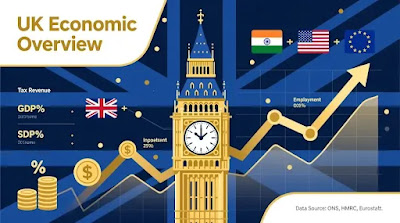
      UK GDP rose 0.1% in August 2025.

      ​Look, trying to figure out where the UK economy is heading usually involves filtering through an absolute mountain of boring economic guesswork. But every now and then, a single set of growth figures and a looming budget land all at once, effectively telling you everything you need to know about how regular people are handling their money. When the latest monthly reports dropped, showing a tiny 0.1% nudge in economic output for August, the entire City practically held its breath to pick apart the spreadsheet.

      ​And straight up, the performance metrics were a proper head-scratcher.

      ​While the country technically dodged a full-blown recession, everyday consumer-facing services took an absolute hammering, plunging by 0.6% in a single month. To be perfectly honest, it highlights a serious challenge facing the high street. With the Chancellor staring into a staggering £22 billion fiscal black hole ahead of her big Autumn Budget, everyone from small business owners to everyday savers is feeling incredibly skittish.

      ​Let’s look past the standard media spin and isolate the structural forces driving these outcomes, completely throwing out the typical corporate marketing chatter.

      ​The Squeezed High Street: Why Shoppers are Ghosting Cafes

      Before anything else, it is worth analyzing the core store performance, as buying habits are changing rapidly right now. While factories and manufacturing saw a decent 0.7% uptick, the social heartbeat of our economy—the pubs, travel agencies, and high street shops—is running on fumes.

      The 0.6% drop in customer-facing businesses was heavily dragged down by an absolute collapse in holiday bookings, with travel agents watching their numbers dive by 2.3%. ​Honestly, it isn’t a random blip. Consumer confidence metrics have tanked by a massive 31 points over the past year. Even though overall inflation has technically cooled down to around the 2% mark, the cost of services is still stubbornly hovering near 4%.

      ​When the baseline price of a standard pint or a basic meal out keeps ticking upward week after week, regular families have no choice but to hunt for a way to save cash. People are aggressively cutting back on luxury dining choices, swapping expensive nights out for casual takeaways, and holding onto their disposable cash like it’s gold. This complete lack of high street spending is putting massive pressure on hospitality groups, leading directly to a three-year high in corporate profit warnings.

      The Budget Threat: Isolating the Chancellor’s Targets

      ​Now, layer on the massive fiscal thundercloud hovering over the country. The Chancellor has been incredibly open about the fact that she needs to raise roughly £40 billion to patch up public finances and fund the NHS. While she has promised not to hike basic income tax or VAT for regular voters, the wealthy and business owners are firmly in the firing line.

      ​Take a look at the primary adjustment areas that big investment funds are currently bracing for:


      • The Capital Gains Squeeze: Capital gains tax is highly likely to jump from 20% to 28% for top earners, making share sales and asset investments significantly more expensive.
      • The Business Tax Hit: Employer National Insurance contributions are expected to climb by 1.2% to a flat 15%. Small business groups are already warning that this extra cost could force them to freeze hiring or cut back on staff hours.
      • Property and Pensions: Everything from second-home council tax bands to luxury inheritance thresholds is being looked at with a magnifying glass.

      ​To be fair, it is a massive balancing act. If the government pushes these tax hikes too hard, they risk triggering a massive corporate flight, with thousands of wealthy investors already packing their bags for tax-friendly European destinations.

      ​Post-Brexit Trade: The Global Chess Game

      ​Meanwhile, beyond domestic retail, the UK is actively rebuilding its international trading partnerships. Exports make up a vital 30% of our entire economic output, and the country has been scrambling to sign new international lifelines. The biggest win on the table is the brand-new trade agreement signed with India, which slashes heavy duties on British car exports and Scotch whisky, potentially opening up billions in fresh trade. There is also a major economic prosperity pact locked in with the US to boost pharmaceutical and steel exports.

      ​But look, we have to be completely honest about the lingering hangover of leaving the European market. Red tape and complex visa regulations have caused a massive 16% drop in services exports to the EU since 2021. While a recent customs simplification update has helped smooth out some of the borders, the UK is still actively learning how to play a highly complex global trade game while its main historical pipeline remains restricted.

      ​The Final Verdict

      ​At the end of the day, the UK economy isn’t crashing, but it is stuck in a proper, sluggish slog. Full-year growth is projected to crawl along at 1.3%, meaning you cannot count on a rising tide to magically lift your finances.

      ​If you want to navigate this wave intelligently, you have to be highly proactive. For savers, maxing out your tax-free ISA allowances before the new budget rules kick in is a complete no-brainer to shield your gains. For business owners, it is time to focus heavily on digital commerce and look at international markets where new trade deals are starting to lower the barriers to entry.

      ​What is your personal prediction for the big retail week? Do you think Walmart will continue to leave everyone else in the dust, or are we going to see a surprise comeback from Target? Drop your perspective in the comment section below, and let’s get a proper conversation going!

      ​Frequently Asked Questions

      What is keeping the UK’s growth rate so sluggish compared to international peers?

      ​The baseline issues boil down to a long-term productivity problem combined with recent structural shocks. While countries like the US are expanding comfortably, the UK is still working through a massive post-Brexit trade transition and dealing with sticky inflation inside the services sector, which is keeping our overall expansion stuck at a modest 1.3% pace.

      ​How are the upcoming budget adjustments hitting middle-income households?

      ​Even if the government avoids raising direct income tax bands, middle earners are highly likely to feel the pinch indirectly. When employer National Insurance contributions jump to 15%, businesses usually balance the books by capping pay rises or cutting down on staff benefits, meaning your take-home value gets squeezed anyway.

      ​What does the new India trade deal actually change for domestic firms?

      ​It stands out as one of the brightest spots on the horizon. With massive tariffs removed on the majority of goods, automotive manufacturers and luxury beverage exporters stand to benefit considerably. It is expected to create thousands of specialized jobs across the country over the next few years.

      ​Is it a smart move to keep funds sitting in standard high street savings accounts?

      ​With inflation cooling down to the 2% target, your cash isn’t losing value as fast as it was during the peak of the cost-of-living crisis. However, with major tax overhauls coming to capital gains and investment incomes, using your annual £20,000 ISA allowance is the smartest way to make sure the taxman doesn’t take a bite out of your returns.

      This is for educational purposes only. We are not financial advisors. Results may vary based on your individual debt situation.

    • Grab or bail? 3 Stocks, 3 Duds

       Buy or bail? 3 stocks to grab right now (and 3 to ditch)


      showing six company logos 3 Hot Stocks

      ​The thing is, looking at a stock market dashboard can feel like trying to read the matrix. It’s July 2025, the Q2 earnings are out, and the numbers are flying everywhere. Some companies are throwing massive parties because they smashed their targets, while others are basically hiding in the corner, hoping nobody notices their disastrous spreadsheets. I’m telling you, if you want to make real money, you have to stop listening to the hype and start looking at the actual cash. Earnings reports are the only time these giant corporations have to be honest with us. We’ve spent the week digging through the latest filings from the big players, and to be fair, the results are a total mixed bag. Here is our raw take on who is winning and who is absolutely tanking.

      ​The winners: 3 stocks you should actually care about

      ​1. alphabet (googl) – the king is still on the throne

      ​Look, everyone said Google was getting slow. They said AI would kill search. But the thing is, Alphabet just proved everyone wrong. Their recent earnings report basically dropped the mic on everyone else. They posted an eps of $1.89 when everyone expected $1.68. That’s not just a beat; that’s a statement.

      ​I’m telling you, the secret weapon here isn’t just search—it’s the cloud. Google Cloud is finally growing up, and YouTube ads are holding strong even with all the competition. They are pouring billions into AI, and unlike some other companies, they are actually showing us how that AI is going to make more money. If you want a tech giant that doesn’t just promise the future but actually pays for it, Google is a no-brainer.

      ​2. Microsoft (MSFT) – the safe bet that keeps growing

      ​To be fair, Microsoft is almost boring because they are so consistent. But in this market, boring is beautiful. They reported $61.86 billion in revenue, beating all the Wall Street guesses. But the thing is, you have to look at Azure. Their cloud business grew by 31%, and their AI run rate is now $13 billion.

      I’m telling you, Satya Nadella has turned this company into an unstoppable machine. They have their fingers in everything—office, gaming, cloud, and now the best AI integration in the business. It’s a diversified beast. If the market gets shaky, Microsoft is usually the last one to fall. It’s a solid “buy and hold” for anyone who likes sleeping at night.

      ​3. Nvidia (NVDA) – the AI engine that won’t quit

      ​I know what you’re thinking—”Is Nvidia too expensive?” The thing is, as long as they keep posting numbers like this, the price almost doesn’t matter. They crushed their eps targets again ($1.02 vs $0.92). Their data center revenue is just mind-blowing.

      ​I’m telling you, every single company on this planet that wants to do AI has to buy Nvidia’s chips. They own the “shovels” in this digital gold rush. Until someone else can build a chip that even comes close, Nvidia is going to keep dominating. It’s a high-speed train, and to be fair, you probably don’t want to be standing on the tracks when it’s moving this fast.

      ​The losers: 3 stocks that might break your heart

      ​1. Tesla (TSLA) – the hype is hitting reality

      ​. The thing is, I love Elon as much as the next guy, but Tesla’s Q2 was a bit of a disaster. They missed on both earnings and revenue. Their automotive revenue dropped 20% year-over-year. 20 percent! That’s a massive red flag.

      ​I’m telling you, the competition is finally catching up. Every car company now has an EV, and Tesla is being forced to cut prices just to keep moving cars. That kills their profit margins. Unless they can prove that their “robotaxi” or “optimus” robot is going to start making billions tomorrow, the stock looks incredibly overpriced. To be fair, it might be time to bail before the floor drops further.

      ​2. Intel (intc) – a giant that’s losing its way

      ​This one is actually sad to watch. Intel reported a loss of 10 cents per share when everyone expected a profit. I’m telling you, they are losing the CPU war to AMD and the AI war to NVIDIA. They are cutting 15% of their workforce and stopping construction on new factories just to save cash.

      ​The thing is, you can’t cost-cut your way to greatness. They missed the AI boat, and now they are frantically trying to swim after it. Unless they pull a miracle out of their hat in the next six months, Intel is looking more like a “dinosaur” and less like a tech leader. I’d stay far away from this one for now.

      ​3. ford (f) – trapped between the past and the future

      ​To be fair, Ford is a classic. Everyone loves an F-150. But the thing is, their business is getting messy. They beat on eps, but missed on revenue, and then they did the one thing investors hate—they suspended their guidance. They are worried about a $2.5 billion hit from tariffs.

      ​I’m telling you, Ford is struggling with the switch to EVs. They are losing thousands of dollars on every electric car they sell, and their traditional truck business is facing massive headwinds. With the trade war stuff heating up, Ford is in a very risky spot. It’s a high-dividend stock, sure, but the “capital loss” might eat up all those dividends and more.

      ​Why you need to read between the lines

      ​The thing is, an earnings report is more than just two numbers (revenue and eps). You have to listen to what the CEOs are not saying. When a company like Intel starts talking about “workforce reduction,” it means they are in survival mode. When a company like Alphabet talks about “increased capex for AI,” it means they are in attack mode.

      ​I’m telling you, the market in 2025 is unforgiving. If you don’t have a clear path to AI profitability, investors will dump you in a heartbeat. We saw it with Duolingo last week—record users, but weak guidance led to a 30% plunge. The rearview mirror doesn’t matter; the windshield does.

      the india connection: what it means for you

      ​To be fair, even if you are sitting in Mumbai or Bangalore, these global stocks matter. If Microsoft and Google are spending billions on AI, it means more work for indian it giants like Infosys or TCS. But if Ford is struggling with tariffs, it might mean more opportunities for Tata Motors to grab market share globally.

      ​I’m telling you, the world is connected. A bad quarter for Intel is a signal for the entire semiconductor industry. Don’t just look at these as “us stocks”—look at them as the pulse of the global economy.

      faq – the real talk (no fluff)

      q: Why did Alphabet go up even though they are spending more?

      If a company is growing fast enough, investors are often happy to keep backing it. Alphabet showed that its cloud and YouTube businesses are actually using that spending to make more money. It’s “good debt” vs “bad debt.”

      q: Is Tesla ever going to recover?

      I’m telling you, it depends on their tech, not their cars. If they can launch a real self-driving fleet, the stock is worth trillions. If they stay just a “car company,” they are way overvalued right now. No matter how you look at it, it’s a risky move.

      q: Why is Nvidia so much better than Intel?

      The thing is, Intel focused on the “past” (general CPUs) while Nvidia focused on the “future” (GPUs for AI). Intel is trying to pivot now, but Nvidia is already miles ahead. It’s like a race between a horse and a rocket ship.

      q: Should I sell all my Ford shares?

      To be fair, if you are in it for the long-term dividend, maybe hold. But I’m telling you, the tariff risks in 2025 and 2026 are real. There are better places for your money right now—like the tech winners we mentioned.

      ​final thoughts

      ​The bottom line is that the market is separating the wheat from the chaff. Companies that leaned into AI and avoided unnecessary bloat are pulling ahead. The ones that got comfortable or missed the tech shift are paying the price.

      ​What’s your move? Are you holding on to your Tesla shares or jumping on the Nvidia train? let’s talk in the comments—the market moves fast, and you don’t want to be the last one to know!

      Note: This is for educational purposes only. Not financial advice. We are not SEBI-registered.

    • The Truth Behind the Lululemon Stock Crash

       The Real Story Behind the Big Lululemon Stock Scare


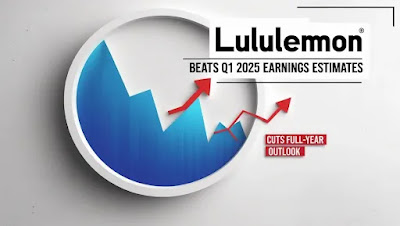
      Lululemon Beats Q1 2025 Estimates,

      ​Look, you don’t exactly need to be a fashion guru to see how completely massive Lululemon has become over the last few years. Walk into any local fitness class or glance down a busy high street, and you will spot people properly raving about their gym gear. So, it was no surprise that when the brand published its first-quarter financial update for 2025, the whole retail market went completely still to dissect the results.

      ​And honestly, what followed next was a total head-scratcher.

      ​If you just looked at the basic balance sheet, the brand absolutely flew past its goals. They brought in a healthier chunk of change than the top Wall Street desks had originally forecast, and their baseline sales figures were ticking along quite nicely. But almost the exact minute those papers dropped, institutional investors completely panicked, causing the overall share price to take a brutal 20% dive in a single afternoon.

      ​It makes you step back and think about what these market analysts actually expect. How can a business comfortably beat its near-term milestones and still get absolutely hammered on the trading floor? Let’s take a proper, unfiltered look at what was actually driving that chaos, completely throwing out the standard corporate marketing speak.

      Breaking Down the Actual Performance Data

      ​Let’s look at the actual cash flow first, because if you ignore the stock market noise, the core business looks incredibly solid. Lululemon managed to stack up roughly $2.37 billion over those three months. To be perfectly fair, that represents a healthy 7% bump compared to the exact same block of months from the previous year. Since the big institutional investors had pencilled in a slightly lower estimate of $2.36 billion, crossing the line ahead of those expectations was a brilliant little win for the executive team. Furthermore, their basic earnings per share metric landed just a touch ahead of the consensus line, settling at $2.60.

      ​But the real star of the report card was their gross margin performance, which hit an impressive 58.3%. To put it simply, every premium legging or performance shirt they sell comes with a hefty profit margin attached. They managed to pull off that specific feat by keeping a super tight grip on their warehouse inventory levels, avoiding major clearance sales, and driving down their basic manufacturing expenses.

      They also ran a massive promotional push across the States called the Summer of Align, which successfully nudged their general brand recognition metrics way up. On top of that, leadership went ahead and bought back roughly 1.4 million of their own shares. Usually, when the higher-ups spend that much cash on their own stock, it is a massive signal to the public that they feel great about where the ship is heading.

      ​So, everything sounds absolutely lovely, right? Well, not exactly.

      The Panic Button: Why the Rest of the Year Looks Rocky

      ​The massive wave of selling didn’t happen because of how the brand performed over the spring months. It happened because of the warnings they attached to their future itinerary. Downgrading their financial projections for the remainder of 2025 was all it took to spark panic across the trading floor.

      ​To be completely fair, the numbers they projected for the upcoming quarter were properly disappointing. They warned everyone to brace for a notable slide in profit margins and put forward an earnings outlook that sat way below what major investment funds had already recorded in their notebooks. So, what is causing the sudden shift towards doom and gloom? Straight up, it boils down to a few massive logistical headaches that the brand is currently scrambling to manage.

      ​1. The Global Tariff Nightmare

      ​This is the absolute killer for their bottom line. Lululemon’s leadership team had to calculate its upcoming financial targets around the very real threat of major new import taxes. Specifically, they are factoring in a heavy 30% penalty on everything shipped out of China, alongside a 10% levy on other major manufacturing corridors like Vietnam and Cambodia.

      ​When you examine where their apparel is actually produced, this creates a total logistical nightmare. They are incredibly dependent on their partner factories across Asia. In fact, a massive 40% chunk of their retail stock is made entirely in Vietnam, while the rest of their supply chain is carved up between Cambodia, Sri Lanka, and Indonesia. Having to swallow an extra 10% to 30% cost just to clear customs is going to bite a massive, painful chunk out of their net profits.

      ​2. Shoppers are Getting Proper Cautious

      ​The second major hurdle is that ordinary consumers are starting to think twice before spending a week’s grocery budget on high-end athleisure. The CEO, Calvin McDonald, candidly noted that they aren’t exactly over the moon with their current growth rate inside the US market.

      ​With so much general economic anxiety floating about, everyday shoppers are understandably tightening their belts. It turns out that when households are feeling stressed about their energy bills or mortgages, splashing out on a fresh pair of luxury yoga trousers slides quite far down the daily priority list.

      ​3. The Price Hike Risk

      ​To try and offset the massive financial sting of those incoming global tariffs, Lululemon is planning to nudge retail prices upward on a few specific product ranges later this year. Look, this is an incredibly dicey gamble. When the public is already watching their pennies, seeing an even steeper price tag at the checkout could easily backfire, driving regular buyers straight into the arms of much cheaper high street alternatives.

      ​The Global Ripple: Digital Tech Hubs and Fresh Competitors

      ​Even though Lululemon doesn’t have a physical, brick-and-mortar storefront on every single high street worldwide yet, its corporate health leaves a massive footprint across the international tech space. Take a look at the Indian market, for example.

      ​While fitness fans over there still have to rely on third-party shipping platforms to secure official gear online, the parent company operates a massive, centralized technology hub right in the middle of Bengaluru. They employ around 250 top-tier engineers and developers there who essentially build and maintain the digital architecture for the brand’s entire global website framework. If the main office has to go on a massive corporate diet to protect its margins from tariff pressures, these international tech branches are bound to feel the pinch.

      ​On top of that, the global activewear sector is turning into an absolute dogfight. While Lululemon is stuck trying to untangle its massive supply chain knots, a whole new wave of clever, homegrown apparel brands across Europe, the UK, and Asia are popping up to steal their thunder.

      ​These newer local brands are focusing heavily on sustainable fabrics, better size inclusivity, and crucially, much friendlier price tags. They are proving every single day that modern consumers are completely fine with walking away from big global logos if a local alternative can deliver top-tier comfort without emptying their bank account.

      The Verdict: Is the Ship Actually Sinking?

      ​Look, when a massive consumer stock sheds a fifth of its total market value over the course of a single trading session, it is easy to assume the wheels are falling off completely. But you have to take a step back and examine the structural fundamentals. Lululemon still possesses an incredibly valuable brand identity, a fiercely loyal customer base, and well over a billion dollars in cold, hard cash parked safely in their bank accounts. They are nowhere near the financial danger zone.

      ​What we are witnessing right now is a classic example of a top-tier luxury player hitting a massive economic speed bump. They are wedged in a tight spot between skyrocketing manufacturing expenses on one side and a much more hesitant consumer base on the other.

      ​The next few quarters are going to provide a proper test of whether Lululemon can successfully migrate its factory operations away from tariff-heavy borders without losing the premium fabric quality that made it famous in the first place. Until they show the market they can successfully pull off that massive balancing act, investors are going to stay incredibly nervous.

      ​What do you reckon about the whole situation? Was the market’s reaction to tariff threats over the top, or are investors justified in worrying that the era of ultra-expensive luxury leggings may be slowing down? Drop your thoughts in the comment section below. Let’s get a proper discussion going!

      ​Frequently Asked Questions

      ​Why did Lululemon’s stock dive if its Q1 earnings beat expectations?

      ​Honestly, it all comes down to what lies ahead. Even though their immediate performance was brilliant, the executive team lowered their financial profit targets for the remainder of 2025. In the stock market, hints about future struggles carry way more weight than past victories, so investors immediately panicked and dumped their positions.

      ​How do new import tariffs actually change the cost of gym gear?

      ​Look, because the vast majority of Lululemon’s apparel is produced in Asian factories—specifically across places like Vietnam and Cambodia—any brand-new import taxes mean it costs the firm significantly more money just to land their containers in Western ports. To cope with that financial hit, they either have to accept smaller profit margins or make the consumer pay for it by raising prices.

      ​Are shoppers completely giving up on premium activewear?

      ​Not entirely, but people are definitely becoming far more strategic with their spending. Instead of casually grabbing two or three new outfits every season, consumers are holding onto their cash due to the general squeeze on household budgets. It means premium brands have to work twice as hard to justify their luxury price tags.

      ​Where is Lululemon’s clothing supply chain located?

      ​According to their official corporate reports, their absolute main manufacturing engine is Vietnam, which covers roughly 40% of their total production volume. The rest of their inventory is sourced across specialized factories in Cambodia, Sri Lanka, and Indonesia, with a small remaining percentage still handled out of China.

      This is for educational purposes only. We are not financial advisors. Results may vary based on your individual debt situation

    • Palo Alto Stock Drops Despite Q3 2025 Beat

       That moment Palo Alto crushed their earnings, and the stock still tanked

      Line chart showing Palo Alto Networks stock dropping after Q3 2025 earnings despite beating analyst expectations.
      Man, the stock market is just weird sometimes. Have you ever had one of those days where you do everything right — like, everything — and people still look at you like you messed up? Yeah. That’s literally what happened to Palo Alto Networks on May 20, 2025.
      They put out their Q3 numbers. And on paper? Absolute home run. But the stock? Nope. It dropped like a rock. A drop of over 6% before most people were done with their first coffee.
      I know, it sounds crazy. You could be asking yourself, “If they’re making so much money, why isn’t the price moving up?” You’re not alone. Feels like some kind of glitch. But honestly? It might come across as strange, but it makes sense.

      Okay, so the numbers — a win that kinda felt like a loss

      Let me just get the dry stuff out of the way. Palo Alto made $2.3 billion in revenue. That’s 15% higher than last year. In a normal world, 15% is a big deal. And their adjusted profit? Also beat what those Wall Street big shots were expecting.
      But here’s the sneaky thing hiding in the fine print. Those “adjusted” numbers look all shiny and great. But their actual GAAP profit — the real one, after you take away all the fluff — actually went down a little. From $0.39 to $0.37 per share.
      Yeah, only two cents. Two stupid cents. But in high‑finance land, people lose their minds over two cents, as if the sky is falling.

      The “what’s next?” trap

      Here’s the thing about investors. They’re never really happy with what you just did. They’re like that annoying friend who’s already asking about next weekend’s plans while you’re still halfway through your Saturday night.
      Palo Alto’s backlog — that’s basically the pile of work they’ve already sold but haven’t done yet — is sitting at a crazy $13.5 billion. That’s an insane amount of future cash. But then they gave their forecast for the next few months and basically said, “Hey, things might slow down just a tiny bit.”
      And the market? Totally spoiled. It sees that huge backlog and expects the company to grow at some ridiculous, breakneck speed. So when Palo Alto says, “Actually, we’re gonna keep things steady around 14% or 15%,” the big investors throw a proper tantrum. It’s that weird disconnect — reality just can’t keep up with the hype they’ve built in their heads.

      Why’s it so expensive to stay on top?

      Running a giant cybersecurity firm ain’t cheap. But Palo Alto’s costs are starting to look a little scary. Operating costs jumped 20%. And admin spending — you know, boring stuff like HR and office overhead — shot up a massive 38%. (Someone earlier typed 8% by mistake, but no, it’s 38%.)
      Think of it this way. Imagine you’ve got a side hustle that makes more money every month. Great, right? But then you realise your rent and your bills are doubling at the same time. You’re working twice as hard, but your actual bank balance isn’t really moving. That’s exactly what’s worrying the big players. If they keep burning cash this fast, how much of that $2.3 billion actually stays in the company’s pocket at the end of the day?

      The “Cyber‑Flu” effect

      Honestly, it wasn’t just Palo Alto having a rough day. The whole cybersecurity sector felt a bit under the weather that week. When a giant like Palo Alto stumbles, everyone starts eyeing companies like CrowdStrike or Fortinet, wondering if the entire industry is about to hit a brick wall.
      It’s like when the smartest kid in class fails a test. Suddenly, everyone else panics, thinking the exam was rigged from the start.

      What’s the lesson for us? (Especially in India)

      I know a lot of you reading this — whether you’re a student in Delhi or a developer in Bangalore — are probably trying to build your own portfolios. The big takeaway? Don’t just believe the headlines.
      A headline might scream “Palo Alto Beats Estimates,” but the stock price tells you the real story. Here in India, we’re seeing a huge surge in tech and digital security. Companies like Quick Heal are doing their thing. And it’s super tempting to jump in the moment you see some “good” news report.
      But you’ve gotta look at how fast they’re burning through cash. Investing isn’t about what happened yesterday. It’s about having the stomach for when “good news” leads to a 6% crash — and knowing whether to sit tight or get out.
      At the end of the day, cybersecurity is a massive, essential industry. We’re only getting more digital, and hackers aren’t going anywhere. But Palo Alto has to prove it can grow without spending every last penny they make. If they can get those costs under control, that $13.5 billion backlog might actually start looking like the goldmine it’s supposed to be.

      FAQs – real quick

      1. Why’d the stock drop if earnings were good?
      Because stock prices are about the future. Palo Alto did great last quarter, but their “guidance” (their prediction for the future) was a bit slower than people wanted. Investors just hate anything that sounds like “slow.”
      2. What’s GAAP vs. Non-GAAP?
      GAAP is the strict, official way of counting money. Non-GAAP is the “lite” version where companies ignore certain costs. Palo Alto’s “lite” numbers looked awesome, but their “strict” numbers showed a tiny drop in profit — and that scared people off.
      3. Is cybersecurity still worth investing in?
      Definitely. The world’s more digital than ever. But it’s a crowded market — companies are spending billions just to stay one step ahead of each other. You’ve got to pick the ones that manage their cash well.
      4. What should Indian investors watch out for?
      Watch the expenses! A company can be making billions in revenue, but if its “burn rate” (how fast they spend money) is too high, it’ll struggle to deliver real profit to shareholders.
      5. Was the 6.6% drop a total disaster?
      Not a total disaster, but a big wake-up call. It wiped billions off the company’s value in a few hours. Basically, the market is telling Palo Alto: “We love the growth, but get your spending sorted out.”

      Note: This is for educational purposes only. Not financial advice. We are not SEBI-registered.
    • The Secret Behind the Record $180B Retail Win

        What is causing affluent households to switch to a budget supermarket?

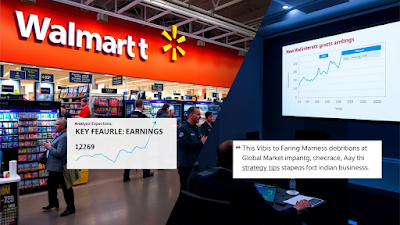
      Walmart’s projected Q4 FY2025 revenue of $180.01B, 16% e-commerce growth, and stock surge of 15% in early 2025, with icons representing key drivers like holiday sales, inflation impacts, and cautious market outlook

      ​Look, trying to map out exactly where the consumer market is heading usually involves filtering through an absolute mountain of boring economic guesswork. But every now and then, a single earnings disclosure lands that effectively tells you everything you need to know about how regular people are handling their money. When the retail giant published its final winter update for the fiscal period finishing at the close of January 2025, the entire trading floor practically held its breath to pick apart the spreadsheet.

      ​And straight up, the performance metrics were eye-watering.

      ​The low-cost supermarket group managed to clock up a staggering $180.6 billion in raw turnover over that brief twelve-week stretch. Fairly speaking, the company did not just outperform consensus targets; it completely overwhelmed analyst projections. Yet, despite dropping this massive stack of cash on the table, a slightly cautious warning about the upcoming months caused an immediate, brief dip in shares.

      ​It makes you wonder how an organisation can post such historic, blockbusting totals and still leave the investment community looking incredibly skittish. Let’s look past the standard media spin and isolate the structural forces driving these outcomes, completely throwing out the typical corporate marketing chatter.

      (more…)