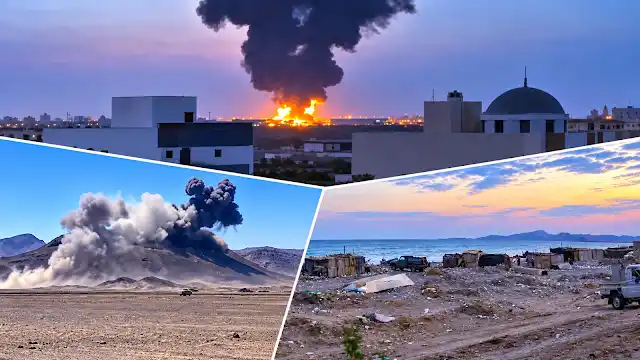
Beyond the Battlefield: The Human Cost of Conflicts in Ukraine and the Middle East
Yet over the last three days, strikes in Eastern Europe and across the Gulf hit directly into everyday public spots.
Eastern Europe and Tech Infrastructure
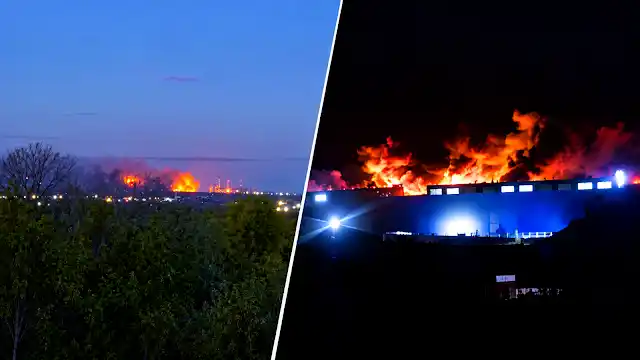
Out in Eastern Europe, the fighting between Russia and Ukraine took an unusual turn. Long-range drones hit the primary Sasovo data facility belonging to Yandex. Put simply, Yandex provides the digital services millions of Russians rely on every day, from maps to transportation bookings. Striking a core server setup like this shifts the conflict straight toward civilian internet backbones. If you missed how tech targets and remote platforms have altered the ground fighting recently, have a look at our earlier piece on the Russia-Ukraine War Update: Deep Strikes.
Things turned far worse on city streets. A heavy bombardment struck right into a packed bus stop in Kramatorsk. India Today reported that at least 33 people lost their lives while dozens of passersby ended up in hospital. Power networks took direct hits as well. In Kyiv, families now face blackouts going on for 10 or 11 hours daily, with mothers and children sleeping on the concrete platforms of old metro stations just to keep warm as frost sets in. To prevent a winter heating disaster, United24 Media noted that the UK stepped in with an emergency $73m relief fund.
On the front, Russian jet-powered strike drones are causing major headaches for air defence squads, as detailed by the Jamestown Foundation. At the same time, young Ukrainian operators are steering small tracked robot units across open fields using game controllers, trying to pull enemy fire away from live infantry.
Diplomacy is taking hits too. Al Jazeera reported that South Korea recalled its ambassador from Kyiv after Ukrainian officials went public with intelligence on captured North Korean troops, a move Seoul felt put regional stability at risk. Behind closed doors, Reuters revealed that US envoys Steve Witkoff and Jared Kushner sat down with Ukrainian representatives in Miami to test the waters for future talks. The danger at sea is escalating rapidly. Syria called for an urgent inquiry after a commercial vessel sank in the Black Sea, leaving 10 crew members unaccounted for, according to Al Jazeera. Reuters also noted that Turkish authorities warned both nations that firing near commercial sea routes puts global grain ships in serious peril.
Strikes Across the Gulf and Terminal Casualties
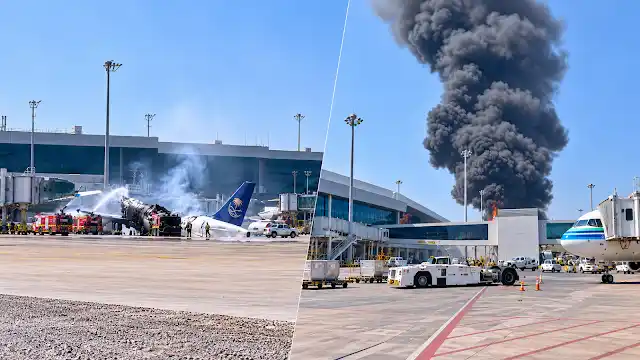
Down in the Gulf, the shock was just as sharp. Reports emerged of a strike near Terminal 3 at Riyadh’s King Khalid International Airport. Early posts on social media painted a misleading picture of the incident, leading us to separate verified information from speculation in our earlier fact-check. Riyadh Airport Attack and Viral Claims: What the Facts Reveal. But the real casualty figures were heavy. Saudi Arabia’s civil aviation body (GACA) confirmed that 12 people died and 309 suffered injuries, with victims including four Saudis, two Bangladeshis, and nationals from the US, Egypt, Jordan, Syria, Palestine, and Sudan. The New York Times reported that the blast forced air traffic to halt for several hours.
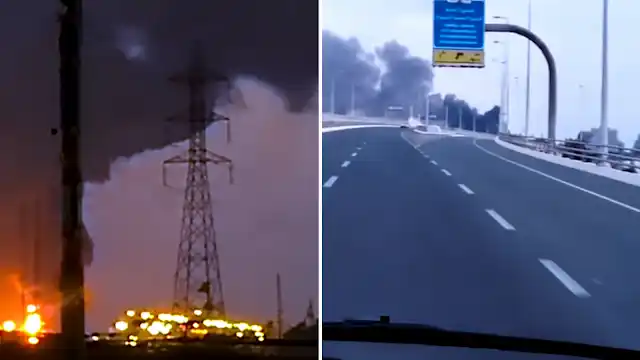
Trouble did not stop there. Al Jazeera covered another projectile landing near King Fahd International Airport in Dammam, while Houthi representatives stated online that passenger flights would stay blocked apart from relief planes. In Taiz, Yemen, airstrikes reportedly killed two civilians near a roadside shop, according to Al Mayadeen.
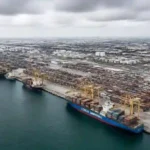
Around the Red Sea, control over the narrow Bab al-Mandeb strait tightened. CBS News reported that Saudi-backed Yemeni forces pushed back onto Mayyun Island, while France kept two naval ships nearby to escort merchant vessels, according to Al Mayadeen English. Pakistan’s government condemned the airport strikes, with CBS News noting that Pakistani troops in the Kingdom remain under purely defensive agreements. With safety risks climbing, countries like the UK, France, Australia, and Canada advised against non-essential travel to regional airports. If you are keeping track of movement rules and expat safety across the Gulf, see our guide on Middle East safety updates and expat travel advisories. The disruption extended to the entertainment sector, as Gulf News reported that Saudi Arabia put high-profile events such as the Joy Awards on hold.
The Reality of Striking Civilian Spaces
Civilian targets solve nothing in modern combat. Striking a busy terminal or a morning bus queue does not defeat an opposing army; it just leaves regular workers and families picking up the pieces. Blocked seas and threatened straits push up food and fuel bills for homes thousands of miles away. Once civilian infrastructure gets hit, each strike brings a heavier reply. Halting that cycle takes real diplomatic resolve, not more missiles on public streets. Tracking the rising civilian toll in Ukraine and the Gulf makes one thing clear: hitting public hubs brings zero strategic victory.
Frequently Asked Questions
Why does hitting Yandex cause such a stir?
Outside Russia, most people have no clue how big Yandex actually is in daily life. Millions use it every day just to call a taxi, pay for things, or get around the city. So when missiles hit that hub in Sasovo, it wasn’t some distant military target anymore. It took out the apps and services ordinary people need first thing in the morning.
The truth behind the incident at Riyadh Airport.
Terminal 3 took a direct hit. Saudi aviation officials said twelve people had been killed and more than 300 wounded, with those affected coming from a range of countries. The terminal stayed shut for a few hours while emergency crews cleaned up the mess.
Why is everyone worried about the Black Sea and Bab al-Mandeb?
Those two sea lanes carry the goods that keep supermarket shelves stocked around the world. Grain shipments continue to move through the Black Sea by sea. Merchant ships use Bab al-Mandeb to reach Europe through the Suez Canal. Once ships start getting attacked there, fuel and food prices jump almost everywhere overnight.
Are external troops getting dragged into the fight?
Not as actual combat forces. Western governments have mostly just put up money to repair damaged power stations. French warships are mainly escorting commercial cargo ships. Pakistani soldiers deployed in Saudi Arabia are still operating in a defensive capacity, as set out in their longstanding agreement.