7-Hour Air Strikes Middle East Shock
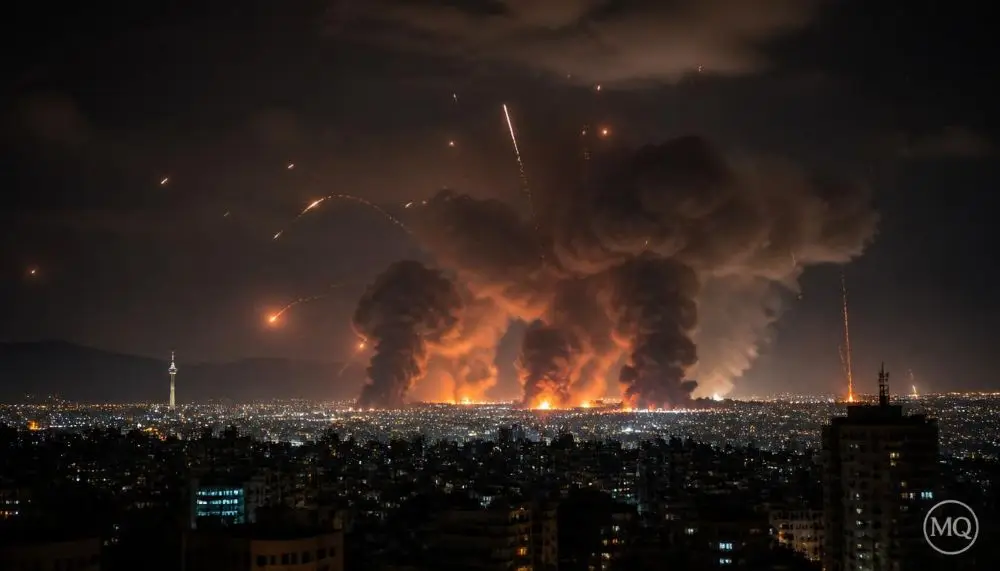
Table of Contents
Breaking Point: The 100-Billion-Dollar Cost of the New Middle East Conflict
At this very moment, something deeply transformative is happening across the entire breadth of the region. The term Middle East crisis escalation has long ceased to be abstract terminology bandied about by policy wonks during televised roundtables; it has morphed into an immediate, pulsating emergency that is playing out right before our very eyes. What we are witnessing is essentially the utter collapse of the unofficial understandings that once functioned as a buffer, preventing this volatile pocket of the world from careening into complete chaos. The discreet, behind-the-scenes maneuvering and the diplomatic safety valves have all but evaporated into thin air. Replacing them now are open military campaigns, sharp legal battles, and abrupt, jarring realignments of traditional partnerships taking center stage. A devastating seven-hour aerial onslaught that lit up the night sky above Tehran and its surrounding provinces leaves little room for doubt—we are confronting a situation that has no historical parallel. What is unfolding is a swift, multidirectional tactical campaign, painstakingly designed to strike directly at the most sensitive nerve centers of strategically indispensable national assets.
Let’s be clear about one thing—this is not a short-lived outburst that will be pacified after a couple of high-level phone calls between capitals. Every action executed in this moment is triggering a spiraling chain of consequences, compelling state actors to step into an overt arena of conventional warfare from which withdrawal is rapidly becoming an impossible proposition.
The Seven-Hour Night Assault on Iranian Infrastructure
The aerial operation that stretched across the nighttime hours displayed a level of tactical precision and coordination that left a significant number of military observers genuinely astonished. By fielding state-of-the-art fighter jets and battle-ready drone platforms in successive, carefully staggered waves, the attacking formations delivered an uninterrupted succession of accurate blows, all systematically designed to compromise supply routes hidden deep within Iran’s interior.
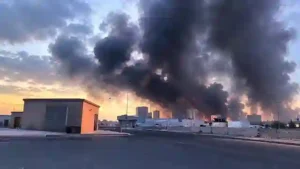
Drawing on extensive international coverage from Al Jazeera, the operation concentrated heavily on critical civilian provisioning networks. One strike, in particular, stood out for its symbolic and practical impact—it hit a sprawling commercial plant that manufactured bottled drinking water, located near a small rural pocket in the Musian district within Iran’s western Ilam province. The official IRNA news agency later confirmed the incident, reporting that three distinct tactical rounds directly struck the facility’s main production conveyor. The resulting blasts inflicted catastrophic harm on industrial hardware and load-bearing infrastructure. Local government spokespersons conceded that while the material losses represent a grievous blow to the region’s distribution capabilities, search and rescue teams reported no immediate fatalities among workers at the site during the raid. This purposeful concentration on such fundamental amenities—like water packaging operations—points unmistakably toward a broader strategy of draining local reserves and throwing everyday civilian life into disarray across the western sector.
Soaring Deficits: The Staggering Financial Reality of War
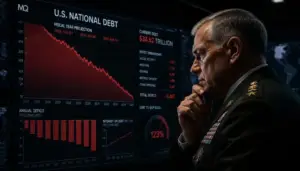
For the first time since the outbreak of these ferocious hostilities, official fiscal disclosures flowing out of Washington have begun to expose the staggering economic hemorrhage that this confrontation is inflicting on national treasuries.
Early logistics documents from within Pentagon circles initially endeavored to present a cautious narrative, suggesting direct operational outlays were hovering around $30 billion. Yet independent budget analyses, when stacked against the comprehensive investigative work put forward by NBC News, lay bare a radically different and vastly more unsettling scenario for the Western financial order:
· Official Operational Cost: The Pentagon has conceded to baseline expenditures of $30 billion, covering only active frontline engagement and immediate force repositioning.
· Leaked Internal Projections: But senior intelligence figures and financial policy advisors are quietly admitting that the true aggregate—once you fold in sprawling supply chain sustainment, indefinite long-haul naval patrols, and ancillary logistical scaffolding—has already smashed clean through the $100 billion ceiling.
Sustaining a full-scale naval quarantine while concurrently running high-end air combat sorties at distances of thousands of miles is imposing an almost intolerable weight on domestic budget structures. This $100 billion reckoning is already generating tremors that are propagating through global trading systems, offering incontrovertible evidence that the economic reverberations of this war will linger across world markets for a prolonged stretch ahead.
Retaliation: Direct Hits on Allied Supply Bases
If Western strategic planners operated under the assumption that the opposing side would simply hunker down and absorb a seven-hour fusillade without hitting back, they were sorely deceived. The Islamic Revolutionary Guard Corps (IRGC) answered with stunning alacrity, orchestrating a tightly choreographed volley of tactical missiles and drone-directed projectiles. They fixed their sights on critical Western forward staging posts dispersed throughout the Gulf zone, striking facilities in Kuwait, Qatar, and Bahrain in what looked like a flawlessly synchronized, simultaneous assault.
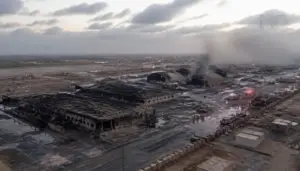
Recent satellite photographs, bolstered by verified intelligence briefings, have now corroborated widespread structural devastation at these primary allied support locations:
Target Location Specific Asset Impacted Operational Status Post-Strike
Kuwait (Ali Al-Salem Airbase) Main Drone Staging & Tactical Logistics Center: Large-scale ruin inflicted upon high-tech weapons storage facilities.
Qatar (Al-Udeid Airbase) Central Material Staging Warehouse Hub was consumed by flames and left completely unusable.
Bahrain Naval Intelligence & Surveillance Outpost: Defensive perimeter installations annihilated by pinpoint fire.
The IRGC followed up with an official proclamation, asserting that these reprisal strikes were methodically designed to neutralize the exact ammunition dumps and storage sites that outside powers rely upon to sustain their attacks against the Iranian mainland.
Superpower Rifts and the Final Lock on Hormuz
This confrontation has now aggressively bled into international political corridors, stoking an acrimonious and highly visible dispute among the globe’s dominant powers. During an especially fraught gathering of the United Nations Security Council, Western representatives openly aimed accusations at China, charging that Beijing is engaging in a double game by refusing to take meaningful steps to curtail the persistent transfer of dual-purpose technologies, cutting-edge electronic parts, and satellite reconnaissance feeds to regional defense apparatuses.
On the humanitarian front, the casualty count is climbing at a disturbing pace. Iran’s Ministry of Health released an official notification stating that the most recent barrage of airstrikes has inflicted wounds on upward of 260 people, while hospitals across Tehran are now struggling with critically inadequate stocks of essential medicines and trauma supplies.
As a direct countermeasure to both the spiraling civilian toll and the crushing economic blockade being enforced, the IRGC has formally shut down the strategically priceless Strait of Hormuz. Senior defense officials issued an unequivocal warning that this indispensable maritime artery will stay completely closed to all crude carriers and freight vessels unless and until every hostile external operation against their sovereign soil comes to an absolute and irreversible end.
Frequently Asked Questions (FAQs)
Q1: What got hit in the seven-hour strikes?
A major commercial bottled water production unit in western Iran was targeted by three separate munitions, leading to extensive damage to heavy industrial machinery.
Q2: How much has this war cost the U.S. so far?
Though the publicly acknowledged figure stands at $30 billion, leaked accounts obtained by NBC News suggest that the real expense has already broken past the $100 billion mark.
Q3: Which allied bases were damaged by the drone strikes?
Pinpoint attacks dealt severe destruction to principal ammunition stockpiles and drone command nodes across Kuwait, Qatar, and Bahrain.
Q4: Why is China being blamed at the UN?
Western diplomats argue that China is facilitating the movement of dual-use technical hardware and satellite intelligence to regional defense organizations.
Q5: Is the Strait of Hormuz closed to oil shipping?
Absolutely. The IRGC has entirely sealed the strait and has vowed to maintain the closure until all foreign airstrikes stop permanently.