Hospital Strike in Ahvaz Sparks Panic
- The Middle East Breaking Point: US Missiles Near Cancer Hospitals, Qeshm Island Blasts, and the Split in the Gulf
- The Hospital Strike: When War Hits the Most Vulnerable
- After the Qeshm Island Blasts: The Strait of Hormuz Under Pressure
- The IRGC’s Warning of a Long War of Attrition
- Internal Cracks: The US Marine Corps PR Disaster
- The Gulf Revolt: Oman Points the Finger at Israel
- Private Arab Lobbying and the Anti-Netanyahu Push
- The Bought Narrative: Paid Influencers and Dirty Money
The Middle East Breaking Point: US Missiles Near Cancer Hospitals, Qeshm Island Blasts, and the Split in the Gulf
Mainstream media feeds are completely broken. What they serve daily is a heavily sanitized loop that completely covers up a massive, violent shift on the ground. If you are still relying on those polished corporate broadcasts, you are missing the actual geopolitical realignment.
When you look past the official press releases, the situation is far more hostile than anyone in Washington or London wants to admit.
The Hospital Strike: When War Hits the Most Vulnerable
The direct military friction between the US and Iran has crossed a dangerous line. This conflict is no longer confined to remote outposts or desert borders. It is affecting densely populated civilian centers, where the human consequences are mounting at an alarming pace.
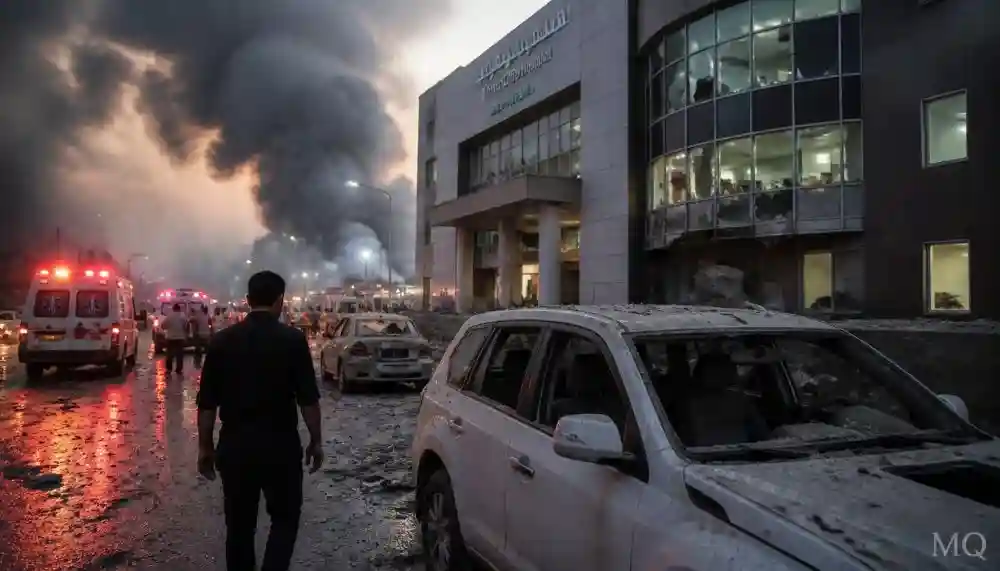
Verified dispatches from Al Mayadeen English and Iranian State TV paint a brutal picture: US missiles slammed into the direct vicinity of Shahid Baghaei Hospital in Ahvaz, forcing an immediate, chaotic evacuation.
This isn’t just another building. Shahid Baghaei serves as a critical, specialized hub for pediatric cancer care. During the strikes, children undergoing intensive chemotherapy had to be dragged from their beds in the dark because the shockwaves were physically rattling the ward walls. Over 200 critically ill patients were moved under absolute panic.
When military planners drop heavy ordnance right next to a children’s oncology wing, any talk of “precision targeting” is a joke. It reveals a desperate escalation where civilian safety is no longer a factor in regional targeting.
After the Qeshm Island Blasts: The Strait of Hormuz Under Pressure
Almost simultaneously, a massive explosion shook the southern coast of Iran. Al Jazeera confirmed a heavy strike on Iran’s strategic Qeshm Island, quoting local reports from the state-run IRNA news agency.
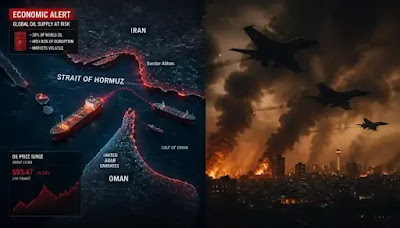
Geographically, Qeshm Island sits directly at the throat of global trade, right at the narrowest corridor of the Strait of Hormuz. Controlling this single bottleneck means holding absolute leverage over a quarter of the planet’s liquefied natural gas and crude oil shipping.
The US military targeted the Masan area on the island to dismantle active Iranian coastal defense positions. But triggering kinetic strikes around the Strait of Hormuz is incredibly reckless. Tehran has made it clear they will not tolerate foreign naval control here. If coastal strikes persist, commercial shipping operators are likely to reconsider or suspend transit through the region. A full blockade will instantly send global crude prices soaring past $90 a barrel, hitting British and European households directly at the petrol pump.
The IRGC’s Warning of a Long War of Attrition
The military leadership in Tehran is dug in for a long, grinding campaign. They have zero plans to retreat.
Al Jazeera documented a blunt warning from IRGC spokesperson General Mohammadi on X. He stated that Iran’s retaliatory strikes are now strictly prioritized to destroy US “offensive infrastructure” across the region. He warned Washington that any ongoing aggression would simply drag the US military into a bloody war of attrition.
This marks a major pivot. Instead of attempting to match Western forces in a conventional, high-tech war, Iran is playing a slow, defensive game. They want to make the US presence in the Middle East so expensive and politically toxic that domestic pressure in the West forces a total withdrawal.
Internal Cracks: The US Marine Corps PR Disaster
While Washington attempts to project absolute control, internal friction is showing. The US Marine Corps (USMC) had to issue an urgent public statement to distance the military from highly controversial statements made by a medically discharged Marine named William Upham.
Upham released a viral video wearing his uniform, calling the US government “the new Babylon” and directly attacking current leadership.
The Pentagon quickly declared his comments a direct violation of his oath, emphasizing that his views do not represent military values. But analytically, this incident highlights a growing ideological weariness and psychological strain among those tasked with fighting these endless foreign operations.
The Gulf Revolt: Oman Points the Finger at Israel
Western planners have always assumed that Gulf Arab states would automatically fall in line and back any military campaign against Tehran. That assumption is officially dead.
Firstpost reported a stunning public declaration from Oman’s Foreign Minister that shook diplomatic circles. He openly called the current conflict an absolute disaster and stated that Israel—not Iran—is now the primary threat to security in the Gulf.
This is an incredibly sharp shift for Oman, which traditionally plays the role of a quiet, neutral mediator. For them to publicly point the finger at Tel Aviv shows that Gulf leadership is running out of patience. They realize that supporting Western-led military escalation will only lead to their own ports, trade routes, and economic hubs getting caught in the crossfire.
Private Arab Lobbying and the Anti-Netanyahu Push
This diplomatic friction is turning into active political pushback behind closed doors.
According to The Times of Israel, Arab diplomats are bypassing normal channels and directly lobbying Donald Trump in private. Their message is simple: Prime Minister Benjamin Netanyahu is the single biggest barrier to keeping the region from blowing up into a total war.
These leaders are terrified of a regional firestorm that will engulf their own borders. They are trying to convince Trump’s team that stabilizing the Middle East requires putting a tight leash on Tel Aviv, rather than just ramping up pressure on Tehran.
The Bought Narrative: Paid Influencers and Dirty Money
To control public perception, immense resources are being poured into manipulating the online narrative.
The Daily Mail exposed a highly sensitive, leaked Time magazine report proving that prominent American influencers were being paid to attack the Iran nuclear deal. Investigators traced the funding through a former Trump campaign operative, ultimately linking it to entities directly funded by elements within the Israeli government.
This explains the sudden surge of highly aggressive, pro-war rhetoric on social media—it is a manufactured consensus. While this secret funding was active, mainstream media was also pushing a false story that former Iranian President Mahmoud Ahmadinejad was under house arrest as a Mossad asset. Anadolu Agency documented a sharp denial from his office, which killed the psychological operation before it could create internal division in Tehran.
Frequently Asked Questions (FAQs)
Q1. Why was Shahid Baghaei Hospital in Ahvaz evacuated?
Al Mayadeen English reported that US missile strikes landed so close to the facility that the resulting blast waves threatened the pediatric oncology wing, forcing staff to pull critically ill children out of their beds and evacuate the hospital.
Q2. What is the IRGC’s stated strategy against US forces?
The IRGC has officially shifted its strategy to target and destroy US “offensive military infrastructure” across the Middle East, aiming to draw the US into an unsustainable war of attrition.
Q3. Why did Oman’s Foreign Minister label Israel the main threat to the Gulf?
According to Firstpost, Oman’s leadership believes that unchecked military aggression and unilateral actions by Israel are actively destabilizing regional trade, putting the entire Gulf’s economic security at risk.
Q4. Who was behind the paid online campaigns against the Iran deal?
The Daily Mail revealed leaked documents showing that elements of the Israeli government channeled money through a former Trump campaign operative to pay US influencers to coordinate attacks on the nuclear deal.