Persian Gulf Escalation: War Crisis
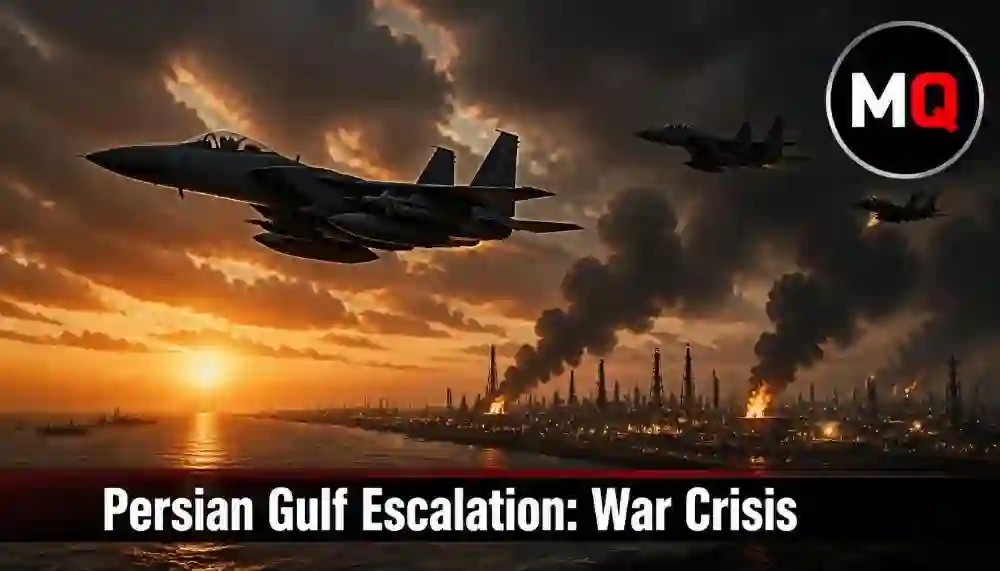
Strategic Escalation: Evolving Military Operations Raise New Security Risks Across the Persian Gulf
Middle Eastern security dynamics are breaking down at a dangerous pace. The ongoing warfare has pushed far past familiar border skirmishes, slamming directly into core energy grids, international cargo lanes, and heavy industrial complexes. Operational coverage highlighted by The New York Times reveals that this tactical shift toward Persian Gulf coastal centers caught regional defense chiefs largely unprepared. Traditional containment strategies simply no longer hold up under current field conditions. Local emergency response teams are scrambling to secure vital assets, while blocked maritime chokepoints and stalled commercial cargo ships are already dragging down global energy markets.
Fresh Water Security in Focus Following Reported Strikes on Kuwait’s Desalination Facilities
Civilian operational risks reached a critical tipping point when long-range strikes hit essential public utilities. On-the-ground field reporting verified by The Times of Israel confirmed that a direct air strike hit a major combined power generation and water desalination facility in Kuwait. That single hit sparked massive structural blazes and instantly knocked out multiple high-capacity electrical power units. Emergency firefighting crews spent hours struggling to isolate the roaring flames, while site engineers executed rapid grid-isolation steps to prevent a complete nationwide blackout.
Hitting essential water supply hubs along the Gulf Coast creates an immediate survival crisis for everyone living across the region. Desert urban centers across the peninsula rely almost entirely on industrial desalination plants for over 90 percent of their daily drinking water needs. Physical damage to these vulnerable processing sites puts millions of urban residents in direct, immediate danger. As analytical coverage from WION pointed out, targeting basic public utilities breaks established international norms, exposing how vulnerable these massive water-and-power hubs remain whenever modern air defense shields fail to stop incoming suicide drones and tactical missiles.
Furthermore, engineers on site warned that repairing specialized desalination turbines requires imported technical components that are currently blocked due to regional shipping delays. If secondary strikes land near these fragile coastal grids, local authorities will be forced to ration daily municipal water supplies, creating a severe public health emergency across major residential sectors within days.
CENTCOM Intensifies Air Operations as US Deploys European Strike Aircraft
Following these critical utility disruptions and recent American military casualties, US Central Command (CENTCOM) launched a massive series of retaliatory air strikes. Press updates released directly by CENTCOM confirm that US warships and strike aircraft hit Iranian command posts, missile launch pads, radar stations, and underground weapons storage sites across southern zones during nine straight nights of heavy bombing runs. The primary operational goal is clear: crush active launch sites and force open the Strait of Hormuz, a narrow maritime pass through which 20 percent of the world’s crude oil travels daily.
To keep up this heavy, non-stop bombing pace, American defense leadership moved additional squadrons of F-16 Fighting Falcons and advanced F-35 stealth jets out of European bases and straight into forward Middle Eastern airfields. But flying continuous combat sorties over heavily defended airspace carries real, documented hardware costs. Investigative military reports from ABC News show that multiple US MQ-9 Reaper surveillance drones have been shot down while tracking high-value targets over hostile, heavily defended territory.
These sustained aerial engagements have also strained US logistics networks, requiring non-stop aerial refueling operations over international waters. Military strategists note that as Iranian air defense crews adapt to American flight vectors, US pilots are forced to fly at higher altitudes, slightly reducing the immediate precision of tactical ground strikes.
Regional Air Defenses Intercept Threats as Gulf Allies Re-Evaluate Security Models
Air warning sirens echoed across several parts of Bahrain, sending citizens running to emergency shelters as military radar networks picked up fast-moving targets overhead. On-the-ground reporting from Al Jazeera documented that Kuwaiti military officials issued direct notices confirming their air defense batteries were actively firing at incoming drone swarms, clarifying to residents that loud coastal booms were just defensive systems intercepting targets mid-air.
These constant air scares are forcing a serious re-examination of regional defense setups across the entire Arabian Peninsula. While Gulf states have made significant investments in sophisticated military equipment, they continue to depend on U.S. missile defence systems and forward military bases for much of their regional defence posture. Running their own unified defense networks. With cheap, mass-produced drones repeatedly testing these expensive air defense layers, local military command structures face rising domestic pressure to build independent, multi-layered counter-drone systems to guard vital public infrastructure properly.
Defense experts emphasize that relying solely on high-cost interceptor missiles to shoot down low-cost attack drones is financially unsustainable over a prolonged war of attrition. Local defense ministries are now rushing to procure directed-energy weapons and electronic jamming systems to build a more sustainable defense perimeter around coastal economic centers.
Covert Maritime Routing Bypasses Blockade Amid Heightened Sanctions Pressure
Even with tight naval blockades, strict cargo checks, and constant warship patrols watching main shipping lanes, crude oil is still finding sneaky ways out into global energy markets. Commercial trade data published by Mint reveals that Iranian shipping networks exported about 70 million barrels of crude oil—worth around $6 billion—to buyers in Asia. They pulled this off by using unlisted dark fleet tankers and executing risky mid-ocean oil transfers well outside active patrol zones. This steady cash flow gives financial planners in Tehran a solid cushion as global sanctions tighten up.
Lawmakers in Washington are now pushing fresh economic sanctions to block these workaround routes, proposing steep tariff hikes and severe legal penalties for foreign companies caught trading with Iranian sellers. At the same time, investigative tracking by The Wall Street Journal exposed an aggressive $50 million digital campaign that used automated messaging tools, mass text feeds, and online influencers to shift American public opinion and rewrite media narratives around the war.
By blending covert maritime commerce with high-tech influence operations, this dual-track conflict underscores how modern asymmetric warfare reaches well beyond the battlefield, presenting significant challenges for international regulators and policymakers.
Frequently Asked Questions (FAQ)
What caused the recent water and power supply disruption in Kuwait?
A direct air strike hit a major power generation and water desalination plant in Kuwait, sparking heavy structural blazes and damaging key electrical power units. Engineers had to execute immediate grid-isolation steps to prevent a widespread blackout across the country.
Why are desalination plants considered critical infrastructure in the Gulf?
Gulf nations depend on industrial desalination complexes for over 90 percent of their daily drinking water supply. Severe physical damage to these plants creates an immediate public survival emergency across densely populated coastal metropolitan areas.
What is the current scale of US military operations in the region?
American forces under CENTCOM are conducting continuous nightly air and naval strikes against Iranian missile pads, radar arrays, and command bunkers, backed by additional F-16 and F-35 strike jets deployed directly from airbases in Europe.
How has global shipping been affected in the Strait of Hormuz?
Ongoing drone attacks, missile strikes, and heavy naval blockades have slowed commercial maritime traffic in the Strait of Hormuz to a crawl, severely disrupting a vital maritime chokepoint that handles 20 percent of global energy supplies.
How is Iran continuing to export crude oil despite active blockades?
Maritime trade tracking data shows Iran uses unlisted dark fleet tankers, unmonitored shipping channels, and mid-ocean ship-to-ship transfers to keep sending crude oil to Asian buyers without getting intercepted by active naval warship patrols.
How are cyber operations playing a role in this regional conflict?
Investigative reports from The Wall Street Journal detail foreign digital influence operations, including a $50 million campaign using automated AI-driven messaging networks, mass text distribution, and digital influencers to alter public opinion and shape media coverage of the war.





Leave a Reply