UAE Infrastructure Threat: Gulf Grid War Explodes
- UAE Becomes a Strategic Flashpoint in the Expanding Gulf Infrastructure Crisis
- UAE Placed on Immediate Threat Red Alert
- Legal Charges and Broken Memorandums
- Intelligence Overhauls and Widespread Gulf Base Strikes
- Strategic Retaliation Across the Gulf Network
- Leader Protection Protocols and Spying Crackdowns
- Digital Satellite Masking and Global Supply Fallout
UAE Becomes a Strategic Flashpoint in the Expanding Gulf Infrastructure Crisis
UAE Placed on Immediate Threat Red Alert
Field updates show that recent air campaigns have heavily impacted civilian communication and utility networks across the southern provinces. In immediate response, the Iranian military leadership has officially singled out the United Arab Emirates as its prime target if Western forces execute any further strikes on domestic soil. The operational footprint of the current aerial deployment shows a deliberate concentration on areas controlling internal domestic distribution networks. Official statements carried by Al Mayadeen English confirm that Iranian military officials have issued an uncompromising “evacuation alert” for specific high-value targets across the UAE.
- Aviation Infrastructure Targeted: The defensive advisory explicitly warns that the operational perimeters of Dubai International Airport and Abu Dhabi Airport must be evacuated immediately.
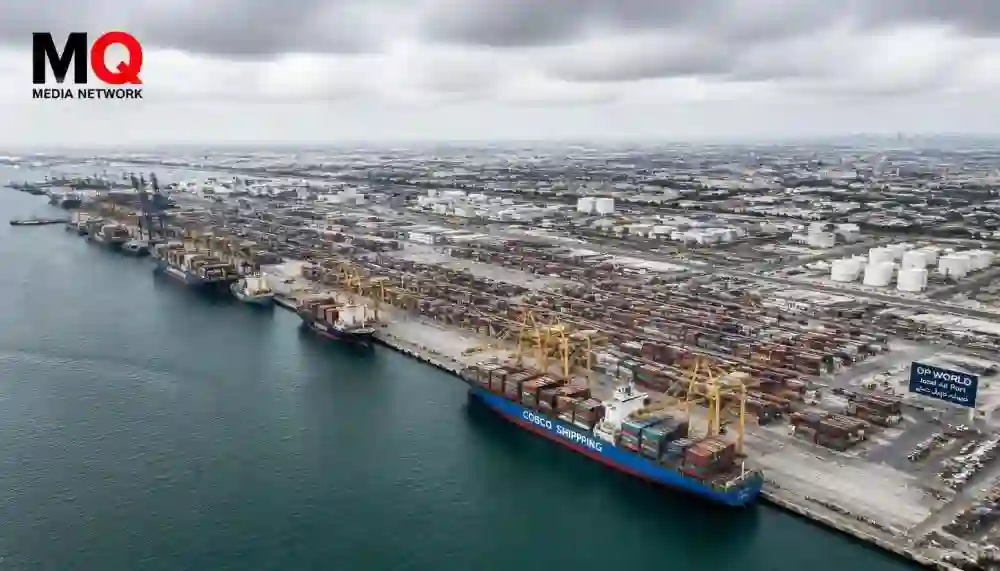
- Maritime Shutdown Warning: Major regional trade shipping loops, including the massive Jebel Ali Port in Dubai and the critical fuel export docks of Fujairah, are now sitting directly in the line of fire.
- Neighboring Base Alert: Senior military commander Seyed Majid Moosavi publicly stated that Arab leaders across the Gulf must take this final warning seriously, declaring that any nation providing launchpads or hosting Western strike assets will face direct kinetic consequences.
Legal Charges and Broken Memorandums
The legal framework surrounding the current escalation has moved to international judicial bodies. In an official announcement, the Iranian Judiciary said it is compiling extensive criminal cases for international legal bodies, accusing U.S. and allied officials of systematic war crimes against critical civilian infrastructure.
Concurrently, diplomatic offices highlighted growing friction over previous security agreements. Statements carried by Al Jazeera from Iran’s First Vice President Mohammad Reza Aref indicated that active U.S. air operations were initiated before the initial ink on the recent MoU had even dried, completely eroding strategic trust between the negotiating teams.
Intelligence Overhauls and Widespread Gulf Base Strikes
The expanding geographic reach of the conflict has forced major internal changes within regional defense architectures and intelligence tracking groups. Beyond the primary threat to the UAE, the Islamic Revolutionary Guard Corps (IRGC) has actively scaled up its ballistic operations across secondary deployment hubs throughout the wider Gulf.
Strategic Retaliation Across the Gulf Network
The IRGC ground and aerospace forces confirmed they have actively engaged Western military assets positioned in Kuwait, Bahrain, Qatar, Jordan, and Iraq. U.S. Central Command (CENTCOM) was forced to issue an official combat update following high-speed precision missile strikes on its forward infrastructure. The Wall Street Journal formally verified the severity of the damage, documenting that two U.S. service members were killed in action and several others wounded during a heavy missile strike on a base in Jordan, with one additional member reported missing.
Furthermore, coordinated long-range missile waves successfully hit Kuwait’s Al-Salim Air Base, reportedly disabling their advanced radar monitoring systems, damaging a weapons maintenance hangar, and destroying two Eurofighter Typhoon fighter jets belonging to the Kuwaiti defense forces.
Leader Protection Protocols and Spying Crackdowns
Field documentation confirms that internal security protocols have adjusted public movement rules for senior leadership figures. Official statements verify that Supreme Leader Mojtaba Khamenei will maintain a restricted public schedule and will not appear in public until the ongoing war status concludes, managing high-level tracking risks during active hostilities.
Simultaneously, international tracking indicates a sharp rise in internal security tracking within neighboring territories. Reports published by The Times of Israel reveal that Israeli administrative offices have actively enlisted local community networks, Rabbis, and Haredi influencers to implement broad awareness campaigns designed to stop regional espionage networks and warn citizens against spying for Iran.
Digital Satellite Masking and Global Supply Fallout
The physical impact of recent missile strikes has led to significant shifts in digital data management. Independent tracking groups noted that public satellite mapping platforms, including Google Maps services, have begun applying heavy visual blurring over verified impact zones near key Gulf power generation plants, such as the Shuwaikh utility sector. This data masking is intended to suppress public verification of structural degradation across critical harbor networks.
Strait of Hormuz Daily Transits (July 2026)
Normal Fleet Average: 35 – 40 commercial hulls
Current Fleet Output: 05 – 08 commercial hulls
The resulting maritime freeze has lowered average commercial transits through the Strait of Hormuz to an all-time low of five to eight hulls per day. The immediate logistics squeeze, combined with surging insurance risk premiums, has pushed average consumer fuel trackers from AAA to a sustained market rate of $3.94 per gallon. Regional monitoring services further reported that additional commercial transport tankers experienced major hull damage after interacting with drifting naval mine hazards along common international shipping loops.
Geopolitical Friction and Regional Double Standards
Recent developments involving critical infrastructure have triggered strong diplomatic reactions across the region. Preliminary assessments indicate that increased maritime security risks have affected commercial shipping routes through key chokepoints, contributing to uncertainty in global energy markets. The Saudi Arabian Ministry of Foreign Affairs subsequently issued an official appeal urging all parties to halt offensive missile activity and engage in immediate de-escalation.
Concurrently, the Secretary General of the Gulf Cooperation Council termed the targeting of critical public assets a violation of international law. This formal legal declaration has generated considerable debate among independent foreign policy experts, who point out a deep contradiction in regional diplomacy where administrative councils maintain strict public silence regarding widespread grid damage in Gaza and the West Bank but mobilize instantly when primary energy transport hubs face kinetic threats. With the U.S. State Department actively raising its global travel advisory to a level advising against all transit through the Middle East, the entire regional security framework faces a sustained systemic breakdown.
Frequently Asked Questions
Which specific facilities are covered under the latest UAE evacuation alerts?
Official advisories from regional military commands have placed the airports in Abu Dhabi and Dubai, alongside Jebel Ali Port and the industrial docks of Fujairah, under immediate emergency evacuation tracking.
Why has the public schedule for senior Iranian leadership been modified?
Security deployment groups implemented a restricted public movement protocol for Supreme Leader Mojtaba Khamenei to counter high-level tracking risks during active hostilities.
What is the reason behind the blurring on satellite mapping systems?
Public mapping networks have applied visual masking over specific infrastructure locations, including the Shuwaikh utility sector, to manage public access to data regarding real-time damage.
Which base losses have been officially confirmed by international media?
The Wall Street Journal and CENTCOM verified that two U.S. service members were killed in action in Jordan, while hits on Kuwait’s Al-Salim base destroyed two Eurofighter Typhoon jets.
What action is Israel taking against internal intelligence leaks?
According to data published by The Times of Israel, administrative hubs have enlisted local networks, Haredi influencers, and religious leaders to run public awareness programs warning citizens against spying for Iran.