Iran Military Matrix Shifts the Gulf
- The Axis Shifts: Inside Iran’s New Military Matrix and the Gulf’s Silent Panic
- The Military Consolidation: Regular Army Meets IRGC
- The Ahmadinejad Disinformation Campaign
- Hormuz, Crude, and the Sanction Myth
- The Shipping Strike: Casualty Data
- The Northern Supply Corridor: Russia-China Railway Link
- The Washington Dilemma: Arab Frontlines and Financial Demands
The Axis Shifts: Inside Iran’s New Military Matrix and the Gulf’s Silent Panic
The latest moves in the Middle East confirm that the old geopolitical boundaries are dead. What we are witnessing is a high-stakes game of regional survival driven by a major structural shift. This conflict is not just about random drone strikes or angry press releases. It is a calculated realignment of power that will rewrite the security dynamics of the entire region.
The Military Consolidation: Regular Army Meets IRGC
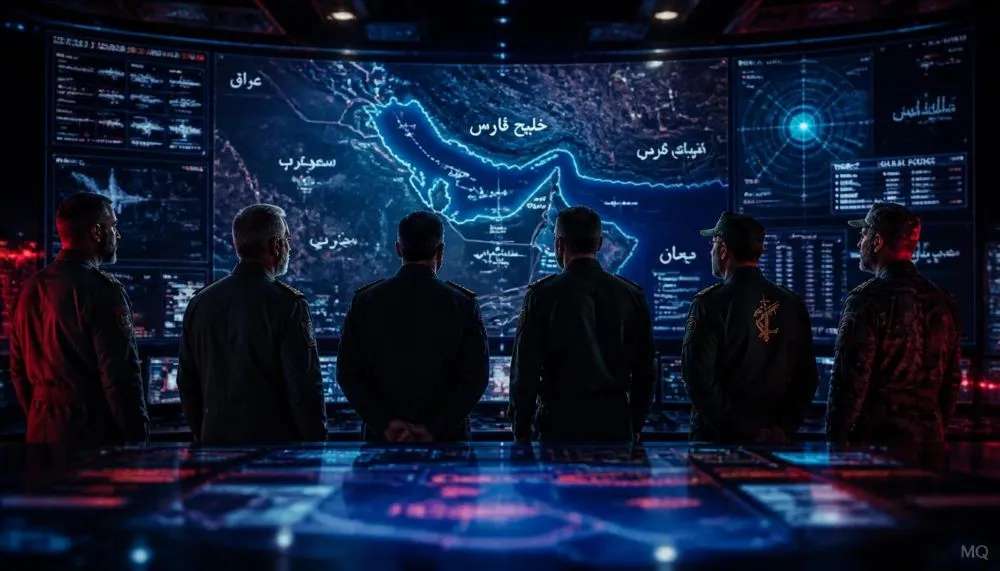
The top commanders of Iran’s regular army and the Islamic Revolutionary Guard Corps (IRGC) just held a strategic, joint meeting. This unified front changes the entire strategic equation. For decades, foreign analysts assumed these two wings operated in completely separate silos, often competing for domestic resources and political influence.
Those days are over.
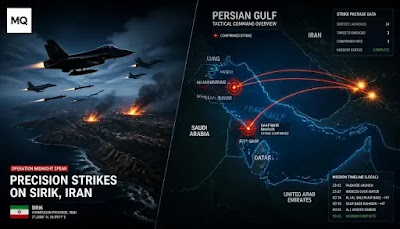
This new alignment presents a massive challenge for Western defense planners. The regular military brings conventional heavy armor, large-scale logistics, and traditional defensive depth. On the other side, the IRGC brings a highly sophisticated, battle-tested network of asymmetric warfare and regional proxies. By synchronising their command structures, Tehran is creating a single, consolidated military fist. Any future foreign retaliation will not just face a rogue militia network—it will hit a unified, state-backed military apparatus.
The Ahmadinejad Disinformation Campaign
During this intense period of military consolidation, a highly specific narrative emerged claiming that former Iranian President Mahmoud Ahmadinejad was placed under tight house arrest for allegedly acting as a high-level Mossad asset. The internet went into absolute overdrive because the man has historically been one of Israel’s most aggressive and vocal critics.
The entire drama was snuffed out almost immediately. Ahmadinejad’s official office released a blunt statement rejecting the reports as completely fabricated fake news. From an analytical standpoint, this was a calculated psychological operation designed to spark internal distrust inside Tehran at a critical moment. By shutting it down instantly, the establishment managed to neutralise the political blast radius and maintain internal stability.
Hormuz, Crude, and the Sanction Myth
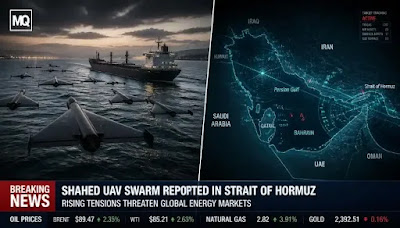
Meanwhile, the economic choke point of the world—the Strait of Hormuz—remains a ticking time bomb. The Iranian military has issued a direct warning, stating clearly that this vital shipping corridor cannot be controlled through foreign aggression or naval blockades.
Economic sanctions keep piling up, but the actual trade data tells a completely different story. Iran’s oil exports have not stopped for a single day. They are actively bypassing international restrictions and pumping crude directly into global markets. If things escalate even an inch further in the shipping corridor, oil prices will easily spike past $90 a barrel. The ensuing global inflation hit will be felt directly at every single petrol pump in Europe and the United States.
The Shipping Strike: Casualty Data
The situation in the shipping lanes is causing immediate issues. A targeted missile recently hit a merchant vessel moving through the lower part of the Strait of Hormuz. The ship had 24 foreign workers on board, including 12 from India. One person lost their life in the incident. This development shows how incredibly risky the commercial transit lanes have become for everyday cargo crews.
The Northern Supply Corridor: Russia-China Railway Link
Local crews managed to fix the main northern train tracks that got damaged during the recent bombings. This route serves as a major overland shipping link connecting Iran straight to Russia and China. Heavy freight trains are moving along the path once again. Getting this connection back online allows goods to bypass international sea blockades completely, keeping supply lines running smoothly between Tehran and its main partners up north.
The Washington Dilemma: Arab Frontlines and Financial Demands
A distinct change in strategic posture is also emerging from Washington, driven by a growing reluctance to engage in direct ground combat with Iranian forces. A prominent US Senator recently proposed that Arab states should deploy their own military forces to the frontlines inside the region, arguing that Western troops should step back into a supportive role.
This domestic political pressure aligns with demands coming from the political camp of Donald Trump. His team has asserted that regional allies must financially invest in repairing the logistical and material losses suffered by Western militaries during recent operations. This dual approach—demanding both frontline troops and financial compensation—is forcing Gulf leadership to completely re-evaluate the actual value and reliability of their long-standing Western defense treaties.
Saudi Arabia’s Stealth Drone Splurge
Now look at Saudi Arabia. Riyadh is playing a very quiet, very calculated game of chess. A tracking report recently revealed that the Kingdom stealthily purchased roughly $47 million worth of advanced military drones from Taiwan last month. This sudden diversification has raised a lot of eyebrows across global defense markets.
This deal tells you everything about the current state of trust in the Gulf. Riyadh is no longer willing to rely solely on external superpowers for its security blanket, especially given how volatile global foreign policy has become. Whether these drones are meant to secure the southern border against regional instability or act as a long-term deterrent, one thing is clear—the Saudis are actively buying their own military independence.
The UAE’s Silent Diplomacy
The local diplomatic approach is shifting. The UAE unexpectedly freed 55 detained Iranian fishermen, bringing a tense maritime standoff to a sudden end. While external observers might see this as a basic legal agreement, it is a clear choice based on local reality.
Gulf leaders are increasingly acknowledging that perpetual confrontation with a heavily armed neighbor hurts trade and economic stability. With Western allies frequently changing their approach to the region, maintaining long-running diplomatic feuds no longer makes strategic sense. The UAE’s decision suggests that, despite the harsh political rhetoric, regional governments are quietly choosing a more pragmatic, hands-on approach to negotiation.
Frequently Asked Questions (FAQs)
Q1. What separates the regular Iranian military from the IRGC?
The traditional army handles basic national border security. The IRGC operates as an elite group tasked with protecting the political structure and handling external missions. Working under a unified command setup allows them to combine traditional warfare tactics with asymmetrical strategy seamlessly.
Q2. Why is the Strait of Hormuz so critical to international business?
Roughly a fifth of all global petroleum moves through this tight passage. Any complete closure or serious conflict there will trigger an immediate energy shortage, driving fuel costs through the roof globally.
Q3. Why did Saudi Arabia decide to buy hardware from Taiwan?
Buying equipment from standard Western partners usually involves a lot of political conditions and heavy scrutiny from Washington. Spending $47 million with Taiwan lets Riyadh pick up advanced surveillance tools without having to deal with foreign political interference.
Q4. Did the claims about Ahmadinejad turn out to be accurate?
No. His team put out a clear denial, labeling the entire story a complete fabrication. Most regional analysts believe the leak was just a psychological tactic meant to cause confusion inside the country while military tensions were running high.