Ahmadinejad Mossad Leak Oil Shock
- The Secret Leak Tearing Through Tehran: How Mossad Cultivated Ahmadinejad And The Chaos At The Strait of Hormuz
- The Hungarian Connection and the Tehran Safe House Operation
- Trump’s Constitutional End-Run and Depleted U.S. Stockpiles
- The Strait of Hormuz Toll War and the 4% Oil Shock
- Did the IRGC actually fire live shots at ships in the Strait of Hormuz?
The Secret Leak Tearing Through Tehran: How Mossad Cultivated Ahmadinejad And The Chaos At The Strait of Hormuz
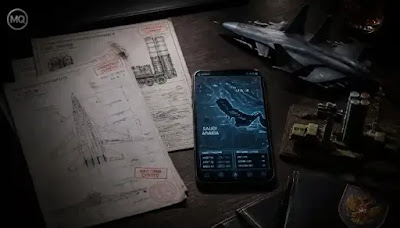
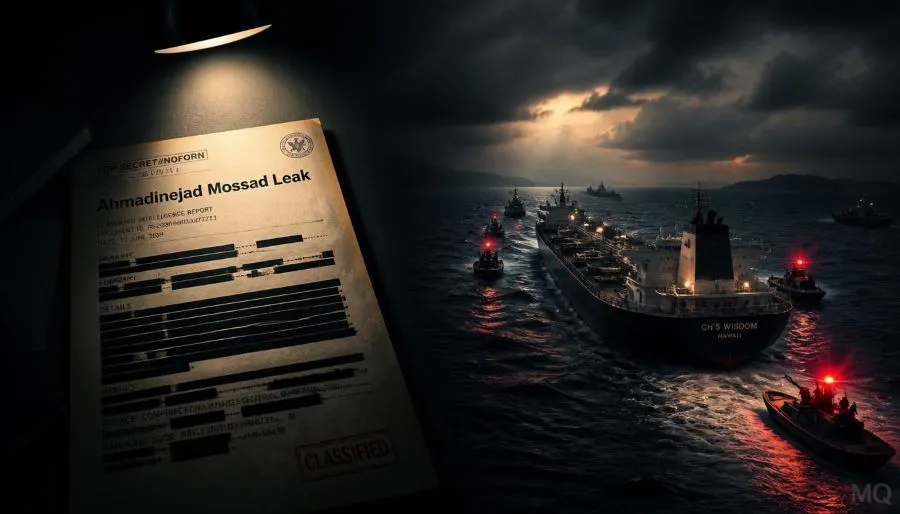
A massive intelligence leak just hit the wires, and a major American newspaper officially published the details. When the smoke is this thick, it’s hard to escape the conclusion that a major blaze is burning behind the closed doors of international espionage. The New York Times dropped a verified bomb. According to the report, Iran’s former president, Mahmoud Ahmadinejad—long known for his uncompromising anti-Western rhetoric—was himself the subject of a covert effort to cultivate him as an intelligence asset. high-level intelligence asset by Israel’s Mossad.
Iranian intelligence networks have already intercepted these documents. The current government in Tehran cannot officially acknowledge this reality, as doing so would mean admitting a structural breach at the highest historical level of their political hierarchy.
The Hungarian Connection and the Tehran Safe House Operation
The operational logs show that this relationship did not develop overnight. Mossad had established lines of communication well before 2024. The data confirms that Ahmadinejad traveled to Hungary under the official cover of a state meeting, where he met directly with Mossad commanders and operational leaders. Over a prolonged period, substantial financial payouts were routed to him through third-party financial networks. Israel later shared parts of this intelligence portfolio with Western planners as the regional kinetic phase intensified.
During the conflict, the operation took a highly volatile turn inside the Iranian capital. Mossad wanted to secure its asset. Intelligence planners deliberately carried out targeted airstrikes just steps from Ahmadinejad’s private residence. The strategic objective was simple: eliminate the Islamic Revolutionary Guard Corps (IRGC) security perimeter stationed around the property without killing the asset himself.
Tehran was rattling under heavy bombardment when Israeli operatives found their window. The moment the local air defenses and guards scattered, Mossad field networks pulled off a lightning-fast evacuation right inside the city. They rolled in with an ordinary, unmarked car, shoved Ahmadinejad inside, and rushed him away to a highly classified safe zone that Israeli intelligence had set up right under Iran’s nose.
But the extraction plan cracked down the middle before long. Ahmadinejad refused to stay put inside the compound, slipping away under strange circumstances that remain unverified. It did not take long for the IRGC to spot the unusual movements on their grid. They tracked the high-profile breach, realized the extent of the betrayal, and put the former president under tight house arrest. This sudden lockdown explains why he completely vanished from the scene during the latest high-profile hits, especially when Ali Larijani was assassinated after actively walking the streets despite knowing he was a marked man.
Trump’s Constitutional End-Run and Depleted U.S. Stockpiles
While the espionage scandal tore through Tehran, a massive constitutional crisis erupted inside Washington. President Trump formally notified congressional leaders that U.S. forces had engaged in aggressive defensive strikes directly inside mainland Iran starting July 7. This notification triggered a fierce political battle between Capitol Hill and the White House.
Lawmakers across both chambers of Congress pushed back hard, voting directly to freeze all funding for the war or legally force the administration to get explicit approval before dropping more bombs. Trump completely brushed off the legislative vote, using his sweeping commander-in-chief powers to bypass Congress entirely so he could keep the mainland bombardment moving forward without a pause.
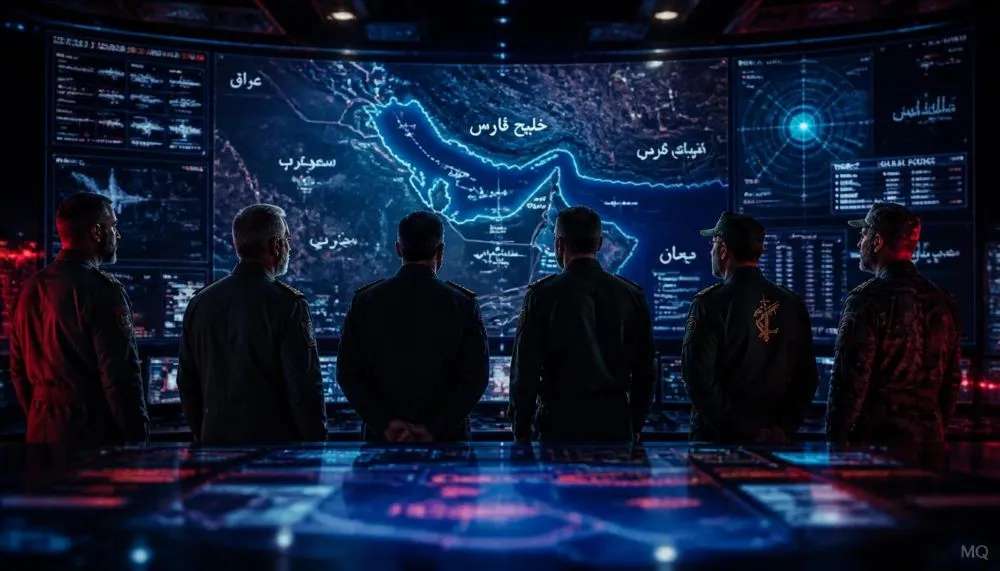
However, Western military readiness is facing severe long-term constraints. U.S. Central Command, led by Capt. Tim Hawkins, announced the deployment of warships to enforce a total naval blockade across regional waters. Yet, a critical leak confirmed by CNN reveals that American advanced missile interceptor stocks are heavily depleted. Pentagon officials are raising internal alarms that sustained engagements against ongoing drone and ballistic missile salvos are draining defense systems, and replenishing these high-tech interceptors will require multiple years.
The air war has become a bizarre mirror match. The IRGC published clear photographic evidence showing they have successfully intercepted and shot down several American drones. The twist? These U.S. assets are direct reverse-engineered copies of Iran’s own Shahed loitering munitions, showing that Washington is now printing and deploying Iranian-designed drone architecture back onto mainland targets.
The Strait of Hormuz Toll War and the 4% Oil Shock
The naval blockade announced by Washington has sent an immediate shockwave through global commodity trading boards, with international crude prices jumping over 4% in a single trading session. The White House announced that within 22 hours, all commercial shipping and energy tankers navigating the Strait of Hormuz must undergo absolute compliance checks. The administration plans to leverage total naval control of the corridor to extract transit fees from global shipping vessels, even from allied nations that rely on the passage.
Iran’s response to this financial strategy came directly from Foreign Minister Seyed Abbas Araghchi. In a public statement, Araghchi sarcastically agreed with the premise of charging transit fees, noting that if the international community wants secure passage through a volatile war zone, a service charge is entirely fair.
Tehran threw serious shade at the White House’s plan, with Araghchi mocking Washington for trying to demand a massive 20% cut, saying Iran would undercut them with a much better rate. He made it clear that the IRGC has always been, and will always be, the true guardian of the Strait of Hormuz.
Things on the water are already breaking out into chaos. The IRGC Navy ran a high-stakes interception, firing aggressive warning shots right across the bows of two large commercial vessels that tried to slip through the strait without getting local clearance or paying up. The target ships escaped without taking direct damage, but the message was loud and clear. This disruption has drawn fierce condemnation from Germany, France, and the UK, which issued a joint statement denouncing the escalating attacks on commercial shipping lanes. To bypass this bottleneck, the UAE has accelerated a strategic infrastructure plan to construct an alternative port system outside the immediate perimeter of the strait, attempting to disconnect its trade loops from Iranian maritime influence.
Satellite Evidence of Base Destruction and the Russian Grid Alliance
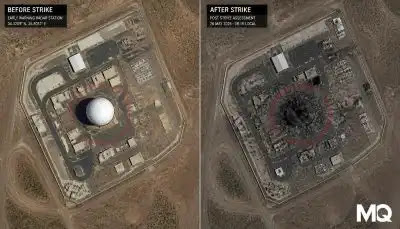
Independent defense networks analyzing high-resolution satellite imagery have completely torn down the official military narrative. While corporate media downplayed the fallout from recent skirmishes, Al Jazeera’s visual telemetry exposes extensive destruction across several key hubs:
- Bahrain Tactical Hub: Satellites confirm extensive structural damage inside the primary U.S. naval asset base in Bahrain, showing scorched earth and penetrated hangars.
- Qatar Logistics Node: The massive American logistical air base in Qatar shows clear signs of successful precision strikes, with multiple fuel storage sectors appearing burnt and heavily compromised.
- Jordan Forward Base: The satellite views over Jordan tell an ugly story, exposing heavily charred ground and demolished sectors inside the U.S. forward base, proving that Iranian missile units managed to completely bypass local air defense networks with pinpoint accuracy.
Simultaneously, the air war inside Iran has caused catastrophic damage to civilian infrastructure. The relentless bombing campaign from the West has hammered the domestic power grid, blowing out over 2,000 separate distribution points and causing a brutal 4,200-megawatt drop in electricity capacity right during the blistering summer heatwave. To counter this grid collapse, Iran’s president held an emergency meeting with Russia’s energy minister. The two nations finalized a strategic grid-connection pact, enabling Iran to draw direct electricity from southern Russian power grids to stabilize its domestic network.
As diplomacy fractures, regional psychological warfare is intensifying. The Iranian embassy in South Africa went viral after publishing a raw political meme mocking a high-profile pro-war Washington politician who passed away recently, showing him waiting in vain for Iran’s collapse, only to end up in the grave himself. The conflict has moved past proxy scripts; it is an open war for absolute systemic dominance.
Frequently Asked Questions
Did The New York Times confirm that Mahmoud Ahmadinejad worked with Mossad?
Yes. The New York Times published an exclusive report detailing a multi-year intelligence operation by Israel to cultivate Iran’s former president as a high-level asset. The logs show he met with Mossad leads in Hungary and received major financial payouts before being placed under house arrest by the IRGC.
Why are global oil prices jumping past 4% right now?
Prices surged over 4% following President Trump’s announcement of a hard naval blockade on the Strait of Hormuz. The threat of transit interruptions across a corridor that handles 20% of global energy supply caused immediate panic on international commodity trading boards.
Is President Trump waging a war against Iran without congressional approval?
Yes. President Trump formally notified Congress that direct military operations inside mainland Iran began on July 7. Even though lawmakers in both the House and the Senate voted to pull the plug on the war or force an approval process, Trump simply bypassed the legislature by using his unilateral authority as commander-in-chief to keep the operation running.
What is the critical issue with the Pentagon’s missile stockpiles?
According to a leaked defense analysis confirmed by CNN, the intense frequency of regional engagements has heavily depleted American advanced missile interceptor stocks. Officials warn it will take multiple years of industrial production to refill these warehouses, threatening readiness for future conflicts.
How is Russia assisting Iran during the recent power grid failure?
U.S. strikes knocked out over 2,000 separate nodes on Iran’s power network, causing a massive 4,200-megawatt drop in domestic energy capacity. The Iranian president immediately sat down with Russia’s energy minister to lock in a grid-sharing deal that pumps electricity directly from southern Russian power lines.
Did the IRGC actually fire live shots at ships in the Strait of Hormuz?
Yes, the IRGC officially confirmed the incident. Their naval forces deployed to fire direct warning shots right at two commercial vessels that were attempting to navigate through the Strait of Hormuz without sorting out local transit fees or getting security clearance from the coastal patrols.