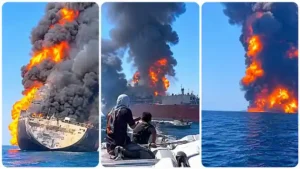
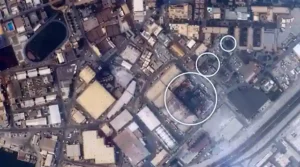
Iran-US Conflict: Hormuz, Sanctions, and the Path to Talks
- Iran-US Conflict: Hormuz, Sanctions, Carriers, Nuclear Deadlock—and a $48 Billion War Bill
- Naval Shifts and Rising Stakes in the Strait of Hormuz
- Bunker Construction, Covert Plans and Pentagon War Gaming
- Chemical Weapon Claims and the IAEA Nuclear Deadlock
- Global Diplomacy, Gaza Calls and Economic Realities
- War Costs, Fuel Prices and the US Senate Vote
- Frequently Asked Questions
Iran-US Conflict: Hormuz, Sanctions, Carriers, Nuclear Deadlock—and a $48 Billion War Bill
Honestly, the standoff between Washington and Tehran has reached a point where military posturing, economic pressure, and high-stakes diplomacy collide every day. Straight up, while headlines swing between warnings of imminent strikes and calls for restraint, the real story is in the details reported by major international outlets. According to reporting by Bloomberg, the risk of new US strikes on Iran has grown as low-level skirmishes escalate across the region. Yet at the same time, diplomatic and military signals show a far more complicated picture on the ground. Readers following our wider geopolitical coverage can explore more updates at https://marqzy.in/middle-east-updates/.
Naval Shifts and Rising Stakes in the Strait of Hormuz
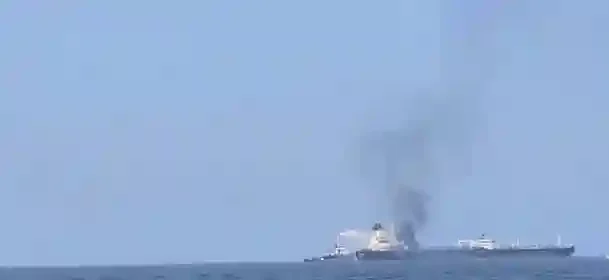
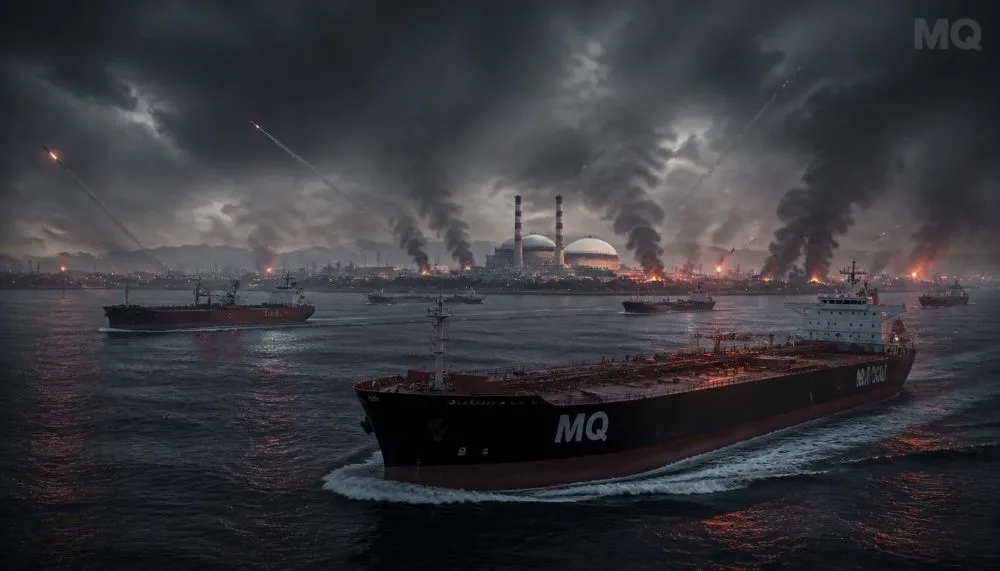
Look at the maritime picture first, because energy routes remain the biggest pressure point. According to Bloomberg, a US aircraft carrier strike group, the USS George Washington, sailed out of the Persian Gulf region, leaving two carrier strike groups stationed nearby to maintain naval pressure. Meanwhile, maritime security in the Strait of Hormuz is facing severe strain. According to reporting by The Jerusalem Post, citing a US source, Iran has shifted toward using deadlier anti-ship cruise missiles rather than just drones when targeting vessels in the Strait of Hormuz.
To be fair, global energy watchdogs are sounding the alarm over what this means for oil supplies. According to Daily Sabah, citing the International Energy Agency (IEA), the Strait of Hormuz crisis has become the largest threat to global energy security in history. On the Iranian side, Islamic Revolutionary Guard Corps (IRGC) spokesperson Hossein Mohebbi stated via Al Jazeera that Tehran will not allow the US-imposed naval, land, and air blockade to continue, adding that Iran will not address its nuclear programme before resolving the situation in the Strait of Hormuz. Reports shared via TankerTrackers and Fars News also point to efforts to load Iranian crude via ship-to-ship transfers to challenge the blockade, alongside warnings from Iranian parliamentary figures like Deputy Speaker Hamid Reza Haji Babaei that energy access in the region must apply to everyone or no one.
Bunker Construction, Covert Plans and Pentagon War Gaming
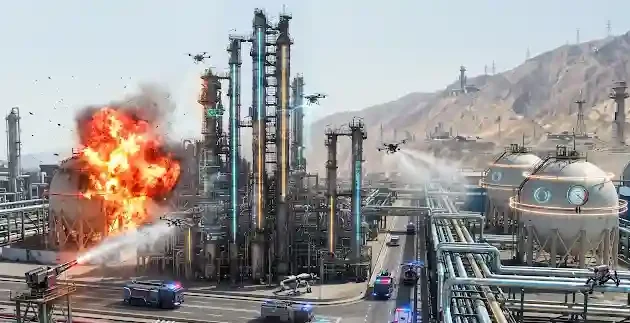
While naval movements grab attention, defensive and covert preparations are quietly accelerating behind closed doors. According to Fox News, the US is racing to build 17 reinforced concrete bunkers across the Middle East, including locations in Israel, Saudi Arabia, and Lebanon, to protect American troops from Iranian missile and drone threats. Simultaneously, according to The Times of Israel, citing Axios, President Donald Trump asked the Pentagon and US intelligence agencies to game out how Iran would respond to various attack scenarios prepared by Central Command, specifically examining whether any military option could avoid triggering large-scale Iranian retaliation against Gulf energy infrastructure.
Straight up, Washington is also dealing with intense pressure from Israeli leadership alongside internal hesitation. According to reports by The New York Times and Axios, Trump has weighed new strikes on Iran as Israeli officials warn about missile stockpiles and alleged chemical or biological programmes. However, according to The Times of Israel, citing Channel 12, Trump backed out of planned strikes multiple times in recent weeks, and he told Axios that he is not rushing into a decision on Iran. Separate reporting by The Times of Israel also noted claims that Israeli Prime Minister Benjamin Netanyahu asked Mossad chief Roman Gofman to prepare covert operations against Iran without informing the IDF chief of staff.
Chemical Weapon Claims and the IAEA Nuclear Deadlock
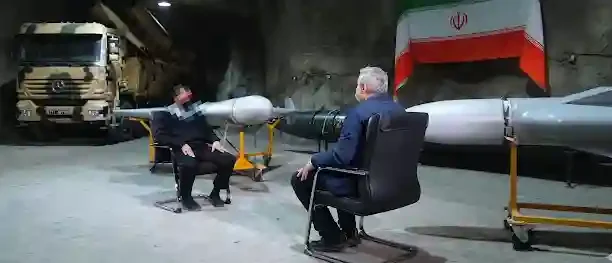
Information battles are running parallel to military planning. According to CBS News, Iranian Foreign Ministry spokesperson Esmaeil Baqaei rejected US accusations that Iran is developing chemical or biological weapons, comparing the claims to the fraudulent script used ahead of the 2003 US invasion of Iraq. Meanwhile, Iran’s Ministry of Foreign Affairs issued an official statement asserting its right to legitimate self-defense against US military actions and warning neighbouring states not to allow their territory to host airbases and installations earmarked for potential action against Iran.
On the nuclear front, international monitoring remains stuck. According to Anadolu Agency, Russia, China, and Iran delivered a joint message at the International Atomic Energy Agency (IAEA) Board of Governors meeting in Vienna stating that UN nuclear inspections can only resume once hostilities end and threats of renewed military attacks against safeguarded facilities are removed. Iran’s diplomatic mission in Vienna reinforced this stance, arguing that external powers cannot bomb nuclear sites, threaten further strikes, and simultaneously demand unrestricted inspector access.
Global Diplomacy, Gaza Calls and Economic Realities
Beyond the Gulf, major powers are weighing the broader fallout. According to Al Jazeera, China reaffirmed its backing for Iran’s sovereignty and security at the United Nations General Assembly’s Third Committee, calling for the immediate lifting of unilateral sanctions harming ordinary citizens. Separately, Al Jazeera reported that Trump claimed Chinese President Xi Jinping and Russian President Vladimir Putin want the war on Iran to end following discussions on the sidelines of the APEC summit, though Trump added that Washington does not need assistance from Beijing or Moscow to end the conflict.
At the same time, Iranian Foreign Minister Seyed Abbas Araghchi used social media and diplomatic channels to highlight the humanitarian crisis in Gaza, calling on the Organisation of Islamic Cooperation (OIC) to convene an emergency meeting of foreign ministers to lift the blockade and allow aid deliveries. Inside Iran, President Masoud Pezeshkian acknowledged economic strain under sanctions and blockades, stating in remarks reported by Al Jazeera that the government’s priority is preserving economic capacity and supporting domestic production.
War Costs, Fuel Prices and the US Senate Vote
Finally, the financial and political price tag in Washington is becoming harder to ignore. According to Insider Paper citing Pentagon official Arthur Miller, the Iran conflict has already cost the United States more than $48 billion, a sharp jump from earlier budget estimates. Even so, domestic fuel markets saw temporary relief, with Bloomberg India reporting that average US gasoline pump prices dropped to an eight-month low, easing immediate inflation worries.
Politically, Trump secured a key legislative win on Capitol Hill. According to Al Jazeera, Republicans in the US Senate voted 51 to 48 to reject a war powers resolution that would have required congressional approval to continue military action against Iran. With naval tensions high in the Strait of Hormuz, bunker construction underway, and nuclear inspections frozen, the coming weeks will test whether backchannel diplomacy can prevent a wider regional firestorm.
Frequently Asked Questions
Why did a US aircraft carrier leave the Persian Gulf region?
According to Bloomberg, the USS George Washington carrier strike group departed the Persian Gulf region to return toward its home port, leaving two US carrier strike groups operating in the area.
How much has the Iran conflict cost the United States so far?
According to Pentagon figures reported by Insider Paper, military operations and equipment replacements tied to the Iran conflict have cost more than $48 billion.
What conditions have Iran, Russia, and China set for IAEA inspections?
According to Anadolu Agency, representatives from Russia, China, and Iran told the IAEA Board of Governors that full nuclear inspections can resume only after hostilities cease and guarantees are given against further attacks on nuclear sites.
What happened in the US Senate regarding presidential war powers on Iran?
According to Al Jazeera, Senate Republicans defeated a war powers resolution by a 51 to 48 vote, allowing President Donald Trump to maintain current military authority without new congressional restrictions.