Iran Military Operation Threat: MOAB Bomb

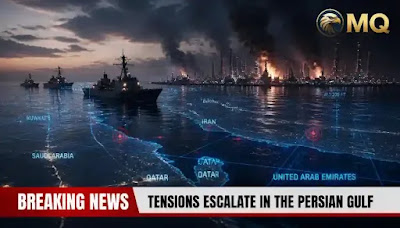
Visual overview of regional military alerts, naval disruptions, and diplomatic tensions across the Middle East.
Strategic Brinkmanship: Inside the US MOAB Warning and Gulf Sea Stand-offs
The Iran military operation in the Middle East war has entered far more dangerous territory, moving from diplomatic arguments straight to talk of massive conventional firepower. For months, international observers assumed that backchannel diplomacy would keep major energy corridors open. But stepping outside official meeting rooms, that fragile calm is clearly gone as chatter about high-yield bunker-busting weapons takes over regional intelligence circles.
A tense couple of days of naval deployments, leaked military blueprints, and missile drills have left the region bracing for an open clash. As global leaders weigh heavy aerial weapons and commercial waterways grind to a crawl, energy markets feel the strain within hours. Much like we tracked in our earlier analysis of the Saudi Arabia Houthi conflict and airport security alerts, cross-border skirmishes are rapidly bleeding into regional transport hubs.
The MOAB Consideration and Underground Nuclear Facilities
Diplomatic and military tension reached a new peak following reports regarding potential American strike options. In an exclusive report by CNN Politics, defence sources revealed that the United States administration has been evaluating the possible use of the GBU-43/B Massive Ordnance Air Blast (MOAB) against heavily fortified Iranian nuclear complexes and subterranean military bunkers ahead of domestic elections.
While conventional in design, the weapon delivers the most destructive blast of any non-nuclear ordnance in the American arsenal. According to reporting from Bloomberg and Ynet Global, Israeli defence planners have continued to push for decisive measures to dismantle deep underground enrichment sites before regional voting takes place.
Tehran has responded by clearing key facilities and relocating military command teams. Financial news outlet InvestingLive reported that the Islamic Revolutionary Guard Corps (IRGC) ordered the urgent evacuation of several major military bases in central and southern Iran, anticipating imminent strikes from coalition assets.
Industrial Recovery and the 400 Launcher Milestone
Despite enduring continuous air strikes and naval blockades, Iran’s military manufacturing network appears to have rebounded. Defence assessments published by JFeed, referencing Israeli intelligence updates, confirmed that Iran has rebuilt its operational ballistic launcher force back to approximately 400 units.
This recovery brings Tehran’s launcher capacity nearly level with its pre-conflict totals, enabling units to fire rapid salvos without exhausting mobility platforms. Complementing this, investigative coverage from Bloomberg and Ynet Global highlighted that Tehran has successfully restored damaged drone and missile assembly lines, drawing fresh supply support from Moscow while Western leaders debate the timing of any new air campaign.
Regional defensive postures have tightened across the board. The Middle East Monitor (MEMO) confirmed that Israeli defence units jumped to their maximum combat readiness stage over worries that Tehran could launch a quick missile barrage first to disrupt allied preparations. These multi-front operations closely follow the recent Saudi Yemen War Aramco strikes and cross-border missile scrambles that sent shockwaves through regional corporate networks.
Naval Friction and Strait of Hormuz Standoffs
Tensions at sea continue to choke global logistics. Official maritime traffic data released through Anadolu Agency revealed a steep fall in daily commercial tanker movement through both the Strait of Hormuz and the Bab al-Mandeb Strait. Fear of drone attacks and naval mines has forced commercial freight operators to reroute vessels or halt sailings altogether.
Direct hits have already taken place. Official bulletins from U.S. Central Command (CENTCOM) confirmed that the Singapore-flagged container carrier M/V GFS Pride was struck by an IRGC projectile rather than a floating mine while navigating regional waters. The strike caused containers to tumble overboard and created heavy disruption across local sea channels.
To secure international sea routes, CENTCOM announced that the aircraft carrier USS George H.W. Bush (CVN 77), carrying more than 5,000 personnel and an entire air wing, has taken up active patrol positions in the Arabian Sea following a port visit to Thailand.
Domestic Economic Pressures and Diplomatic Walkouts
The domestic reality inside Iran remains under severe economic strain. As reported by Insider Paper, Iranian President Masoud Pezeshkian acknowledged publicly that his country is currently enduring the harshest economic and trade blockade since the 1979 Islamic Revolution, with maritime blockades cutting deep into standard commerce. This mirrors the wider economic fallout documented in our coverage of the Iran military operation Middle East energy crisis, where household costs climbed sharply.
Financial pressure has also arrived from regional neighbours. Bloomberg India reported that Lebanese financial authorities revoked the operating license of Iran’s Bank Saderat in Beirut following pressure from Washington and international lenders.
Diplomatic rifts were on full display during the recent Conference on Interaction and Confidence Building Measures in Asia (CICA) summit in Azerbaijan. Foreign ministers from several regional countries walked out of the conference hall as the Israeli delegation stepped up to address the forum. Meanwhile, Bloomberg reported that Pentagon advisers are seeking to hold back the release of a formal investigation into a deadly air strike on the Shajarah Tayyebeh school in Minab until after national midterm elections.
Counting on crude markets and regional borders to stabilise without clear diplomatic progress is increasingly difficult. Until maritime security rules are agreed and weapon manufacturing channels are tackled openly, the risk of a wider confrontation will remain extremely high.
Common Queries
Is the United States planning to deploy the MOAB against Iran?
Reporting from CNN Politics indicated that American officials have reviewed options regarding the GBU-43/B Massive Ordnance Air Blast for targeting fortified underground facilities in Iran.
How quickly has Iran restored its ballistic launcher inventory?
Israeli intelligence reports cited by JFeed confirmed that Tehran has restored its operational ballistic missile launchers to roughly 400 units, matching its pre-war strength.
What caused commercial traffic to drop through the Strait of Hormuz?
Maritime monitoring data published by Anadolu Agency and CENTCOM confirmed a sharp drop in traffic following projectile strikes on commercial ships like the M/V GFS Pride.