- Iran War Update – 12 August 2026: IRGC Signals Strikes on Worldwide Infrastructure While Gulf Producers Quietly Accept Hormuz Reality
- IRGC Expands Threat to Global Pipelines, Grids and Cables
- U.S. Helicopters Fire on Panama-Flagged Vessel; Trump Claims Control of Frozen Assets
- Trump Blames Biden for Missile Shortages
- Leadership Shake-up in Tehran and Hard-Line Stance on Hormuz
- Gulf States Adjust to Iranian Oversight of Hormuz
Iran War Update – 12 August 2026: IRGC Signals Strikes on Worldwide Infrastructure While Gulf Producers Quietly Accept Hormuz Reality
West Asia slid deeper into crisis on 12 August 2026. Following our Iran War Update on 11 August 2026, back-channel talks have effectively stalled. The United States and Iran continue trading conflicting claims about the scale of battlefield damage. U.S. crude inventories have fallen to their lowest levels in four decades, and Iranian commanders are now demanding mandatory transit fees on Gulf shipping. The standoff shows no sign of easing.
IRGC Expands Threat to Global Pipelines, Grids and Cables
The Islamic Revolutionary Guard Corps shifted the tone of the conflict today with a broad warning. According to Newsquawk, an IRGC spokesperson stated that any fresh military threat against Iran would place hundreds of thousands of miles of international energy pipelines, power plants and internet infrastructure on the target list.
The threat is not limited to the immediate theatre. Tehran specifically listed cross-border electricity connections, regional water pipelines and undersea fibre-optic cables as potential targets should U.S. strikes resume.
Iran’s foreign ministry backed the message at once. Press TV reported that Foreign Minister Abbas Araghchi told European diplomats by phone that the United States and Israel alone bear responsibility for the collapse of maritime security in the Strait of Hormuz.
U.S. Helicopters Fire on Panama-Flagged Vessel; Trump Claims Control of Frozen Assets
Kinetic action resumed early Tuesday in the Gulf of Oman. The Wall Street Journal reported that American naval helicopters fired on a Panama-flagged commercial ship that tried to breach the blockade and reach Iranian ports.
At the same time, Moneycontrol carried statements from Donald Trump asserting that the United States now exercises full control over Tehran’s frozen bank accounts. Trump accused Iranian negotiators of negotiating in bad faith and repeated that Washington retains the ability to strike Iran with significant force if talks collapse.
Security concerns inside the United States have also risen. After reports that Iranian forces possessed shoulder-fired missiles, additional air-defence systems were deployed around Trump’s private residences and golf courses.
Diplomatic efforts have not entirely stopped. The Financial Post noted that Pakistani and Qatari intermediaries continue to press both sides, arguing that a quiet understanding on Gulf transit remains within reach despite the public hard line.
Trump Blames Biden for Missile Shortages
Faced with questions about U.S. military endurance, Trump publicly attributed dwindling stocks of long-range interceptors to the previous administration. He claimed the Biden White House transferred roughly $300 billion in advanced weaponry to Ukraine, leaving U.S. inventories short for operations in West Asia.
Domestically, political pressure is mounting. A New York Times analysis suggested that Trump’s long series of political recoveries may now face its stiffest test, citing declining approval numbers and growing public weariness with prolonged regional involvement.
Leadership Shake-up in Tehran and Hard-Line Stance on Hormuz
Inside Iran, the political system is preparing for a protracted confrontation. NBC News reported that Supreme Leader Mojtaba Khamenei has overhauled key national-security posts, elevating hard-liners. Outside observers interpret the moves as preparation for a tougher line both at home and abroad.
The Times of Israel quoted former IRGC commander Mohsen Rezaee saying Iran will keep the Strait of Hormuz closed even if a side arrangement with Oman is reached. Rezaee insisted the waterway will reopen only when the United States meets every Iranian demand, including an end to operations in Gaza and Lebanon.
State media also highlighted the death of political figure Larijani, who refused evacuation during heavy bombardment and remained in Tehran with civilians until his death.
Gulf States Adjust to Iranian Oversight of Hormuz
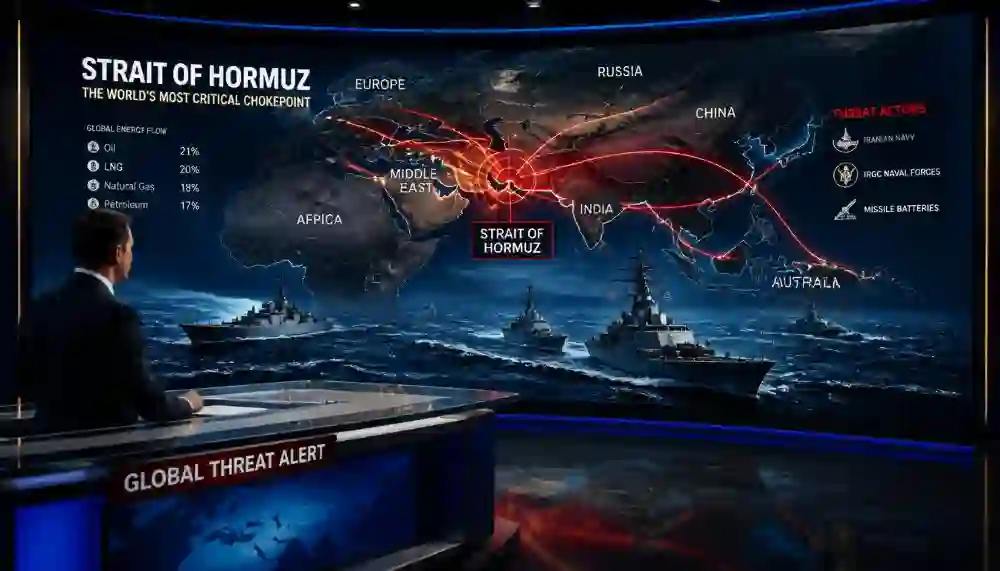
Despite U.S. naval activity, regional oil exporters are adapting to the new reality. A detailed Wall Street Journal analysis concluded that Persian Gulf producers now regard Iranian operational control of the Strait of Hormuz as effectively permanent.
Faced with soaring war-risk insurance and the risk of pipeline disruptions, governments in the region appear to view Tehran’s transit regime as preferable to full-scale regional war. Crude prices jumped on the assessment as markets absorbed the likelihood that shipping lanes will not return to normal without substantial U.S. diplomatic concessions.
Iranian Missiles Hit Kurdish Bases Near Erbil
On the northern front, Tehran struck at cross-border opposition groups. Al Jazeera confirmed an Iranian missile attack on the Komala Party headquarters in the Duli Alan area near Erbil in Iraq’s Kurdish region. Iranian forces have launched more than 100 drones and missiles against Kurdish opposition sites since the conflict began.
Separately, Foreign Minister Araghchi held security coordination talks with Patriotic Union of Kurdistan President Bafel Talabani aimed at tightening border controls.
Further afield, an unexplained explosion at a Libyan oil refinery sent smoke across nearby shipping lanes and added another layer of unease to global energy markets. As noted in our Day 28 Middle East conflict report, the fighting continues to spread across multiple strategic theatres.
Frequently Asked Questions
What new threat did the IRGC issue?
Newsquawk reported that the IRGC warned it would target international energy pipelines, power plants and undersea internet cables if Iran faces renewed military attacks.
Why did U.S. forces fire on a commercial ship?
The Wall Street Journal said American helicopters engaged a Panama-flagged vessel attempting to run the blockade into Iranian waters.
What has been the Gulf states’ response to Iranian control of Hormuz?
According to The Wall Street Journal, Gulf oil exporters have largely accepted Iranian oversight of the strait as a lasting arrangement to avoid wider war.
Why did Mojtaba Khamenei reshuffle Iran’s security leadership?
NBC News reported the elevation of hard-liners as preparation for a prolonged confrontation with the Trump administration.
Would a deal with Oman reopen the Strait of Hormuz?
No. The Times of Israel cited Mohsen Rezaee, stating that Hormuz will stay closed until the United States meets all Iranian demands, including an end to fighting in Gaza and Lebanon.