Persian Gulf and Levant Clashes: 5 Fronts
- Persian Gulf and Levant Clashes: Five Major Flashpoints This Week
- Direct US Strikes on Qeshm Island and Strait of Hormuz Interceptions
- Multi-Target Drone and Ballistic Strikes Across Saudi Facilities
- Frontline Counter-Operations and Humanitarian Displacement in Yemen
- Expanding Urban Operations Across Gaza and West Bank Settlements
- Israeli Parliamentary Deadlock and Foreign Funding Inquiries
- Frequently Asked Questions
Persian Gulf and Levant Clashes: Five Major Flashpoints This Week
Things heated up fast across multiple regional borders over the past day. Heavy missile hits, shipping fires near vital maritime corridors, and sudden political fights at home left regional capitals dealing with immediate pressure on several fronts. Newsrooms on the ground documented major shifts across active theaters.
Direct US Strikes on Qeshm Island and Strait of Hormuz Interceptions
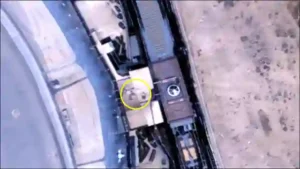
Direct military friction flared up again right along the southern coastline. According to dispatch reporting from JFeed, United States forces struck an Islamic Revolutionary Guard Corps (IRGC) missile launch squad deployed on Qeshm Island in southern Iran. Residents in the nearby coastal hub of Bandar-e-Jask also reported a succession of heavy detonations near local airfield grounds.
The aerial response followed swiftly over the waterway. Reporting carried by Anadolu Agency confirmed that the IRGC Aerospace Force scrambled interceptors and activated ground batteries to confront a hostile fighter jet operating in airspace adjacent to Qeshm Island. Official statements indicated that tactical counter-maneuvers forced the unidentified aircraft to withdraw from the sector amid active air defense alerts.
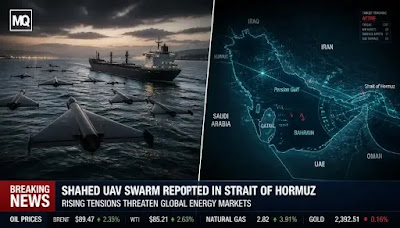
Naval navigation through the channel faces immediate danger. United Kingdom Maritime Trade Operations (UKMTO) released Warning 187-26 detailing an emergency incident twenty-five nautical miles northeast of Khasab, Oman, where a commercial merchant vessel transiting outbound through the Strait of Hormuz caught fire following an unconfirmed external incident.
Multi-Target Drone and Ballistic Strikes Across Saudi Facilities
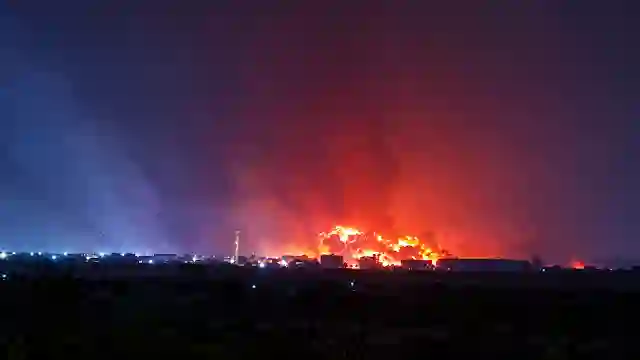
The operational standoff across the Arabian Peninsula widened significantly as regional facilities came under direct aerial barrage. In an official military declaration cited by Al Jazeera, Houthi military spokesperson Yahya Saree claimed responsibility for conducting six coordinated operations directed at critical infrastructure across Saudi Arabia.
The claimed targets included major energy hubs and logistical transit centers:
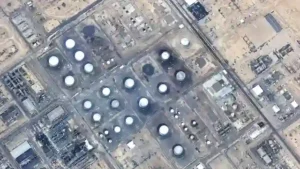
- The Ras Tanura crude export terminal and refinery complex was struck by a ballistic projectile.
- The central Aramco processing facility situated in Abqaiq was targeted with missile salvos.
- Riyadh’s King Khalid International Airport came under attack from several ballistic missiles.
- King Fahd International Airport in Dammam was targeted by extended-range uncrewed aerial systems.
- The Rabigh oil refinery complex on the western Red Sea coast.
- Saudi military headquarters situated along the southern frontier in Najran.
Defensive systems engaged targets over urban sectors. Follow-up coverage by Al Jazeera confirmed through Saudi civil defense statements that defensive interceptors neutralized two incoming ballistic projectiles over Riyadh. However, falling interceptor shrapnel resulted in injuries to a Saudi national, alongside localized structural damage to residential homes and vehicles.
(Related Coverage: Explore our comprehensive report on Gulf Security Shifts and Middle East defense alerts shaping regional military alignments.)
Frontline Counter-Operations and Humanitarian Displacement in Yemen
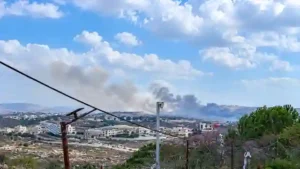
Ground fighting inside the Yemeni theater reached peak operational tempo. On-air briefings from Al Arabiya English stated that armed forces carried out nearly a thousand combat runs across disputed sectors in twenty-four hours, reporting that over three hundred fighters were taken out during combined operations.
Airstrikes along northern provinces also left a heavy civilian toll. Field reports published by Al Mayadeen English documented that airstrikes across Taiz and Al-Jawf left twenty-seven individuals dead and eighteen others injured. Data issued by the local health administration in Al-Jawf stated that 186 non-combatants have been martyred or wounded since the renewal of aerial operations.
Relief teams on the ground are struggling to keep up with the crisis. Reporting from Al Jazeera noted United Nations figures showing that more than 281,000 residents had to flee their homes since August. Damaged roads between Taiz and southern hubs cut off key supply lines, forcing aid trucks onto steep dirt tracks.
Expanding Urban Operations Across Gaza and West Bank Settlements
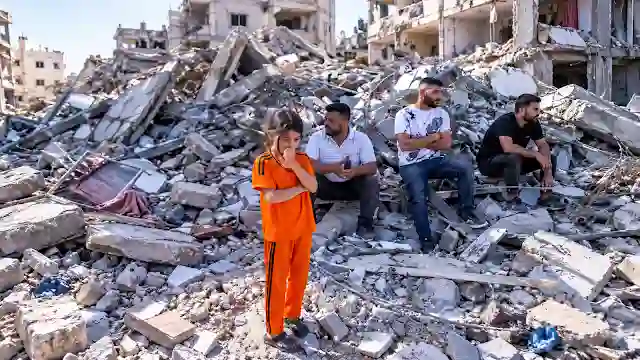
Civilian areas faced renewed strikes across both territories. According to Al Jazeera, an artillery hit near an al-Mawasi checkpoint in southern Gaza—a designated humanitarian zone—killed a Palestinian civilian, pushing the toll to four dead and thirty hurt. Nearby artillery fire east of Gaza City left eleven people wounded, while strikes landed near Bureij and Jabalia camps as well.
At the same time, Wafa News Agency reported that soldiers and settlers took over land outside al-Majd village near Hebron to set up a new outpost. Local village elders said around five hundred acres of pasture and farmland were fenced off, leaving local shepherds without their usual grazing grounds.
Israeli Parliamentary Deadlock and Foreign Funding Inquiries

Domestic political instability in Israel deepened after parliamentary election tallies failed to yield an outright governing majority to any primary political bloc. Dispatches from Firstpost revealed that Prime Minister Benjamin Netanyahu has been actively exploring a rotational power-sharing premiership arrangement with opposition figure Gadi Eisenkot in an effort to avert unprecedented coalition gridlock or an immediate snap election.
Simultaneously, contentious legal and security inquiries were initiated. As detailed by The Jerusalem Post, the internal security agency Shin Bet opened formal inquiries into allegations regarding foreign monetary channels suspected of operating through Qatari and Turkish entities to elevate Arab voter turnout during the election.
Al Arabiya English reported that Qatari officials dismissed the election claims entirely, calling them baseless accusations meant to shift blame for local political troubles.
Frequently Asked Questions
What happened on Qeshm Island?
JFeed reported that US units hit an IRGC launch crew on Qeshm Island, while Anadolu Agency noted Iranian jets chased off an unidentified military aircraft over the waterway.
Which Saudi facilities were targeted in recent claims?
Al Jazeera noted Houthi claims regarding missile and drone strikes aimed at Ras Tanura, Abqaiq processing plants, and airports in Riyadh and Dammam.
What coalition arrangements are being considered in Israel?
Reporting from Firstpost indicates that Prime Minister Benjamin Netanyahu is reviewing a rotational power-sharing government with Gadi Eisenkot following an inconclusive parliamentary vote.